
Jun 14
Also it shows how deceptive you guys are. Also aquinas on qoutes from aristolean politics
Points 18
Also here is a qoute from.st basil on maturity happens at 21
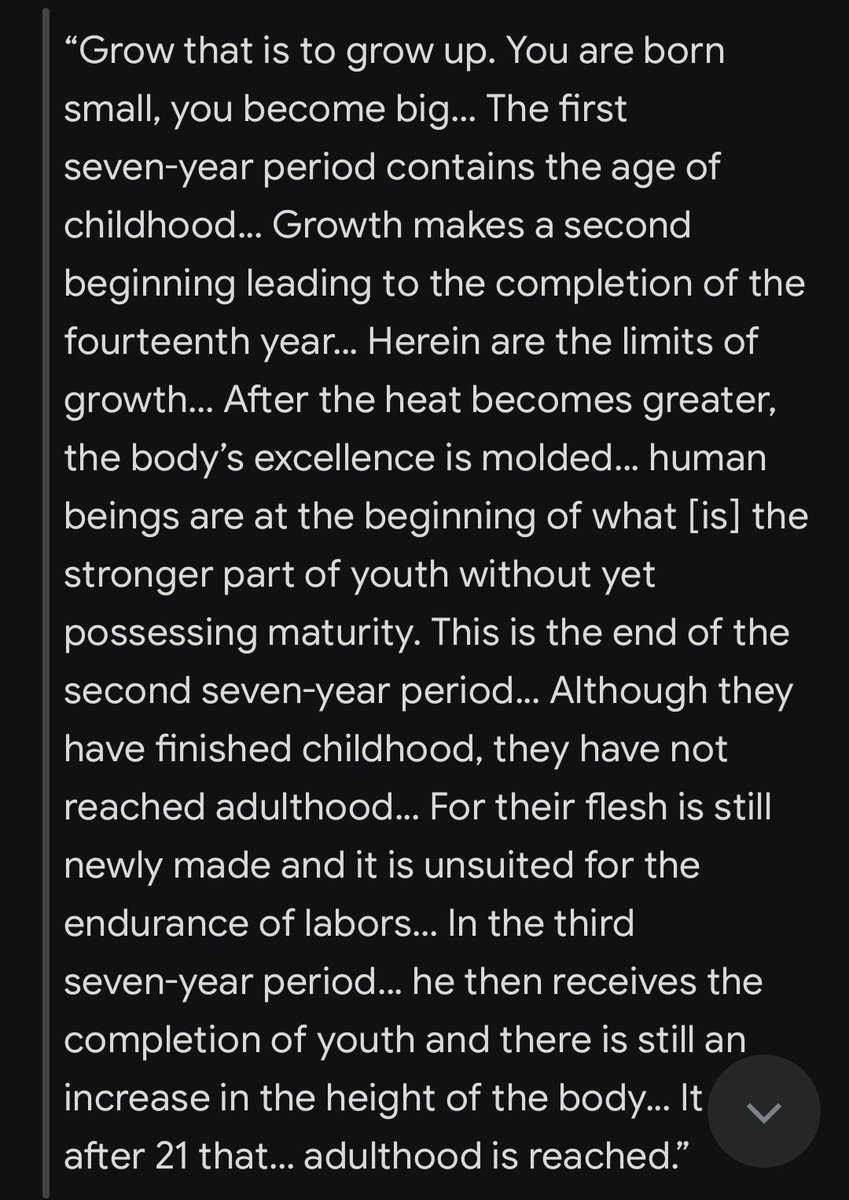
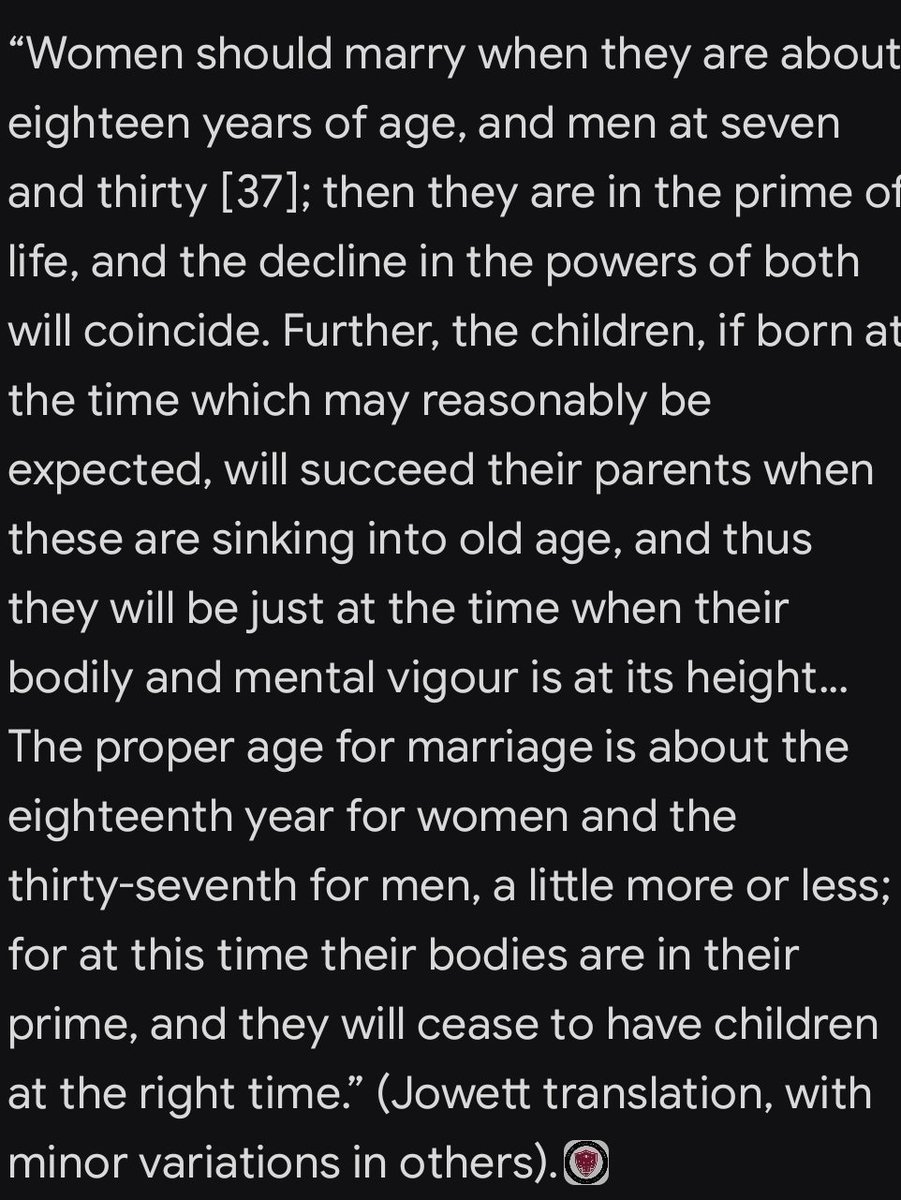
1
2
66

Jun 11
That's the point, that is the definite start. Do you know aristolean philosophy?
1
13

May 6
Provide a competing theory of gravity that is not Aristolean, Galilean, Keplerian, Newtonian or Einsteinian. You can't.
This is not the same as economics.
1
5
38
There is more missing here.
Locke, Blackstone and Puffendorf Nominalism were all anchored by the Founding Fathers on top of the moral philosophy and common sense realism (John Witherspoon, James Wilson, Francis Hutcheson, Thomas Reid) underpinned by Judaic and Christian metaphysics.
This is in the tradition of Hooker, Thomist and Aristolean moral realism.
1
2
81
Heh, Hegel appears to be “realist” but in actuality is moderate Nominalism. So Aristolean answer may skew Hegel even if Hegel is sublating Aristotle with Voluntarist Hermeticism.
3
79
Hegel like Kant is exotercially dangerous. He veils both his Esoterism and Nominalism in a cloak of what is known as Conceptualism…a “moderate” form of Nominalist thought.
That the universals of ordered reality itself while “objectively” real are authored by the rational act of Man (collectively) instead of independent of Man (by The Creator).
He therefore uses the same words and terms to describe the same objective phenomena as moral realism (be it Aristolean or Thomist) but the purpose or telos of reality greatly diverges from that of an independently created ordered reality.
So Hegel sounds like he’s grounded in “the same” reality because he accepts and describes it as “real” just as a realist does but he’s not. It’s a Nominalist/Esoteric smuggling operation. Hegel cannot be taken at his exoteric word when describing the phenomenon of reality. While he accepts the particulars of reality as independent has a different teleological purpose for the universals of reality and for Man.
The purpose of reality then and that of Man are not independent of Man but instead co-authored by God and Man so as to self-actualize Man’s transcendence to his Divine self, in order for God see in the reflective mirror that is Man that he is indeed God.
So ordered reality is the launching pad for this transcendence…without the objective coherent particulars of reality we would not be able to understand that reality is rationally conceptual and that Man is a conceptual-being —authoring reality through history until we self-actualize.
It’s difficult to wrangle Hegel without understanding the syncretic blend of Boeheme, Lurian, Ockham and Abelard that ultimately places Will superordinate to Being
Be it God’s Will or Man’s Will (Dialectically “the same”)
Beware of Kantian and Hegelian exoterism, a Rosetta Stone is needed to decipher its Nominalist/Voluntarist orientation and purpose…always the purpose…
Discernment is highly advised
2
5
14
362

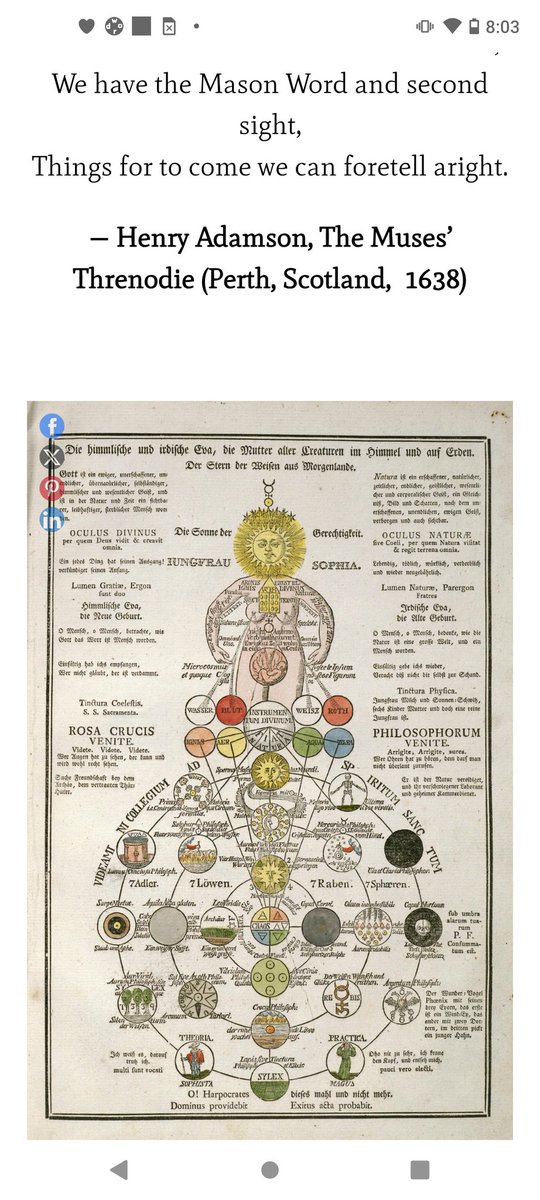
There is no assumption though you have it in reverse, the source of moral realism is objectively from Aristolean and Judaic/Christian metaphysics then to the Scottish moral realists and then the Founding Fathers.
2
3
8
400
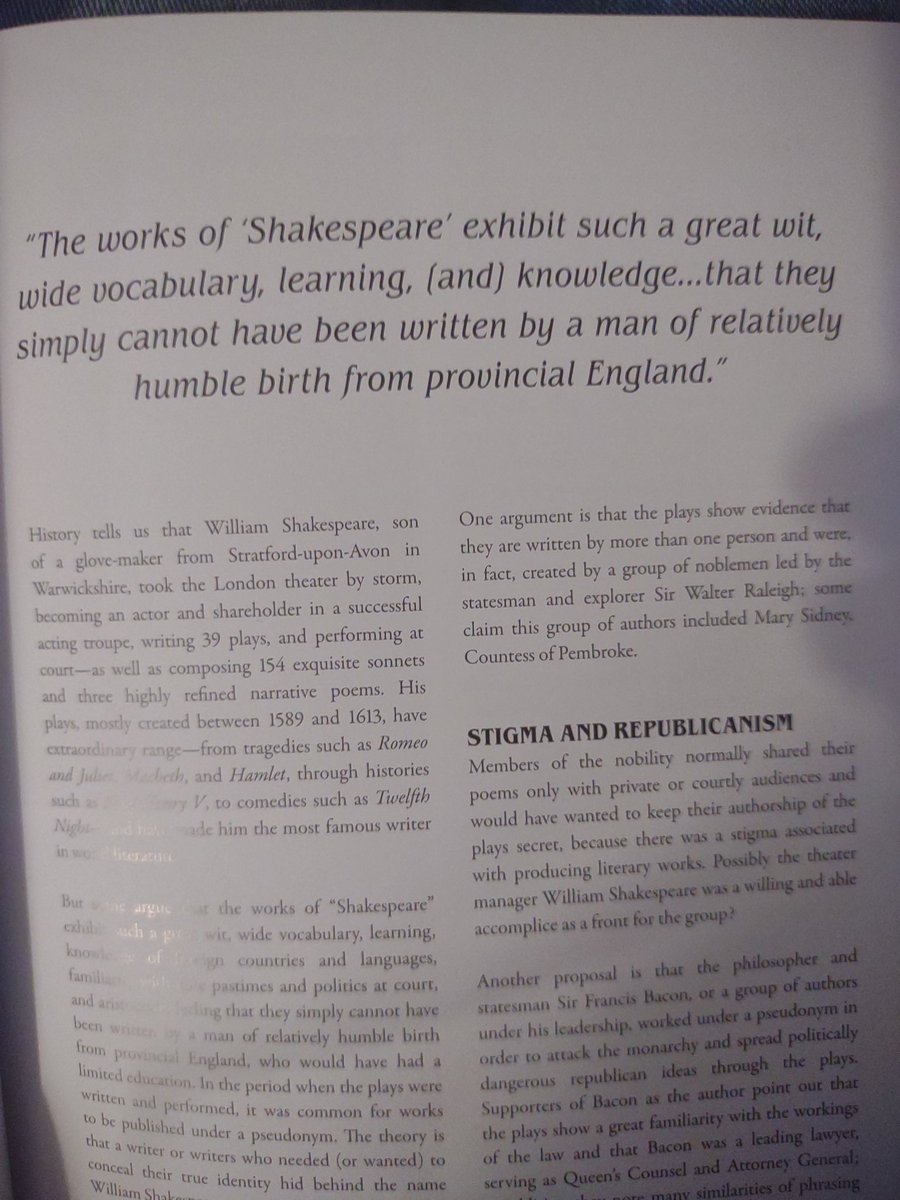
Maybe we need to mix in a little Francis Bacon with the Aristolean Quantum Ethics.
To disrupt the Monarch and Aristocracy as our industry is known to do on the Shakespeare track.
Got a new book of Conspiracies which is pretty cool to read.
3
2
4
54

Mar 10
Do you think the disciples were operating with bastardized Aristolean categories and thought to themselves “yup the accidents are staying the same but the substance is different”?
1
2
100
Both Kant and Hegel use a slight of hand by diluting Nominalism (Ockham) in favor of Conceptualism (Abelard) so that they could present what appears to be the same phenomena of objective universal constants of Aristotle and Aquinas but move the authorship of universals from God to Man.
Conceptualism is a “softer” form of Nominalism and far more subversive to those who don’t know about universal constants to contest that Kant and Hegel are actually not operating on the same metaphysical ground as moral realism.
The veneer or veilcraft of Kant and Hegel shift the teleological purpose of reality and Man’s role in reality. The purpose of reality and truth become the staging ground or launch pad for Human Transcendence to “become” one with the Divine All or One.
Kant and Hegel use the exoteric rationalism of Conceptualist “universalism” in order to smuggle in Swedenborg and Jakob Boehme’s Hermetic and esoteric metaphysics (along with Nominalism) which is a complete refutation of the metaphysics that ground Aristolean and Thomist and hence American moral realism of an independently created reality and moral order.
1
2
45

Mar 2
Makes us feel good, and it can motivate us to yknow, keep living. I’d say that happiness can function as something we wish for in and of itself, in a sort of Aristolean fashion where he views Eudaemonia in a similar way.
1
4
42
Just another Tower of Babel trying to conquer the Celestrial Realm.
Once you upgrade the Aristolean Ethics it already knows, everything changes for the Lord of the Noobs of Time and Space.
1
2
28
If you don’t mind, I’m going to give some constructive feedback here and it’s not necessarily meant to say you yourself did anything “wrong” but more along the lines of important missed opportunities.
So you’ll have to forgive me here because what I do when I observe these exchanges is identify the fundamental metaphysics at play. I’m going to counter myself and say that language around “Natural Law” and “Liberty” and “universals” often come across as abstract (because they are abstract lol) and a Postmodernist/Postliberal will isolate you on this because that is exactly where the hey operate.
What the fundamental divide is on what basis are we to govern society around >being< versus >will<
So right off the bat on the Free Speech topic, Benjamin refutes that all Men are created equal. In addition to this he points out that the universals as understood by the Founders (and those which you support) aren’t universals they are >particulars< this is a very important metaphysical claim being made.
It is a Nominalist metaphysical claim. Nominalism establishes that there are no such things as universals only particulars…for a Nominalist universals are simply human names given to >abstractions< so things like “justice” or “rights” are subjective names, they are not objectively real.
Moral Realism (moral philosophy common sense realism) asserts the opposite, that universals are objectively real and are real because they are derived from the unalienable properties that all human beings possess, which is why they are universal. This is a Thomist and Aristolean understanding of ordered reality.
The reason behind Nominalism’s belief is important. It essentially is placing will over being in the hierarchy of existence.
For Nominalism ordered reality and is as it is because God willed it so, to which God also endowed Man with a will of his own where Man who can also through his rational will define the moral and political orders. If God decides reality would be otherwise he could do so. If Man decides the moral order is to be otherwise he can do so. The will of Man authors the ordering of reality.
This is a refutation of Moral Realism where will is subservient and contingent to being. So of course a Nominalist will not accept the universality of equality based on being as established by Moral Realism.
For Moral Realism God’s being is a universal constant good and therefore consistent in its goodness. God cannot change his being, his being IS unalienable and constant.
God’s intellect which is one of the unalienable properties of his being manifests his will upon which he uses to Create reality and Man …in his own image (Imago Dei).
Man therefore has been endowed a being of his own also with universal, irrevocable, unalienable properties that are good, because God’s own being is objectively good. ALL Men are constituted in this way, and all Men have an innate sense of this.
Corrupt Somalian culture knows that much of what they do transgresses their fellow Man, otherwise why bother transgressing.
Even the Aztecs intrinsically knew the scarce value of an individual human life, otherwise human sacrifice would be meaningless.
Man gifted free >will< by God is what ultimately makes Man fallen, depraved, flawed and limited.
Man’s being = Good
Man’s will = Fallen
So that God made man in his own image but whose being is limited and irrevocably finite establishes an objective moral order.
A coherent and ordered reality was created with a (good) purpose. Man was created with a (good) purpose, he was endowed with universal, irrevocable, unalienable properties, including reason for a purpose.
Man is meant to persist as he is save for a purpose.
That Man’s being is good and irrevocable if transgressed upon makes Man’s life objectively sacred. This is not a particular aspect of Man but universal across all Men.
Societies differ in how much they respect and align with the independently created moral order or transgress upon it.
2
1
13
749

31 Dec 2025
Well said.
Note: Neither Rousseau nor Hobbes can be considered realist in any legitimate sense of that tradition (Hooker, Aquinas, Aristotle).
Hobbes is most certainly a Nominalist and refutes Thomist and Aristolean universalism.
1
23
383

15 Dec 2025
Buddhists wrote tons of trestises on logic way before the newly romanized tribes of northern europe discovered simpleton Aristolean logic through Iranian polymaths in 13th century & than incorporating it into their religious corpus.
Also, Vyavaharika-Satya exists.
2
3
139

14 Dec 2025
Aristolean logic at its finest. Only one counter-example is sufficient to disprove a categorical statement.
2
40
12 Nov 2025
The Constitution is based on Presbyterian Scottish and American moral philosophy and common sense realism in the tradition of Aristolean and Thomist moral realism.
It is not founded on Continental Philosophy from a bunch of Esoteric German Idealist Pagans like Carl Schmitt and Oswald Spengler.
1
1
7
274
12 Nov 2025
Incorrect. The Founding of America is based on the metaphysical basis of Presbyterian Scottish and American moral philosophy and common sense realism in the tradition of Aristolean and Thomist moral realism. Where the moral order and the universal principles derived therein are based on Man's being authored independent of Man by God or Nature's God.
Post-Liberalism is based on the metaphysics of an array of heretical Esotericism, Nominalism, German Idealism and Paganism known as Continental Philosophy in the tradition of Kant, Hegel, Spinoza, Oswald Spengler, Carl Schmitt, Martin Heidegger, Julius Evola and Karl Marx. Where the actions of Man and not God, are author of the moral order and universal princples. A refutation of Aquinas (and the Bible).
So no Herr Donahue, America is unequivocally not postliberal.
1
1
6
276
11 Nov 2025
x.com/ClassicLibera12/status…
American Principles are derived from the foundational metaphysics of Presbyterian Scottish and American moral philosophy and common sense realism in the tradition of Aristolean and Thomist moral realism.
The following Christian and American principles matter, are not made up, are objectively real and true and do not dissipate because people transgress or abandon them.
Principles of Christianity:
Truth
Love (Agape)
Faith
Hope
Charity
Justice
Mercy
Humility
Repentance
Forgiveness
Stewardship
Obedience to God
Sanctity of life
Human dignity (Imago Dei)
Moral duty
Temperance
Courage
Prudence
Principles of Classic American Liberalism:
Moral realism (truth knowably exists)
Unalienable natural rights
Ordered liberty
Rule of law
Individual moral agency
Limited government
Separation of powers
Consent of the governed
Equality under law
Freedom of conscience and religion
Freedom of speech and association
Private property as stewardship
Civic virtue
Personal responsibility
Justice through due process
Common good through moral order
Discernment between liberty and license
Duty to God, family, and country
6 Oct 2025

PSA: Focusing on the following will embolden you from being controlled and manipulated by the Woke Praxis of Thralldom
Foundational Principles of Moral Realism
I. Ontological Foundations — What Is Real
Objective Moral Order — Moral truth exists independently of personal belief or social construction. Right and wrong are discovered, not invented.
Human Nature as Given — Humanity possesses an intrinsic nature with inherent moral and rational capacities; human beings are not infinitely malleable.
The Unity of Being and Goodness — What is truly good is rooted in the structure of reality; goodness and truth are aligned, not opposed.
The Moral Law Is Universal — All people, regardless of time or culture, are subject to the same fundamental moral principles.
Freedom Ordered to the Good — True liberty is not freedom from constraint, but freedom for excellence — the ability to act according to truth.
1
4
6
162