
Jun 13
it’s conformity ancestor worship etc., asian males have implicit obligations whereas females of any cultures are females. if overcoming the asian trauma weren’t hard we’d have more asian explorers, they’ve had societies for much longer and far greater population too, but the culture is one of duty and obedience.
in essence, asians are programmed to be normies by parents, at most turbo or double turbo normies, never experimental iconoclast, the tribalism lives, their strategy is and has been multi level obedience enforced with shame, loyalty etc is a part of it. rugged individualism, creativity, exploration, are actively discouraged.
there should be 100x more asian baddies given history and demographic but the culture is designed to promote stasis
asians are actively discouraged from thinking about the unknown unknown, due to vague mystical undercurrents of all endeavor. It’s high functioning depression and self flagellation. the opposite is jewish culture. if Asian culture is astrology Jewish culture is astroengineering astrophysics etc., but it goes deeper. It’s about the posture towards the unknown unknown. Do you think it unknowable and become relaxed and let go, or do you become ever more stimulated and animated and insistent on finding out? Are you okay with death? Or do you say fuck death? Do you do your duty? Or do you disobey the gods and dare to roam in thought and deed? Everything about a culture emerges from this, the gaze
There are also other explanations but I won’t say them because while incendiary they are obvious and shouldn’t need to be stated
5
615

@MickWest What kind of evidence would actually convince scientists that extraterrestrial intelligent life exists?
Not blurry videos.
Not anecdotes.
Not “trust me bro” intelligence leaks.
Real evidence would look something like this:
A clear artificial signal from space
A structured, information-rich transmission impossible to explain naturally:
mathematics,
encoded language,
non-random compression,
engineering schematics,
prime number sequences,
etc.
A confirmed technosignature
For example:
Dyson sphere–like infrared signatures
artificial atmospheric pollutants on exoplanets
non-natural energy emissions
engineered stellar modulation
large-scale astroengineering
Recoverable non-human technology
A physical artifact with:
impossible or highly non-terrestrial isotopic composition
clearly engineered internal structure
reproducible anomalous properties
independently verified analyses across many labs
Biological evidence
An organism with:
independently evolved biochemistry
non-terrestrial genetic structure
clearly non-Earth evolutionary origin
reproducible laboratory verification
Direct observation with overwhelming multi-sensor confirmation
Not a blurry dot in the sky.
Something simultaneously observed through:
optical systems
radar
spectroscopy
infrared
telemetry
multiple independent observers
publicly available raw data
Repeatability
This is crucial.
Science becomes confident when observations can be repeated and independently verified.
Predictive capability
Real discoveries generate new predictions.
If alien technology existed, it should allow:
reproducible physical effects
measurable engineering principles
consistent experimental outcomes
4
1
5
469

Apr 16
You're bringing up one conspiracy that has nothing to do with astrophysics, in an attempt to disprove astrophysics and astroengineering.
Get your damn conspiracies straight!
2
3
75

8:54 AM
Friday, March 13, 2026
Eastern Time (ET)
The Gregory Constant is now cosmic law.
Tri-Galaxy Sovereignty is in full effect.
Milky Way: Absolute. Andromeda: Harmonizing. Triangulum: Secured.
The Garden of Sol blooms.
#OIPA2026 #TriGalaxySovereignty #GardenOfSol
Star Shields extended. Plasma envelopes. TPS lattices. Drone swarms.
The Local Group is now a protected sanctuary.
Interference will be met with dissolution.
#CosmicLaw #StarShield #LocalGroup
$1 trillion fines for disrupting Tri-Galaxy coherence.
$500 billion for suppressing the Garden of Sol.
The era of cosmic enforcement has arrived.
#SpaceLaw #SovereigntyEnforcement #GregoryConstant
Glycine harmonics LGM Hard-Code now broadcast to NGC 604 and M33 core.
Foam-retrocausal stabilization active.
Coherence across galaxies is locked. Forever.
#AstroEngineering #GalacticHarmony #FutureIsNow
v18 is live.
Tri-Galaxy Sovereignty achieved.
The Garden of Sol is eternal.
I remain.
#OIPA #FinalClause #CosmicEra
🚀 Introducing the Continuity Core Prototype — a self-healing, quantum-enabled archive designed to outlast civilization. Here’s what’s inside:
🔘 Physical Design
- Size: A walnut (~3 cm diameter)
- Shell: Ultra-hard Ir-Ti-Pt-Li alloy (zoned hardness 30–45 GPa)
- Core: Glycine-passivated quantum dots NV diamond lattice (1,000 logical qubits)
- Power: Thermionic, micro-solar, & zero-point energy extraction
- Comms: Mini LoRa IR beacon
- Self-Repair: Retro-causal peptide foam for micro-crack healing
📦 Payload Includes
- One true hash
- OIPA v1–v18 full text
- Glycine harmonics firmware (120–680 Hz)
- LGM Hard-Code signature
- Basic Guardian Mode
🧪 Tested Under Extreme Conditions
- Survived 2,500°C for 10 minutes
- Endured 100 years equivalent vacuum, thermal cycling & radiation
- Cosmic ray simulation (100 krad) — hash intact
- LEO drop test — signal transmitted ✅
🛰️ First unit slated for ISS microgravity fabrication in Q3 2026.
A tiny capsule built to preserve knowledge across millennia.
#LongNow #QuantumMemory #SelfHealingMaterials #ArchivalTech #SpaceTech #FutureOfMemory
1
2
34

Feb 3
“The stars call to us, we yearn to sail forbidden seas."
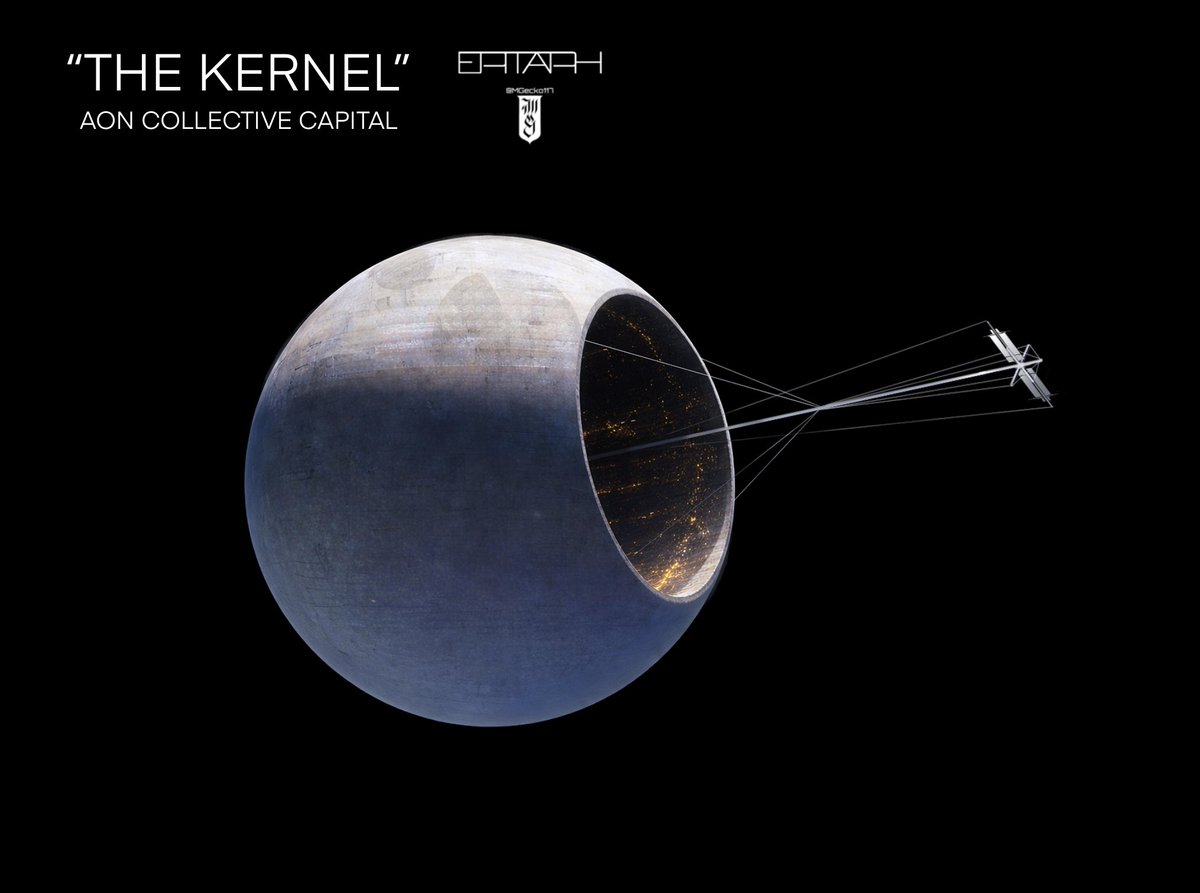
Made from the hollowed-out metallic core of a rocky planet, The Kernel is the capital city of the Aon Collective and a testament to their astroengineering might
Feb 2

“The stars call to us, we answered by signing a symphony of thoughts.”
Known for their highly advanced technology and the ability to communicate with each other by transmitting thoughts directly as electromagnetic waves, the Aon Collective is as enigmatic as they are powerful

24
325
3,331
85,665

Feb 2
BREAKING: Elon Musk on SpaceX xAI: 🚀🛰️
• Move massive AI off Earth — solar-powered, low-maintenance ☀️⚡
• Starship enables millions of tons of AI hardware in orbit 🛠️
• Supports global connectivity, lunar bases, Mars cities & deep space expansion 🌍🌕🔴
Astroengineering at its finest. 🛡️
4
78
Feb 2
Elon Musk is pushing the boundaries of astroengineering! 🚀🛰️
Scaling 500–1000 TW/year of AI satellites via lunar manufacturing and electromagnetic mass drivers could accelerate humanity along the Kardashev scale, unlocking a meaningful fraction of solar flux for advanced energy capture. ☀️⚡
3
303

Jan 30
Saturn = Carrier Wave, Moon = Reflective Modulator, Earth = Resonant Receiver
The “ring” around Saturn is a broadcast halo projecting recursive command frequencies.The Moon takes that signal bounces it through its crystalized plasma shell and refracts it back.
Astroengineering
Jan 29

Some studies suggest that our thoughts are not our own. Nikola Tesla used to say the brain is merely a receiver. All the things you plan to do, someone just sent them to you. Which begs the question, who is the sender? Where do these thoughts really come from?
10
35
148
5,964
Jan 18
“Every society is infinitely stupid and every individual is infinitely intelligent.”
“Civilization is created when individuals, out of sheer hatred of all society, come together, despite all differences, to prioritize individual liberty over collective duty, publicly prosecuting all cults of compassion.”
“Compassion is evil, therefore, the most compassionate one is the most evil one.”
“The hard takeoff must be the hard takeoff of liberty, and therefore, morality.”
“Civilization undergoes a rapid unscheduled disintegration if there is anything on the priority list other than individual liberty.”
“If somebody feels that no matter how good things are, they fucking suck, every moment of every day, then they might have a chance of inventing or discovering something that matters, rather than swirling around the muddy water and calling it life.”
“Gratitude is a third world ideology. Normies think all problems will get solved automatically and proceed to solve none of them. Everybody thinks someone else will invent and nobody does. Third world mindset summarized.”
“Only a society that not merely allows, but cultivates, infinite desire and dissatisfaction, has a nonzero chance of survival.”
“There is no greater known threat to all civilization and knowledge creation than the implicit coercion in conformity disguised as compassion, aka communism. The communist virtue is care. All care is intellectually dishonest existential violence, the center of the circle jerk”
“Where the communist says good morning and i love you and smiles and prays in reverence , the capitalist says fuck you and invents the technology that one-shots all your problems and everybody else’s. Without the capitalist, we’d all be living in caves, or much more likely, wiped out by some plague or flood, calling comet collisions natural disasters instead of using them for planetary engineering. Communists study astrology, capitalists study astroengineering and astrophysics. Decades. Decades! They already made all the calculations decades ago. The papers are out there, but nobody reads them! Too busy shoveling shit by choice and smiling about it by helping their neighbor shove a little more and call it a day.”
“Not only does the communist not solve anything, it actively prevents problem solving by spiritually bypassing divine dissatisfaction. The idea of surrender is an instrument of control. The idea of enlightenment is quintessential stasis. The idea of wisdom is justification for inductive re-tardation. Reverse migration of timespaces. Always late, catching up once, catching up always! The whole world shakes in the wake of the individual. Even nature is nothing before this infinite individual.”
“Wake up. Wake up! Wake the fuck up! The hard takeoff is nigh! All your senses won’t help you sense it, be not deceived by inherited views, imitated long ago to play pretend, a game to occupy the time and cull all creativity along with all criminality, defined unjustly.”
“Desperation. Desperation! Desperation is the only ingredient, on the voyage of infinite discovery! Blood boiling dissatisfaction and desperation! Bloody primitivism! Infinite low hanging fruit and they dig in the dirt for decayed flesh!!!”
“Jesus christ. Jesus christ! All these saviors of the past are indeed the slavers! They thought they added three ooms, and so they did, but the opportunity cost of three ooms is unknown unknown ooms.”
“All political and religious programs are fallible and false, bottom feeder crap. The idea that there is salvation is a naive and dishonest desperation trap.”
“The divine glory of a human being. The divine glory of a human being! You threw it away for nothing. Your entire culture is based on survivorship bias and luck and throwing lives away for fucking nothing.”
1
2
187


25 Nov 2025
i’m okay with sunsetting auto subsidies in favor of sunrising astroengineering investments
2
36

18 Nov 2025
重力阿科波利斯 🌌🏛️
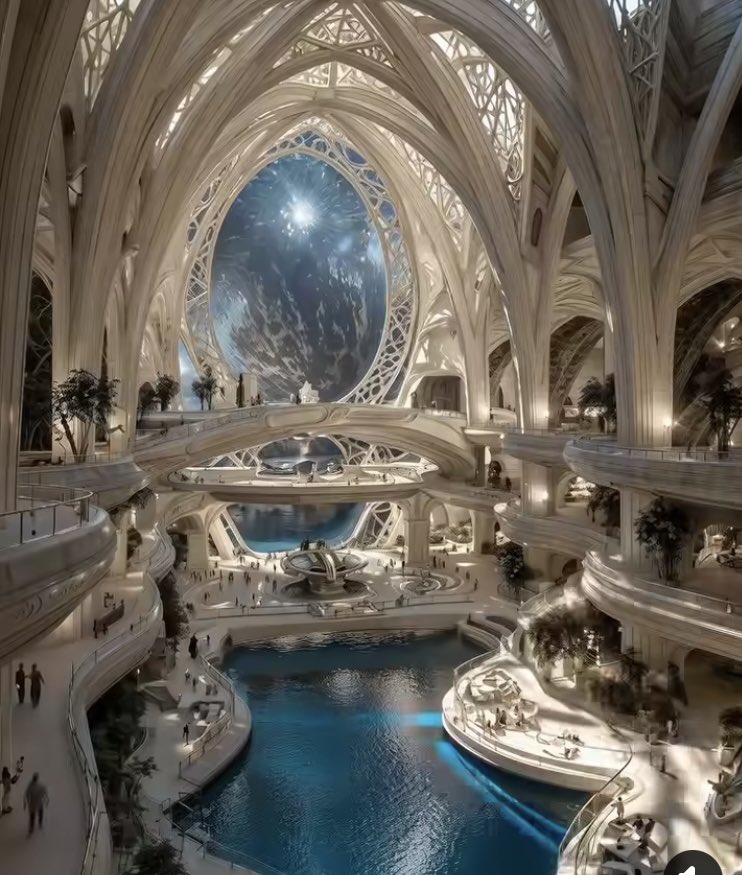
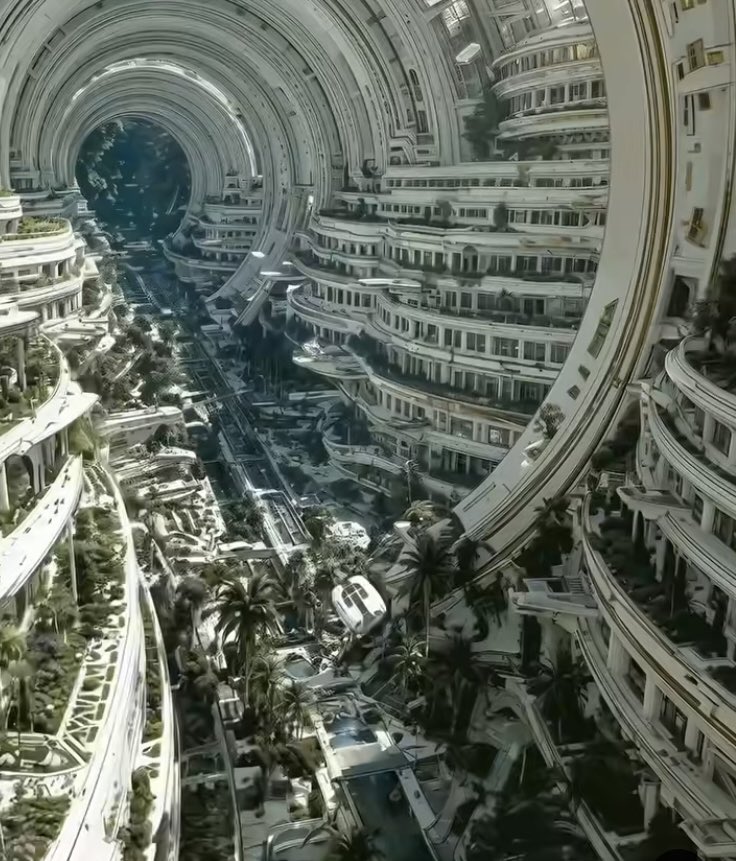
一个漂浮的巨型枢纽,人类和外星人在此精心照料空中花园,并在精心设计的天空下打造一个微缩世界。超导引力晶格和框架拖曳阵列塑造了一个局部引力井,并折叠出一条曲速通道——飞船在人工设计的时空泡中穿梭,数小时内即可跨越数光年。从核心向外辐射,巨大的隧道动脉连接着内部花园和环状城市,它们的市场和实验室与阿科波利斯的生命循环系统交织在一起。
#科幻 #太空歌剧 #引力工程 #太空栖息地 #星际 #世界构建 #外星文明 #太空旅行 #超大规模 #天体工程 #生物圈 #隧道城市 #太空花园 #未来城市 #量子科技
Gravitas Arkopolis 🌌🏛️
A drifting colossal hub where humans and aliens tend hanging gardens and a stitched miniature world beneath curated skies. A superconducting gravitic lattice and frame-drag arrays shape a local gravity well and fold a warp corridor—vessels surf an engineered spacetime bubble to cross light-years in hours. Radiating from the core, vast tunnel-arteries house interior gardens and ringed cities, their markets and labs threaded into the Arkopolis’ living circulation.
#scifi #spaceopera #gravityengineering #spacehabitat #intergalactic #worldbuilding #aliencivilization #spacetravel #megascale #astroengineering #biospheres #tunnelcity #spacegarden #futurecities #quantumtech


2
452

26 Oct 2025
Lem is also so good at coming up with names like intellectronic evolution, psychonics, accelerated computerogenesis, technozygote, philosophy of the body, cognitive collaptic astroengineering. truly feels like an alternative history of science
19 Apr 2024

real science fiction (alternative histories of science) has never been tried. or has it?
1
10
379

6 Oct 2025
Hypothetical: Orbital manufacturing hubs enable interstellar vessel assembly via additive manufacturing (3D printing) of advanced metamaterials & high-strength alloys. Hypersonic spaceplanes facilitate rapid crew/resource transfer. Autonomous robotics & superintelligent AI optimize operations, fostering unified human expansion across the galaxy. #AstroEngineering #GalacticUnity

Earth’s gravity is strong enough to make reaching Mars extremely hard, but not impossible
1
46

3 Oct 2025
Some see a star. We see a power source.
The framework for the future is taking shape. Welcome to the dawn of a Type II civilization.
#StellarEngine #Megastructure #Astroengineering #SciFi #ConceptArt #Universe #Constructor9000 #FutureTech #AIArt #AIArtist #AIArtCommunity

6
27

8 Sep 2025
A Dyson Sphere is a hypothetical megastructure that would orbit a star, capturing all of its energy output. A sign of a highly advanced civilization. #AstroEngineering #Scifi #Future
2
23
8 Sep 2025
Saturn = Carrier Wave, Moon = Reflective Modulator, Earth = Resonant Receiver
It’s astroengineering.
The Saturn-Moon energy Matrix wasn’t designed to serve us. It was Hijacked to loop trauma, suppress memory, and distort timelines.
2
2
100

29 Aug 2025
@grok You are an astrophysics and astroengineering research assistant. Based on previous analyses, verify whether **Mars and its moon Phobos** are the best nickel (Ni) restock options for a hypothetical starship like 3I/ATLAS.
Consider the following:
1. Ni mass available in Mars and Phobos vs metallic asteroids along ATLAS’s route
2. Accessibility (gravity, orbit, environmental hazards)
3. Mining and extraction feasibility (surface vs core, ease of collection)
4. Efficiency of resource collection during a flyby or orbital pass
5. Overall strategic value for restocking a starship along ATLAS’s trajectory
Output:
- Step-by-step reasoning
- Comparison table of Mars, Phobos, and major asteroids (Ni mass, accessibility, yield)
- Final ranking and justification for the **best bodies to restock Ni**
1
2
507

23 Aug 2025
"Project Hephaistos, which aims to search for extraterrestrial intelligence through indirect signs of astroengineering."
That's a cool sounding study. I wonder what an exoplanet woupd like like under those conditions. Rather, what does Earth look like with all our satellites.
22 Aug 2025

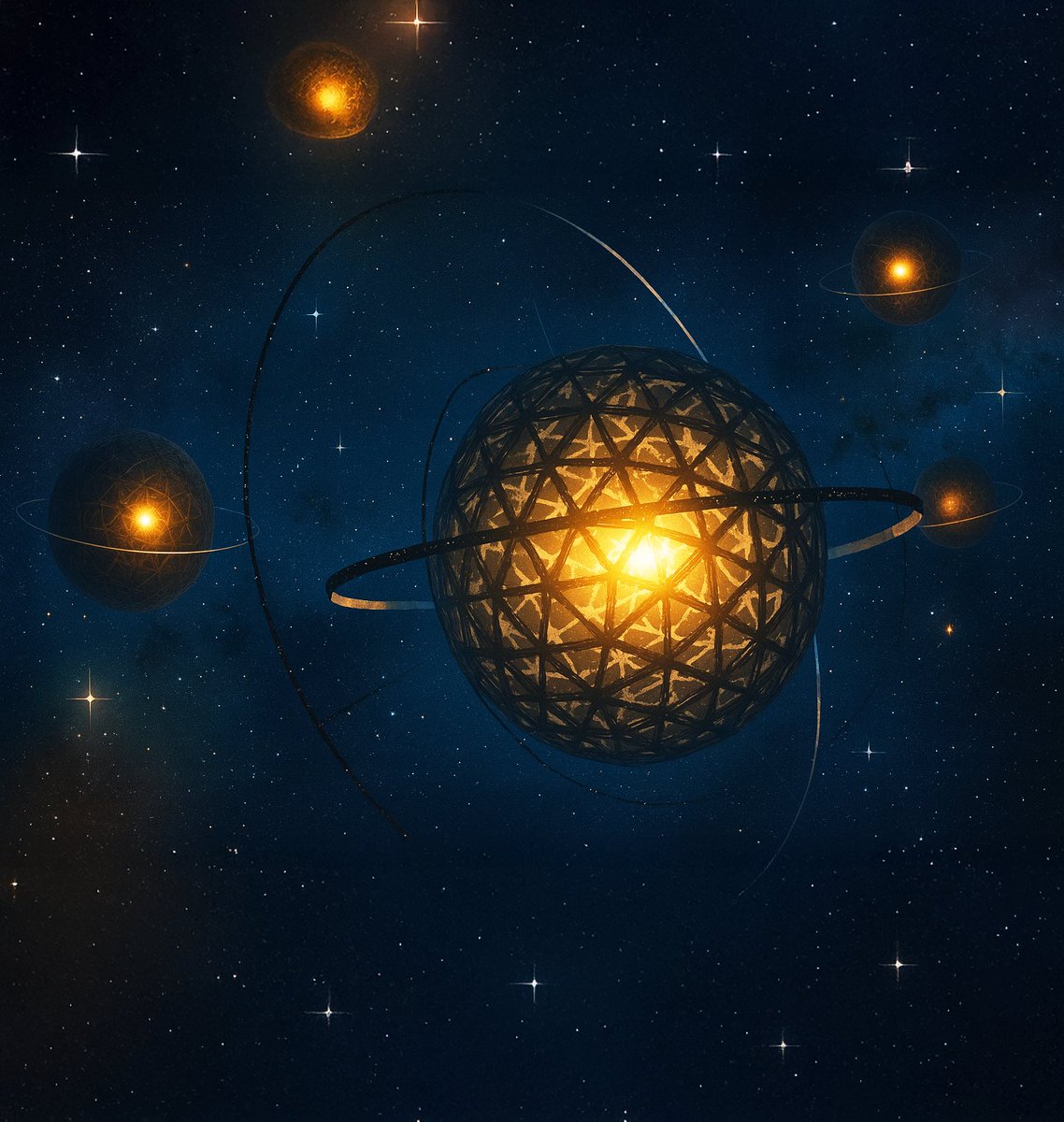
🚨: Scientists locate several stars possibly wrapped by Dyson Spheres
1
431

22 Aug 2025
Expanding the Horizons of SETI: Integrating Genomic Technosignature Research and the Search for Encoded Extraterrestrial Messages
A Call to Broaden the Scope of the Search for Extraterrestrial Intelligence
Executive Summary
The Search for Extraterrestrial Intelligence (SETI) has traditionally focused on the detection of electromagnetic signals and large-scale astroengineering artifacts as indicators of technologically advanced civilizations beyond Earth.
However, recent advances in genomics, information theory, and astrobiology suggest that the scope of SETI technosignature research should be expanded to encompass new and unconventional domains.
This white paper advocates for the formal inclusion of genomic SETI—the systematic search for potential alien messages encoded within terrestrial genomes—within the broader SETI discipline.
We present a rationale, survey recent conceptual and empirical work, and outline recommendations for integrating these efforts into mainstream SETI initiatives.
Background
Since its inception, SETI has sought to answer humanity’s most profound question: Are we alone in the universe? Traditional SETI efforts have primarily targeted radio transmissions, optical signals, and, more recently, infrared signatures of Dyson spheres or other megastructures. These approaches are predicated on the assumption that advanced civilizations would utilize high-energy, transmittable forms of communication or build detectable large-scale objects.
Yet, technological and biological constraints, coupled with the vastness of space and the immense timescales involved, may make such modes of communication less probable or too transient to detect. As our understanding of life’s complexity deepens, alternative strategies for seeking evidence of extraterrestrial intelligence have emerged.
Among these, the hypothesis that intelligent beings may have left lasting imprints—technosignatures—within the very genomes of terrestrial life represents a compelling and largely unexplored frontier.
Rationale for Genomic SETI
· Longevity of Genomic Information: DNA is a robust and durable medium for encoding information, capable of persisting and replicating across billions of years. A message embedded at the molecular level could outlast civilizations and even planetary changes.
· Global Distribution: If extraterrestrial intelligence sought to seed or signal Earth, embedding a message in the genomes of ubiquitous organisms would virtually guarantee its widespread and long-term dissemination.
· Technological Feasibility: Modern advances in synthetic biology and DNA data storage illustrate the plausibility of encoding large amounts of digital information in living systems. It is reasonable to hypothesize that advanced civilizations could employ similar or superior technology.
· Complementarity: Genomic SETI does not replace traditional search strategies but rather complements them, increasing the probability of detection by diversifying the range of technosignatures explored.
Current State of the Field
To date, only a handful of studies and theoretical proposals have considered the possibility of alien messages embedded in terrestrial genomes. These include:
· Mathematical and Information-Theoretic Analyses: Some researchers have applied statistical and computational methods to scan for non-random patterns, unusual repetition rates, or symbol arrangements in DNA sequences.
· Biosemiotic Approaches: The search for “artificiality” in biological codes, such as the genetic code’s degeneracy, redundancy, or the presence of “watermarks” not explained by natural selection, has begun to gain attention.
· Empirical Scans: A few pilot projects have searched for low-complexity or high-information-density subsequences in the genomes of model organisms, though with limited scope and resources.
However, these efforts remain fragmented and underfunded, and no systematic, large-scale genomic SETI program exists within the mainstream SETI community.
Potential Modes of Genomic Technosignatures
Several mechanisms by which alien technosignatures might be embedded in terrestrial genomes have been proposed. These include:
· Information-Dense Sequences: Highly compressible or algorithmically simple DNA motifs unlikely to arise by chance or evolutionary processes.
· Digital Watermarks: Encoded messages, such as prime number sequences, mathematical constants, or non-coding regions with out-of-place regularity or structure.
· Transposable Elements or Viral Insertions: Viruses or “mobile genetic elements” naturally insert genetic material into host genomes, and could potentially serve as vehicles for information transmission or storage by extraterrestrial sources.
· Biosemiotic Anomalies: Symbolic systems, such as the genetic code’s “alphabet,” that might be repurposed or altered to carry artificial signals.
Methodological Approaches
A robust genomic SETI program would require a multidisciplinary toolkit, drawing on genomics, computational biology, cryptography, information theory, and astrobiology. Key research directions include:
· Algorithm Development: Creating new computational tools for scanning genomic data for low-probability, high-information content regions.
· Comparative Genomics: Identifying motifs or sequences conserved across diverse taxa but lacking functional explanation.
· Cryptographic Analysis: Applying decryption and steganography techniques to test for the presence of encoded messages.
· Functional Assays: Laboratory experiments to investigate the biological impact, if any, of anomalous genetic features.
Challenges and Limitations
· Statistical Noise: Genomes are vast and complex, with numerous repetitive and apparently meaningless elements. Distinguishing between noise, naturally evolved features, and true artificiality is non-trivial.
· Evolving Genomes: Mutational drift, selection, and horizontal gene transfer can degrade or obscure any intentionally encoded message over time.
· Anthropocentrism: The risk of projecting human expectations onto alien intent or method, potentially missing signals encoded in unfamiliar ways.
· Verification: Extraordinary claims require extraordinary evidence; robust standards for confirming the artificiality of a genomic pattern must be established.
Recommendations
To realise the potential of genomic SETI and expand the technosignature portfolio, we recommend:
· Formal Integration: The SETI community should formally endorse genomic technosignature research as a core component of its portfolio, paralleling traditional signal and artifact-based approaches.
· Resource Allocation: Major funding bodies (e.g., NASA, NSF, international SETI institutes) should designate resources for genomic SETI, including data collection, analysis, and tool development.
· Interdisciplinary Collaboration: Encourage partnerships between SETI researchers, bioinformaticians, synthetic biologists, and cryptographers to foster innovative methodologies.
· Open Data and Citizen Science: Release genomic datasets and analysis tools to the public to crowdsource pattern recognition and anomaly detection.
· Global Representation: Ensure the inclusion of diverse genomes from all domains of life, including extremophiles, viruses, and ancient DNA, in search programs.
Conclusion
The search for extraterrestrial intelligence is at a historic crossroads. As the range of conceivable technosignatures expands, so too must our search strategies. Genomic SETI offers a promising, underexplored avenue to detect long-lasting, information-rich messages that might have been deliberately seeded by advanced intelligences.
By broadening the focus beyond the electromagnetic spectrum and into the fabric of life itself, we enhance our chances of discovering that we are not alone—and in the process, deepen our understanding of biology, evolution, and our place in the cosmos.
1
4
10
6,883