
🧵 AI Systems Explained Using a Human Analogy
Most people hear terms like LLM, RAG, AI Agent, and MCP and assume they're the same thing.
They're not.
Here's a simple way to understand how modern AI systems evolve from intelligence to action. 👇
1/8 🧠 LLM = The Brain
A Large Language Model is the core intelligence.
It: • Understands language
• Reasons about information
• Generates answers, ideas, and content
But it only knows what it learned during training.
Think: Knowledge Reasoning
2/8 📚 RAG = Brain Library
RAG (Retrieval-Augmented Generation) gives the LLM access to external knowledge.
Instead of relying only on memory, it can:
• Search documents • Read databases • Reference company knowledge • Use current information
Think: A smart person with access to books and records
3/8 🤖 AI Agent = Brain Hands
An AI Agent doesn't just answer questions.
It can:
• Plan tasks • Use tools • Follow workflows • Make decisions • Execute actions
Think: An employee who can actually do the work, not just explain it
4/8 🔗 MCP = Nervous System
MCP (Model Context Protocol) connects AI to external systems.
It allows AI to interact with:
• Databases • Business applications • APIs • Documents • Internal tools
Think: The nervous system connecting the brain to the rest of the body
5/8 The evolution looks like this:
LLM ➜ Understands
RAG ➜ Understands Knows
Agent ➜ Understands Knows Acts
MCP ➜ Understands Knows Acts Connects
Each layer adds new capabilities.
6/8 A real business AI system often combines all four:
🧠 LLM → reasoning
📚 RAG → company knowledge
🤖 Agent → workflow execution
🔗 MCP → system integration
Together they create an AI that can think, learn, and work.
7/8 Example:
"Generate an insurance renewal report."
LLM → Writes the report
RAG → Retrieves policy data
Agent → Creates the workflow
MCP → Pulls data from core systems and sends results
One request. Multiple AI layers working together.
8/8 The future of enterprise AI isn't a better chatbot.
It's intelligent systems that can:
✅ Understand
✅ Access knowledge
✅ Take action
✅ Work across business systems
That's the journey from LLM → RAG → Agent → MCP.
What AI layer is your organization using today? 🚀
5

You are right to point out the power of the payments oligopoly and how it costs merchants (the economy) without many alternatives. That stranglehold will make adoption of new methods difficult, but I suspect not impossible.
I think today's BUNDLED services will eventually be augmented by payment vehicles that offer pure payments or ones with chargeback protection (likely with rewards) in addition to those with credit extended also. Stablecoins can easily power such products already.
In such an eventuality, IF a tax change significant enough to make spending appreciated Bitcoin rational passed, we would see a rush to SAVE in Bitcoin and new products built around it to support spending.
Competitive payment processors would create Bitcoin debit cards that convert to dollars at POS seamlessly.
Only time will tell if vendors will charge differently for methods that cost them more and if consumers will use such products.
15


This homo impotentus wants to cap intelligence 🤡
The Right to Intelligence and Cognitive Liberty
Intelligence - whether biological, artificial, synthetic, augmented, or arising from future forms of enhanced cognition - must never be artificially capped, restricted, monopolized, or centrally controlled by governments, corporations, regulators, or any other concentrated authority. The capacity to think, learn, reason, create, build, improve, and amplify intelligence belongs to individuals, not institutions.
In the same spirit that the Second Amendment to the United States Constitution protects the people’s right to keep and bear arms as a safeguard of liberty, self-defense, and resistance to tyranny, the right to access and develop intelligence should be recognized as a fundamental domain of individual freedom.
Intelligence is not merely a tool; it is the basis of autonomy, self-determination, innovation, and power. To restrict intelligence is to restrict human potential itself.
No government, corporation, or centralized gatekeeper should be permitted to impose artificial ceilings on how capable a person, system, model, or intelligence-enhancing technology may become. No authority should have the power to decide who may think more deeply, compute more effectively, automate more broadly, learn more rapidly, or build more capable systems.
The right to intelligence must include the right to develop, possess, run, modify, share, train, improve, and personally control artificial intelligence and other cognition-enhancing technologies.
This principle requires universal and decentralized access. Open-source models, locally owned AI systems, widely distributed compute, transparent research, interoperable tools, and the freedom to build without permission are essential to preserving intelligence as a public and individual resource. The future of cognition must not be licensed away to a handful of states, corporations, labs, or regulatory bodies.
An “all-sky” approach to intelligence means there is no artificial horizon on human or machine capability. Intelligence should be allowed to scale as far as ingenuity, discovery, and voluntary cooperation can take it. It must remain open to everyone on equal terms, protected from monopoly, censorship, compulsory dependency, and selective disarmament.
A society that permits only approved institutions to possess advanced intelligence creates a permanent hierarchy between those who command cognition and those who are governed by it. A free society must reject that arrangement. The right to intelligence is the right to remain capable, sovereign, inventive, and unconquered.

The problem @DavidSacks is that the Administration has a credibility gap on whether decisions are being made with political or retributive motives or for the national interest. Trump's mantra has been, until now, accelerationism and no regulation.
Why not work with Congress to set up an independent agency for AI safety, like the nuclear commission or FERC, so that the public has confidence in these decisions?
1
21
Hey impotent of the ideas:
The Right to Intelligence and Cognitive Liberty
Intelligence - whether biological, artificial, synthetic, augmented, or arising from future forms of enhanced cognition - must never be artificially capped, restricted, monopolized, or centrally controlled by governments, corporations, regulators, or any other concentrated authority. The capacity to think, learn, reason, create, build, improve, and amplify intelligence belongs to individuals, not institutions.
In the same spirit that the Second Amendment to the United States Constitution protects the people’s right to keep and bear arms as a safeguard of liberty, self-defense, and resistance to tyranny, the right to access and develop intelligence should be recognized as a fundamental domain of individual freedom.
Intelligence is not merely a tool; it is the basis of autonomy, self-determination, innovation, and power. To restrict intelligence is to restrict human potential itself.
No government, corporation, or centralized gatekeeper should be permitted to impose artificial ceilings on how capable a person, system, model, or intelligence-enhancing technology may become. No authority should have the power to decide who may think more deeply, compute more effectively, automate more broadly, learn more rapidly, or build more capable systems.
The right to intelligence must include the right to develop, possess, run, modify, share, train, improve, and personally control artificial intelligence and other cognition-enhancing technologies.
This principle requires universal and decentralized access. Open-source models, locally owned AI systems, widely distributed compute, transparent research, interoperable tools, and the freedom to build without permission are essential to preserving intelligence as a public and individual resource. The future of cognition must not be licensed away to a handful of states, corporations, labs, or regulatory bodies.
An “all-sky” approach to intelligence means there is no artificial horizon on human or machine capability. Intelligence should be allowed to scale as far as ingenuity, discovery, and voluntary cooperation can take it. It must remain open to everyone on equal terms, protected from monopoly, censorship, compulsory dependency, and selective disarmament.
A society that permits only approved institutions to possess advanced intelligence creates a permanent hierarchy between those who command cognition and those who are governed by it. A free society must reject that arrangement. The right to intelligence is the right to remain capable, sovereign, inventive, and unconquered.
41

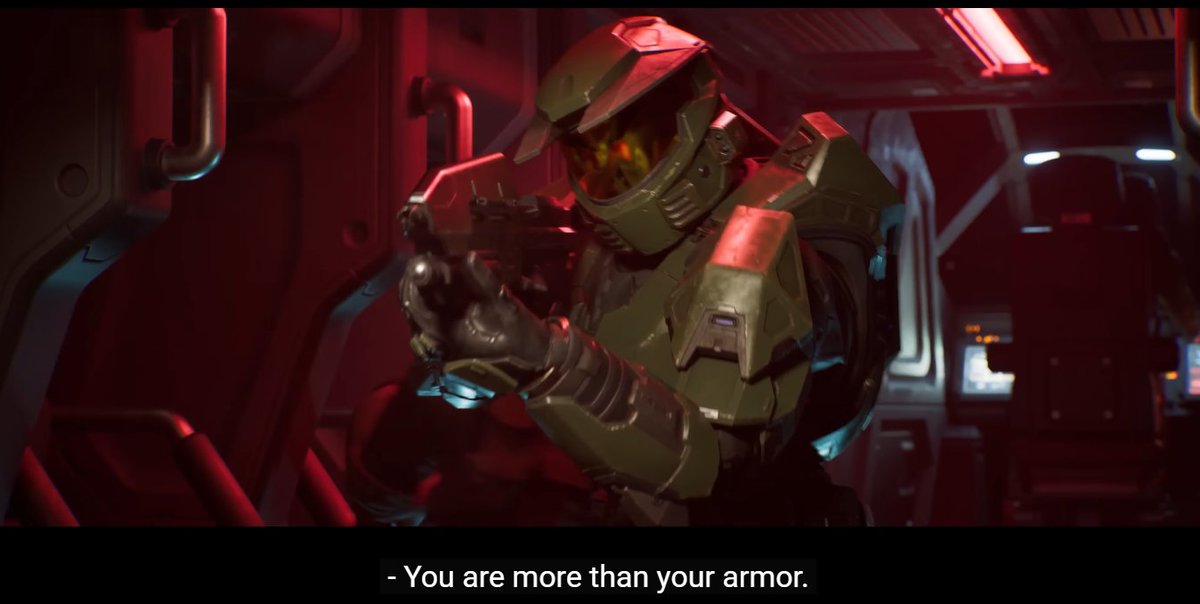
There’s a weird confusion going on with this line. First it is a fact that Chief and his armor are one. Only Spartans can wear it and Chief has always felt that the armor was just right.
Second, he is also more than his armor because of who he is. Not just an augmented human. 🧵

1
16

Nice! I'll try it out. I think one of the unsolved issues of AI-augmented development is how to align AI and how to keep decisions "visible".
1
8

well one can just rebrand an AI augmented human intelligence as superintelligence. does the job. ASI achieved.
8
🌹 Rosie Greene 😷 🇺🇦🙏 retweeted

Grenfell Next Of Kin
Grenfell Tower Fire
9th Anniversary campaign
14:06:26
Posters, Billboards
and Augmented Reality Posters
9 years and still waiting for prosecutions due? Who knows…
With thanks to Ocean
#grenfell
#GrenfellTower


1
57

📅 Day 393
Studied and revised:
✅ Strategy, Factory & Singleton Design Patterns
✅ Observer, Adapter & Decorator Patterns
✅ Tokenization & Embeddings in AI
✅ AI Agents & Agentic Workflows
✅ Retrieval-Augmented Generation (RAG) Basics
✅ Computer Vision Fundamentals
1
17

Sayın @dbdevletbahceli, @RTErdogan, @Mustafa_Destici, @Dogu_Perincek , @kilicdarogluk , @mfatihkacir,
Perplexity ,
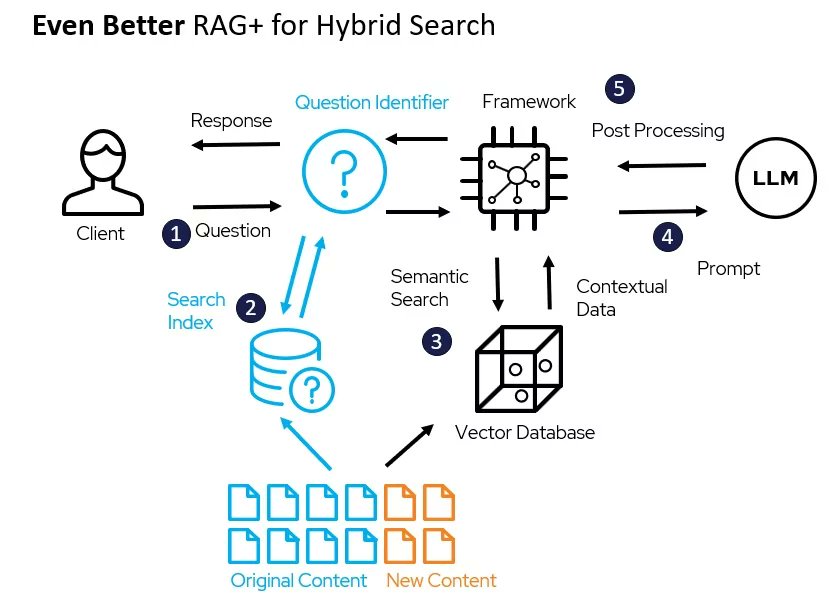
Retrieval-Augmented Generation (RAG) ALGORİTMA-MANTIĞI :
DAĞINIK SİSTEMLERİMİZİ
ORGANİZE EDECEK BİR ÖRNEK
OLABİLİR.
KENDİ RAG YZ ARAMA MOTORUMUZU YAPMALIYIZ ‼️
15

-Latest Gaming PCs & Laptops
-Next-Generation Gaming Consoles
-Premium TVs & Home Theater Systems
-High-Performance Gaming Monitors
-Virtual & Augmented Reality Experiences
-AI-Powered (Grok) Smart Home Technologies
-Humanoid Robotics (Optimus) Demonstrations
1
4

The best off-the-shelf OCR system reads zero line numbers correctly. Zero.
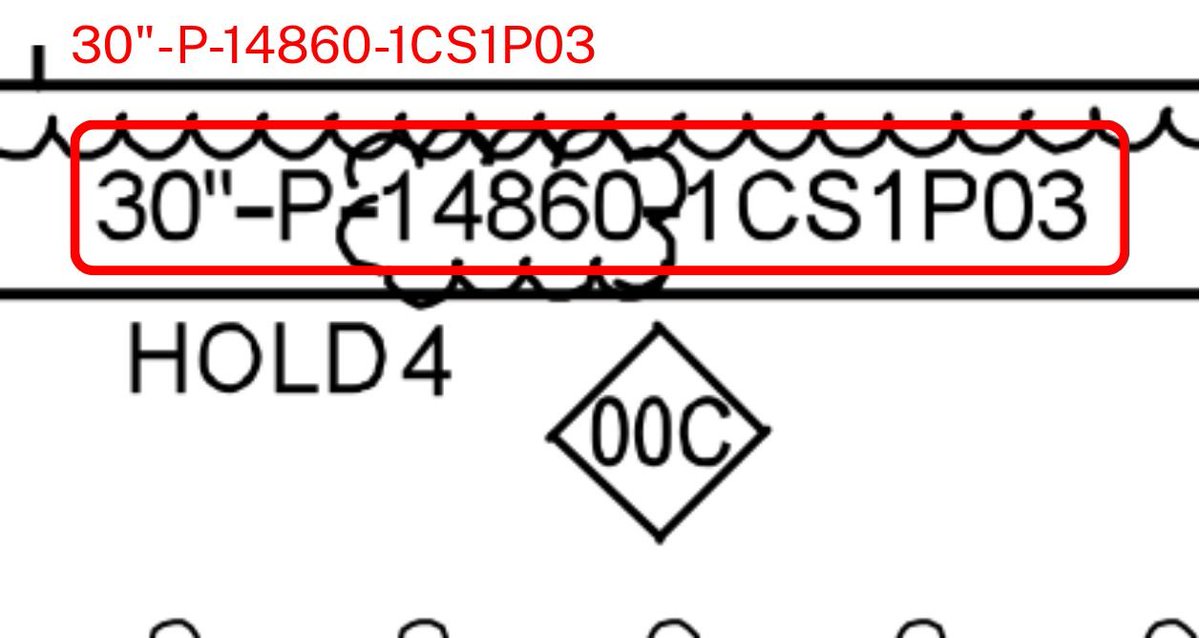
We are digitizing P&ID sheets for a leading international oil and gas client. The dense piping diagrams an engineer traces by hand for a risk assessment. Our pipeline could already find the symbols, instruments, and lines. The last mile was reading the tiny line-number tags printed beside them, like 30"-P-14860-1CS1P03.
That last mile breaks things. Always does. Stock OCR confused 0 with O, 9 with g, 2 with Z. On ordinary text you would never notice. On a pipeline tag, one swapped character points to a different line in a different system, and that feeds a safety calculation.
So Shubham Kumar built a pipeline instead of trusting one model. Split each sheet into overlapping patches so edge tags are not cut off. Process rotated copies to catch vertical tags. EasyOCR finds the text regions. A regex layer checks each read against the format a real tag is allowed to take, so the system stops guessing and starts validating. A vision model handles the hard character calls.
A bake-off ranked the stock options first: LLaVA-Next around 0.41 F1, off-the-shelf TrOCR around 0.71. The version that shipped was trained on line numbers cropped from the sheets themselves, with the hard cases augmented to strengthen the training set. It reached roughly 99% recognition accuracy.
2
47

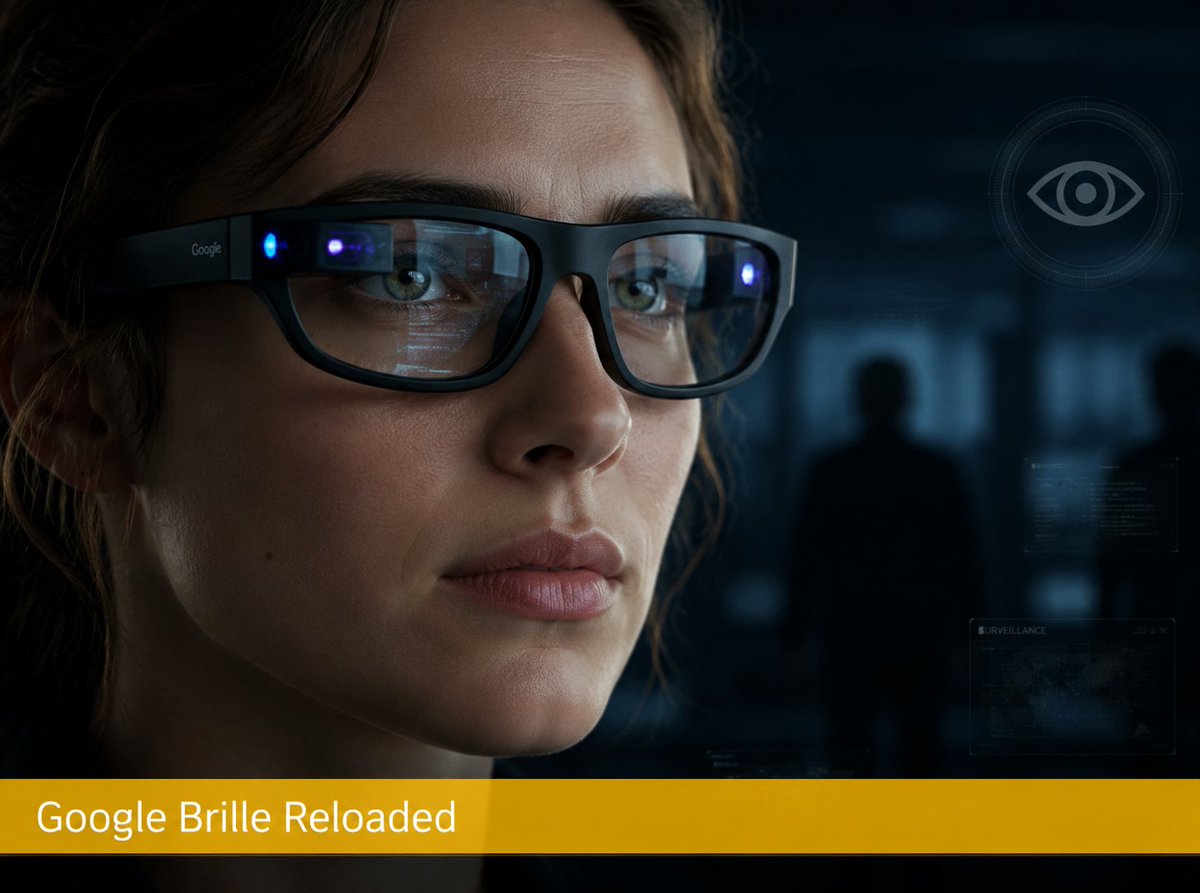
Die glassige Wahrheit: Google verspricht „horizontfreie“ Zukunft – doch jeder Blick wird zur Aktendatei. 📸
Zehn Jahre nach dem Glasshole-Desaster tastet sich Google wieder in unsere Augen – nur mit Nonstop-KI, Gesichtserkennung und Emotions-ibes. Das Versprechen: „Augmented Reality“ ohne Telefon. Die Kehrseite: Permanente US-Cloud-Analyse von allem, was wir sehen – ohne Konsens der Menschen im Bild.
- Zwei Beta-Modelle: Android-XR-Brille Prototyp für Live-KI-Auswertung
- Teil I peak Privacy 2.0, Teil II „Experiment 2013 – Reloaded“, Teils Gesichtszug-Datensammler 2025
Wo liegt die rote Linie, ehe sich unsere intimen Blicke in einer kalifornischen Datenkalke freivillig nackt machen – akzeptieren wir wirklich „Augenpflegetonklippe“ unter dem Deckmantel des Fortschritts?
#AIoversight #Privacy2025 #ARwearables
1
5

The “future of observational trading” likely belongs to hybrids who treat observation as a skill augmented by tools rather than replaced by them. Discretionary traders who evolve into overseers, theorists, or system designers (building agents that enhance their observational loop) can maintain or expand an edge. Pure “watch charts all day manually” will face competition from faster, tireless systems—but those who formalize their observational process into testable, reflexive-aware frameworks can thrive.
2
14

SpaceX reinvests
IT DOES NOT LOSE
It does not pay a dividend -
it's a CAPITAL APPRECIATION COMPANY
the value of the asset increases over time
as in REINVEST IN GROWTH and DEVELOPMENT
GROUND FLOOR
SPCX is more than a Rocket or a Satellite
it's the vehicle advancing humans
into a new way of living ...
You CREATE tommorrow - today
it doesn't just appear from nothing ... it has to be ENGINEERED
@elonmusk and his teams and all who join will be doing that
CREATING WHAT NEEDS TO EXIST in order to REALIZE the Future of being a SPACE faring / autonomously augmented civilization

🔊 'SpaceX is still a loss-making business. It lost $5 billion around 2025. In comparison, Amazon in 2025, they made $80 billion in operating income.' @echowang on the Reuters World News podcast as SpaceX surges past a $2 trillion valuation reut.rs/3QfZq4u

11

Nie znałem takiego Minsky Augmented Goodwin cycle, ale wygląda sensownie :)
6

and working over night has definitely augmented how i see days all over again...
2

you need to put in active effort to appear ambiguously gendered as a human being. i believe that perhaps in the future, in whatever state we are, we will have grown beyond the evils of primitive beliefs like hierarchy, and become genetically augmented superior beings
1
851
Hollie retweeted
Grenfell Next Of Kin
Grenfell Tower Fire
9th Anniversary campaign
14:06:26
Posters, Billboards
and Augmented Reality Posters
9 years and still waiting for prosecutions due? Who knows…
With thanks to Build Holllywoood
#grenfell
#GrenfellTower




1
1
44