
1h
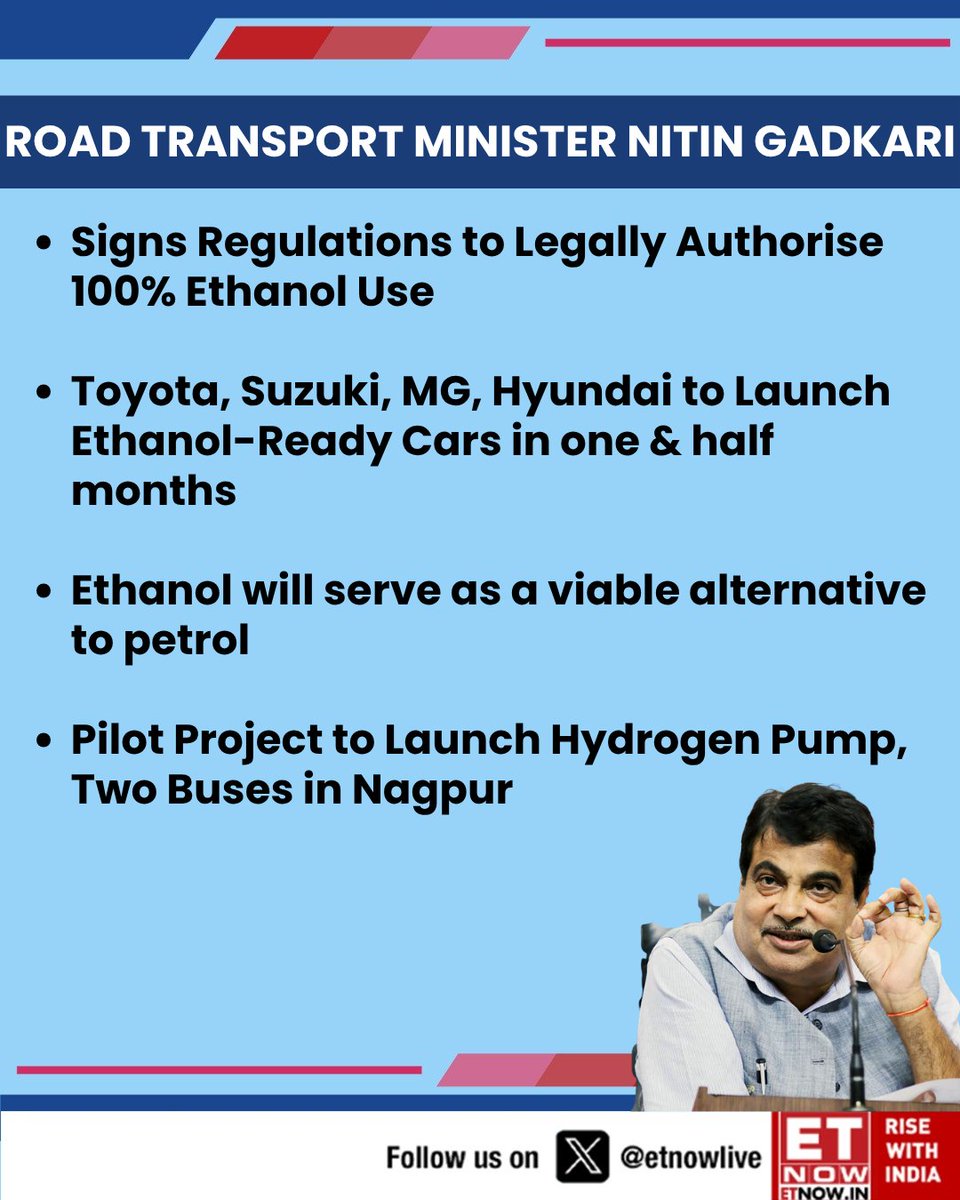
India moves closer to cleaner mobility as Nitin Gadkari authorises 100% ethanol use, with major automakers set to launch ethanol-ready vehicles and a hydrogen mobility pilot planned in Nagpur
#NitinGadkari #Ethanol #GreenMobility #AutoSector #Toyota #Suzuki #MGMotor #Hyundai #Hydrogen
1
2
10
1,320

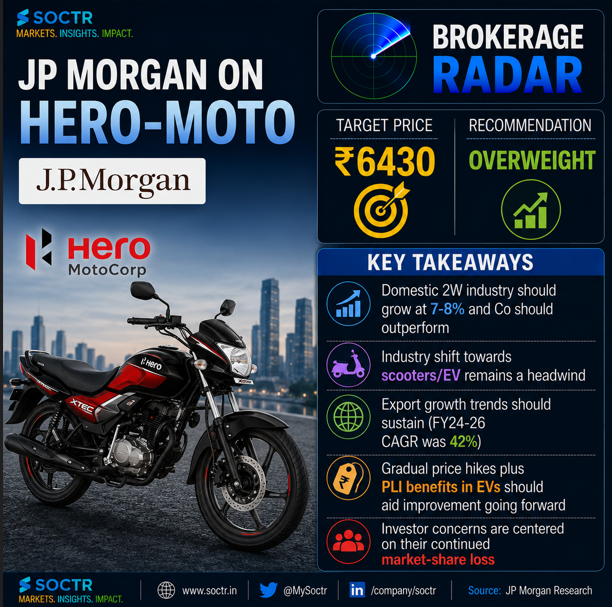
🏍️ JP MORGAN remains bullish on Hero MotoCorp
🎯 Target Price: ₹6,430
📈 Recommendation: OVERWEIGHT
JP Morgan believes Hero MotoCorp's strong export growth, improving profitability and industry tailwinds position it well for long-term growth, despite competitive challenges in EVs and scooters.
#HeroMotoCorp #JPMorgan #BrokerageRadar #StockResearch #TwoWheelers #AutoSector #ElectricVehicles #EV #Exports #IndianStockMarket #StocksToWatch #NSE #BSE #Investing #MarketInsights #MySoctr #SOCTR
90


Ather Energy ₹2,500 Cr Fundraise via QIP & FCCBs — What Investors Missed
Read More: niftytrader.in/markets/ather…
#NiftyTrader #AtherEnergy #EVStocks #ElectricVehicles #StockMarket #IndianStocks #QIP #FCCB #EVIndustry #AutoSector #Investing #CapacityExpansion #MarketAnalysis
95

Jun 13
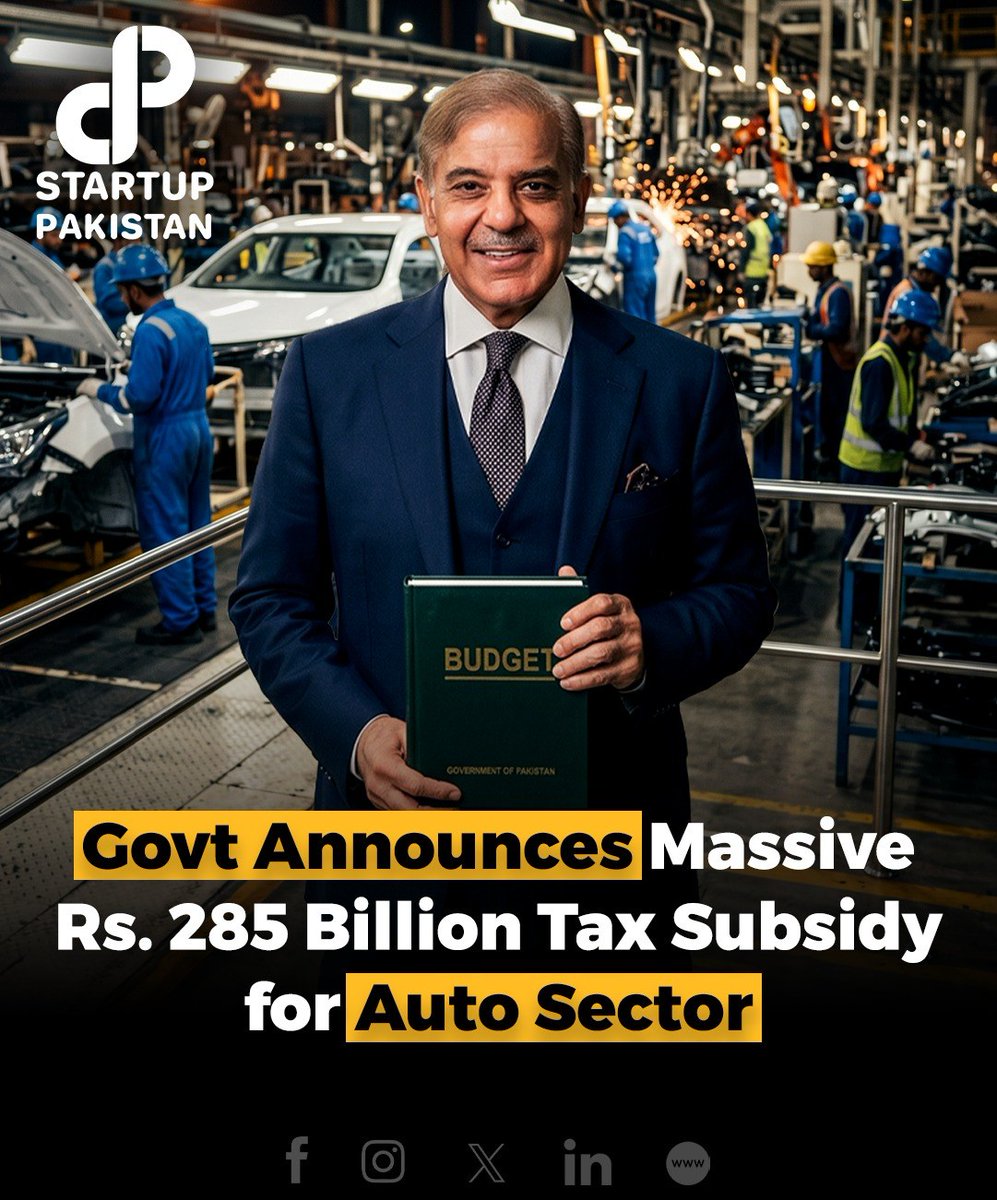
Pakistan Budget 2026–27 introduces major relief for the auto sector through tariff cuts and subsidy support. The government is offering around Rs. 285 billion in total tax and duty relief across different sectors, including automobiles.
In the auto industry, import duties are being rationalised significantly. Reports indicate Customs Duty reduced from 100% to 50% and Regulatory Duty lowered from 50% to 20%, bringing overall tariff relief of nearly 80 percentage points on imported vehicles and parts.
These changes aim to boost local manufacturing, improve affordability, and attract investment. The auto sector is expected to benefit from increased demand, while consumers may see gradual price adjustments in the coming months.
Disclaimer: This post is for informational purposes only and is based on publicly available reports. The image is AI generated and is just for reference.
#PakistanBudget2026 #AutoSector #CustomsDuty #Subsidy #Rs285Billion #CarPrices
4
56
1,486

Jun 13
🚨 CORPORATE ACTION ALERT
🚗 #TataMotors declares a Final Dividend of ₹3.00 per share.
📅 Ex-Date: 19 June 2026
📅 Record Date: 19 June 2026
#TataMotors #Dividend #CorporateAction #AutoSector #StockMarket #Investing

1
59

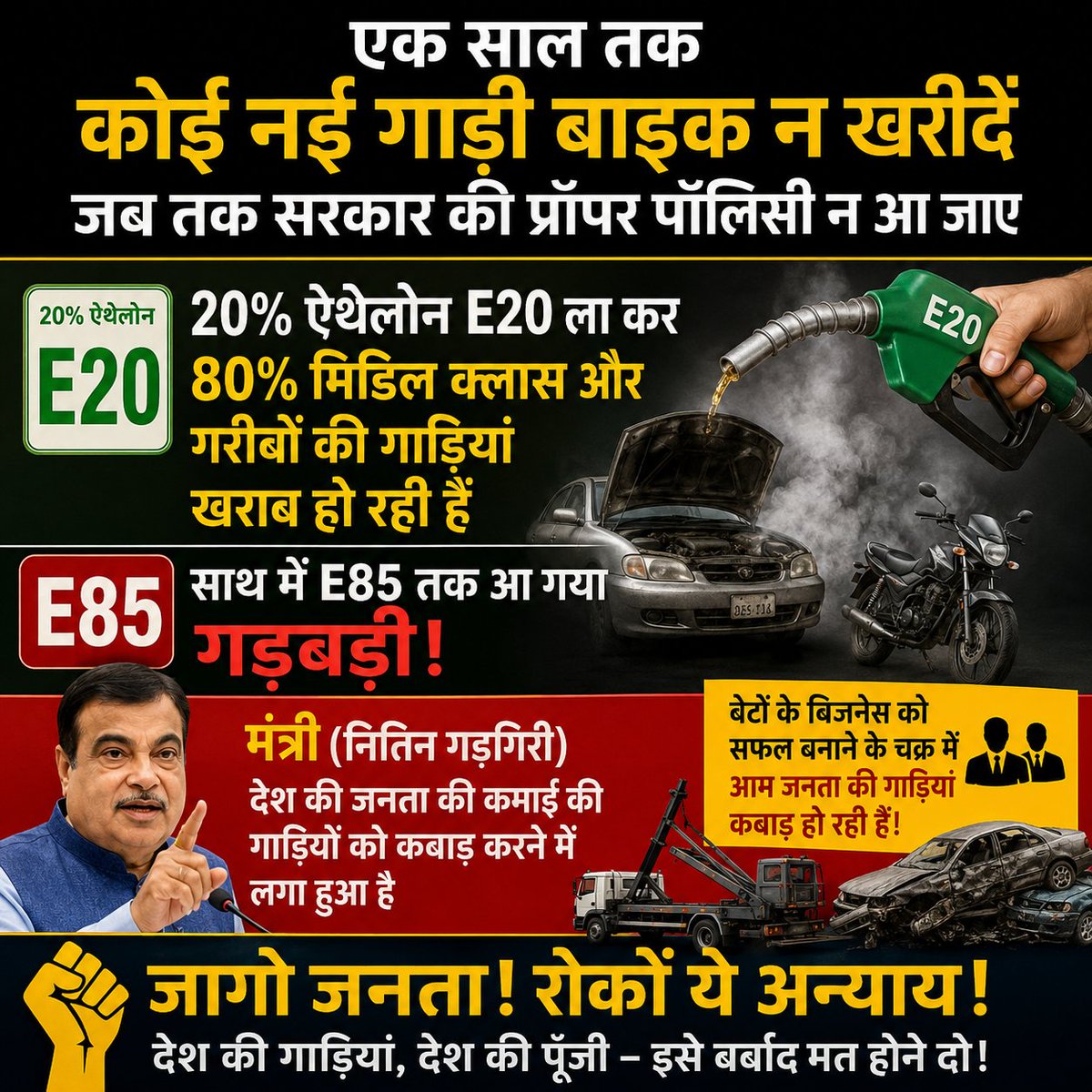
पहले लोगों को लाखों रुपये खर्च करके गाड़ियाँ खरीदने दो, फिर ईंधन के नियम बदल-बदल कर उन्हें यह सोचने पर मजबूर कर दो कि उनकी गाड़ी भविष्य में चलेगी भी या नहीं।
E20 आया, E85 आ गया, कल शायद कुछ और आ जाए...
मिडिल क्लास EMI भरे, मेंटेनेंस भरे, महंगा ईंधन भरे और ऊपर से यह चिंता भी करे कि उसकी मेहनत की कमाई से खरीदी गई गाड़ी की कीमत कब आधी हो जाए।
इसलिए मेरा सुझाव: एक साल तक नई गाड़ी या बाइक खरीदने से पहले पूरी नीति साफ होने का इंतजार करें।
जनता कोई प्रयोगशाला का चूहा नहीं है। नीतियाँ ऐसी हों जिनसे जनता का भरोसा बढ़े, भ्रम नहीं।
अपनी राय बताइए— क्या आपको लगता है कि ईंधन नीति में और स्पष्टता आनी चाहिए?
#E20 #E85 #FuelPolicy #AutoSector #MiddleClass CarOwners BikeOwners IndianAutomobile VehicleOwners PublicAwareness JagoJanata Trending ViralPost India AutomobileNews TaxPayers CommonMan SaveConsumers ViralHindi ShareNow
4
26
39
4,628

Jun 12
گاڑی مالکان ہوشیار!
حکومت نے تاریخی ٹیکس بم گرادیا!
#ExpressNews #BreakingNews #LatestNews #Budget2026_27 #CarOwners #VehicleTax #TaxBomb #PakistanBudget #BreakingNews #AutoSector #NewTaxes #NonFilers #EconomicUpdate #PakistanNews #FinanceBill #TaxPolicy #GovtDecision #TrendingNews
9
4,471

Jun 12
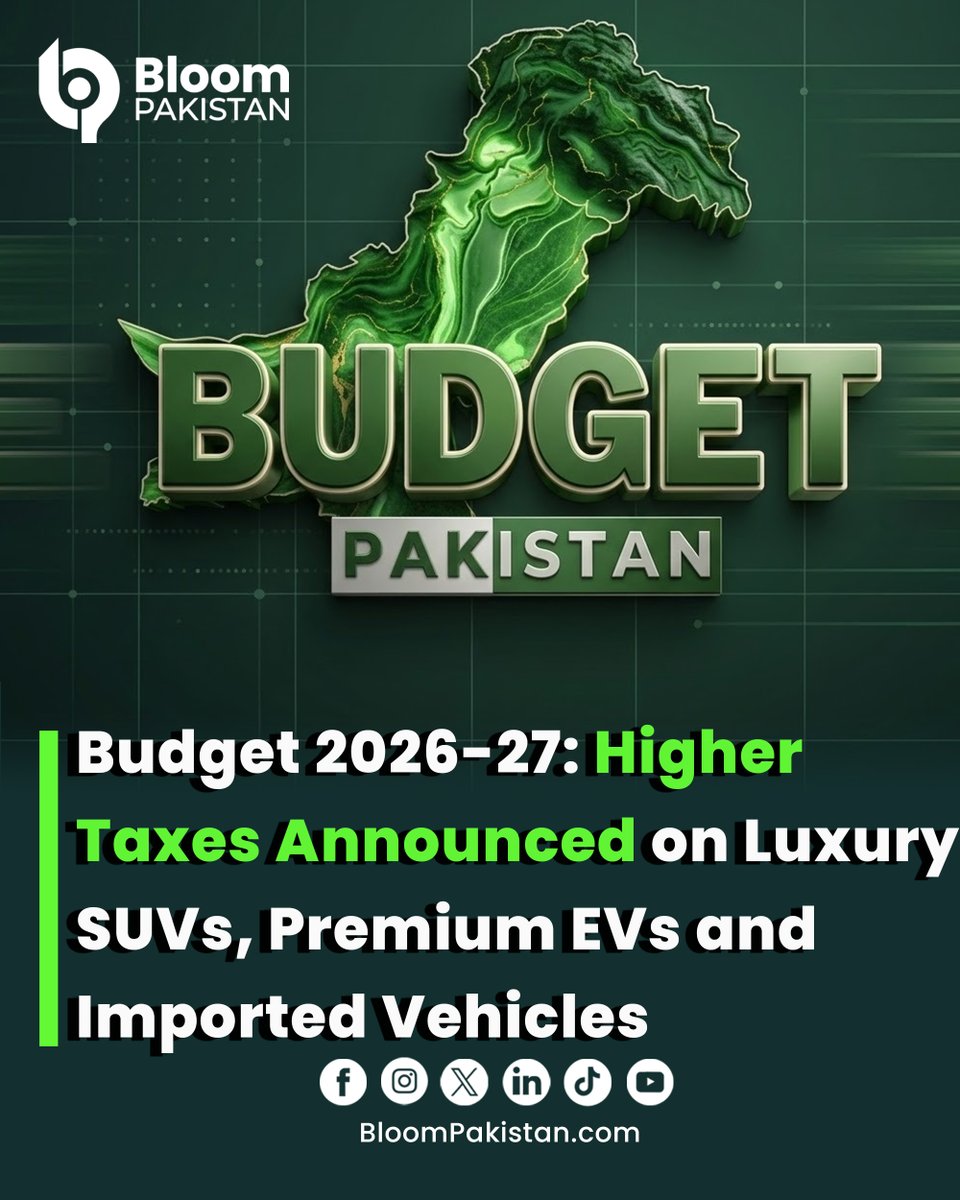
The federal government has unveiled a major tax overhaul for the automobile sector in the Budget 2026-27, imposing higher duties on imported luxury vehicles, large-engine SUVs, and premium electric vehicles (EVs) as part of efforts to increase revenue, reduce non-essential imports, and ease pressure on the country’s foreign exchange reserves.
Presenting the budget in the National Assembly, Finance Minister Muhammad Aurangzeb announced a series of fiscal measures targeting high-end automobile imports, a move expected to significantly increase the cost of luxury vehicles in Pakistan.
Under the new taxation framework, imported SUVs with engine capacities between 2,000cc and 3,000cc will face higher duties, while vehicles exceeding 3,000cc will be subject to even steeper taxation.
The government says the measures are designed to discourage the import of expensive vehicles and promote a more balanced use of foreign exchange resources.
Premium Electric Vehicles Brought Into Tax Net
In a significant policy shift, the government has also introduced taxes on luxury electric vehicles valued above Rs20 million. The move marks a departure from previous incentives aimed at encouraging EV adoption and signals a focus on taxing high-end consumption regardless of vehicle type.
The new tax regime is expected to affect premium international EV brands and wealthy consumers who import luxury electric cars, while lower-priced EVs remain central to Pakistan’s broader clean-energy and transport objectives.
Industry observers believe the decision reflects the government’s attempt to strike a balance between promoting green mobility and ensuring affluent consumers contribute a larger share of tax revenues.
#PakistanBudget #Budget2026 #AutoSector #AutomobileIndustry #LuxuryCars #SUVs
1
1
255

Jun 12
‘मेक इन इंडिया’ मुळे मागच्या दशकभारत ऑटोमोबाईल उद्योगाला नेमका काय फायदा झाला? सविस्तरपणे जाणून घ्या
#MakeInIndia #AutomobileIndustry #AutoSector #IndianEconomy #ManufacturingIndia
navarashtra.com/automobile/1…
5

Jun 12
Pakistan Auto Sector: "Indus Motor Company (#INDU) performance remained subdued, posting a notable decline of 19% MoM in May’26 with total sales of 3,496 units.
On YoY basis company reported a marginal 28% decline in May’26 but on cumulative basis 11MFY26 company managed to sustain growth of 38%, bringing cumulative sales to 41,139 units."
Source: @alhabibcapital
#PSX #Pakistán #AutoSector

3
11
471

Jun 12
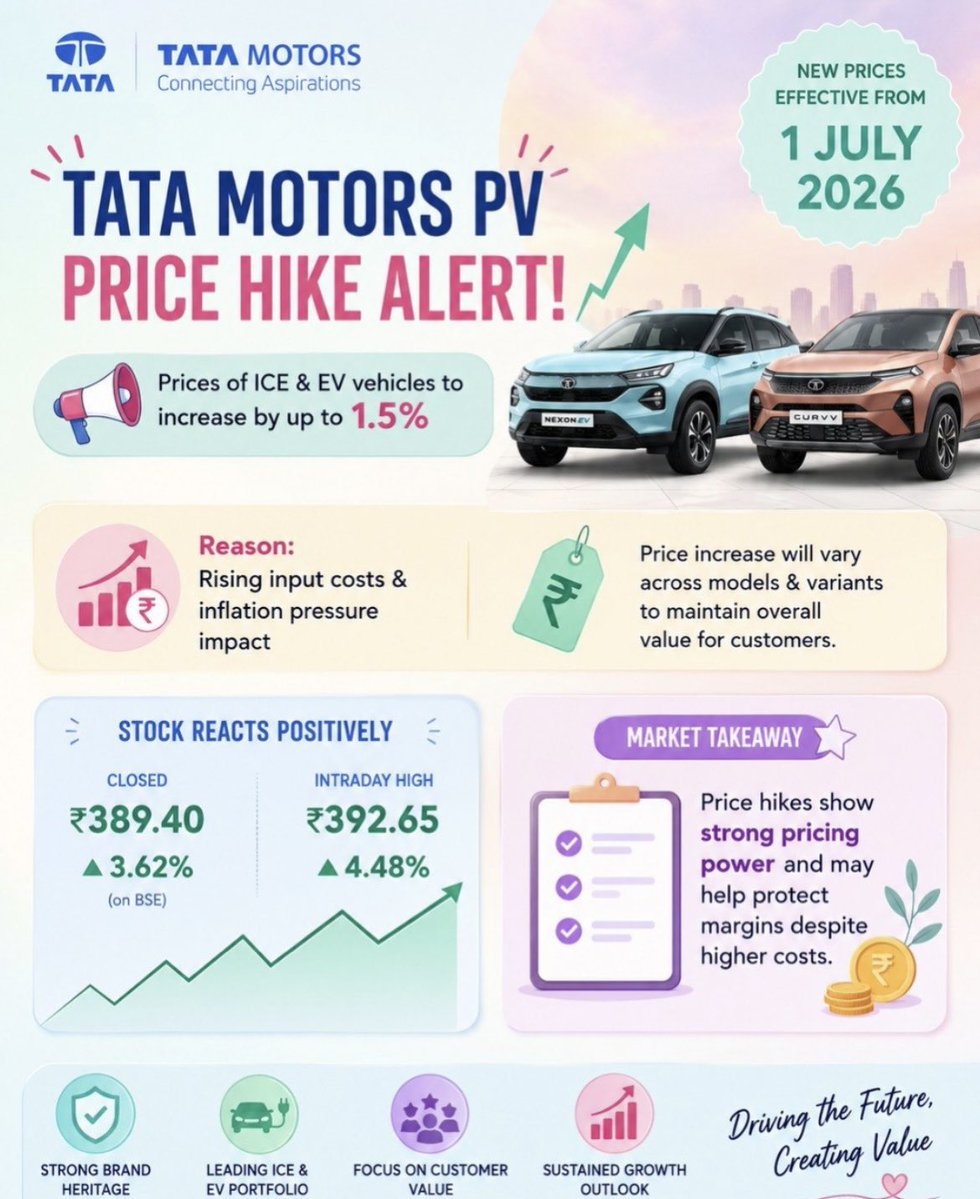
🚗 TATA MOTORS PV PRICE HIKE ALERT! 📈
🔹 Tata Motors PV to increase prices of ICE & EV vehicles by up to 1.5%
🔹 New prices effective from 1 July 2026
🔹 Reason: Rising input costs & inflation pressure
🔹 Stock reacted positively, closing 3.62% at ₹389.40
🔹 Intraday high touched ₹392.65 ( 4.48%)
📊 Market Takeaway:
Price hikes indicate strong pricing power and may help protect margins despite higher costs.
#TataMotors #AutoSector #EV #StockMarket #IndianMarkets #AutoStocks #Investing #ShareMarket 🚘📈
102

Jun 12
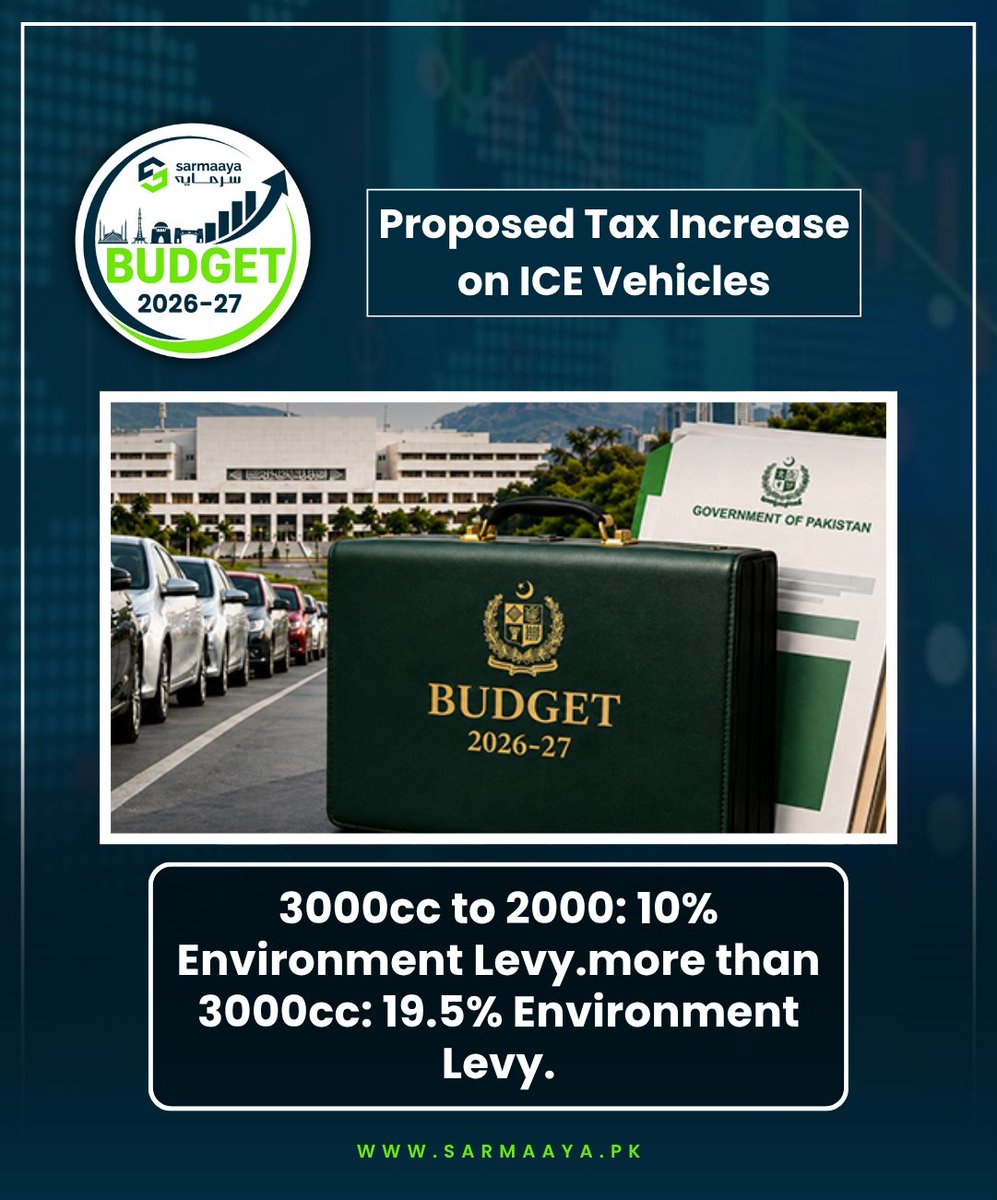
Proposed Tax Increase on ICE Vehicles: Up to 19.5% Environment Levy.
The government has proposed new Environmental Levies on high-engine capacity Internal Combustion Engine (ICE) vehicles for the upcoming fiscal year to promote greener transport alternatives and generate federal revenue.
1. 2000cc to 3000cc Vehicles: 10% Environment Levy
2. Above 3000cc Vehicles: 19.5% Environment Levy
The national exchequer expects to collect PKR 26 billion through these newly introduced environmental levies. This policy shift is anticipated to increase ownership costs for luxury SUVs and high-end sedans, impacting volumetric sales for local automotive assemblers dealing in these segments.
Track the real-time sector analysis and automotive market impact on our live blog:
sarmaaya.pk/learn/article/bu…
#PakistanBudget #Budget2026 #SarmaayaFinancials #AutoSector #EnvironmentLevy #ICEVehicles #PSX #BudgetForPakistan
1
473
Jun 12
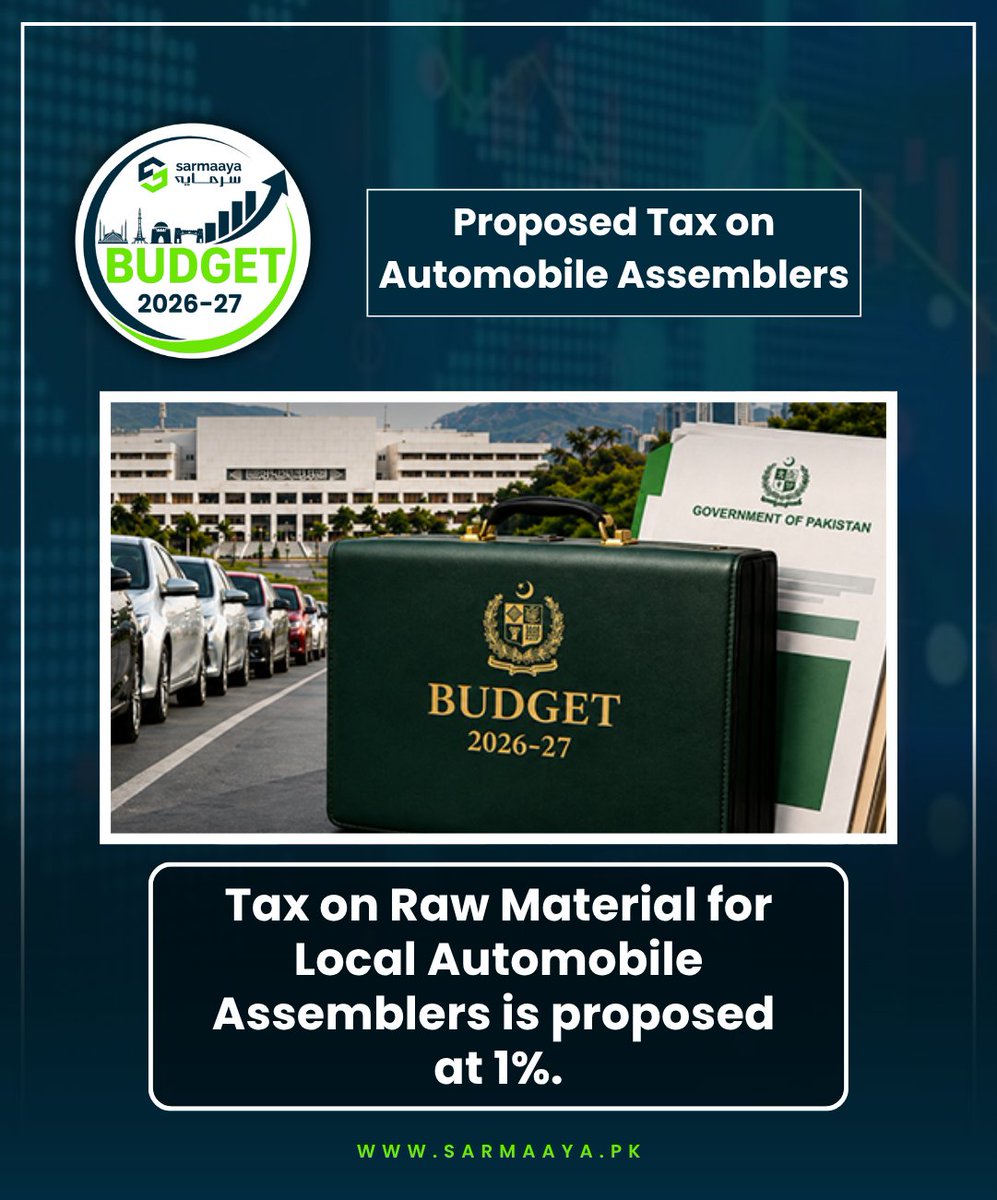
Tax on Raw Material for Local Automobile Assemblers: Proposed at 1%.
The government has proposed a concessional tax rate of 1 percent on raw materials imported or procured by local automobile assemblers for the upcoming fiscal year. This strategic adjustment aims to provide direct relief to the domestic automotive manufacturing sector, keeping localized production costs manageable.
Combined with the proposed reduction in import duties for assembly parts, this measure serves as a vital cushion for auto manufacturers to maintain price stability amidst newly introduced environmental levies and sales tax updates.
Track the real-time auto sector analysis and corporate market impact on our live blog:
sarmaaya.pk/learn/article/bu…
#PakistanBudget #Budget2026 #SarmaayaFinancials #AutoSector #TaxRelief #RawMaterial #PSX #BudgetForPakistan
302
Jun 12
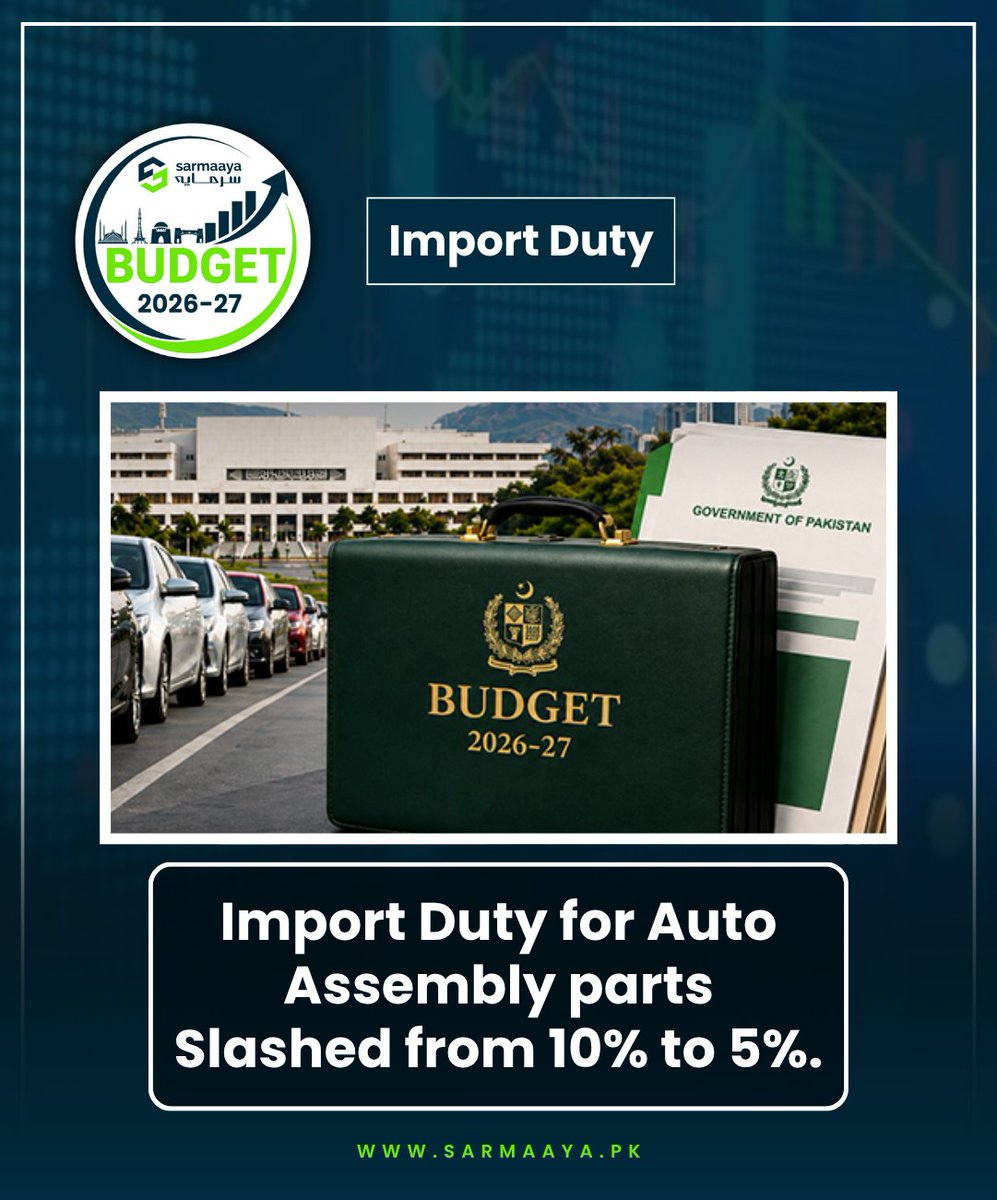
Import Duty on Auto Assembly Parts: Slashed from 10% to 5%.
The government has proposed to cut the import duty on completely knocked-down (CKD) kits and automotive assembly parts by half, reducing it from 10 percent to 5 percent for the upcoming fiscal year. This measure is designed to reduce the cost of production for local automotive assemblers, offering a significant cushions against rising raw material costs and recent currency fluctuations.
This development serves as a major positive catalyst for the automotive sector listed on the PSX, as the duty reduction is expected to partially offset the higher prices resulting from newly proposed sales taxes and environmental levies on finished vehicles.
Track the real-time auto sector analysis and corporate market impact on our live blog:
sarmaaya.pk/learn/article/bu…
#PakistanBudget #Budget2026 #SarmaayaFinancials #AutoSector #ImportDuty #CKD #PSX #BudgetForPakistan
1
335
Jun 12
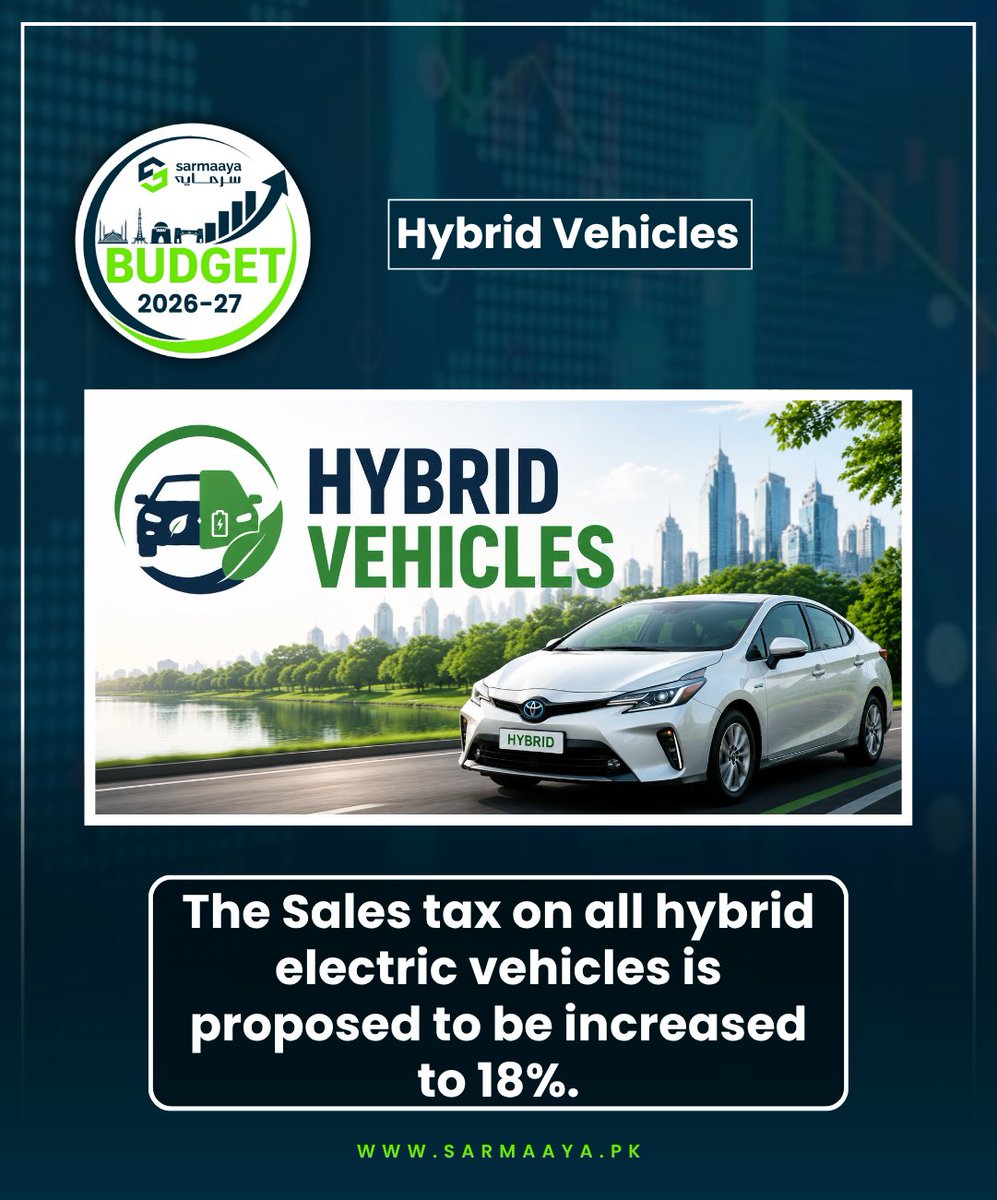
Hybrid Electric Vehicles Tax Update: Sales Tax Increased to 18%.
The government has proposed a standard sales tax rate of 18 percent on all hybrid electric vehicles (HEVs) for the upcoming fiscal year. This measure removes previous tax concessions enjoyed by locally assembled and imported hybrid vehicles, aligning them with standard internal combustion engine taxation.
This policy shift is expected to significantly drive up the retail prices of popular hybrid models, potentially impacting volumetric sales for major automotive manufacturers listed on the PSX who have recently pivoted toward hybrid technology.
Track the real-time auto sector analysis and market impact on our live blog:
sarmaaya.pk/learn/article/bu…
#PakistanBudget #Budget2026 #SarmaayaFinancials #AutoSector #HybridVehicles #HEV #TaxUpdates #PSX #BudgetForPakistan
3
12
2,420

Jun 12
Will Your Next Car Cost More? Auto Price Hikes Back In Focus
#TataMotors #AutoSector #CarPrices #AutoStocks #MarutiSuzuki #PassengerVehicles #AutomobileIndustry #Inflation #StockMarket #BusinessToday
328

Jun 12
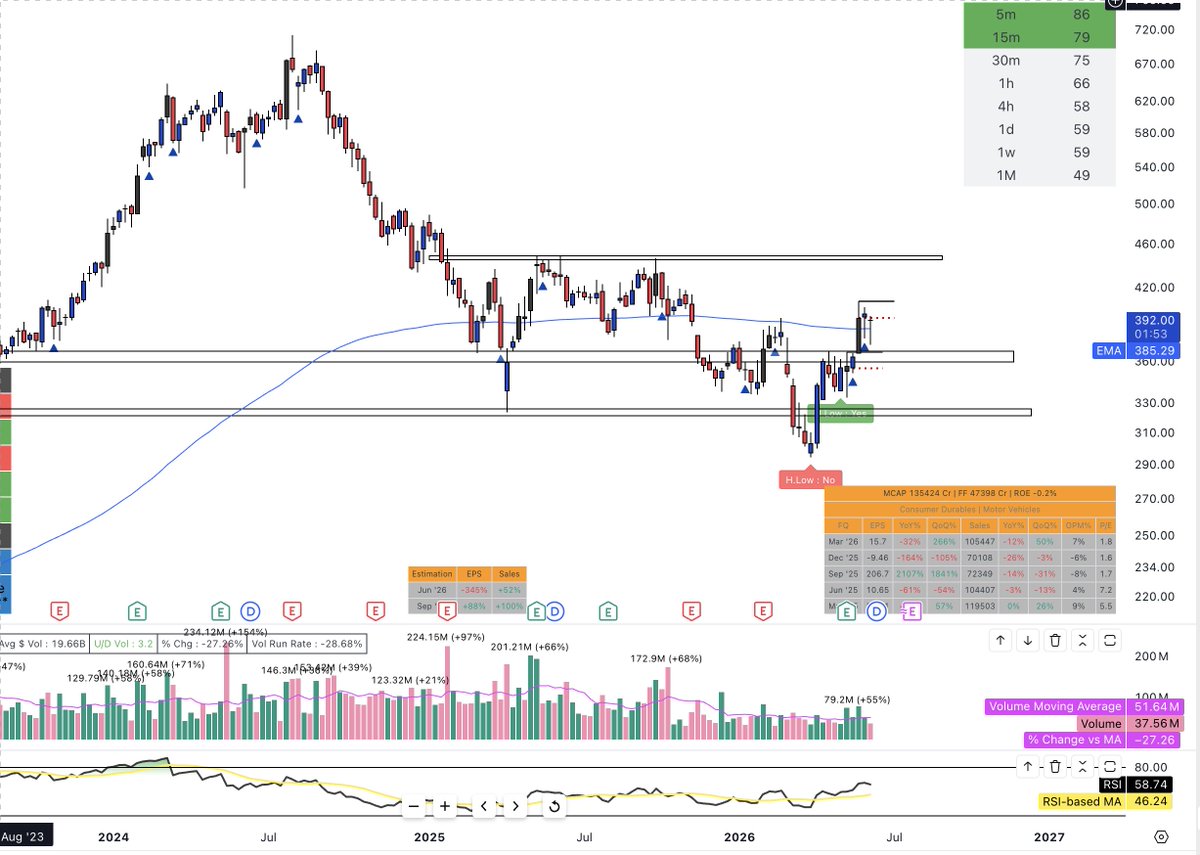
TMPV - My pick for rest june and july
#tatamotors #tmpv #ev #passendger #auto #autosector #chartsdontlie
381

Jun 12
India has scrapped the license requirement for radar sensors to encourage automakers to adopt crash-avoidance and self-driving technologies, aiming to improve safety on its roads.
#SelfDrivingCars #MarutiSuzuki #TataMotors #Mahindra #AutoSector
mybs.in/2g6ueAC
2
6
719

Jun 12
Brokerage Report | ઓટો અને ઓટો એન્સિલરી સેક્ટર પર જેફરીઝનો રિપોર્ટ | Auto Sector | Auto Ancillary Stocks | Share Market Updates | Business News
@KapuriaTrupti
#Jefferies #AutoSector #AutoAncillary #BrokerageReport #ShareMarket #CNBCBajar #StockMarketIndia
92