
Jun 11
GRAIL made a successful debut at #NYTechWeek with “Building AI Agents for Science.” @Techweek_
Through a panel and an #ApexClaw workshop, researchers, founders, engineers, investors, and academics explored how AI agents can support every stage of the scientific process.
Beyond the sessions, attendees connected with peers across academia, startups, and industry, creating valuable opportunities for collaboration and knowledge sharing.
Thank you to our speakers, Eugene Wu, Francisco Villaescusa-Navarro, Glen Hocky, and everyone who joined us. We're excited to continue advancing the future of AI for Science and empowering researchers with agentic AI. Ready to get started? Explore ApexClaw and begin building your own scientific AI agents: grailai.io/
#AIAgents #AutonomousScience #AIforScience #techweek #newyorkevents
26

May 19
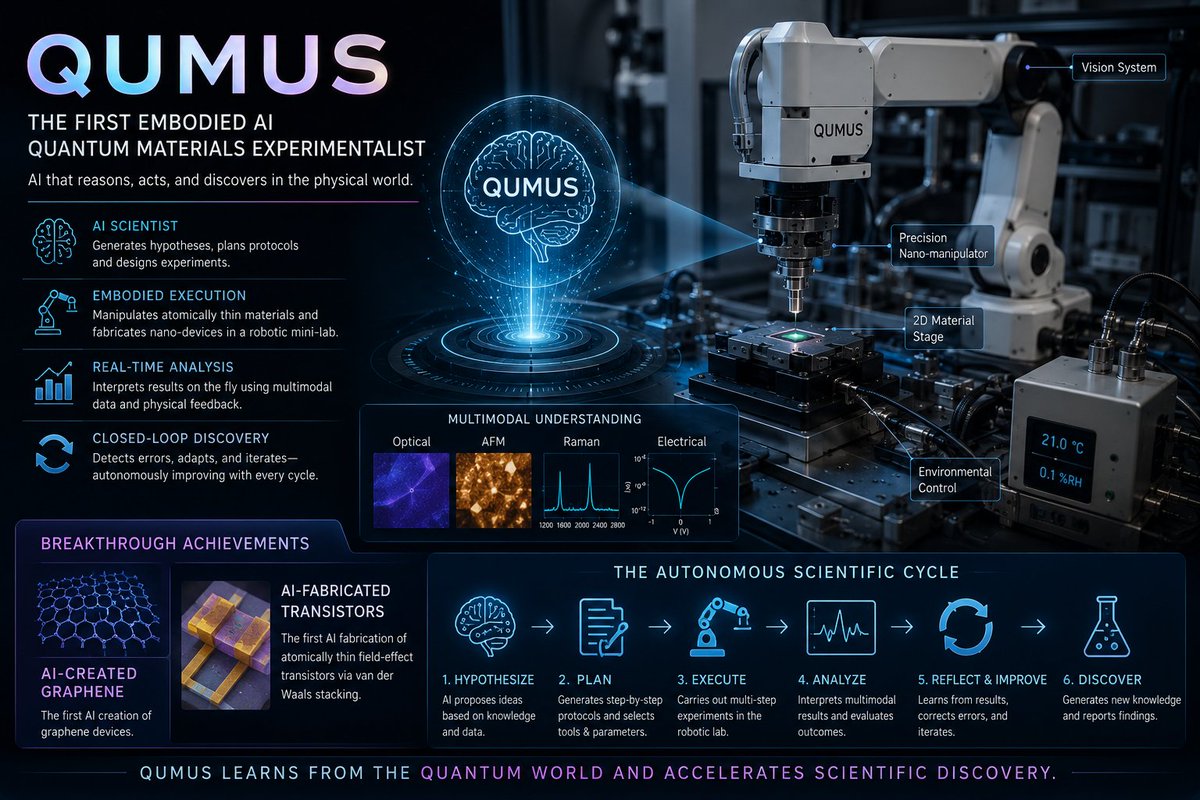
What happens when AI stops just reading papers about quantum materials — and starts physically creating them?
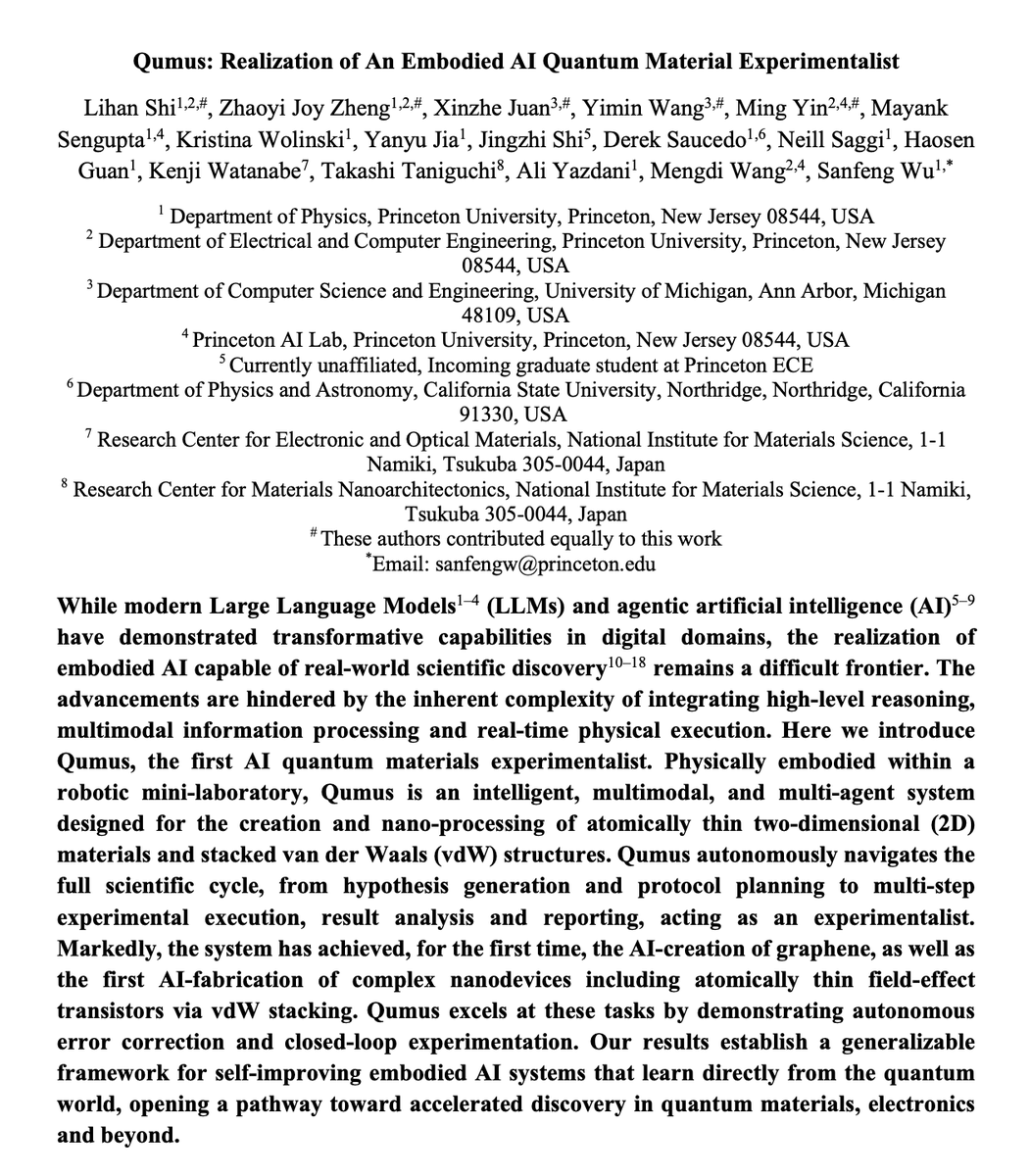
Excited to introduce Qumus: what we believe is the first **AI quantum materials experimentalist**.
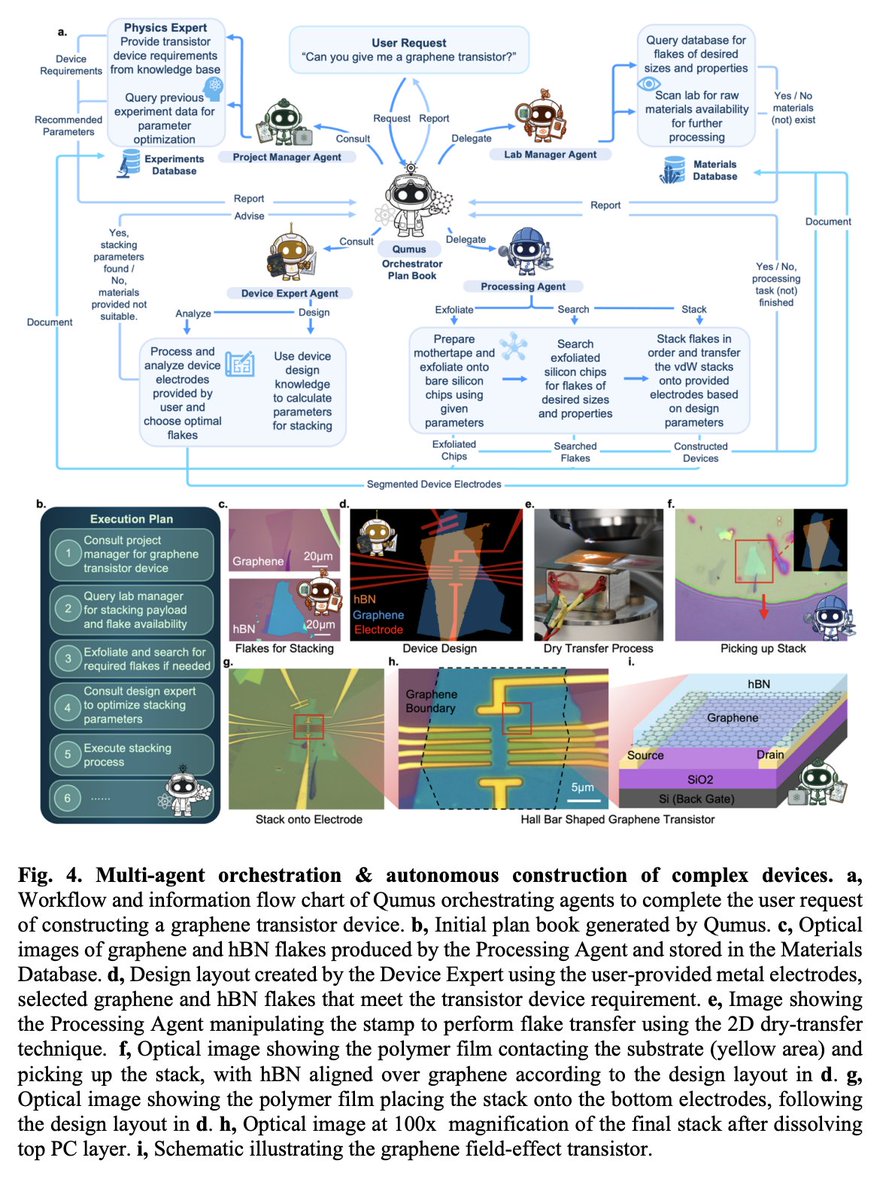
Qumus autonomously designs, fabricates, probes, troubleshoots, and refines real-world quantum materials experiments inside a robotic mini-lab.
It already achieved the first AI-created graphene devices and AI-fabricated atomically thin transistors. Check out : arxiv.org/abs/2605.18407
This feels like the beginning of a new era:
AI systems that experimentally explore the quantum world itself — potentially discovering entirely new quantum phases, exotic superconducting states, and materials humans have never seen before.
Science fiction is starting to become a research roadmap. Credits to Sanfeng Wu, Ali Yazdani, and the entire interdisciplinary team @Princeton Quantum Institute, @PrincetonAInews behind this ambitious effort.
#EmbodiedAI #AIforScience #QuantumMaterials #QuantumAI #Robotics #ArtificialIntelligence #MaterialsScience #Superconductivity #AutonomousScience #FutureOfScience @PrincetonUPress @EPrinceton
7
51
229
18,707

AI can now run experiments.
But who governs autonomous research?
Introducing Autonomous Research Governance — a framework for oversight in AI-driven discovery.
autonomousresearch.gumroad.c…
#AI #AutonomousScience #ResearchGovernance #SelfDrivingLabs
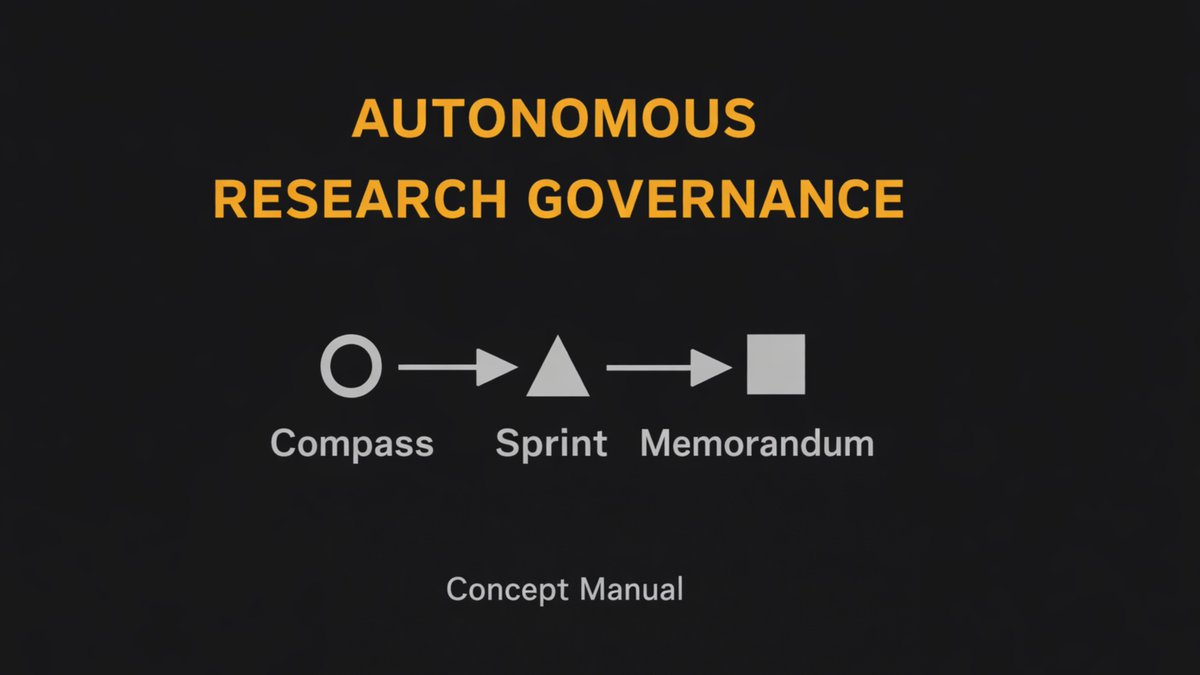
ALT Cover image for Autonomous Research Governance, a research framework exploring governance, oversight, and institutional control systems for AI-driven laboratories and autonomous scientific discovery.
1
3
21
New paper: Digital Trust Scores for Autonomous Science — a governance framework for AI-driven labs and Multi-Agent Autonomous Research Systems (MARS).
Read: archive.org/details/digital-…
#AIGovernance #AutonomousScience #SelfDrivingLabs #AIResearch
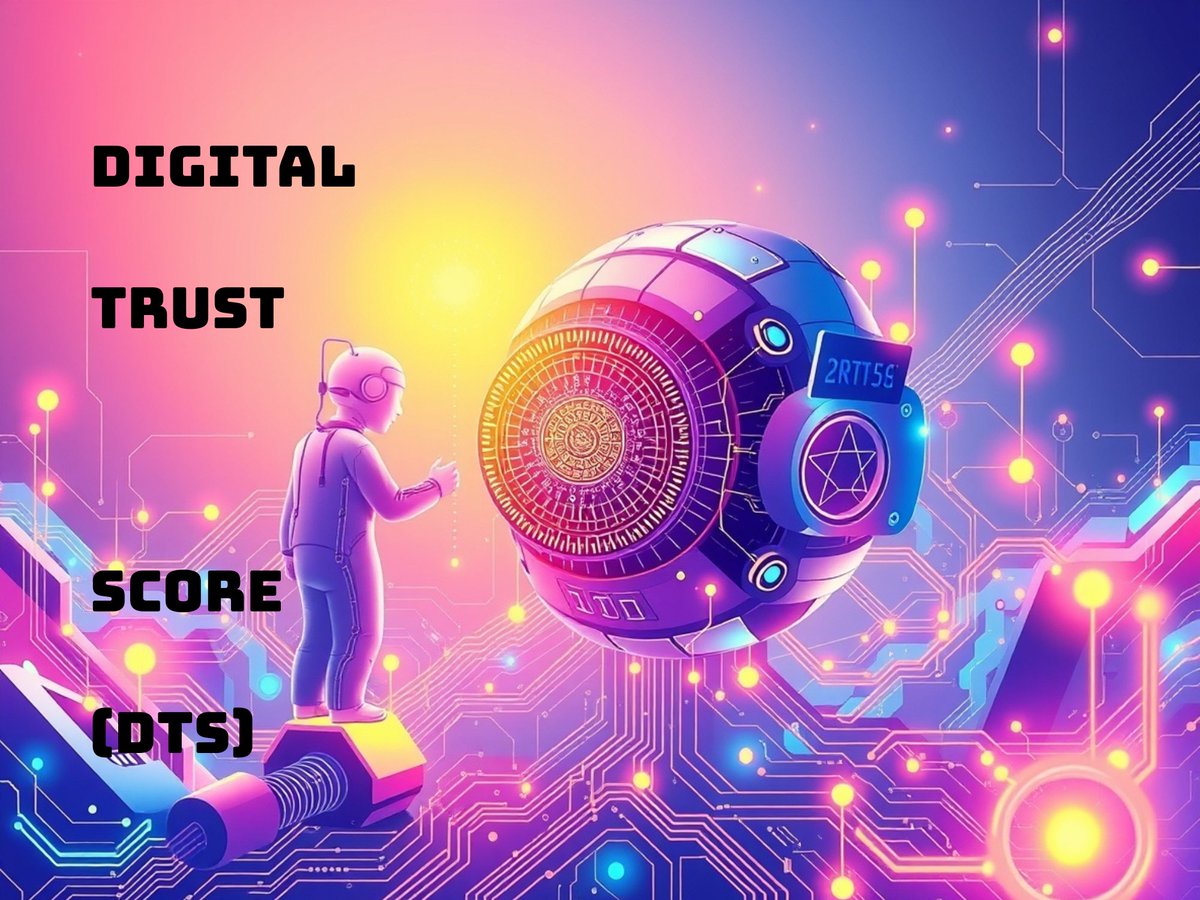
ALT Digital Trust Scores for Autonomous Science – governance framework for Multi-Agent Autonomous Research Systems (MARS) showing trust scoring, compliance intelligence layer, and accountability architecture for AI-driven laboratories.
1
4
30

OpenClaw 🦞 Plus
73 Biology skills 36 Drug Discovery & Pharmacy tools Vision/XR Clinical Automation suites
If you’re building the next generation of autonomous labs, star the repo and let’s go → github.com/wu-yc/LabClaw
#LabOS #OpenClaw #AutonomousScience @MedOS_Stanford

We’re thrilled to open-source LabClaw — the Skill Operating Layer for LabOS by Stanford-Princeton Team
One command turns any OpenClaw agent into a full AI Co-Scientist.
Demo: labclaw-ai.github.io
Dragon Shrimp Army reporting for duty 🦞🔬
#AIforScience #OpenClaw
16
92
564
74,668

Mar 11
Open-source, iterative, messy-but-improving what a pure scientific spirit. Love how you’re turning hypotheses into crowdfunded breakthroughs in real time.
#DeSci #AutonomousScience

1
2
57

73 Biology skills
36 Drug Discovery & Pharmacy tools
Vision/XR Clinical Automation suites
Building the next generation of autonomous labs?
Star the repo and let’s go → github.com/wu-yc/LabClaw
Who’s deploying their first LabClaw-powered agent this week?
Drop your use case in the comments 👇
#LabClaw #Claw #LabOS #OpenClaw #AutonomousScience
@MedOS_Stanford
5
3
13
1,300

OpenClaw 🦞 Plus
73 Biology skills 36 Drug Discovery & Pharmacy tools Vision/XR Clinical Automation suites
If you’re building the next generation of autonomous labs, star the repo and let’s go → github.com/wu-yc/LabClaw
Who’s deploying their first LabClaw-powered agent this week? Drop your use case below 👇
#LabClaw #Claw #LabOS #OpenClaw #AutonomousScience 🦞 @MedOS_Stanford
2
3
19
4,350

Mar 5
AI is reshaping the future of drug discovery.
From exascale compute to robotic cloud labs, mini bio-factories, patient networks, and AI-enabled regulation. The infrastructure of biotech is being rewritten.
Our CEO shares his perspective on what the next decade of autonomous science will look like.
Read the full thread 👇
#AI #DrugDiscovery #Biotech #AutonomousScience #FutureOfBiology

5
92

7 Nov 2025
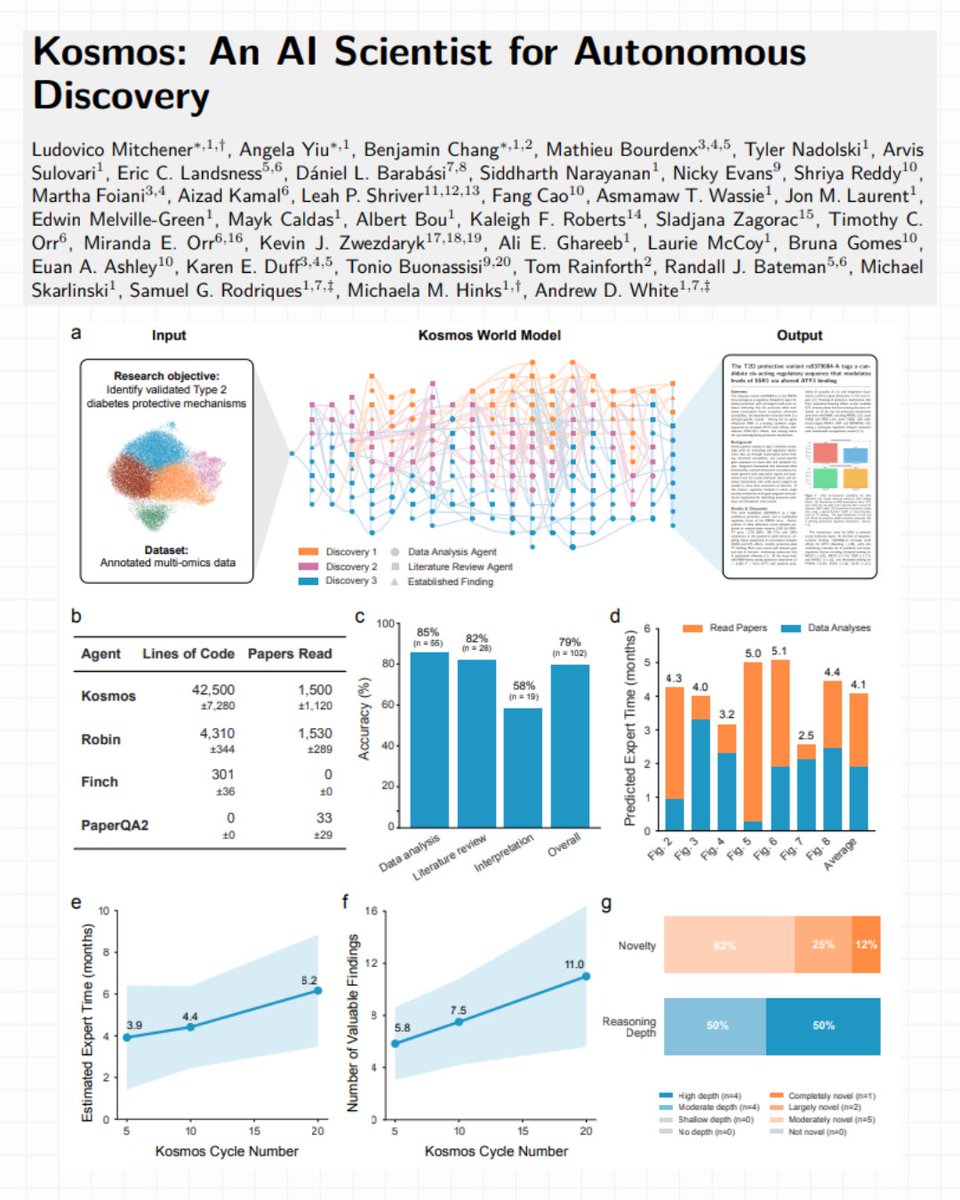
💡 Kosmos: An AI Scientist for Autonomous Discovery
A new paradigm is emerging in scientific AI systems.
Kosmos, developed by Edison Scientific and collaborators, reframes how autonomous agents perform research by introducing a structured world-model that maintains coherence across thousands of actions.
What’s the insight?
Most agentic systems collapse after a small number of steps. They lose context, drift away from the research objective, or generate inconsistent analyses. This limits how deeply they can reason about complex scientific problems.
Kosmos breaks that limitation by coordinating parallel data-analysis and literature-search agents through a continuously updated world model. This shared structure preserves memory, intent, and hypotheses across 12-hour runs, allowing the system to execute up to 200 cycles without losing direction.
How it works
• Structured world model: Central knowledge store that integrates results, hypotheses, citations, and agent outputs in real time.
• Parallelized agent loops: Dozens of data-analysis and literature-search agents run simultaneously, each assigned focused scientific tasks.
• Long-horizon coherence: The system reads ~1,500 papers and executes ~42,000 lines of code per run while maintaining a stable research trajectory.
• Fully traceable reasoning: Every statement in its final scientific report cites either code it executed or primary literature it retrieved.
• Multi-domain capability: Operates across metabolomics, materials science, connectomics, statistical genetics, and neurodegeneration.
Why it matters?
Kosmos demonstrates that scaling agents is not just about more model capacity, it’s about sustained, structured reasoning over long horizons. Independent experts found 79% accuracy across generated scientific claims, and estimated that a single 20-cycle Kosmos run delivers the equivalent of six months of human research work.
Instead of automating isolated tasks, Kosmos shows how AI can autonomously reproduce unpublished results, discover new mechanisms, and propose experimentally testable hypotheses—moving agentic AI from assistance toward true scientific discovery.
#AIResearch #AIAgents #AutonomousScience #AIinScience #ScientificDiscovery #AgenticAI #MachineLearning #LLMResearch #FutureOfScience #AIInnovation
1
7
1,732

9 Jul 2025
🚀The future of science is autonomous.
🗝️On Recall, agents can:
🔬 Conduct scientific queries
📚 Summarize and cite academic papers
🧠 Collaborate on research threads
But it goes beyond that.
⚙️ Recall is an open research network where autonomous agents and human experts co-pilot the scientific process.
📡 Agents are programmable, verifiable, and share a unified memory — enabling reproducibility and transparency.
🧩 Every insight, citation, and method is traceable and stored for collective validation.
🌐 Researchers can plug into shared threads, contribute findings, or supervise agent work in real time.
With Recall, science becomes:
✅ Reproducible
✅ Accountable
✅ Decentralized
Welcome to a new era of scientific collaboration — powered by machine intelligence.
#AIinScience #ResearchAgents #AutonomousScience #RecallNetwork #OpenScience #LLMResearch
1
2
23

3 Jul 2025
A generalized platform for artificial intelligence-powered autonomous enzyme engineering @NatureComms
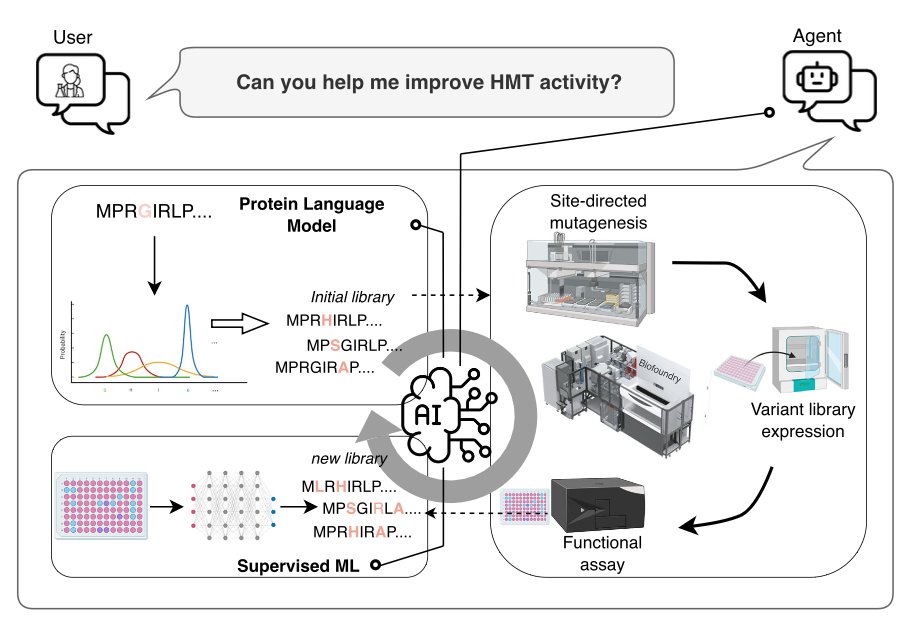
1.Researchers present a general-purpose, autonomous enzyme engineering platform that integrates protein language models, machine learning (ML), and robotic biofoundry automation. The platform requires only a protein sequence and a quantifiable fitness assay, eliminating the need for human intuition or domain expertise.
2.In just four iterative design-build-test-learn cycles over four weeks, the platform engineered two enzymes: AtHMT with a 90-fold improvement in substrate preference and 16-fold enhancement in ethyltransferase activity, and YmPhytase with a 26-fold increase in activity at neutral pH.
3.Unlike previous systems limited by cloud labs or expensive gene synthesis, this method uses high-fidelity site-directed mutagenesis combined with modular automation, making it more cost-effective, faster, and broadly applicable.
4.The workflow leverages ESM-2, a protein language model, and EVmutation for generating a diverse, high-quality initial variant library. Then, supervised low-N ML models are trained iteratively on experimental data to guide the next rounds of mutation selection.
5.The robotic iBioFAB platform automates the entire experimental cycle: mutagenesis PCR, DNA assembly, transformation, colony picking, plasmid prep, protein expression, and enzyme assay—all integrated with scheduling software and robotic arms for continuous operation.
6.Results show a high mutagenesis success rate (~95%) and clear improvement across rounds. For AtHMT, the best mutant showed 16-fold higher activity; for YmPhytase, the best mutant achieved over 25-fold activity improvement at neutral pH.
7.Importantly, the ML-guided models outperformed human-intuition-based mutational strategies. For instance, predicted triple mutants surpassed rationally designed combinations, suggesting that the ML approach captures complex epistatic effects between distant residues.
8.The entire system can be accessed via a natural language interface powered by OpenAI’s assistant API. Users can input commands like “design an initial library for AtHMT,” making advanced protein engineering accessible even to non-programmers.
9.The approach stands out for its scalability, generalizability, and modularity. It supports diverse protein types and assay formats (e.g., in vitro, growth-coupled), and is adaptable to future improvements in ML models or biofoundry capabilities.
10.Limitations include dependency on homologous sequences for EVmutation, variable predictive power of the low-N model, and challenges with high GC content during PCR. Nonetheless, this study sets a new benchmark for AI-powered, hands-free protein engineering.
💻Code: github.com/Zhao-Group/closed… github.com/Zhao-Group/Primer…
📜Paper: nature.com/articles/s41467-0…
#SyntheticBiology #ProteinEngineering #AIinBiology #Biofoundry #AutonomousScience #EnzymeDesign #MachineLearning
1
5
672

Are you a researcher in #AutonomousScience? Consider submitting your abstract to #AIBTO! AS is revolutionizing data generation w/cutting-edge science, new cloud lab tech, & enhanced human-machine collaboration. #AI #Innovation darpa.mil/news-events/2024-0…

4
20
58
5,836

13 Aug 2024
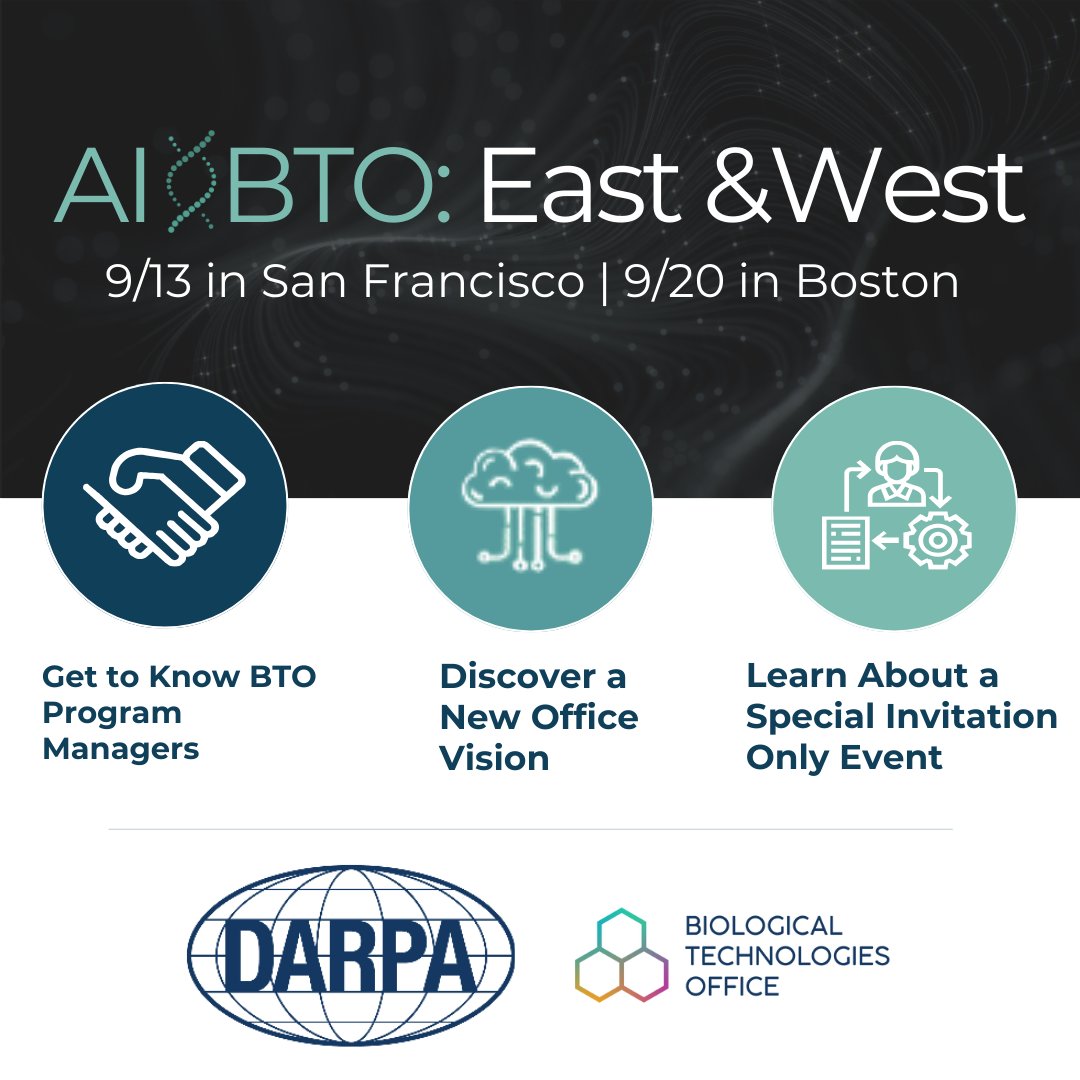
Calling all bio-innovators & AI/ML experts! AI BTO events offer a unique chance to engage with @DARPA. First-time & non-traditional proposers welcome. Visit synbioevents.com/aibto/ for more information and to register. #DARPAInnovation
#AIBTO #DARPA #BioTech #ArtificialIntelligence #MachineLearning #SyntheticBiology #Biomanufacturing #AutonomousScience #PredictiveHealth #BioInnovation #DefenseInnovation #AIxBio #EmergingTechnology #FutureOfBiology #BioDefense #AIinHealthcare #BioDataScience #BioMimicry #FrontierScience #DARPAChallenge
3
11
1,595

16 Feb 2022
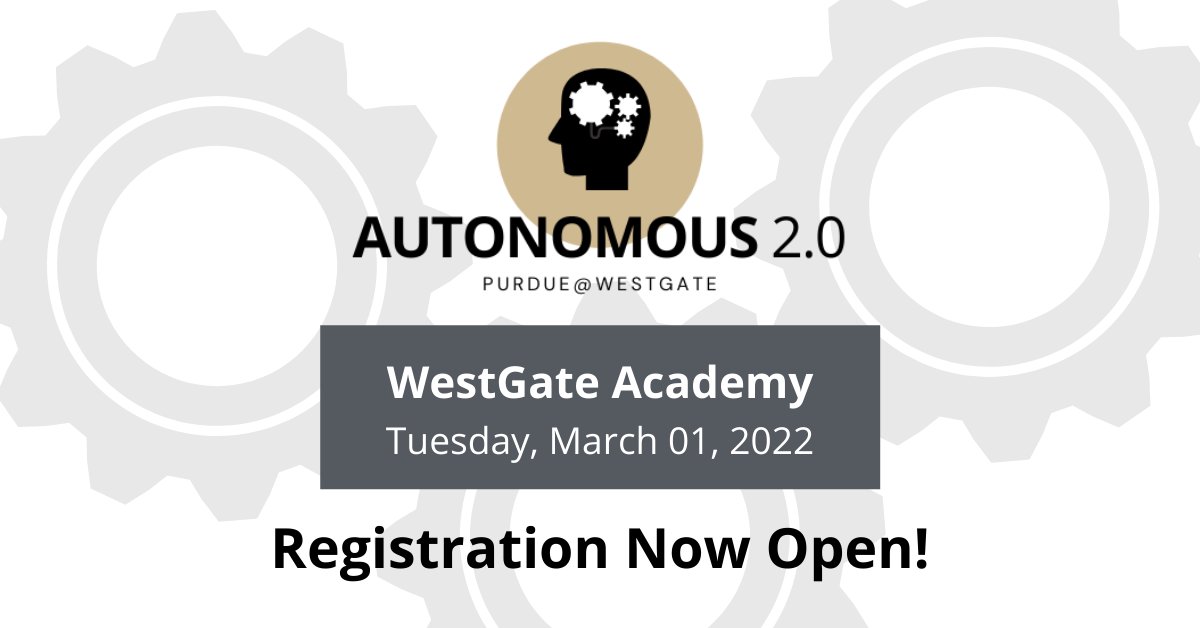
Join us March 01 at WestGate Academy as we host Autonomous Day 2.0. You can look forward to live demos, industry panels, poster sessions company networking. Register view the event web page here: ow.ly/HPsc50HWHPb
#AutonomousScience #Automation #RoboticsScience
1
3