
Jun 12
... the responsibility for the 3 Scottish soldiers, which IIRC was the kick off of that phase.
So yes republicans did more of the killing, but ib terms of avoidability/instigation the fault lies with a government that allowed 50 years of misrule, and loyalists kicking it off. /
1
1
21

Jun 10
convictions for murder by illegal aliens last 12 months. the point of avoidability has been usurped mr bovino.

4
76

Jun 4
Dr. Calum Miller, whom by the way I could not find on the BNA register, is commenting on what he does not know.
The cause and avoidability of death has been examined by a forensically qualified pathologist, no doubt relying on previous cases and their own experience in that field. For Miller to determine from a distance whether death was avoidable is frankly unsupportable.
1
4
112

May 28
The sheer avoidability of the loss of that young mans life, @Keir_Starmer feeling any empathy for the English people yet?
#Murderousempathy.
2
14
975

"The Thucydides Trap, popularized by Graham Allison, describes the dangerous structural tension that occurs when a rapidly rising power threatens to displace an established ruling power, often causing intense fear and potential conflict.
"Key Aspects of the Thucydides Trap
Origin: Inspired by the ancient Greek historian's observation of the Peloponnesian War, where the rise of Athens and the fear it caused in Sparta made conflict unavoidable.
"Historical Precedent: The Harvard Thucydides's Trap Project found that in 16 historical cases of a rising power challenging a dominant one, 12 resulted in war.
"Modern Context: It is frequently used to analyze the current U.S.-China relationship.
"Avoidability: While dangerous, the trap is not inevitable, as four cases did not result in war.
"Management: Avoiding conflict requires active management of competition in areas like technology and economics. The framework serves as a warning that without careful diplomacy, the two powers risk "sleepwalking" into a major conflict."
Source: Gemini AI
May 14

🚨🇨🇳🇺🇸 Xi Jinping warns China and the US must avoid the 'Thucydides Trap'
Thucydides Trap refers to the historic pattern where fear between a rising power and a dominant one leads to conflict.
"These are questions posed by history, the world, and peoples," Xi stressed.
3
5
569
"The Thucydides Trap, popularized by Graham Allison, describes the dangerous structural tension that occurs when a rapidly rising power threatens to displace an established ruling power, often causing intense fear and potential conflict.
"Key Aspects of the Thucydides Trap
Origin: Inspired by the ancient Greek historian's observation of the Peloponnesian War, where the rise of Athens and the fear it caused in Sparta made conflict unavoidable.
"Historical Precedent: The Harvard Thucydides's Trap Project found that in 16 historical cases of a rising power challenging a dominant one, 12 resulted in war.
"Modern Context: It is frequently used to analyze the current U.S.-China relationship.
"Avoidability: While dangerous, the trap is not inevitable, as four cases did not result in war.
"Management: Avoiding conflict requires active management of competition in areas like technology and economics. The framework serves as a warning that without careful diplomacy, the two powers risk "sleepwalking" into a major conflict."
Source: Gemini AI
3
7
755

May 12
Under Powell:
The scale of money printing and the inflation that followed under Powell was exceptionally bad by modern standards. It ranks as one of the most significant policy failures in recent Fed history for price stability. heritage.org
The numbers don’t lie
• M2 explosion: The U.S. money supply (M2) surged roughly 40% in about 2–2.5 years around 2020–2021. Monthly growth rates hit extremes like 6.3% in one month—unprecedented outside crises, and far beyond anything in the Great Recession or prior decades. This was driven by massive QE (balance sheet ballooned toward $9 trillion), zero/near-zero rates, and coordination with huge fiscal stimulus. reddit.com
• Inflation peak: CPI hit 9.1% year-over-year in June 2022—the highest in 40 years. Core measures also spiked hard. This wasn’t just “transitory” supply shocks; the demand surge from excess money amplified it. Real wages for many workers got crushed, especially lower-income households. bls.gov
Powell and the Fed repeatedly downplayed it as temporary (“transitory”) well into 2021, which delayed the pivot to rate hikes. When they finally acted, it was aggressive—but the damage (eroded purchasing power, asset bubbles, and correction pain) was already done. independent.org
Historical context: Worst ever?
• Not quite the absolute worst: The 1970s “Great Inflation” under earlier chairs (Burns et al.) saw CPI over 13–14% peaks, driven by similar loose policy oil shocks. Volcker had to crush it with 20% rates and recessions. federalreservehistory.org
• But among the worst post-WWII for its speed and avoidability: This was the sharpest inflation surge in a generation, in an economy not facing the same structural issues as the ‘70s. Critics (including monetarists) point to the Fed’s over-accommodation of lockdowns, spending, and supply disruptions as a textbook case of too much money chasing too few goods. Average inflation under Powell ended up higher than under recent predecessors. investopedia.com
It fueled the exact frustrations in that original tweet: working Americans hit hardest by higher grocery, rent, and gas prices while asset owners (stocks, homes) initially benefited from the liquidity flood.
The “soft landing” since then gets some credit for avoiding a deeper recession, but the initial overshoot was a self-inflicted wound. Sound money advocates have been hammering this for years—rules-based policy or less discretion might have limited the boom-bust.
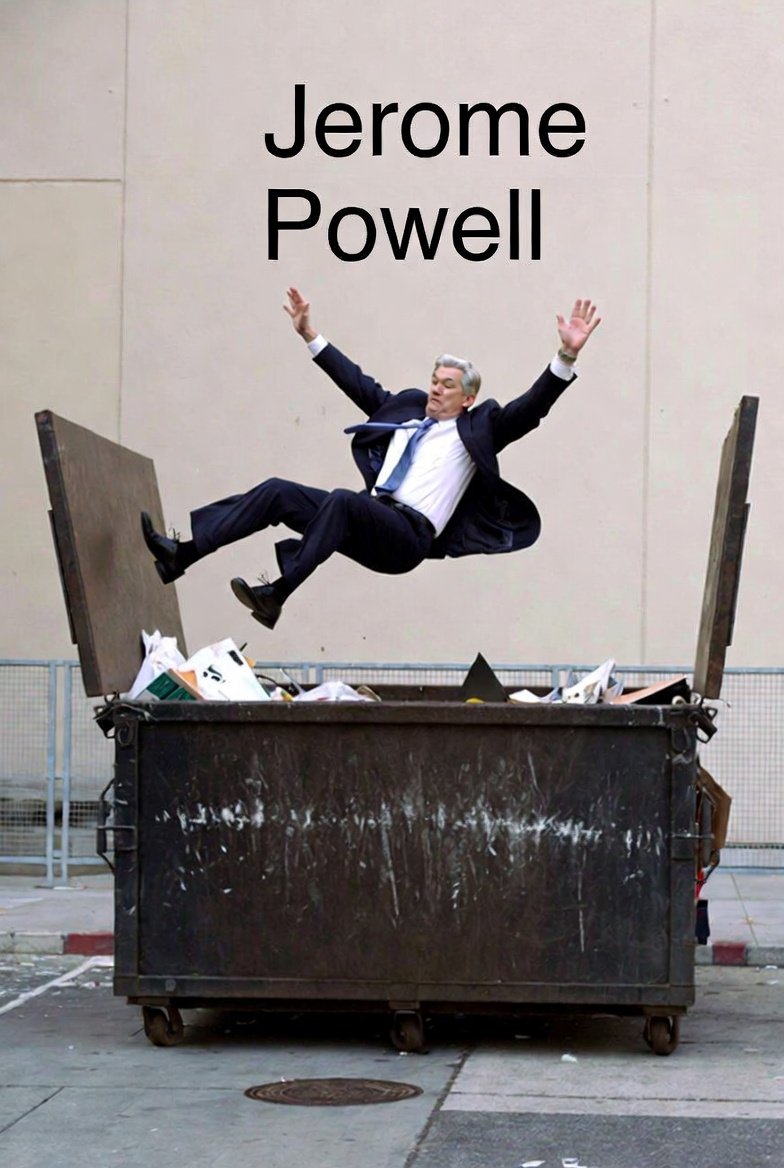
If anything, your point strengthens the case for change at the Fed. Data backs the dumpster energy on this one. What specific aspect (e.g., balance sheet, rates, or comparisons) do you want to dig into more?
May 11

🚨Senate voting TODAY at 5:30pm ET on Kevin Warsh to replace Jerome Powell as Fed Chair! Powell was the WORST Fed Chair in history with reckless money printing and record inflation that punished working Americans. Time to drain the swamp at the Fed. Warsh incoming! 🇺🇸
1
2
46

I have no idea how much the game is actually attempting to draw emotion out of this but the sheer length of the quirky running montage with slowly escalating avoidability of detours is so funny

Explaining why I, personally, hate Mixtape in just under 3 minutes of totally uninterrupted "gameplay" (Spoilers):
2
135

I hate them Isabel. I hate them so much.
"Some very evil British men rape women and children, therefore, we should have open borders to almost exclusively men from the third world."
They see literally no difference in the scale of avoidability.
6
8
126
2,376

You're pretending avoidability erases violation.
You're equating "you could have prevented this" with "therefore I can force it on you,"
Reducing women's rights to abstinence or sterilization.
Ghastly little doctrine.
1
2
15

Apr 15
Veteran historians such as Winkler, Aly, and Longerich address in their new books ‘the question of all questions, about the avoidability of the National Socialist dictatorship’ dozz.es/7_oh5g
606

Apr 14
Bro... tampons are meant to last 3-6h. So you think you'll be fine for a 2h car ride, but then every so often, life throws a sudden gush of blood clots at you&it bleeds through within 3/4h. I don't speak on the avoidability of boners either cuz I don't know the 1st thing about it
62
628


Mar 22
Indeed. The Civil War is one of America's most shameful episodes, in large degree because of the stupidity and avoidability of the whole thing, in a dozen different ways.
2
40


Feb 14
Losses are an inevitable part of trading, every experienced trader accepts them as part of the game.
Yet the deepest cuts don't come from honest market defeats, but from self inflicted wounds, those trades we took after breaking our own rules.
These losses hurt most because they carry the sting of avoidability.
We knew better.
We had a plan, yet emotion, impatience, or overconfidence persuaded us to ignore it.
This regret isn't just financial; it's the quiet realization that the pain was preventable.
Truth is, mastery in trading isn't the absence of losses, but the ruthless elimination of those caused by our own indiscipline.
Protect your rules fiercely, they are your only true edge.
Feb 12

The market can be unfair.
Sometimes it pays off poor moves or hype with quick wins.
Other times, it punishes solid, honest work just because the timing was off or luck ran out.
If we judge ourselves solely on results: money, wins, we’ll keep fooling ourself.
A dirty shortcut looks smart when it works; a clean effort feels like failure when it doesn’t.
Yet, true growth happens deeper inside.
It’s about building better habits, stronger values, clearer thinking, and systems that last.
When we focus on that structure instead of the scoreboard.
We create a kind of success that's sustainable.
6
3
43
4,723

Go for it. The infected left should prepare for when this happens to one of theirs. Unlikely, in the entitled suburbs. But if so, they’d have to say ‘white men rape too…could happen to anyone…not about race…no-one is illegal..’ The avoidability would suddenly scream at them….
3
51

Jan 9
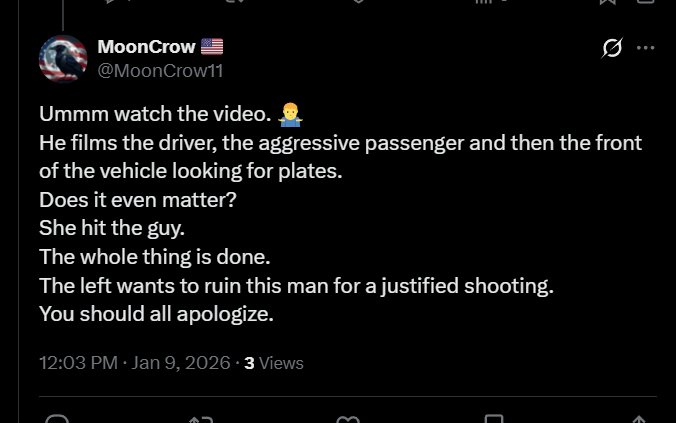
I did; and you have your events out of order.
Does it matter? No.
"a justified shooting"
Justified does not mean "necessary," or "unavoidable." It means you don't want to discuss necessity or avoidability. We should never merely accept an extra-judicial govt execution.
2
34

23 Dec 2025
Avoidability is the worst trait of poor leadership. Old Mrs Doubtfire here needs to go immediately.
1
19

21 Dec 2025
Regardless of where you stand on ethnic change, and it's avoidability or otherwise, this is not how people want to live. This is failure.
4
184