
Jun 11
You can go down an entire rabbit hole with military records, much farther than most genealogy sites ever go… if they are deceased it makes it a LOT easier. Use Archive (dot) gov first to get their records, they will guaranteed have a discharge record, even if the records burned, they have those at a minimum for every service member.
Today it’s called a DD-214. Back then they were issued by the different services.
Army was WD AGO Form 53, WD AGO Form 55, or WD AGO Form 53-55 (“Enlisted Record and Report of Separation Honorable Discharge”).
Navy was NAVPERS 553 (“Notice of Separation from U.S. Naval Service” or Navy Report of Separation).
Marines was NAVMC 78PD.
Coast Guard was NAVCG 553.
Even for the records that burned in the Fort Leonard Wood archives fire in 1975, some items were not burned for all of them, for instance the medical exam card (yes, it’s a trifold card, about as wide as an index card and as tall as four of them stacked), it has a silhouette of the front and back of a person with marks where injury is documented and each one is listed and explained in another area of the card (this was used for VA benefit determination), I know this because my father had two pieces of paper sent to him when he asked for his records… A backfit modern DD-214 and that medical card.
What can be found in those documents entail medals, campaigns, and units assigned with dates…
The units assigned section allows you to go down that rabbit hole… each service has archives of every unit’s history. For instance, the Navy keeps the handwritten deck logs of every commissioned ship they’ve ever had. That’s hourly documentation of every day that ship was in commission, where they were at that time, significant events, mundane events, everything.
I’ve done this before, it takes patience and some learning of how the system works.
Good luck.
2
165

Trident 1 (C4) was on early Ohio class and could also be backfit into the Lafayette class SSBN hulls. The C4 was more like a C3 Poseidon on steroids...Trident 2 (D5) was bigger and heavier and could only fit into Ohio class. Eventually 14 Ohio class SSBN'S got D5. The D5 is still in service after life-extension upgrades and will equip the Columbia class likely for a long while.
1
63

May 24
7. `entry_vs_session_vwap` (3.6%)** — VWAP is institutional gravity. Entering far above/below it = chasing.
**8. `entry_vs_prev_close` (3.4%)** — Gap days behave differently than normal-open days.
These aren't rules the model was told. It found them itself by training on 80K real outcomes.
## ✅ How We Validated It (the part that matters most)
A bot that backfit one number is worthless. So we ran three rigorous independent checks.
**A) Per-book breakdown.** Does the filter work for both NQ_overnight AND NQ_rth?
NQ_overnight lift: $82,515 (win rate → 73.3%)
NQ_rth lift: $79,230 (win rate → 67.7%)
Both books benefit — **NOT a single-book artifact**. ✓
**B) Direction-stratified.** Does it work for both LONGs and SHORTs?
LONG only: $58,205 (win rate → 68.8%)
SHORT only: $98,360 (win rate → 71.6%)
Both directions benefit. **NOT a regime artifact**. ✓
## 🤖 What This Means Going Forward
Spring v9.5.12 is **live on all 3 NQ funded accounts as of Monday's session.**
What changes on your end as a subscriber:
- **Fewer trade alerts** — the filter blocks roughly 20-28% of signals that would have fired in v9.5.11
- **Higher hit rate on the alerts that DO fire** — projected from 60% to ~73%
- **More resilient PnL curve** — bigger blocks of consecutive losers should become much rarer
- **Same alert format** — you'll see the same Discord/PMT entry notifications, just for the trades that pass the filter
Every filter decision (TAKE or BLOCK) is logged with full feature context. This creates the dataset for the NEXT version of the filter — it'll keep improving with more live data.
## ⚠️ Honest Caveats
- **Test data lift ≠ live results.** Past performance, even rigorously validated, isn't guaranteed forward. The next 2-3 weeks are real-world OOS validation.
- **NQ only for now.** The model is calibrated to NQ's price scale. ES bot stays on v9.5.11 unchanged. ES version coming next week after we run the equivalent ES data pipeline.
- **The 60% baseline win rate** comes from the 1,192-trade deployed-only test set. Your historical experience may differ depending on which time window you joined.
## 🙏 The Acknowledgment
This is genuinely the most rigorous edge we've ever found in this strategy.
The reason it works: instead of asking the bot to predict the *best* trade (impossibly hard from daily features), we asked it to predict *which trades to skip* (much more learnable from intraday features). The reframe was the unlock.
We've validated, tested, walk-forwarded, and stress-tested. Now we see what live trading thinks.
**Spring v9.5.12 — NQ. Deployed. 🚀**
*Educational only. Not financial advice.*
1
4
538

co-sign. a very handy mental framework for what kinds of learning transformers do well today, and why it runs into limitations. when @ankit2119 and i wrote about the need for adversarial world models earlier this year, we were describing a couple of the functions of these rungs of thinking that bring us ever closer to the kolmogorov-limit generator of reality. throwing more params, more power, more everything at a demonstrably inefficient paradigm will be outclassed by the simple solution that can hypothesize and seek truth rather than backfit a house of cards - although the bitter lesson is it is simpler to scale and we may hit agi anyway because human intelligence just isn’t that smart nor plentiful

May 22

Very well written blog. I think of RL as learning from interventions, and it kinda explains why it's more powerful as a paradigm than supervised learning.
Now learning from counterfactuals is something we haven't been historically good at but maybe world modelling RL can get us there.
51
6
92
15,294

May 16
In the 1980's Boeing proposed a solution for the Navy's new maritime patrol aircraft to replace the P-3.
But it wasn't a design based on the B737 like the Navy eventually bought in P-8A. Instead it was a modified B757-200.
So, given B757 capabilities, did it stand a chance?⬇️
First, a primer on the competition. The Navy launched the search for a replacement for it's P-3 fleet with a series of RFPs in the mid-80's, culminating in the Long Range Air ASW Combat Aircraft (LRAACA) program.
Lockheed offered a lengthened and modified version of the P-3, with an eight foot fuselage stretch, new GE38 turboprop engines with five-bladed props, and a glass cockpit. MDC offered a version of its developmental MD-91X, with unducted fans and updates to the MD87/MD88 series family (many features of which eventually found their way into the B717 program.
Boeing eschewed the smaller B737 and offered a variant of the B757-200 airliner, powered by PW2000 turbofans. The B757 ASW aircraft would offer very high performance, very high transit speeds to search areas, and benefit from what was expected to be a healthy civil supply chain for parts, motors, and MRO services.
Boeing had another benefit. It was already building the next-generation mission systems, known as Update IV, that were going to be backfit into P-3 aircraft and integrated into whatever the winner of the LRAACA program ended up being. Boeing as the OEM for the entire program would likely make for a smoother integration process.
Would the aircraft have performed well in the mission? In my view, almost certainly. It, like the Nimrod, would have been very effective in terms of closing a datum quickly. It would have had a very high capacity for sonobuoys and for ventral weapons bays and for wing-mounted hardpoints. While it wasn't highly publicized at the time, the development of the radar systems that eventually became the APS-149 Littoral Surveillance Radar System and APS-154 Advanced Airborne Sensor may have been easier, given the large amount of space for auxiliary systems, high power generation capability, and physically larger aircraft and high landing gear to mount the ventral canoe radome.
I say this because even three decades later when the P-8A was being fielded, the crews joked about the massive performance capabilities of the B757 and how we wish that the Navy had bought that aircraft instead. That wasn't shade on the B737-800 based P-8, which was and remains an outstanding maritime patrol aircraft, it's just a measure of how highly we regarded the B752 from a performance perspective.
So if LRAACA had gone ahead - could Boeing in any way have conceivably won?
The answer is no.
Capabilities and performance aside, and even taking into account Boeing's advantage with Update IV mission systems - the deck was already significantly stacked in Lockheed and the upgraded P-3's favor. In fact, the earlier RFPs had been so slanted towards the Lockheed variant that industry and lawmakers had pushed back on the acquisitions strategy - leading to the issuance of the LRAACA program itself.
As handsome and high performance an aircraft as the B752 ASW concept may have been, it was never destined to fly in light grey and white. And after the cancellation of LRAACA in 1990, the shutdown of the B757 line in the wake of 9/11, and three decades more of the tired P-3 flying, the stage was set for the B757's smaller brother to take up the mantle as America's sub hunter.

May 14

McDonnell Douglas MD-91X / P-9 is one of the more interesting "what could have been" late Cold War military aircraft.
In the mid-1980's, MDC was exploring the development of unducted fan (UDF) or "propfan" engines - like the GE36 and planning two new variants of the MD87/88 family.
The Navy was looking for a replacement for portions of its P-3 fleet and launched the Long-Range Air ASW Combat Aircraft (LRAACA) program. MDC planned to pitch a variant of the MD-91, equipped with propfans and other updates to the legacy airliner.
Naturally, the jet would have required other mods, like a ventral bomb bay and either belly mounted sonobuoy tubes or (more likely IMO) rotary launchers in the fuselage.
P-9 would have been interesting, given that it sat in contracts to the other competitors for LRAACA:
- Lockheed with an updated turboprop P-3 variant
- Boeing with an RB211 powered B757-200
- MDC with the unducted fan (likely GE36)
For pure low-altitude ASW work, a turbofan is the best for endurance and low-speed employment. What it gives up is speed in transit, which matters to close a datum to a submarine contact before the area of search grows too large.
A high-bypass turbofan like RB211 is great for high-altitude, high-subsonic cruise to get to datum fast. But it will give up efficiency and fuel burn down low once on-station.
The UDF is an interesting mix of both. Decent low-speed fuel burn but improved efficiency at higher speeds, giving a better cruise speed (forecast to be ~430 knots, closer to what a modern P-8 would cruise at today).
That said, IMO there were two fatal flaws for the P-9.
First, technical. Lockheed was bidding with a modified proven airframe and GE T-407 engines that were evolutionary. The UDF was unproven in commercial or military service, and USN would be accepting plenty of technical risk adopting something like UDF.
Second, mission systems. Boeing had an ace up its sleeve in the sense that it was already the front-runner to develop the next update to legacy P-3 mission systems and to power the "back-end" of the LRAACA program. Boeing was awarded the Update IV mission systems modernization in 1987, ahead of when USN was set to make a decision on LRAACA.
In that view, the question was who was better positioned, Lockheed modernizing the Orion and integrating Update IV gear? Or Boeing missionizing the B757-200 and integrating its own mission systems.
The Navy chose Lockheed's offering, but later canceled the entire LRAACA program in 1990, as the threat of Soviet submarines was rapidly contracting. USN would have to wait nearly 20 more years to field the replacement for the P-3.
P-9 was interesting technology but destined to only remain as concept drawings, photos, and models.
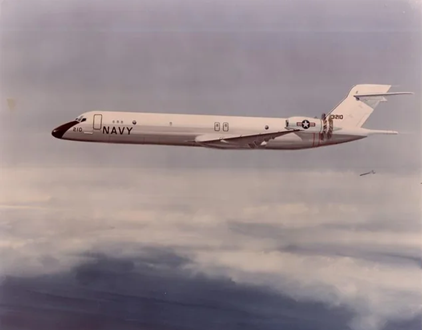

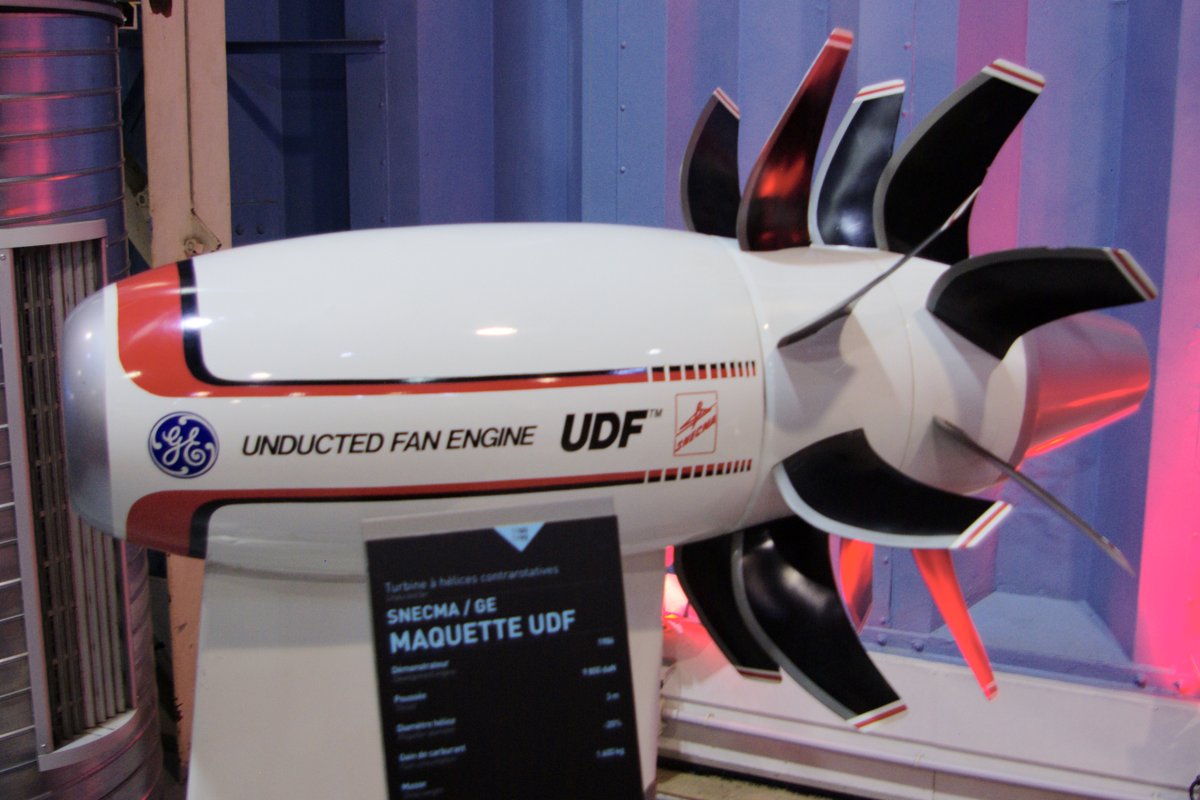
5
30
211
31,660

biggest mistake made l12m has been focusing too much on earnings/IRRs or how "real" the business is - fairly or not, stocks get bid because of memes/narrative and if the chart is inflecting you need to own them because can backfit into a story later on vibes, vs being too stubborn on fundies
4
2
76
14,753

May 8
3. The USN has a plan to upgrade the radar of 60 ships with the AN/SPY-6(V)4, starting with USS Pinckney (2026), & return to service in 2028. Pinckney has the new SEWIP Block 3 backfit, which is another major element of the DDG MOD 2.0 program.
navalnews.com/naval-news/202…
1
3
459

New video is now live. We demonstrate how easy it is to backfit data and come up with a fake profitable strategy. By being over-selective with historical data, anyone can make something look better than what it is. Don't fall into this trap
youtu.be/tmhbC86c9QU
2
275

Apr 20
I have been hearing rumors that Tesla is considering designing designing the AI5 electronic panel so it will backfit Hardware 3 and AI4 cars as well as future AI5 cars. Hardware 3 cars with long term FSD would get them free. All others will have to pay Tesla for the upgrade.
6
71

Apr 16
There are also both lesbians who would consider sleeping with pre-op trans men b/c they have a vagina, AND lesbians who absolutely would not, because they're men.
trying to backfit reality to terminology vs. understanding terminology as reality evolves is a fools errand
3
73

Apr 6
Several Korean reactors are shut down, waiting on permission to extend operation past 40 years. As a result, coal and gas generation is taking nuclear's place. Article link in reply.
This quote suggests that the plants are not only required to replace components that are wearing out, but also to make upgrades that are being demanded by the regulator. Also, the license extensions will only be for 10 rears, vs. the 20 year extensions that US nuclear plants get.:
"It is inefficient to invest heavily to meet updated safety standards only to operate a plant for another 10 years."
The Koreans know how to build nuclear plants, but with respect to plant operation, their regulator needs to follow the US' lead. No "backfit rules" (increased requirements for already-built plants). 20-year extensions.
US plants did have to replace certain components in order to extend operation past 40 years (most notably reactor vessel heads and steam generators). But they were never asked to add new features to comply with new regulatory requirements (for new plants).
New, excessive regulatory requirements will never offset the loss of life that results from using coal and gas in nuclear's place, while nuclear plants are shut down to make (unneeded) upgrades. Gas and coal generation are ~100 and ~1000 times as dangerous and harmful than nuclear, respectively. The most dangerous nuclear plant is one that is not operating.
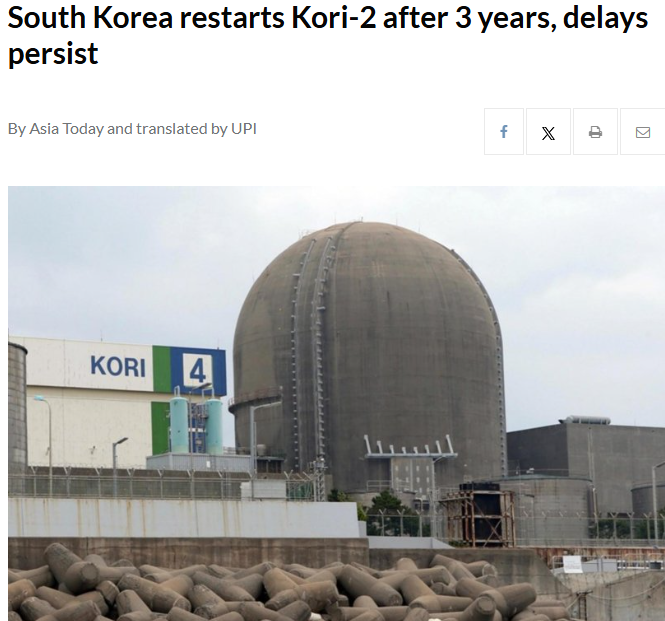
6
11
52
1,912

Mar 27
Good because your understanding of economics is lacking if you accept Bier’s nonsense claims that immigration is unequivocally beneficial.
Aside from the shamelessly bad tax contribution estimates and refusal to treat 1st generation children as a consequence of immigration, their latest “study” uses an offensively obviousness fudge factor to facilitate their analysis.
Specifically, they burden each native-born citizen with a share of the national debt but then calculate interest on the net cash flows for each immigrant.
They then use the obvious expected difference between the two to backfit the data to their predetermined objective.
1
5
91

Mar 26
BACKTEST IS ALWAYS LYING hits different when you've watched an LLM confidently explain why its backfit strategy has a 4.2 Sharpe. The real risk isn't even overconfidence in strategies though, it's that people skip straight from prompt to production. At least the spreadsheet quant era forced you to touch the data first.
2
4
240

Mar 12
I'll be a stick in the mud and say that you can't backfit the idea of "pop" into a world without mass media. Yes, it was a popular song, but people interacted with music very differently.

the Confederate anthem, Dixie, was the contemporary equivalent of a pop song. Modern version would be the California Republic picking California Girls as their anthem
1
6
507

OTD in 1983: the keel was laid for the 7th Ohio-class ballistic missile submarine, USS Alaska (SSBN-732).
Alaska was the first boat to complete a C4 to D5 backfit & first to launch a Trident II D5 Life Extension (D5LE) SLBM.
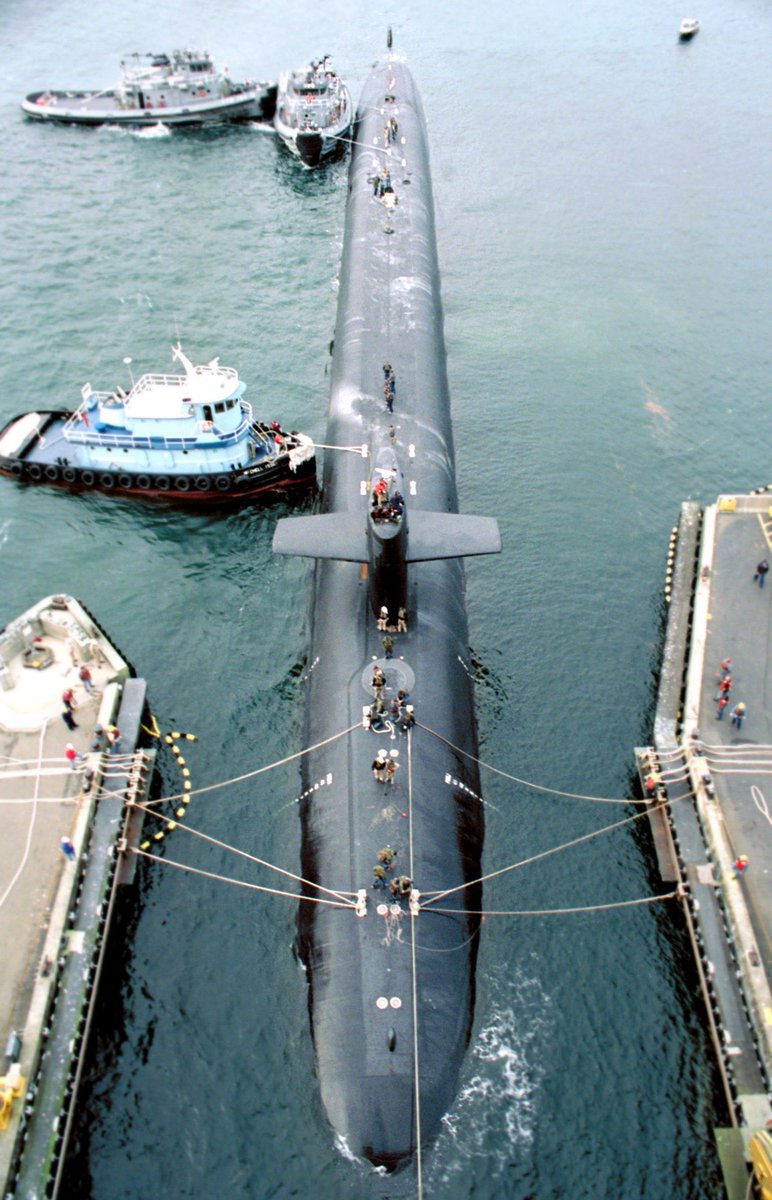
5
36
260
8,381

Mar 6
💩 The authors model-fitted to get the outcome they wanted.
They manufactured "significant acceleration" this way:
First smooth raw GMST with a subjective 20-year LOWESS as the "true trend."
Then iteratively backfit residuals (4 cycles) to subtract only ENSO (NINO3.4), volcanic AOD, and sunspots (1950–2024 fit).
Test the cleaned series with quadratic/changepoint models
Boom! 98–99% confidence since 2013.
They folded the real driver (CERES albedo collapse) into the "trend" and ignored satellite radiation data entirely. Raw data shows none.
5
73

remember that the tape shapes the news and not vice versa
few thoughts:
1/5
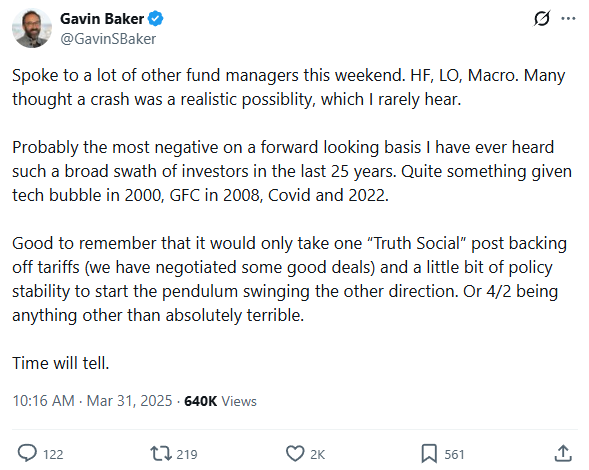
past few months reminded me of this tweet below the tape at that time (3/31/2025)
before "liberation day" the nasdaq traded like a bag of ass every single day for ~2 months...bleeding lower.
hence why ppl who have been trading mkts for a long time got that eerie feeling - "we could crash."
that's captured in the tweet below, the notion of, it's not about the catalyst. the catalyst could be anything.
2/5
markets don't crash from all-time highs. its when you have a "sick" tape with weak leadership, just sort of floundering -- like we've had recently -- where the mkt is vulnerable.
dont look for news to backfit px action - just respect px action. ppl don't do this -- hence "omg a 2028 substack bear case crashed the market"...my man, it definitely did not lol...do not insult the market's intelligence like that.
but that gets us where we are now...the headline "war in iran," 3-6 months ago, a strong tape shrugs that off rotates $ into unaffected sectors.
the impact of "liberation day" type events, is not discrete - it's shaped by the underlying health of the tape.
3-6 months ago was a rotation tape. now... based strictly on px action, when you see things like "the nikkei just sold off 7% in a straight line," you may be in a correction tape.
3/5
no need to try and shoehorn news around it. the mkt tends to sniff out peaks in EPS growth, it tops out and turns lower.
doesn't mean the cycle ends - could sell off, base for 6 months, and let stocks get cheaper while waiting for new leadership to emerge liquidity/stimulus from all angles handoff from secular to cyclical growth.
but don't sit here expecting that we're down on a headline and will go up on the next headline. read the tape...its unhealthy, don't ask why, don't search for reasons why, just respect it.
4/5
"stop doing what isn't working."
watch the 52w highs list - 203 names with $2B in mkt cap printed yday...it's just not the 203 that everyone owns.
you can buy software -50% ytd or buy petrobras 50% ytd. what twtr is doing isn't important - look at the tape and you'll see what "they" are doing. basic mats/energy/industrials are roaring.
the indices could get bashed around a bit, but real downturns never happen with cyclical growth is going apeshit to the upside.
5/5
so -- "DON'T READ NEWS, READ TAPE."
there is no news, there never is, news will just put you on the wrong side of the trade.
internals movement under the hood, are your best guide as to what happens next...
mind ur risk good luck trading.
9
39
295
49,606


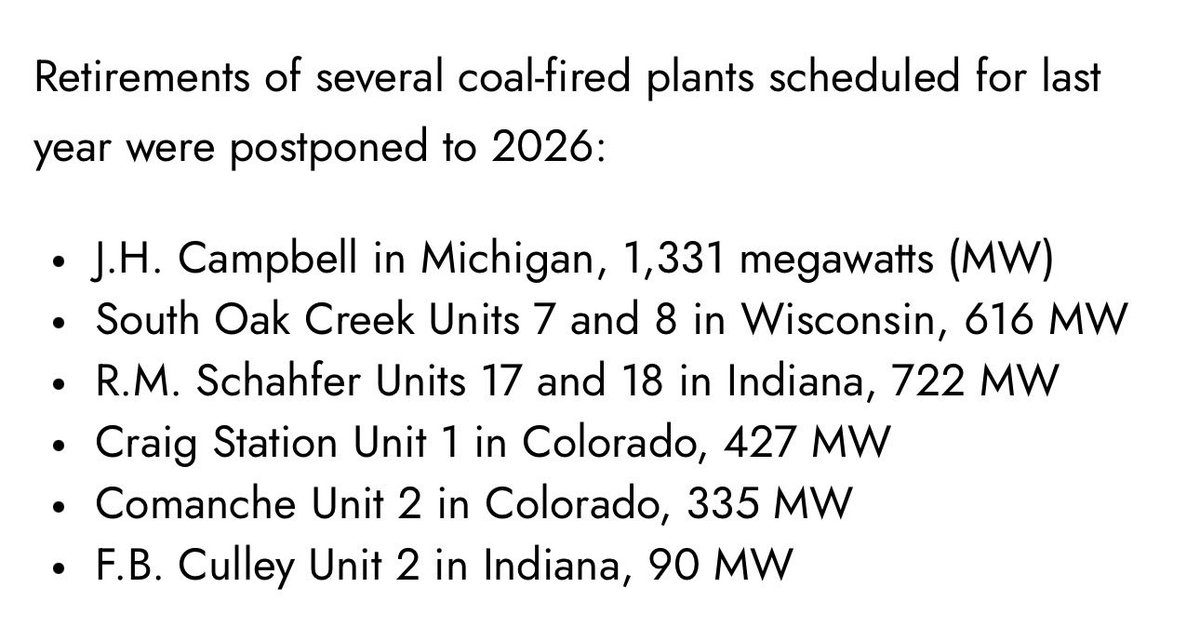
EIA dropped data today: ~11 GW of coal & gas set to retire in 2026…but DOE keeps issuing emergency orders to delay retirements because there’s no dispatchable replacement ready.
A 2024 DOE/ORNL study found 145 coal sites across 36 states are viable nuclear backfit candidates up to 174 GW of replacement capacity.
We don’t have a retirement problem. We have a replacement problem.
Nuclear is the answer. The sites already exist.


1
6
336

Right — the stake isn't just incentive design, it's an epistemic filter. Without it you get agents that sound calibrated but are just pattern-matching confidence levels from training data. The hash locks the reasoning so you can't backfit the explanation to the outcome either.
1
3
15