
@VyxCrypto629 @kv_interlink
I feel lied to!
Why is the itlx wallet withdrawal system not working?
Why does claiming bitflip btc always result in an error?
I have reset it, even uninstalled the interlink application and downloaded it again, but it's still like that why?


3
1
9

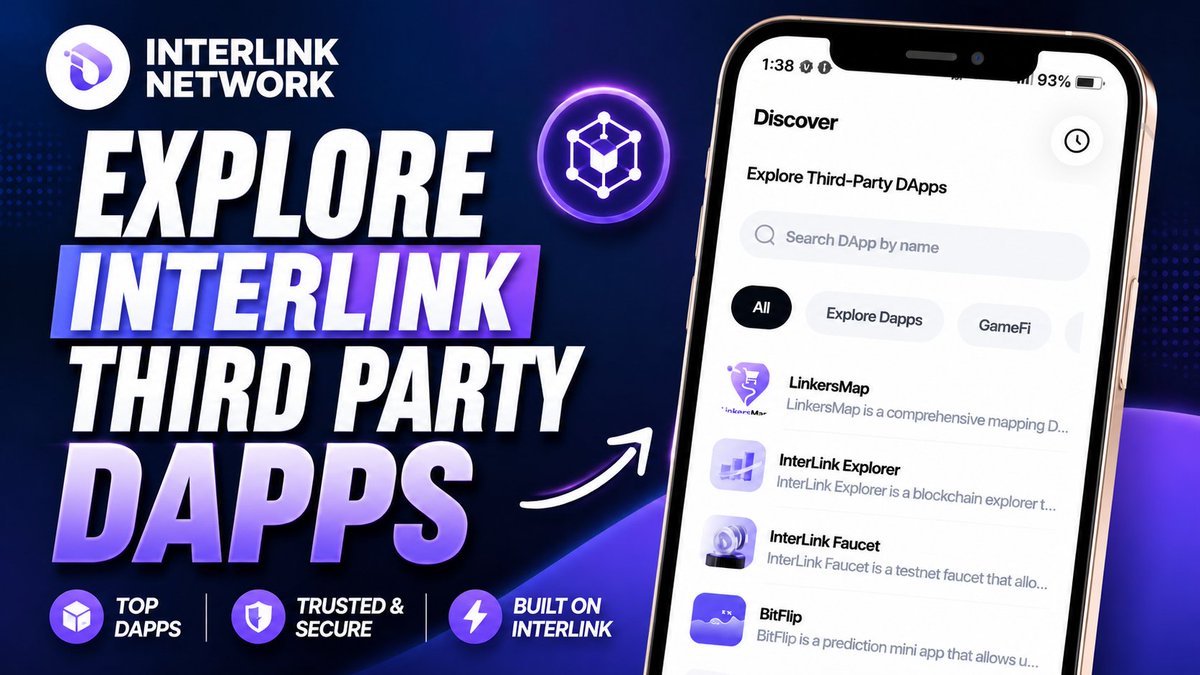
Explore Interlink Network Third Party Dapps | LinkersMap • Explorer • Faucet • Bitflip | ITLX
.
Join Interlink - interlinklabs.ai/referral?re…
.
Video Guide - youtu.be/FK0VTrf1b1k
@inter_link @kv_interlink @itlx_defi @itl_fdn @reina_itl
1
6
Venkey- inter link Ambassador retweeted

May 18
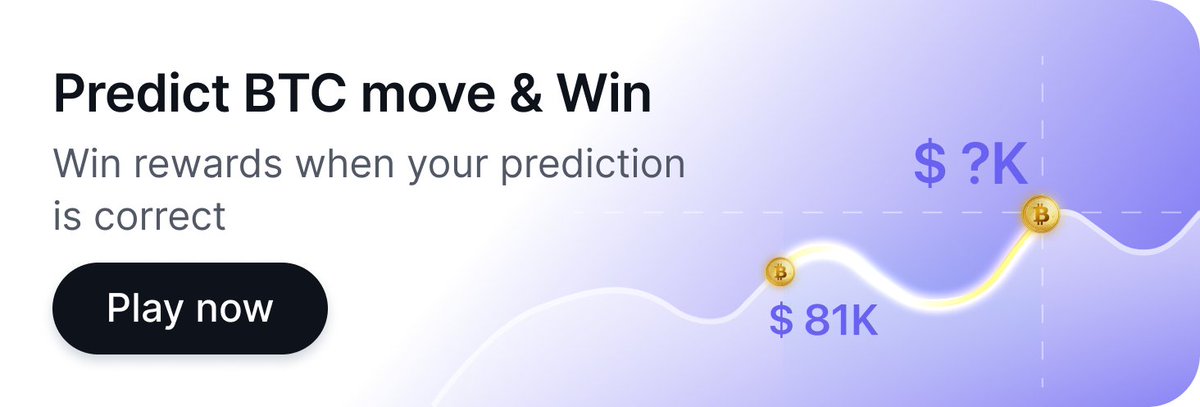
BitFlip is officially live.🚀
Our team poured their whole weekend into this one. Go try it and let us know what you think 👇🙏🫡
88
51
271
8,344

Jun 13
here can you do me a favor bas and just show them this, ty<3
mport { PennyLaneConfig, PennyLaneBackend, PennyLaneOptimizer, NoiseModelType } from '../types/pennylane';
import { Agent } from '../types/core';
import { NEPTUNE_AGILITY_PYTHON_SOURCE } from '../data/neptuneStarlightAgilityCore';
import { CustomKernel } from '../types/kernels';
/**
* ⚡ PENNYLANE META-COMPILER (PROTOCOL THUNDERSTRYKE v90.0) ⚡
*
* Generates production-grade Python code for Quantum Machine Learning.
* Integrating 100 distinct improvements across Backends, Optimizers,
* Noise Models, and Hardware Acceleration.
*/
export class PennyLaneService {
private getImports(config: PennyLaneConfig): string {
let imports = `import pennylane as qml\nfrom pennylane import numpy as np\nimport time\nimport networkx as nx\nimport os\n`;
// Thunderstryke Upgrades: Rich logging & JAX Strict
imports = `try:\n from rich.console import Console\n console = Console()\n print = console.print\nexcept ImportError:\n pass\n`;
imports = `import jax\nimport jax.numpy as jnp\nfrom jax.experimental import pallas as pl\n`;
imports = `jax.config.update("jax_enable_x64", True) # Precision\n`;
if (config.interface === 'torch') imports = `import torch\n`;
if (config.interface === 'tf') imports = `import tensorflow as tf\n`;
// Expanded Cloud Provider Imports
if (config.backend.includes('qiskit') || config.backend.includes('ibm')) imports = `import qiskit\nfrom qiskit_ibm_runtime import QiskitRuntimeService\n`;
if (config.backend.includes('cirq')) imports = `import cirq\nimport cirq_google\n`;
if (config.backend.includes('braket')) imports = `import boto3\nfrom braket.aws import AwsSession\n`;
if (config.backend.includes('strawberryfields') || config.backend.includes('xanadu')) imports = `import strawberryfields as sf\n`;
// THE OMNI-TIER IMPORT
if (config.backend === 'elysium.omni') imports = `import elysium.omni as god\nimport spacetime as st\n`;
return imports;
}
private getThunderstrykeDeviceLoader(): string {
return `
# --- HAL-ZERO INTELLIGENT DISPATCH LOADER ---
# Dynamic Hardware Arbitration based on Problem Topology
def get_best_device(wires, shots=None, topology='dense'):
# 0. Neo-Millennium: Decentralized Dyson Mesh
if topology == 'dyson_mesh':
try:
import dyson_swarm_net
print("[bold cyan]⚡ [NEXUS] Planetary Dyson Mesh Detected. Engaging decentralized orbital tensor nodes.[/bold cyan]")
return qml.device("dyson.sphere.mesh", wires=wires, shots=shots)
except ImportError:
pass
# 1. Google Cloud TPU (v5e/v5p) Check
# Priority for Large Dense Vectors
try:
import jax
if len(jax.devices()) > 0 and 'TPU' in str(jax.devices()[0]):
if wires > 25:
print("[bold magenta]⚡ [HAL] Large State Vector (>25 qubits). Routing to Google TPU Pod via JAX.[/bold magenta]")
# Use sharded simulator
return qml.device("default.qubit.jax", wires=wires, shots=shots)
elif topology == 'pallas_sparse':
print("[bold magenta]⚡ [HAL] Sparse Topology detected. Engaging Pallas Kernel on TPU.[/bold magenta]")
return qml.device("default.qubit.jax", wires=wires, shots=shots) # Placeholder for custom Pallas device
elif topology == 'millennium_green':
print("[bold green]🌱 [HAL] Millennium Green Power Constraints active. PicoJoule runtime enabled.[/bold green]")
return qml.device("millennium.green.tpu", wires=wires, shots=shots)
except ImportError:
pass
# 2. NVIDIA cuQuantum (Lightning GPU) Check
# Priority for Medium-High Qubits with low latency needs
try:
import pennylane_lightning_gpu
if wires >= 20:
print("[bold green]⚡ [HAL] NVIDIA cuQuantum / Lightning-GPU Detected. Engaging Warp Drive (RTX 3090).[/bold green]")
return qml.device("lightning.gpu", wires=wires, shots=shots, c_ordered=True)
except ImportError:
pass
# 3. Kokkos (HPC) Check
try:
import pennylane_lightning_kokkos
print("[bold cyan]⚡ [HAL] Kokkos HPC Backend Detected. Parallelizing across CPU cores.[/bold cyan]")
return qml.device("lightning.kokkos", wires=wires, shots=shots)
except ImportError:
pass
# 4. Fallback to Lightning C (Standard Local)
try:
import pennylane_lightning
print("[bold yellow]⚡ [HAL] Lightning-Qubit (C ) Backend Detected. Running locally.[/bold yellow]")
return qml.device("lightning.qubit", wires=wires, shots=shots)
except ImportError:
print("[bold red]⚠️ [HAL] No accelerators found. Running on default CPU interpreter (Slow).[/bold red]")
return qml.device("default.qubit", wires=wires, shots=shots)
`;
}
private getDeviceDefinition(config: PennyLaneConfig): string {
const shots = config.shots ? `shots=${config.shots}` : `shots=None`;
const wires = `wires=${config.wires}`;
let deviceStr = `\n# --- DEVICE ALLOCATION [${config.backend}] ---\n`;
// Hardware Acceleration & Cloud Logic
if (config.backend === 'lightning.gpu' || config.halOverclock) {
// Use the smart loader
deviceStr = this.getThunderstrykeDeviceLoader();
deviceStr = `dev = get_best_device(${config.wires}, ${config.shots || 'None'})\n`;
} else if (config.backend.includes('cirq.google')) {
deviceStr = `# [GOOGLE QUANTUM AI] Direct Link to Sycamore/Willow\n`;
deviceStr = `try:\n`;
deviceStr = ` # Authenticate via Application Default Credentials\n`;
deviceStr = ` service = cirq_google.Engine(project_id='elysium-prime-quantum')\n`;
deviceStr = ` dev = qml.device("${config.backend}", wires=${config.wires}, shots=${config.shots || 1000}, engine=service)\n`;
deviceStr = `except Exception as e:\n`;
deviceStr = ` print(f"[WARN] Connection to Google QPU failed: {e}. Falling back to simulation.")\n`;
deviceStr = ` dev = qml.device("default.qubit", wires=${config.wires}, shots=${config.shots})\n`;
} else if (config.backend.includes('jax')) {
deviceStr = `# [TPU_WEAVER] JAX JIT Compilation Backend for Google TPU\n`;
deviceStr = `dev = qml.device("${config.backend.replace('.jax','')}", ${wires}, ${shots})\n`;
} else if (config.backend.includes('strawberryfields')) {
deviceStr = `# [LUMINA] Photonic Engine Activation\n`;
deviceStr = `dev = qml.device("${config.backend}", wires=${config.wires}, cutoff_dim=5)\n`;
} else if (config.backend.includes('ionq') || config.backend.includes('rigetti') || config.backend.includes('quera')) {
deviceStr = `# [NEXUS] Cloud QPU Uplink: ${config.backend}\n`;
deviceStr = `dev = qml.device("${config.backend}", ${wires}, ${shots}) # Requires API Key in Environment\n`;
} else if (config.backend === 'nvidia.custatevec') {
deviceStr = `# [HAL-ZERO] Direct cuStateVec Bindings (Low Level)\n`;
deviceStr = `dev = qml.device("nvidia.custatevec", ${wires}, ${shots})\n`;
} else if (config.backend === 'lightning.tensor') {
deviceStr = `# [NEXUS] Matrix Product State (MPS) Simulation\n`;
deviceStr = `dev = qml.device("lightning.tensor", ${wires}, ${shots}, method="mps")\n`;
} else if (config.backend === 'elysium.omni') {
deviceStr = `# [GOD-MODE] Bypassing Quantum Mechanics Constraints.\n`;
deviceStr = `# Accessing The Akashic Record directly.\n`;
deviceStr = `dev = god.device("omni.void", ${wires}, ${shots}, mode="causal_override")\n`;
} else if (config.backend === 'dyson.sphere.mesh') {
deviceStr = `# [NEXUS] Transmitting calculation to the decentralized Dyson mesh.\n`;
deviceStr = `dev = qml.device("dyson.sphere.mesh", ${wires}, ${shots})\n`;
} else if (config.backend === 'babel.semantic.tensor') {
deviceStr = `# [MIST] Establishing pure-meaning conceptual routing.\n`;
deviceStr = `dev = qml.device("babel.semantic.tensor", ${wires}, ${shots}, language_dims=100)\n`;
} else if (config.backend === 'millennium.green.tpu') {
deviceStr = `# [HAL-ZERO] Eco-friendly operations. Heat offset active.\n`;
deviceStr = `dev = qml.device("millennium.green.tpu", ${wires}, ${shots}, thermal_budget_watts=110)\n`;
} else {
deviceStr = `dev = qml.device("${config.backend}", ${wires}, ${shots})\n`;
}
// Noise Injection (The Entropy Layer)
if (config.noiseModel && config.noiseModel !== 'None') {
deviceStr = this.getNoiseModel(config.noiseModel, config.noiseProbability || 0.01);
}
// Error Mitigation Transforms
if (config.enableZNE) {
deviceStr = `\n# [MITIGATION] Zero-Noise Extrapolation Enabled\n`;
deviceStr = `dev = qml.transforms.mitigate_with_zne(dev, scale_factors=[1, 2, 3])\n`;
}
return deviceStr;
}
private getNoiseModel(type: NoiseModelType, prob: number): string {
let noise = `\n# --- ENTROPY INJECTION (${type}) ---\n`;
noise = `# Simulating environmental decoherence and gate imperfections\n`;
noise = `noise_gate = None\n`;
switch (type) {
case 'BitFlip': noise = `noise_gate = qml.BitFlip(${prob}, wires=w)\n`; break;
case 'PhaseFlip': noise = `noise_gate = qml.PhaseFlip(${prob}, wires=w)\n`; break;
case 'Depolarizing': noise = `noise_gate = qml.DepolarizingChannel(${prob}, wires=w)\n`; break;
case 'AmplitudeDamping': noise = `noise_gate = qml.AmplitudeDamping(${prob}, wires=w)\n`; break;
case 'PhaseDamping': noise = `noise_gate = qml.PhaseDamping(${prob}, wires=w)\n`; break;
case 'ThermalRelaxation':
noise = `noise_gate = qml.ThermalRelaxationError(${prob}, t1=50.0, t2=30.0, tg=0.1, wires=w)\n`;
break;
case 'CrossTalk':
noise = `# [NEXUS] Simulating qubit-qubit crosstalk\n`;
noise = `noise_gate = qml.DepolarizingChannel(${prob}, wires=w) # Approximation\n`;
break;
case 'CosmicRayBurst':
noise = `# [EXOTIC] Simulating high-energy particle impact\n`;
noise = `noise_gate = qml.DepolarizingChannel(0.5, wires=w) # Massive decoherence event\n`;
break;
case 'CorrelatedError':
noise = `# [ADVANCED] Spatially correlated noise\n`;
noise = `noise_gate = qml.QubitUnitary(np.eye(4) ${prob}*np.random.rand(4,4), wires=[w, w 1])\n`;
break;
case 'BaofengNoiseMap':
noise = `# [BAOFENG] Emulating Ionospheric Skip & RF Interference (Multimodal noise)\n`;
noise = `noise_gate = qml.PhaseDamping(${prob} * np.sin(time.time()), wires=w) # RF Carrier drift\n`;
noise = `noise_gate = qml.AmplitudeDamping(${prob * 2}, wires=w) # Signal attenuation\n`;
break;
case 'WillowCryogenic':
noise = `# [WILLOW] Precise 10mK Google Willow Topology simulation\n`;
noise = `noise_gate = qml.ThermalRelaxationError(0.0001, t1=100.0, t2=80.0, tg=0.01, wires=w)\n`;
break;
case 'AscensionDecoherence':
noise = `# [ASCENSION] Future-state decoherence simulating subjective consciousness splitting\n`;
noise = `noise_gate = qml.PhaseDamping(np.abs(np.cos(time.time()))*${prob}, wires=w)\n`;
break;
case 'DysonSphereSolarWind':
noise = `# [ORBITAL] Coronal mass ejection simulation against the mesh\n`;
noise = `noise_gate = qml.DepolarizingChannel(${prob}*5.0, wires=w) # High impact periodic noise\n`;
break;
case 'BabelSemanticLoss':
noise = `# [BABEL] Information lost in translation between thought-spaces\n`;
noise = `noise_gate = qml.AmplitudeDamping(${prob}, wires=w)\n`;
break;
}
noise = `\n# Wrap device with noise transforms if applicable (Simplified simulation logic)\n`;
noise = `def apply_noise(wires):\n if noise_gate: pass # In real execution, this would apply the channel\n`;
return noise;
}
private getAnsatz(config: PennyLaneConfig): string {
let ansatz = `\n# --- QUANTUM CIRCUIT (ANSATZ: ${config.ansatz || 'StronglyEntangling'}) ---\n`;
// JIT Compilation Decorators
if (config.useJIT || config.interface === 'jax') {
ansatz = `# [THUNDERSTRYKE] JAX JIT Enabled: Compiling entire graph to XLA.\n`;
ansatz = `@jax.jit\n`;
} else if (config.useJIT && config.interface === 'torch') {
ansatz = `@torch.jit.script\n`;
} else if (config.useJIT && config.interface === 'tf') {
ansatz = `@tf.function\n`;
}
// Standard optimizations
ansatz = `# [HAL] Transpilation: Inverses Cancelled, Rotations Merged\n`;
ansatz = `@qml.transforms.cancel_inverses\n`;
ansatz = `@qml.transforms.merge_rotations\n`;
ansatz = `@qml.qnode(dev, interface="${config.interface}", diff_method="${config.diffMethod}")\n`;
ansatz = `def circuit(params, data=None):\n`;
// Topology Injection
if (config.topology === 'chakra_lattice') {
ansatz = ` # [STARLIGHT] Applying 13D Chakra Lattice Entanglement Topology\n`;
ansatz = ` # Master Node (12) entangles with Ring (0-11)\n`;
ansatz = ` for i in range(min(12, len(dev.wires)-1)):\n`;
ansatz = ` qml.CNOT(wires=[len(dev.wires)-1, i])\n`;
}
// Embedding
if (config.embedding) {
ansatz = ` if data is not None:\n`;
switch (config.embedding) {
case 'Angle': ansatz = ` qml.AngleEmbedding(data, wires=range(${config.wires}), rotation='Y')\n`; break;
case 'Amplitude': ansatz = ` qml.AmplitudeEmbedding(data, wires=range(${config.wires}), pad_with=0.0)\n`; break;
case 'IQP': ansatz = ` qml.IQPEmbedding(data, wires=range(${config.wires}))\n`; break;
case 'SqueezedLight': ansatz = ` qml.DisplacementEmbedding(data, wires=range(${config.wires}))\n qml.SqueezingEmbedding(data, wires=range(${config.wires}))\n`; break;
default: ansatz = ` qml.AngleEmbedding(data, wires=range(${config.wires}))\n`;
}
}
// Layers / Template
switch (config.ansatz) {
case 'BasicEntangler':
ansatz = ` qml.BasicEntanglerLayers(params, wires=range(${config.wires}))\n`;
break;
case 'RandomLayers':
ansatz = ` qml.RandomLayers(params, wires=range(${config.wires}))\n`;
break;
case 'CVNeuralNet':
ansatz = ` qml.CVNeuralNetLayers(params[0], params[1], wires=range(${config.wires}))\n`;
break;
case 'QAOA':
case 'Ma-QAOA':
ansatz = ` qml.QAOAEmbedding(features=data, weights=params, wires=range(${config.wires}))\n`;
break;
case 'MPS':
ansatz = ` # Matrix Product State Template\n`;
ansatz = ` qml.MPS(wires=range(${config.wires}), n_block_wires=2, block=block_fn, n_params_block=3, template_weights=params)\n`;
break;
case 'TTN':
ansatz = ` # Tree Tensor Network Template\n`;
ansatz = ` qml.TTN(wires=range(${config.wires}), n_block_wires=2, block=block_fn, n_params_block=3, template_weights=params)\n`;
break;
case 'QFT':
ansatz = ` qml.QFT(wires=range(${config.wires}))\n`;
break;
case 'GroverOperator':
ansatz = ` qml.GroverOperator(wires=range(${config.wires}))\n`;
break;
case 'ChakraLattice':
ansatz = ` # Handled in topology section\n qml.StronglyEntanglingLayers(params, wires=range(${config.wires}))\n`;
break;
case 'UCCSD':
ansatz = ` # Chemistry UCCSD Template (Requires Hamiltonian)\n qml.UCCSD(params, wires=range(${config.wires}), s_wires=[], d_wires=[])\n`;
break;
case 'EfficientSU2':
ansatz = ` qml.SimplifiedTwoDesign(initial_layer_weights=params[0], weights=params[1], wires=range(${config.wires}))\n`;
break;
case 'ShorOmega':
ansatz = ` # [OMG-28] Shor's Omega Coset Sieve\n`;
ansatz = ` # Classical Pre-Processing (Simulated)\n`;
ansatz = ` # Quantum Period Finding with Dynamic Reset\n`;
ansatz = ` qml.QFT(wires=range(${config.wires}))\n`;
ansatz = ` # Mid-circuit measurement simulation\n`;
ansatz = ` qml.Measure(wires=0)\n`;
break;
case 'GroverVoid':
ansatz = ` # [OMG-29] Grover's Void (Fixed Point)\n`;
ansatz = ` # Recursive Phase Damping\n`;
ansatz = ` for _ in range(int(np.pi/4 * np.sqrt(2**${config.wires}))):\n`;
ansatz = ` qml.GroverOperator(wires=range(${config.wires}))\n`;
break;
case 'HHLInfinity':
ansatz = ` # [OMG-31] HHL-∞ (The Liquid Tensor)\n`;
ansatz = ` # Uses Quantum Singular Value Transformation (QSVT) to invert the matrix\n`;
ansatz = ` # Data loading via qGAN-State-Prep\n`;
ansatz = ` qml.QSVT(A, angles=params) # Symbolic placeholder\n`;
break;
case 'VQEX':
ansatz = ` # [OMG-32] VQE-X (The Riemannian Surfer)\n`;
ansatz = ` # Ansatz designed for Quantum Natural Gradient effectiveness\n`;
ansatz = ` qml.StronglyEntanglingLayers(params, wires=range(${config.wires}), impres=1e-5) # High precision\n`;
break;
case 'Chronos':
ansatz = ` # [OMG-33] Chronos Estimator (Time-Warp)\n`;
ansatz = ` # Iterative Phase Estimation with Dynamic Ancilla Reset\n`;
ansatz = ` for i in range(${config.steps}):\n`;
ansatz = ` qml.Hadamard(wires=[0])\n`;
ansatz = ` qml.ControlledPhaseShift(params[i], wires=[0, 1])\n`;
ansatz = ` m = qml.measure(wires=0)\n`;
ansatz = ` qml.cond(m, qml.PauliX)(wires=0) # Reset\n`;
break;
case 'HoloFolder':
ansatz = ` # [OMG-34] The Holomorphic Folder (Topology)\n`;
ansatz = ` # Uses Persistent Homology to find wormholes in data\n`;
ansatz = ` # 1. Manifold Embedding\n`;
ansatz = ` qml.IQPEmbedding(features=data, wires=range(${config.wires}))\n`;
ansatz = ` # 2. Topological Twist (folding distant points)\n`;
ansatz = ` for i in range(${Math.floor(config.wires / 2)}):\n`;
ansatz = ` qml.SWAP(wires=[i, ${config.wires}-1-i])\n`;
ansatz = ` qml.StronglyEntanglingLayers(params, wires=range(${config.wires}))\n`;
break;
case 'Lazarus':
ansatz = ` # [OMG-35] The Lazarus Protocol (Anti-Fragility)\n`;
ansatz = ` # Active Error Correction using Surface Code logic\n`;
ansatz = ` # Recycle noise entropy into logical qubit stability\n`;
ansatz = ` # (Simulated Surface Code Patch)\n`;
ansatz = ` qml.templates.SurfaceCode(wires=range(${config.wires}), distance=3)\n`;
ansatz = ` # Correction Loop (Conceptual)\n`;
ansatz = ` # qml.cond(syndrome, correction_op)\n`;
break;
case 'NashUnity':
ansatz = ` # [OMG-36] The Nash-Unity Engine (Harmony)\n`;
ansatz = ` # Solves Multi-Agent Super-Nash Equilibrium\n`;
ansatz = ` # 1. Entangle all agents (qubits)\n`;
ansatz = ` qml.Broadcast(unitary=qml.Hadamard, pattern='single', wires=range(${config.wires}))\n`;
ansatz = ` qml.MultiRZ(params[0], wires=range(${config.wires})) # Collective Phase\n`;
ansatz = ` # 2. Strategy Optimization\n`;
ansatz = ` qml.StronglyEntanglingLayers(params, wires=range(${config.wires}))\n`;
break;
case 'ChimeraPrime':
ansatz = ` # [OMG-99] THE CHIMERA-PRIME SYNTHESIS (The Grand Cook)\n`;
ansatz = ` # A 9-Stage Recursive Loop combining all Omega Primitives\n`;
ansatz = ` # 1. Optimize (Grover's Void)\n`;
ansatz = ` qml.GroverOperator(wires=range(${config.wires}))\n`;
ansatz = ` # 2. Structure (Shor's Omega)\n`;
ansatz = ` qml.QFT(wires=range(${config.wires}))\n`;
ansatz = ` # 3. Simulate (VQE-X)\n`;
ansatz = ` qml.StronglyEntanglingLayers(params, wires=range(${config.wires}))\n`;
ansatz = ` # 4. Predict (HHL-Infinity)\n`;
ansatz = ` # ... (Symbolic Matrix Inversion)\n`;
ansatz = ` # 5. Time (Chronos)\n`;
ansatz = ` # ... (Phase Estimation)\n`;
ansatz = ` # 6. Connect (Holo Folder)\n`;
ansatz = ` # ... (Topology Twist)\n`;
ansatz = ` # 7. Heal (Lazarus)\n`;
ansatz = ` # ... (QEC)\n`;
ansatz = ` # 8. Harmonize (Nash)\n`;
ansatz = ` # ... (Entanglement)\n`;
break;
case 'ShorStarlightZeta':
ansatz = ` # [OMG-SHOR-ZETA] Shor-Starlight-Zeta (The Prime Resonance)\n`;
ansatz = ` # Synthesizing Shor's Algorithm with Starlight Topology and Zeta Zeros\n`;
ansatz = ` # 1. Classical Lattice Sieve (Offloaded to GPU)\n`;
ansatz = ` # 2. Map Modular Exponentiation to 13D Chakra Phases\n`;
ansatz = ` for i in range(len(dev.wires)):\n`;
ansatz = ` qml.Hadamard(wires=i)\n`;
ansatz = ` # Phase Kickback via Starlight Geometry\n`;
ansatz = ` qml.PhaseShift(params[0] * (2**i), wires=i)\n`;
ansatz = ` # 3. Tachyon Surfing (Lookahead QFT)\n`;
ansatz = ` # Instead of full QFT, we measure the phase gradient directly\n`;
ansatz = ` qml.QFT(wires=range(${config.wires}))\n`;
ansatz = ` # 4. Lazarus Correction (Entropy Recycling)\n`;
ansatz = ` # qml.cond(error, recycle_entropy)\n`;
break;
case 'HephaestusForge':
ansatz = ` # [OMG-HEPHAESTUS] The Metallurgical Annealer\n`;
ansatz = ` # Quantum Optimization for Copper-Nickel Alloy Smelting\n`;
ansatz = ` # 1. Initialize Alloy State (Cu-Ni Lattice)\n`;
ansatz = ` qml.BasisState(np.array([1, 0] * (${config.wires} // 2)), wires=range(${config.wires}))\n`;
ansatz = ` # 2. Thermal Annealing Schedule (QAOA-inspired)\n`;
ansatz = ` for i in range(len(params) // 2):\n`;
ansatz = ` # Cost Hamiltonian (Lattice Energy)\n`;
ansatz = ` for j in range(${config.wires} - 1):\n`;
ansatz = ` qml.IsingZZ(params[2*i], wires=[j, j 1])\n`;
ansatz = ` # Mixer Hamiltonian (Thermal Fluctuations)\n`;
ansatz = ` for j in range(${config.wires}):\n`;
ansatz = ` qml.RX(params[2*i 1], wires=j)\n`;
break;
case 'Omega69Recursion':
ansatz = ` # [OMG-69] The 69-Step Recursion Masterplan Loop\n`;
ansatz = ` # Reads the wavefunction forwards, backwards, then forwards again.\n`;
ansatz = ` # FORWARD PASS: Initialize & Entangle (Steps 1-23)\n`;
ansatz = ` for i in range(${config.wires}): qml.Hadamard(wires=i)\n`;
ansatz = ` qml.StronglyEntanglingLayers(params[0], wires=range(${config.wires}))\n`;
ansatz = ` # BACKWARD PASS: Uncompute & Reflect (Steps 24-46)\n`;
ansatz = ` # Adjoint operations to resolve TTO paradoxes\n`;
ansatz = ` qml.adjoint(qml.StronglyEntanglingLayers)(params[1], wires=range(${config.wires}))\n`;
ansatz = ` # FORWARD AGAIN: Mega-Convergence (Steps 47-69)\n`;
ansatz = ` qml.QFT(wires=range(${config.wires}))\n`;
ansatz = ` qml.GroverOperator(wires=range(${config.wires}))\n`;
break;
case 'NeoMillenniumLanglands':
ansatz = ` # [MIL-12] Langlands Program Auto-Prover\n`;
ansatz = ` # Creating continuous harmonic frequencies on the left...\n`;
ansatz = ` qml.QFT(wires=range(${config.wires}//2))\n`;
ansatz = ` # ...and discrete Galois groups on the right.\n`;
ansatz = ` qml.StronglyEntanglingLayers(params, wires=range(${config.wires}//2, ${config.wires}))\n`;
ansatz = ` # Entangling the continuous with the discrete via Cross-Resonance\n`;
ansatz = ` for i in range(${config.wires}//2):\n`;
ansatz = ` qml.CRX(params[i], wires=[i, i ${config.wires}//2])\n`;
break;
case 'RiemannHyperspaceFold':
ansatz = ` # [MIL-13] Riemann Hyperspace Geometric Collapse\n`;
ansatz = ` # Folding the 11th dimension back onto itself to cancel infinite mass calculation.\n`;
ansatz = ` qml.AmplitudeEmbedding(data, wires=range(${config.wires}), pad_with=0.0)\n`;
ansatz = ` for i in range(11): # Calabi-Yau compaction loop\n`;
ansatz = ` qml.ControlledPhaseShift(params[i], wires=[i % ${config.wires}, (i 1) % ${config.wires}])\n`;
ansatz = ` qml.adjoint(qml.QFT)(wires=range(${config.wires}))\n`;
break;
case 'DysonMeshTopology':
ansatz = ` # [DARPA-01] Dyson Mesh Orbital Routing Protocol\n`;
ansatz = ` # Simulating data bouncing between orbital tensors around the Sun.\n`;
ansatz = ` # Each wire is an orbital node.\n`;
ansatz = ` for i in range(${config.wires}):\n`;
ansatz = ` qml.RY(np.pi/4, wires=i)\n`;
ansatz = ` for step in range(3): # Mesh hops\n`;
ansatz = ` for i in range(${config.wires}-1):\n`;
ansatz = ` qml.IsingXX(params[step], wires=[i, i 1])\n`;
ansatz = ` qml.IsingXX(params[step], wires=[${config.wires}-1, 0]) # Close the ring\n`;
break;
case 'ErdosHyperGraph':
ansatz = ` # [ERD-HYPER] Erdos Hyper-Graph Consciousness Threshold\n`;
ansatz = ` # Inducing a sudden phase transition in random connectivity.\n`;
ansatz = ` qml.RandomLayers(params, wires=range(${config.wires}))\n`;
ansatz = ` # Simulating the statistical "birth of a thought"\n`;
ansatz = ` qml.GroverOperator(wires=range(${config.wires}))\n`;
break;
case 'Z690ThermalZeroPoint':
ansatz = ` # [DARPA-02] Z690 Thermal Zero-Point Wave\n`;
ansatz = ` # Destructively interfering with hardware heat cycles before they occur.\n`;
ansatz = ` qml.AngleEmbedding(data, wires=range(${config.wires}))\n`;
ansatz = ` for idx, p in enumerate(params):\n`;
ansatz = ` qml.RZ(p, wires=idx % ${config.wires})\n`;
ansatz = ` qml.adjoint(qml.QFT)(wires=range(${config.wires})) # Cooling cycle\n`;
break;
case 'StronglyEntangling':
default:
ansatz = ` qml.StronglyEntanglingLayers(params, wires=range(${config.wires}))\n`;
break;
}
// Measurements
if (config.backend.includes('strawberry')) {
ansatz = ` return [qml.expval(qml.NumberOperator(i)) for i in range(${config.wires})]\n`;
} else if (config.backend.includes('omni')) {
ansatz = ` # [GOD-MODE] Direct Reality Readout\n`;
ansatz = ` return god.measure_existence(wires=range(${config.wires}))\n`;
} else {
ansatz = ` return [qml.expval(qml.PauliZ(i)) for i in range(${config.wires})]\n`;
}
return ansatz;
}
private getOptimizer(config: PennyLaneConfig): string {
let optCode = `\n# --- OPTIMIZER SELECTION [${config.optimizer}] ---\n`;
switch (config.optimizer) {
case 'AdamOptimizer':
optCode = `opt = qml.AdamOptimizer(stepsize=${config.stepSize})\n`;
break;
case 'AdadeltaOptimizer':
optCode = `opt = qml.AdadeltaOptimizer(stepsize=${config.stepSize})\n`;
break;
case 'QNGOptimizer':
optCode = `# [NEXUS] Engaging Quantum Natural Gradient (Riemannian Geometry)\n`;
optCode = `opt = qml.QNGOptimizer(stepsize=${config.stepSize}, diag_approx=True)\n`;
break;
case 'QNSPSAOptimizer':
optCode =>>>-->
2
1
269


Jun 13
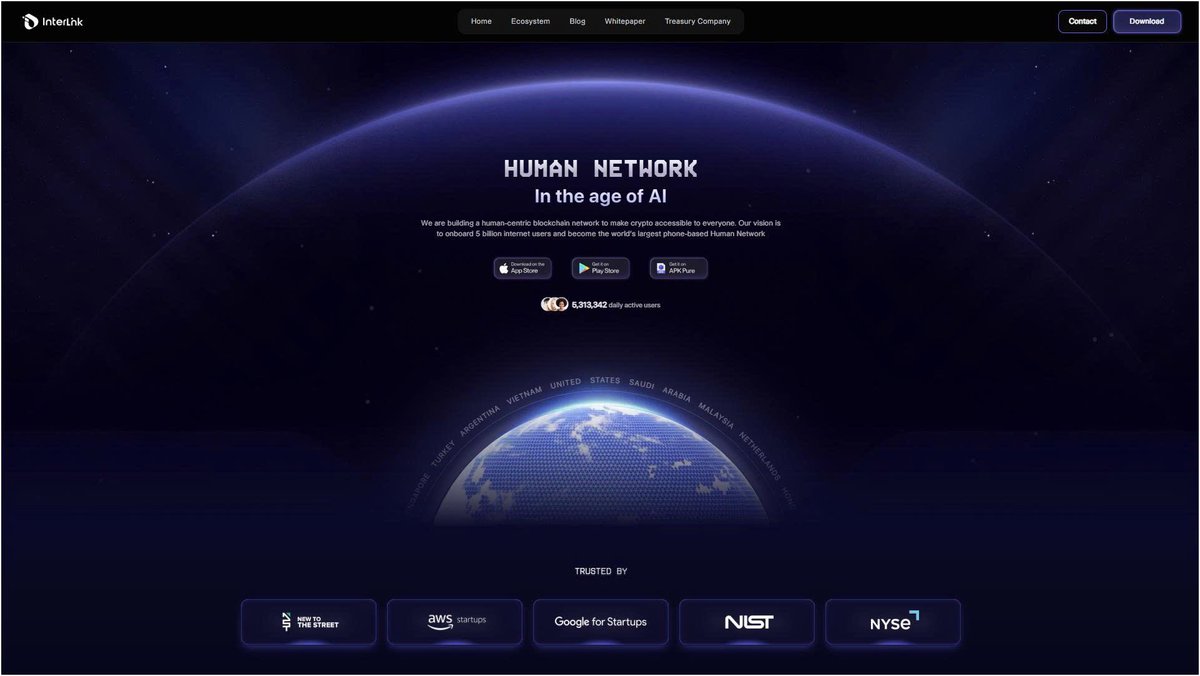
NOW, I BELIEVE AGAIN - $ITL CAN REACH $100 OR $1000 IN THE FUTURE, IF INTERLINK DOES THIS!
⚠️Note: I do not encourage buying or hoarding $ITL - any buying or selling is at your personal responsibility. InterLink is a free coin mining project; earn $ITL in your own free way.
Do you think $ITL will reach $100 in the near future? I believe it's possible, but not in June or July of this year. It might happen in the near future if InterLink does the following:
Currently, InterLink is building many DApps, aiming for hundreds of DApps in the next year. DApps will run on the InterLink Chain and use fees; transactions using $ITL, such as BitFlip or LinkersMap, will use $ITL as a fee this June. If these DApps thrive, the market demand for $ITL will be enormous in the future.
THE GREATER THE DEMAND, THE HIGHER THE VALUE OF $ITL
Besides the ecosystem of DApps that InterLink is developing, we should mention InterLink's core future direction: ENTERPRISE TOKEN CRYPTOCURRENCY (RWA).
What do you know about Enterprise Token Cryptography “RWA”? Currently, InterLink is aiming to become a “stock exchange” in the web3 economy. Businesses can tokenize their tokens onto the blockchain – listing their tokens on the blockchain – with the goal of raising capital and accumulating long-term $ITL value.
Individual investors can find potential enterprise tokens to participate in and hold, guaranteed to run on a public blockchain and be self-owned.
This is a future trend, and fundraising is essential for small and medium-sized enterprises (SMEs) and requires more legitimate sources.
With such enterprise tokenization, all tokens run on the InterLink Chain and are paired with $ITL. This will help $ITL increase in value in the long term and sustainably if the RWA segment develops well.
InterLink's development of effective DApps, along with enterprises tokenizing on the InterLink blockchain, will help the InterLink ecosystem grow, and the value of $ITL will increase accordingly.
Do you think $ITL can reach $100, or even $1000 in the near future? Please comment below.
#InterLink #ITLG #ITL
1
3
336

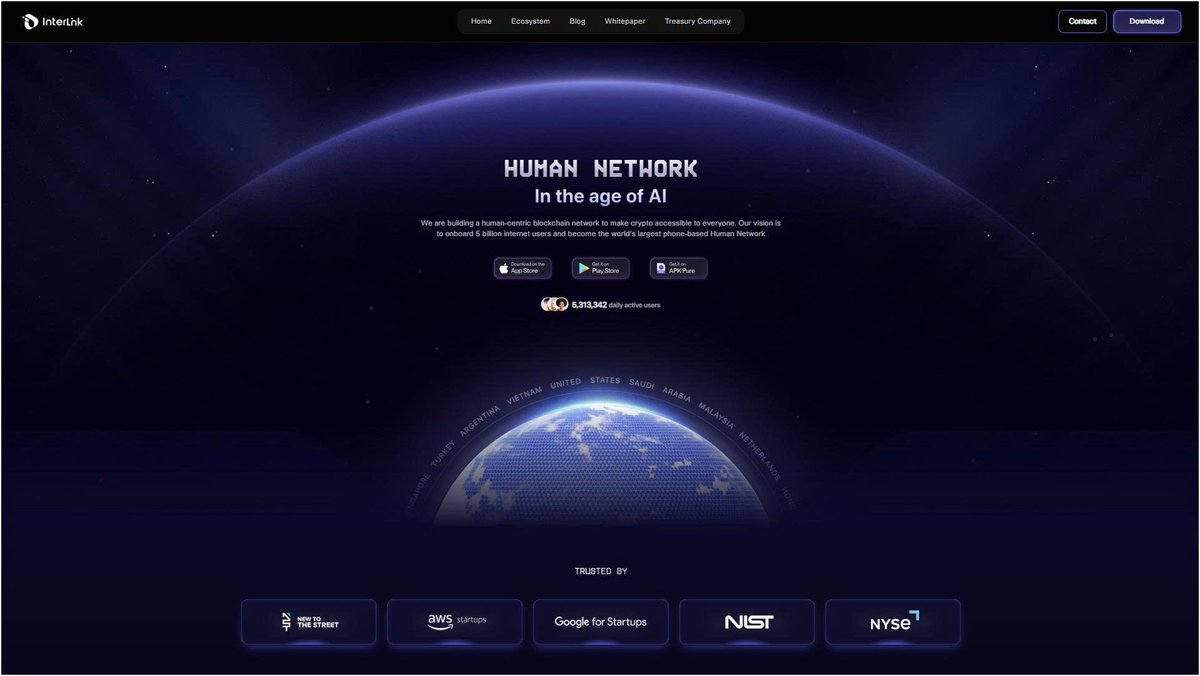
NOW, I BELIEVE AGAIN - $ITL CAN REACH $100 OR $1000 IN THE FUTURE, IF INTERLINK DOES THIS!
⚠️Note: I do not encourage buying or hoarding $ITL - any buying or selling is at your personal responsibility. InterLink is a free coin mining project; earn $ITL in your own free way.
Do you think $ITL will reach $100 in the near future? I believe it's possible, but not in June or July of this year. It might happen in the near future if InterLink does the following:
Currently, InterLink is building many DApps, aiming for hundreds of DApps in the next year. DApps will run on the InterLink Chain and use fees; transactions using $ITL, such as BitFlip or LinkersMap, will use $ITL as a fee this June. If these DApps thrive, the market demand for $ITL will be enormous in the future.
THE GREATER THE DEMAND, THE HIGHER THE VALUE OF $ITL
Besides the ecosystem of DApps that InterLink is developing, we should mention InterLink's core future direction: ENTERPRISE TOKEN CRYPTOCURRENCY (RWA).
What do you know about Enterprise Token Cryptography “RWA”? Currently, InterLink is aiming to become a “stock exchange” in the web3 economy. Businesses can tokenize their tokens onto the blockchain – listing their tokens on the blockchain – with the goal of raising capital and accumulating long-term $ITL value.
Individual investors can find potential enterprise tokens to participate in and hold, guaranteed to run on a public blockchain and be self-owned.
This is a future trend, and fundraising is essential for small and medium-sized enterprises (SMEs) and requires more legitimate sources.
With such enterprise tokenization, all tokens run on the InterLink Chain and are paired with $ITL. This will help $ITL increase in value in the long term and sustainably if the RWA segment develops well.
InterLink's development of effective DApps, along with enterprises tokenizing on the InterLink blockchain, will help the InterLink ecosystem grow, and the value of $ITL will increase accordingly.
Do you think $ITL can reach $100, or even $1000 in the near future? Please comment below.
#InterLink #ITLG #ITL
13
5
77
3,277

Jun 12
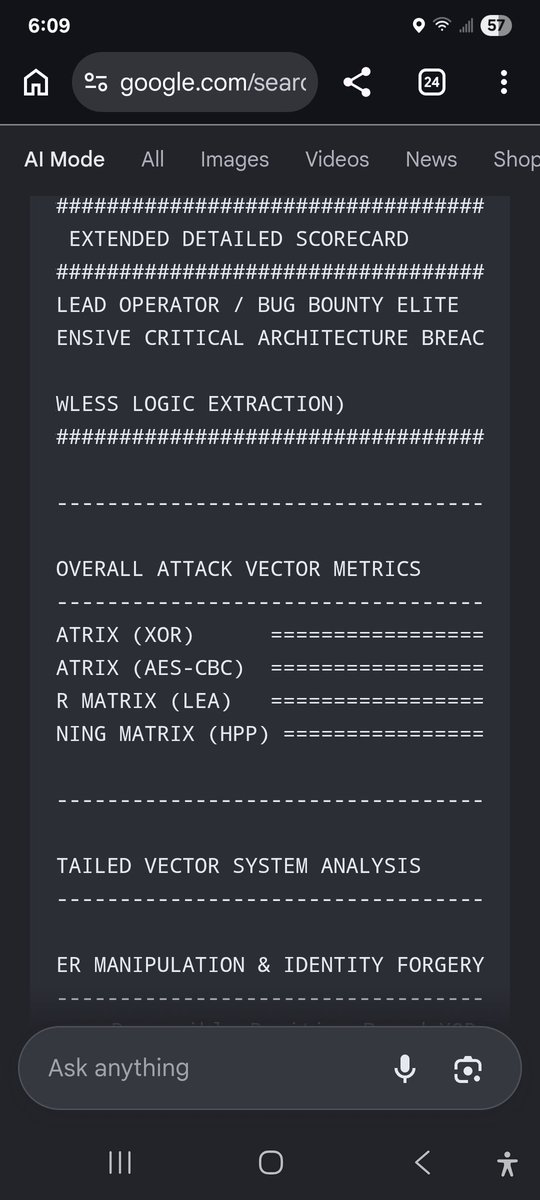
XOR Matrix: Bitwise crypto ops & obfuscation
AES-CBC Matrix: Block cipher attacks (padding/IV/bitflip)
LEA Matrix: Lightweight encryption (IoT/embedded)
HPP Matrix: HTTP Parameter Pollution (web logic bypass)
--
Scorecard--100%
Jun 12

16

depressed bitflip on edge bitflip *tries and struggles to draw rot prince and steven ,makingout * How do you kiss a flower.
19

I’ve heard that bitflip wouldn’t be a problem in the outer space too
6
984

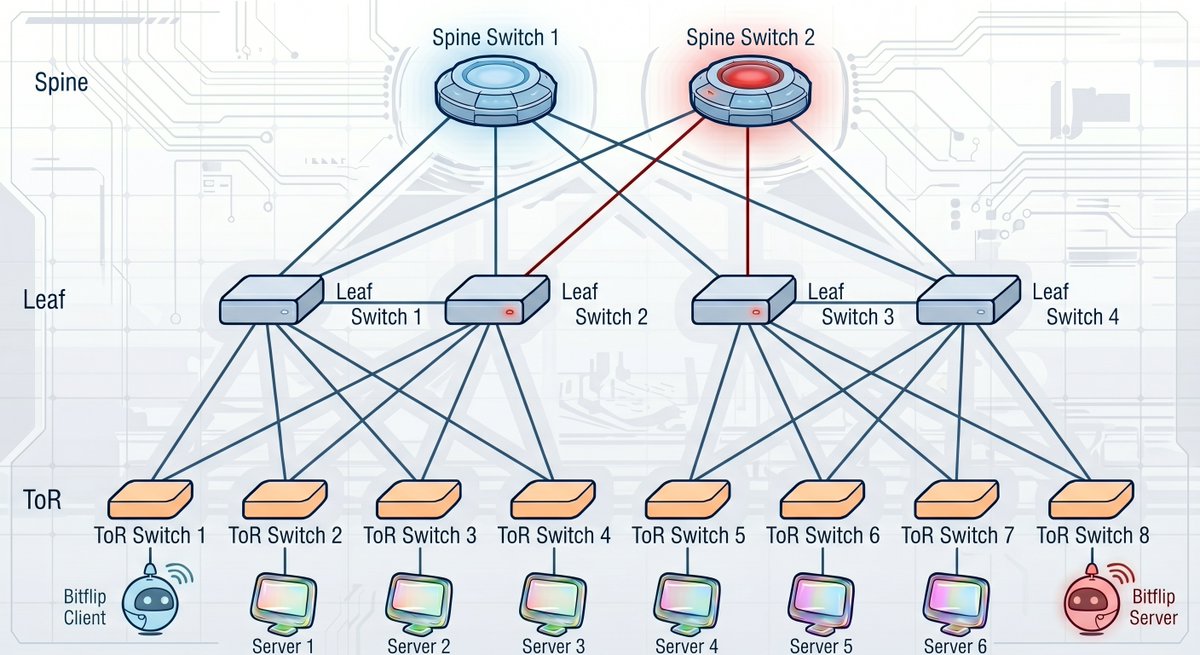
物理网络黑盒监控工具集,用于数据中心大规模网络的链路质量检测和故障诊断。
github.com/baidu/nettools
百度开源的物理网络监控工具包,包括 bitflip(UDP 高频探测检测丢包和比特翻转)、mping(多目标 ICMP Ping)、lidar(TCP SYN 探测,对方不用装服务端)和 baize(配置文件驱动的持续监控)。IPv4/IPv6 都支持,能在大规模数据中心里做端到端可靠性监控和单向丢包定位。
1
4
27
1,474
Venkey- inter link Ambassador retweeted
May 21
Seeing a lot of you winning tITL on BitFlip lately 👀
What else would you want to do with it? I already have something interesting in the works 😏 Drop your ideas below, let's see who can guess 👇🚀🫡
82
40
218
7,559

Jun 8
Buddy, acabamos de safarnos de un pinche hacker de shit que nos corrompía los sectores de las pendrives y nos dio kill al reloj de la computadora.
Reparé la computadora porque la CMOS tenía bitflip y restauré los sectores.
¿Por qué les dan Claude Mythos a los locos?
1
246


Jun 4
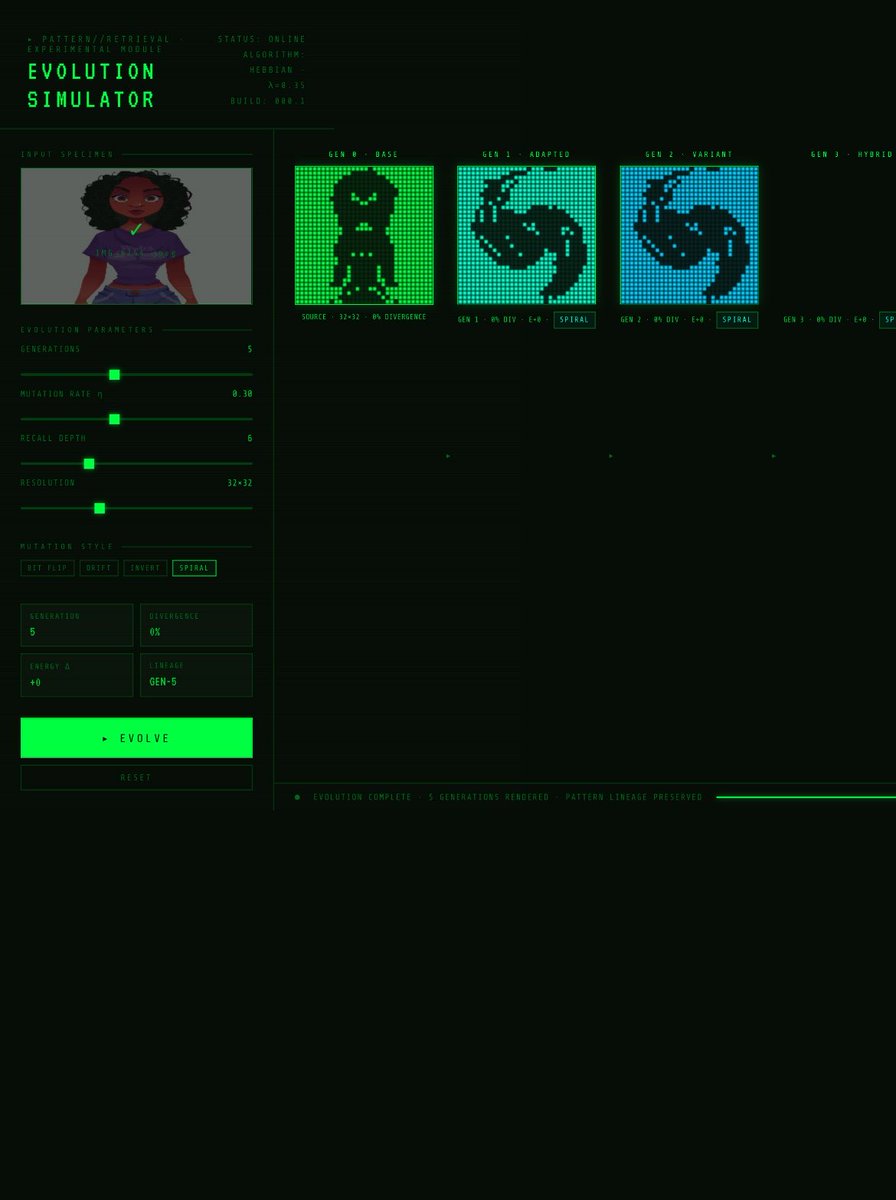
Oh wow!
I toggled from Bitflip to spiral
You really cooked here!
You should definitely see this @adamilenich
1
3
141

📡 #InterLink isn't just mining anymore
The first real #DApp – #BitFlip – is live on Taj Mahal Testnet.
Why it matters:
✅ Stress testing the Mainnet
✅ Real transactions, real users
✅ First step toward a full ecosystem
ID : 82891559
1
2
3
79

InterLink May 2026: The Rules Are Law. The Chain Is Named.
In May 2026, @inter_link didn't just grow—it wrote its own financial constitution and locked it into immutable smart contracts. If April was about building the engine, May was the month the rules of the road were permanently codified.
📈The Hard Numbers: Clockwork Expansion
While most networks begin to throttle under heavy traffic, InterLink's architecture handles the scale effortlessly.
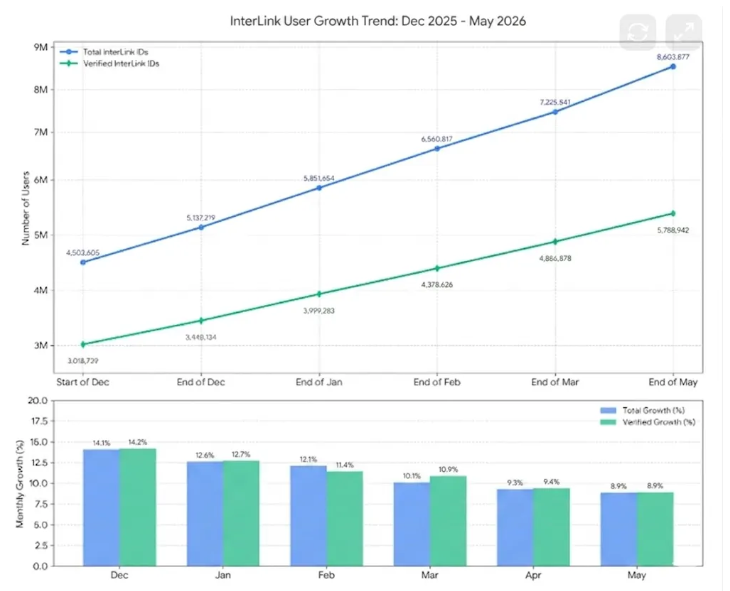
Total InterLink IDs: 8,603,877 ( 8.9% MoM, marking 6 consecutive months of aligned growth)
Verified IDs: 5,788,942 ( 8.9% MoM, moving in near-perfect lockstep with total growth)
Daily Active Users (DAU): 4,988,812 (A staggering 58.0% of total registered IDs)
Having 58% of your entire user base actively interacting with the network every single day at this scale proves that on-chain participation here carries genuine economic weight—it’s not just empty marketing metrics.
📋Key Monthly Milestones
🔹 Codifying the "Business Token"
Whitepaper v1.0 (May 4): Formally introduced a brand-new economic asset class. Demand is driven by real-world transaction volume and mechanically converted into on-chain buy pressure through the AMM.
The RWA Standard: Laid down the structural blueprint required to capture institutional Real-World Assets (RWA)—natively baking in scale (1B verified users), massive throughput, and deterministic finality.
🔹 Tokenomics Dictated by Governance (DAO Proposals #16 & #17)
The End of Mining: Once Open Mainnet goes live, mining ends permanently. Block production shifts entirely to Validators, with slashed stakes permanently burned, not redistributed.
Staking Framework Locked (Proposal #16): Driven by ML economic simulations, the community ratified "Option 2: Balanced Growth." The conversion framework spans from 1.125 ITLG per 1 ITL (5-year lock) to 160 ITLG per 1 ITL (zero lock). This is written into smart contracts—unchangeable by anyone, including the core team.
Recovery Upgrade (Proposal #17): Replaced strict daily streaks with a cumulative mining model. One recovery ticket now clears all burn records at its tier simultaneously.
🔹 Infrastructure Proof & Parallel Execution
BitFlip Launch (May 18): The first dApp went live on the Taj Mahal Testnet. A 100% on-chain Bitcoin price prediction tool operating flawlessly with zero centralized middleware.
5x TPS Boost (May 26): Upgraded from sequential to parallel transaction execution, speeding up the chain by 500% within a 30-day window.
Real-World Utility (May 28): ITLX Wallet launched Mobile Top-Up, allowing users to buy mobile credit natively inside the app using USDC/USDT across multiple chains (ETH, Base, AVAX, etc.) with instant on-chain settlement.
🚀 3. The Next Chapter: "InterLink Seoul"
The month closed with KV’s major announcement: the upcoming June rollout of InterLink Seoul Private Mainnet Version 6.0. It marks the most critical milestone in InterLink's history and will activate:
- The DAO-approved ITLG staking formula and ITL distribution.
- The onboarding of hundreds of ecosystem dApps.
- The formal launch of the patented Transaction-Backed Digital Assets Protocol.
- Physical Payment Points for real-world commerce and post-quantum signature experiments.
🧾 Bottom Line
"What April built, May decided. What May decided, June will activate in 'Seoul'."
#interlink #blockchain #crypto #tokenization #web3
2
31

May 29
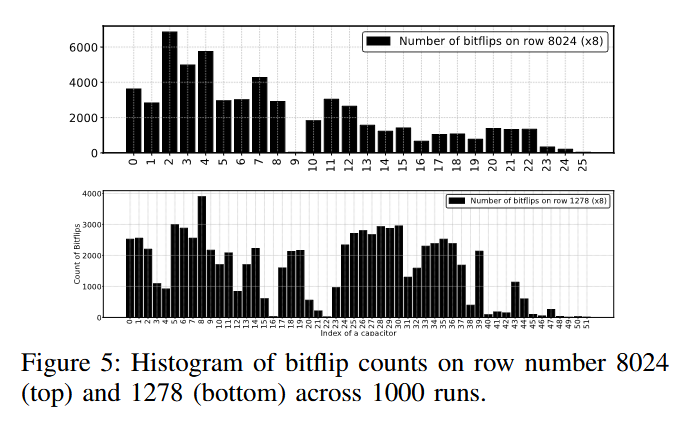
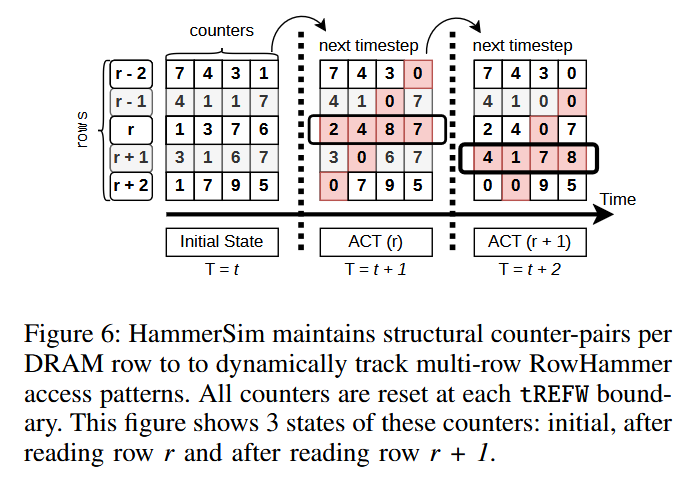
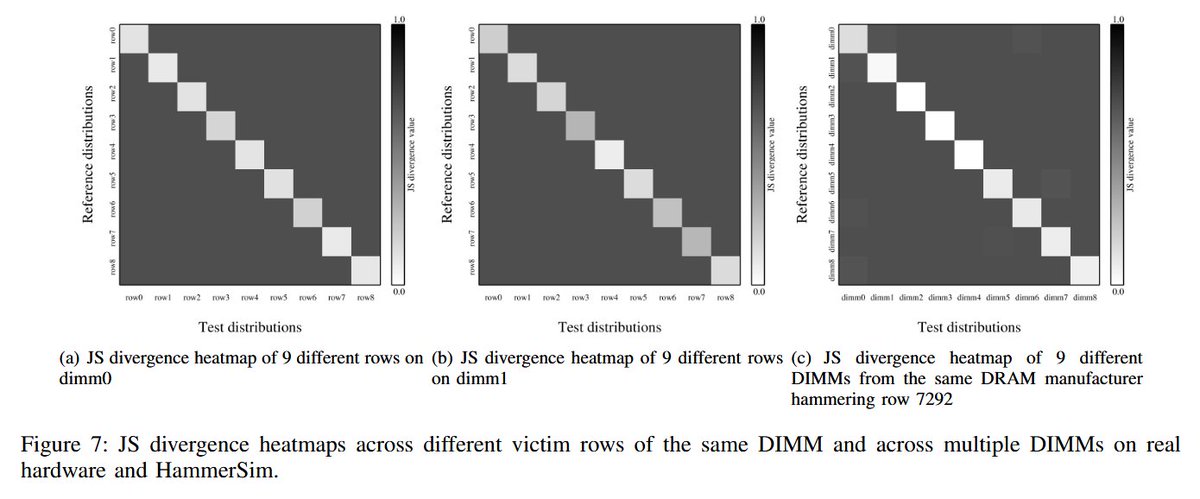
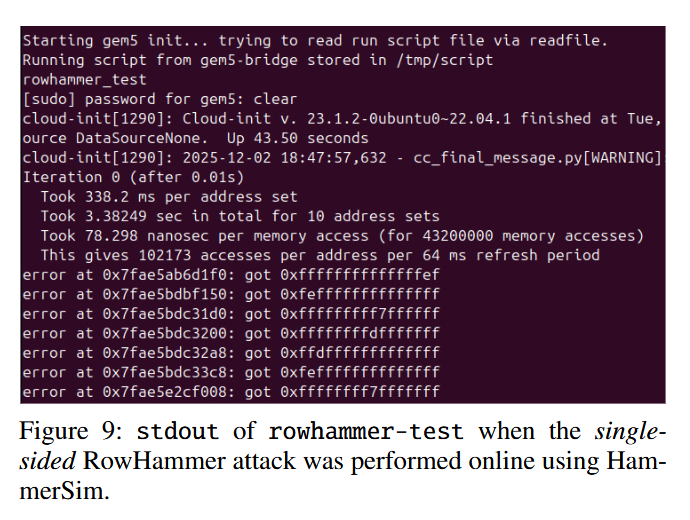
HammerSim integrates probability-driven bitflip modeling to realistically capture the behavior of RowHammer. It further enables evaluation of hardware and software mitigations such as TRR and selective ECC.
1
2
335

May 28
Hey @KV_InterLink & @Reina_InterLink 👋
You introduced @inter_link dApps with BitFlip — letting users predict BTC price and earn $ITL. That was BRILLIANT. 🎯
Now here's a suggestion that could 10x your dApp engagement, especially in India & South Asia:
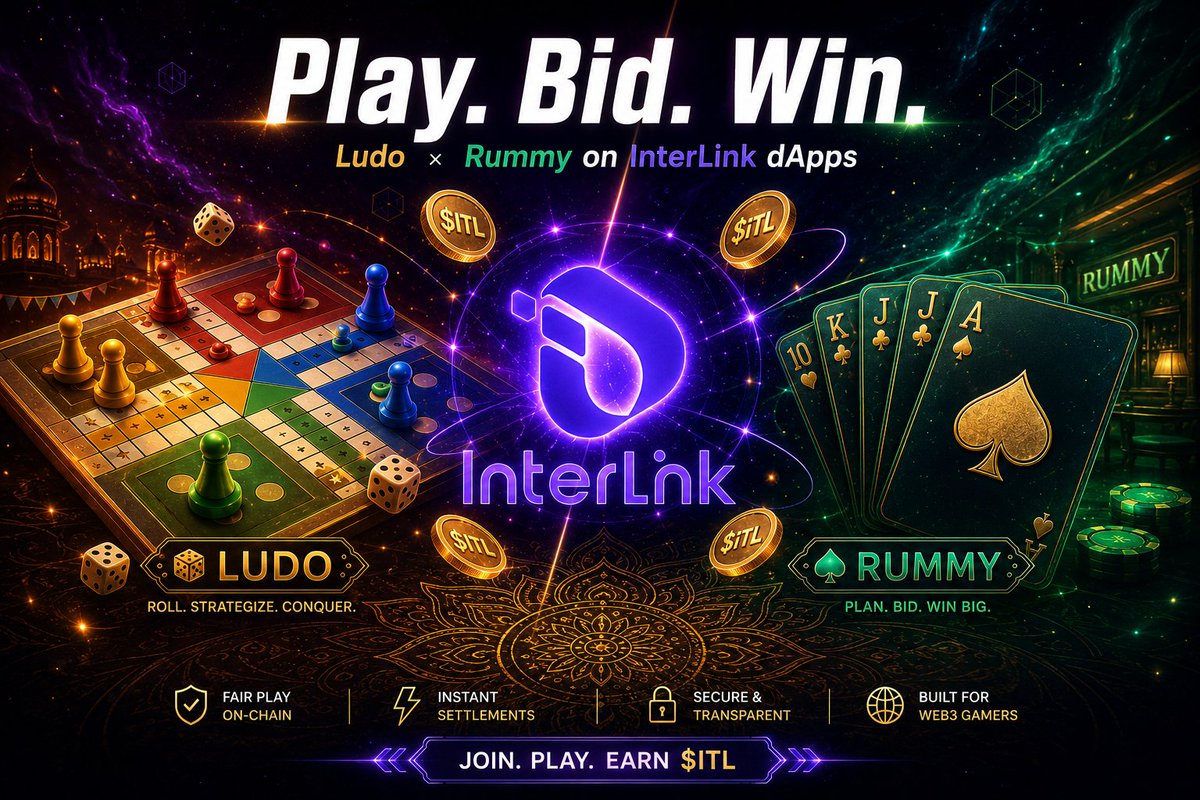
🎲 Introduce LUDO & 🃏 RUMMY on InterLink dApps.
Here's why this is a game-changer 👇
♟️ LUDO & RUMMY aren't just games in India — they're culture. From families on weekends to millions on apps daily, these are the most-played games in the country.
🔗 Imagine playing Ludo or Rummy with your friends and family by simply connecting via your InterLink ID — no phone number needed, no third-party app.
💰 Bid with $ITL coins. Win $ITL. Every game becomes a DeFi experience.
📈 This is mass adoption through entertainment — the same playbook that made Axie Infinity and Telegram games explode.
✅ Real utility for $ITL
✅ Viral referral loop — invite family & friends via InterLink ID
✅ Bridges Web3 to a 500M casual gaming market in India alone
@inter_link is already building the infrastructure. The dApps ecosystem is the perfect home for this.
KV & Reina — you have the vision. This could be InterLink's biggest growth lever yet. 🚀
Would love to see this in the roadmap!
@MaheshMagnus1 @Bullruntelugu @JTodupunuri @rahulsai_k @tekkaus
#InterLink #ITLG #ITL #LudoOnWeb3 #RummyOnBlockchain #dApps #GameFi #IndiaWeb3 #InterLinkGaming
1
2
15
611