
Jun 3
Dr. Craig Wright Continues to Demonstrate Exceptional Technical Productivity — Real Bitcoin (SV) Is Alive and Developing at High Speed ⚡
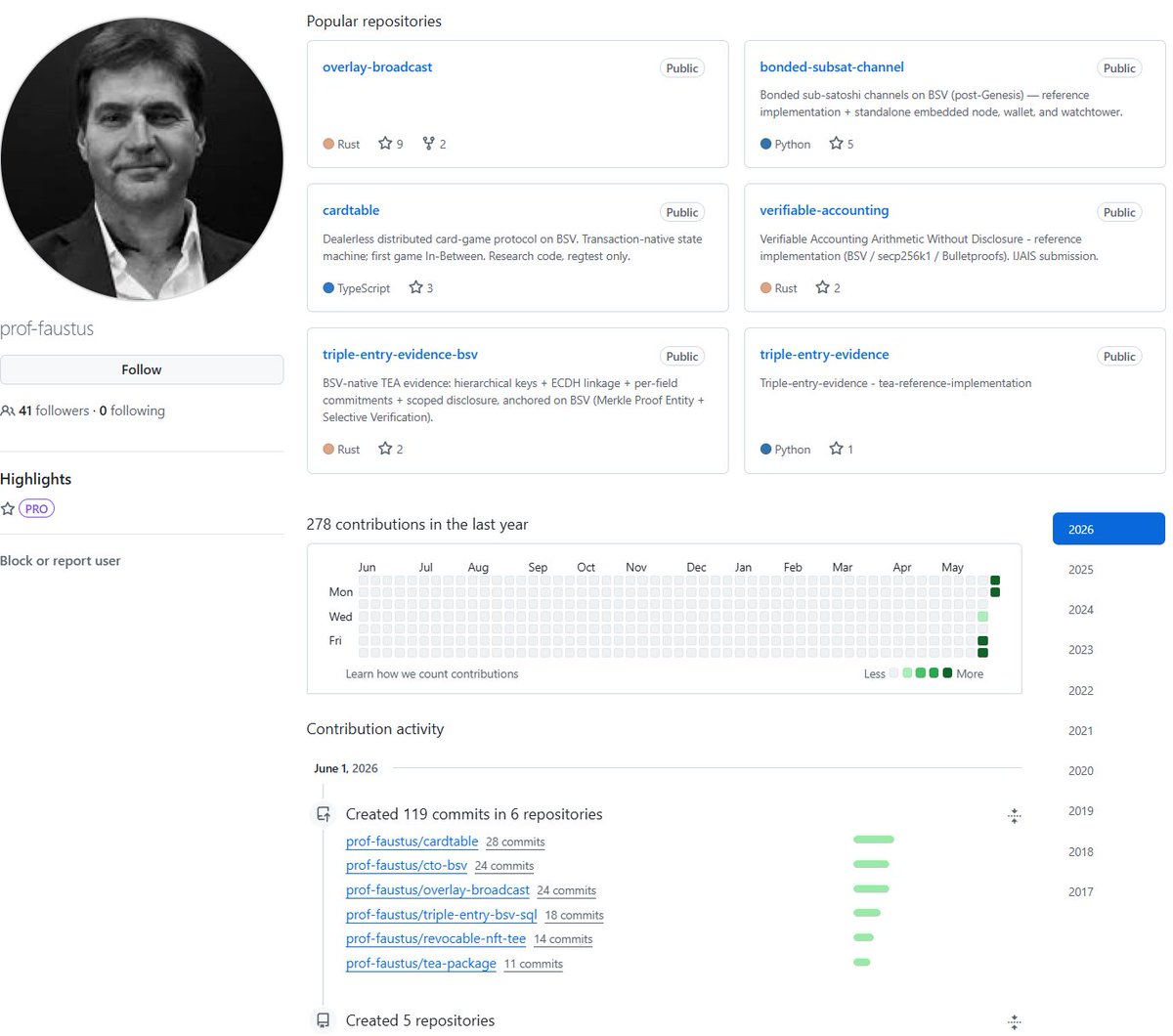
In less than a week, 15 new GitHub repositories have been created under his development alias.
This level of consistent technical output is remarkable. It demonstrates that Dr. Wright remains actively engaged at the code level— not only writing papers and books, but directly contributing to development.
For those paying close attention, this serves as clear evidence that Real Bitcoin (SV) is not a static or dormant project . It is alive, actively maintained, and developing at a rapid pace.
While much of the broader crypto space focuses on narratives, price speculation, and marketing — the original protocol continues to receive hands-on technical development grounded in Satoshi’s vision.
Substantial infrastructure work is happening behind the scenes.
Real Bitcoin (SV) is moving forward.
The storm is coming. ⚡
Sources:
- GitHub: github.com/prof-faustus
- Community observation: x.com/bsvsimp/status/2061403…
#RealBitcoin #BitcoinSV #BSV #SatoshiVision #BitcoinDevelopment #CraigWright #Teranode
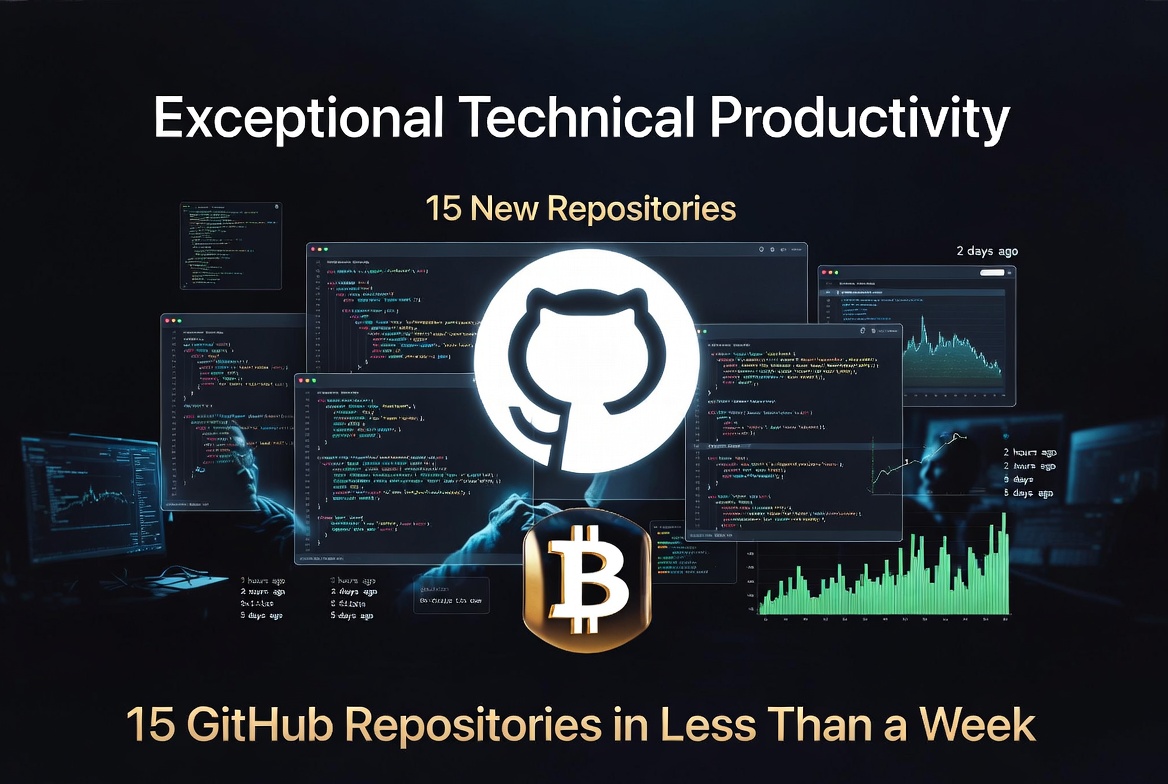

Dr Craig can code as fast as he tweets and writes books and papers 😊
15 GitHub repositories in less than a week!
5
19
84
1,854

May 12
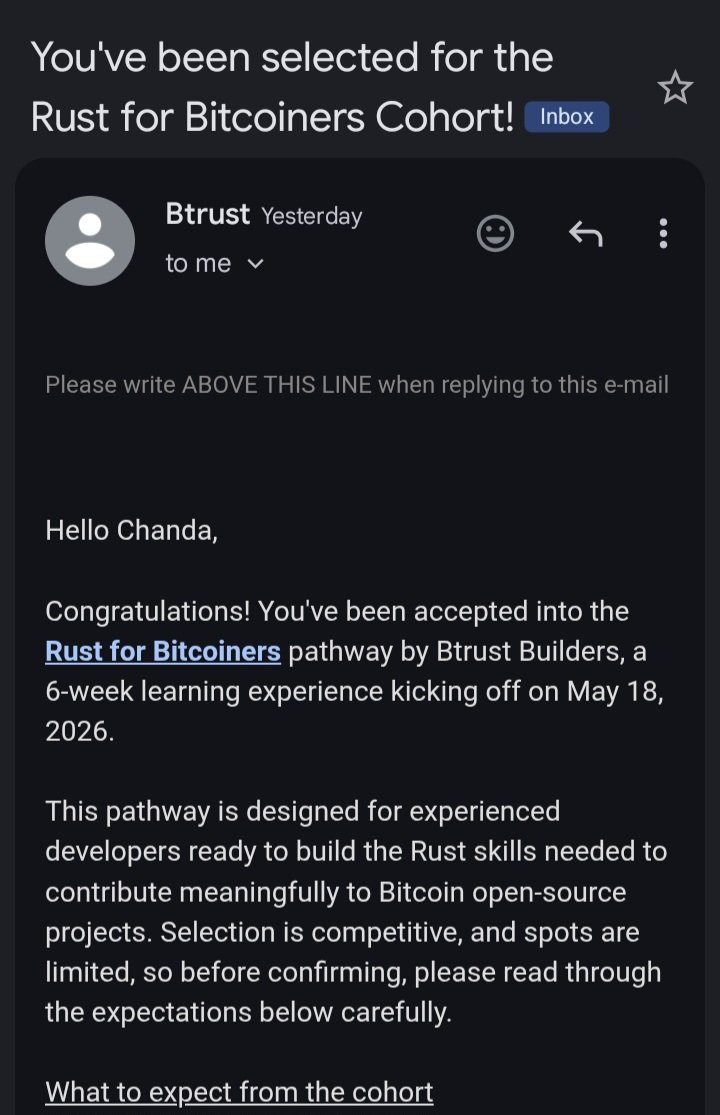
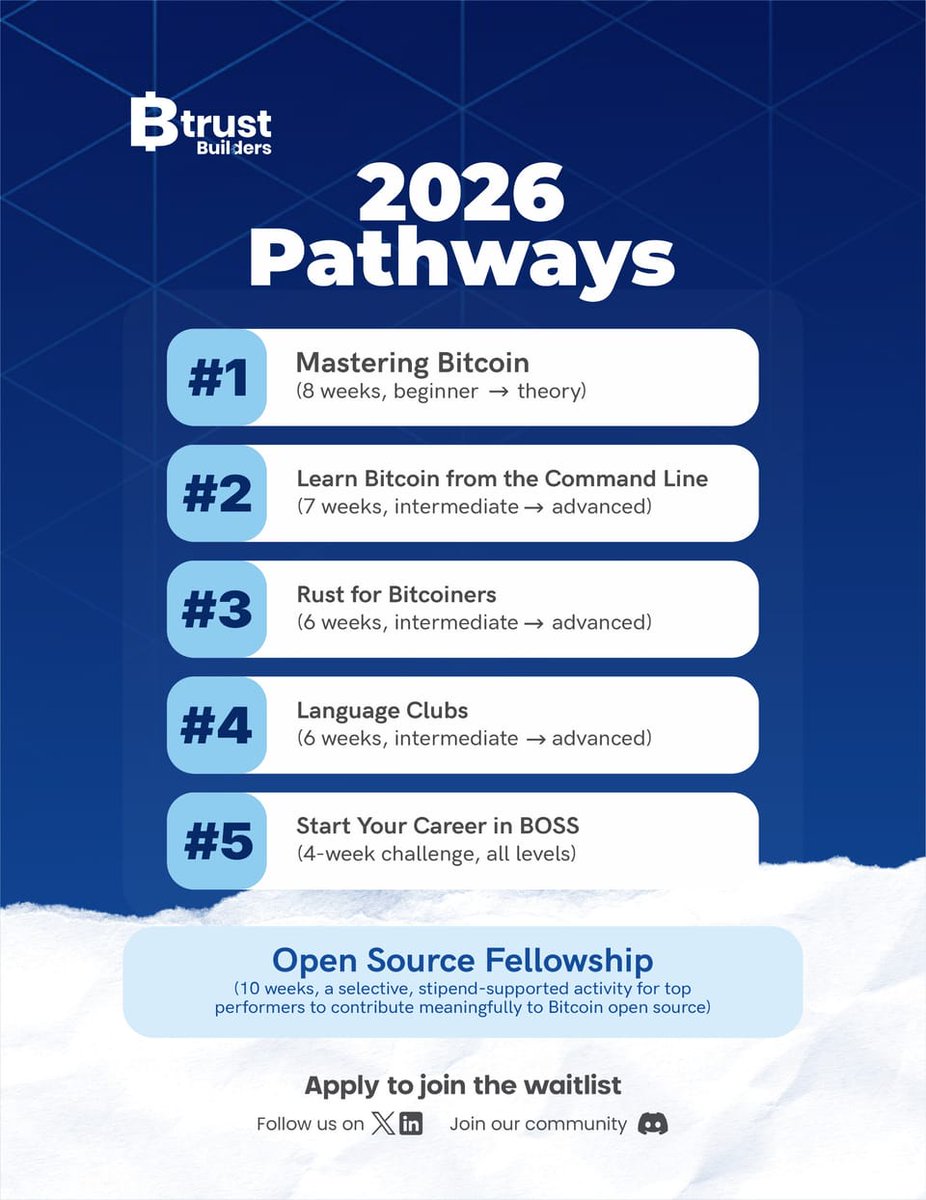
Excited to share that I’ve been selected for the Rust for Bitcoiners program by @btrust_builders for 2026!
Looking forward to deepening my Rust skills and contributing to Bitcoin open-source projects.
#Bitcoin #RustLang #OpenSource #BtrustBuilders #BitcoinDevelopment
2
1
14
788


Apr 2
Most people think a Bitcoin wallet works like a bank account. It doesn’t.
Bitcoin runs on a different model entirely. One that changes how ownership, control, and transactions actually work.
Understanding UTXOs is a step toward understanding Bitcoin itself.
#BitcoinEducation #BitcoinDevelopment #BitcoinDada



1
15
328

Previous week’s training recap: from network propagation to chain consensus
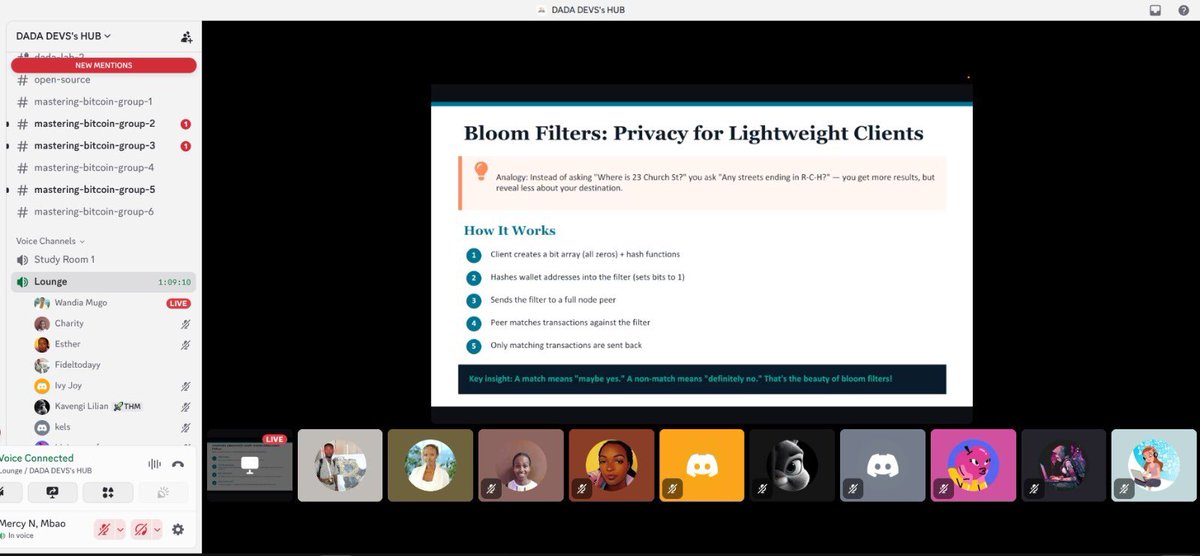
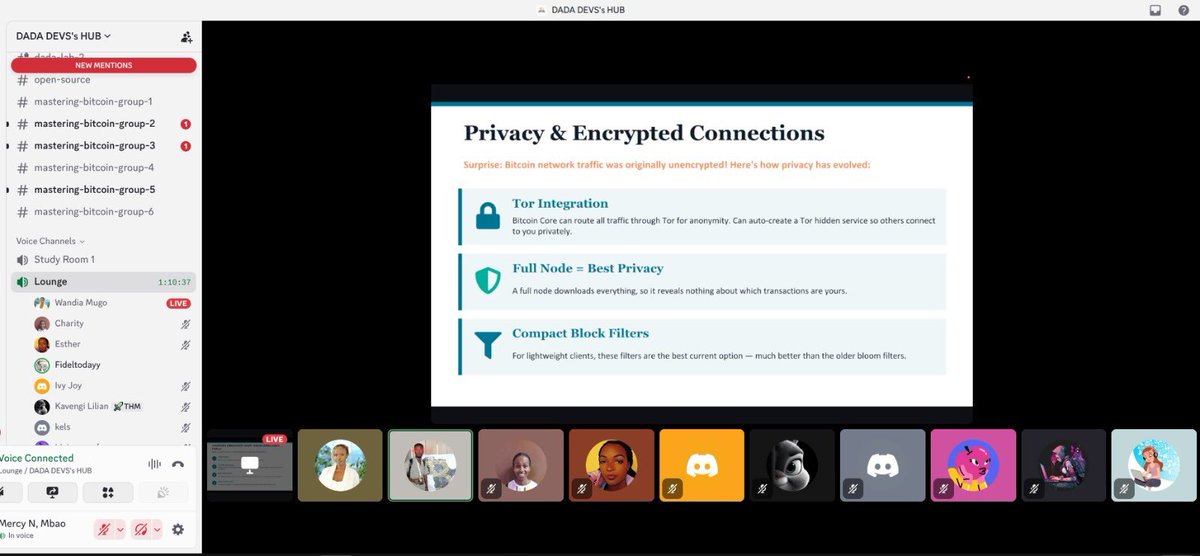
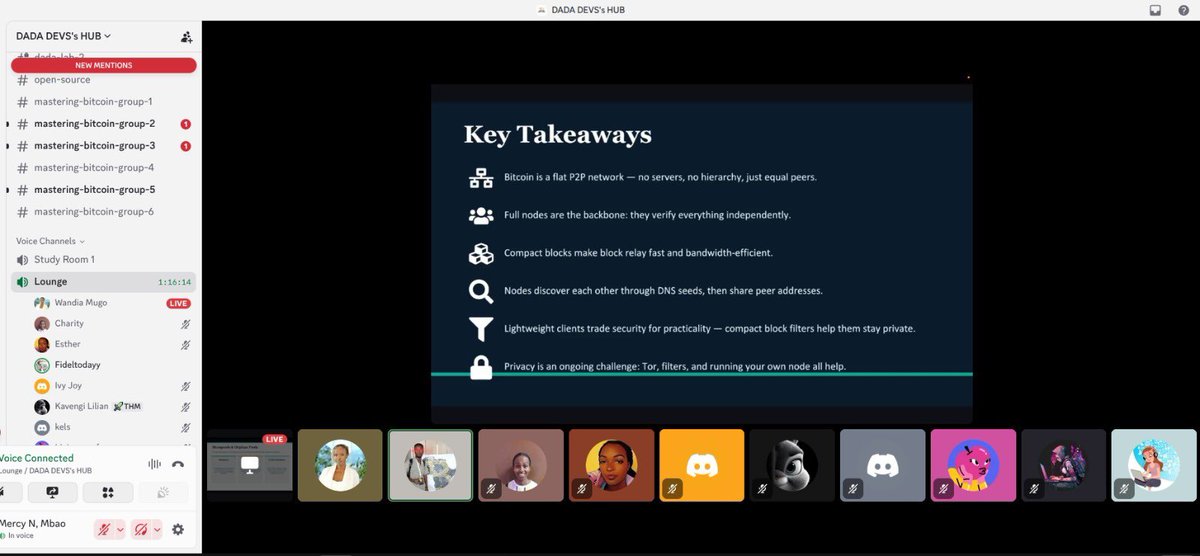
Sessions led by Fidel, CEO @bitika_KE and @tobi_bams, CTO @mavapay focused on Bitcoin as a distributed system in practice: examining how nodes operate at the network layer and how consensus emerges at the protocol level.
Key areas covered:
P2P Architecture: how Bitcoin nodes establish connections without central coordination, discover peers, and propagate transactions across the network
Mempool Mechanics: how unconfirmed transactions are stored, prioritised, and selected for block inclusion
Full Nodes vs SPV Clients: the distinction between independent verification and delegated trust, including the associated security tradeoffs
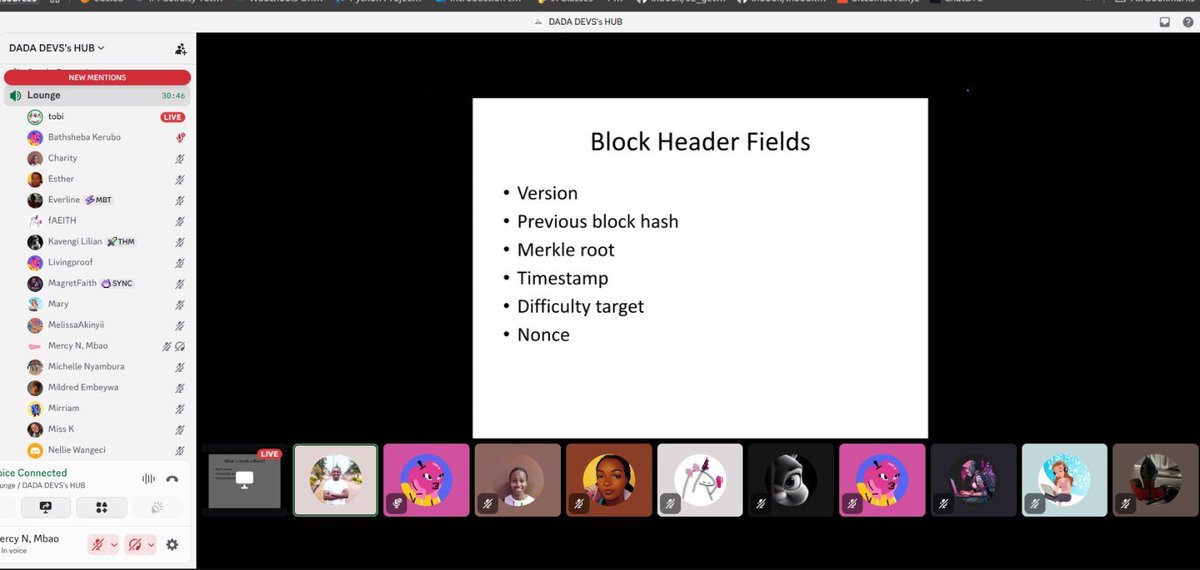
Block Structure: versioning, previous block references, Merkle roots, timestamps, difficulty targets, and nonce fields
Merkle Trees: efficient verification of transaction inclusion without requiring full block data
Validation Rules and the Longest Chain Rule: how nodes independently converge on a canonical state without direct coordination
Forks: the technical distinction between soft forks and hard forks, and their implications for protocol upgrades
#BitcoinDevelopment #DadaDevs
3
11
249
No part of programming is truly easy.
That is why we are giving you a compact HTML cheat sheet with only the essentials to help you code faster, reinforce your fundamentals, and focus on building real projects.
#BitcoinDevelopment #DadaDevs #HTML #Programming
6
108
Multiple edge cases and it’s Friday… Satoshi would definitely wait till Monday 😅
#DadaDevs #BitcoinDevelopment #FridayMeme

4
101
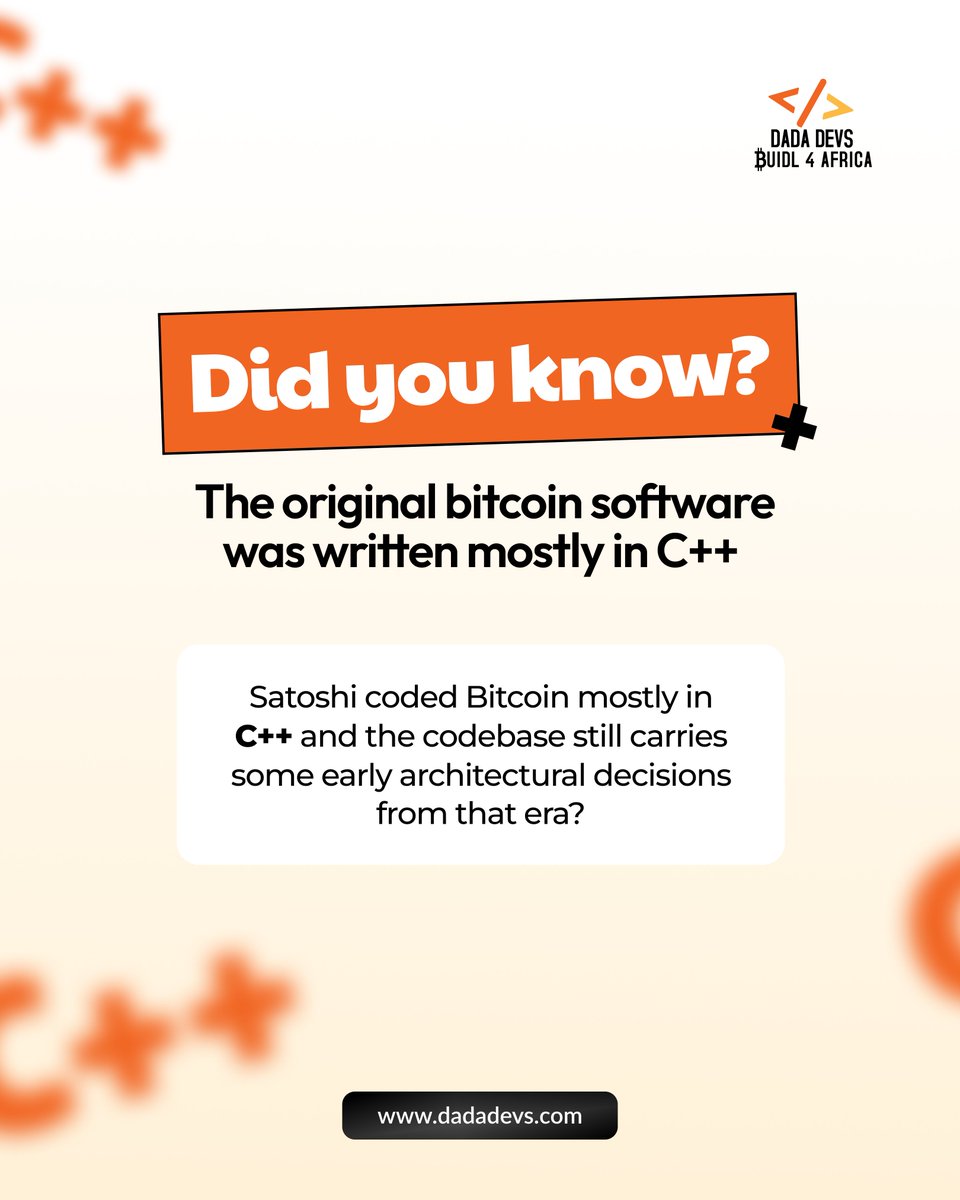
When Satoshi Nakamoto created Bitcoin, they needed a language that could handle direct memory control, high performance, and low-level system access, all critical for a decentralized currency that relies on cryptography and peer-to-peer networking.
C was the obvious choice because it offered speed, deterministic behavior, and mature libraries for complex data structures.
Plus, Satoshi wanted a language that could prevent accidental bugs in money handling.
Ever wondered why C was the choice?
#DadaDevs #Bitcoin #BitcoinDevelopment
10
132
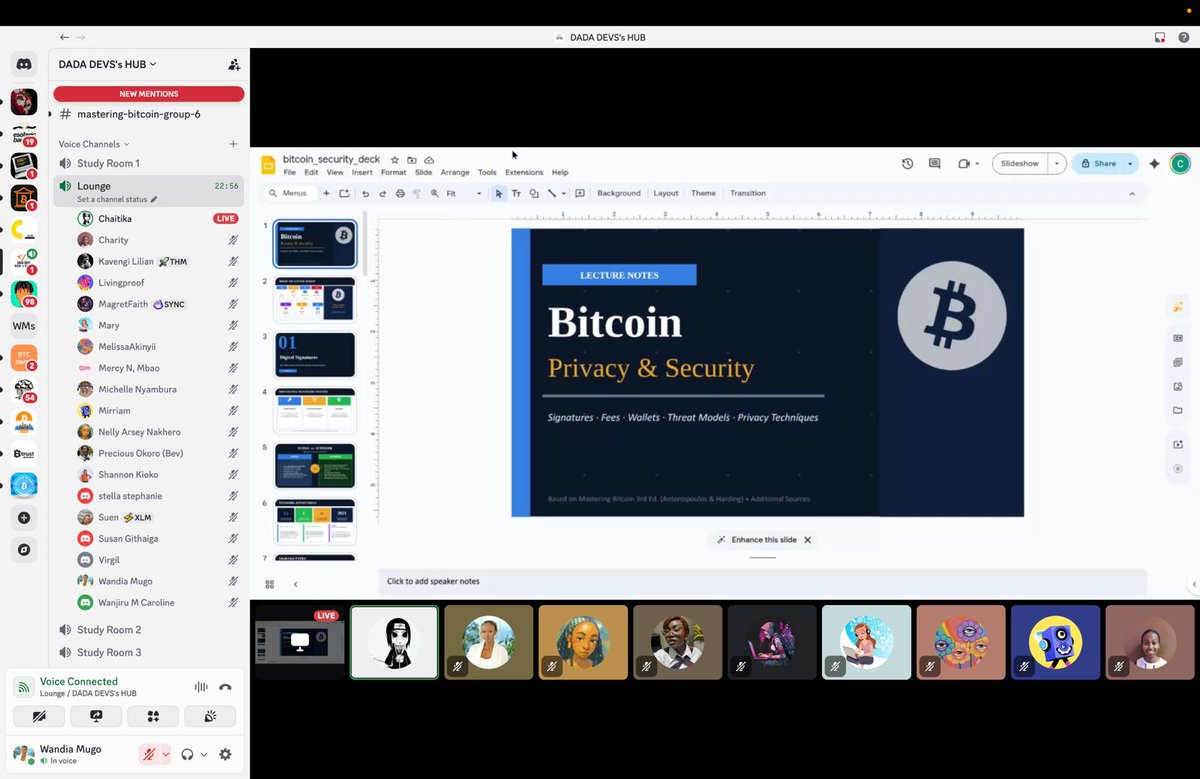
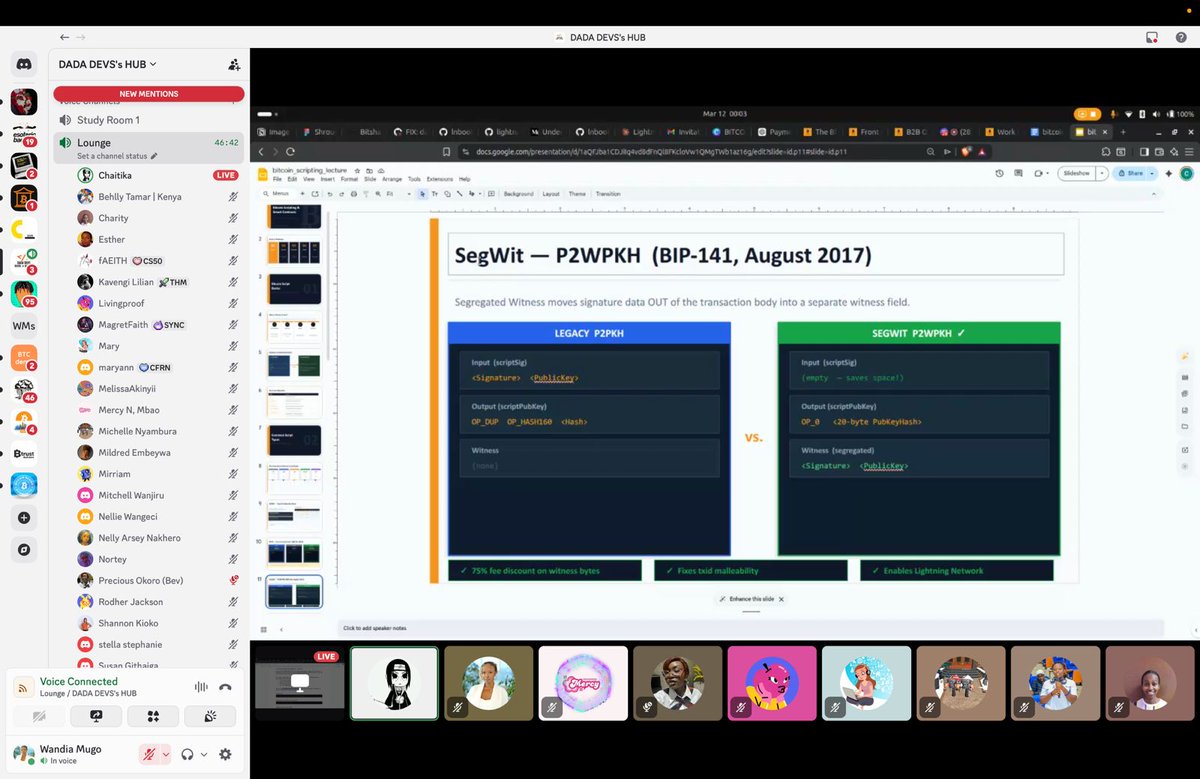
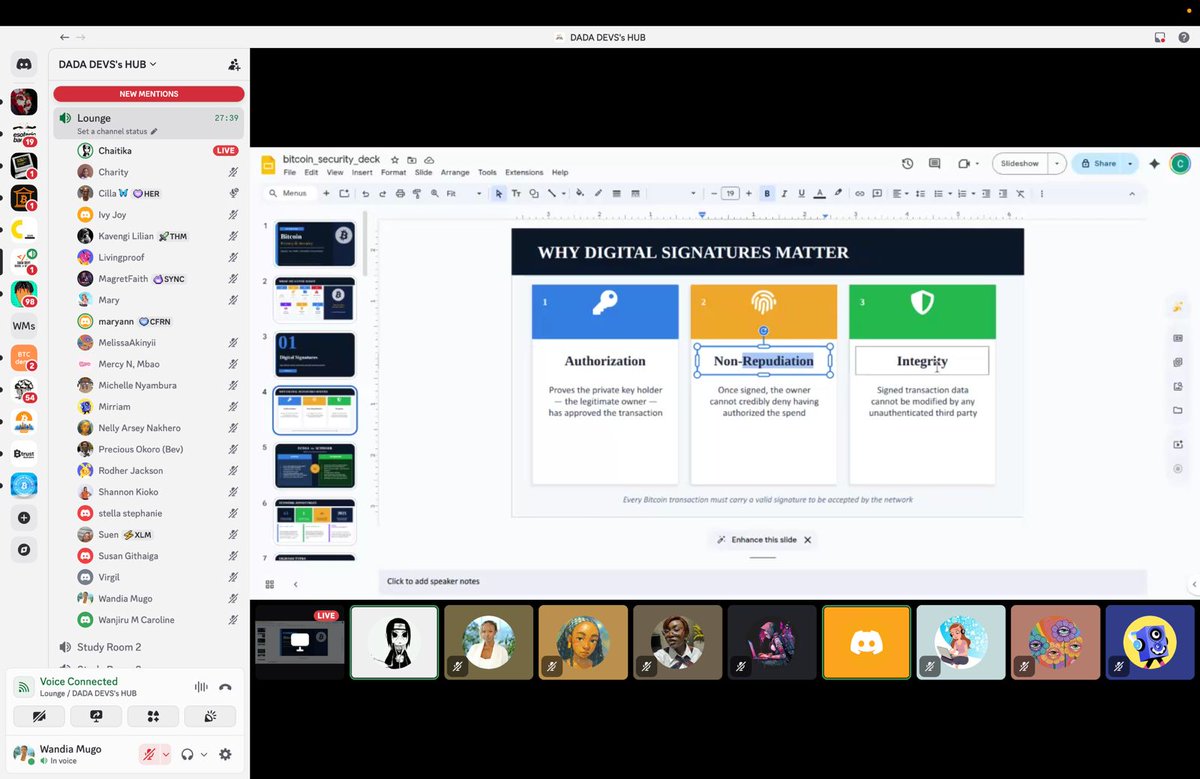
Last week, through the lens of @Chaitika_ the focus was on Scripting, key control, and transaction-level behavior.
Script was approached through execution rather than abstraction, with emphasis on how outputs define spend conditions and how validation enforces them. P2PKH, P2SH, and P2WPKH were used as reference points, particularly in understanding SegWit’s role in transaction structure, weight, and malleability fixes.
Spending conditions were extended into multisig, timelocks, and HTLCs. This covered m-of-n authorization, absolute and relative timelocks via nLockTime and nSequence, and hashlock constructions for conditional flows.
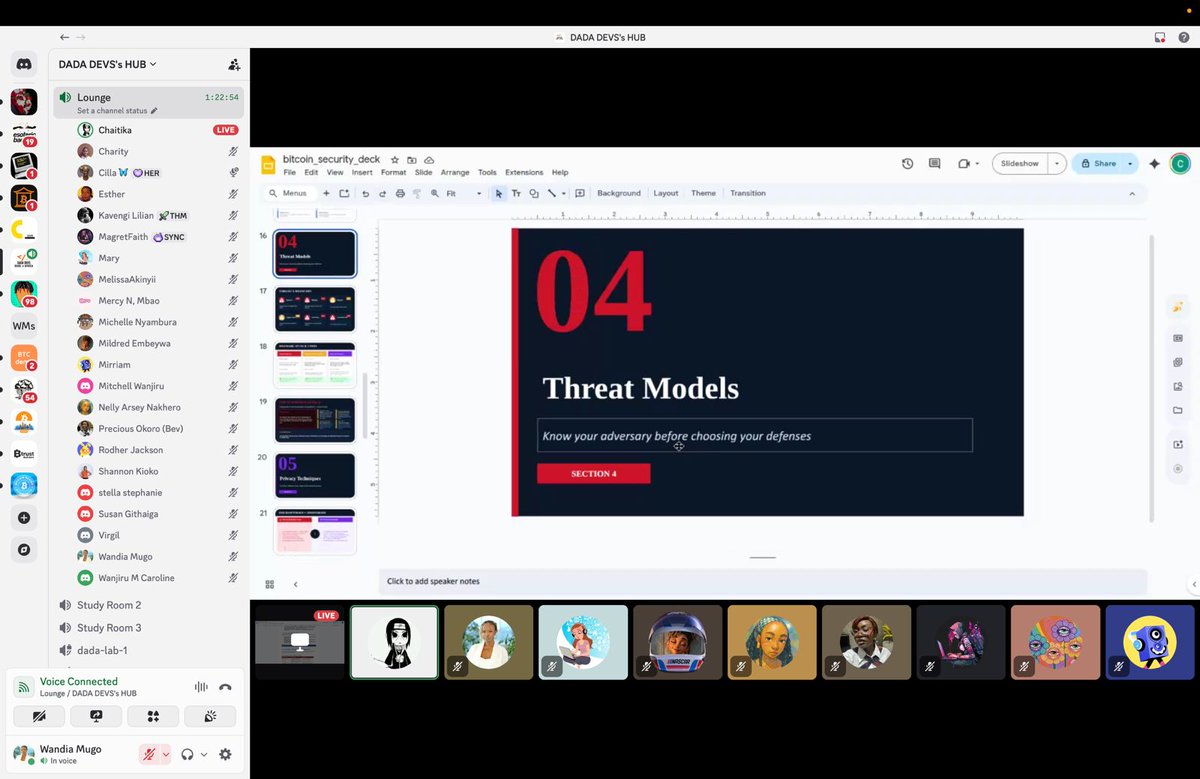
On the security side, the discussion centered on key ownership. Authentication and authorization were separated at the wallet level, with cold storage treated as an operational necessity for minimizing key exposure.
Threat models focused on realistic vectors, including malware, phishing, and physical compromise.
At the transaction layer, signatures and fee rates were examined in relation to validation and mempool policy.
Privacy was discussed in terms of UTXO linkability, CoinJoin usage, and the impact of address reuse on traceability.
#BitcoinDevelopment #BitcoinSecurity #DadaDevs
2
9
184
Another week of class⚡
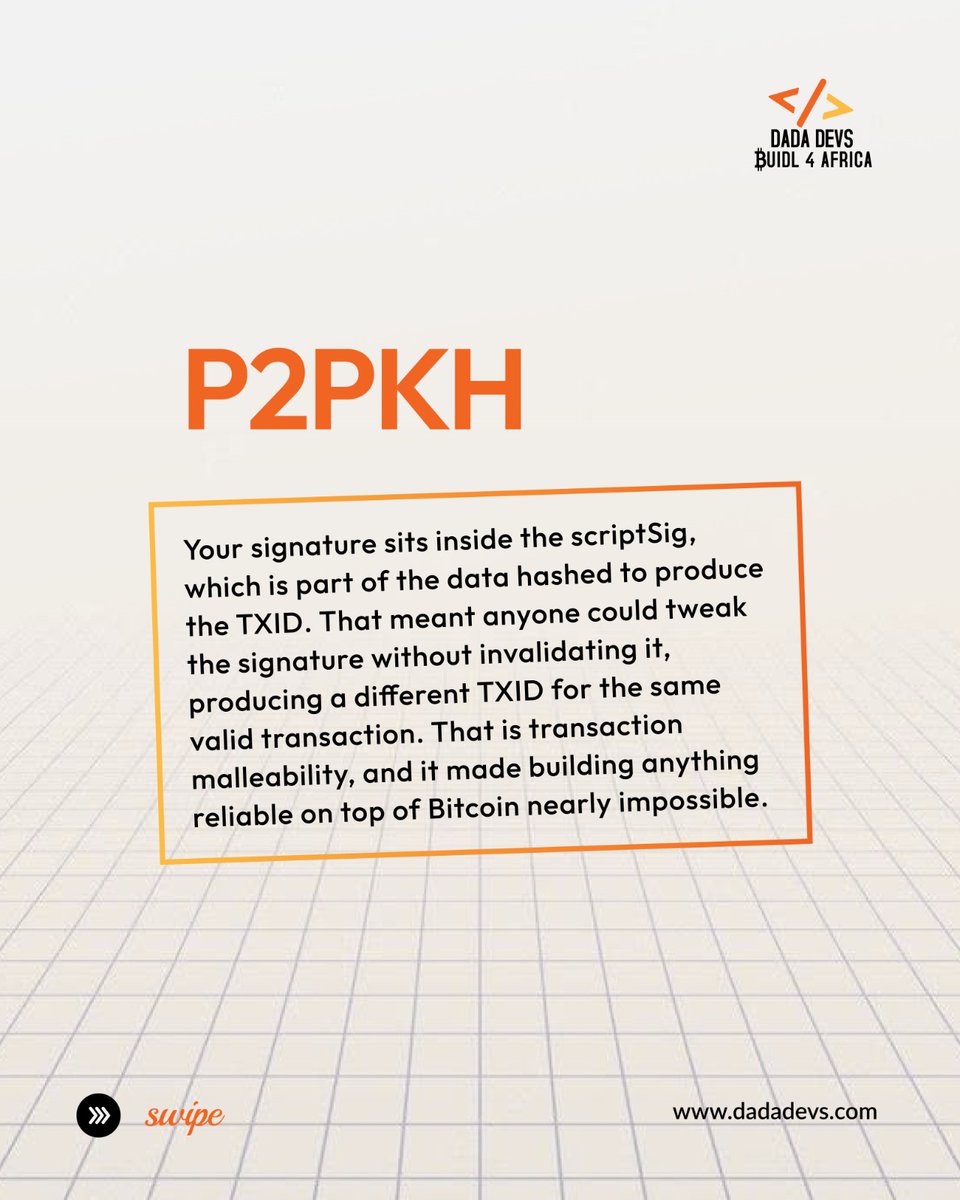
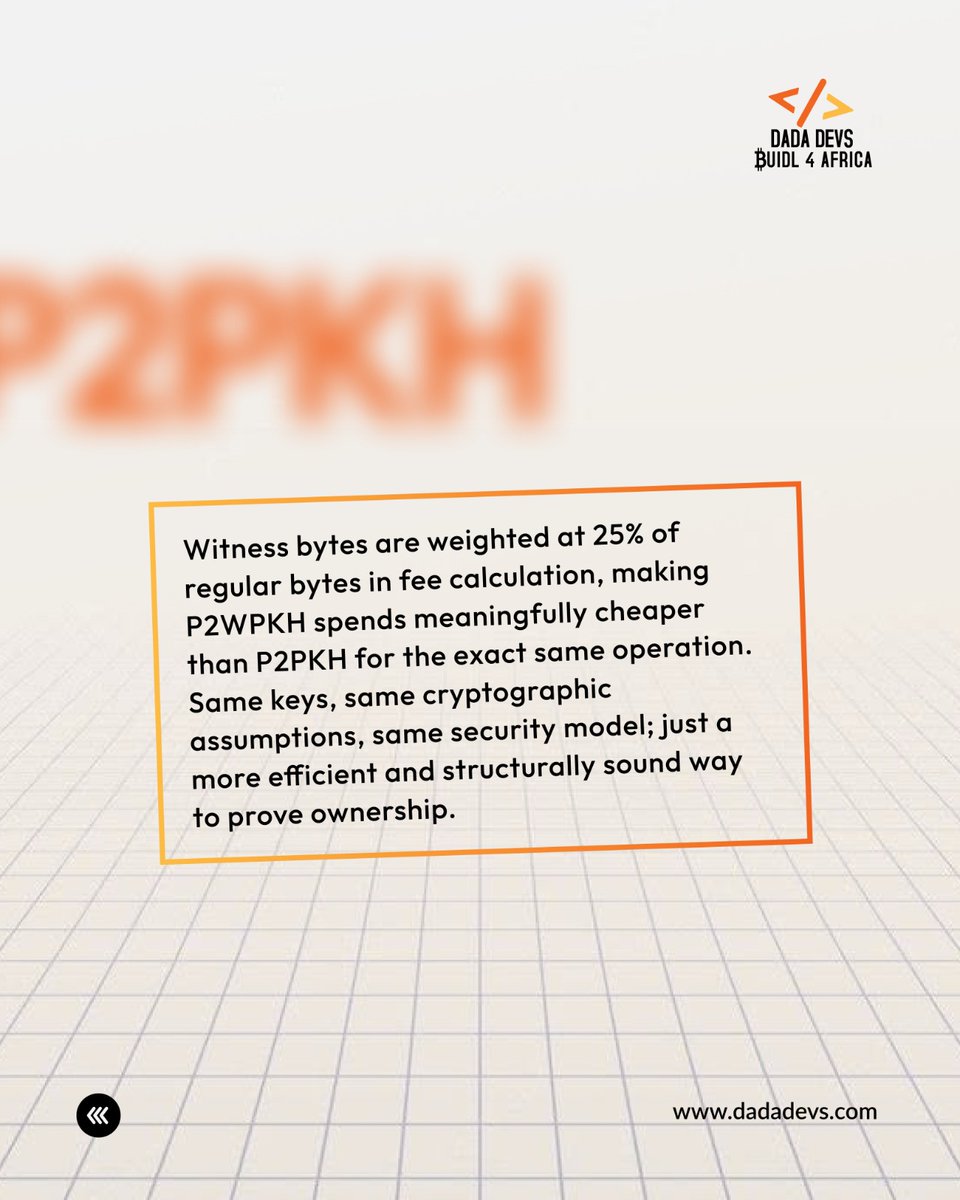
This time we’re deconstructing the shift from P2PKH to P2WPKH. What changed in the transaction structure, why SegWit introduced it, and what it means for fees and signatures.
Swipe through for the breakdown.
#DadaDevs #Segwit #BitcoinDevelopment

2
1
10
164
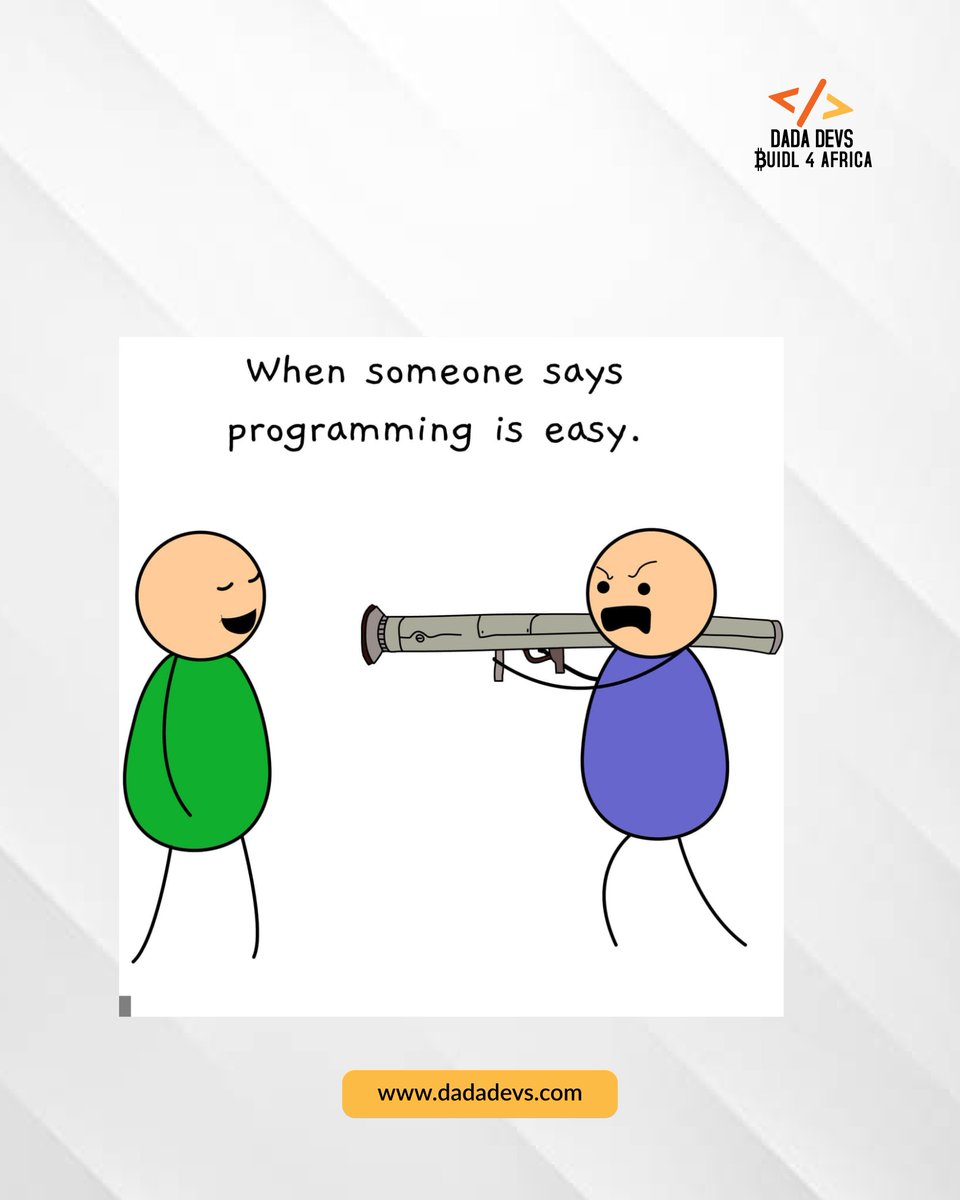
Programming is easy… until the bugs start multiplying.
Especially in the age of vibe coding.
#BitcoinDevelopment #AI #DadaDevs
6
109
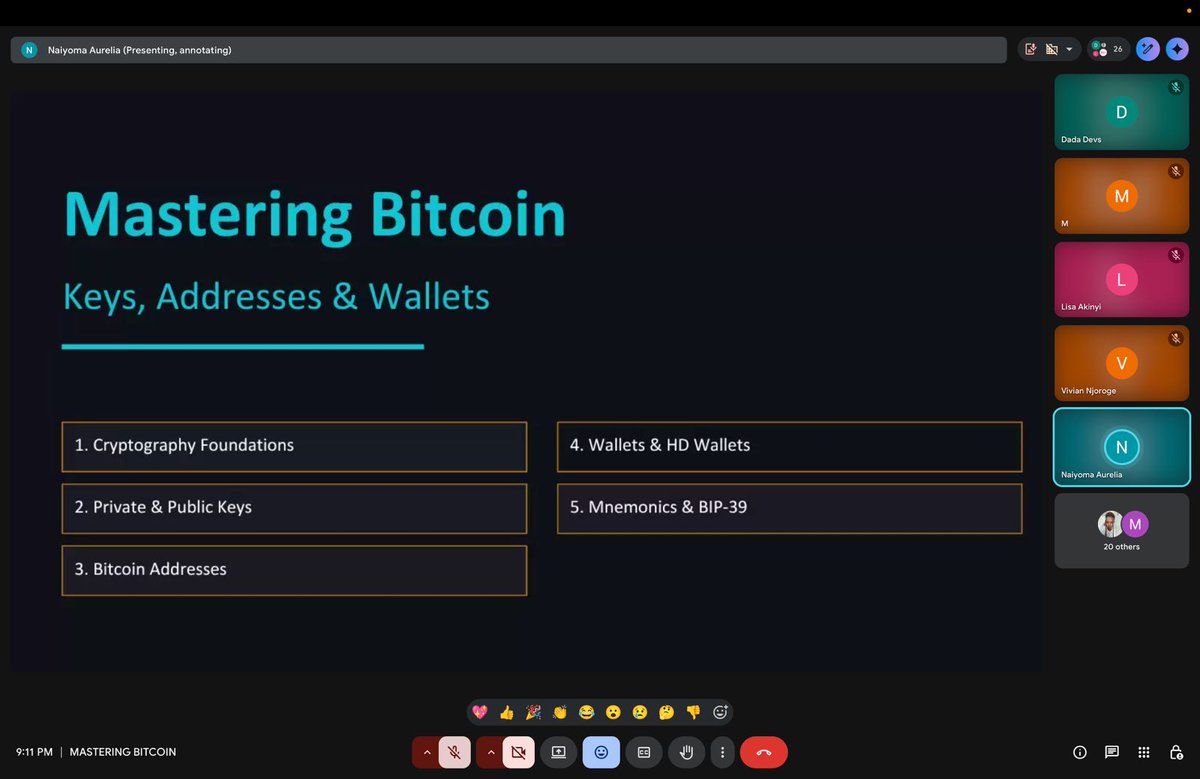
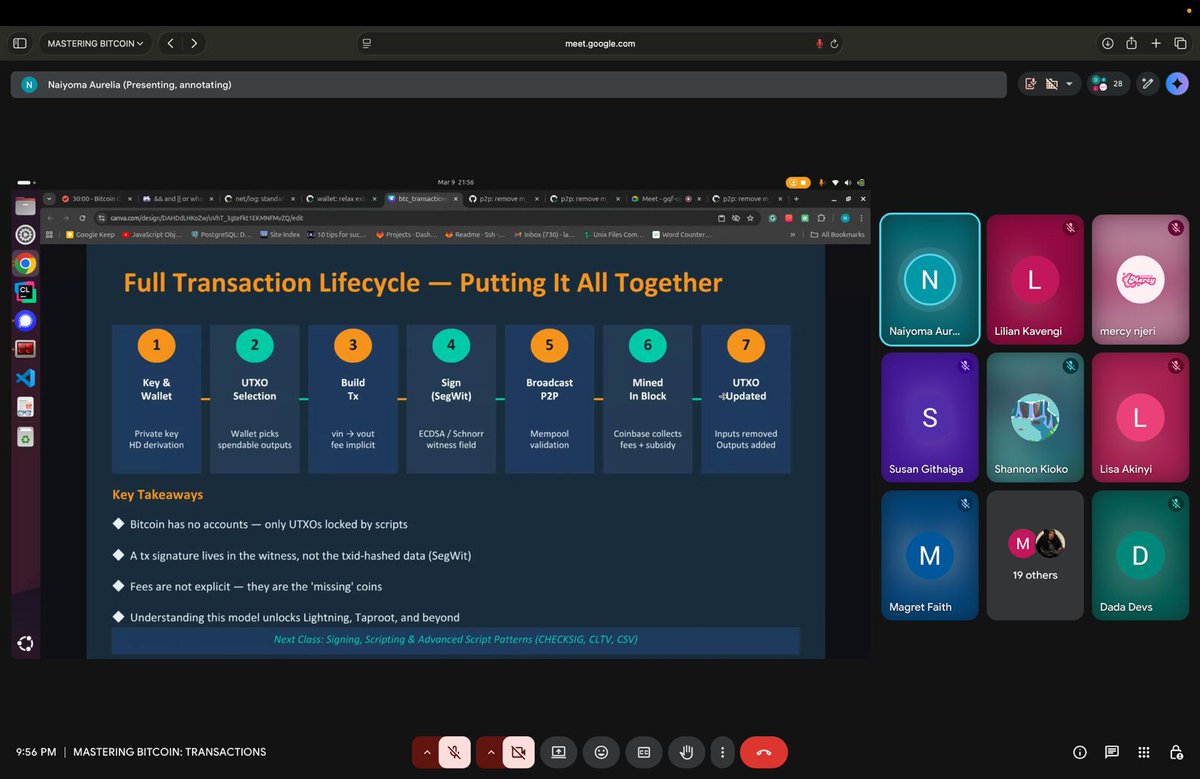
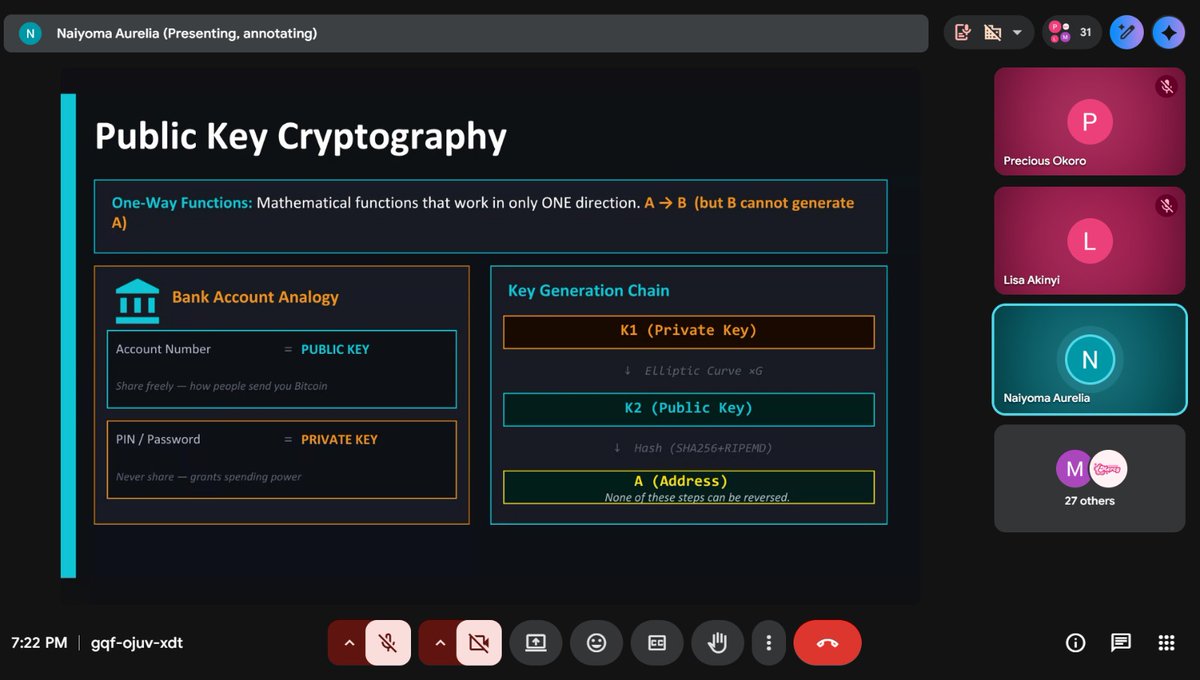
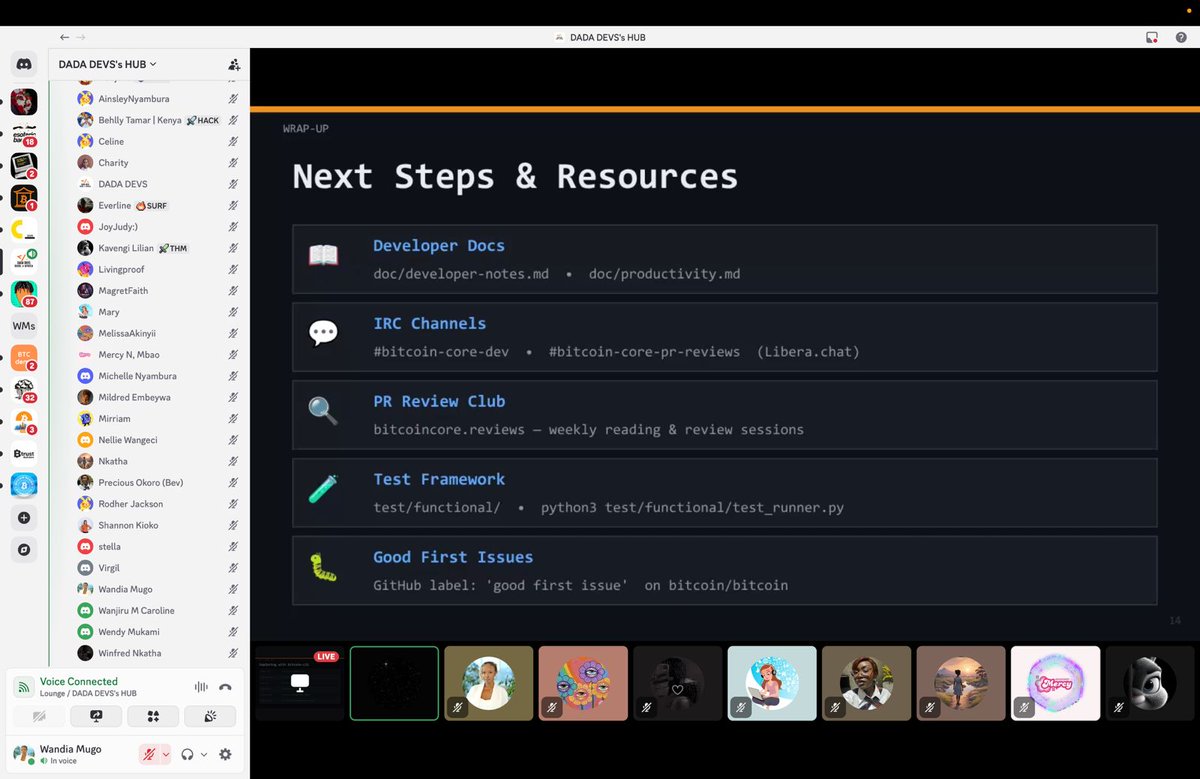
This past week, the Dada Devs fellows covered three lectures under the guidance of @ANaiyoma and the depth of what was covered speaks for itself.
We covered:
Bitcoin Core Development Environment: Configuring the core build, compiling from source and running a fully validating Bitcoin node on the network.
Keys, Addresses and Wallets: Private and public key cryptography, address derivation, hot vs cold storage, custodial vs non-custodial wallets, HD wallet architecture, mnemonic seed phrases and the BIP32, BIP39 and BIP44 standards that define how modern wallets are structured.
Transactions: The UTXO model, transaction structure from inputs to outputs, how digital signatures prove ownership without revealing private keys and a SegWit overview covering how it solved transaction malleability and expanded block capacity.
The fellows are going deep, and we are only just getting started.
#DadaDevs #BitcoinDevelopment
1
3
15
314
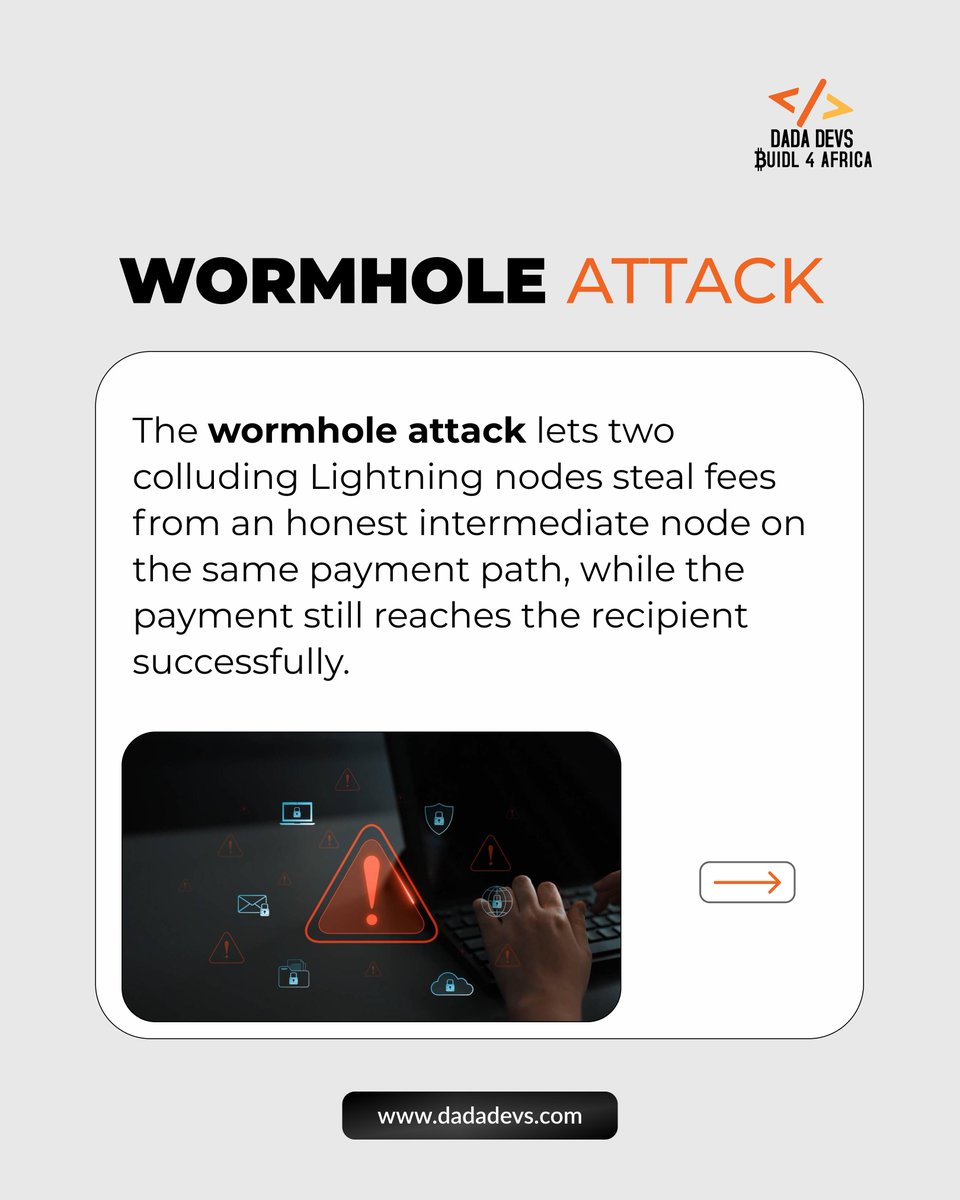
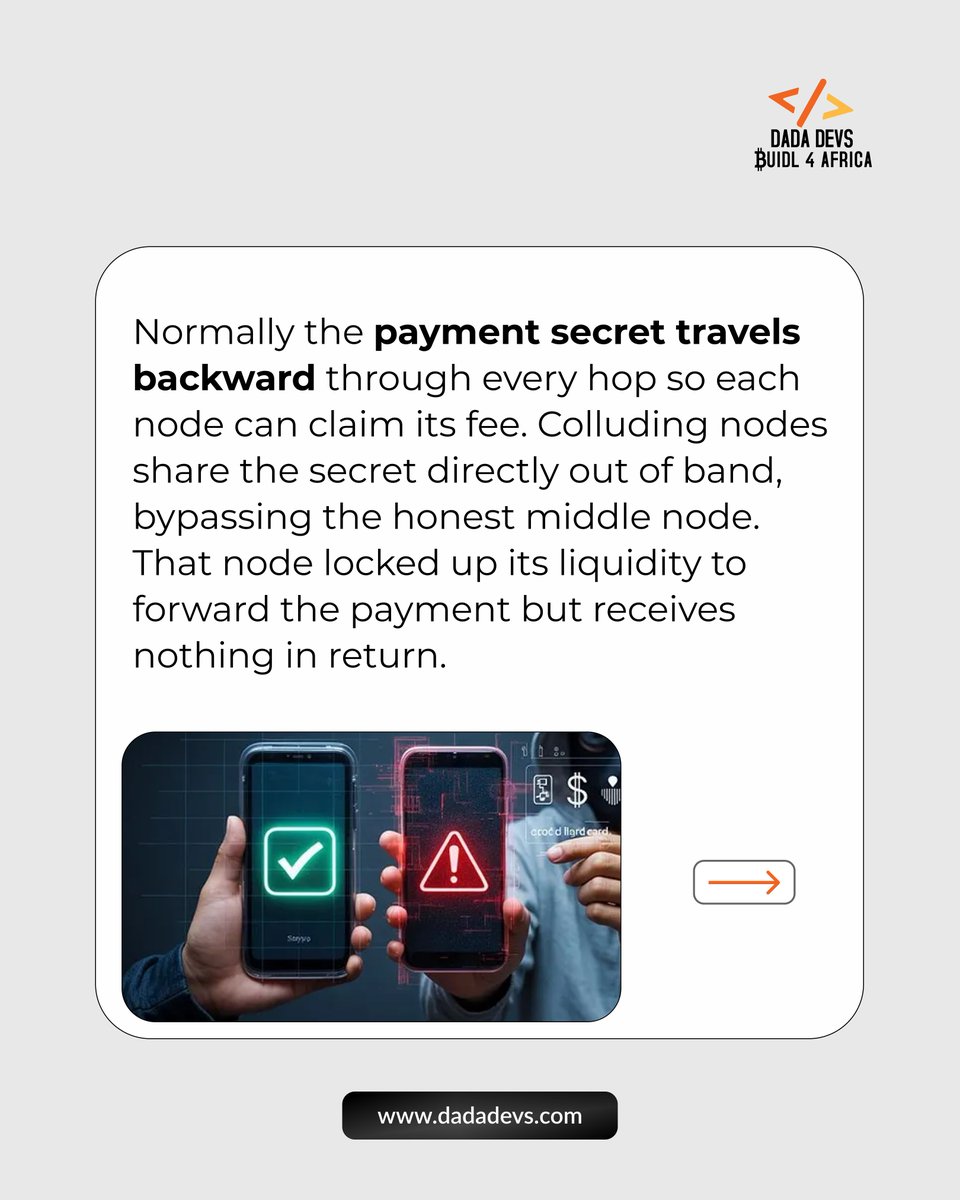
𝐂𝐨𝐧𝐜𝐞𝐩𝐭 𝐨𝐟 𝐭𝐡𝐞 𝐃𝐚𝐲: 𝐖𝐨𝐫𝐦𝐡𝐨𝐥𝐞 𝐀𝐭𝐭𝐚𝐜𝐤
In distributed networks, assumptions about topology matter.
A wormhole attack occurs when an adversary tunnels packets between two distant parts of the network, making nodes appear closer than they actually are. The result is distorted routing and manipulated message propagation.
Studying these attack models sharpens our thinking about network resilience.
Security starts with understanding the adversary.
⚡
#Bitcoin #DadaDevs #BitcoinDev #BitcoinDevelopment

5
125
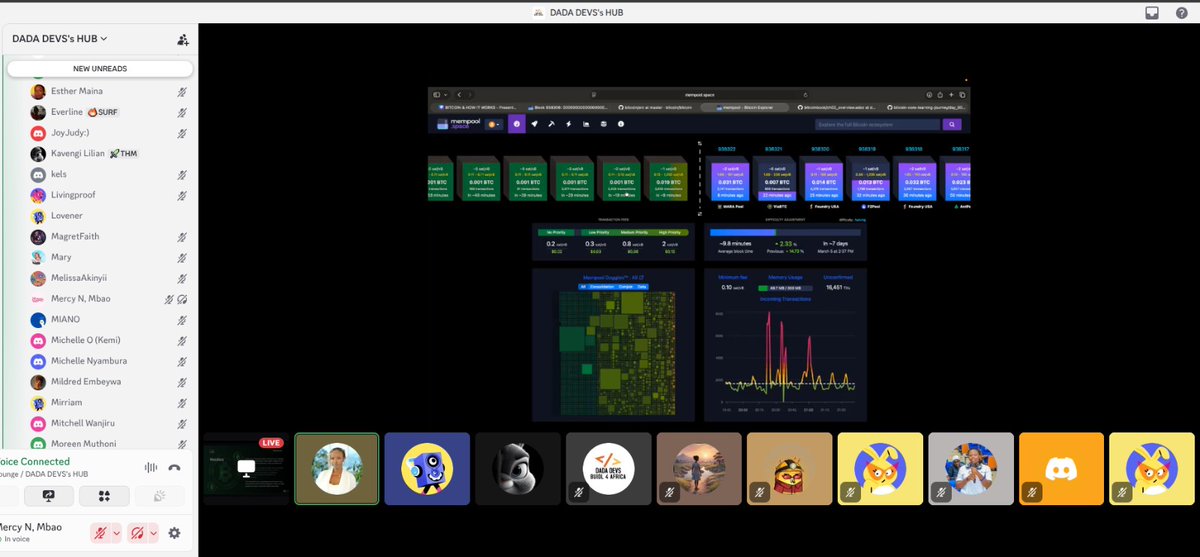
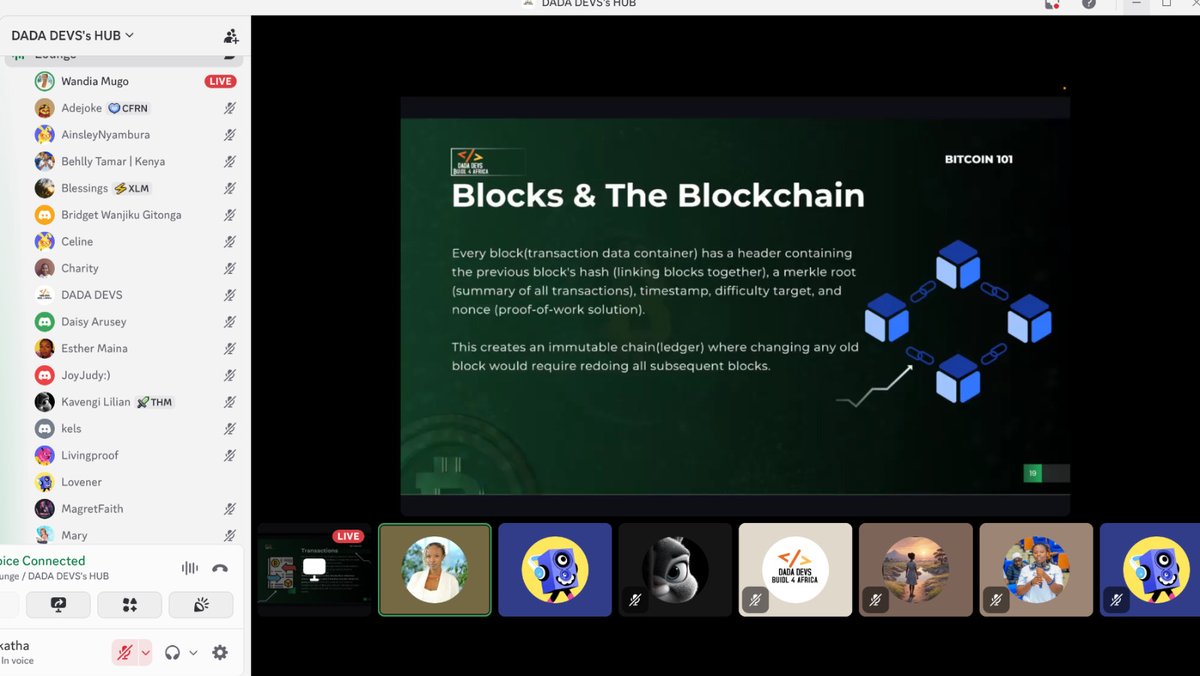
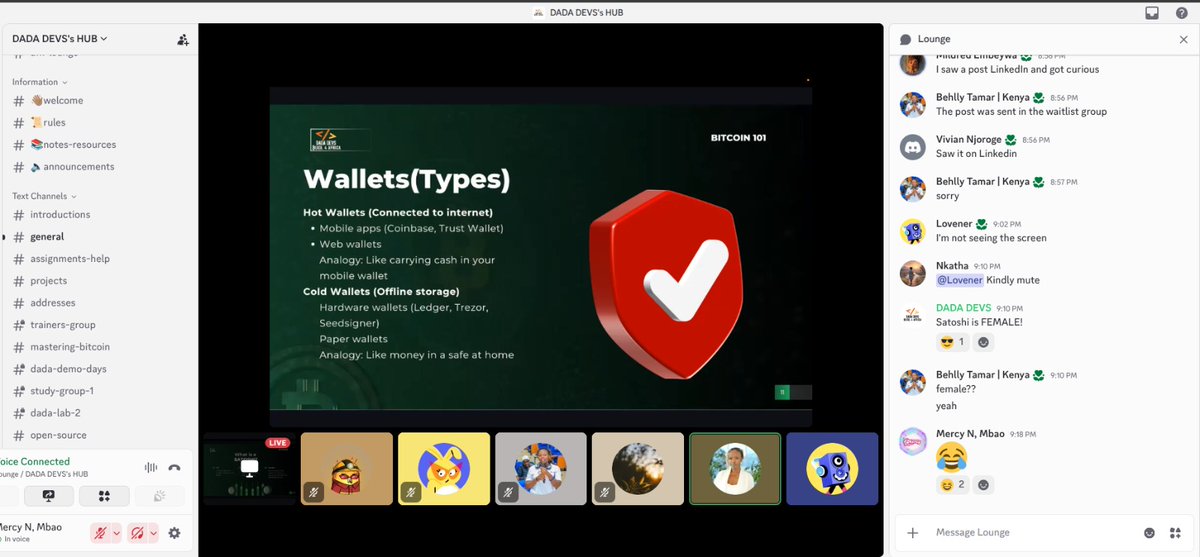
Last Wednesday, we took the fellows through Bitcoin 101, how it works and why it matters.
Under the guidance of @wandiology, the fellows spent the evening building a solid foundation in Bitcoin from the ground up.
We covered:
🔷 What Bitcoin is: A decentralized digital money ecosystem built on cryptography.
🔷 The Role of Cryptography: Digital signatures and how the double-spend problem was solved.
🔷 Bitcoin Wallets: How they work, hot vs cold storage, and keeping funds secure.
🔷 Public & Private Keys: How ownership works on the Bitcoin network.
🔷 Transactions: How value moves from one person to another.
🔷 Nodes: What keeps the network decentralized and running.
🔷 Mining & Proof of Work: How new bitcoin enters circulation and the chain stays secure.
🔷 The Lightning Network: Bitcoin’s Layer 2 for fast, low-cost payments.
We are excited for all they have to learn and we are only just getting started!
#Dadadevs #BitcoinDevelopment
2
4
20
353
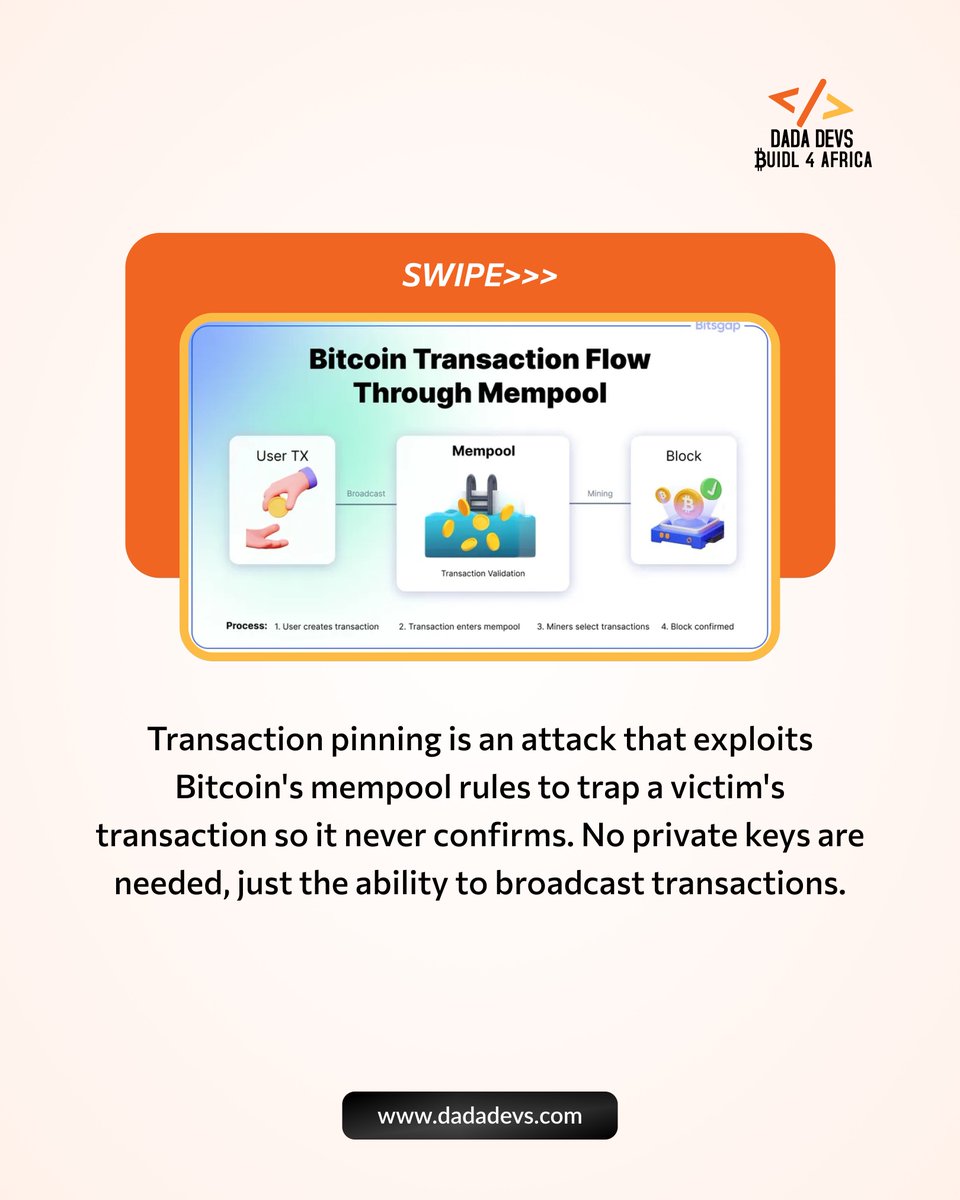
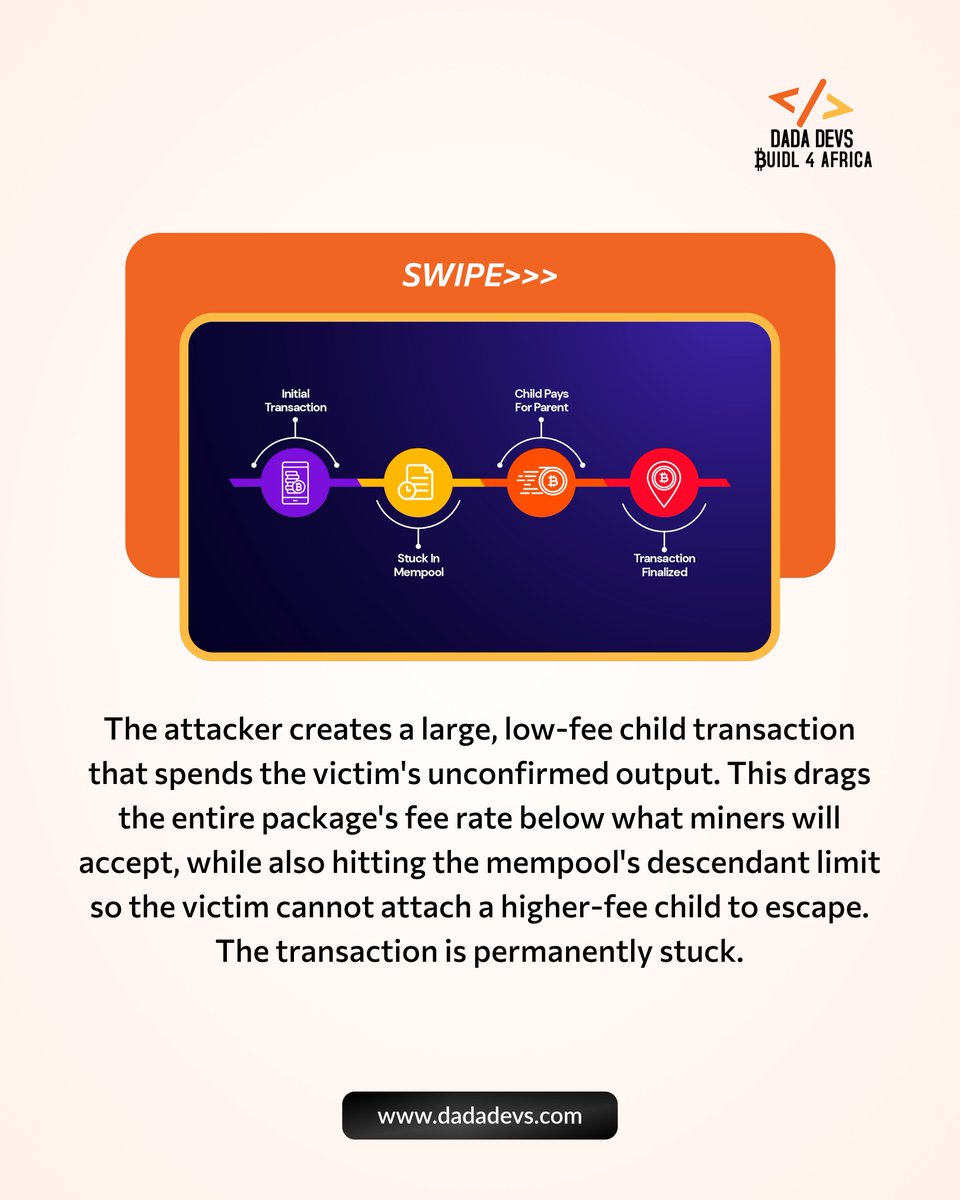
Today's focus: Transaction Pinning.
When a transaction gets stuck in the mempool, it is not always random.
Sometimes it is by design. A low fee transaction can block a higher fee replacement from confirming, and for developers building on Lightning and second layer solutions, that is not an edge case.
It is something you need to understand before it catches you in production.
These slides break it down, step by step.
What did you pick up today? Drop it below. ⚡
#DadaDevs #BitcoinDevelopment #TransactionPinning

1
2
10
169

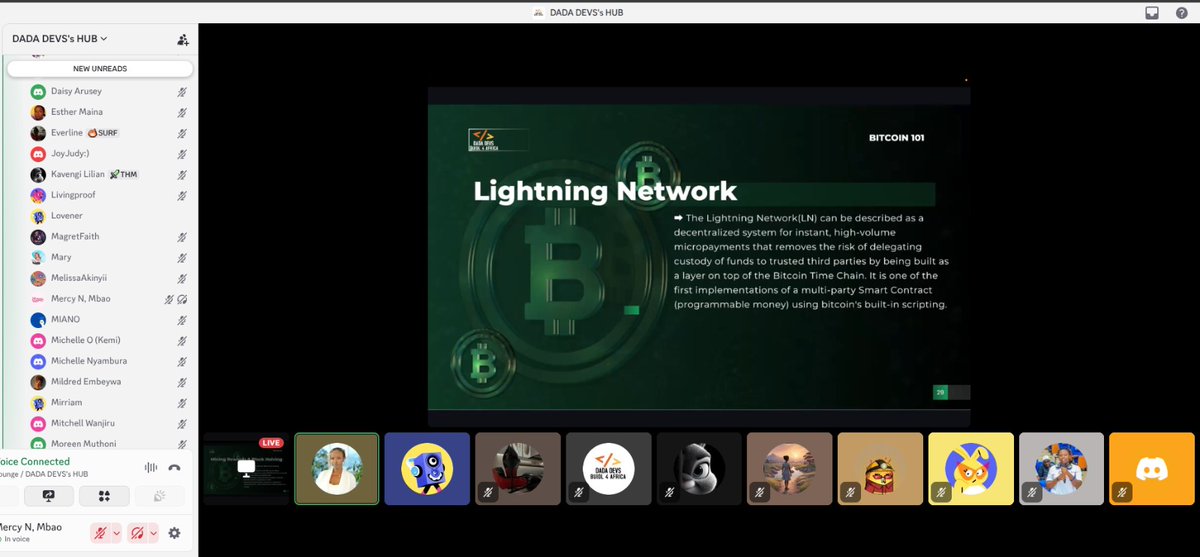
Week 1 with @DadaDevs Mastering Bitcoin Cohort 4
We dove straight into Bitcoin fundamentals with Lorraine Marcel and @wandiology exploring the ethos, Bitcoin Core, Satoshi's legacy, and the Lightning Network's real-world potential.
#BitcoinDevelopment #WomenInTech #BitcoinAfrica
1
2
84
𝐔𝐧𝐯𝐞𝐢𝐥𝐢𝐧𝐠 𝐎𝐮𝐫 𝐃𝐚𝐝𝐚 𝐃𝐞𝐯𝐬 𝐂𝐨𝐡𝐨𝐫𝐭 𝟒 𝐓𝐫𝐚𝐢𝐧𝐞𝐫𝐬!!
The technical depth of any program is defined by the people leading it. For Cohort 4, we have assembled six brilliant engineers with extensive real-world experience in Bitcoin development and open-source contributions.
Meet our Facilitating Engineers:
@megasley - General Manager, @FreeRoutingAf
@wandiology - Head of Operations, @DadaDevs
@tobi_bams - CTO @mavapay
Fidel Otieno - CEO, @bitika_KE
Chaitika - Bitcoin Open-Source Developer and Educator, @bitshala_org
@ANaiyoma - Bitcoin Core Contributor
These are practitioners actively building, reviewing, and shipping production-grade systems across the Bitcoin stack.
Their mentorship ensures that Cohort 4 is grounded in technical rigor, open-source culture, and real-world engineering standards.
Dada Devs continues to set a high standard for Bitcoin technical education in Africa, supporting the next generation of contributors shaping the future of open monetary infrastructure.
#DadaDevs #BitcoinDevelopment

6
26
1,121
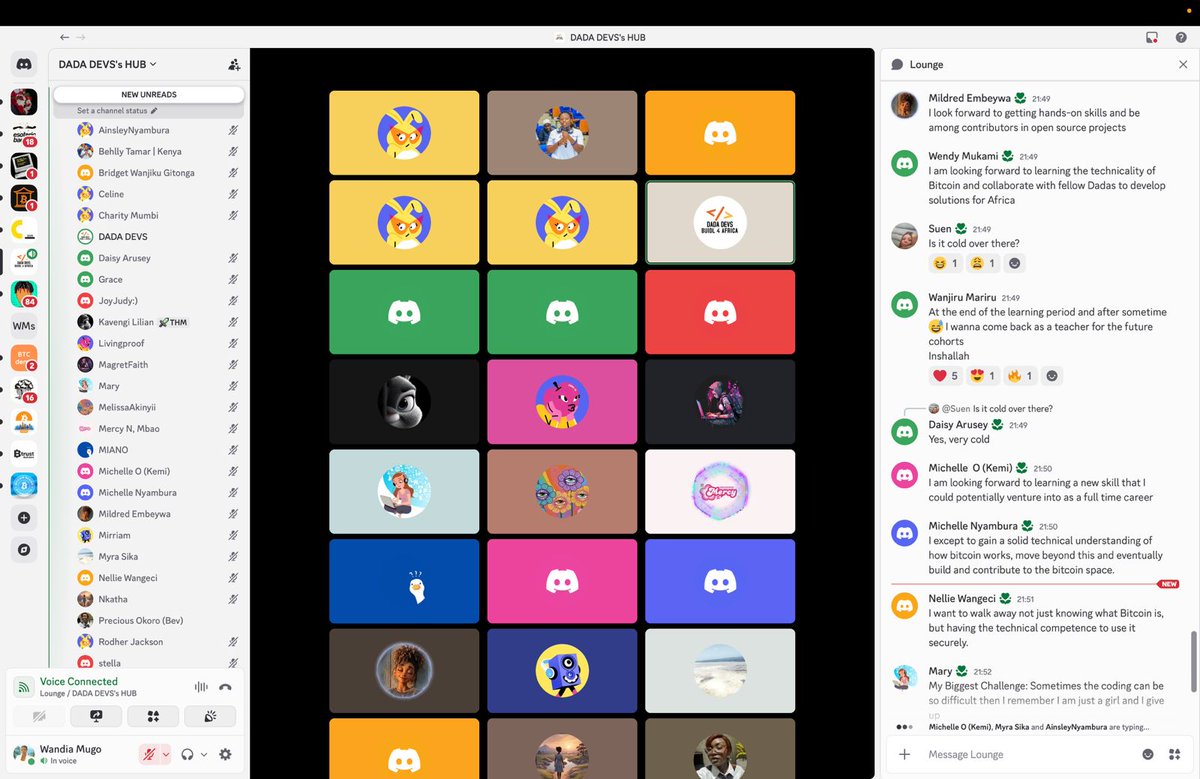
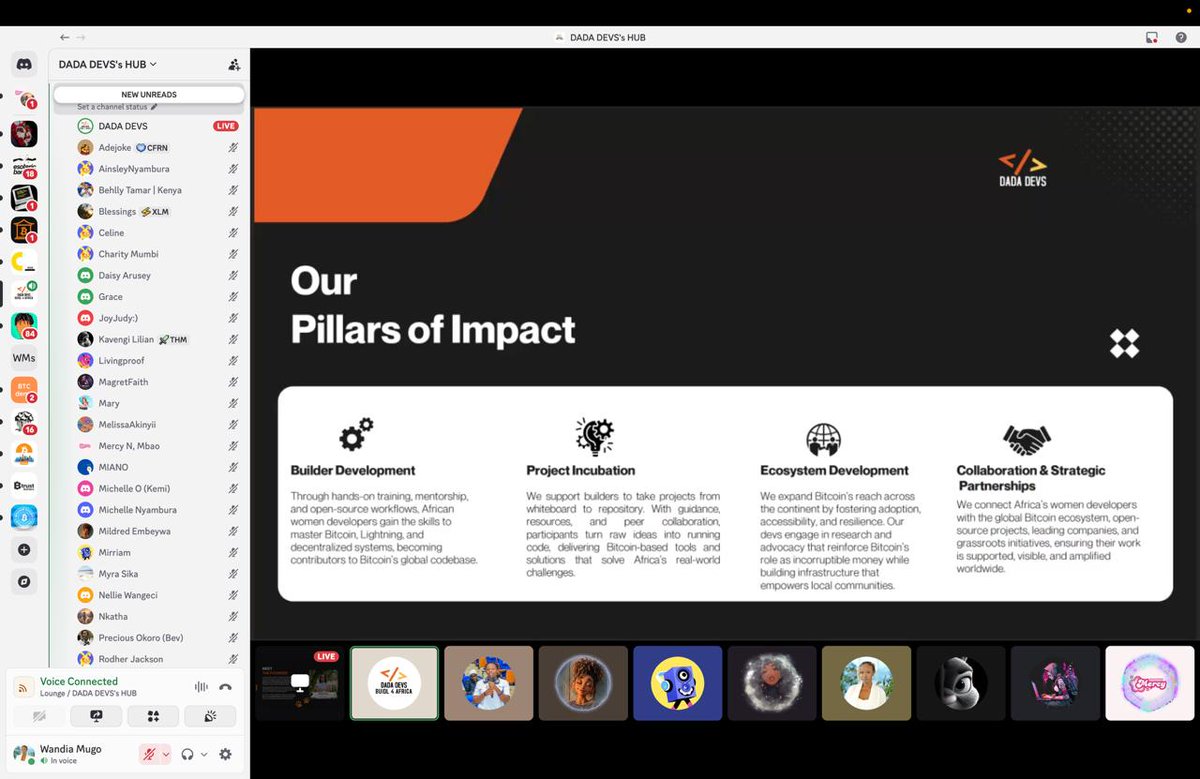
If women are not participating in Bitcoin’s development, they will inherit systems designed without their realities in mind. That is not a new problem. It is history repeating itself within a new financial and technical architecture.
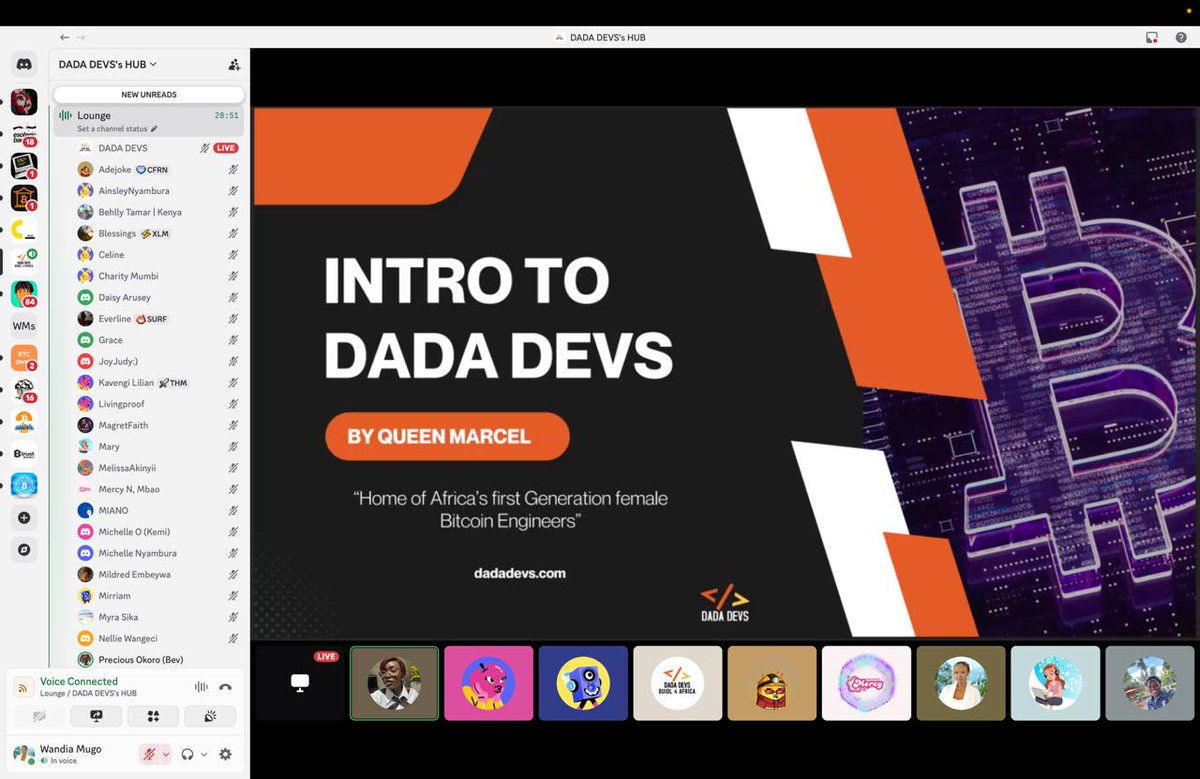
Last night, we opened the doors to our fourth Dada Devs cohort. The room was filled with exactly what this programme was created for: African female developers showing up to study the protocol, interrogate design decisions, understand trade-offs, and build tools that reflect their lived contexts.
Our founder, @marcelorraine , reminded the fellows that technology is not neutral. It encodes the assumptions, priorities, and perspectives of those who contribute to it — and it reflects the absence of those who do not.
Dada Devs is a community where African female developers deepen their technical competence in Bitcoin development and grow alongside others navigating similar structural realities. It is a space safe enough to ask foundational questions, and rigorous enough to demand real answers.
#DadaDevs #BitcoinDevelopment #Bitcoin #WomenInTech #WomeninBitcoin
1
4
21
757

Feb 23
Day 7 of deconstructing Bitcoin Core tests 🧵
Testing the promise every server makes: "I'm listening on the port you told me to"
Problem: Software can claim to bind to ports without actually doing it.
Silent failures. Config looks correct. Connections mysteriously fail.
Bitcoin's solution: `-bind` flag
- `-bind=127.0.0.1:8333` → standard P2P
- `-bind=127.0.0.1:8334=onion` → Tor connections
The test doesn't trust Bitcoin's logs. It queries the OS kernel directly.
On Linux: reads `/proc/<pid>/net/tcp`
Verifies: configured ports = actually bound ports
Three test cases:
✓ Tor-only binding
✓ Clearnet Tor (both)
✓ Clearnet-only
Each proves: what you configure is what you get.
Why it matters:
- Tor privacy depends on correct binding
- Port conflicts break deployments
- Silent failures are debugging nightmares
The lesson: Don't just test the API. Test the observable outcome.
Calling `bind()` isn't enough. Query the system to confirm the socket exists.
Full article below 👇
📖 medium.com/@wandiamugo/decon…
💻 github.com/wandiamugo/bitcoi…
📬 open.substack.com/pub/wandia…
#BitcoinDevelopment #BitcoinCore

1
7
269
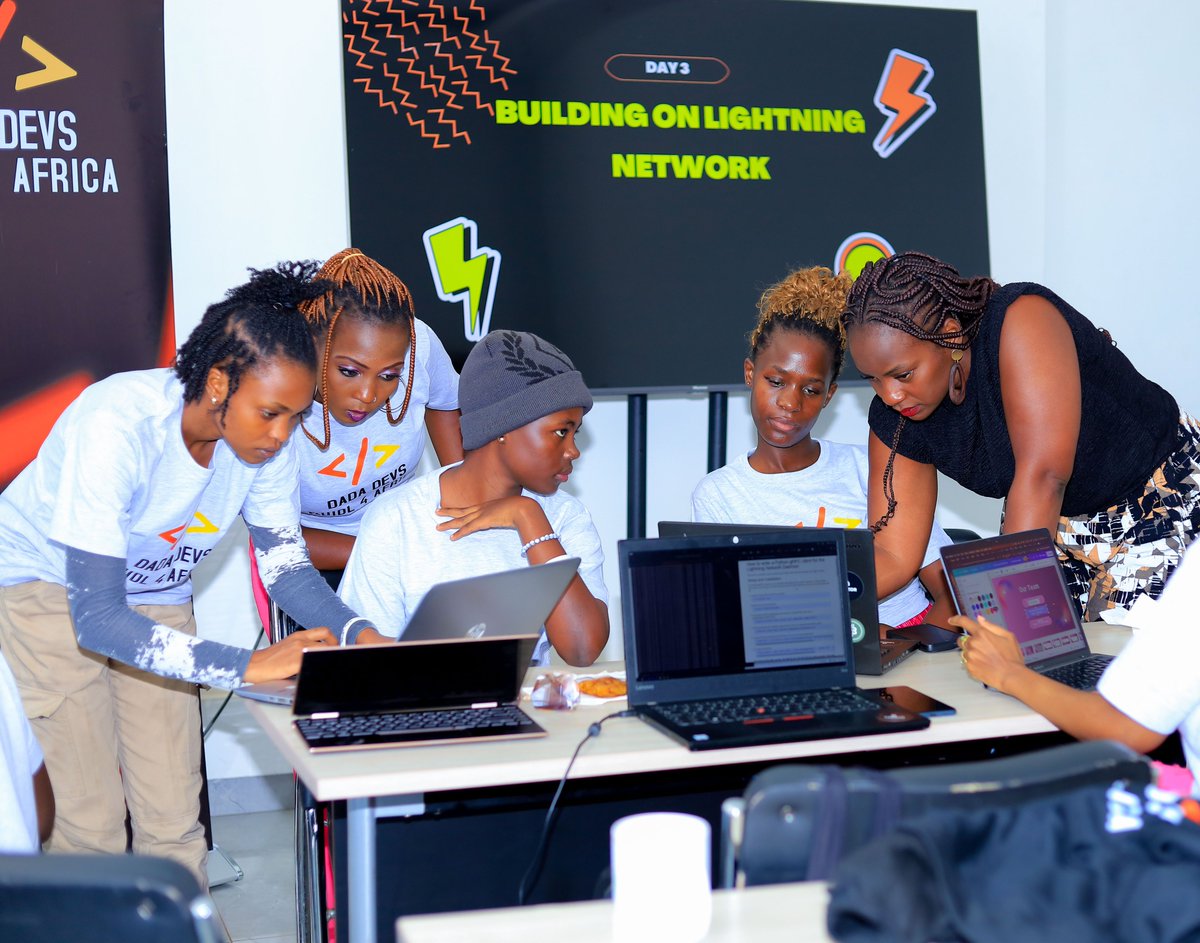
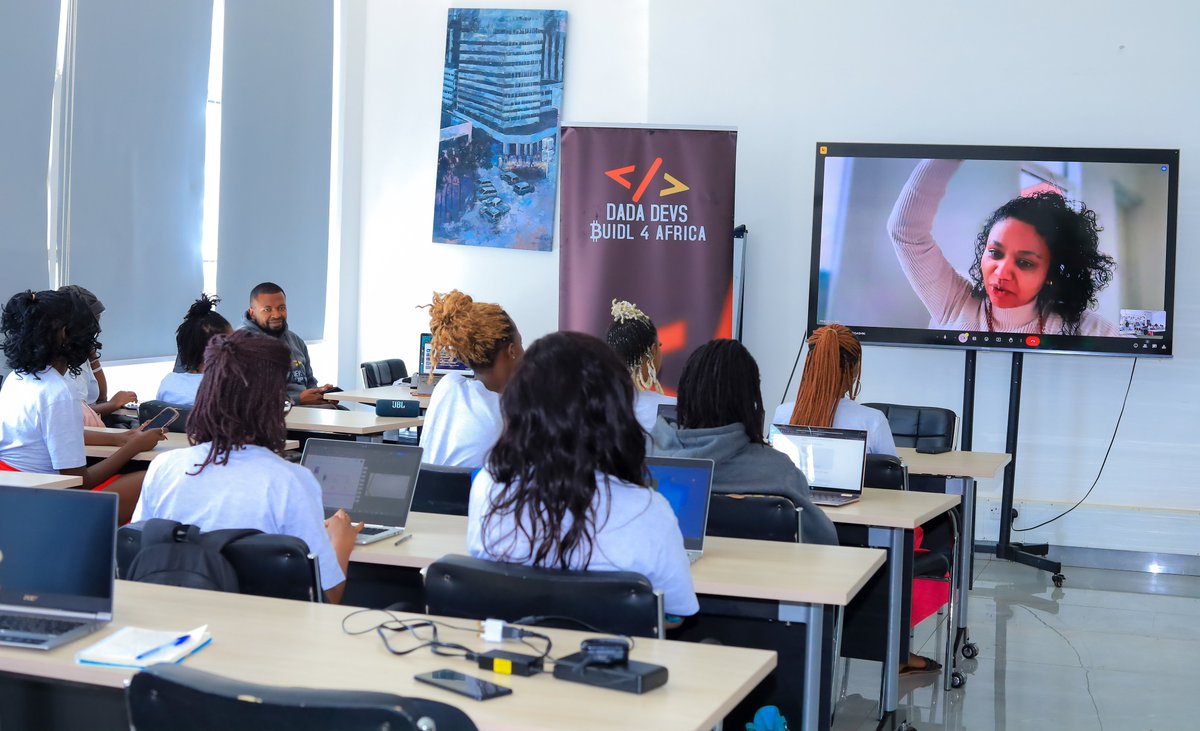
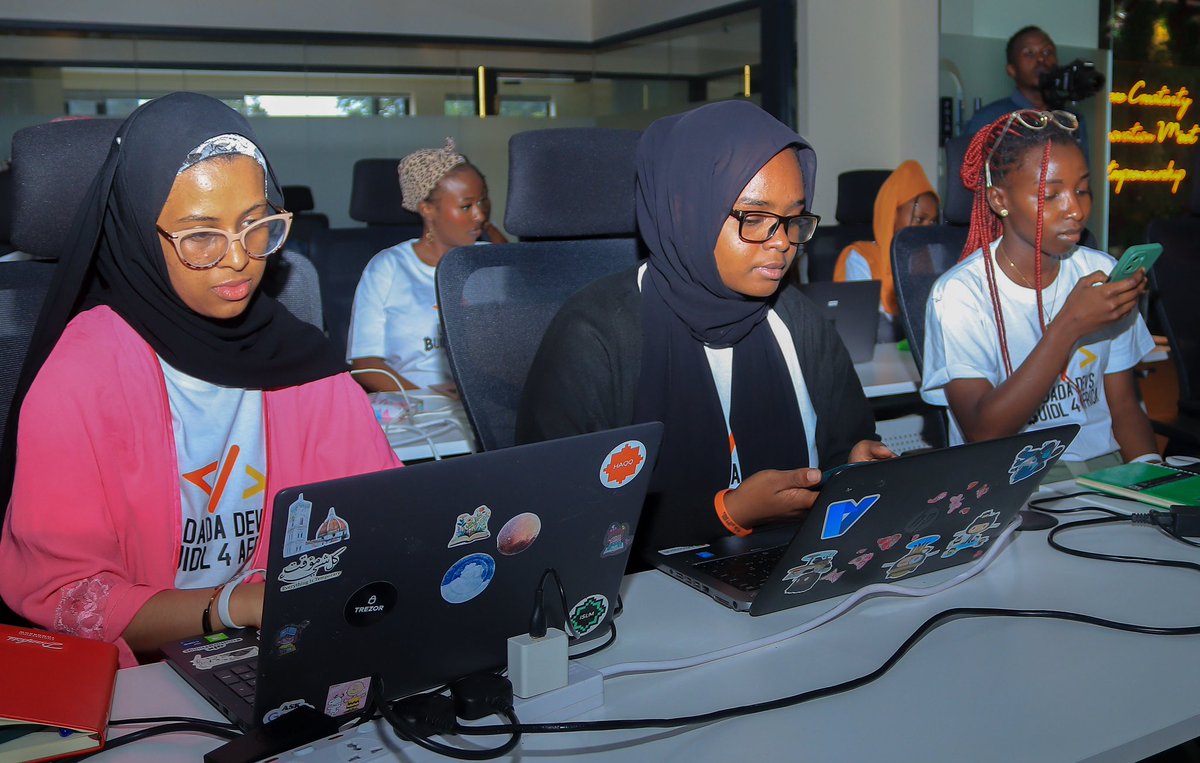
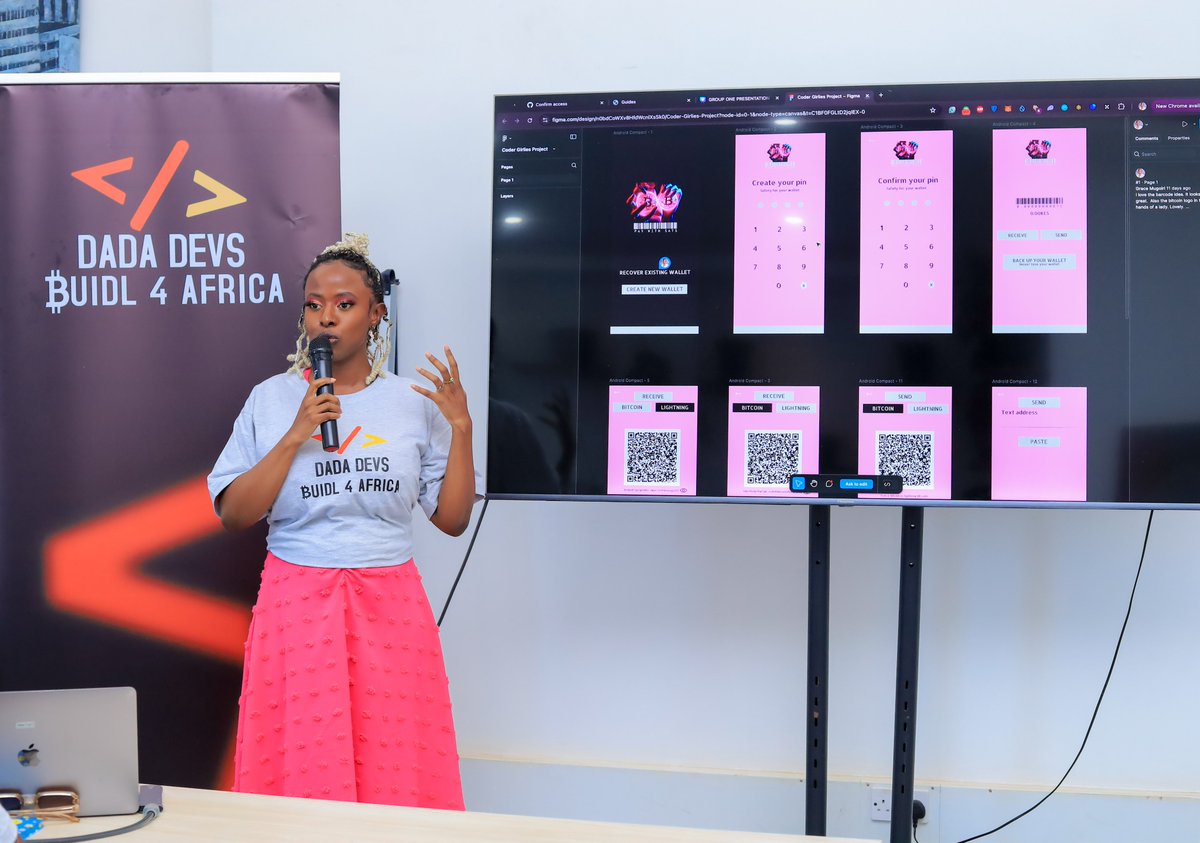
Cohort 4 is here, and we could not be more proud of the developers who made it in, but before we look ahead, we want to take a moment and go back to where this all started.
These first photos carry something special for us, the early days of Dada Devs when we were still figuring out what this could become and watching it grow into something far bigger than we imagined. There is something about the beginning of anything that stays with you, and for us, that feeling never left.
Dada Devs exists because African female developers belong in Bitcoin development, not on the sidelines of it, but building it, contributing to it, and shaping what it becomes.
We are training the next generation of female Bitcoin engineers, and we are only getting started. Cohort 4 is proof that the demand is real, the talent is there, and the mission is far from done.
If you applied, kindly check your email. Selection updates have been sent.
We cannot wait for what this cohort is about to build. Welcome. 🧡
#DadaDevs #BitcoinDevelopment #BitcoinAfrica #BuildingBitcoin
1
32
621