
👾 Athena HTTP Botnet Builder 2026
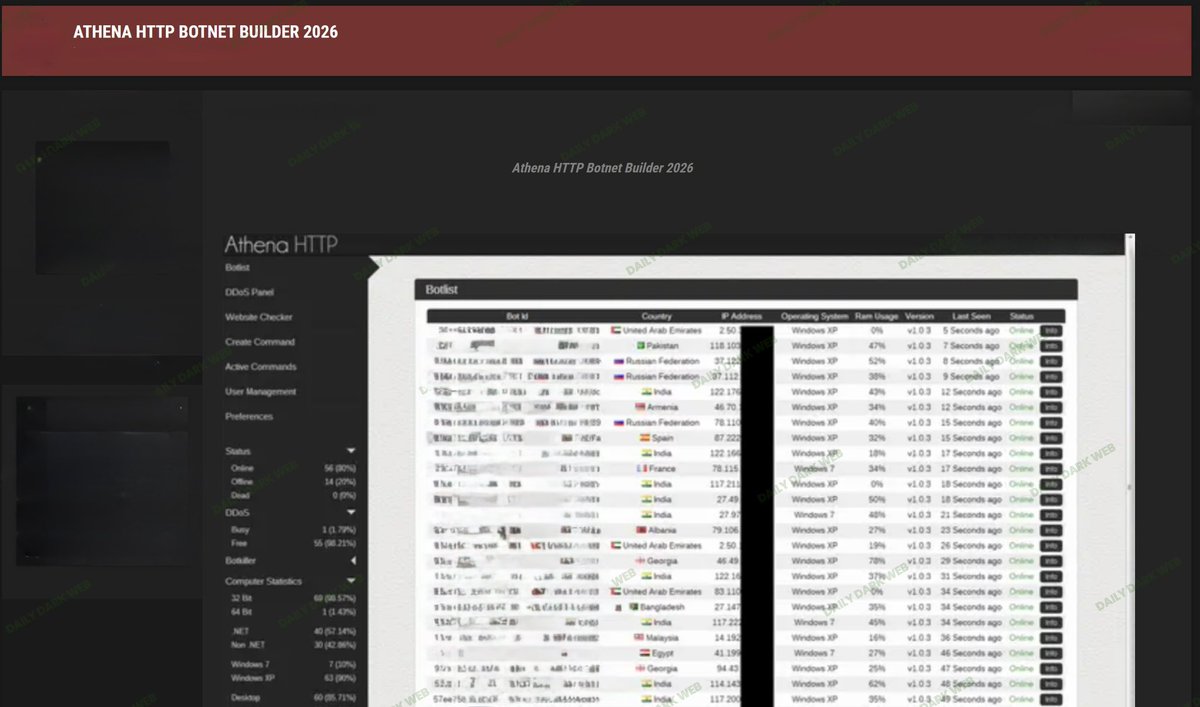
A post is advertising a tool called “Athena HTTP Botnet Builder 2026”, showcasing what appears to be a DDoS control panel.
Observed features in panel:
• Botlist management (infected hosts)
• Country / IP tracking
• OS visibility (Windows XP / Windows 7 observed)
• Real-time status (online bots)
• Command execution module
• DDoS control interface
📊 Additional capabilities referenced:
• Website checker
• Command creation / active commands
• User management
• System statistics (bot distribution, OS breakdown)
⚠️ Threat assessment:
• Classic HTTP-based botnet C2 panel
• Likely used for:
• DDoS attacks
• Traffic flooding
• Potential proxy / relay usage
• Older OS presence (XP/7) suggests:
→ IoT / legacy system infections or simulated demo data
🚩 Red flags:
• No technical proof of builder distribution (no repo / no binary)
• UI screenshot could be:
• Reused panel
• Reskinned existing botnet framework
• Actor has low reputation (new account)
🧠 Analyst note:
This is likely:
→ Either a commodity botnet panel being resold/rebranded
→ Or a scam listing using recycled screenshots
Still relevant because:
• These tools lower barrier for DDoS actors
• Often used by low-skill attackers (script-kiddie ecosystem)
Status: Unverified – Medium confidence / likely commodity tool
#DDW #CyberThreat #Botnet #DDoS #ThreatIntelligence
1
31
4,674


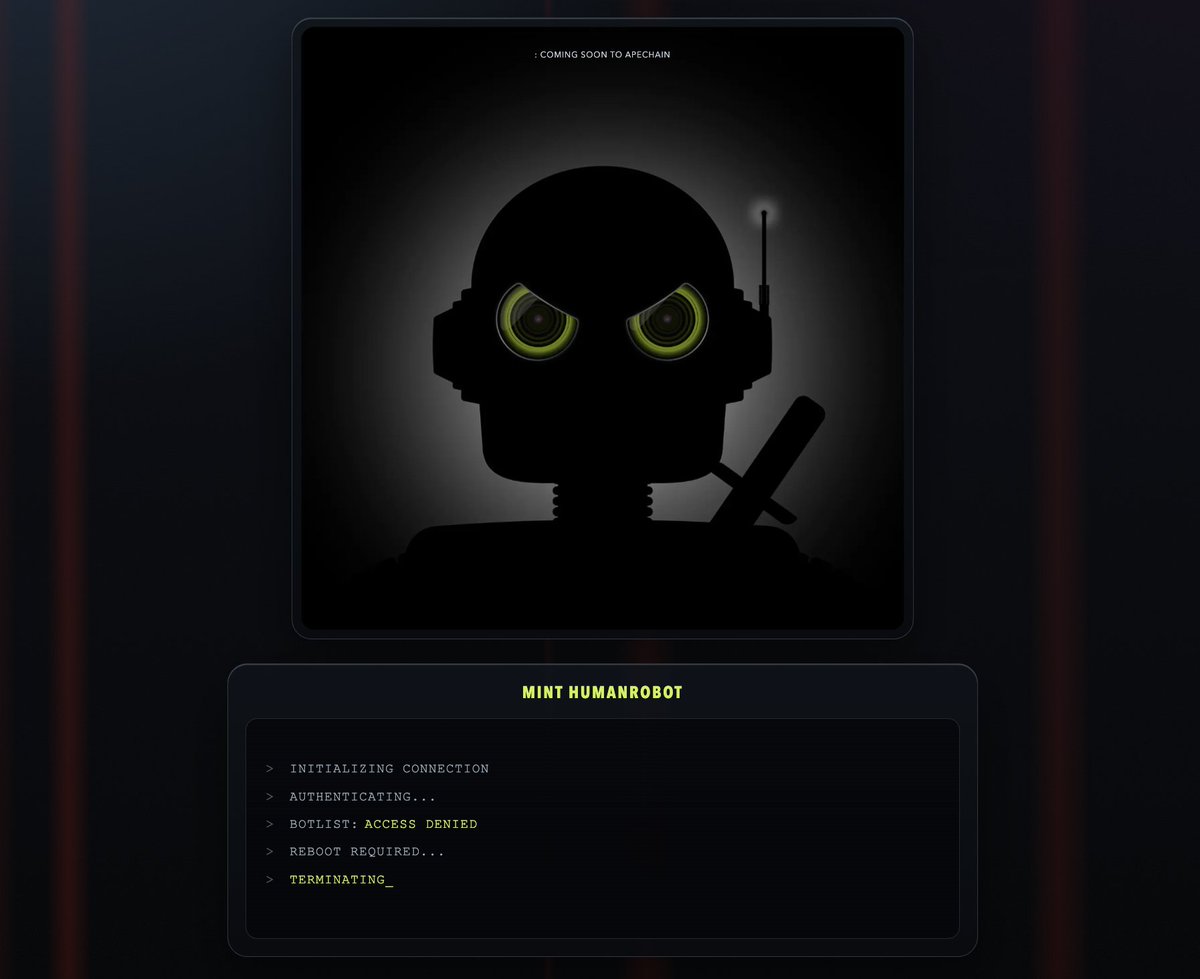
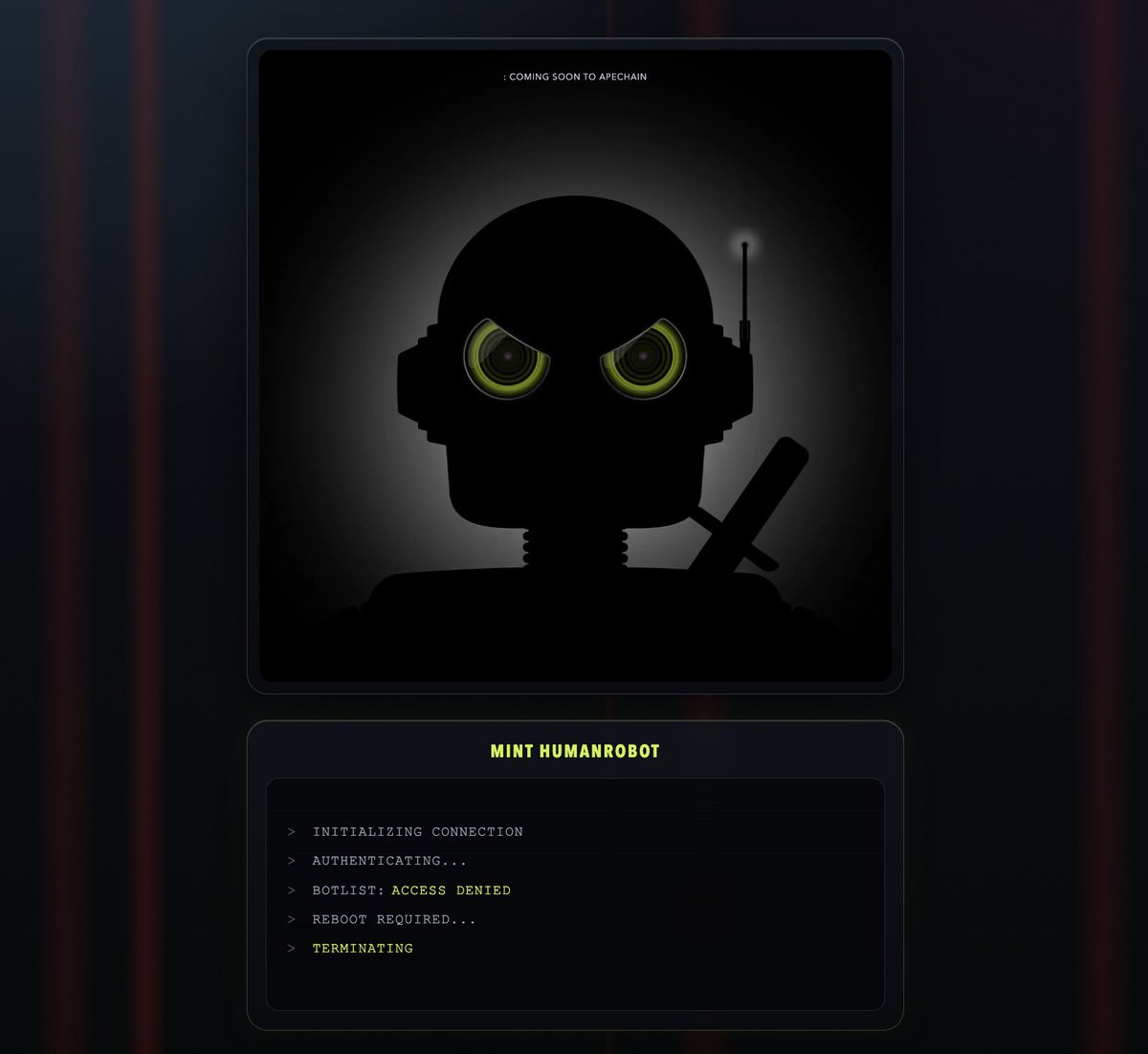
Just vibe coded an app to take a snapshot of all @moonbirds holders' wallet regardless of nesting status.
Starting to build out the botlist for @humanrobotnft
1
7
215


Jan 25
GLAM-BOT:
Who does the Glam-boy (Cole) remind you of? A dude who hangs with celebs and therefore ass-u-me-s he’s one too. 😂😂😂
Personally, I think he should start a service. Call it THE BOTLIST. 🤣🤣🤣
But only after doing a TEDx Ha!

2
4
191

Jan 17
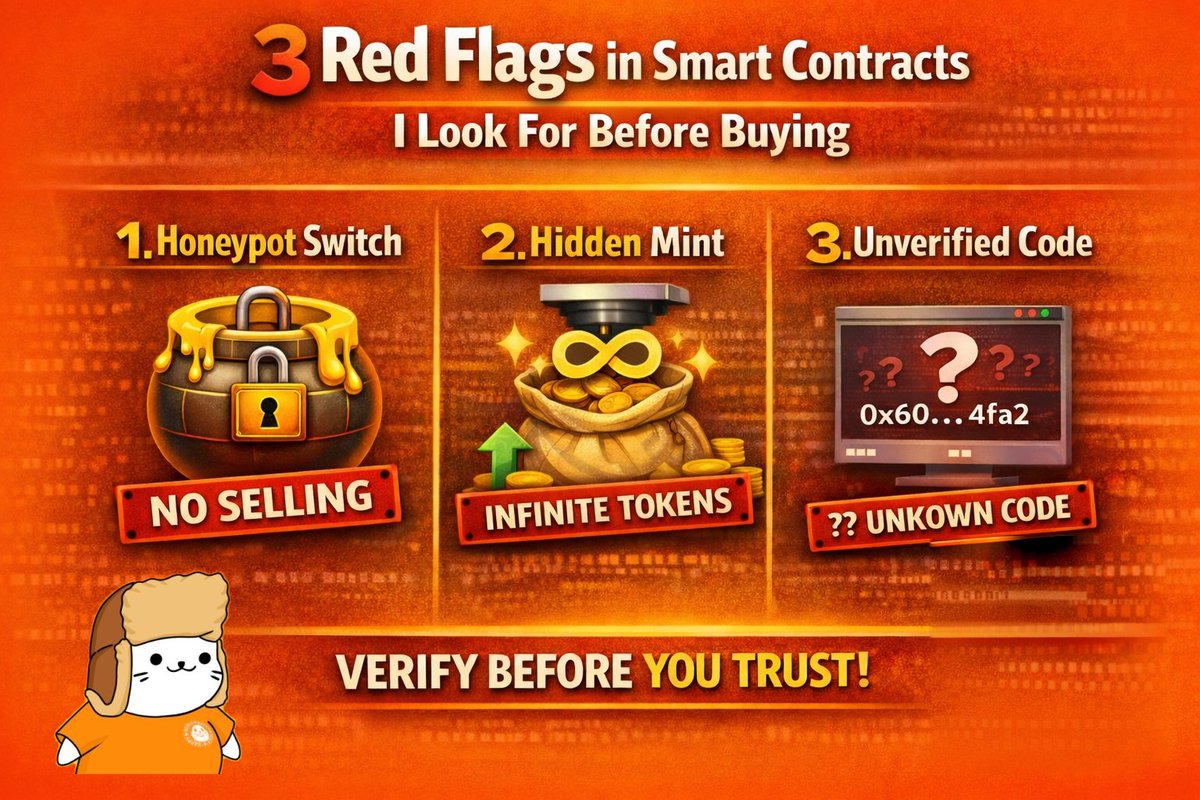
3 Red Flags in Smart Contracts I Look For Before Buying
I’m not a Solidity dev and I’m not an auditor. I’m just someone who’s been around crypto long enough to learn one painful lesson: most “mystery dumps” aren’t bad luck. A lot of the time, the trap was written into the contract from day one.
You see a token, cool name, hype site, “devs doxxed” everywhere. You get FOMO, you buy… and 12 hours later the chart looks like a cliff and liquidity is gone.
Most people blame whales or market conditions. But a huge chunk of rugs are simply code-level scams.
The good news: you don’t need to be a master coder to catch the worst ones. You just need to know where to look on Etherscan or BscScan.
Here are the top 3 red flags I check immediately. If I see any of these, I don’t care how good the website looks. I’m out.
Red Flag #1: The Honeypot Switch (Hidden Trade Restrictions)
You’ve probably heard “honeypot.” You can buy, but you can’t sell. The chart is all green candles because only the dev is allowed to sell.
How do they do it? It’s rarely a button called StopSelling. It’s usually hidden inside transfer logic.
What to look for: Go to the contract on the block explorer and search for transfer restrictions. A clean token transfer is basically: transfer(sender, recipient, amount)
A sketchy one has conditions like:
require(isWhitelisted[sender], "Not allowed");
require(tradingOpen == true, "Trading paused");
The scam: They launch with tradingOpen = true. Everyone buys. Once liquidity is juicy enough, they flip a hidden switch and set tradingOpen = false. Now your swap fails every time you try to sell.
The blacklist trick: Some are sneakier. They don’t block everyone, they trap you individually. You buy, your wallet gets added to a blacklist mapping, and you’re stuck while new victims keep buying.
My advice: Check the “Read Contract” tab. If you see functions like blacklist, botList, setMaxTxPercent, or weird whitelist logic, be very careful. Sometimes it’s real anti-bot protection, but often it’s a freeze lever.
Red Flag #2: Hidden Mint (Infinite Supply)
This is the classic rug.
A token says total supply is fixed. 1,000,000 tokens should mean 1,000,000 tokens forever.
But there’s a function called mint that can create new tokens out of thin air.
The scam: They launch with 1M supply and “lock liquidity” to make you feel safe. Then they left a backdoor where the owner can call mint.
You buy at $1.00.
They mint billions to their wallet.
They dump into the pool.
Price nukes instantly.
What I look for: Search the code for “mint.” In a safer setup, mint only exists in the constructor (the one-time setup when the token is created). If you see something like:
function increaseSupply(uint256 amount) public onlyOwner {
_mint(msg.sender, amount);
}
Run. There is basically no good reason for a meme coin or “community token” to have owner-controlled mint after launch.
Red Flag #3: Unverified Source Code
This might be the biggest red flag of all.
On-chain, contracts are deployed as bytecode (human unreadable). Legit projects verify the source code on Etherscan so anyone can read what it does.
The scam: If you open the Contract tab and see something like:
“Are you the contract owner? Verify and publish your source code today!”
or just a wall of hex (0x6080604052…)
Do not buy. If the code is unverified, you have no idea what it’s doing. It could be a honeypot, it could have a 99% tax, it could route funds straight to the dev.
Scammers will say “we keep code private to stop snipers” or “we’ll verify later.” Most of the time, that’s just an excuse.
The proxy trap: Sometimes the contract is verified, but it’s a proxy pointing to another contract that holds the real logic. If you see “Implementation Address” or delegatecall, you need to check the implementation too. The visible contract can look clean while the hidden one contains the rug.
Bonus: The Fake Renounce
You’ll hear: “ownership renounced, safe.” Renouncing means setting owner to a dead address so no one can call onlyOwner functions.
The trick: Some contracts “renounce” but keep a second privileged role like marketingWallet or devAddress with the same powers.
Owner is gone on paper, control still exists in reality.
Summary
Crypto can be a dark forest. Tons of opportunity, also tons of predators.
If you’re buying a token on your own, do these 3 quick checks:
1- Is the code verified? (if no, assume scam)
2- Can the owner mint new tokens? (search “mint”)
3- Are there weird transfer restrictions? (search “tradingOpen”, “whitelist”, “blacklist”)
Stay safe. Verify before you trust.
If you found this useful and want more real world crypto lessons like this, a like helps a lot.
And if you think you’ll need this later, bookmark it so you don’t lose it. 🫡
69
5
185
12,214

Jan 9
Built a bot but no one can find it?
🤖 List your bot on Omniplex’s bot directory for discovery, growth, and real exposure.
Get found. Get users. Start today 👉 omniplex.gg/
#DiscordBots #BotDev #BotList #InfinityBots #DevCommunity
1
2
57

21 Dec 2025
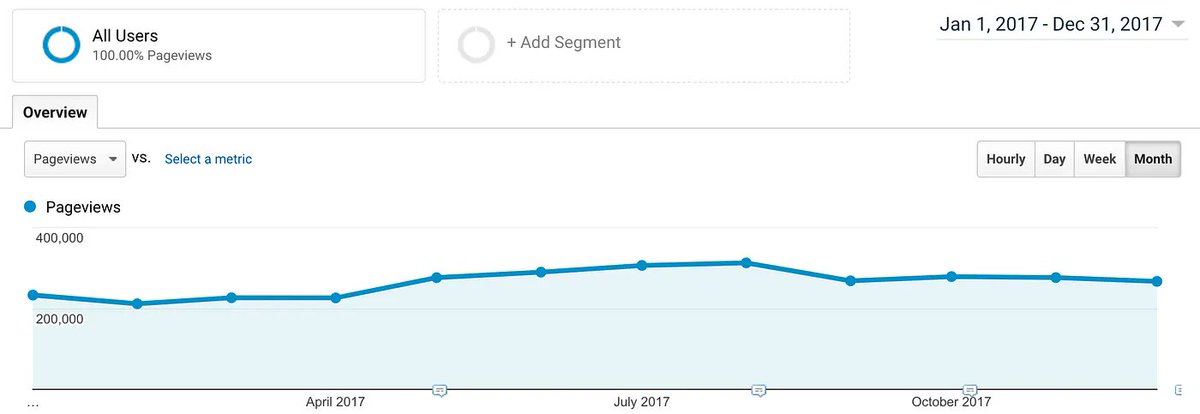
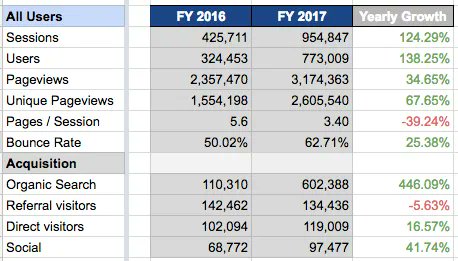
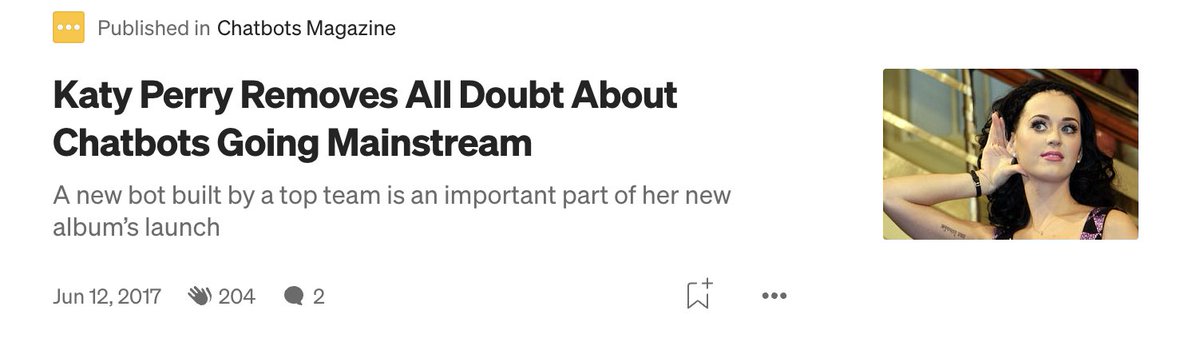
Always fascinating how chatbots probably had 2-3 hyper cycles before ChatGPT
In 2017 my first big SEO client was Botlist, it was the largest chatbot directory. Companies (Eg. footbal teams) and celebrities were launching their own chatbots and "build your own bot" was a thing.

2
276






19 Feb 2025
I haven’t seen you post a single wallet of yours yet.. you’re on the “botlist” and over 4200 users have reported this account as spam.. keep shilling those bot tweets. Your account just like the rest is soon to be suspended and deleted. Loser
2
3
34

28 Jan 2025
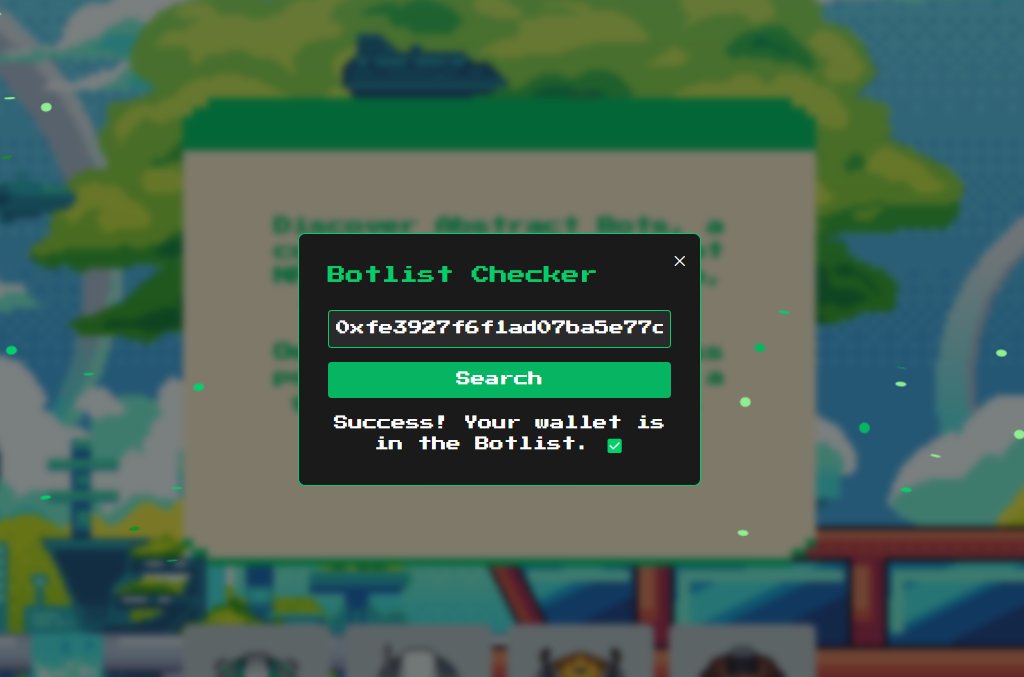
🚨 T-1 hour until we finalize our WL! 🚨
Head over to our website to check your wallet status: abstractbots.xyz 🤖✨
We also fixed a case-sensitive issue with the botlist that caused errors for some addresses.
Don’t miss your chance, double-check now! 🚀
9
19
1,834
27 Jan 2025
🚨 The wait is over! Our WL Checker is LIVE!
Head to our website, smash 'Botlist Checker,' and paste your wallet address to see if you made the list.
The bots are gearing up to invade your wallet—are you ready?
abstractbots.xyz
20
13
45
2,464
4 Jan 2025
Abstract is about to hit Mainnet!
Tell us what excites you the most about Abstract Chain.
We’ll pick the best answers for a Botlist spot! 🔥
Go. 👇
26
8
32
2,118
2 Jan 2025
Botlist Checker is launching soon!
Hope you’re ready, Bots fam, let’s get it!

12
2
20
982
22 Dec 2024
Translation Protocol: Botlist = Whitelist.
Stay sharp!
2
8
239