
Young and Restless: Nikki Explodes at Lily, Devon Threatens Cane
Read more: soapcrush.world/post/young-a…
#YoungAndTheRestless #YR #CBSSoaps #NikkiNewman #DevonHamilton #JackAbbott #ChancellorIndustries #SoapOpera #CBSNetwork #ParamountPlus
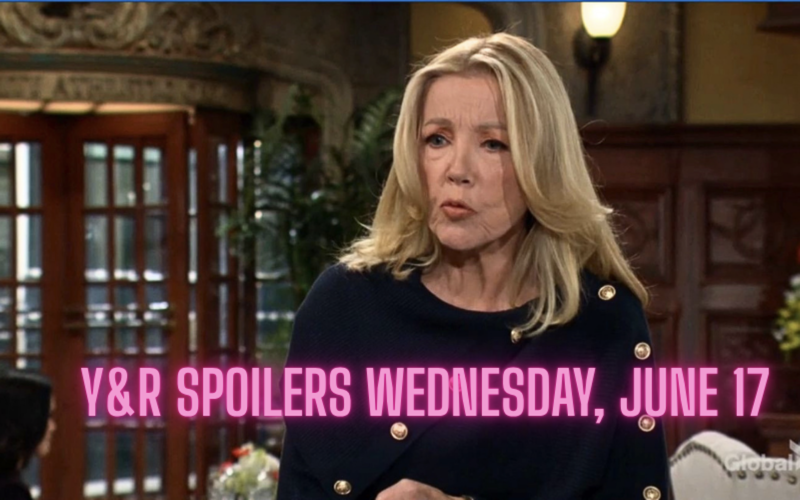
Wednesday's Young and the Restless episo…
80

Jun 9
@CBS @paramountplus @60Minutes @paramountnet @paramountco @SundanceTV Congratulations 2 the higher-Ups in destroying 60 Minutes and the #CBSNetwork Even though I’m just ONE PERSON, I’m Boycotting your NETWORKs because your concern IS 4 One @POTUS & NOT YOUR FANS! #BoycottCBS
8
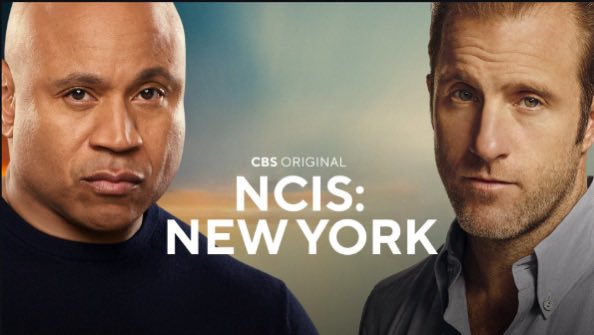
Paramount Skydance Corp’s #CBSStudios has added a new series in the #NCIS franchise, #NCISNewYork. The series is set to premiere in the fall on the company’s #CBSNetwork
3
185
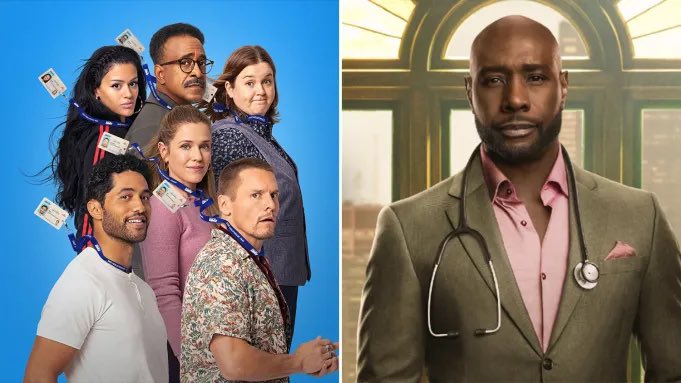
Paramount Skydance Corp’s #CBSStudios series #Watson & #DMV have both been cancelled after two seasons & one season respectively by the company’s #CBSNetwork. Their series finales are scheduled May 3rd & 11th #ParamountSkydanceCorp
12
701
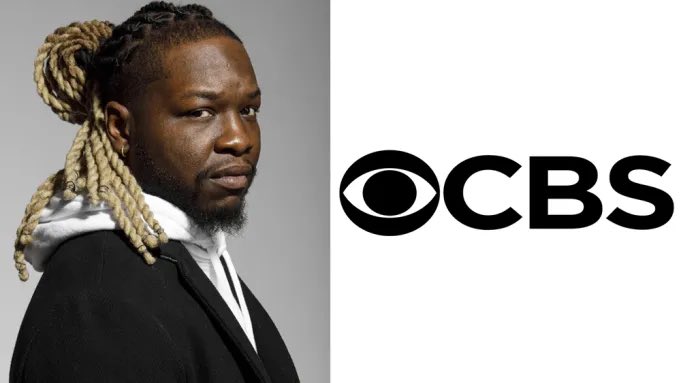
Casting News : Chris Lee has been upped to series regular for next season on Disney’s #20thTelevision series #Tracker on Paramount Skydance Corp’s #CBSNetwork #TheWaltDisneyCompany
3
58

📍 #JimmyKimmel's critique of #Trump & #CBSNetwork while presenting the #Oscars
Highlights the risks faced by Documentary Filmmakers contrasting their work with Political & Corporate pressures in #US..😷🍁
#AcademyAwards #Oscar
All d Bst!
B Sporty Happy..
जय हिन्द!🇮🇳
#HappyYadav
4
4
4
219

10 Nov 2025
I’m sorry my friends…I’m just so sad and tired of the lack of representation and the fact that the #CBSNetwork controls decision making…I miss our Queer Representation…I hope they will make Mariah and Tessa’s reunion epic…#Teriah #YR
6
7
17
1,197

31 Jul 2025
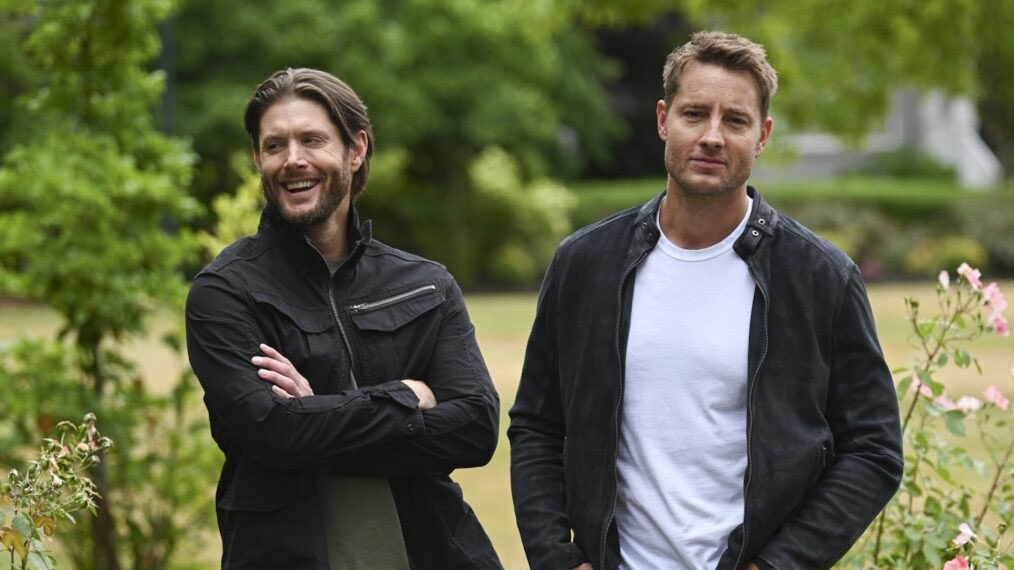
Jensen Ackles will be reprising his role as Russell Shaw, brother to Justin Hartley’s Colter Shaw in Disney’s #20thTelevision series #Tracker Season 3 for Paramount Global’s #CBSNetwork. The third season premieres on October 19, 2025
2
279

🤣🤣 hope he gets as rude as possible #ihateyoucbs and we say that for almost 15 months now since #ncishawaii got brutally cancelled and coming up with lie after lie but the real numbers show that #cbsliesnumbersdont #cbsnetwork keeps pissing of people 👏🏼
18 Jul 2025

This is not going to go well for CBS, they just gave Stephen Colbert the green light to say basically anything he wants for the next year.
1
3
112
7 May 2025
Paramount Global’s #CBSNetwork has ordered #YMarshals (working title) spin off from #Yellowstone starring Luke Grimes reprising his role as Kayce Dutton. The series is produced by Paramount Global’s #MTVEntertainmentStudios #ParamountGlobal deadline.com/2025/05/cbs-ord…
1
2
194

31 Mar 2025
Yarden Bibas in '60 Minutes' interview: 'I am here because of Trump'
Released hostage Yarden Bibas, picking up the pieces of his life following his family's murder by Hamas terrorists, speaks out for the first time, urging Donald Trump to stop the war and help free 59 remaining hostages, including his close friends
***
In a promo for an interview set to air early Monday morning on the American news magazine '60 Minutes', broadcast on the CBS network, Bibas appeared alongside fellow survivors Tal Shoham, and Keith and Aviva Siegel. During the promo, he stated: "I am here because of Trump. Only because of him."
When interviewer Lesley Stahl asked Bibas what he would say to President Donald Trump if he could speak to him, he responded, "Please stop, stop this war and help bring all the hostages back."
bit.ly/42y7WOv
@60Minutes
#YardenBibas #BibasFamily #60Minutes #DonaldTrump #Hostages #BringThemHomeNow #NeverAgainIsNow #CBSNetwork #TalShoham #KeithSiegel #AvivaSiegel #PresidentTrump #Ynetnews #YnetGlobal
4
15
41
13,571

24 Mar 2025
5
474

14 Mar 2025
4
3
84
45,048

6 Mar 2025
Not many people understand this for whatever reason. But the future of college athletics - follow the money - can be learned by looking back in the past. So, let's do that!
In the 1960s, one college football game was broadcasted on TV each week. This was part of an NCAA-controlled package called the "game of the week".
The NCAA limited college football games to one national broadcast per season to prevent a decline in attendance.
The Big Ten Conference was unhappy with this arrangement and pressured the NCAA to allow regional broadcasts.
To go back to an important date in 1955, the NCAA allowed regional broadcasts during five weeks of the season.
NBC aired college football games from 1952 to 1959, and again in 1964 and 1965.
NBC also carried the Blue–Gray Football Classic, an all-star game, on Christmas Day until 1963.
The first college football game on TV was between Fordham University and Waynesburg University on September 30, 1939. The game was broadcast by NBC on W2XBS.
In the early to mid-1970s, there were typically only a couple of national TV games each Saturday. Major networks like ABC, CBS, and NBC had contracts to broadcast a limited selection of games.
Many games were shown on a regional basis and that was done through the 2000's, where networks would select games of interest to specific geographic areas.
Some games were syndicated to local stations, meaning they were sold to individual stations rather than being part of a network package.
National Games: 2-3 per week x 10-12 game weeks = 20-36 games
Regional Games: 5-10 per week x 10-12 weeks = 50-120 games
Bowl Games: 10-15 games
Total Estimate: Roughly 80-171 games per year.
Over the entire decade (1970-1979), this would translate to a broad estimate of 800 to 1710 college football games being broadcast on TV.
Keep in mind that this is a very rough estimate. The actual number could be higher or lower depending on the specific year and the availability of broadcast records.
When you fast forward from the 1970's to the 2024 college football season, there were approximately 40-50 games per week across all networks (ABC, CBS, FOX, ESPN, Peacock, CBSNetwork, ESPN etc). Over a 13-week regular season, this equates to roughly 520-650 games.
That equates to more than 5,500 games on TV or a streaming service in the 2020's vs the 800 to 1710 throughout the 1970's.
That shows us the growth in exposure but also money. Money, money, money, and did I say money?
As a result in the explosion TV in the 1990's and through the 2000's and into the 2010's, prices increased. Conferences, via the networks, were able to add schools to their conferences and generate new revenue via media rights deals because then networks were able to make money off of cable subs. Since the peak of TV hosueholds that reached the 123 million mark, it has eroded, due to the over affordability of cable, to roughly 45 million cable subscribers in 2023.
Therefore, the old ways of making money off of football, cable subs, and adding new schools because of cable subs, is a dying method of generating revenue. Thus, new methods of revenue need to be created and that is where the new era of primetime matchups comes into play. That is why you see the move towards 8 playoff spots for the Big Ten and SEC, play-in games, and an eventual scheduling agreement between the Big Ten and SEC.
People can scuff at the words "Super League" but it is niave and dumb to think a Super League is not already forming and the moves being made in the college football world are leading to an eventual Super League.
Yes there will be a spllintering within FBS football. There was in the past, there will be again. There is no valid reason why there are over 130 schools at the same level at FBS football. None. There are major differences in resource abilities among these schools and the schools who can invest the most into football should be at a different tier than those that can't afford the same level of investment. The concept and idea of over 130 schools having to be in the same level of division is holding onto the mindsets of the 1980's college football, not a reality of 2025 college football. Remember, back when there were changes to the TV world with the lawsuits by Oklahoma and Georgia. Back in the summer of 2021 when NIL became a reality. This year with the House Settlement gets approved. Those three events is what leads us to a Super League.
Follow the money and it will lead you to the future.
5
5
2,434


25 Nov 2024
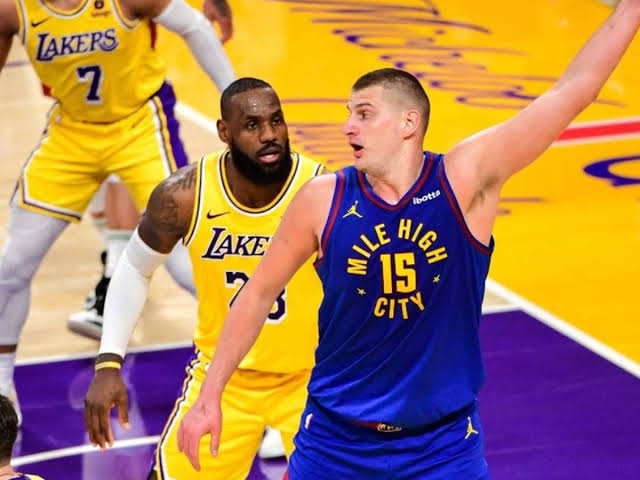
🏀📈 Basquete já é o 2° esporte dos EUA em preferência e audiência, ultrapassando o beisebol!!
Fonte: CbsNetwork 🎤
2
448


25 Sep 2024
Thomas hasn't shared a scene with Beth since she was a baby...but we heard all the time that she was his pall and attached to him. Robbed
2
71

12 Aug 2024
Please, so Hope can be free from this whole situation because it's time for this story to end & move on.
4
129

12 Aug 2024
I don’t think they know what they are doing with her.
Like they can’t figure it out.
3
116