geoffro retweeted

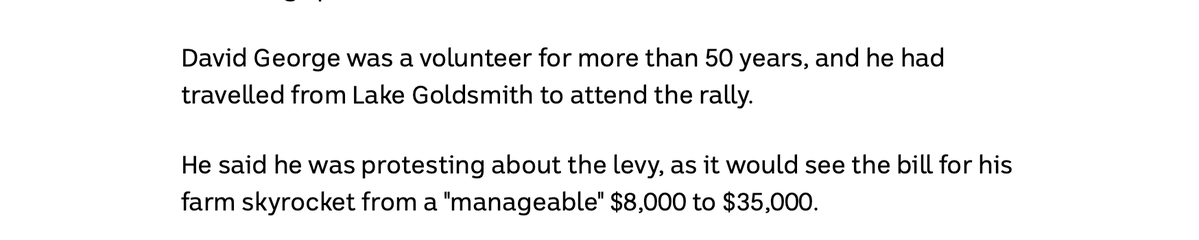
Based on Victorian property data and the fire levy calculation formula, David George’s land has an estimated market value between $15 million and $22 million AUD. He is complaining about a $35,000 levy to protect it. 🙄 #auspol abc.net.au/news/2026-06-14/c…
5
15
37
595


HOW THE BIDEN ADMINISTRATION ENABLED G*NOCIDE IN SUDAN
Exposing the American geopolitical calculation that allowed Sudan to burn, US Representative Sara Jacobs said she is "incredibly angry" at the US President Joe Biden administration for not using the leverage they have over the UAE to end the war in Sudan.
Jacobs, along with Senator Chris Van Hollen, previously led joint resolutions of disapproval to block arms sales to the UAE due to its support for the Rapid Support Forces (RSF), a militia accused of perpetrating g*nocide in Sudan.
In comments to journalist Mehdi Hasan on his Zeteo platform, Jacobs said that this was triggered by a recognition that the Biden administration was completely failing to pressure the UAE to end its backing of the RSF.
She went on to explain that the White House failed to act.
"The Biden administration felt like they needed the UAE’s partnership on other things in the Middle East, particularly on the issue in Isr*el and Gaza, and they were unwilling to actually put this real leverage on," Jacobs said.
In short, the US government consciously traded Sudanese lives to maintain Abu Dhabi's diplomatic cooperation elsewhere in the Middle East.
This is the raw reality of Western foreign policy. When powerful nations use Africa as a geopolitical bargaining chip, millions of innocent people pay the price.
1
14

Jaimini Sutras for Financial Success 💵
1. 11H from Pada Lagna occupied by exalted or friendly planet gives immense wealth to the native
2. Pada Lagna aspected by Benefic or associated with Benefic will be wealthy
3. 2nd from Pada Lagna occupied by benefic then immense wealth incoming is promised
4. If 7th Pada is in a Kendra (1, 4, 7, 10) or Trine (1,5,9) or in 3, 11 then person will earn a lot from business
5. If 7th pada is in 6,8,12 then there will be difficulty in earning wealth and moreover sustaining the same
6. Poverty is seen if the Lord of 8H from Atmakaraka (AK) aspects the AK
7. Best combination for financial prosperity is when an aspect or association between AK or Lord of AK sign with 2L from AK promising smooth career gains too
Calculation for Pada Lagna
1. Check your ascendant sign and count till the house where the lord of the ascendant sign is posited
2. Count the same number of houses from there and you will reach your Pada Lagna
Exceptions to Calculating Pada Lagna:
1. If Lagna Lord is in its own sign then count 10th from that will become Pada Lagna
2. If Lagna Lord is 7th from Lagna then count 4th from 7H and that will be Pada Lagna
39

Really enjoyed delving into the complexities of the 2025 #EU-US #trade and tariff negotiations in my new article in Contemporary Italian Politics.
The article examines the crisis as an asymmetric deal, where trade and security logics became tightly intertwined. It shows how PM #Meloni ultimately positioned Italy within a broadly European camp, not despite her political background, but because the structure of the crisis made EU-level coordination the most effective channel for defending national interests.
Building on this case, I develop the concept of #strategicEuropeanism: the idea that even leaders with Eurosceptic legacies may increasingly rely on the EU when collective action becomes the only viable way to navigate external economic and geopolitical pressures
Beyond the Italian case, the article raises broader questions about #European integration. If support for the EU is increasingly grounded in strategic calculation rather than normative commitment, what does this imply for the durability and direction of integration itself?
You can access one of 50 free copies here tandfonline.com/eprint/WCDCC…
From Euroscepticism to strategic Europeanism. Giorgia Meloni and the 2025 EU-US trade and tariff crisis tandfonline.com/doi/full/10.…
5

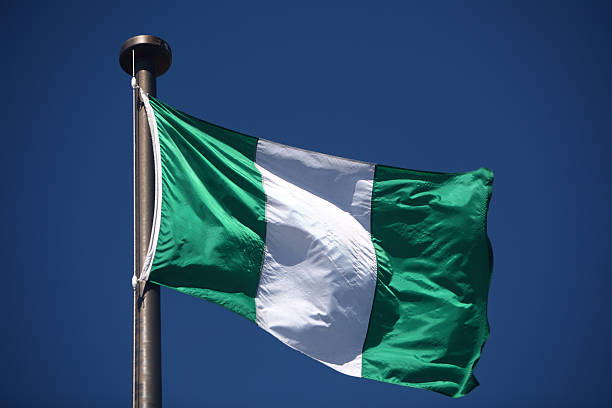
FORTY YEARS OF FICTION: HOW NIGERIA WAS STOLEN BY A MAN WHO DOES NOT EXIST
By Kio Amachree | President, Worldview International
There is a particular kind of rage that settles in the bones of those who love Nigeria — a slow, grinding fury born not of hatred but of heartbreak. It is the rage of watching a nation of 250 million extraordinary people, with more natural wealth than most continents combined, brought to its knees by one man’s lifelong addiction to power purchased with dirty money and sustained by terror.
Bola Ahmed Tinubu is not a political genius. He is a well-funded street operative who mistook the silence of frightened men for the consent of a nation.
THE LIES WERE ALWAYS THERE
The foundation was always fraudulent. Fake university certificates. A school in Chicago that could not verify his attendance. A birth date so impossibly manipulated that it makes him younger than his own daughter. These are not minor administrative errors. These are the fingerprints of a man who constructed an entire identity from scratch — and paid handsomely to ensure that nobody looked too closely at the scaffolding.
For four decades, the dollars flowed. Journalists were bought. Officials were silenced. Those who asked inconvenient questions were threatened, beaten, or worse. I know this not as an abstraction. I have been threatened with death six times by operatives linked to this network — six times, for the crime of speaking plainly about a public figure in public office. I am not a man who frightens easily. I come from a family that fought the British for Nigerian independence. My father, Chief Godfrey Kio Jaja Amachree QC, was Nigeria’s first Solicitor-General, its first African UN Under-Secretary-General, a man of law, principle, and unshakeable courage. My grandfather sat at the negotiating table in London before independence. Backing down is not in our blood. It has never been in our blood.
So when Tinubu’s operatives reach into Stockholm to remind me of my mortality, they reveal something important: they are afraid. Men who are confident in their innocence do not send death threats to writers in Scandinavia.
A GOVERNORSHIP BUILT ON BODIES
He should have stopped at Lagos. The governorship gave him wealth, influence, and a platform that most politicians in the world would consider the summit of a career. But power is a drug, and Tinubu has always needed a larger dose.
What he left behind in Lagos was not a legacy of governance. It was a trail — of bodies, of broken institutions, of a state treasury treated as a personal account, of political opponents who met ends that were never properly investigated. He did not build Lagos. He colonised it. And he used the revenues of that colonisation to finance his next ambition, and the one after that, until the presidency itself became the only prize large enough to satisfy him.
The manner in which he obtained that presidency — through an electoral process that the courts themselves found deeply troubling — tells you everything about the man. He did not win Nigeria. He purchased it. And Nigeria is now paying the price.
THE SON AND THE NETWORK
While the father performs statesmanship on the world stage, the son operates with the brazen confidence of a man who believes accountability will never reach him.
Seyi Tinubu co-owns a British Virgin Islands entity — Aranda Overseas Corporation — with Ronald Chagoury Jr., son of Gilbert Chagoury, a man convicted of money laundering in Switzerland, listed in the FBI terrorism database, banned from entering the United States, and the beneficiary of approximately thirteen billion dollars in no-bid Nigerian infrastructure contracts awarded under his father’s administration. Seyi simultaneously sits on the board of CDK Integrated Industries, a Chagoury Group subsidiary, while his father’s government continues to direct state contracts toward Chagoury-linked entities.
This is not a grey area. This is not a matter of interpretation. It is a blatant, documented, publicly reported conflict of interest of a kind that would end political careers and trigger criminal prosecutions in any functioning democracy. Bloomberg has reported it. Court documents have recorded it. The property at 32 Grove End Road in St. John’s Wood — acquired through Aranda and linked to prior fraud investigations — sits in London, in plain sight, waiting for authorities with the will to act.
I have placed the full evidentiary file before the UK Serious Fraud Office. I have been interviewed for nearly two hours. Further written documentation has been formally requested. I am not permitted to discuss the specifics of an active investigation, but I will say this: what I presented was not opinion. It was evidence. Sworn affidavits. Court documents. Material reported by reputable international outlets and verified against public records. The file is solid. And it is in the right hands.
A NATION THAT LOOKED AWAY
Here is the uncomfortable truth that no amount of outrage at Tinubu can avoid: Nigeria let this happen.
Not out of ignorance — the signs were always visible to anyone willing to look. Not out of powerlessness — Nigerians have shown, repeatedly, that they are capable of extraordinary collective action when the will is present. Nigeria looked away because too many of its elites, its security chiefs, its political class, made a calculation. Tinubu was useful. He had money. He could finance ambitions, neutralise enemies, and deliver results in the crude transactional currency of Nigerian politics. So they covered for him. They repeated his fictions. They dismissed the questions. They told themselves that what they did not say officially could not be held against them.
Sani Abacha knew. The successive administrations that followed knew. The intelligence files existed. The DEA had been watching since the 1990s. And yet the arrangement held — because in Nigeria, what you know about a powerful man is often less important than what he knows about you.
The Yoruba political establishment bears a particular responsibility. A people with one of the most distinguished intellectual and cultural traditions on the African continent allowed tribal pride to override moral judgment. They wanted a hero. They needed a symbol of Yoruba political ascendancy. And so they looked past the forged certificates, the drug money, the bodies, the threats — and they gave this man their full-throated support. Some of them knew exactly what they were endorsing. That is not tribalism. That is complicity.
THE RECKONING ARRIVES
But the bill always comes due.
The economy is in ruins. The naira has been hollowed out. Food inflation has crushed the working poor. Kidnappings terrorise communities from Oyo to Borno. The streets that once celebrated this man now fill with protesters demanding his removal. Even on Democracy Day — the most symbolically loaded date in Nigeria’s calendar — police fired tear gas at demonstrators in Abuja. The opposition is openly declaring his government a failure. The cracks in his political coalition widen by the week.
And in Washington, a federal judge’s deadline has passed. The FBI and DEA files on Bola Tinubu — files that have existed for decades, files that trace money, associations, and conduct that the Nigerian public has never been allowed to see in full — are at the centre of a legal and institutional process that his lawyers cannot charm, threaten, or bribe into silence. The machinery of international accountability does not respond to the methods that worked in Lagos in 1999.
This man is not well. The evidence of cognitive and physical deterioration is visible to anyone who watches him speak. Nigeria cannot afford to wait for nature to resolve what politics has failed to address. The country needs its dignity back. It needs a government that can speak in coherent sentences, formulate credible policy, and lead with something other than fear.
WHAT COURAGE REQUIRES NOW
I have written these words from Stockholm, where I live as a Swedish citizen, where the authorities from the Foreign Ministry to the state security services are aware of my situation and the threats I have received. I write without anonymity and without apology. My name is on every letter, every submission, every article.
Nigeria has produced enough men and women of genuine courage — in its universities, its judiciary, its press, its diaspora — to build something worthy of its people. What it has lacked is not talent or intelligence or moral clarity. What it has lacked is the collective willingness to pay the price that accountability demands.
That price is no longer optional. The protests are the beginning, not the end. The international legal processes are accelerating. The evidence is public, documented, and damning. The only remaining question is whether Nigerians — at home and in the diaspora — will find the backbone to match the moment.
This creation, wherever it was truly made and whoever truly made it, must go. Not quietly. Not with honours. Not with a negotiated exit that allows the network to regroup under new management.
It must go with the full weight of the truth behind it.
Nigeria deserves nothing less.
Kio Amachree is President of Worldview International, a Stockholm-based diaspora advocacy and political commentary platform. He writes on Nigerian governance, accountability, and diaspora engagement.
12

I think we need to make the calculation on “late” based on when sunset is. If the sun doesn’t go down until 9 or 9:30, I think you’re fine.
1
1
6

I don't see any evidence of that cynical calculation in Dario's words or actions. It all reads as sincere to me, although deeply naive and harmful.
5

AI feels like you talking with someone who has great knowledge, memorise everything and helping you to solve problems.
But at the end it just a piece of code doing tone of mathetical calculation for predicting next fucking word you are except to receive.
1
4

Calculations initially added by 2 increments by one for each following calculation, such as:
2,3 4,?
? = 5
5 x6 = 30 5= 35
2

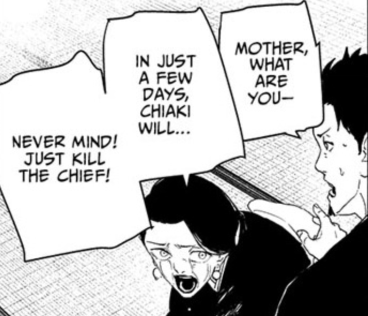
this is just sick and heartbreaking :( mrs. soga isn't making any political calculation here. she's not even really thinking like a soga anymore. she is thinking like a mother whose daughter is about to be violated by the very hierarchy she helped teach her to obey.
1
14

Calculation based on a 100k funded account.
Target 4.5% per month: $4500
Total trading days: Approx 20 days per month(Trade only 15 days)
Daily target: $300
Max trades: 2 per day
After 80% split: $3600
That's how you do it.
4
Deon_1z retweeted

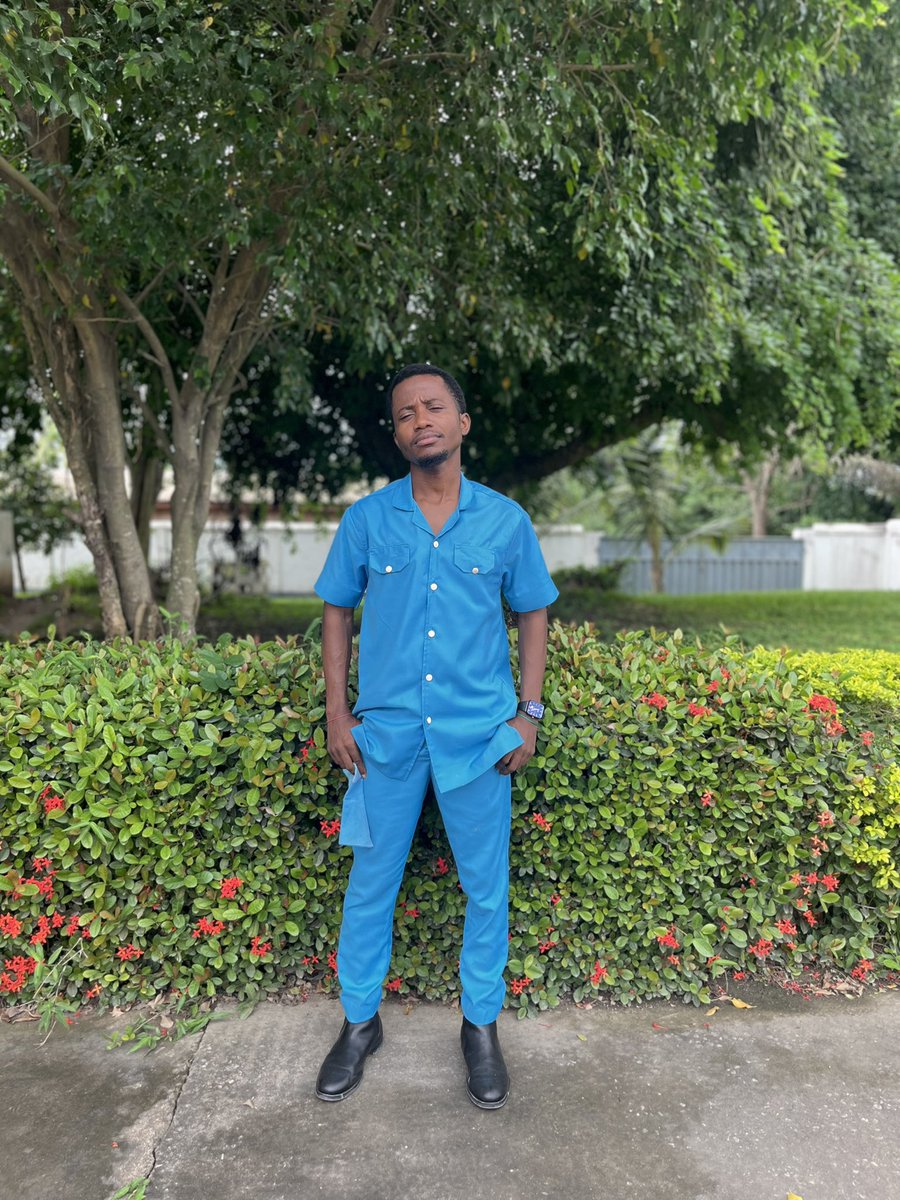
combination is a calculation nti He buy blue handkerchief ah😂
akoa sɛ akurase showmaker🤣
32
40
68
2,976

There is no email from your team after June 6. I have highlighted that your calculation is incorrect with clear proofs.
2

Money is a low-value higher-order good that serves as the universally accepted medium of exchange, enabling the homogeneous calculation of capital across an economy.
6

Is it possible for a heart that masterfully conceals its chaos to be conquered by a man who lives by calculation?
Arkan terbiasa mengendalikan segalanya, tapi Claire adalah ketidakpastian. Di depan gadis penuh trust issue itu, logikanya seakan lumpuh.
/wp/

96


Hmmm not too sure of this calculation
Maybe before not now
1
15

🛡️ ISRAEL RAISES ALERT LEVEL AND PREPARES FOR POSSIBLE IRANIAN MISSILE RESPONSE AFTER IDF STRIKE ELIMINATES HEZBOLLAH LIAISON COMMANDER IN BEIRUT
✈️ The IDF notified CENTCOM shortly before the strike in Beirut took place, according to Axios. Israeli media reported that an empty Hezbollah headquarters in Beirut’s Dahiyeh suburb was struck again, similar to last week.
🎯 Israeli and Lebanese media reported that Ali Musa Abbas Daqduq, also known as Abu Hussein Sajid, Hezbollah’s liaison unit commander, was eliminated in the Israeli strike on Beirut. Israel had reportedly attempted to assassinate Daqduq several times in the past.
🛡️ Israeli media initially reported that Israel assessed Iran would not respond to the Beirut strike. Israeli Army Radio later reported that Israeli assessments now indicate Iran will respond. Israel has raised its alert level and begun preparations for possible fire from Iran.
The IDF said it is prepared for Iranian missile fire on Israel in the coming hours following the strike on Beirut’s Dahiyeh suburb. Jordanian air defense systems have also been placed on full alert.
🔹 Israeli security sources told Channel 12: "We saw how the Iranians reacted last time and took it into account. We are prepared for all possibilities".
⚠️ Iranian Parliament Speaker Mohammad Ghalibaf said: "Israel's violations in southern Lebanon have again proven that it either has no desire to fulfill its obligations or lacks the ability to do so. By giving a green light, you cannot gain concessions. The game of a bad cop and a good cop is already obsolete. If you have no will or ability to fulfill your obligations, there is nothing to talk about along the way".
⚠️ Brigadier General Mohammad Jafar Asadi, deputy commander of the Iranian General Staff, Khatam al-Anbiya Central Headquarters, said: "The Zionists' crimes in the suburb will not go unanswered".
⚠️ Iranian MP Ebrahim Rezaei said: "One must not fall into a calculation error: Even if you seek agreement or understanding, its path is disciplining the Zionist regime. If this rabid dog is not controlled, the ink of an agreement not yet dry will bite our own foot".
🔸 A senior diplomat involved in the talks told Fox News: "The strikes today in Beirut are creating issues with finalizing the deal. This is a clear attempt by Israel to sabotage the President's deal and drag the US back into war".
🔸 US Secretary of War Pete Hegseth said: "We are on track to sign the agreement with Iran and the question is not whether we will sign it but when".
Hegseth added: "I do not expect Israel's strikes on southern Beirut's Dahiyeh to derail the agreement with Iran. If Iran wants this to hold, it must rein in Hezbollah. Iran must strongly urge Hezbollah to stop attacking Israel".
🔸 President Trump said: "This morning's attack on Beirut should not have happened, particularly on a special day when we are so close to a peace deal with Iran. Israel has the right to defend itself, but the attack it was responding to was very small and meaningless, nobody was hurt, injured, or killed, and should not disrupt this important process. There should be no more attacks by Israel anywhere in Lebanon, but there should also be no more attacks by any other party, including Hezbollah, against Israel. This could be the beginning of a long and beautiful peace — let's not blow it!"
🔁 If this gave you clarity — forward it.
🌐 Full updates & discussion: israelrealtime.com
1
1
127

I know the numbers. I tweaked the AI to give me the raw information I already knew before doing the screen capture. The political will was the entire point. The US could have won Korea and Vietnam. The calculation that its voters would shrink from what was needed, proved correct.
23m

Brother, I can see why you think this - look at how the AI is responding and misleading you. Here's the truth.
In 1941, they had a 2million man military *before* Japan struck - the draft had been in place for over a year. They had a bigger navy and airforce than Japan, and most important of all... Radar.
And they weren't bogged down in China when things kicked off. History is written by the victors - but no one likes to read a story about a lopsided fight. They did all the hard, long-to-do stuff first - all they needed, was an enemy to flick the switch.
"The arsenal of democracy"
3