
RWOボリュームとして使ってるし単一ポッドにしかアタッチされないようになってるから何処かで何かがのこってるんだよねぇ〜
いっそのことCephFSに切り替えてやろうかな
DBだけど
1
14


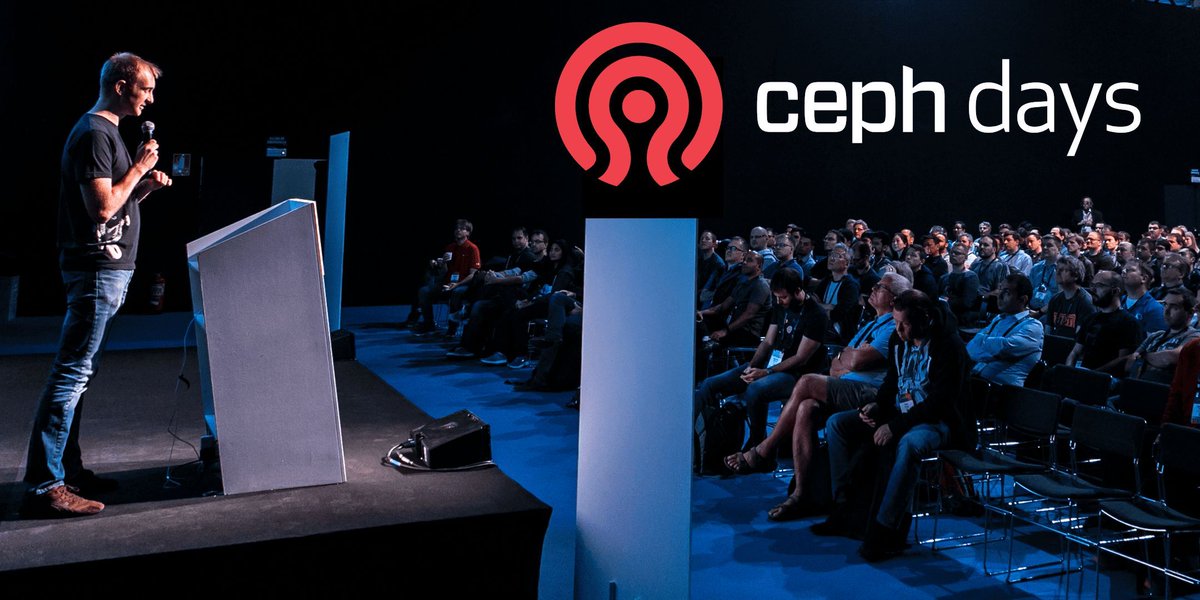
🚨 Attention, #Seattle Ceph Friends! #CephDaysSeattle is tomorrow! 🚨
This #CephDays event will cover:
• #CloudNative and Edge Deployments
• #CephFS Capacity
• Real-world user stories
• And more...
Tickets here: t.ly/CephSeattle2026
#OpenSource #Storage
1
2
213

May 25
$AMD Violent Re-rating ⤴️$1,200 is coming 🧵
Not Financial Advice! DYOR!
I'm seeing lots of misinformation on CPU capability and how certain companies just made claims to take most of CPU market share in a week. This thread will focus on why @AMD will be the clear winner or 50-60% market share long term. A violent re-rating to $1,200 IMO is coming whether bears like it or not.
AMD is exceptionally well-positioned to capture the majority of incremental market share and revenue growth in the Agentic AI era. This is driven by a fundamental structural shift in data center architecture: the dramatic rise in CPU demand relative to GPUs as autonomous agentic workflows proliferate. AMD’s differentiated EPYC portfolio combining extreme high-core-density flagships like Venice (Zen 6) with highly efficient, right-sized options like the 8005 series (Zen 5) perfectly matches the diverse needs of hyperscalers, enterprises, telco operators, and edge deployments under varying power, memory, and ecosystem constraints, or precisely to win over in-house Arm-based CPUs.
If you enjoy this kind of thread, slap the like/repost to please the X Algo.
If you are interested in supporting my work or reading more supply-chain analyses, consider subscribe(only if u can afford it)
Read until the end for the best part!
1. Dr. Lisa Su’s Vision: Engineering the J-Curve for AMD
Dr. Lisa Su, AMD’s Chair and CEO, has been instrumental in positioning the company for this inflection. In AMD’s Q1 2026 earnings call and subsequent comments, she highlighted the “unexpected” surge in CPU demand driven by AI inferencing and agentic AI, describing it as a structural, multi-year tailwind that no one in the industry fully anticipated a year earlier. This forced her to visit Taiwan and the entire supply chain to expand Advanced Packaging capacity for 2026 and beyond.
Dr. Su explicitly noted the CPU:GPU ratio evolution: “In the past, the CPU to GPU ratio was primarily just as a host node in like a 1:4 or 1:8 configuration node, now changing and getting closer to a 1:1 configuration or even, you can even imagine if you get lots and lots of agents that you could have more CPUs than GPUs.” She emphasized that this demand is “largely additive” to GPU TAM rather than cannibalizing it, as agentic workloads require additional CPU processing for orchestration, data movement, and parallel execution alongside accelerators.
This insight led AMD to dramatically revise its server CPU TAM forecast upward from ~18% annual growth and ~$60B by 2030 to >35% CAGR and over $120B. And this was a beautiful and conservative guidance considering the Rapid TAM Expansion. Dr. Su has framed Q2/Q3 2026 onward as the start of a J-curve momentum in EPYC revenue: initial investments in capacity and portfolio (high-density Venice efficient 8005) compound into accelerated growth as supply ramps and agentic adoption scales. She has stressed tight supply conditions and the need to ramp production aggressively with partners, signaling confidence that AMD’s execution will capture outsized share of this expanded opportunity.
Under Dr. Su’s leadership, AMD engineered this J-curve through years of Zen architecture improvements, socket/platform investments (SP6/SP7), and a segmented portfolio that addresses every agentic layer turning what could have been a GPU-centric era into a balanced CPU GPU boom where AMD holds the winning edge
2. Agentic AI workload shift: CPUs become the central chip, where it is projected to ramp to 40m units to fix the imblanced CPU:GPU ratio in the last 3-4 years caused by 1 company where they claimed AI will only run on GPU.
Traditional generative AI (like simple chatbots) relied on GPU-dominant clusters with CPU:GPU ratios of roughly 1:4 to 1:8. GPUs handled heavy matrix operations for training and inference, while CPUs managed lighter orchestration.
Agentic AI, where systems of autonomous agents(3-5 agents on average today) that plan, reason, use tools, maintain long-term state, spawn sub-agents, perform multi-step workflows, and incorporate reinforcement learning feedback fundamentally changes this balance. These workloads demand:
~Massive parallel orchestration and agent coordination.
~Extensive data preprocessing, retrieval-augmented generation (RAG), tool calling, routing logic, and low-latency decision loops.
~Simulation, state management, and mixed workloads that keep GPUs fed efficiently.
This shifts ratios toward 1:1 CPU:GPU (or higher CPU emphasis in agent-dense setups), with many AI companies are already testing 30-50-800 agents running in a loop. Projections indicating 5–10x more CPU cores per GPU in complex Agentic AI scenarios. CPUs can account for 90% of compute workload in agentic inference versus ~15-30% previously.
The result is explosive growth in the server CPU TAM: AMD has revised its forecast from ~18% annual growth to >35% CAGR, projecting over $120 billion by 2030. And we now have Equity Firms are putting out $200-$400B TAM by 2030. During Q1 Earning Call $NVDA Jensen said $200B CPU TAM in 2026. Clearly, The TAM is expanding faster than most imagined. Hyperscalers and AI native companies will need much higher CPU:GPU ratio if they want to run more than 10-20 agents to 200-300 agents 24/7.
This creates a massive incremental opportunity where flexible, high-value CPU solutions win like AMD. In this environment, factors like raw per-socket throughput, core density, memory bandwidth, power efficiency, and software compatibility become decisive advantages precisely where AMD’s segmented strategy excels.
3. AMD's portfolio Advantage, where tailored Solutions for every customer segment.
Unlike competitors with narrower or more uniform offerings, AMD provides the right CPU for each layer of the agentic AI stack:
A. High-Core Density Flagships (EPYC Venice / Zen 6, 2026): Up to 256 cores/512 threads per socket on the new SP7 platform, with up to ~1.6 TB/s memory bandwidth (via advanced MR-DIMM/MCR-DIMM and more channels), PCIe 6.0, and significant IPC/clock gains. This delivers the "one big powerful chip" economics for dense agent orchestration, large-context processing, and high-throughput coordination in hyperscale or HPC AI clusters. It minimizes NUMA overhead, reduces server count, lowers networking costs, and optimizes $/M tokens($0.0003-$0.0005/M Token) or agent throughput per node. Expected 70% performance uplifts and strong efficiency gains make it ideal for raw power in AI/HPC where power headroom exists.
B. Efficient Lower-Core Options (EPYC 8005 / Sorano, Zen 5): 8–84 full Zen 5 cores (up to 168 threads) in a compact single-socket SP6 design, with TDP ranging from 70W–225W (highly configurable). AMD benchmarks show leadership perf/watt ( 24,408 ssj_ops/watt on the 8635P vs. NVIDIA Grace’s ~13k and Intel’s 21k). It offers ~40% higher integer performance than prior 8004 and excels in edge, telco (vRAN with LDPC optimizations), dense storage (CephFS), and power/memory-constrained racks. 8005 is to win most in-house arm-based CPUs or Intel at scale
C. Mid-Range and Specialized Variants ( 9005 Turin family and upcoming Verano): Balance frequency, efficiency, and features for latency-sensitive agent tasks, general-purpose cloud, and hybrid AI racks.
This portfolio serves hyperscalers (max density), enterprises (easy migration), and telco/edge (low power), capturing revenue across the full spectrum rather than ceding segments.
4. $AMD EPYC vs In-house Arm-based CPUs like Graviton, Axion, Cobalt or recently new $NVDA Vera)
In-house Arm designs from hyperscalers (AWS Graviton4/5, Google Axion, Microsoft Cobalt 100/200) are highly optimized for their specific clouds, delivering strong efficiency and cost advantages within locked-in ecosystems. However, AMD EPYC frequently demonstrates superior general-purpose performance, ecosystem flexibility, and broad applicability, key for the heterogeneous, rapidly evolving Agentic AI landscape that spans multi-cloud, hybrid, and on-prem deployments.
A. Performance & Throughput
~Current-gen EPYC Turin often leads independent cloud VM benchmarks , delivering top results in multi-threaded, general workloads, with strong price-performance. Venice’s jump to 256 cores and 1.6 TB/s bandwidth positions it for even greater density advantages in agent orchestration.
~In-house Arm ( Graviton5 ~192 cores, Axion) excels in specific highly parallel or scale-out tasks like decompression, Node.js/Python APIs, or certain LLM token throughput. EPYC’s stronger per-core performance, SMT (2x threads), and AVX-512 support provide advantages in complex agent reasoning, vectorized preprocessing, mixed workloads, and HPC-style simulations.
~Turin instances frequently win overall geomean performance and perf/$, especially as agentic workflows involve more general-purpose compute.
B. Efficiency & Power
~Arm customs leverage LPDDR5X and custom tuning for excellent perf/watt in pure scale-out/cloud-native jobs, with lower per-core power.
~And EPYC 8005 often reverses or matches this (clear win vs. Grace on SPECpower), while Venice maintains competitive efficiency at much higher density. In power-constrained environments, the 8005’s lower TDP and balanced 6-channel DDR5 reduce overall system draw and DIMM pressure compared to high-channel x86 or some Arm setups.
C. Ecosystem & TCO
~Full x86 compatibility enables zero porting, seamless hybrid/multi-cloud/edge migration, and mature tooling/ecosystem. This is critical as Agentic AI expands beyond hyperscaler silos into enterprises with legacy code, diverse apps, and vector-heavy needs
~In-house Arm-based CPUs offers vertical integration (Graviton with Trainium/Inferentia) and lower instance pricing inside their clouds, but it locks customers in and requires validation/porting effort. This limits appeal for multi-vendor or on-prem strategies.
=>AMD powers open-market servers from multiple OEMs, enabling faster innovation and broader adoption.
D. Overall Market share
The result is explosive growth in the server CPU TAM: AMD has revised its forecast from ~18% annual growth to >35% CAGR, projecting over $120B by 2030. And we now have Equity Firms are putting out $300-$400B TAM by 2030. During Q1 Earning Call otal TAM expands.
5. What is required to hit $1,200?
To reach a $1,200 stock price, AMD would likely need annual revenue in the range of $130–150 billion (depending on the valuation multiple sustained at that scale and growth), representing roughly 2–3x current levels. This is a long-term scenario (likely 2027-2028 ) with continued strong execution in the Agentic AI era, 20%-25% net margins, and market willingness to apply premium multiples to a much larger company.
At current multiple: ~20x P/S, it would only require $98B revenue, this could be easily done next year. However, we do not know the market sentiment/macro condition for next year. It could reward more or less for AMD or Semi stocks differently.
At 15x P/S that would require closer to my $130-$150B revenue target
At 12x P/S, this would signal somewhat of a slow down on overall AI-CapEx, which bears been attacking for abt 3 years now. This would require $163B Revenue
At 10x P/S, this would mean AI CapEx flat or decline YoY, which is unlikely. This would require $196B Revenue
The most likely path or trend would be $100-$150B revenue withing a 15-20X P/S(Cheaper than most Semi-peers as AMD has the worst of the worst coverages from analysts).
The current consensus is still $40B-$50B for FY2026, and this is extremely misleading, and I'm not surprised as I been covering AMD for a long time now. Analysts were only projecting $25-$28B for FY2025, and we got $34.6B.
My lowest end of FY2026 projection, where you can comp it to analysts:
AI GPUs: $40-50B
EPYC Data center: $15-$20B
Client Segment: $12-$13B
Gaming: $6B
Embedded: $4-$5B
Total Revenue: $77-$94B
Non-GAAP net income $19.3B-$23.5B
Non-GAAP EPS $12-$14.7
If executed and delivered on-time for large customers $META, @OpenAI, $MSFT and many others,
At current multiple ~20x P/S FY2026 would mean
$1,54T-$1.88T or $944.79 - $1,153.37 per share.
Now, I dont know what kind of P/S multiple AMD gonna be rewarded by year end, I will let you do the math. It is all about 2027 guidance and how market feels about AI CapEx.
IMO, CapEx may accelerate because CPUs are cheaper to ramp, and produce far superior margin for Hyperscalers and AI Native Companies. And companies are willing to pay more than B2C, because digital workers are productive and useful. We will see.
Conclusion:
In conclusion, AMD stands at a pivotal inflection point in the Agentic AI era, uniquely equipped to capture the majority of incremental market share and revenue growth in server CPUs. The structural shift from GPU-dominant (1:4–1:8 CPU:GPU ratios) to CPU-co-equal or CPU-heavy (approaching 1:1 or higher) architectures driven by the orchestration, reasoning, RAG, and parallel workflow demands of autonomous agents is expanding the server CPU TAM dramatically to over $400 billion by 2030. This creates a massive additive opportunity that plays directly into AMD’s strengths.
Dr. Lisa Su has deliberately engineered this J-curve momentum for AMD. Her clear articulation of the unexpected CPU demand surge and the company’s aggressive portfolio and capacity investments position EPYC as a primary beneficiary of the rebalanced CPU:GPU landscape. Combined with strong execution (record 46% x86 server revenue share and robust data center growth), this sets up sustained outperformance.
Looking ahead, these tailwinds support ambitious but achievable financial upside. Reaching a $1,200 stock price would IMO require scaling revenue to roughly $130–150 billion annually (2.5–3.5x current levels) at reasonable 15–20x P/S multiples, a plausible multi-year outcome as AMD continues capturing share in the expanded TAM while improving healthy margins.
Overall, the combination of workload shifts favoring CPUs, AMD’s tailored high-and-low core portfolio, ecosystem superiority over Arm, and visionary leadership under Dr. Su creates a compelling setup for AMD to not only defend but significantly expand its leadership in the data center. In the Agentic AI era, where raw power, efficiency, and flexibility all matter, AMD’s strategy is exceptionally well-aligned with where the market is heading. The coming years should reward this positioning with substantial revenue, market share, and shareholder value creation.
Not Financial Advice! DYOR!
May 22

BREAKING $AMD Dr. Su Full Interview Taiwan 🆕🚀
In this interview, you will hear more abt how @AMD demand for CPUs GPUs are so high right now. How AMD is going to ramp up Supply in the next 3-5 years. And How AMD is going to win with massive increase in production through 2027-2029
CPU:GPU Ratio 1:1 or Higher CPU Ratio as more agents are running.
Nobody makes money on AI Training. More money will be made on Inference.
Deeper Collaboration with TSMC: AMD aims to be the first company to adopt 2nm HPC (high-performance computing) technology at scale and TSMC CEO Dr. Wei prased it the best CPU. Su expressed high satisfaction with the TSMC partnership amid tight global capacity.
We are still super early in the cycle, and AMD will supply the compute for all customers
She reiterated her view that the world needs dramatically more computing power (orders of magnitude higher) to support AI going from ~1 billion to over 5 billion active users in the coming years.
Taiwan is not just a manufacturing base but a key co-creator in the AI ecosystem. Strengths highlighted include advanced packaging, server manufacturing, and cooling technologies. Su encouraged Taiwan to move from "dream executor" to "dream maker" by participating more in global standards and innovation.
Technology and Ecosystem Strategy: Emphasis on chip architecture innovation, open ecosystems (vs. closed ones), and partnerships to drive down costs and broaden AI adoption across industries.
Supply Chain and Geopolitics: AMD is focused on capacity ramp-up and resilience through diversified production while deepening ties in Taiwan.
Source: youtube.com/watch?v=DpLJcQhv…
7
9
130
184,844
Ceph v18.2.8 (Reef) is out! 🚀
The final expected Reef backport release brings:
🔐 Security fixes (CephFS, mgr alerts)
⚙️ Stability correctness improvements across RGW, CephFS, BlueStore
Read more: t.ly/Reefv1828
#Ceph #OpenSource #Storage

4
5
533

Feb 28
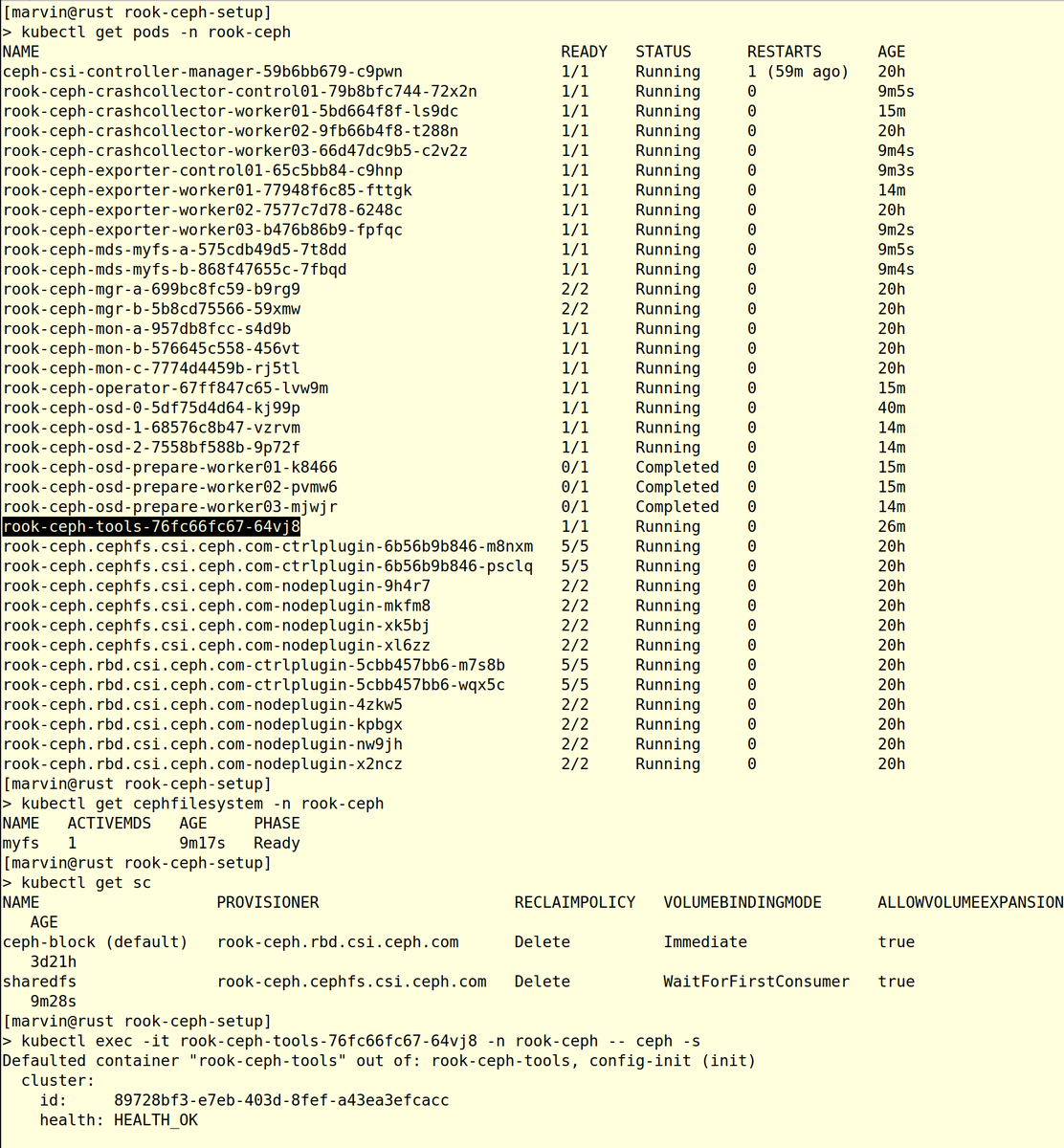
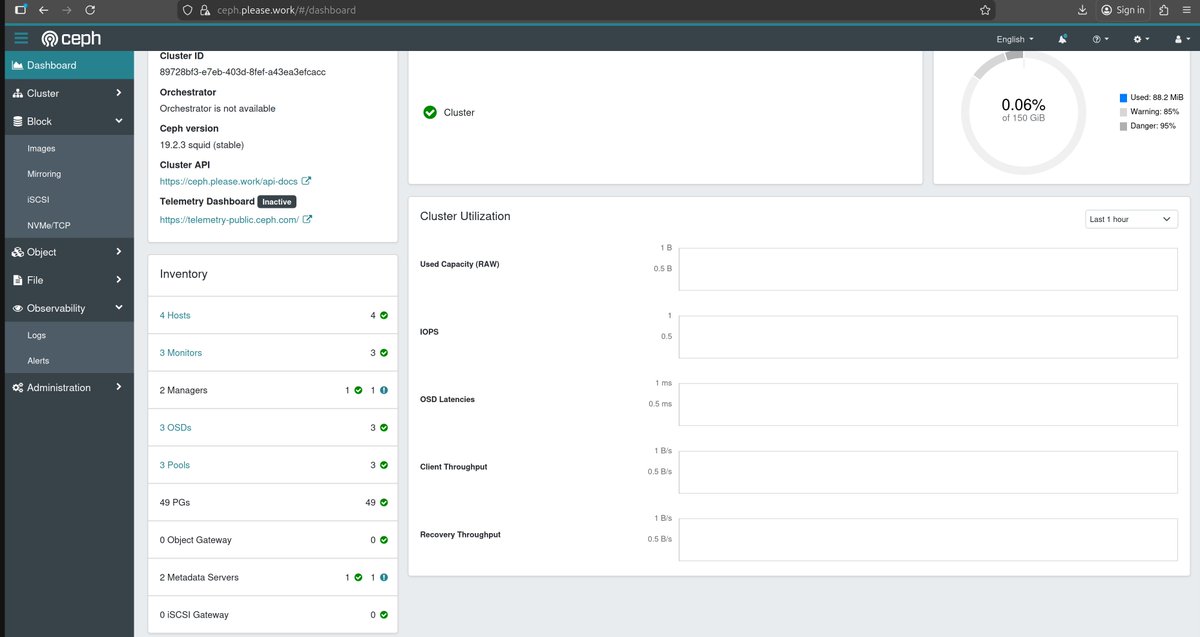
Finally got rook-ceph setup in my airgap k3s KVM cluster
3 VM worker nodes with data replicated across all 3
Using raw disk (No partition or FS on disk)
Monitors (mon)
Managers (mgr)
Object Storage Daemons (osd)
A CephFilesystem (NFS like)
A storage class referencing my CephFS
rook-ceph is the standard for bare-metal AI infrastructure
#AI #AIWORKLOADS #rook #rookceph
2
39
2,215

Feb 13
One time I was migrating a bunch of websites from ext4 or whatever to Ceph's networked posix fs. One site had hundreds of thousands of pictures of shoes in a single directory. A few hundred thousand in and cephfs segfaulted on every. single. node. in the same millisecond.
2
1
26
3,362

Feb 9
I think we just accidentally created one of the biggest storage clusters in Cambridge by pooling together our individual machines into ~1.5PB of usable CephFS storage (for TESSERA embeddings, datasets like GBIF, OpenAlex, OpenStreetmap, AGB maps, downloaded fulltext papers etc)
1
14
1,206

dockerで動いているサービスが増えてきたので、今日はクラスタにcephfsという共有ストレージのようなものをつくり、その上でdocker swarmというサービスを走らせるという設定をしました
Geminiに教えてもらいながらさっき完成
2
3
246

Pourquoi ? Au contraire. Tu mets le code dans une image, tu laisses uniquement upload/ & logs sur le CephFS, et zou.
Quant à la BDD, tu peux partir sur MariaDB Operator, en Galera avec stockage sur du topoLVM, par exemple.
1
4
139

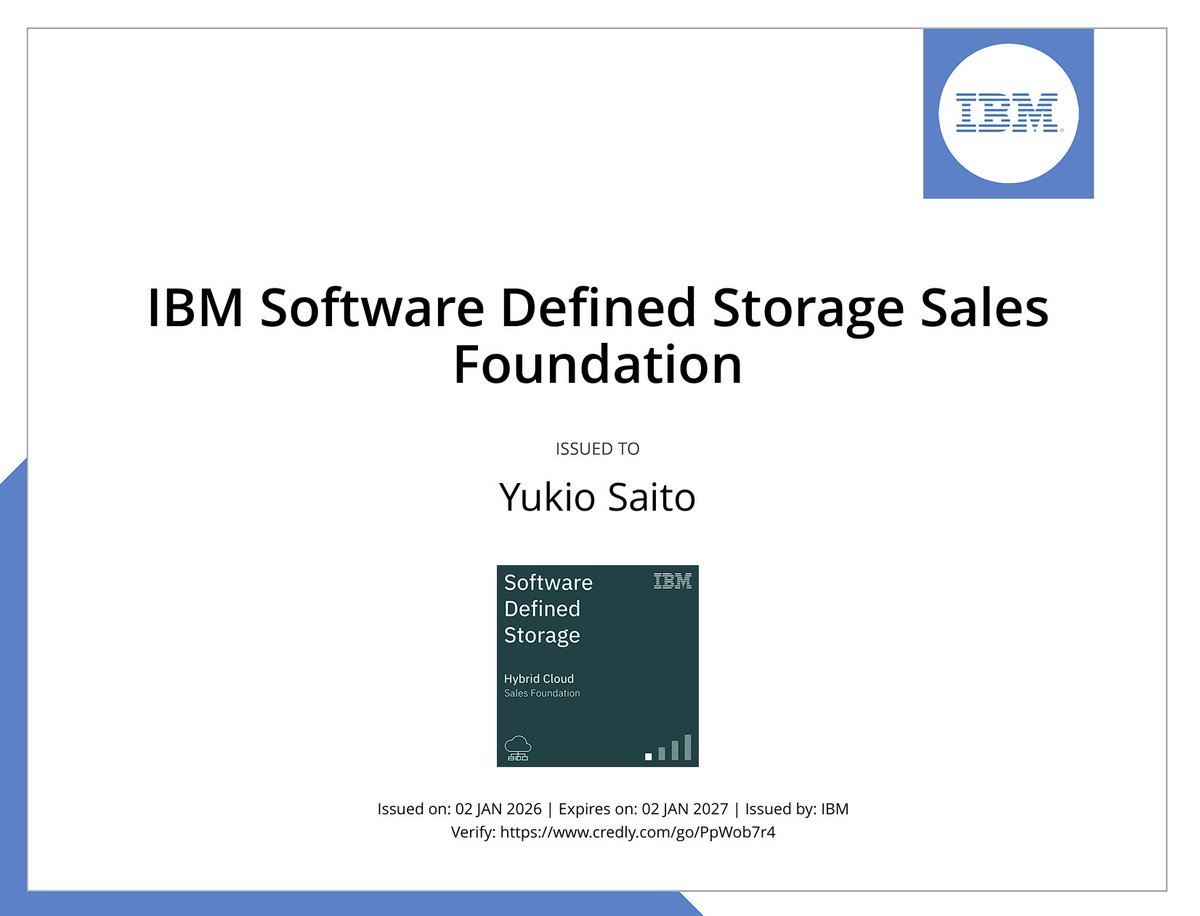
View my verified achievement from @IBM. credly.com/badges/5efb62d7-d… オープンソースからエンタープライズ製品に組み込まれた IBM Storage ceph を学習済。特徴はブロック(RBD)、ファイル(CephFS)、オブジェクト(S3互換)を1つのプラットフォーム化したソフトウェア定義ストレージ(SDS)です。
3
120

3 Dec 2025
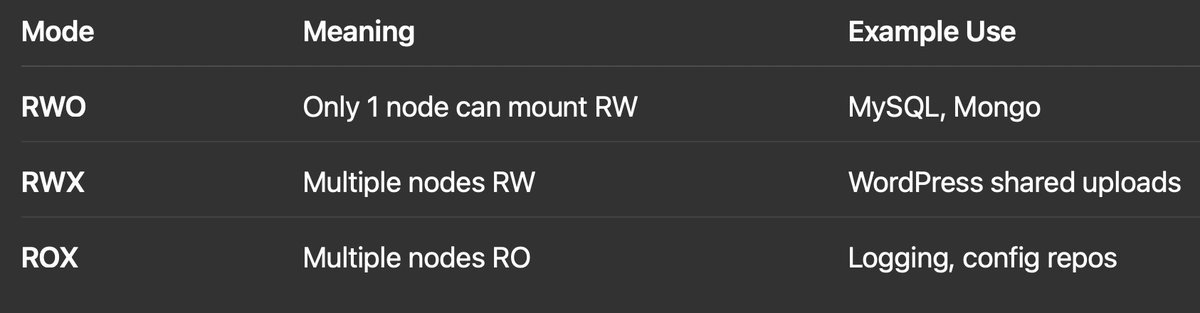
5️⃣ Access Modes — Most misunderstood
Most cloud disks support RWO,
Distributed FS (NFS, CephFS, EFS) support RWX.
1
2
270
🐙 Ceph Tentacle (v20.2.0) is out!
The 20th stable #Ceph release brings updates to #CephFS, #RADOS, #RBD, #RGW, and #Dashboard, along with an expanded #SeaStore tech preview.
Community feedback is encouraged.
Read more here: t.ly/CephTentacle20.2
#CephTentacle #OpenSource

1
6
8
533
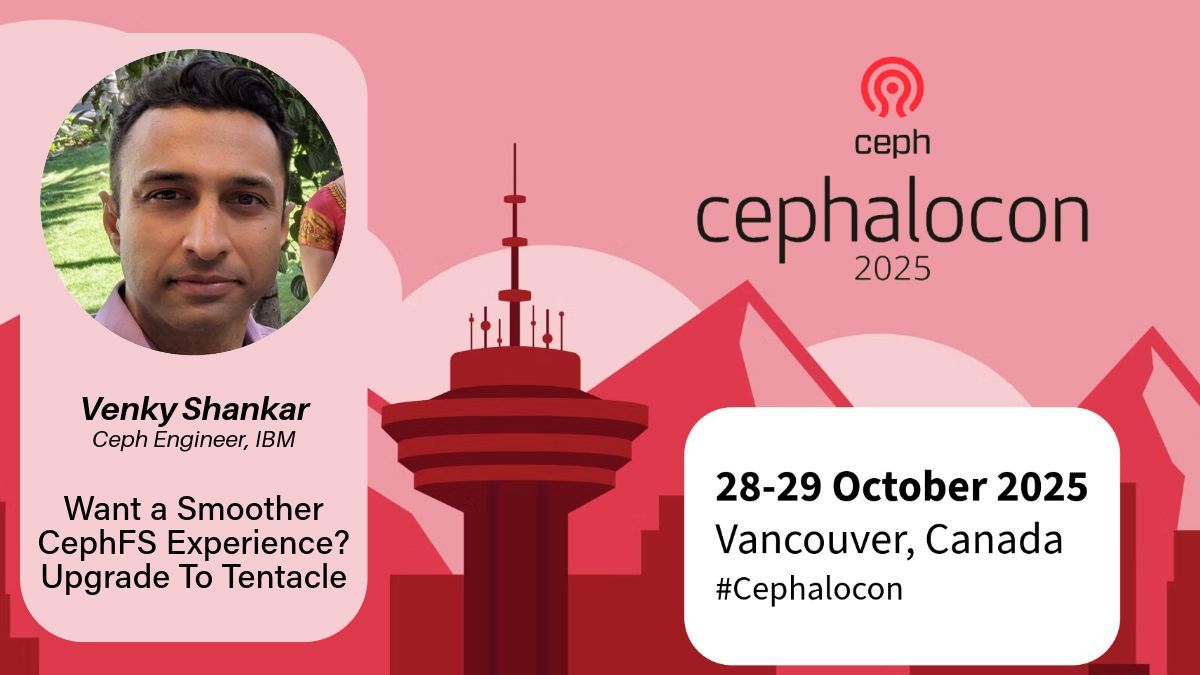
🐙 #Cephalocon Spotlight
Deep Dive: CephFS QoS & Fairness – Venky Shankar, IBM
Exploring how to ensure fair resource allocation with QoS in CephFS workloads.
Read more here: t.ly/cephalocon-schedule
#Ceph #OpenSource
2
301
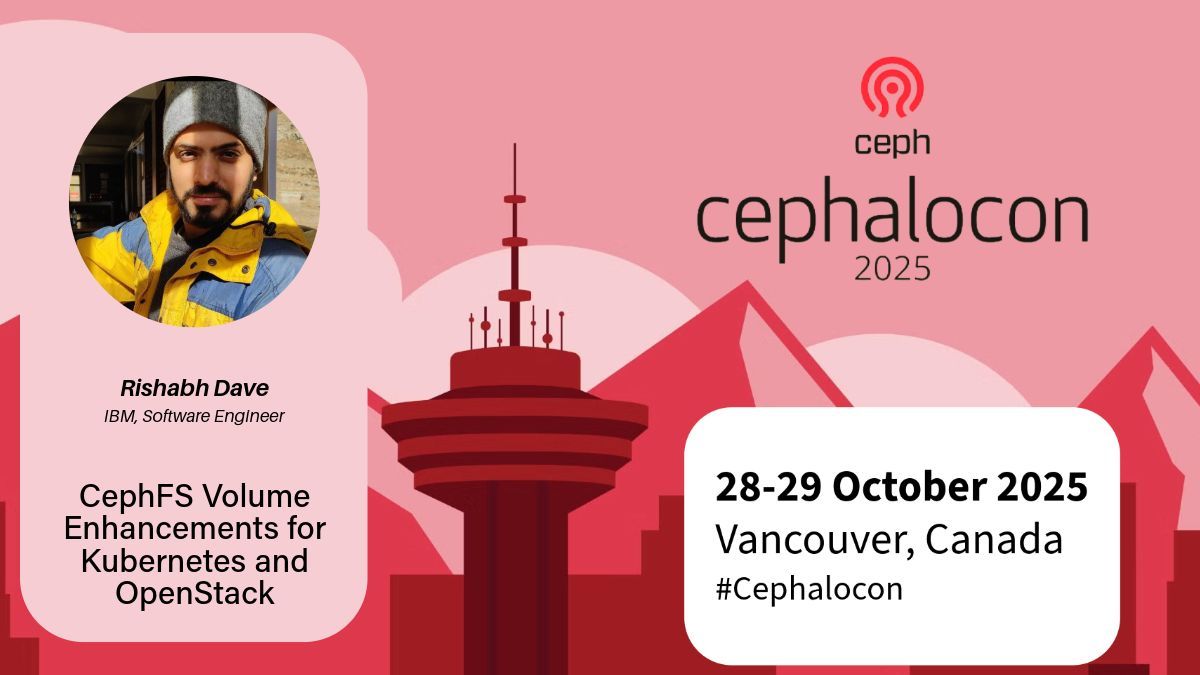
🐙 #Cephalocon Spotlight
CephFS Volume Enhancements for K8s & OpenStack – Rishabh Dave, @IBMcloud
New layouts, better deletion handling, and performance boosts for CephFS PVCs.
Read more here: t.ly/cephalocon-schedule
#Ceph #OpenSource
1
3
325

31 Aug 2025
Alright after like 8 straight hours of battling, I've got CephFS mounted in this VM and Samba sharing it to Windows. And the performance sucks... Samba directly on the proxmox host is insanely fast. VM running on the same machine is 10x slower for transfers to the same CephFS. 😑
3
145

My proxmox_storage module (works also w/ #NetApp) is now part of the official #Ansible #Proxmox collections! In this post, I explain how it can automate storage integration for NFS, iSCSI, CephFS, & Proxmox Backup Server - making complex setups fast & repeatable.
27 Aug 2025

Automatisiere dein Proxmox-Storage smarter!
Erfahre hier, wie das Ansible‑Modul proxmox_storage deine Storage-Provisionierung blitzschnell, konsistent und wiederholbar macht:
credativ.de/blog/virtualisie…
#credativ #proxmox #storage #ansible #opensource
3
15
69
6,215

23 Aug 2025
Ya que hablas de ceph. Has probado cephfs? O solo lo usas para máquinas virtuales en Proxmox?
1
2
105
It just got merged… You can now easily manage storage in #Proxmox with #Ansible.
Simply add CephFS, NFS, iSCSI or Proxmox Backup Server to your cluster with a simple Ansible task :)
github.com/ansible-collectio…
4
33
118
5,574

8 Aug 2025
Ouais, clairement du vieux rotatif c’est la misère (proxmox ou pas d’ailleurs), j’ai un 33 noeuds ceph (>8PB) mais plateau, le cephfs chie complet, je crains le bitrot à tout moment tant ça peine à scrub, le même (un peu plus petit) full SSD pro, ça bombarde
2
45