
🚨 ChainX ICO Alert
High demand • Limited supply
Early buyers already in profit 💰
Don’t miss the next move ⏳
👉 chainxglobal.com
#ChainX #ICO #Crypto
16
1
17
467

May 4
🚀 ChainX ICO is the Biggest ICO right now!
🔥 Massive bookings going on
💰 Limited supply – huge demand
Don’t miss this opportunity!
Get in early & ride the next big wave 📈@chainx_global

1
1
21
30,368


Apr 24
chat, I just noticed eyes are in this.
@0xCatana
It's a free mint. Supply still TBA.
Discord ~3,000 non bots. Team, Anon.
It's coming on "Katana Chainx
Launching May 2026
~ 𝒅𝒐𝒏𝒕 𝒅𝒂𝒚 𝑰 𝒅𝒊𝒅𝒏𝒕 𝒕𝒆𝒍𝒍 𝒚𝒐𝒖 😏

8
23
331

Apr 24
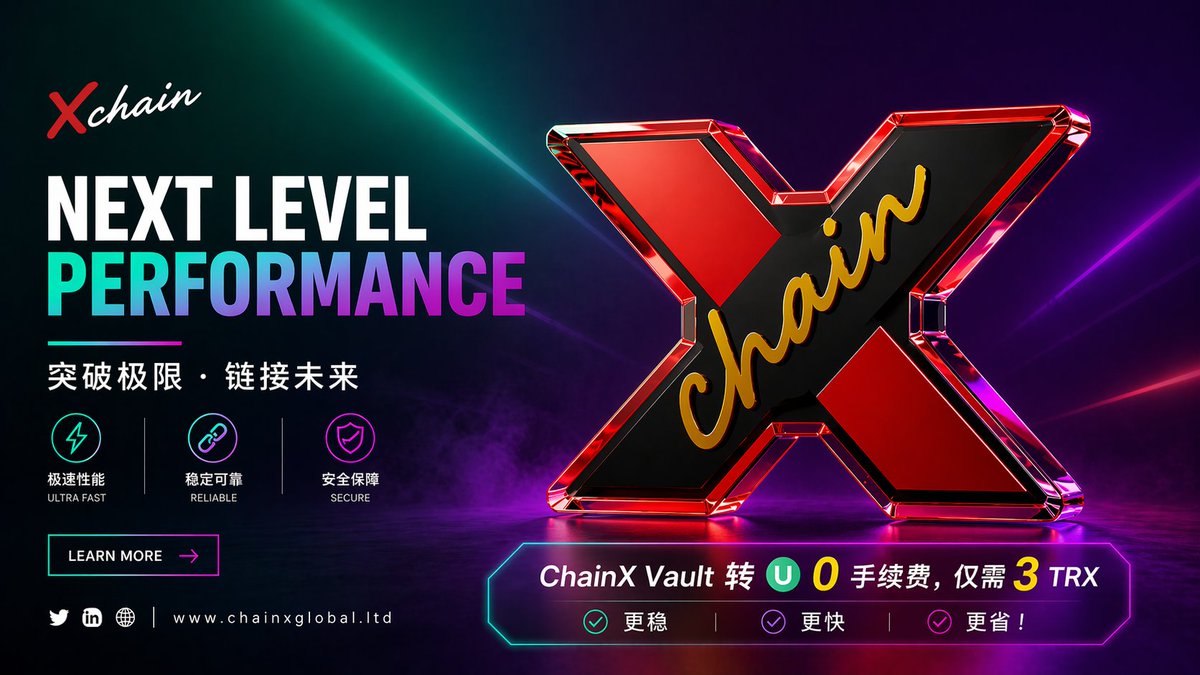
ChainX Vault:转U 0手续费,仅需3 TRX
简介:专为高频转账与资产流转打造,ChainX Vault 提供稳定高效的链上服务体验。低至3 TRX成本,实现0手续费转U,兼顾速度与安全,让每一笔交易都更省、更快、更可靠。
官网:chainxglobal.ltd
1
1
3
111
Apr 15
美国 ChainXGlobal 旗下 ByteVault 后量子硬件钱包已正式发布并面向全球销售,同时已集成于 ChainX Vault 应用,提供量子安全资产管理解决方案。
1
2
137

Apr 13
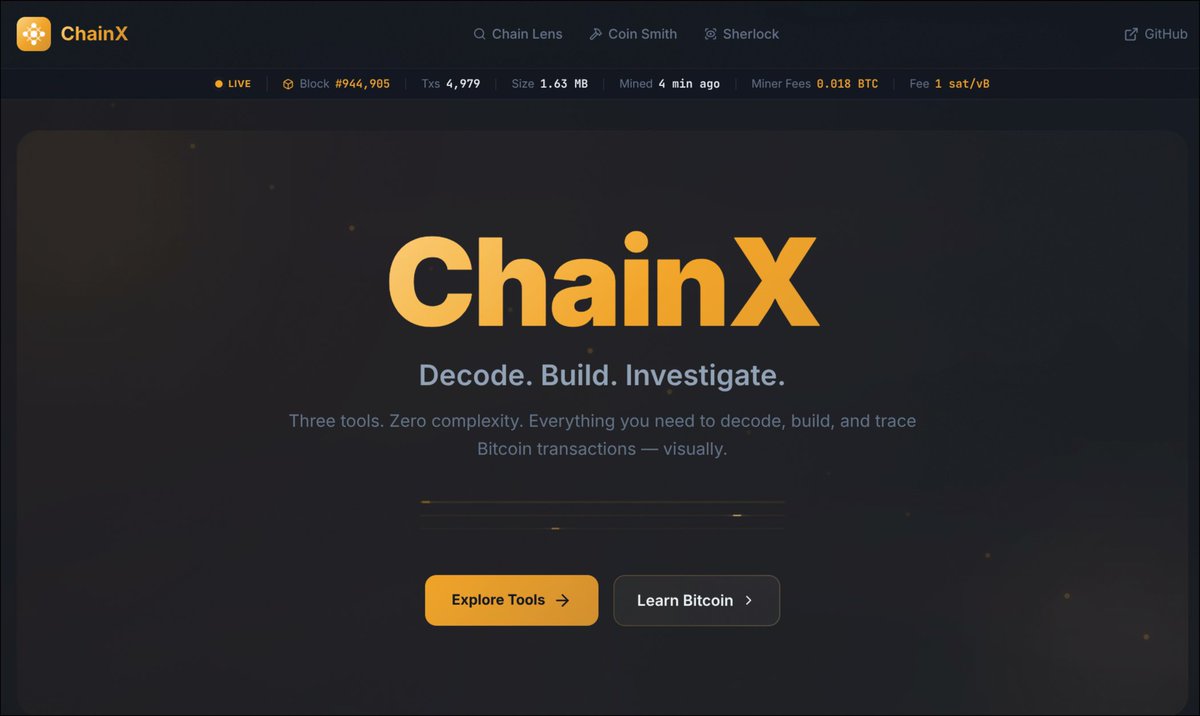
3 weeks @summerofbitcoin, 3 challenges: chain lens, coin smith, sherlock
built all three as separate tools then thought why not just make it one thing
so i did. chainX - a bitcoin protocol toolkit
chain-x.tech
4
2
10
698

Apr 3
ChainX user here.
I got two minutes in and straight up wrong. I’m no whale but I have over a dozen Cardano wallets, with the cumulative trading volume well over $250k, thousands of different CNTs and NFTs, and five years of supporting Cardano brands, projects, and irl events. None of my wallets were allocated any $NIGHT. And I am not the only one like this.
So NO. Not everyone in ChainX was given allocation.
3
1
7
406
Apr 3
The ByteVault post-quantum hardware wallet has officially launched and is now integrated with ChainX Vault.
Embracing the “post-quantum era” early on is the true path to long-term success.
Apr 2

Didn't know phishing attacks are possible with a hardware wallet. Stay SAFU!
2
2
90

Apr 2
据悉,美国 @ChainXGlobal 旗下 ByteVault 后量子硬件钱包 已正式上线,并面向全球开放销售 🌍
同时已全面接入 ChainX Vault 应用生态,打造新一代「量子级安全资产管理方案」🔐
👉 简单说:
未来抗量子攻击的钱包,现在就能用
📎 详情链接:
m.odaily.news/zh-CN/newsflas…
6
3
9,906
Apr 2
The ByteVault post-quantum hardware wallet has officially launched and is now integrated with ChainX Vault.@cz_binance
Embracing the “post-quantum era” early on is the true path to long-term success.#ByteVault #ChainXVault
cryptorank.io/news/feed/b7cf…


4
6
231
Apr 1
[Quantum Computing on the Horizon: Is the Crypto World Entering the “Post-Quantum Security Era”?]
Recently, the impact of quantum computing on the security of crypto assets has once again become a focal point in the industry.
Research from Google Quantum AI indicates that, under specific conditions, future quantum computers could potentially derive a Bitcoin private key in approximately 9 minutes using an optimized version of Shor’s Algorithm—a timeframe that is approaching Bitcoin’s average block generation time.
This means that an issue once considered “a long-term concern” is gradually becoming a reality in current discussions.
Industry Consensus: Upgrades Are Possible, but Challenges Are Real
Changpeng Zhao believes that the crypto ecosystem can address these challenges by upgrading to “post-quantum cryptography,” so there is no need for panic.
However, the reality is:
Upgrading decentralized networks is extremely difficult
The technical path may trigger forks
Existing assets and dormant addresses are difficult to upgrade simultaneously
Uncertainties persist during the initial phase of new algorithms
👉 The direction is clear, but the window of opportunity is narrowing.
From “Discussion” to “Implementation”: Security Systems Are Being Proactively Enhanced
Against this backdrop, ChainX Global offers a more engineering-oriented perspective:
Cryptographic security cannot wait until risks materialize to be upgraded; instead, the “post-quantum environment” must be considered at the underlying architectural stage.
This has also driven some products to adopt more long-term security designs.
ByteVault: The Technical Architecture Behind Quantum Resistance
Unlike traditional hardware wallets that emphasize only “private key isolation,” ByteVault incorporates a more comprehensive security framework into its design. Its “quantum resistance” is not merely a concept but is built upon a concrete technical architecture:
1️⃣ Quantum-Secure Foundational Capabilities
Chip-level secure operating system (COS)
Supports the integration of quantum cryptography algorithms and blockchain-related algorithms
Provides foundational support for decentralized identity authentication and asset security
👉 This means: It possesses the foundational capabilities to evolve toward a post-quantum cryptographic system
2️⃣ Hardware-Level Encryption System
Based on the ARM 32-bit secure CPU architecture
Integrated hardware encryption processor
Supports multiple algorithm families:
Symmetric Algorithms: TDES, AES, SM1, SM4
Asymmetric Algorithms: RSA, SM2, ECC
Hash Algorithms: SHA-1 / SHA-256 / SM3
Also equipped with:
High-Performance True Random Number Generator (TRNG)
Multi-Sensor Protection (Voltage / Frequency / Temperature / Light Detection)
👉 Ensures high security and unpredictability in key generation and computation processes
3️⃣ High-level security protection mechanisms
Utilizes EAL6 certified security chips
Supports offline cold storage and multi-signature mechanisms
Built-in:
Storage encryption
Address scrambling
Data integrity verification mechanisms
And features physical attack protection capabilities:
Resistant to SPA / DPA / DEMA / DFA attacks
Storage Level:
EEPROM supports over 500,000 erase/write cycles
Data can be retained for up to approximately 25 years (under specific conditions)
Private keys never touch the internet
👉 A multi-dimensional protection system spanning from the physical layer to the algorithmic layer
Key Insights into Quantum Resistance
Based on the above architecture, ByteVault’s positioning can be understood as follows:
👉 Not a “simple hardware wallet”
👉 But rather a secure device system that has incorporated quantum-resistant design principles
It already has the capability to support multiple algorithm systems (fast/non-convenient/hashing). At the architecture level, it can integrate and extend the PQC (Post-Quantum Cryptography) algorithm.
A scalable security architecture
Potential attack vectors from quantum computing have already been addressed at this stage
From Device to Application: Building a Comprehensive Security Ecosystem
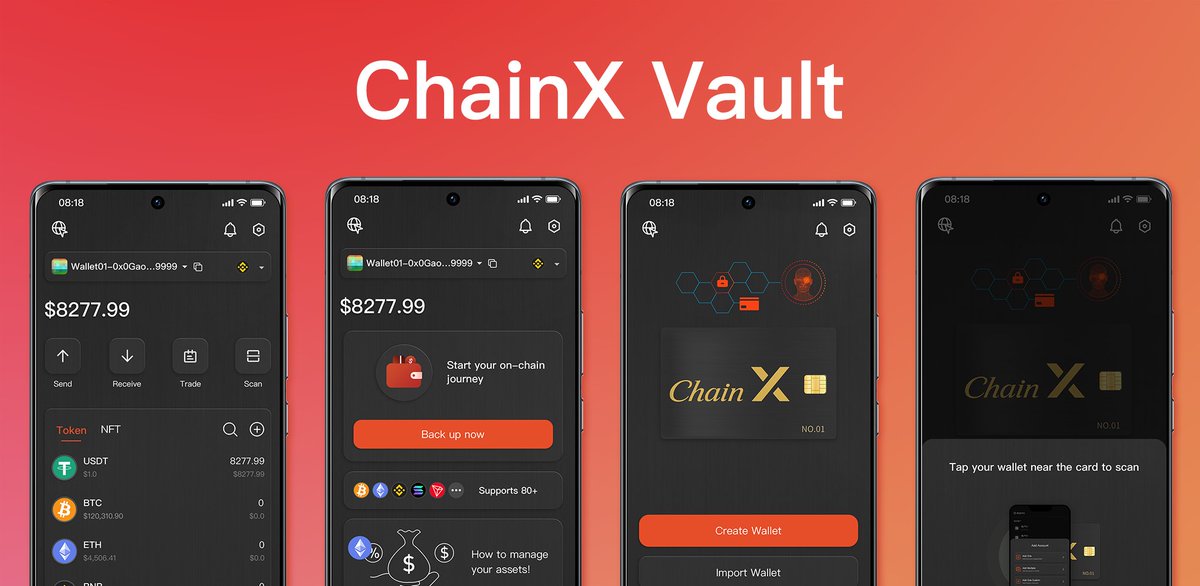
Beyond the device, the ChainXVault application within its ecosystem is evolving in tandem:
Support for asset management and interaction
Mechanisms in place for future key upgrades
Lowering barriers to user migration and adoption
👉 Gradually forming: A holistic security framework combining hardware and applications
In Closing
Quantum computing won’t breach the world of cryptography overnight, but it is changing one thing:
Security no longer belongs solely to the “present”—it now belongs to the “future timeline.”
Just as Satoshi Nakamoto’s original design philosophy for Bitcoin demonstrated:
Systems can evolve, but security must be designed in advance.@cz_binance @Cointelegraph
@VitalikButerin
1
2
5
798
Mar 31
[Quantum Threat Escalates: Google Study Claims Bitcoin Can Be Cracked in 9 Minutes]
The latest research from Google’s Quantum AI team shows that by optimizing Shor’s Algorithm, Bitcoin private keys can be derived in approximately 9 minutes using around 500,000 physical qubits. This timeframe is close to the block generation cycle, creating a realistic attack window.
The study also notes that approximately 6.9 million BTC are at potential risk due to exposed public keys, indicating that quantum attacks are transitioning from theory to the engineering phase.
It is reported that ByteVault, a post-quantum hardware wallet developed by ChainXGlobal in the U.S., has been officially launched and is now available for global sale. It has also been integrated into the ChainX Vault application, providing a quantum-secure asset management solution.
1
20
Mar 31
[Quantum Threat Escalates: Google Study Claims Bitcoin Can Be Cracked in 9 Minutes]
The latest research from Google’s Quantum AI team shows that by optimizing Shor’s Algorithm, Bitcoin private keys can be derived in approximately 9 minutes using around 500,000 physical qubits. This timeframe is close to the block generation cycle, creating a realistic attack window.
The study also notes that approximately 6.9 million BTC are at potential risk due to exposed public keys, indicating that quantum attacks are transitioning from theory to the engineering phase.
It is reported that ByteVault, a post-quantum hardware wallet developed by ChainXGlobal in the U.S., has been officially launched and is now available for global sale. It has also been integrated into the ChainX Vault application, providing a quantum-secure asset management solution.
1
2
136

Mar 24
🚀 ChainX ICO is the Biggest ICO right now!
🔥 Massive bookings going on
💰 Limited supply – huge demand
Don’t miss this opportunity!
Get in early & ride the next big wave 📈
#ChainX #ICO #Crypto #InvestNow

10
11
265


Mar 19
For first-time crypto users: ChainX has launched an ICO with only 8 crore tokens.
The first phase was completed in record time, giving holders 2X profits, which is why it’s trending on social media.
Don’t miss out — fast booking is open now!
Visit: Chainx.global

62
2
20
21,102

Mar 18
🚀 ChainX Next Phase is LIVE!
Phase 1 SOLD OUT ⚡
Early investors already winning 💰
Don’t miss your chance — get in now!
Booking . Chainx.global
#ChainX #CryptoIC #NextBigThing

12
1
15
325