
dazzlingdawn.com/2026/6/13/t…
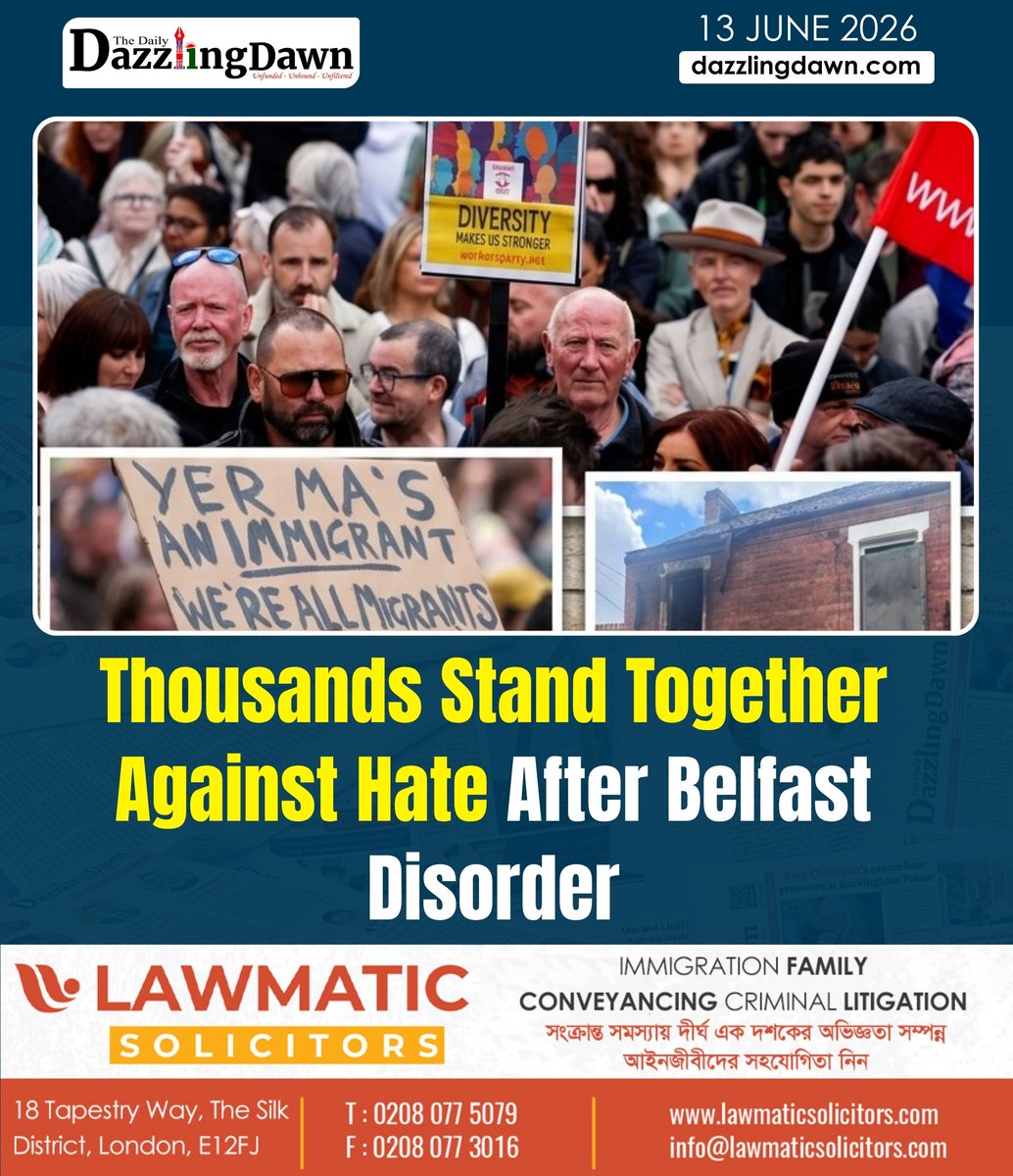
Thousands gather at Belfast City Hall as the city unites against a wave of targeted street violence.
#Belfast #TogetherAgainstHate #NorthernIreland #BelfastCityHall #AntiRacism #CommunitySolidarity #BelfastNews #CivicUnity #UKNews #DailyDazzlingDawn
1
105

Feb 9
Maryland isn’t just part of the anthem debate — it’s where the national anthem was written.
From Fort McHenry in 1814 to today’s stadiums, the question remains: do national symbols unite us, or divide us?
🧵⬇️ #Maryland #StarSpangledBanner #CivicUnity
mdbaynews.com/2026/02/09/one…
1
7
158

23 Sep 2025
International Day of Birmingham
Today, we celebrate the spirit, strength, and story of our great city.
At One Thousand Trades Group, we’re proud to sponsor this landmark event—bringing together communities, businesses, and civic leaders to honour Birmingham’s global reach and local heart.
At 1.45pm, tomorrow we’ll raise the Birmingham flag alongside the Lord Mayor, a moment of unity and pride that reflects everything this city stands for: innovation, inclusion, and identity.
The International Day of Birmingham (IDOB) takes place on Wednesday, September 24, 2025.
This annual event, championed by Brummie comedian Joe Lycett, celebrates the historic alliance between the world's Birminghams, with events including a special free celebration in Colmore Square, a photography exhibition at the Custard Factory, and a headline event at The Old Rep. You can find a full programme of activities and more information at Visit Birmingham.
Key Events on September 24, 2025
13:00 - 13:45: A short, spirited activation will be held in Colmore Square for the local business community.
9:00 - 21:00: The exhibition "United States of Birmingham - Images from a Road Trip" will be on display at Zellig, Custard Factory.
Evening: A headline event at The Old Rep will feature a double bill and a Q&A with Joe Lycett and historian Randell H Spackman.
After sunset: The Library of Birmingham facade will be lit up in pink, yellow, and blue.
How to Participate
Visit the Visit Birmingham website: Visit Birmingham for the full schedule of events and more details.
Check Idob.co.uk: For updates on activities and how to celebrate.
Attend a local event: Several events and activities will be happening across the city.
Whether you were born here, built here, or belong here—today is for you.
#InternationalDayOfBirmingham #OneThousandTrades #BirminghamPride #CivicUnity #FlagRaising #LegacyInActio
3
172

4 Jul 2025
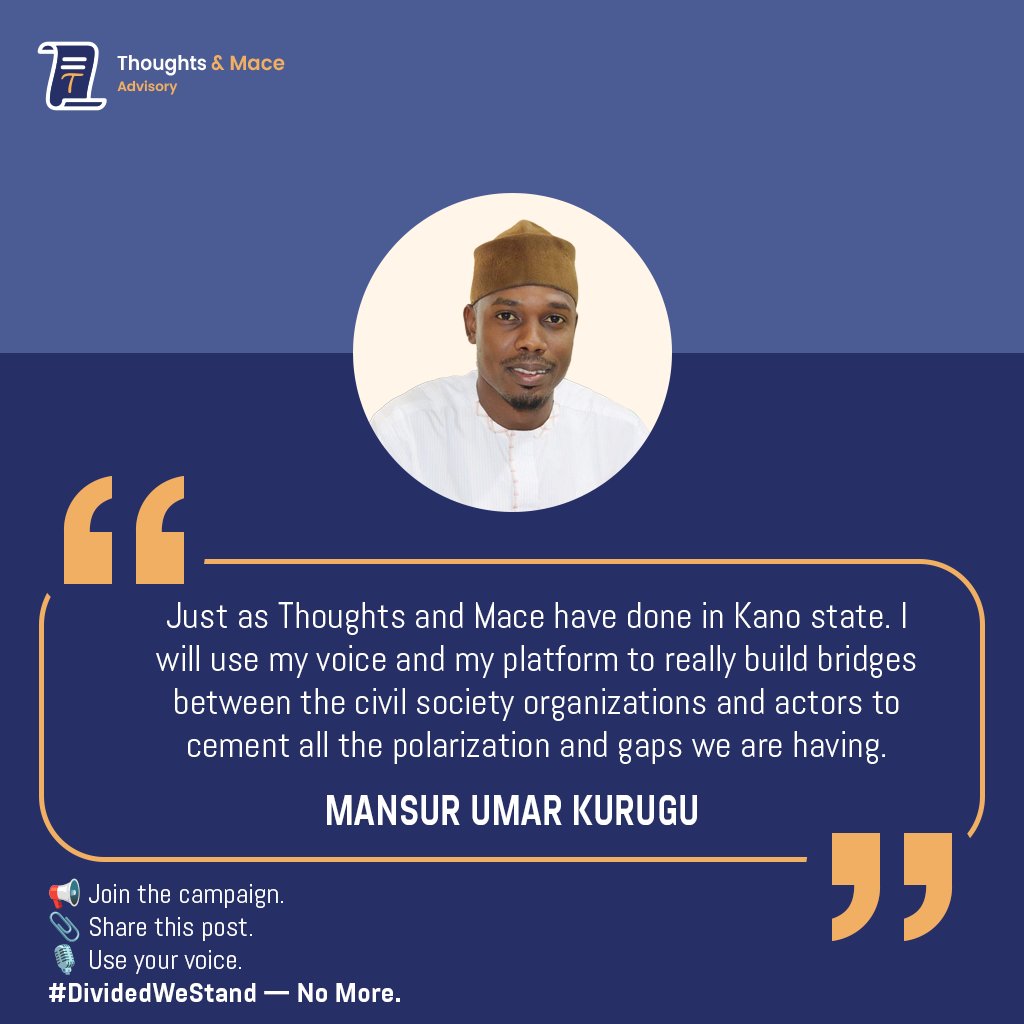
Key takeaway from Mansur Umar Kurugu’s video, speaking to a growing call for collaboration in Nigeria’s CSO space.
He stated that "Just as Thoughts and Mace have done in Kano state. I will use my voice and my platform to really build bridges between the civil society organizations and actors to cement all the polarization and gaps we are having".
We are committed to a civil society that works together, uplifting the communities we serve and living the values we uphold. Are you?
You too can join. Share the post. Record a video on the dialogue and use the hashtag #DividedwestandNomore
#Polarization #NigerianCSOUnity
#CivicUnity #ThoughtsAndMace #RebuildTrust
1
2
55
27 Jun 2025
Josephine Nzerem @JosephineNzerem, Regional Director and Director Venture and Talent at Ashoka Africa @AshokaAfrica @ashokaafriquefr speaks out lending her voice to a growing call for collaboration in Nigeria’s CSO space.
She stated that "It is important for every solving a problem in Nigeria to know that when we are in networks, when we are in coalition, we are a greater force and by becoming a greater force we can solve problems more effectively".
We are committed to a civil society that works together, uplifting the communities we serve and living the values we uphold. Are you?
You too can join. Share the post. Record a video on the dialogue and use the hashtag #DividedwestandNomore
#Polarization #NigerianCSOUnity
#CivicUnity #ThoughtsAndMace #RebuildTrust
5
5
472
24 Jun 2025
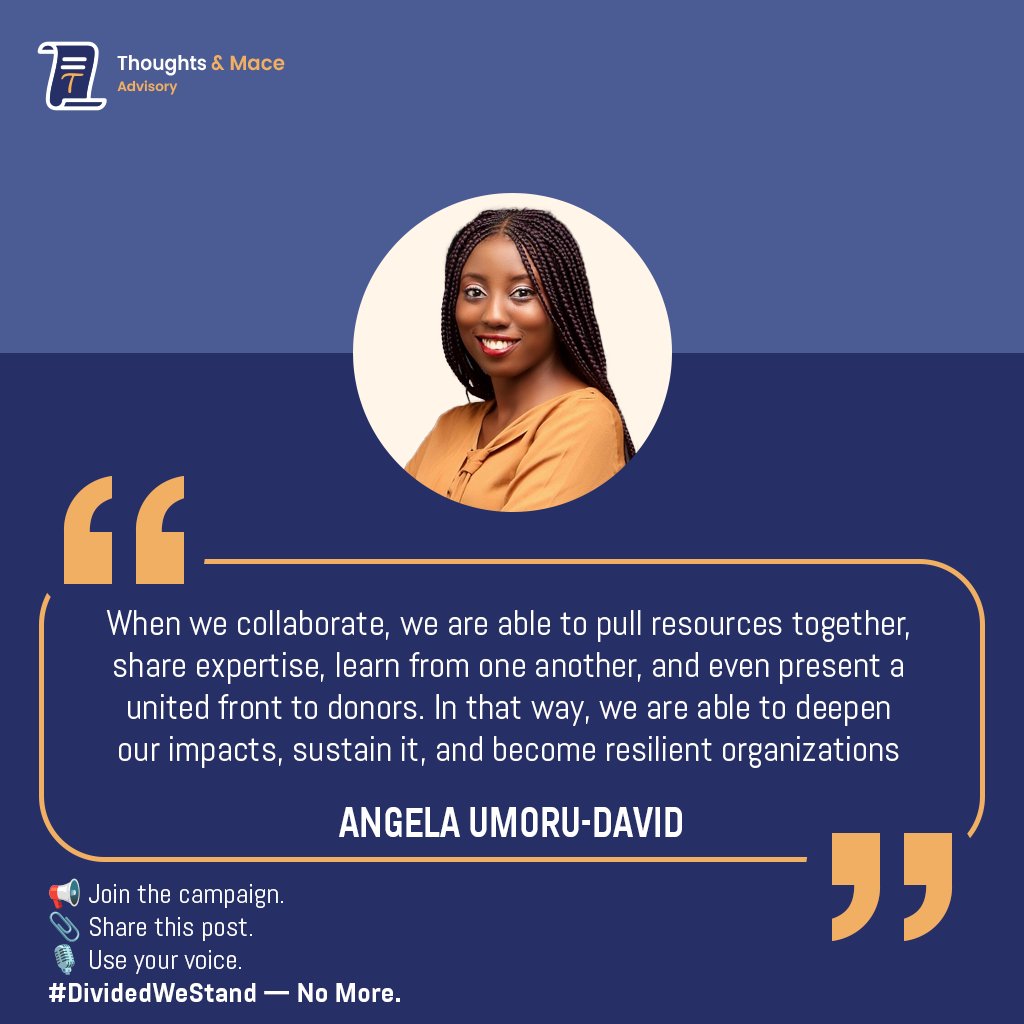
Key takeaway from @AngelaUmoru's video, speaking to a growing call for collaboration in Nigeria’s CSO space.
She affirmed that “When we collaborate, we are able to pull resources together, share expertise, learn from one another, and even present a united front to donors. In that way, we are able to deepen our impacts, sustain it, and become resilient organizations”.
We are committed to a civil society that works together, uplifting the communities we serve and living the values we uphold. Are you?
You too can join. Share the post. Record a video on the dialogue and use the hashtag #DividedwestandNomore
#Polarization #NigerianCSOUnity
#CivicUnity #ThoughtsAndMace #RebuildTrust
5
8
216
23 Jun 2025
Angela Umoru David @AngelaUmoru, Director at Humangle Foundation @HumAngleFdn, lends her voice to a growing call for collaboration in Nigeria’s CSO space.
She stated that beyond conversation what does complementary action look like, and that she believes that even though funding cuts have really deepened the divide, we must find ways of rising above the tide, of collaborating, and pushing forward in spite of these challenges.
We as an organization are continuously committed to a civil society that works together, uplifting the communities we serve. Are you?
You too can join. Share the post. Record a video on the dialogue and use the hashtag #DividedwestandNomore
#Polarization #NigerianCSOUnity
#CivicUnity #ThoughtsAndMace #RebuildTrust
1
3
58
20 Jun 2025
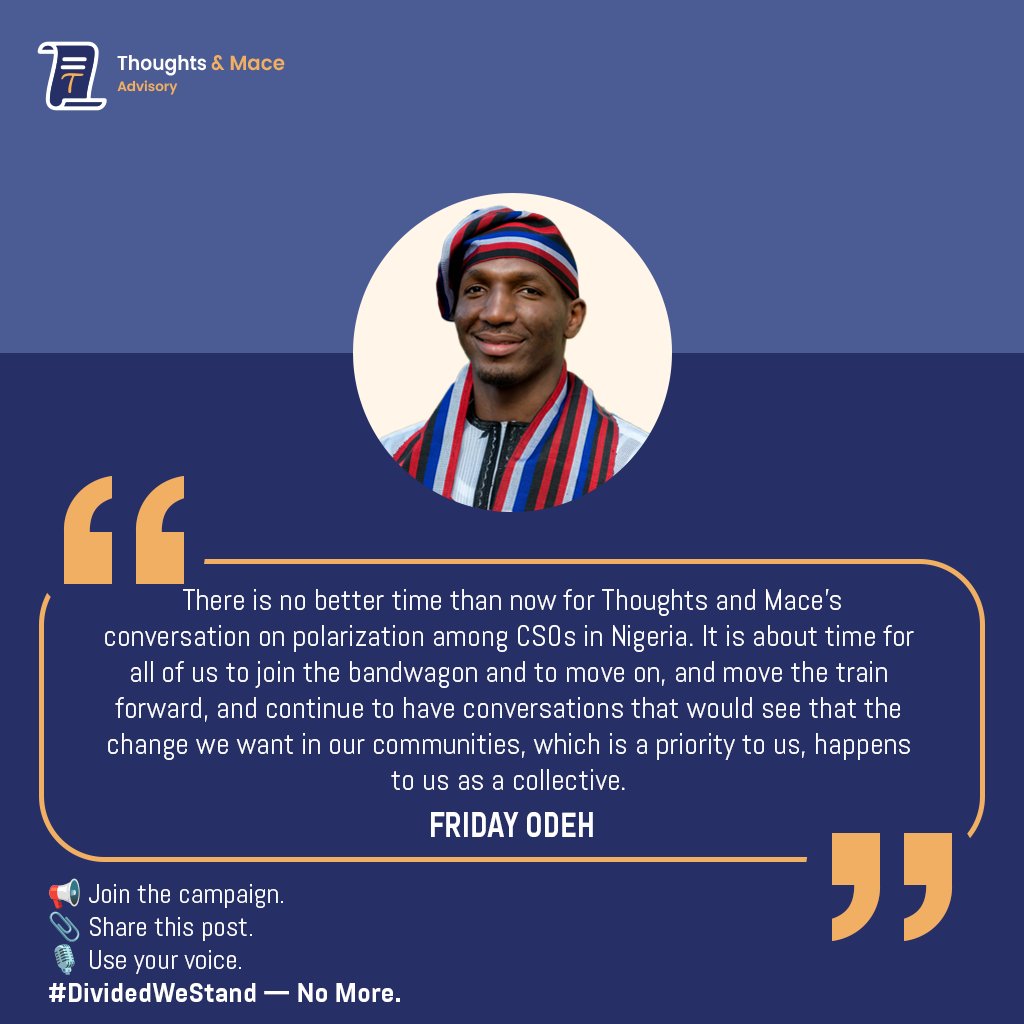
Key takeaway from @Odeh_JuniorOdeh’s video, speaking to a growing call for collaboration in Nigeria’s CSO space.
He affirmed that "I think there is no better time than now for Thoughts and Mace's conversation on polarization among CSOs in Nigeria. It is about time for all of us to join the bandwagon and to move on, and move the train forward, and continue to have conversations that would see that the change we want in our communities, which is a priority to us, happens to us as a collective".
We are committed to a civil society that works together, uplifting the communities we serve and living the values we uphold. Are you?
You too can join. Share the post. Record a video on the dialogue and use the hashtag #DividedwestandNomore
#Polarization #NigerianCSOUnity
#CivicUnity #ThoughtsAndMace #RebuildTrust
2
3
73
19 Jun 2025
Odeh Friday @Odeh_JuniorOdeh, Country Director at Accountability Lab @accountlabng speaks out lending his voice to a growing call for collaboration in Nigeria’s CSO space.
He stated that "Instead of solidarity, we have seen civil societies work in silos. Instead of collaboration, we have seen division around the space. Which is not healthy for civil societies within Nigeria and the work we do".
We are committed to a civil society that works together, uplifting the communities we serve and living the values we uphold. Are you?
You too can join. Share the post. Record a video on the dialogue and use the hashtag #DividedwestandNomore
#Polarization #NigerianCSOUnity
#CivicUnity #ThoughtsAndMace #RebuildTrust
2
4
74
18 Jun 2025
Key takeaway from @YZYau Prof. Y. Z. Ya'u’s video, speaking to a growing call for collaboration in Nigeria’s CSO space.
He affirmed that "Individually we can only do very little. When we come together, we would be able to multiply our strengths, collectiverize our resources and be able to reach a wider part of the country, address more issues substantively".
We are committed to a civil society that works together, uplifting the communities we serve and living the values we uphold. Are you?
You too can join. Share the post. Record a video on the dialogue and use the hashtag #DividedwestandNomore
#Polarization #NigerianCSOUnity
#CivicUnity #ThoughtsAndMace #RebuildTrust
1
3
61
17 Jun 2025
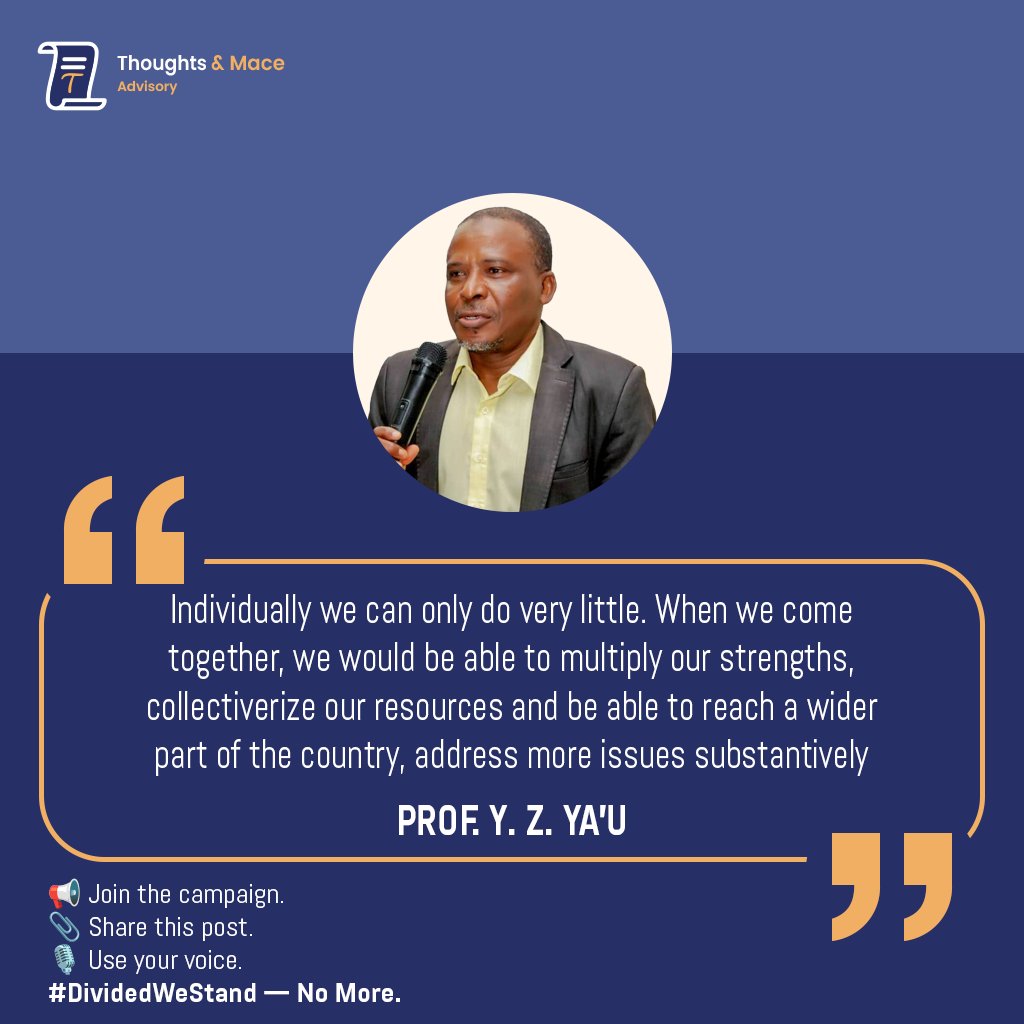
Prof. Y. Z. Ya'u @YZYau, Executive Director at Centre for Information Technology and Development (CITAD) @ICTAdvocates speaks out lending his voice to a growing call for collaboration in Nigeria’s CSO space.
He stated that "Individually we can only do very little. When we come together, we would be able to multiply our strengths, collectiverize our resources and be able to reach a wider part of the country, address more issues substantively".
We are committed to a civil society that works together, uplifting the communities we serve and living the values we uphold. Are you?
You too can join. Share the post. Record a video on the dialogue and use the hashtag #DividedwestandNomore
#Polarization #NigerianCSOUnity
#CivicUnity #ThoughtsAndMace #RebuildTrust
3
5
76
5 Jun 2025
Suliyat Adeleye-Idris, Executive Director at Smartlicks Tech-Wellness Network lends his voice to a growing call for collaboration in Nigeria’s CSO space.
She speaks that in the civic space, we have the same ideas in creating solutions that better our society at large. She acknowledged the call by Thoughts and Mace Advisory in our efforts in combating polarization as timely, not just for Nigeria but civic society organizations at large.
We are continuously committed to a civil society that works together, uplifting the communities we serve. Are you?
You too can join. Share the post. Record a video on the dialogue and use the hashtag #Dividedwestand - No more
#Polarization #NigerianCSOUnity
#CivicUnity #ThoughtsAndMace #RebuildTrust
1
4
78
5 Jun 2025
Suliyat Adeleye-Idris, Executive Director at Smartlicks Tech-Wellness Network lends his voice to a growing call for collaboration in Nigeria’s CSO space.
She speaks that in the civic space, we have the same ideas in creating solutions that better our society at large. She acknowledged the call by Thoughts and Mace Advisory in our efforts in combating polarization as timely, not just for Nigeria but civic society organizations at large.
We are continuously committed to a civil society that works together, uplifting the communities we serve. Are you?
You too can join. Share the post. Record a video on the dialogue and use the hashtag #Dividedwestand - No more
#Polarization #NigerianCSOUnity
#CivicUnity #ThoughtsAndMace #RebuildTrust
1
4
52
2 Jun 2025
@jogbosky, Team Lead at @CivicHive lends his voice to a growing call for collaboration in Nigeria’s CSO space.
He speaks that we need more collaboration more than the competitive nature of the sector.
We are continuously committed to a civil society that works together, uplifting the communities we serve. Are you?
You too can join. Share the post. Record a video on the dialogue and use the hashtag #Dividedwestand - No more
#Polarization #NigerianCSOUnity
#CivicUnity #ThoughtsAndMace #RebuildTrust @Stan_Achonu
1
3
7
155
29 May 2025
Ufuoma Nnamdi Udeh @_ufuoma_, Programme Lead at Enough is Enough Nigeria @EiENigeria lends her voice to a growing call for collaboration in Nigeria’s CSO space.
She affirmed that "no one is saying unity means uniformity, but moving with respect, collaboration and a sense of shared purpose is how we build a thriving civic space that is bigger than any one of us."
We are committed to a civil society that works together, uplifting the communities we serve and living the values we uphold. Are you?
You too can join. Share the post. Record a video on the dialogue and use the hashtag #Dividedwestand - No more
#Polarization #NigerianCSOUnity
#CivicUnity #ThoughtsAndMace #RebuildTrust
3
6
302
29 May 2025
Understanding the need for collaboration and partnership. We spoke to several CSO leaders who were willing to lend their voice to the issue of polarization
In the coming weeks, we will be rolling out video campaigns as they lend their voice to the problem.
You can join the campaign. Record a video on the dialogue and use the hashtag #Dividedwestand - No more
#Polarization #NigerianCSOUnity
#CivicUnity #ThoughtsAndMace #RebuildTrust
2
5
67
28 May 2025
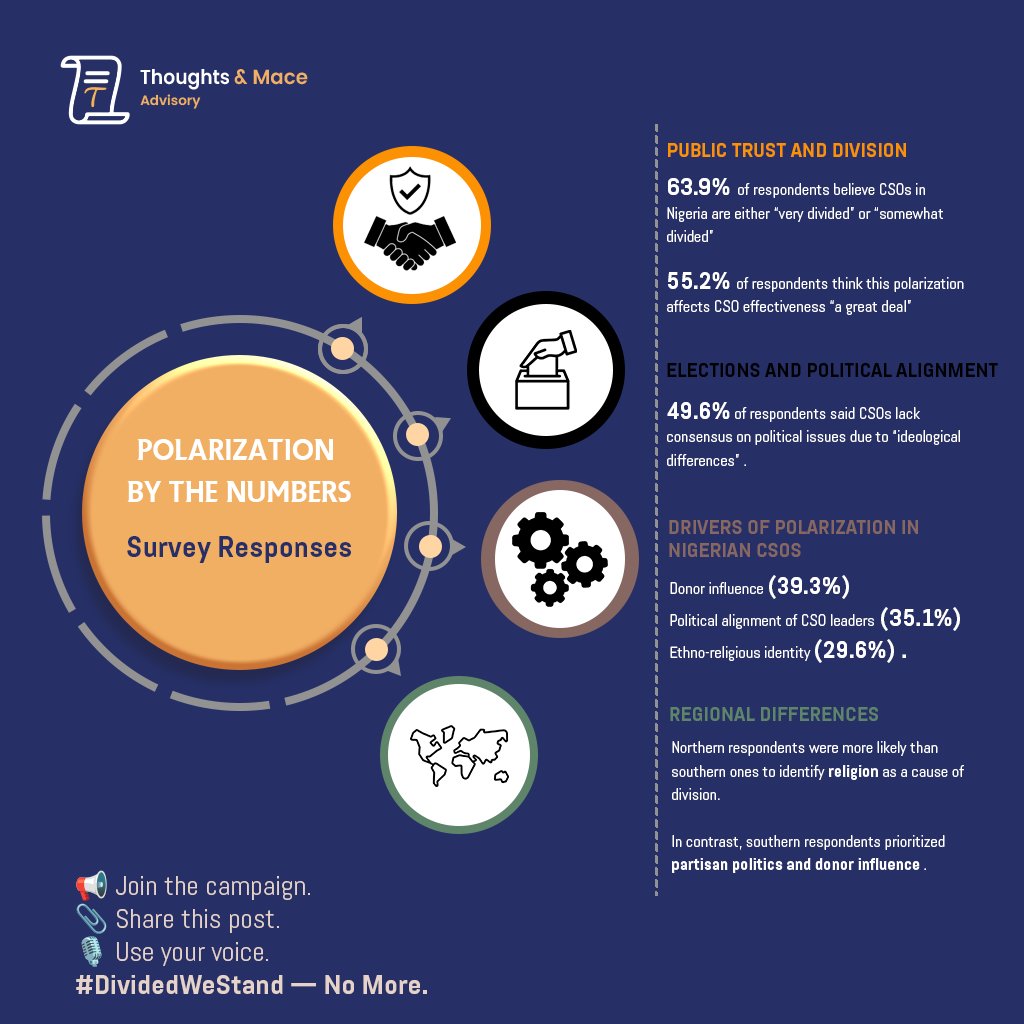
Our research uncovered a reality: Nigeria’s civil society is divided, and it’s costing us our collective power.
- 63.9% of respondents say CSOs are “very” or “somewhat” divided
- 55.2% believe this division greatly affects CSO effectiveness
- 49.6% cite ideological differences as a major barrier to unity
- Top drivers? Donor influence, political alignment, and ethno-religious identity
- Regional divides show different root causes of polarization
These numbers speak volumes, and call us to act.
Let’s rebuild trust, restore collaboration, and reimagine unity.
Join the campaign. Share your voice.
#DividedWeStand — No More.
Read the full report here:
thoughtsandmaceadvisory.com/…
#Polarization #NigerianCSOUnity
#CivicUnity #ThoughtsAndMace #RebuildTrust
2
6
92
27 May 2025
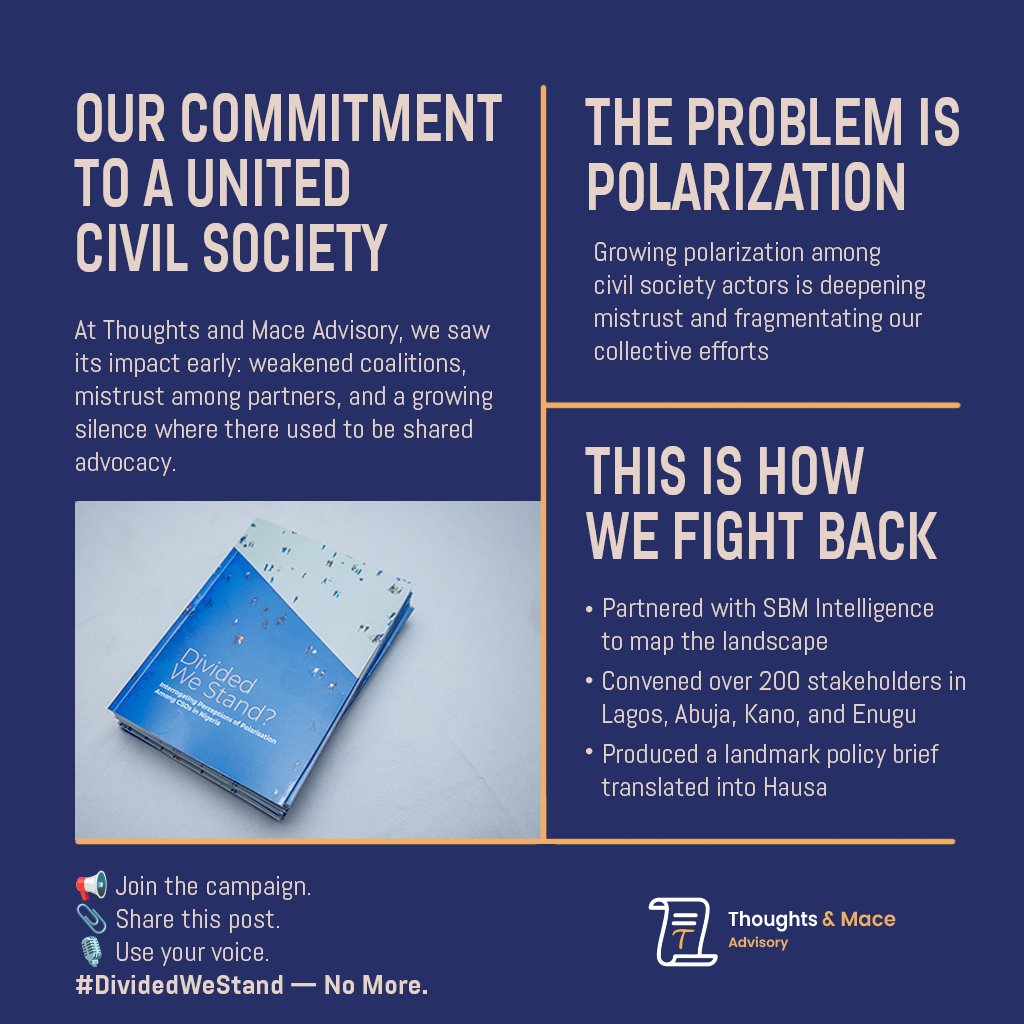
At Thoughts and Mace Advisory, we recognized the cracks early; mistrust, weakened coalitions, and silence where there once was shared advocacy.
Through research, dialogue, and action, we’re building bridges across divides. As part of our efforts, we have:
- Partnered with SBM Intelligence to map the civic landscape
- Convened over 200 stakeholders in 4 major cities
- Produced a landmark policy brief, which was also translated into Hausa
Join the movement. Share the message. Use your voice.
#DividedWeStand - No More.
#Polarization #NigerianCSOUnity
#CivicUnity #ThoughtsAndMace #RebuildTrust
1
4
64
26 May 2025
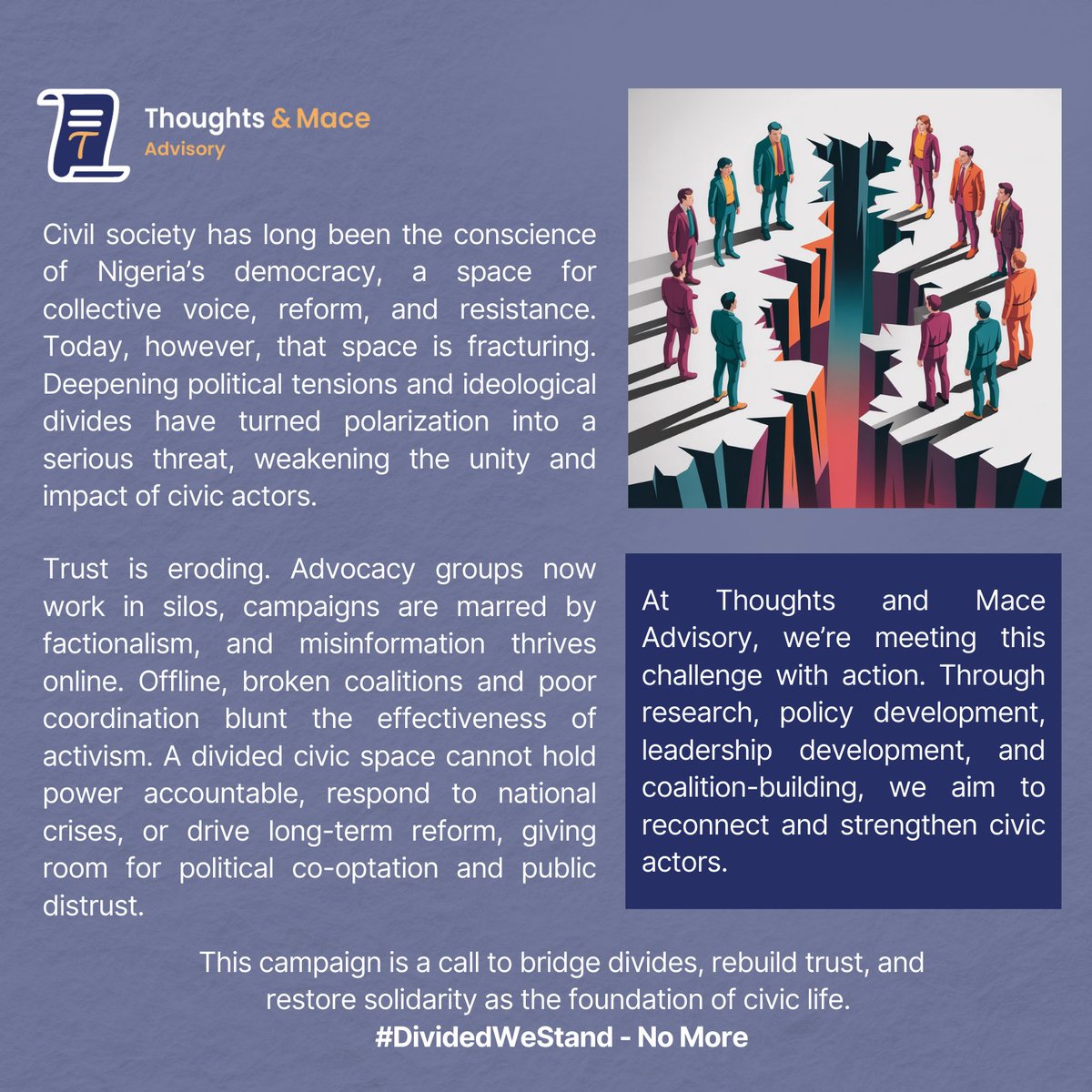
Nigeria’s civil society is at a crossroads. As polarization threatens unity and weakens impact, we must act together.
At Thoughts and Mace Advisory, we’re bridging the divides with research, policy work, and coalition-building. It's time to rebuild trust, reconnect across differences, and restore the power of collective action.
Let’s revive the spirit of civic solidarity.
#CivicUnity #NigeriaDemocracy #ThoughtsAndMace #RebuildTrust #ActTogether
3
5
77

8 May 2025
Flags should unite, not divide. SLC’s mayor is pushing activist designs as ‘official’ city flags, defying the spirit of Utah’s new law. Public spaces belong to everyone—let’s keep them that way. #HB77 #CivicUnity
7 May 2025

A Flag Is Not a Billboard—And a Mayor Is Not a Monarch
On the eve of Utah’s flag law taking effect, the Salt Lake City mayor proposed not one, but three new city flags—each emblazoned with activist color schemes and branded as “official” simply because they include the Sego Lily. This is not leadership. It’s ideological defiance wrapped in municipal technicality.
Let’s be clear: the spirit of HB77 was simple and noble. It was not about banning expression—it was about removing divisive symbols from government buildings and restoring a sense of shared civic space. For too long, public institutions have been turned into ideological battlegrounds, where one group’s banner becomes another’s exclusion. HB77 reaffirmed that government spaces should unite, not segregate by identity or cause.
Public buildings belong to everyone—regardless of politics, race, gender, or creed. That’s why HB77 limited flags to those representing the nation, the state, and official municipal identities—symbols that belong to all of us, not just some of us. By twisting that framework to smuggle in ideologically loaded designs under the guise of city flags, the mayor has subverted the law’s intent and cheapened the very idea of inclusive governance.
This isn’t about inclusion. It’s about institutional favoritism. When a government adopts flags based on identity categories—be it sexuality, race, or ideology—it doesn’t bring people together. It draws lines. It replaces civic unity with tribal signaling.
Salt Lake City deserves better. Our capital should model lawful unity, not partisan resistance theater. This precedent is not progressive. It’s reckless.
Mayor Mendenhall should respect both the letter and spirit of the law—and remember that public symbols are meant to bind us together, not brand us apart. @LindsayOnAir @VoteTrevorLee @danmccay
2
85