
Jun 11
@worldlibertyfi @ZachWitkoff @EricTrump @BarronTNews_
This is the best I could understand how a stablecoin conduit through WLFI can create a financial system in a country.
Feel free to brainstorm and use your "analytical/intelligence/finance" brains to set up the play.
1. Deployment of the $WLFI token or associated governance/stablecoin mechanics to influence or establish parallel benchmarks for interest rates, lending pricing, or exchange rates within Indian markets.
Deployment of WLFI token doesn't settle at 1:1, decide on a processing fee for WLFIs off ramp, on ramp settlement to book the margins there itself.
@ZachWitkoff introduce a crypto spot trading book of WLFI tokens tied to US ETFs, like Blackrock's IBIT. Establish a structural architecture whereby, a spot trading book for an ETF does not trade directly on retail crypto exchanges. It is structured around an institutional ecosystem designed to handle massive volume without causing market dislocation.
@ZachWitkoff after creating this architecture make a partnership deal with @coinbase and @brian_armstrong's architecture to use this structural architecture on retail crypto exchanges, for guys like us, to access the market.
Partner with institutional market makers (e.g., Jane Street, Citadel Securities, Virtu Financial) to act as APs (Authorized Participants). Only APs can create or redeem ETF shares.
Zach then do this imp step, the spot desk hooks into a regulated, aggregated index such as the CME CF Bitcoin Reference Rate (BRR). This index aggregates transaction flow from major constituent spot exchanges (such as Coinbase, Kraken, and LMAX Digital) during a specific daily window to calculate a manipulation-resistant Net Asset Value (NAV).
This will create WLFI's VWAP. The firm’s proprietary algorithmic book calculates its own Volume-Weighted Average Price (VWAP) across global liquidity venues to ensure execution happens as close to the official benchmark rate as possible.
This way a parallel benchmark gets created by WLFI.
To trade millions of dollars in spot crypto without experiencing severe slippage, the firm routes orders through highly specific, vetted channels.
OTC Desks and Principal Market Makers: The book relies heavily on Over-the-Counter (OTC) liquidity providers and specialized crypto market makers (e.g., B2C2, Wintermute, Cumberland).
Smart Order Routing (SOR): The firm deploys a low-latency SOR engine connected via FIX protocol API to multiple institutional crypto venues. The SOR splits giant parent orders into thousands of micro-child orders, spreading them across venues to hide trading intent.
Derivatives Hedging: The spot book is natively integrated with a derivatives desk. While buying physical spot crypto, the traders may simultaneously short CME Bitcoin Futures or use options to hedge directional price risk during the settlement window.
Create separate custody desk from Trading desk: Traditional asset managers cannot hold crypto on their own balance sheets or use standard hot wallets due to strict fiduciary laws.
Qualified Custody Triad: The trading book must plug directly into an institutional qualified custodian (e.g., Coinbase Custody, Anchorage Digital, or Fidelity Digital Assets).
Instant Settlement (Omnibus Accounts): When the spot book executes a trade, the funds move securely via institutional settlement networks (such as Copper's ClearLoop or Fireblocks) which allow trading without keeping assets directly on vulnerable exchange platforms.
The primary operational goal of this book is to keep the ETF's market price perfectly tracking the actual spot crypto price.
Arbitrage Mechanics: If the ETF trades at a premium to the underlying crypto, the trading desk prompts APs to buy spot crypto, deliver it (or its cash equivalent) to the fund, create new ETF shares, and sell them into the stock market for a profit. This arbitrage instantly drives the ETF price back in line with the spot price.
1
243

Jun 11
The most interesting part of XRPfi is the infrastructure behind it.
XRP yield is not simple because XRP does not support native staking.
That is why Bybit partnered with Doppler Finance for XRPfi Earn.
Doppler’s CeDeFi framework highlights on-chain proof of reserve through trusted custody providers, Fireblocks MPC wallet infrastructure, multi-signature approval for large withdrawals, and Off-Exchange Settlement services such as Ceffu and Copper ClearLoop.
In simple terms:
The product is built to bring institutional-style yield access to everyday XRP holders.
Bybit’s campaign offers up to 5% APR on a 90-day XRPfi Fixed Income product for eligible users.
Details:
bybit.com/en/earn/xrp-page/?…
Always check risk disclosures and product terms.
35
35
48
15,106

Jun 10
أبوظبي تمنح Copper ME موافقة مبدئية لتوسيع خدمات الأصول الرقمية.. ماذا يعني ذلك؟
حصلت شركة Copper ME على موافقة مبدئية من سلطة تنظيم الخدمات المالية في سوق أبوظبي العالمي (ADGM)، لتوسيع خدماتها المرتبطة بالأصول الرقمية للمؤسسات.
📍ماذا يعني ذلك؟
المؤسسات المالية مثل البنوك ومديري الأصول وصناديق الاستثمار أصبحت تبحث بشكل متزايد عن:
• حلول آمنة لحفظ الأصول الرقمية
• أدوات تقلل مخاطر الطرف المقابل في التداول
• خدمات متوافقة مع الأطر التنظيمية
• بنية تحتية أكثر كفاءة لإدارة السيولة ورأس المال
وتمثل الموافقة المبدئية مرحلة تنظيمية جديدة للشركة، تمهيدًا للحصول على الترخيص النهائي لتقديم خدمات إضافية داخل سوق أبوظبي العالمي.
📍وبحسب الشركة، فإن الخدمات المستهدفة بعد الموافقة النهائية تشمل:
• حفظ الأصول الرقمية للمؤسسات
• الوصول إلى شبكة ClearLoop لإدارة الضمانات خارج منصات التداول.
• برامج عوائد للمؤسسات الاستثمارية
• خدمات وساطة لصناديق أسواق المال المرمزة (Tokenized Money Market Funds).
ويعكس ذلك استمرار تنامي اهتمام المؤسسات المالية في الشرق الأوسط بالبنية التحتية المنظمة للأصول الرقمية.
@ADGlobalMarket
@ADMediaOffice
@investabudhabi
@adchamber
@AbuDhabiDED
@CopperHQ

1
200

Jun 10
#CopperSecurities (ME) Limited (#CopperME) has received in-principle approval from the Financial Services Regulatory Authority (FSRA) of ADGM, marking a key step toward expanding its regulated digital asset services in #AbuDhabi.
The approval paves the way for Copper to advance its institutional infrastructure offering, including custody, settlement, collateral management via #ClearLoop, and access to tokenized financial products, subject to final regulatory authorization.
As institutional demand for compliant digital asset infrastructure continues to grow across the #MiddleEast, #ADGM is strengthening its position as a hub for regulated market participants building the next phase of on-chain financial systems.
Read more: unlock-bc.com/en/copper-me-m…
#MENA #UAE #CopperGroup @CopperHQ #FSRA #digitalassets #tokenization
1
48

Jun 9
We recently partnered with @VanderbiltU through Professor Leonora Williamson’s Corporate Social Responsibility course to host an undergraduate team at Clearloop for a deep dive into the evolving Scope 2 carbon accounting landscape. Thanks for your contributions!

1
3
524

Jun 9
Funds are deployed across 4 centralized exchanges: @binance, @okx, @Bybit_Official, @Gate,
And use @CopperHQ (ClearLoop) @CeffuGlobal (MirrorX) for off-exchange custody/settlement.
In addition, 2 decentralized exchanges: @HyperliquidX and @Lighter_xyz.
1
7
423


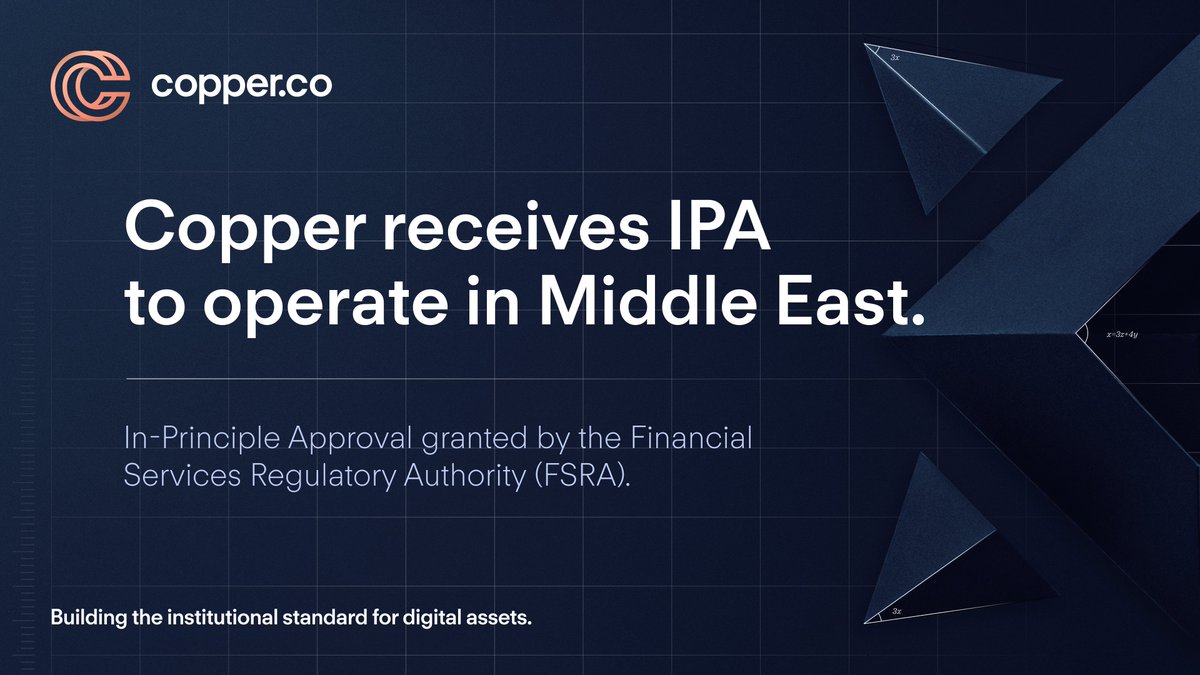
Copper has received an In‑Principle Approval (IPA) from the FSRA of ADGM, subject to completion of the full authorisation process.
This represents an important milestone in our expansion plans for the region. Subject to regulatory approval, we intend to offer custody, ClearLoop, stablecoin rewards and MMFT support into the region.
We look forward to progressing toward full authorisation and supporting institutional digital asset growth.
Read full press release here:
copper.co/en-uae/insights/co…
3
920
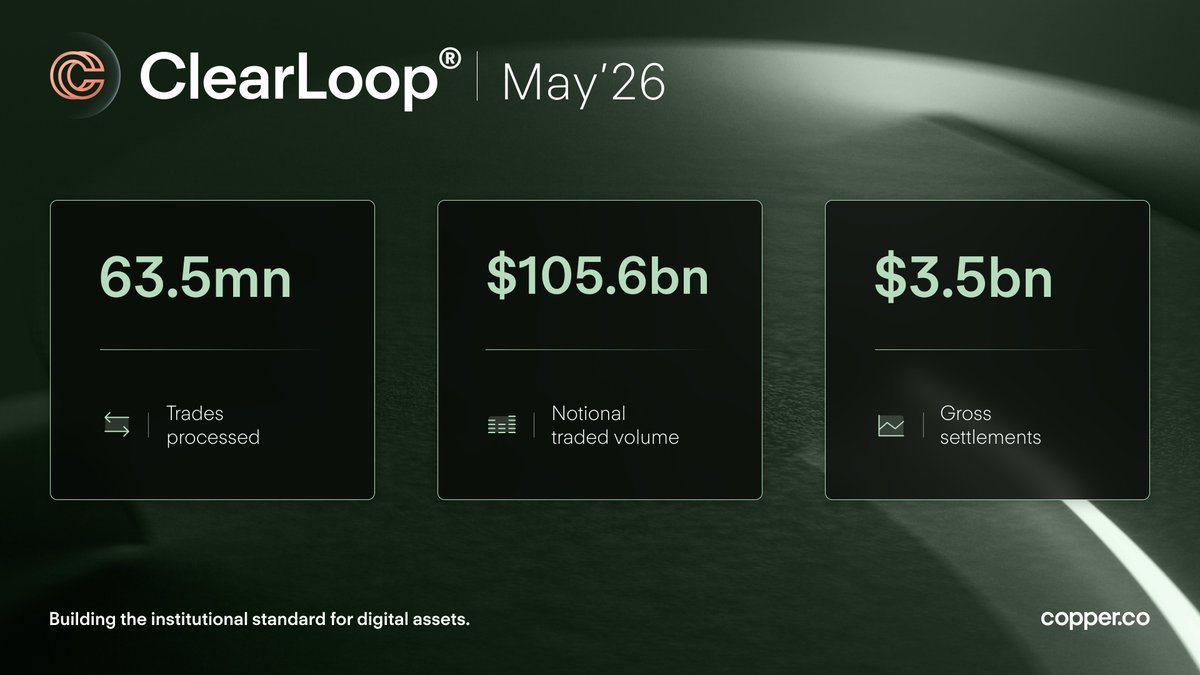
ClearLoop's May numbers are in, and the momentum continues.
In May, ClearLoop delivered:
63.5M trades processed
$105.6B in notional traded volume
$3.5B in gross settlements completed
That's up from an already strong April and a clear signal that the infrastructure is scaling with our clients' needs.
1
585

2/ Mint.
A user deposits a stablecoin and Aegis mints YUSD. $BTC is bought on the spot as collateral. The BTC collateral sits with @CopperHQ ClearLoop qualified custody. Aegis opens a short $BTC perpetual position sized 1 to 1 against the $BTC collateral, so the dollar value of the backing holds steady as $BTC price moves.
1
3
141


May 21
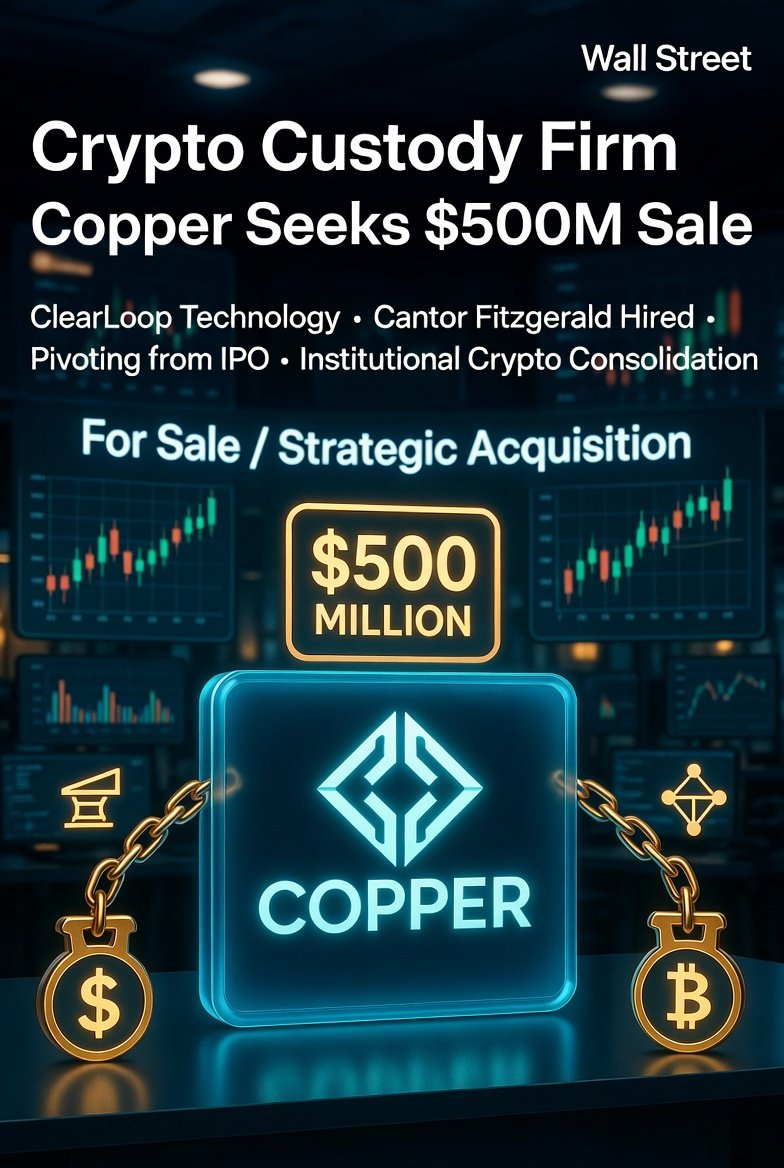
CRYPTO NEWSWIRE: Crypto Custody Firm Copper Seeks Sale at 500 Million Value
CRYPTO CONSOLIDATION: Cryptocurrency firm Copper has hired Cantor Fitzgerald to manage a sale of the company as it pivots away from plans for an initial public offering.
Cryptocurrency custody firm Copper is actively seeking a buyer, placing a $500 million price tag on its platform as it pivots away from earlier plans for an initial public offering.
The firm has tapped Wall Street investment bank Cantor Fitzgerald to manage the sale, signaling a strategic shift in an industry where capital is increasingly flowing toward artificial intelligence rather than crypto-centric public listings.
At the heart of the potential deal is Copper’s ClearLoop settlement system.
By allowing institutional investors to perform delivery versus payment without moving assets on-chain, the technology effectively mitigates settlement risk, a persistent pain point in digital asset trading.
With over 1,000 active counterparties and $50 billion in monthly notional volume, ClearLoop represents a mature, high-value infrastructure play for any buyer looking to bolster their institutional crypto capabilities.
This move underscores a broader trend of consolidation across the digital asset landscape. As traditional finance and fintech firms race to integrate blockchain capabilities, deal-making has accelerated.
Recent months have seen major acquisitions, including Mastercard’s move for stablecoin infrastructure firm BVNK and Standard Chartered’s full buyout of its Zodia Custody subsidiary.
The decision to sell rather than pursue an IPO highlights the current cooling of the crypto public market.
With bitcoin trading below $80,000 and investor attention diverted by the AI boom, firms like Copper are finding that strategic acquisition by established players offers a more certain path to growth than the volatile public markets.
For the industry, this consolidation suggests that the future of digital assets lies in the hands of well-capitalized institutions capable of scaling complex, secure, and regulated infrastructure.
FILED UNDER:
#Crypto, #Cryptocurrency, #Bitcoin, #BTC, #CopperCrypto, #CryptoCustody, #DigitalAssets, #Blockchain, #InstitutionalCrypto, #CryptoSale, #MergersAndAcquisitions, #CantorFitzgerald, #ClearLoop, #SettlementSystem, #DVPSettlement, #CryptoIPO, #CryptoConsolidation, #Fintech, #DeFi, #Web3, #CryptoNews, #CryptoMarket, #BitcoinPrice, #AI, #ArtificialIntelligence, #Mastercard, #BVNK, #StandardChartered, #ZodiaCustody, #CryptoInfrastructure, #CustodySolutions, #InstitutionalInvestors, #CryptoTrading, #SettlementRisk, #NotionalVolume, #CryptoAdoption, #RegulatedCrypto, #TradFi, #BlockchainIntegration, #CryptoMAndA, #CryptoValuation, #CopperAcquisition, #CryptoPivot, #PublicMarkets, #InvestorAttention, #DigitalAssetTrading, #SecureInfrastructure, #CryptoFuture, #CryptoConsolidation
3
140

May 20
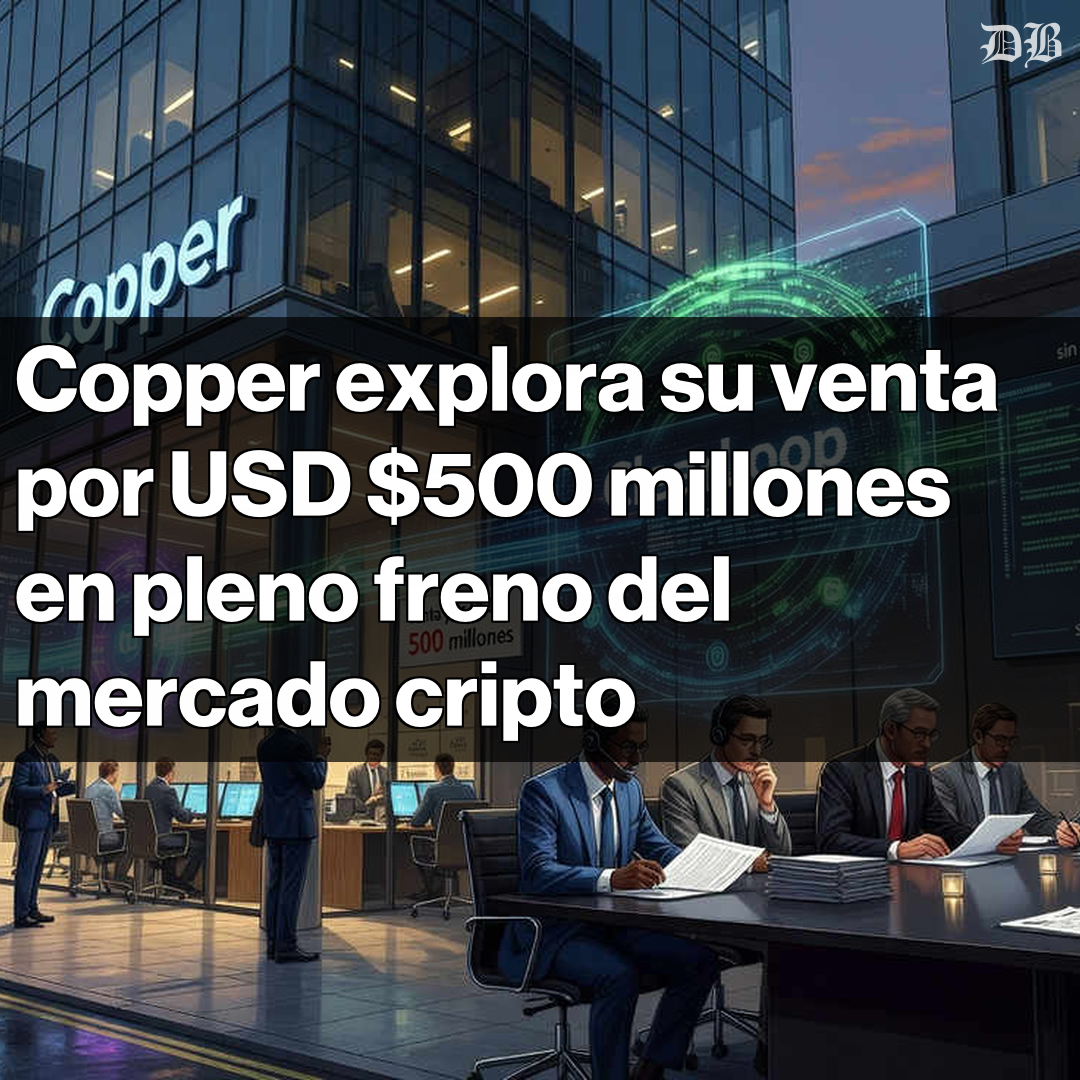
🚨 Copper busca comprador por USD $500 millones en medio del enfriamiento del mercado cripto
La firma de custodia explora una venta mientras las OPI se encuentran detenidas.
Su sistema ClearLoop, clave en la liquidación, atrae el interés institucional.
En un contexto de intensa actividad de fusiones, esta venta podría redefinir el ecosistema.
Mantente atento a las negociaciones en curso.
1
1
3
213

May 20
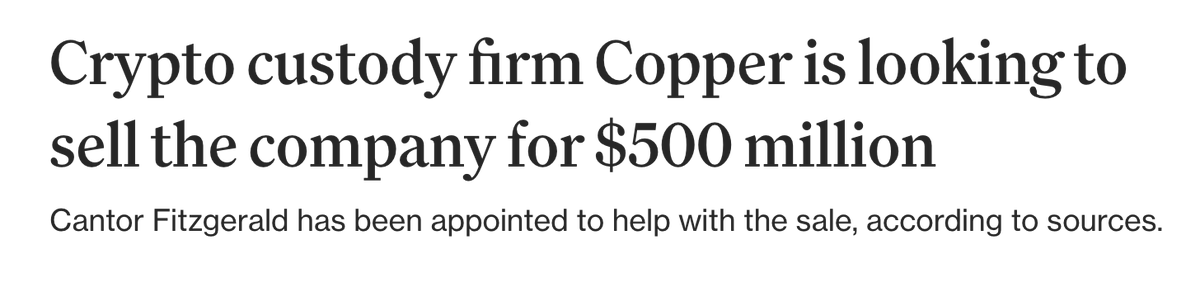
Copper Seeks $500 Million Sale as Crypto IPO Market Stalls
U.K.-based crypto custody firm Copper is exploring a sale at an estimated $500 million valuation. The company had previously considered an IPO, but the crypto listing market has remained subdued amid weaker bitcoin prices and continued capital flows into AI. Copper’s main business is ClearLoop, an in-custody settlement platform designed for institutional trading.
7
1
24
6,290

May 20
英国加密托管公司 Copper 正寻求以约 5 亿美元估值出售,Cantor Fitzgerald 已被聘请协助推进相关出售事宜。报道称,Copper 的核心资产为其托管内结算系统 ClearLoop,该系统允许机构在不将资产转移至链上的情况下完成托管内 DvP(货银对付)结算,以降低结算风险。Copper 已于 2023 年关闭企业托管业务,转而聚焦 ClearLoop。Copper 此前也曾考虑 IPO,但在比特币价格低于 8 万美元、AI 行业吸引大量资本的背景下,加密 IPO 市场整体较为低迷。(CoinDesk)wublock123.com/news/copper-c…
4
1
1,483

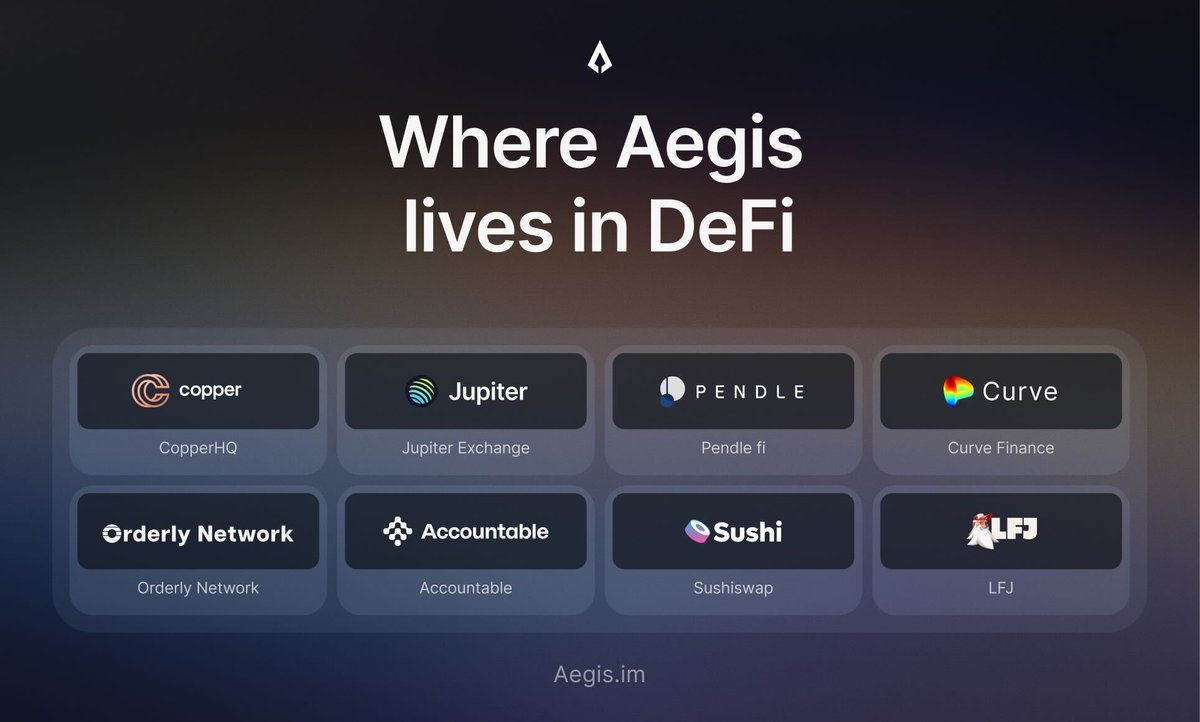
YUSD, sYUSD, jUSD and sjUSD across DeFi.
• @CopperHQ ClearLoop: BTC custody and hedge execution for YUSD
• @JupiterExchange: native jUSD JLP strategy on Solana
• @OrderlyNetwork: YUSD as margin collateral across Orderly perp DEXs
• @pendle_fi: PT, YT and LP markets for sYUSD with maturity September 23, 2026
• @CurveFinance: sjUSD/USDC and YUSD/USDC/USDT pools on Ethereum
• @LFJ_gg: YUSD/USDC pool on Avalanche
• @SushiSwap: sYUSD/USDC pool on Katana
• @AccountableData: live proof of reserves
Native dashboard: app.aegis.im/transparency
Proof of reserves: aegis.accountable.capital/
4
4
27
411

May 9
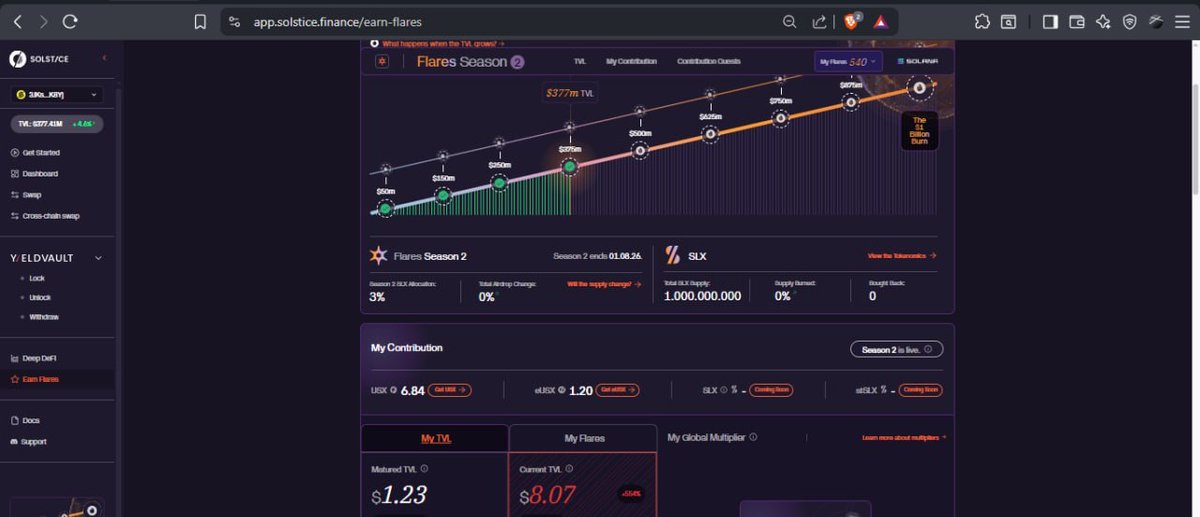
missed the Season 1 registration window. yeah, that one stings a little.
saw everyone flexing their $SLX allocation today and i'll be honest, it hit different when your dashboard shows nothing there. fully my fault, i wasn't paying close enough attention when the window was open.
but here's the thing, if you registered and claimed, congrats. you literally just got free money from people like me who missed the window. unclaimed $SLX doesn't go back to the team, it gets redistributed equally to everyone who registered. so yeah, you're welcome i guess 😅
missing S1 didn't make me sour on Solstice though, it did the opposite. watching USX hold its peg during the October crash while $19B got liquidated everywhere else, seeing the $SLX allocation preview finally drop, the ClearLoop integration, everything i've learned about how this protocol actually works made me more convicted, not less.
btw if you participated in Season 1, your $SLX allocation preview is live now. go check it on the Solstice dApp.
i'm in Season 2 now. small position for now but building up. S1 was a lesson. S2 is where i actually show up properly.
if you also missed S1, no reason to sit this one out too. Season 2 is still open.
↳ app.solstice.finance
↳ reff code: 4CA490E2
57
70
331
May 8
i've been in DeFi long enough to know most "yield" products don't survive a real market stress test.
Solstice is different.
delta-neutral strategies running since 2022 with zero principal loss.
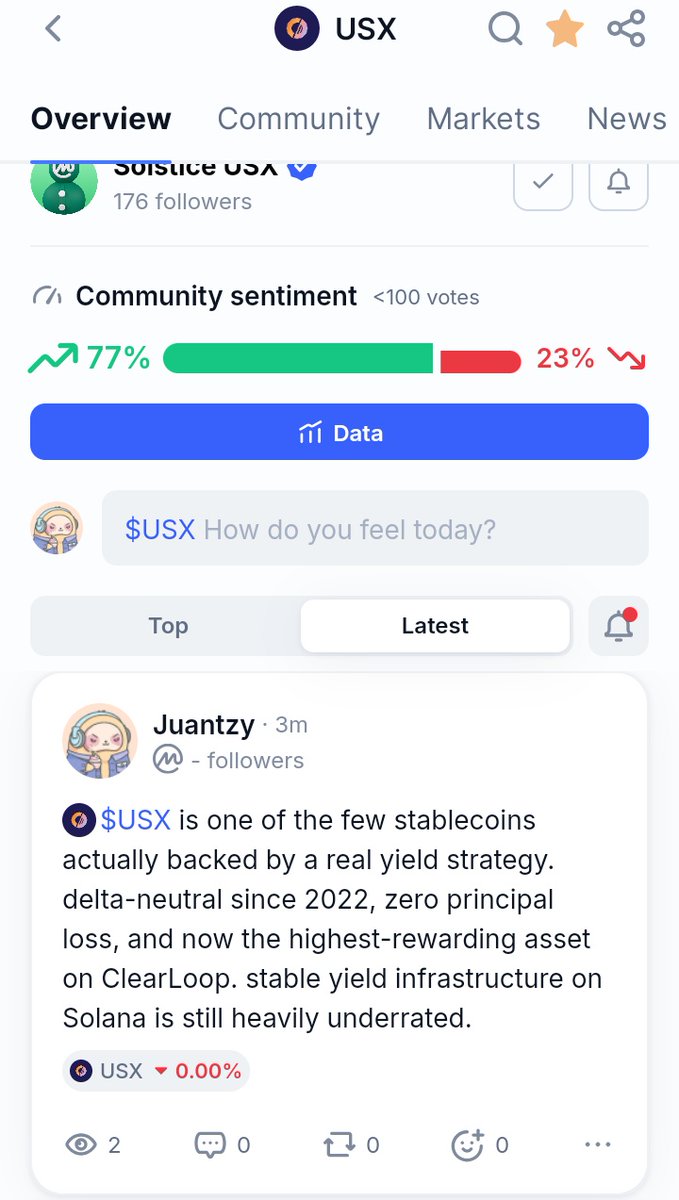
USX held its peg during the October crash where $19B got liquidated across the market. and now USX is the highest-rewarding asset on ClearLoop, institutional infrastructure used by treasuries and DAOs at scale.
that's not hype. that's a track record.
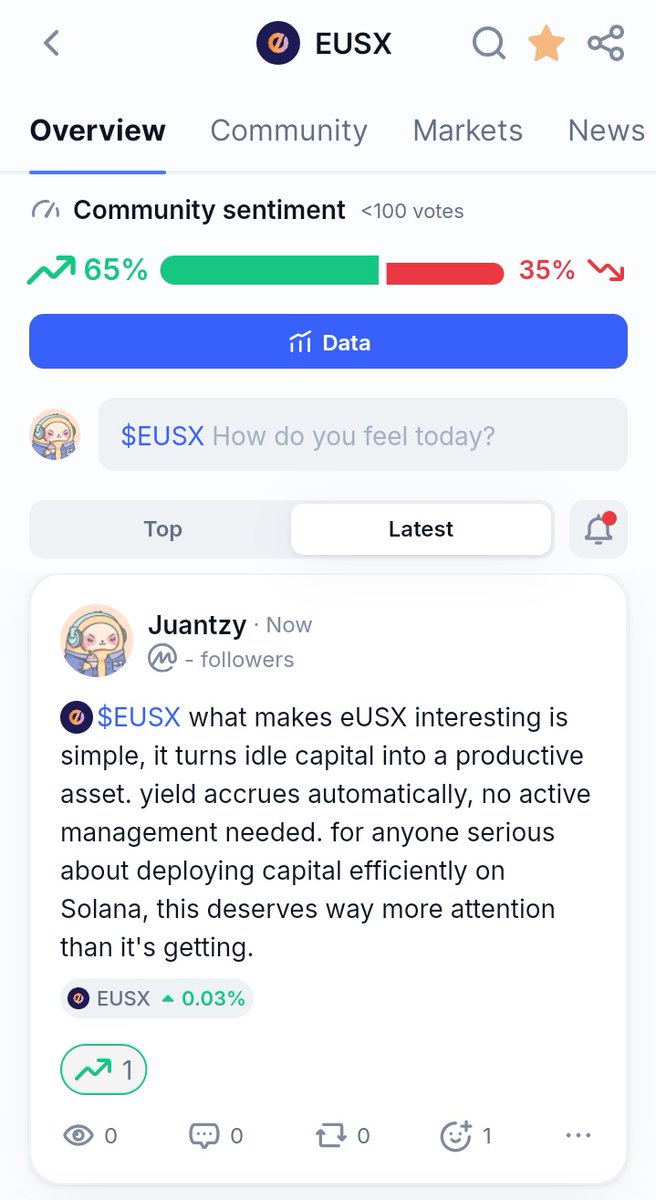
if you believe in what Solstice is building like i do, go vote Bullish on USX and eUSX on CoinMarketCap.
Sentiment is sitting bearish right now heading into TGE, a few consistent votes from the community flips that.
↳ coinmarketcap.com/currencies…
↳ coinmarketcap.com/currencies…
vote resets every 24 hours. takes 10 seconds.
15
30
410