
How Are Insurance Ads Changing Client Behavior Before Law Firms Are Contacted? @AdamonTV @PILMMA
Adam Armbruster explains how consumers are influenced by friendly insurance advertising and often try to handle claims themselves, leading to bigger problems. Lindsey Busfield adds that traditional personal injury attorney commercials fail to connect with clients and emphasizes the need for law firms to change their approach, meet clients where they are, and use creative messaging to engage effectively.
Click the link below to watch the full episode.
optimizemyfirm.com/pimm-128/
#LindseyBusfield #AdamArmbruster #LegalMarketing #ClientBehavior #InsuranceAdvertising #PersonalInjuryLaw #LawFirmStrategy #MarketingInnovation #ConsumerEngagement
1
1
55
How Are AI Tools Changing Legal Marketing Strategies? @AdamonTV @PILMMA
Lindsey Busfield and Adam Armbruster discuss the impact of AI on traditional media and client behavior in the legal industry. Adam explains why legal professionals need to stay smarter than vendors, how AI scrapes online information, and why tech giants prioritize their own profits over unbiased results. He emphasizes using tools strategically to benefit law firms rather than feeding the biggest advertisers.
Click the link below to watch the full episode.
optimizemyfirm.com/pimm-128/
#LindseyBusfield #AdamArmbruster #LegalMarketing #AIinLaw #ClientBehavior #LegalStrategy #MediaTrends #LawFirmGrowth #MarketingInsights
1
1
44

February is a thinking month.
Budgets are tested. Priorities are evaluated.
Stay helpful.
Stay present.
Stay trusted.
#clientbehavior #servicebusiness #coachmarketing #entrepreneurmindset #businessgrowth
1
11

Feb 11
Wealth management is often just order-taking; true influence belongs only to the few pros willing to walk away rather than let a client make a mistake. 💼🚫 #WealthManagement #InvestorPsychology #FinancialAdvice #ClientBehavior
1
1
78

Jan 30
Ever wonder why smart investors still make costly mistakes? 🧠📉 Behavioral finance explains how our brains can quietly sabotage returns—even when the plan looks perfect on paper.
Here are common psychological biases that can derail investment decisions, plus practical ways to manage them:
🔹 Overconfidence: Believing you can consistently outsmart the market may lead to excessive trading, concentrated positions, or ignoring risk. 📈
Tip: 📌 Track decisions in an “investment journal” and compare outcomes vs. a benchmark to stay grounded.
🔹 Loss aversion: Losses tend to feel about twice as painful as gains feel good, which can trigger panic-selling or refusing to rebalance. 😬
Tip: 🧩 Use pre-set rebalancing rules (calendar-based or threshold-based) to make decisions less emotional.
🔹 Confirmation bias: We seek information that supports what we already believe—while dismissing contradictory evidence. 🔍
Tip: 🧠 Actively look for the “best argument against” your thesis before adding to a position.
🔹 Recency bias: Recent performance can feel more predictive than it truly is, driving performance chasing. 🏃♂️💨
Tip: 📊 Review longer-term data (5–10 years) and focus on process, not headlines.
🔹 Anchoring: Fixating on a purchase price or a prior market level can distort decisions (e.g., “I’ll sell when it gets back to…”). ⚓
Tip: 🎯 Base decisions on forward-looking fundamentals and portfolio role, not the original entry point.
🔹 Herd behavior: Following the crowd can lead to buying high and selling low—especially during hype cycles. 🐑
Tip: 🧱 Write a simple investment policy statement (IPS) that defines risk, goals, and guardrails.
The market tests more than your strategy—it tests your psychology. Building systems that reduce emotion (automation, rules, diversification) can be one of the most powerful “alpha” sources available. ✅
If you’re an investment advisor looking to strengthen client outcomes through better decision-making frameworks, explore Adviser CE’s continuing education resources to deepen your expertise and deliver more consistent planning value. 📚🤝
#BehavioralFinance #InvestingPsychology #InvestorMindset #FinancialPlanning #WealthManagement #RiskManagement #PortfolioManagement #ClientBehavior #InvestingTips #AdvisorEducation #ContinuingEducation #AdviserCE
1
1
5
Jan 14
Your brain is a powerful investing tool—but it also comes with shortcuts that can quietly sabotage great financial plans 🧠📉. Understanding cognitive biases is one of the fastest ways to improve decision-making without changing a single market assumption.
Here are a few of the most common biases that show up in real client portfolios (and in our own choices) 👇
🧩 Confirmation bias: We naturally seek information that supports what we already believe. In investing, that can look like only reading bullish takes on a favorite stock or ignoring data that challenges a strategy. A practical fix: intentionally read the “bear case” and ask, “What evidence would change my mind?”
🎯 Overconfidence: Many investors overestimate their ability to time markets or pick winners—especially after a streak of success. This can lead to concentrated positions, excessive trading, or underestimating risk. A countermeasure: pre-set rebalancing rules and use position sizing limits.
⏳ Recency bias: What just happened feels more important than what tends to happen over time. After a market rally, risk can feel “safe”; after a downturn, it can feel “permanent.” Try reframing performance in multi-year ranges and reviewing prior cycles to restore perspective.
🧲 Loss aversion: Losses often feel about twice as painful as gains feel good. Investors may hold losers too long, sell winners too soon, or avoid investing altogether. One solution: align the portfolio with time horizon “buckets” so short-term needs don’t pressure long-term allocations.
🔁 Anchoring: We fixate on a reference point (like a purchase price) and treat it as meaningful. But markets don’t care what you paid. Consider replacing “break-even thinking” with forward-looking expected return and opportunity cost.
The best advisors don’t just pick investments—they design decision frameworks that reduce preventable mistakes ✅. Want more tools to help clients (and yourself) spot these biases in action? Explore Adviser CE’s continuing education resources built for real-world planning and portfolio conversations.
#FinancialPlanning #BehavioralFinance #InvestingPsychology #CognitiveBias #WealthManagement #InvestmentAdvisors #RiskManagement #ClientBehavior #FinancialEducation #AdviserCE
5

18 Nov 2025
“Client after taking the quotation: 👻 Vanished like my weekend plans!”
#ClientGhosting #AgencyLife #MarketingHumor #CorporateMemes #ClientStories #BusinessHumor #ClientBehavior #FreelancerLife #AgencyStruggles #IndianBusinessHumor #DigitalMarketingLife #thedigitaladd
1
4

18 Aug 2025
Not sure how to handle difficult clients? Understanding their behavior can help you tailor your approach for better outcomes and smoother interactions. #ClientBehavior #Adaptability
1
24

30 Jun 2025
Client: searches entire market, gets exhausted😩
Also client: "Hey… you free to take this up?"
Us: 😏(Of course, we are.)
🎬 New reel = 100% relatable.
At Pansofic Solutions, we wait… like legends do.
#ClientBehavior #PansoficSolutions #WebDevHumor #RelatableAF #DiljitDosanjh
1
34

22 Jun 2025
Under stress, investors often make decisions based on comfort, not logic. Meet Familiarity Bias! 🤯
This powerful clip from my CE course for financial advisors explains why clients might dump an S&P index fund before a well-known stock. Learn to identify and counter this bias to protect client portfolios.
Gain critical behavioral finance insights: zurl.co/GqgTW
#FinancialPlanning #InvestmentAdvisory #BehavioralEconomics #ClientBehavior #RiskManagement #FinanceEducation
1
82

13 Jun 2025
Unlock Leads' Secrets: See Exactly When They're Ready to Buy!
#AIDatabase #LeadEngagement #SalesStrategy #CustomerTracking #BusinessIntelligence #DataAnalytics #MarketingTips #SalesAutomation #ClientBehavior #DecisionMaking
4

15 Apr 2025
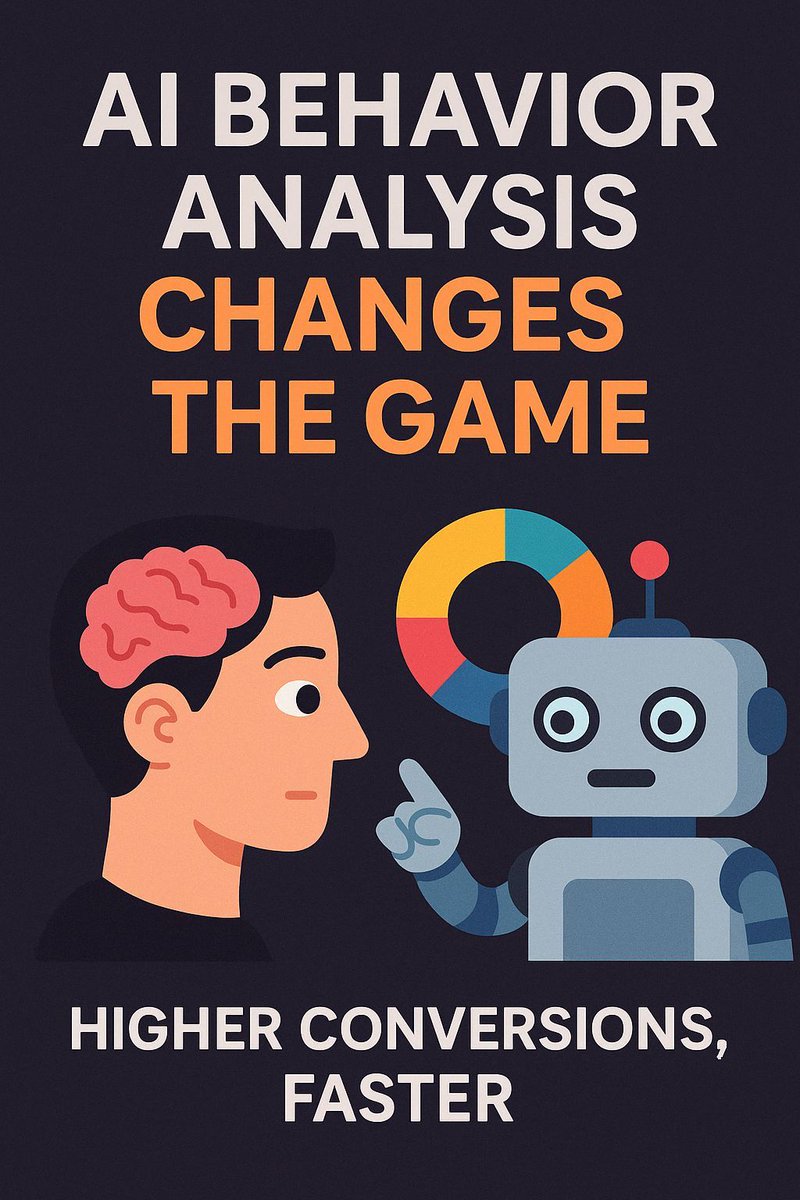
𝗠𝗼𝘀𝘁 𝘀𝗮𝗹𝗲𝘀 𝗳𝗮𝗶𝗹 𝗻𝗼𝘁 𝗯𝗲𝗰𝗮𝘂𝘀𝗲 𝗼𝗳 𝘁𝗵𝗲 𝗽𝗿𝗼𝗱𝘂𝗰𝘁 — 𝗯𝘂𝘁 𝗯𝗲𝗰𝗮𝘂𝘀𝗲 𝘄𝗲 𝗱𝗼𝗻’𝘁 𝒔𝒑𝒆𝒂𝒌 𝒐𝒖𝒓 𝒄𝒍𝒊𝒆𝒏𝒕'𝒔 𝒍𝒂𝒏𝒈𝒖𝒂𝒈𝒆.
💡 What if you could instantly know how a client wants to be pitched — even before the meeting begins?
That’s where AI behavior analysis changes the game.
🔍 Real-time insights
🧠 ~90% accurate personality profiling
🤖 Sales task automation = hundreds of hours saved
🤝 Higher conversions, faster
This isn’t about replacing the human touch — it’s about making it smarter, sharper, and more personal.
👉 Read how modern AI is transforming sales from guesswork to guided action: themindreader.ai/blog-insigh…
#AIforSales #SalesIntelligence #ClientBehavior #MindreaderAI #ModernSales
1
2
17

9 Apr 2025
#TheLatium 155 - Scaling Advise with Michele and Laksh
The power of digital tools allows for financial advice to reach unprecedented numbers. But can technology truly overcome the complexities of human behavior? This episode examines the inherent conflict between scalable advice and the reality that not all clients will follow recommendations, especially during volatile times. Discover why education emerges as a critical tool in navigating this challenge.
#financialadvice #wealthmanagement #fintech #investing #behavioralfinance #clientbehavior #financialliteracy #onlineadvice #digitaladvice #financialplanning #education #businesstips #entrepreneurship
9

5 Oct 2024
Designer VS Client ► At The Payment Time!
#design #designer #graphicdesigner #clientes #clientreview #clientbehavior #freelancinglife #Payments #paymentprocessing #paymentsolutions
2
57
1 May 2024
Not sure how to handle difficult clients? Understanding their behavior can help you tailor your approach for better outcomes and smoother interactions. #ClientBehavior #Adaptability
16

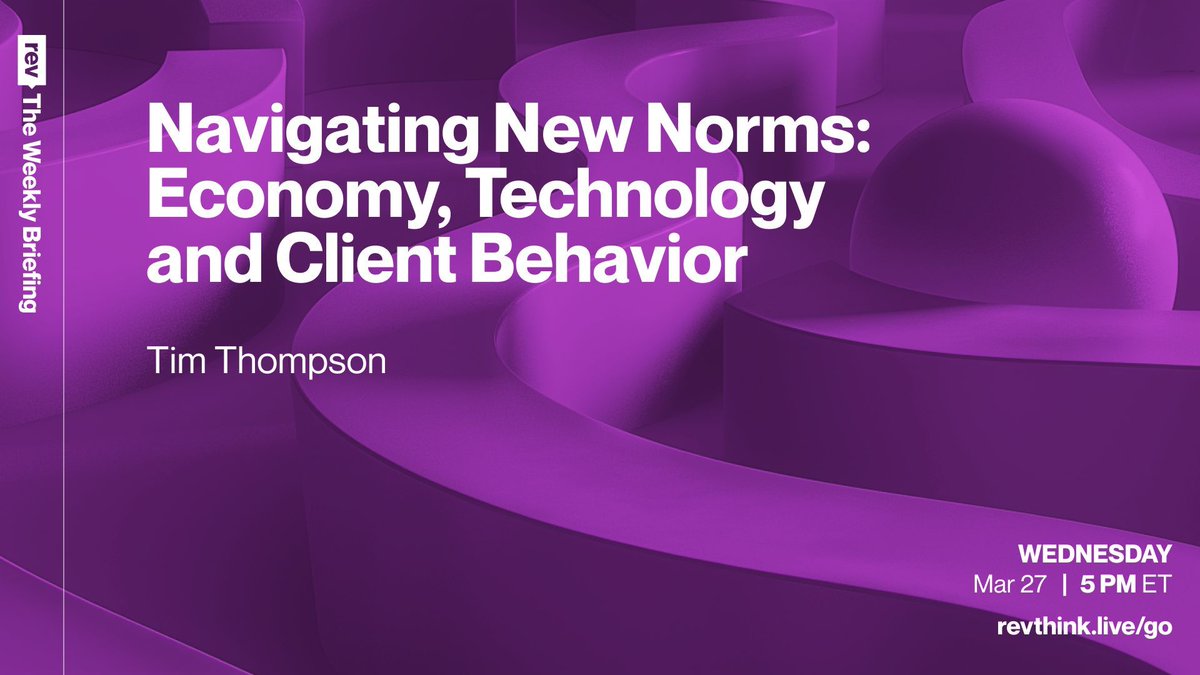
In our ever-changing industry, businesses must constantly navigate new norms and technologies to stay ahead.
Join us in today’s briefing at 5 PM ET: buff.ly/4bvSW74
#TWB #webinar #businesssuccess #economicshift #techtrends #clientbehavior #businessstrategy #management
17

2 Aug 2023
🔍 Unlock the Secrets of Client Behavior! Don't let misunderstandings lead to churn. Discover the top reasons clients leave and keep them raving about your services!
📖 Read and Keep Your Clients Happy: hubs.la/Q01ZvGn-0
#ClientBehavior #CustomerExperience #NoMoreChurn
16

11 Jul 2023
VRCHATでくろさんとライブ練してたら延々とunusual clientbehaviorというエラーで弾かれまくるんでもう無視してやりぬいたった
7
277

5 Apr 2023
In industries where expertise is taken for granted, exceptionally fast and personalized service becomes your key to success.
#B2B #clientservice #clientbehavior #businessoflaw #legalservices #professionalservices #consulting #strategy #leadership #publ…lnkd.in/e5yYE_Gy
6
5 Apr 2023
Dans les industries où l’expertise est tenue pour acquise, un service à la clientèle exceptionnellement rapide et personnalisé devient votre clé du succès.
#B2B #clientservice #clientbehavior #businessoflaw #legalservices #professionalservices #consult…lnkd.in/eN8T9n5m
7