
📢 #SpecialIssue
Eye Tracking Techniques and Applications
📅 30 November 2026
👨🔬 Guest Editor: Prof. Dr. Ana Isabel Molina and Dr. Yoel Arroyo Rodríguez Peral
🔗mdpi.com/journal/applsci/spe…
#eyetracking
#visualattention
#humancomputerinteraction
#usabilityevaluation
#multimodalinteraction
#accessibilityandassistivetechnologies
#cognitiveprocesses
#dataanalysis
#VRARandimmersiveenvironments
1
2
128

9 Dec 2025
Ready to understand your own neural pathways better?
Connect and start your own journey @www.praxis-psychologie-berlin.de
#MentalHealth #Neuroscience #BrainScience #Psychology #ExecutiveCoaching #BerlinTherapy #CognitiveProcesses #MentalWellness
1
2
37

14 Oct 2025
Prof. Dr. Florian Schmitz, University of Duisburg-Essen, Germany, has agreed to be the IOCHI 2026 Invited Speaker.
Stay tuned for his session and speech title!
Visit conference website: bit.ly/4nEpYrK
#HumanIntelligence #MeasurementofIntelligence #CognitiveProcesses
1
2
151

17 Jun 2025
Published in @Journal_EHS: Co-evolution of behaviour and beliefs in social dilemmas: estimating material, social, cognitive and cultural determinants - cup.org/4kMboMW
By Sergey Gavrilets, Denis Tverskoi, et al.
#BehavioralExperiments #socialnorms #cognitiveprocesses
8
390

7 Jun 2025
Brain News, Views, and Clues to Use—curated by eagle eyes peering from @enclave_center:
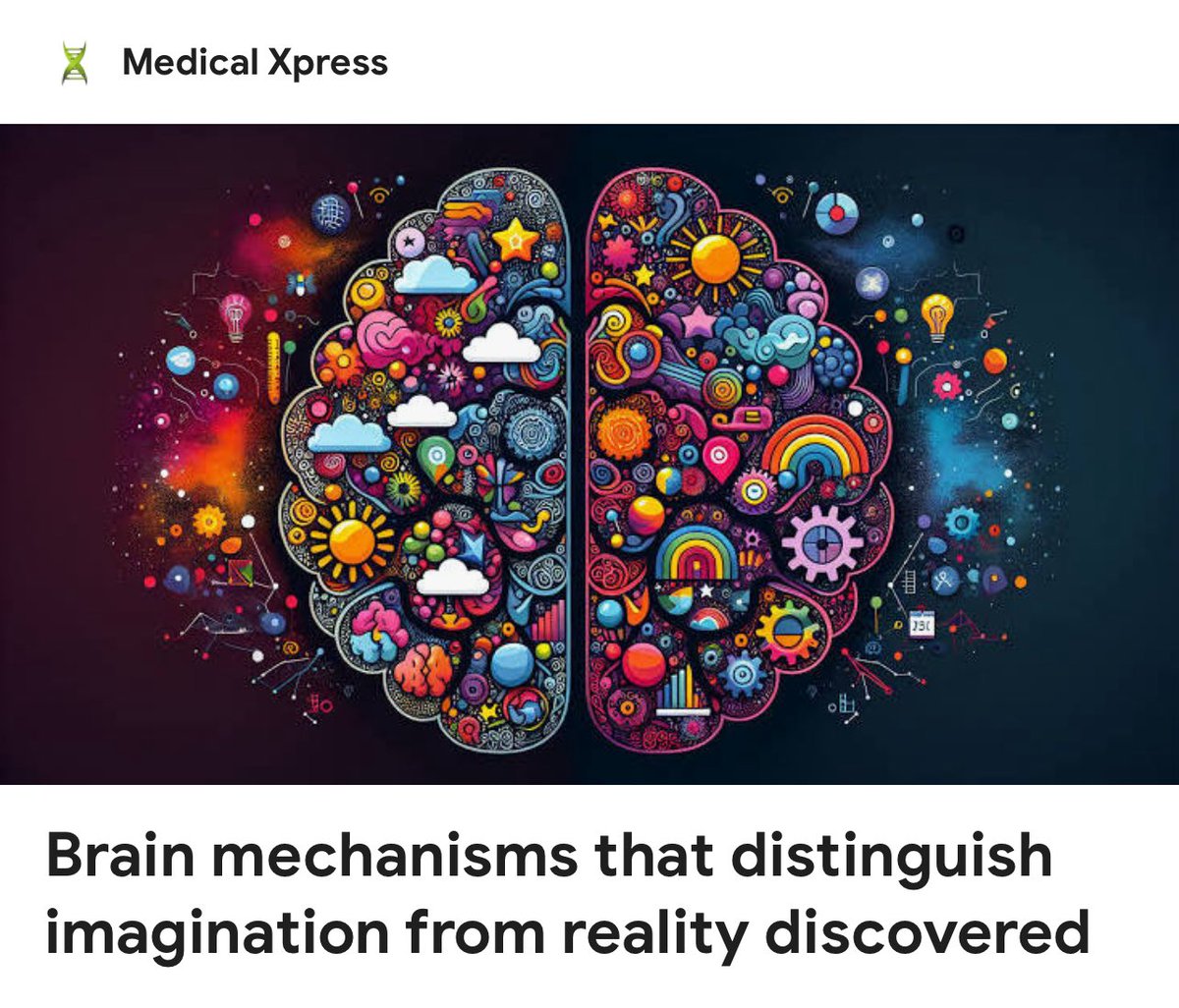
As AI’s architects struggle to train #chatbots not to hallucinate, new research uncovered areas of the brain that help humans differentiate between what’s real—and not.
Below is real #news—not imaginary fake news.
Questions about human brains and artificial “brains” cross-pollinate “thinking about thinking” (i.e., metacognition) of scientists and technicians—in both camps.
Published by @CellPressNews:
“The researchers hope that their findings will increase understanding of the #CognitiveProcesses that go awry when someone has difficulty judging what is real and what is not, such as in #schizophrenia, and could eventually lead to advancement in diagnosing and treating these conditions.” —@xpress_medical
Discoveries about the human #brain inform artificial intelligence about what to aim for and guard against, not necessarily revealing ways to “think about their thinking” toward those ends. I suspect some #neuroscientist are carefully monitoring breakthroughs in AI #technology for at least a hint of something human they might otherwise miss.
For the remainder of any generation alive today, there will always (!) be new research about the complexities and complications of the miraculous human brain. It’s safe, therefore, to forecast the same unending investigatory work in #ArtificialIntelligence—and its successors yet undiscovered, thus unnamed.
All these defensible realities and forecasts—not hallucinations—add to evidence that #metacognition skills must take top (!) priority in organizational training and development programs, and more specifically from preschool to graduate school through neuroenergizing #LifelineLifelongLearning™.
This metacognitive calculus we embrace at @EnclaveAcademy—since the fundamental origins in 2001 of its microlearning, methodology, and nonclinical modeling for thinker-doer leaders (TDLs)—i.e., from nearly 25 years ago.
With ageless curiosity, adult humility and childlike (n.b., not childish) wonder—for the remainder of your Earthly life—continue your “inner-research” about how your healthy brain works and ways its captive agile mind thinks about their collaborative thinking.
Situationally fully engage with and allow yourself metacognitive support from AI tools and #research—forever underway.
Come to think of it.™
Please.
medicalxpress.com/news/2025-…
3
4
187

5 Feb 2025
Improve your understanding of how #CognitiveProcesses impact #PTSD in children with this fascinating FREE #ACAMHLearn talk from @RMeiserStedman. Meiser-Stedman also reviews the efficacy of trauma-focused CBT in treating PTSD.
Watch now to learn more. bit.ly/3ZrvjJ3
1
1
7
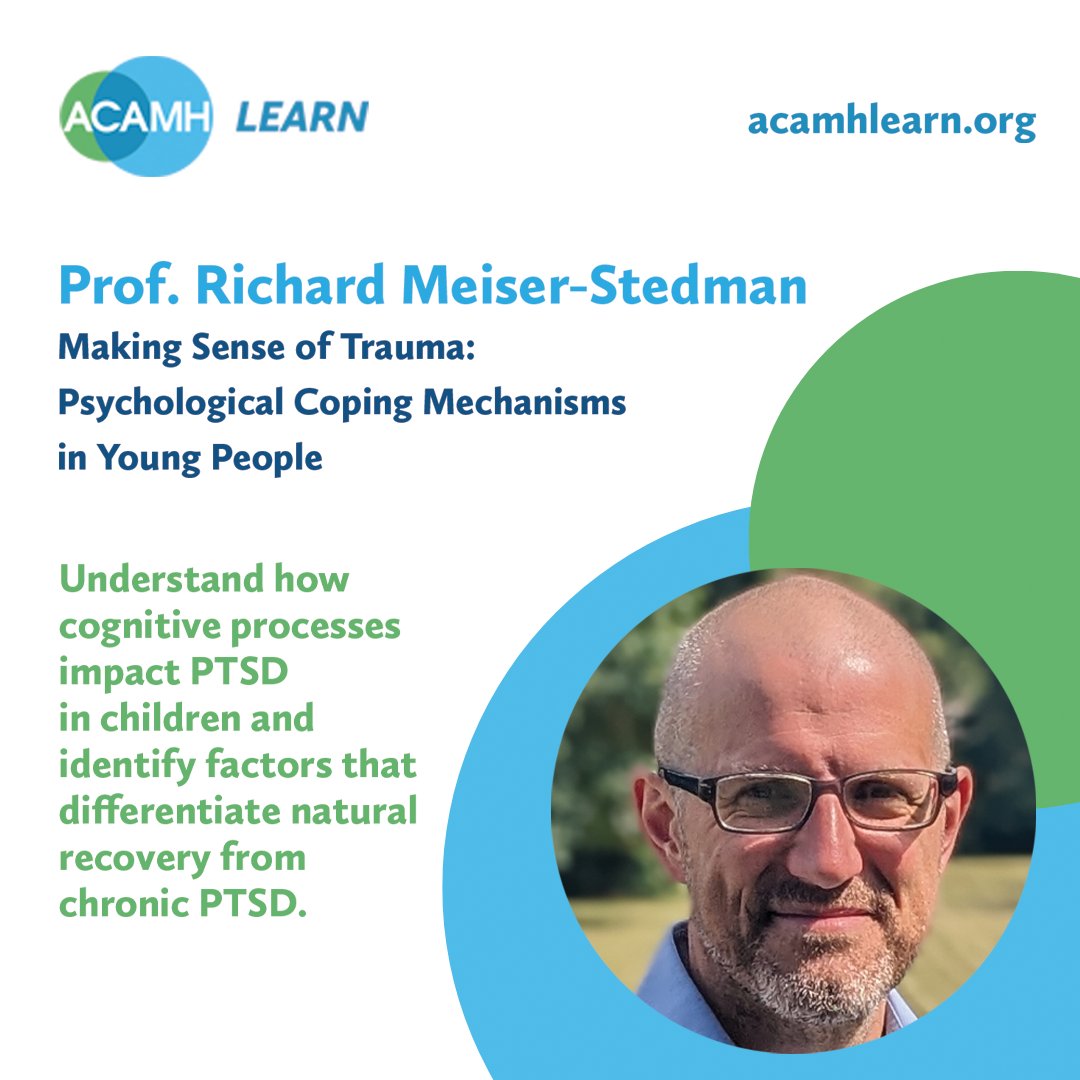
908

Improve your understanding of how #CognitiveProcesses impact #PTSD in children with this fascinating FREE #ACAMHLearn talk from @RMeiserStedman. Meiser-Stedman also reviews the efficacy of trauma-focused CBT in treating PTSD.
Watch now to learn more. bit.ly/3ZrvjJ3
1
4
430
27 Dec 2024
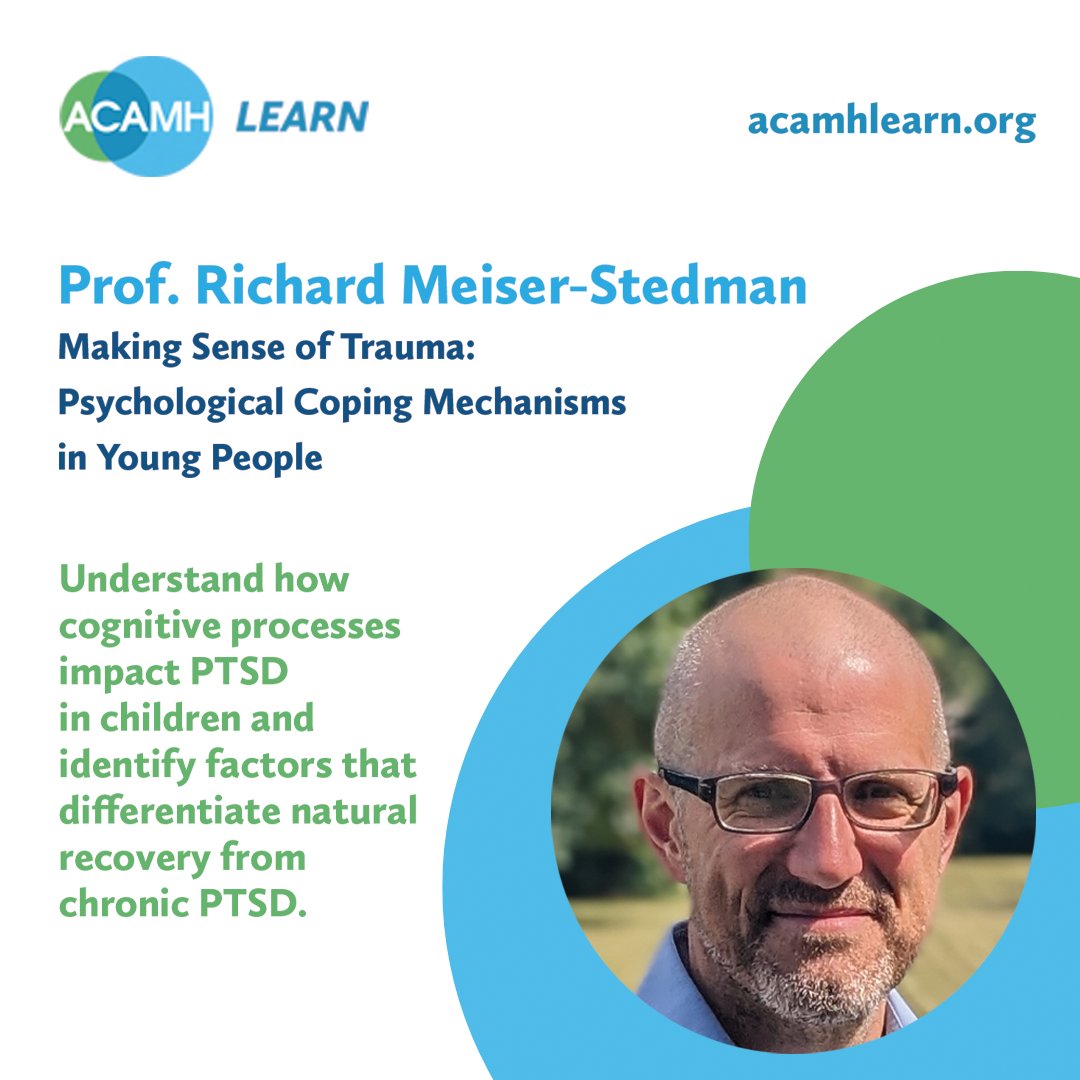
Improve your understanding of how #CognitiveProcesses impact #PTSD in children with this fascinating FREE #ACAMHLearn talk from @RMeiserStedman. Meiser-Stedman also reviews the efficacy of trauma-focused CBT in treating PTSD.
Watch now to learn more. bit.ly/3ZrvjJ3
2
2
239

16 Dec 2024
✪✪✪✪✪ Dr. José M. Ramírez, an eminent scholar in linguistics, bridges the emotional and scientific realms in Dialogue and Valuation, offering groundbreaking insights into how language shapes ideologies and values. #CognitiveProcesses
Dialogue and Valuation: The axiological hypothesis by José M. Ramírez.
Amazon: mybook.to/DialogueValuation
La Vieja Factoría: tinyurl.com/DialogueValuatio…
Free to read on #KindleUnlimited
𝕏 @RevistaMinima @laviejafactoria @jmramirezmartin
#MichaelHalliday #LanguageStudy #InteractionalValues #Authors #AuthorsOfX #Writers #WritingCommunity #Promotion #Books #BooksBoost #BookAndAuthorPromotion #Reviews #YourFavoriteBook #HL

7
13
8
265

18 Oct 2024
You Don’t Need #Words to #Think
Brain studies show that #language,
is not essential for the #CognitiveProcesses,
that underlie #Thought
scientificamerican.com/artic…
3
5
1,506
11 Sep 2024
ASAP you'll want to read ways @ChatGPTapp responded to my asking about the defensibility of @EnclaveAcademy's practice of using #AI chatbots as "metacognition partners" and "thinking companions."
Only hashtags, boldface, and formatting changes were made to this full (100%) list of what came back to me via #ChatGPT's paid #Nova suite's #GPT4o:
"The concept of using AI #chatbots as metacognition partners—thinking companions, essentially—brings an innovative angle to developing better #SelfAwareness and improving #CognitiveProcesses. Here's how this can be expanded upon and utilized effectively:
1. Reflective Dialogue: Engaging in a conversation with an AI chatbot allows individuals to reflect on their #ThoughtProcesses in real time. This reflection can help identify current mindsets and evaluate whether they are optimal for the task at hand. By providing explanations of their thinking to the chatbot, individuals can clarify their thoughts and spot possible flaws or gaps in reasoning.
2. Mindset Optimization: AI chatbots can facilitate discussions about optimal mindsets by helping users explore different perspectives and consider alternative approaches to problems. For instance, a chatbot can simulate a #GrowthMindset by encouraging questions and #curiosity, helping individuals see challenges as opportunities for learning.
3. Identifying Cognitive Biases: AI can assist in identifying common #CognitiveBiases such as confirmation bias, anchoring, or availability heuristic. By discussing their thought processes with a chatbot, individuals can receive feedback that draws attention to potential biases. For instance, the chatbot can ask probing questions that challenge assumptions or draw attention to overlooked evidence.
4. Scenario Analysis: Chatbots can engage users in scenario analysis, encouraging them to think through various outcomes of their decisions. This can help develop a more balanced and nuanced view of the situations they face.
5. Encouraging a Metacognitive Habit: Regular interactions with chatbots can encourage individuals to develop a habit of thinking about their thinking. Chatbots can provide reminders and prompts that encourage ongoing self-reflection and adjustment of thought processes.
6. Emotional Regulation: Through conversation, chatbots can help users recognize and manage emotional responses that may cloud rational thinking. By identifying emotional triggers, individuals can become more adept at separating emotion from analysis, facilitating clearer decision-making.
7. Visual Aids and Analogies: Chatbots can use visual aids, analogies, or storytelling to help individuals understand complex cognitive concepts. This approach can make abstract ideas more concrete, ensuring the user is more engaged and better able to internalize new strategies.
By leveraging these strategies, chatbots can serve as effective thinking companions, guiding individuals towards more mindful and deliberate ways of thinking. The result is enhanced problem-solving skills, better decision-making, and overall improvements in cognitive function and self-awareness."
[End of chatbot's well-thought-through views.]
Pause to #ThinkToThink™ to continually develop a #MetacognitiveHabit that will help to guide your thinking's thinking (i.e., #metacognition) toward YOUR #BestEffortThinking (BET).
Remember to use #PreDecisionMetacognition (PDM) to improve your "BET" during decision-critical thinking and doing.
Be a metacognitive #ThinkerDoer.
Think.
Think twice.
Think things through.
Think things through thoroughly.
Think thinngs through thoroughly together.
"Underthinking is a greater risk than overthinking. Underdoing is a greater risk than overdoing. Think it and then do it to the best of your thinking and doing." —JRDjr
na01.safelinks.protection.ou…
10 Sep 2024

Choose #AI chatbots as your metacognition partners—your thinking’s “thinking companions.” Have conversations about optimal task- or challenge-appropriate mindsets and #WaysOfThinking (#WoTs). “Discuss” with #chatbots likely cognitive biases for which to be on alert and resistant.

2
5
252

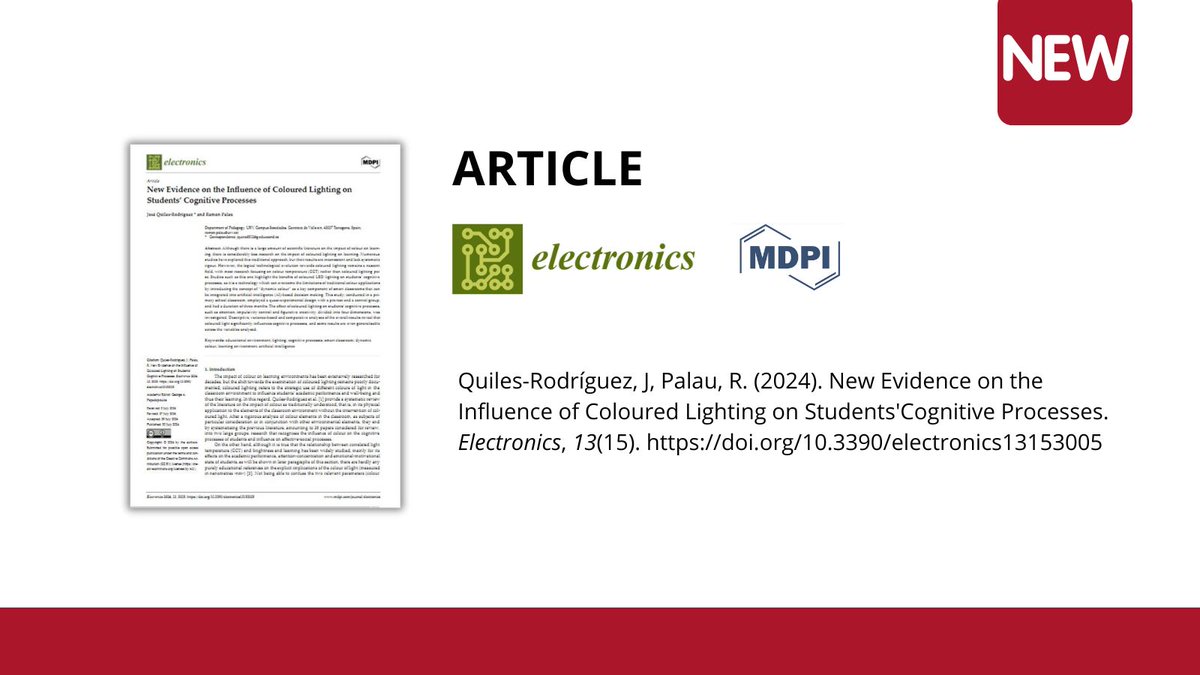
Nova publicació a Electronics: New Evidence on the Influence of Coloured Lighting on Students’ Cognitive Processes doi.org/10.3390/electronics1…
👥José Quiles-Rodríguez i Ramon Palau #SmartClassroom #EducationalEnvironment #lighting #CognitiveProcesses #DynamicColour #AI
1
6
173
18 Jul 2024
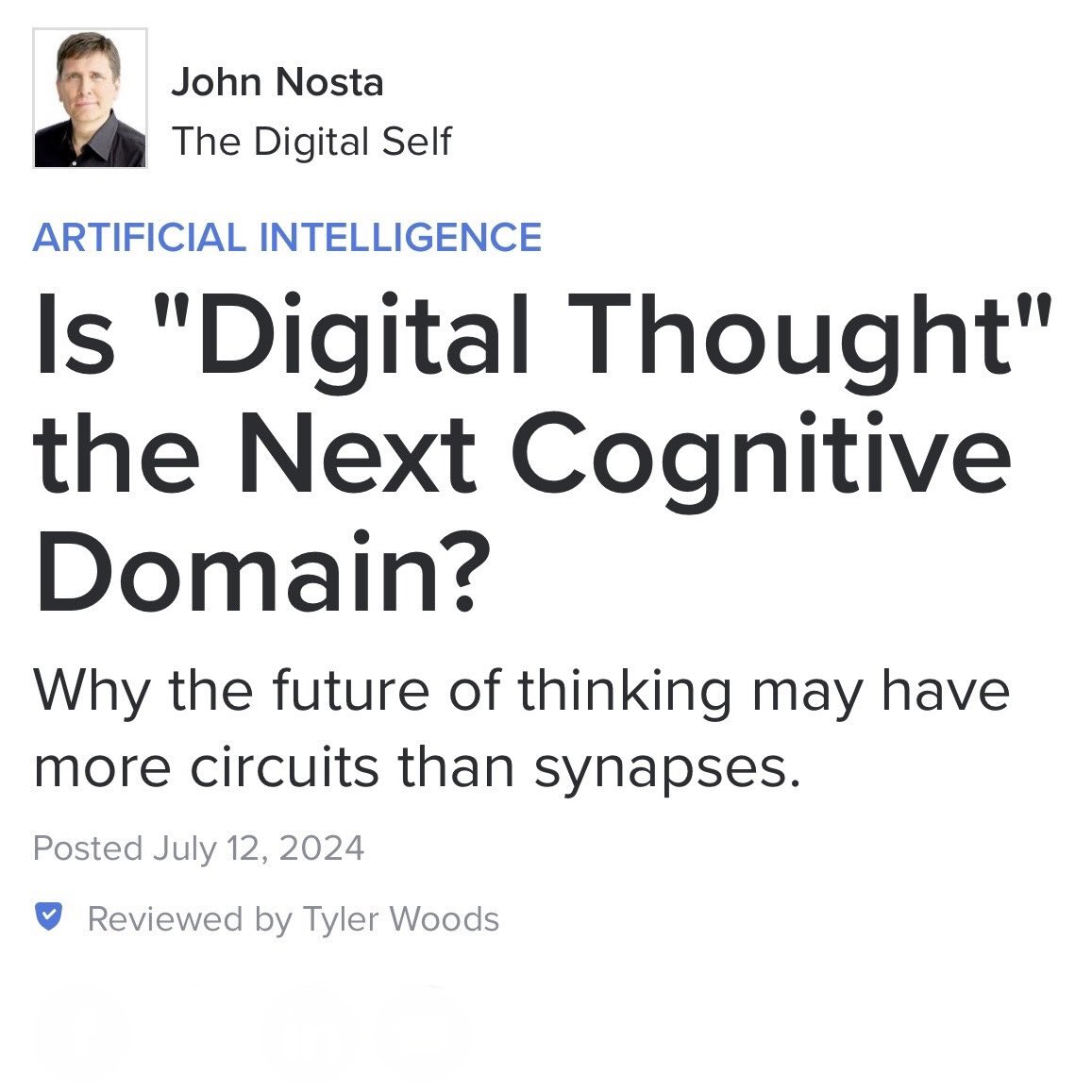
As #WaltWhitman intuited in his poem “I Sing the Body Electric,” #electrometrical measurements in the brain suggest natural #DigitalThinking. @JohnNosta brilliantly illustrates seamless integration of technology to further digitize our #CognitiveProcesses. psychologytoday.com/us/blog/…
4
6
545

23 Feb 2024
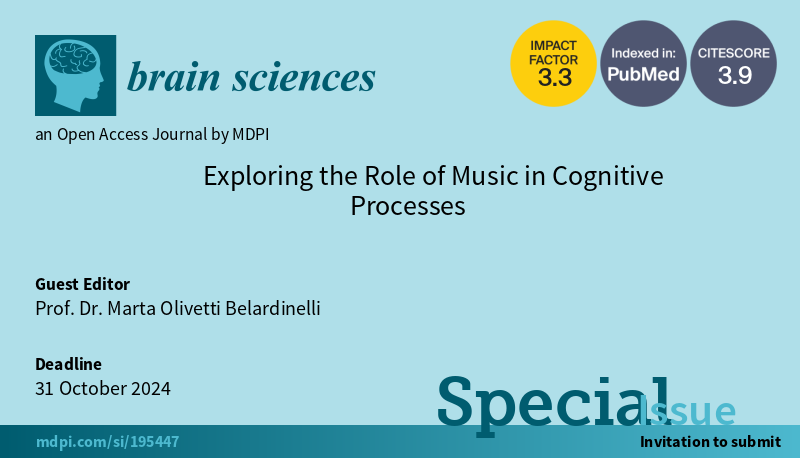
#mdpibrainsci New Special Issue Open for Submission! Exploring the Role of Music in Cognitive Processes edited by Prof. Dr. Marta Olivetti Belardinelli
mdpi.com/si/195447
@MDPIOpenAccess @MDPISociaLsci @Scilit_
#neuroscience #brain #music #CognitiveProcesses #cognition
79
9 Feb 2024
Hippocampus, Odors & DecisionMaking Mechanism
Specific brain cells, known as ‘#TimeCells,’ are stimulated by #Odors to facilitate rapid ‘go, no-go’ #DecisionMaking.
Link between #SensoryPerception & #CognitiveProcesses
neurosciencenews.com/odor-hi…
2
3
490

29 Jan 2024
Did you know? Colourful visuals in #books engage multiple #cognitiveprocesses, aiding memory retention through the Picture Superiority Effect. They not only capture attention and stimulate interest but also facilitate deeper understanding compared to black and white text alone.📚
1
30

9 Jan 2024
Carl Sagan, a visionary in astrophysics and science communication, made significant contributions that transcended traditional boundaries. His ability to explore complex ideas and engage diverse audiences showcased a unique blend of intuition and imagination. Drawing a parallel to the present, where advancements in contextual AI art may be challenging to substantiate with concrete evidence, Sagan's legacy serves as a reminder of the valuable role intuition plays in pushing the boundaries of knowledge.
Can be intuition AI context model working on the background of our neural processes?
While artificial intelligence models, such as contextual AI, lack true intuition akin to human cognitive processes, there is a parallel in their approach. These models operate by discerning patterns and relationships in vast datasets, akin to the way human intuition draws upon experience and context. However, it's crucial to note that this similarity is a functional analogy rather than an equivalence, as AI lacks the subjective awareness and consciousness associated with human intuition. #AI #CarlSagan #Intuition #ArtificialIntelligence #ContextualAI #NeuralProcesses #Intuition #CarlSagan #Astrophysics #ScienceCommunication #CognitiveProcesses #HumanVsAI #PatternRecognition
9 Jan 2024

Carl Sagan: "Imagination will often carry us to worlds that never were. But without it we go nowhere."

ALT Midjourney :Caucasian figure in a mundane setting like a room or park, surrounded by an explosion of imaginative elements. Fantastical landscapes, mythical creatures, and futuristic cities emanate from their head, contrasting with the realistic environment. Vivid colors, light beams, and symbols of creativity like paintbrushes intermingle, visualizing Carl Sagan's quote on the power of imagination to transcend reality --ar 3:2 --style raw --v 6.0

ALT DALL E 3

ALT Leonardo AI

ALT Adobe Firefly
2
66

23 Nov 2023
Come and do a PhD with me and @natasha_sigala at @BSMSClinNeuro @BSMSMedSchool
A very exciting project on #digitalinterventions #behaviouralchange & #cognitiveprocesses
Fully funded opportunity 👩👩👧✍️
Please retweet far & wide👇
tinyurl.com/ykthuh39
@SussexUni @uniofbrighton
5
10
2,224
23 Nov 2023
Highly Cited Paper in 2021!
"In Search of the Executive #CognitiveProcesses Proposed by Process-Overlap Theory" by Gidon Frischkorn (@UZH_en) and @cvonbastian (@sheffielduni) is available at doi.org/10.3390/jintelligenc…
#WorkingMemory #intelligence
1
3
360

22 Nov 2023
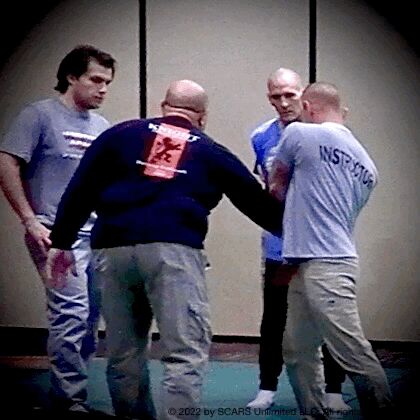
SCARS has dedicated extensive research towards understanding the mental processes involved to help you prepare for a true fight for your life.
Learn more: scars.com/start
#selfdefense #combat #cognitiveprocesses #safety #awareness #scarstraining #firearm #tactics
1
41