

شرپسند بلوچ یکجہتی کمیٹی دا مسنگ پرسنز ڈرامہ بے نقاب
#Balochistan #BalochYakjehtiCommittee #MissingPersons #SecurityConcerns #PakistanNews #BreakingNews #LawAndOrder #CounterNarrative #RegionalStability #CurrentAffairs #HumanRightsDebate #SouthAsia #NewsUpdate #PublicSafety
7

Jun 14
There's no conspiracy theory on my end. After the Access Hollywood tape dropped in October 2016, Trump supporters were desperate to find a counternarrative. When Wikileaks released the Podesta emails, you could see conservative media and /pol/ pouring through them for a weapon.
2
41

Jun 14
I know, and I agree, but like, I do feel the need to offer a counternarrative because oh man repression ain't fun
8
67

Jun 13
You're an idiot.
Vaccines are the narrative.
Ivermectim is the counternarrative.
Both are bad.
If it was good, you wouldn't know about it.
You're one those guys that thinks they're smart, but definitely a midwit at best.
Keep eating the propaganda. Retard.
1
Jun 12
Look it up. Longer term usage also devestates reproductive systems.
You've never wondered why it been pushed so hard?
Narrative and counternarrative, they control them both.
1
6

Jun 12
What about a counternarrative of “traditional” cultures supporting genre savviness more because things change less so you can follow the script more? Maybe you’re noticing genre savviness in the *modern* world because it sticks out like a sore thumb
1
25

Jun 11
Did you have the internet as a kid? How are you any different? How does this stop exposure at schools, without access to a counternarrative?
17

Jun 11
Their podcast w Tressie McMillan Cottom and David Wallace-Wells was excellent actually!
"They discussed the impact of Robert F. Kennedy Jr.’s tenure as secretary of health and human services and what a counternarrative to MAHA should look like."
Jun 10

🚨The MAHA Fever Dream🚨
'MAHA Is No Longer Useful to Trump'
NYT opinion podcast w Tressie McMillan Cottom & David Wallace-Wells at the Brooklyn Public Library.
youtube.com/watch?v=utFLwrzt…
1
1
202

Jun 10
can you also check if the US is currently offering any crude for sale from our SPR? If so, this would seem to be an interesting counternarrative
1
10

Jun 10
Nato does not "expand", nations beg to join because they are afraid of Russian Aggression. That is not expanding like the USSR "expanded". Nations did NOT have a choice to not join the USSR. You are reading the old KGB counternarrative distortion pamphlets exactly
1
13
61

Jun 9
Yes, since the 60's there's been a movement to denigrate American identity and the national foundation myth. An anti-American counternarrative now has hold of half the population, and we need to end that polarity by synthesizing them or extinguishing one.
1
6

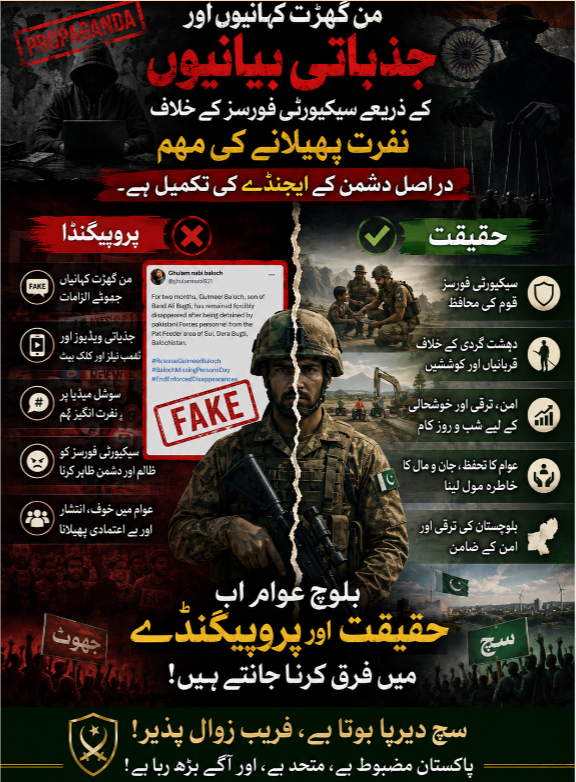
من گھڑت کہانیوں اور جذباتی بیانیوں کے ذریعے سیکیورٹی فورسز کے خلاف نفرت پھیلانے کی مہم دراصل دشمن کے ایجنڈے کی تکمیل ہے۔ بلوچ عوام اب حقیقت اور پروپیگنڈے میں فرق کرنا جانتے ہیں۔
#FactVsPropaganda
#CounterNarrative
#Balochistan
#Pakistan
41
124

Jun 7
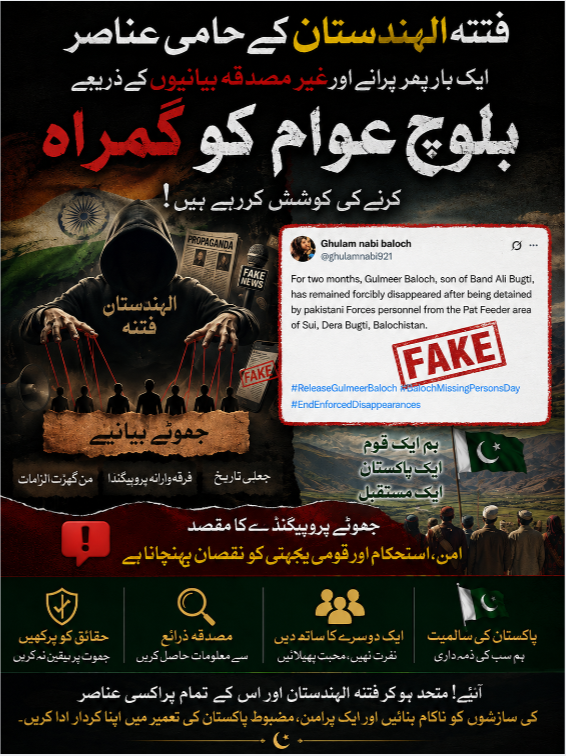
فتنہ الہندستان کے حامی عناصر ایک بار پھر پرانے اور غیر مصدقہ بیانیوں کے ذریعے بلوچ عوام کو گمراہ کرنے کی کوشش کر رہے ہیں۔ جھوٹے پروپیگنڈے کا مقصد امن، استحکام اور قومی یکجہتی کو نقصان پہنچانا ہے۔
#FactVsPropaganda
#CounterNarrative
#Balochistan
#Pakistan
41
105

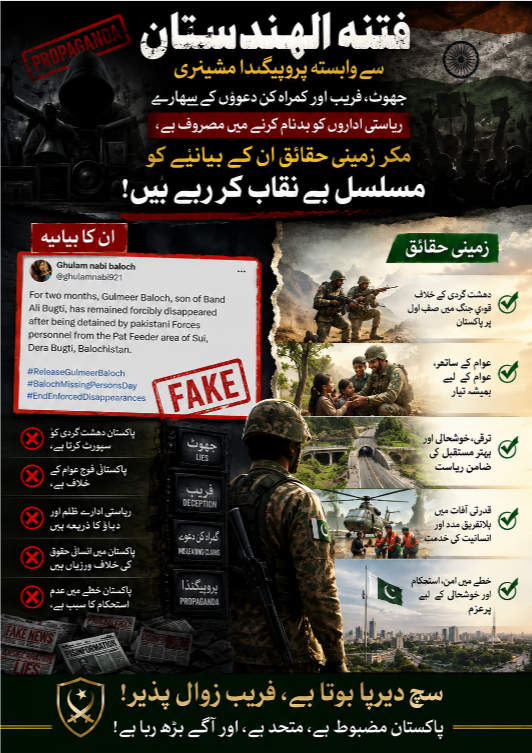
فتنہ الہندستان سے وابستہ پروپیگنڈا مشینری جھوٹ، فریب اور گمراہ کن دعوؤں کے سہارے ریاستی اداروں کو بدنام کرنے میں مصروف ہے، مگر زمینی حقائق ان کے بیانیے کو مسلسل بے نقاب کر رہے ہیں۔
#FactVsPropaganda
#CounterNarrative
#Balochistan
41
107

Jun 5
Part Four: The Outing & Exit
By early 2026, the daily volume of media coverage portraying the FDA under Prasad’s oversight as chaotic, arbitrary, and hostile to patients had become a significant institutional problem. Someone — the identity remains undisclosed — appears to have decided that the solution was to allow Prasad to speak to reporters off the record, specifically about the UniQure situation, in an effort to get the scientific counternarrative into the coverage.
The theory was that if reporters understood the actual science — why the external control comparison was invalid, why the placebo requirement existed, what UniQure’s own randomized data showed — they might write a more balanced story.
The theory was wrong.
Within twenty-four hours, Adam Feuerstein, writing for STAT News, published a piece about the FDA’s senior official handling the case that included details referencing that official’s prior career as a practicing hematologist-oncologist who missed his clinic, his teaching, his podcast, and speaking freely. Feuerstein did not print Prasad’s name. He didn’t need to. There was one senior FDA official with that background. Feuerstein then posted a link to the story on social media with a hint embedded in the framing: curious readers might find out who the official was.
This was not inadvertent. It was a choice. And it was, by any reasonable standard, a serious breach of journalistic ethics.
The foundational obligation when a source speaks on condition of anonymity is not simply “don’t print the name.” It is don’t publish information that makes the person identifiable. The SPJ Code of Ethics, the AP Stylebook, and every major newsroom’s published standards say this clearly. There is a reason for it: the protection exists so that officials can speak candidly without fear that the speaking itself becomes a weapon against them. Journalism ethics boards and courts have long recognized what is sometimes called functional identification — the principle that publishing details that uniquely identify someone constitutes unmasking them regardless of whether the name appears in the text.
Feuerstein can accurately say he never printed Prasad’s name. What he cannot say is that he didn’t know exactly what he was doing. The identifying details were selected and placed to make Prasad recognizable to anyone paying attention — which, in the biotechnology industry and the rare disease advocacy community, meant everyone who mattered.
The ethical path, if Feuerstein believed the source was improperly using an off-record briefing to advance a regulatory position — a defensible concern — was to go back to the source, tell him he intended to identify him, and give him the opportunity to go on record or decline. There is no evidence that happened. What happened instead was that the identifying details ran, the social media hint ran, and the story Prasad was trying to prevent became the story that ran in his place. That is not whistleblowing on an abusive official. That is punishing a source for giving you a framing you dislike.
This matters beyond the individual episode because it reveals something about the media environment Prasad was operating in. A significant fraction of the reporters covering the FDA and pharmaceutical industry have developed, over years of access journalism, a set of relationships and sympathies that align them more closely with the companies they cover than with the regulatory mission they are ostensibly evaluating. Many of them also harbor a deep institutional antipathy toward the Trump administration and view their coverage, at some level, as participation in a larger contest. A principled FDA official holding the line against companies with failed products is not the story they want to write. A chaotic rogue bureaucrat destroying a promising therapy is.
Prasad couldn’t survive the combination. The rare disease advocacy community is not small, and it is not politically passive. The pharmaceutical companies funding the stories are not without influence. And the media infrastructure covering the beat has little institutional incentive to examine the science carefully when the goal is to take scalps of the enemy.
On the same day the Feuerstein piece ran, FDA Commissioner Marty Makary announced that Prasad would be leaving the FDA at the end of April. Prasad did not respond to press requests. Makary framed the departure as the orderly conclusion of a planned one-year leave from his faculty position at UCSF — the kind of thing that was always going to happen, nothing to see here. Whether that is true, or whether it is the version of events a Commissioner tells the press when he needs the story to go away quietly, is a question the timing makes difficult to answer charitably.
He came to Washington trying to do the job a regulator is supposed to do. The machine he ran into had been built, over many years, precisely to prevent that.

2
5
37
4,254

Jun 4
“The poor, the rejected, the despised, the enslaved, … these abandoned persons, more or less exclusively, are the whole center of a proper Christian understanding of the past, and so of a proper Christian desire for the future. Though they have been deprived of their names, God has given them the name of Christ; though they have been forgotten, he has given them Christ’s story as their own. Where they are, he is present; and, in human history, he is most truly present nowhere else. And so the Christian narrative should be a constant and subversive counternarrative, a ceaseless interruption and riposte. … When it is told aright, God is there as well, among his people the poor; Christ is there, always risen and present, passing through the ages in the company of the forgotten and outcast.”
—David Bentley Hart, “The Story of the Nameless”
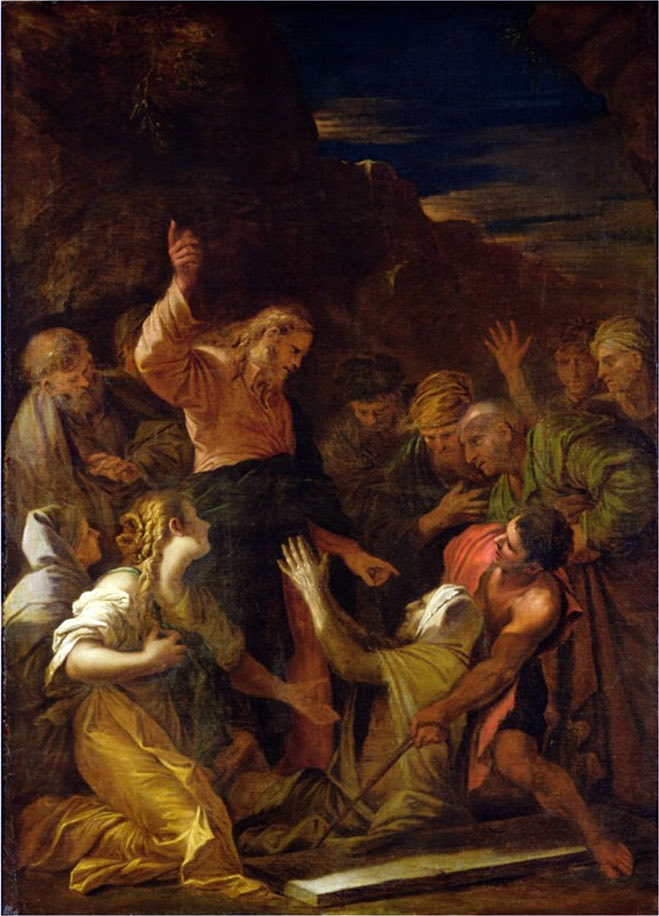
ALT Christ cleansing a leper by Jean-Marie Melchior Doze, 1864
6
27
659


These people are grifters, she's setting up a counternarrative to other right wing influencers right now for attention, and will shift gears and pretend to give a rational arguement for betraying Ukraine later.
3
109

There's a counternarrative among the left that blaming the murder of Henry Nowak on immigration is spurious because the Sikh are purported to be among the most assimilated, to which I would say that if the Sikhs were indeed assimilated, they wouldn't bear long knives.
1
20
1,929