
7 Jul 2025
1K submissives are not worth a Mistress's nail 👠🧎
If you love Femdom, you must believe in this crypto currency and donate something to make it born: once born, it will acquire value together with those in your Wallet
#CryptoProgramming #SolanaProjects #femdom #submission

2
1
4
165

16 Jun 2025
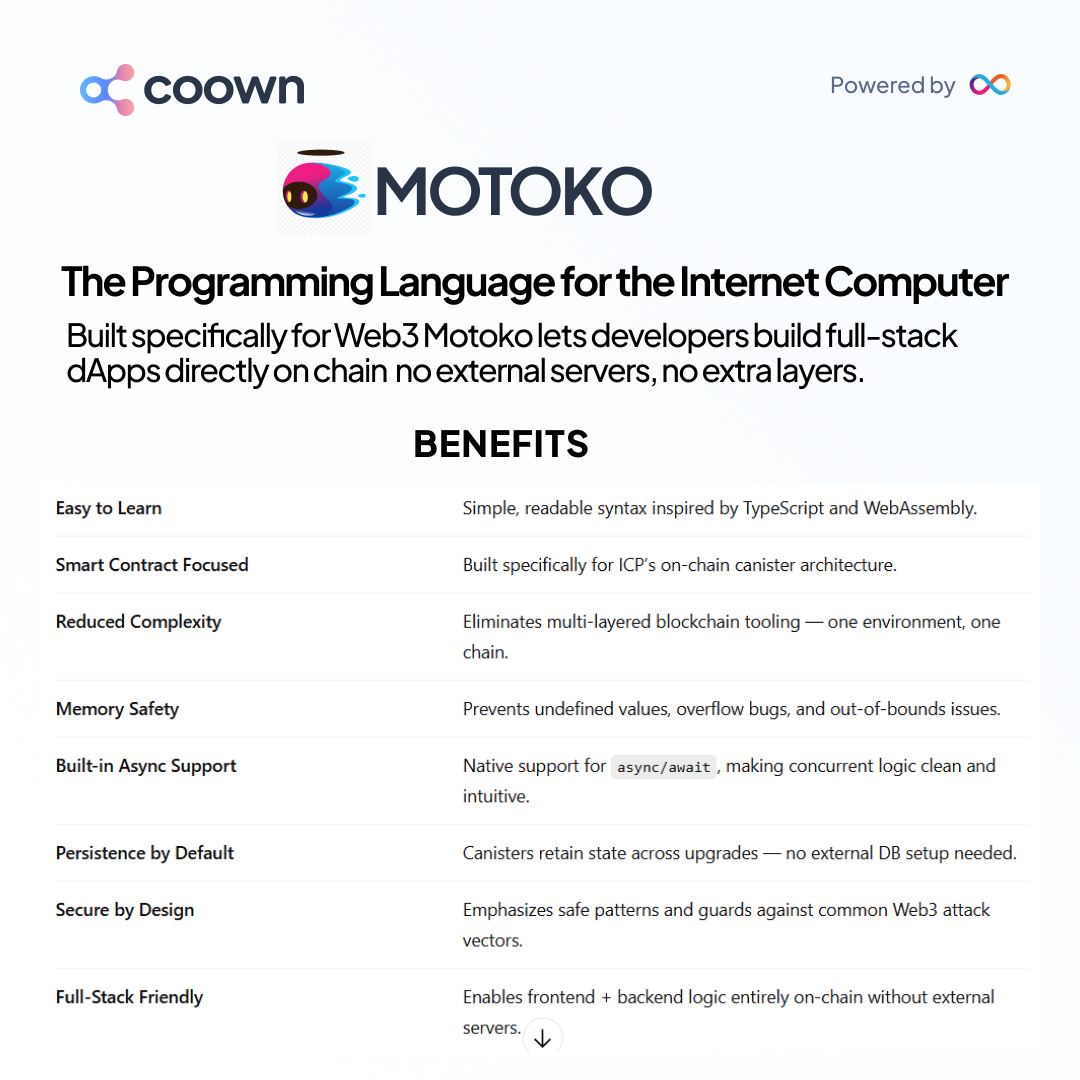
Why build with layers when you can do it all on-chain? Motoko is built for ICP full-stack smart contracts, no servers, no hassle.
If Web3 had a native language, this would be it.
#motoko #InternetComputer #ICPBlockchain #Web3Development #SmartContracts #OnChainApps #FullStackWeb3 #CryptoDev #WebAssembly #TypeScriptDev #ICPDev #SecureCoding #AsyncSupport #BlockchainTools #NoServersNeeded #NextGenWeb3 #DecentralizedApps #CryptoProgramming #DeveloperTools #COOWN
3
8
287
16 Jun 2025
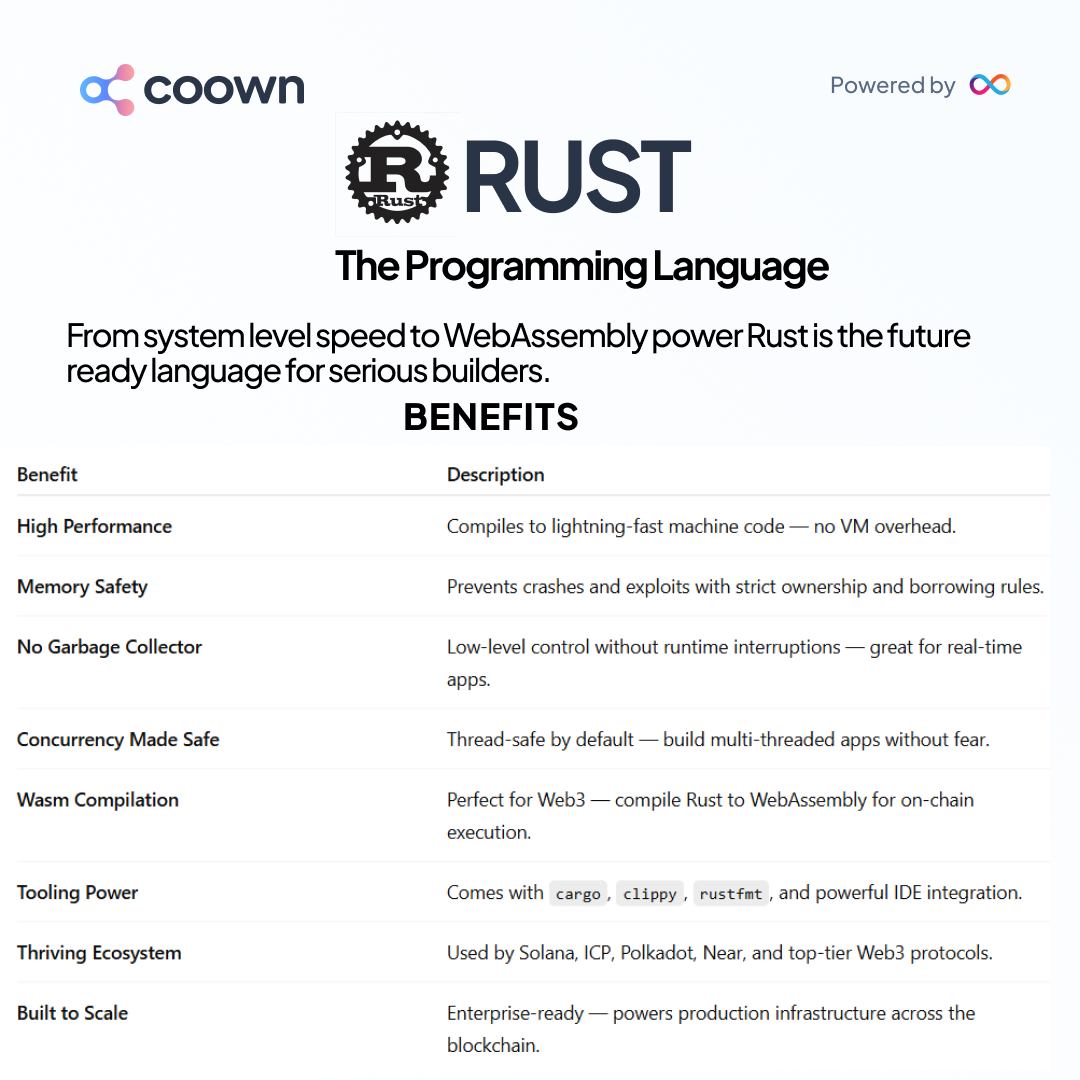
Rust is the language serious builders choose for Web3....Used by Solana ICP and PolkaDot
If you are building the future.. build it in Rust...
#rustlang #icp #bitcointrading #ᴇᴛʜᴇʀᴇᴜᴍ #cryptocurrencynews #web3dev #smartcontracts #blockchaindevelopment #cryptoprogramming #Wasm #RustForWeb3 #SolanaDev #PolkadotDev #HighPerformance #securecoding #coown #webassembly #CryptoBuilders #OpenSourceDev #NextGenBlockchain
4
94

10 Dec 2024
Glad to see $NEXA stepping up their game by hiring professional photographers and videographers to show strong social proof in the X space.
Wishing this blockchain nothing but success in the future! 🚀
I still remember when mining was trending, and $NEXA entered the scene. It became part of the buzz, but the community was unfortunately overshadowed by fudders, with constant comparisons to $RXD and $KAS.
While comparisons are inevitable to weigh the pros and cons, all these projects have their unique strengths. The problem wasn’t the projects but the toxic communities, which often distracted from the teams’ true motives.
Let’s take a moment to acknowledge how challenging it is to manage roles in blockchain projects. The dedication and hard work every member puts into completing their tasks deserve respect. Here's to hoping for a more united and supportive crypto space! 💎
#cryptodevs #bitcoin #blockchain #cryptocurrency #cryptoteam #BTCdeveloper #decentralized #cryptoengineer #altcoins #smartcontracts #Ethereum #blockchaintechnology #cryptoinnovation #BTCmining #cryptoprogramming #cryptoproject #NFT #blockchaincommunity #cryptoecosystem #DeFi #Web3 #fintech #cryptotrading #BTCnews #cryptoenthusiasts #cryptoengineers #cryptoentrepreneurs #SatoshiNakamoto #hodl #cryptoadoption #layer2 #cryptoupdates #cryptoanalytics #cryptoinsights


7
27
583

4 Aug 2023
🧵 Excited to talk about cryptocurrency programming! 💻🚀
1️⃣ Blockchain fundamentals: Cryptocurrencies are built on decentralized blockchain networks, ensuring transparency and security. #CryptoProgramming #Blockchain
2️⃣ Smart contracts: These self-executing contracts facilitate automatic transactions without intermediaries, enabling trustless interactions. #SmartContracts #Ethereum
3️⃣ Solidity: The go-to language for writing smart contracts on Ethereum. Its syntax resembles JavaScript, making it accessible to developers. #Solidity #Ethereum
4️⃣ Token standards: ERC-20 and ERC-721 are essential token standards for fungible and non-fungible tokens, revolutionizing digital asset ownership. #ERC20 #ERC721
5️⃣ Consensus mechanisms: Proof-of-Work (PoW) and Proof-of-Stake (PoS) are two prominent consensus algorithms, determining how transactions are verified. #PoW #PoS
6️⃣ Security challenges: Smart contracts are vulnerable to bugs and attacks. Best practices like input validation and code audits are critical for robustness. #Security #Crypto
7️⃣ Decentralized apps (DApps): Building DApps on blockchain platforms brings transparency and fairness to various industries. 🏗️ #DApps #DeFi
8️⃣ Interoperability: Cross-chain solutions aim to enhance compatibility between different blockchains, enabling seamless asset transfers. #Interoperability #Crypto
9️⃣ Oracle integration: Connecting smart contracts with external data sources enhances functionality and real-world use cases. #Oracles #Blockchain
🔟 Web3.js: A JavaScript library that empowers developers to interact with the Ethereum blockchain and build decentralized applications. #Web3js #Ethereum
🔗 Dive into the world of cryptocurrency programming and contribute to the decentralized future! 🌐💪 #Cryptocurrency #Programming #Decentralization
1
1
19

28 Jun 2023
Um problema com Solidity é que, uma vez que um contrato é implantado, ele é imutável e não pode ser alterado ou atualizado.
Se um erro for encontrado ou uma atualização for necessária, um novo contrato deve ser criado e todos os dados devem ser migrados, o que é um processo trabalhoso e propenso a erros. (só de pensar já passo raiva kkk )🤬
😇Cadence, por outro lado, permite atualizações de contrato.
🙏 Isso significa que se um erro for encontrado ou uma alteração for necessária, o contrato existente pode ser atualizado diretamente.
🕗Isso economiza tempo, reduz a complexidade e diminui a chance de erros durante a migração de dados.
Cadence resolve um problema significativo encontrado em Solidity, tornando o processo de atualização e correção de contratos inteligentes muito mais simples e seguro.
TMJ @jacobmtucker
#Solidity #Cadence #FlowBlockchain #SmartContracts #BlockchainDevelopment #Ethereum #DappDevelopment #DecentralizedApplications #BlockchainTechnology #CryptoProgramming #SolidityProgramming #CadenceProgramming #SmartContractUpdates #BlockchainMaintenance #CryptoMarketplace #BlockchainInnovation #SmartContractSecurity #DecentralizedMarketplace #BlockchainSolutions #CryptoInnovation
27 Jun 2023

To all the @solidity_lang devs out there:
What is something you’ve struggled to implement in #Solidity?
Or something you won’t implement because it’s too complex?
Maybe the most complex contract you’ve developed?
3
104

31 May 2023
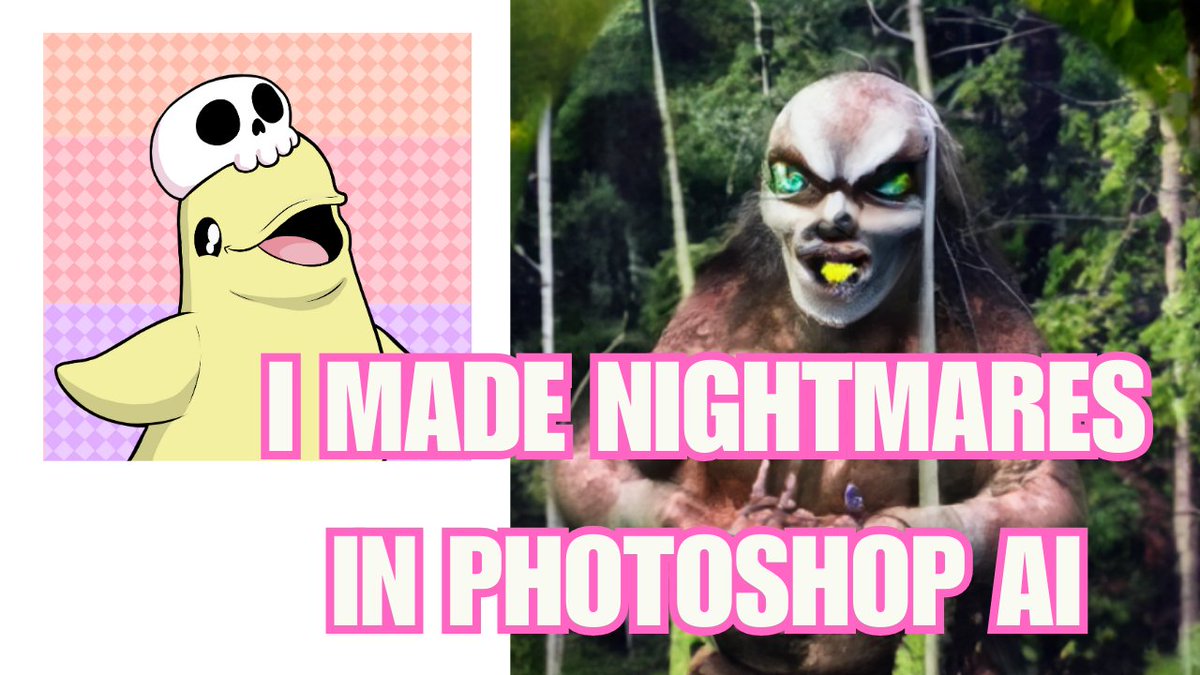
I set out to see how fast I could make a spooky scene with the new photoshop AI (beta)
youtu.be/9KnVC8rAC7I
#AI, #ArtificialIntelligence, #MachineLearning, #DeepLearning, #DataScience, #Web3, #Web3Development, #SmartContracts, #Decentralized, #Blockchain, #Ethereum, #Crypto, #DApps, #Solidity, #BlockchainDeveloper, #Web3Coding, #SmartContractDevelopment, #NFTs, #CryptoProgramming, #Web3Tech, #NotFinancialAdvice, #memecoins, #NFTs, #Polygon
2
3
229
30 May 2023
I played with AI in Photoshop so you don't have to.
Sorry about the pacing of this video. I was almost asleep.
youtu.be/QAJgczJ1qxI
#AI, #ArtificialIntelligence, #MachineLearning, #DeepLearning, #DataScience, #Web3, #Web3Development, #SmartContracts, #Decentralized, #Blockchain, #Ethereum, #Crypto, #DApps, #Solidity, #BlockchainDeveloper, #Web3Coding, #SmartContractDevelopment, #NFTs, #CryptoProgramming, #Web3Tech, #NotFinancialAdvice, #memecoins, #NFTs, #Polygon
1
1
189
30 May 2023
My twitter DMs are crazy. I look at them once a month so if you are trying to contact me in the DMs it might come across as me ignoring you. Don't take it personally. I ignore all DMs.
#AI, #ArtificialIntelligence, #MachineLearning, #DeepLearning, #DataScience, #Web3, #Web3Development, #SmartContracts, #Decentralized, #Blockchain, #Ethereum, #Crypto, #DApps, #Solidity, #BlockchainDeveloper, #Web3Coding, #SmartContractDevelopment, #NFTs, #CryptoProgramming, #Web3Tech, #NotFinancialAdvice, #memecoins, #NFTs, #Polygon
2
108
30 May 2023
Good morning, What are you building today?
#AI, #ArtificialIntelligence, #MachineLearning, #DeepLearning, #DataScience, #Web3, #Web3Development, #SmartContracts, #Decentralized, #Blockchain, #Ethereum, #Crypto, #DApps, #Solidity, #BlockchainDeveloper, #Web3Coding, #SmartContractDevelopment, #NFTs, #CryptoProgramming, #Web3Tech, #NotFinancialAdvice, #memecoins, #NFTs, #Polygon
2
3
154

6 May 2023
A week ago we released Carey Locker, our own token locker (careylocker.com) without any fee.
This week there is something huge coming up. More #Solidity DApps related to Carey Token, more utilities and more value to this token.
Good swings are about to arrive! 🚀
#Solidity #SmartContracts #Ethereum #BlockchainDevelopment #DAppDevelopment #CryptoProgramming #DecentralizedApplications #Web3 #SolidityProgramming #CryptoDevelopment #MemeCoins #Dogecoin #ShibaInu #Safemoon #BabyDogecoin #HogeFinance #ElonMuskEffect #MoonshotMonday #MemeCoinMania #CryptoMemes
2
3
5
156

29 Dec 2017
EOS Contract Programming - Programmer explains
#cryptoprogramming #cryptocurrency #bitcoinfutures #Programming #EOS #dapp #Decentralization
youtu.be/dUrecTYs_nI
1
4