
You forget to mention the cost increase to diversify.

I do believe that trade diversification is good for all Canadians!

2m
Saylor is the ultimate top buyer for Bitcoin. His greed is so blinding that he will topple like the Hunt brothers.
His only saving grace now is to diversify into Litecoin.
15

They are their own genres that deserve to be recognized. This is to help diversify the Grammys. Hopefully this will bring more people to listen to their music
56

We need to diversify our Economy. Harper was PM when I was invoking NAFTA on many of our Procurements and our ally was stable. My staff and I were buying Military Equipment for Afghanistan. We did the work along with thousands of other Procurement Officers.
3

I have been reliably informed on X that if you diversify oil exports from the USA you are a chicom puppet
5

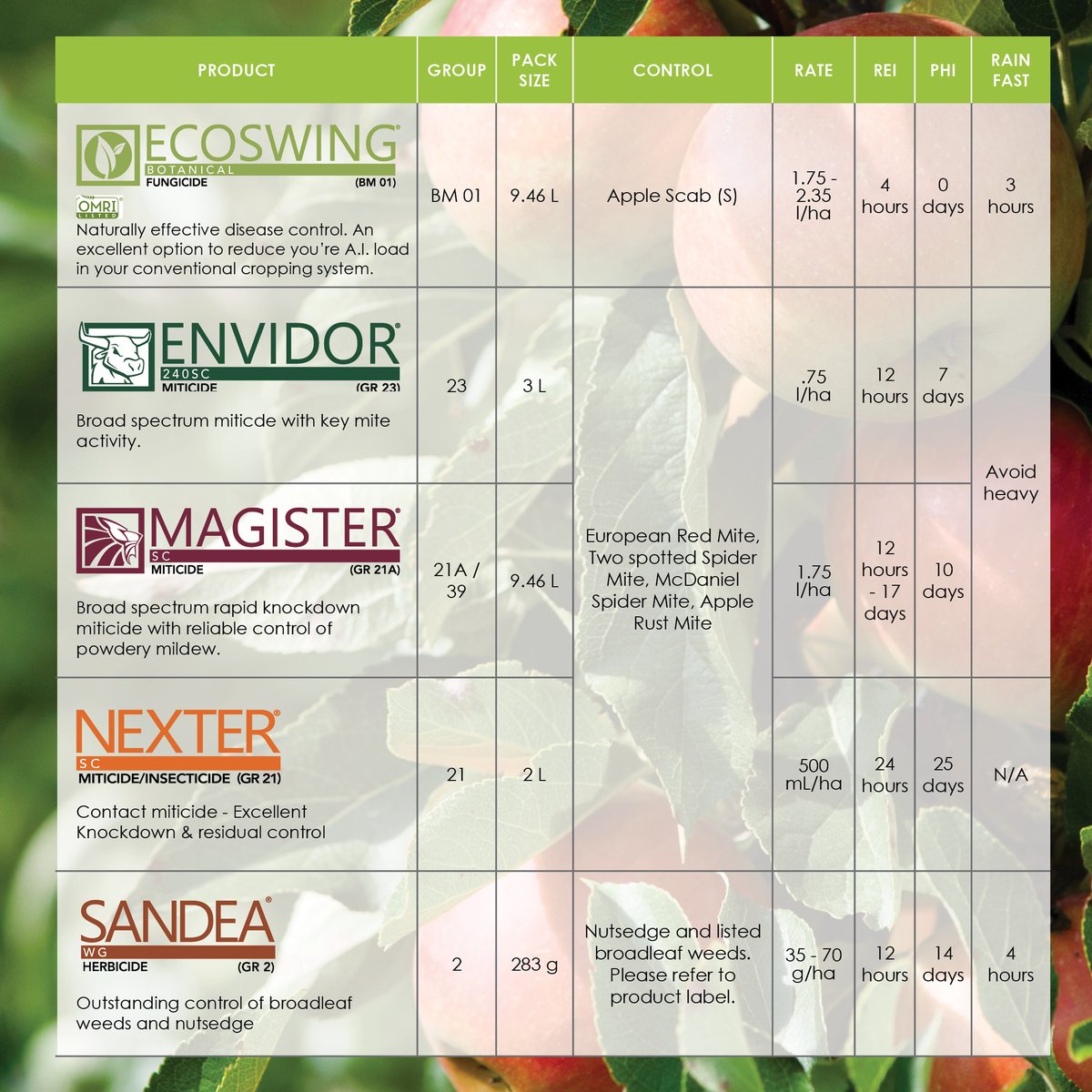
Looking for another tool in your apple scab program?
EcoSwing® Botanical Fungicide offers a unique BM 01 mode of action that can help diversify fungicide programs while supporting effective resistance management.
With:
🍏 Three modes of action from one active ingredient
🍏 Organic certification
🍏 Flexible fit in seasonal spray programs
🍏 Reduced synthetic chemical load
EcoSwing is an important addition to modern apple disease management programs.
Talk to your Gowan representative about where EcoSwing fits in your orchard this season.


2

Most portfolios are still in USD, adding EUR real world yield onchain would actually be a good way to diversify
21

We cannot diversify our power generation plants because there are many personal interests from political leaders they want to monopolise everything
6

13m
Relying on just one platform for income?
That’s a gamble.
Learn how to diversify your social media revenue and build a more stable business. 👇
lttr.ai/AsN8O
via @bloggingwizard
#SocialMedia #ContentCreators #Marketing
1


Supply security over cost: Google leads CSP charge to diversify InP substrate sourcing
China has recently eased controls on some indium phosphide (InP) substrates, relieving a bottleneck in optical communications capacity for the second half of the year. But supply chain players say the long-term priority is still to expand substrate capacity from non-China sources, with supply security for the AI industry outweighing price.
Representatives from Google and other cloud service providers (CSPs) have personally visited overseas substrate makers to signal that demand for their products is real and substantial.
Given the technological rivalry between the US and China, Beijing began imposing export controls on InP substrates in February 2025, a move the industry has viewed as retaliation for US restrictions on advanced chip exports.
Shortage hampers high-speed transmission
As AI infrastructure drives greater demand for high-speed transmission, the shortage of compound semiconductor substrates caused by China's export controls has become a major bottleneck for the optical communications industry.
Sources familiar with the compound semiconductor supply chain say the InP substrate market has long been dominated by AXT, Japan's Sumitomo, and JX Advanced Metals. AXT and Sumitomo each hold about 40% of the market, together controlling roughly 80% of global InP substrate capacity.
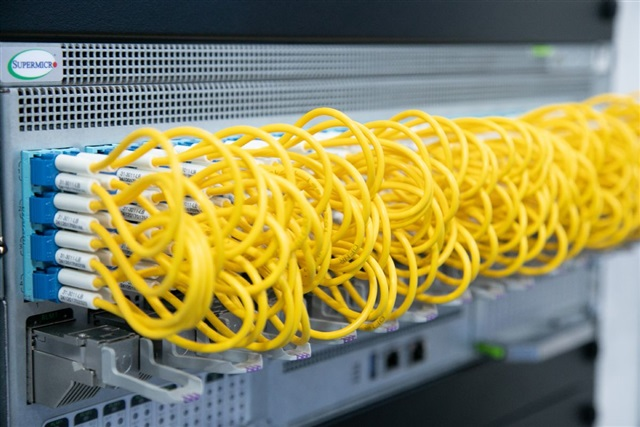
Recently, the industry has raised concerns that the shipment schedule for co-packaged optics (CPO) could be delayed. Meanwhile, industry insiders say that CSPs have already raised their inter-rack transmission requirements from 400G to 800G. Even though in-rack compute nodes still rely mainly on copper wiring for now, CPO scale-out will become the mainstream trend, pushing optical communications demand to peak in 2027 and 2028.
The search for non-China substrates
There has been some good news on China's InP substrate export controls. After a batch of substrates was released in August 2025, the first 2026 batch of InP substrates began shipping at the end of May, which could support second-half operations for Taiwan-based compound semiconductor suppliers including Visual Photonics Epitaxy (VPEC) and Global Communication Semiconductors (GCS).
But industry sources stressed that supply chain security is currently a top concern, one that even overtakes price considerations. Even if China temporarily loosens its substrate export controls and optical communications shipments remain stable in the second half of the year, companies still need to aggressively expand their sources from Europe and Japan over the longer term.
Sources said that non-China supply must eventually exceed 50% of total substrate sourcing to ensure supply chain stability.
However, under China's export controls, large substrate inventories have accumulated inside the country, and domestic makers such as Yunnan Germanium are aggressively expanding capacity, triggering price competition among local substrate suppliers. Overseas makers are also worried that if China fully opens exports in the future, low-priced InP substrates will flood other markets, discouraging local producers from expanding production.
German manufacturer Freiberg Compound Materials originally specialized in gallium arsenide (GaAs) substrates and currently ships only small volumes of InP substrates, with yields still needing improvement. Japanese suppliers have also been relatively conservative about expanding production.
Substrate makers need more certainty before committing to capacity expansion. To that end, Google and other CSP giants have been visiting suppliers in person to make one thing clear: demand for their products is genuinely substantial.
16
20
210
33,128

Great to see efforts to diversify trekking and tourist destinations - this is a must for Nepal @nepaltourismb
5

Canada's PM Mark Carney said overreliance on a single partner for AI access creates systemic risk. "Nobody has done anything wrong. But we will have if we don't take the lesson and build out and diversify." EU members and Canadian officials now cite tech sovereignty as urgent.
1

Zanzibar plans a $560m free port in Mangapwani to become an East African trade hub. The project features logistics and cargo facilities, aiming to diversify the economy and compete with regional hubs.
Source @Splash_247
splash247.com/zanzibar-plans…
1

You haven’t shown anything.
You’re using useless metrics like GDP contribution vs population, which mean nothing.
You’re comparing a one trick pony economy to nations like NZ, who have a very diversify economy.
What happens when oil is not firing? What will dry the economy?
1
6

1. Set clear financial goals.
2. Diversify your portfolio.
3. Research before investing.
4. Keep emotions in check.
5. Monitor and adjust regularly.
6. Utilize tax-advantaged accounts.
7. Stay informed on market trends.
4

The Iran war has exposed major risks for Southeast Asia (SEA) that could cost the region billions of dollars, if it doesn’t diversify sources of energy more quickly, according to International Energy Agency Report. apnews.com/article/asia-ener…
12

I mean he’s a finance guy. The urge to diversify his holdings is probably overwhelming.
38
