
📣 New Podcast! "Solved: How Modern Science and DNA Forensic Archaeology Explain History’s Greatest Mysteries" on @Spreaker #ancientengineering #ancienthistory #archaeology #digitalimaging #dnaanalysis spreaker.com/episode/solved-…

2

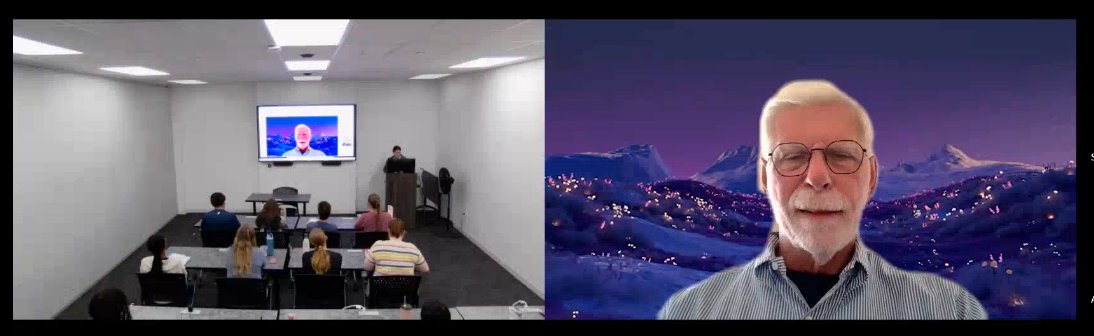
Honored to welcome Mark Stolorow, retired Deputy Director at NIST, who spoke with our summer interns about the evolution of DNA analysis—from PCR to STR sequencing.
Thank you, Mark, for inspiring the next generation! #ForensicScience #DNAAnalysis #InternshipProgram
1
34

Jun 9
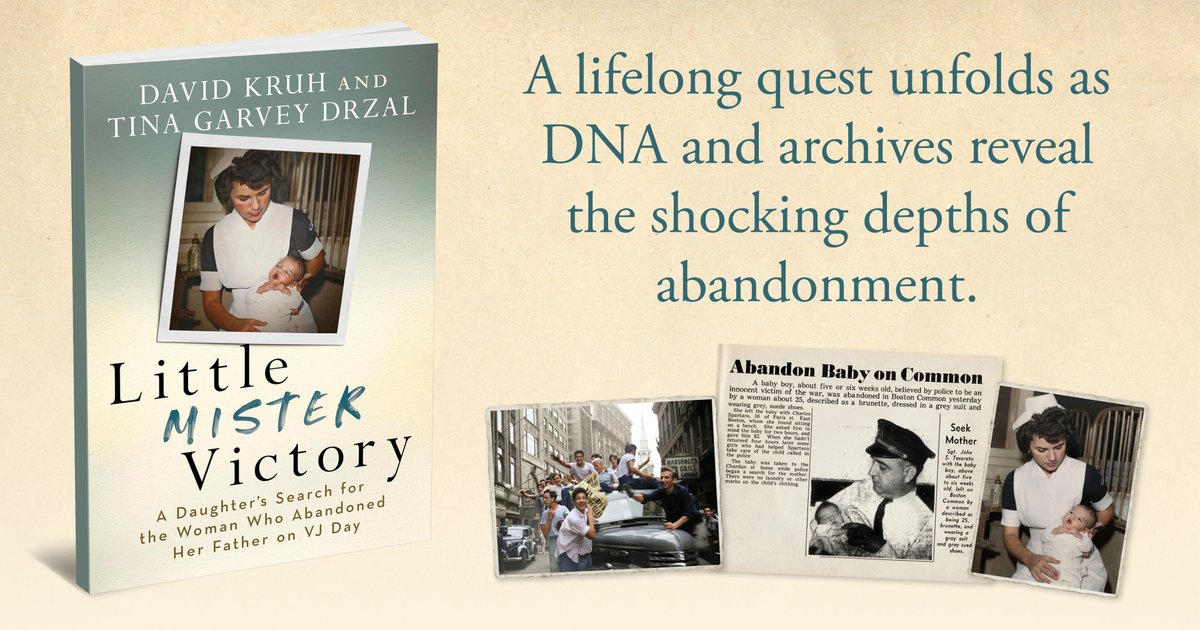
A true story of a lifelong quest to find the woman who abandoned her son on V-J Day. Using cutting-edge DNA analysis, newspaper archives, and government documents, she was found, along with a surprise.
💻️: tinyurl.com/5x85uhpm
#DNAanalysis #mystery #truestory
1

May 19
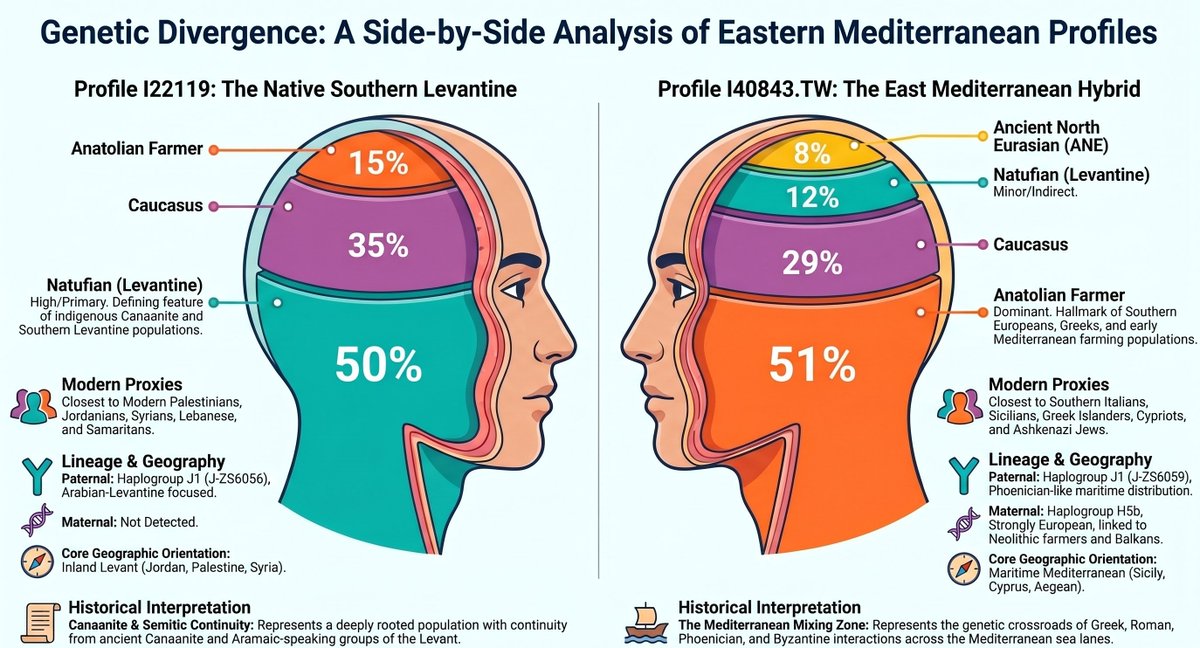
Levantine Continuity vs. Mediterranean Hybridity: Analysing the Genetic Signatures of I22119 and I40843.TW
🧬 I22119
I22119 represents a classic native Southern Levantine genetic profile. His DNA is closest to modern Palestinians, Jordanians, Syrians, and Lebanese, with very high Natufian ancestry — the main ancient component associated with the Levant. His paternal lineage (J1) also points strongly toward the Southern Levant and Arabian Peninsula, matching populations historically linked to Semitic-speaking peoples. Overall, this profile reflects deep continuity with ancient Levantine populations such as the Canaanites and other indigenous peoples of the region.
🧬 I40843.TW
I40843.TW represents a more mixed East Mediterranean profile centred around Southern Italy, Sicily, the Greek Islands, and Cyprus. Unlike I22119, this individual has much higher Anatolian farmer ancestry and additional Western European influence, while still retaining a noticeable Levantine and Caucasus component. His paternal lineage is also Levantine-derived (J1), possibly linked to Phoenician or broader Near Eastern migrations, but his maternal lineage is distinctly European. Overall, this profile reflects the historical blending of Southern European, Aegean, Anatolian, and Levantine populations across the Mediterranean world.
#Genetics #AncientDNA #Levantine #SouthernLevant #MiddleEast #PalestinianDNA #Jordanian #Lebanese #Syrian #Natufian #Canaanite #J1 #Archaeogenetics #PopulationGenetics #Mediterranean #Phoenician #Anatolian #Caucasus #AncientOrigins #DNAAnalysis
2
4
1,709

Apr 28
ডিএনএ বিশ্লেষণে নতুন তথ্য!
#DNA #DNAAnalysis #humanspecies #ScienceNews
anandabazar.com/science/dna-…

1
2
184
Apr 27
🔬🧬🗒️ Genetic Profile of Individual I47249.TW
1. Modern Population Affinities (Autosomal DNA)
Individual I47249.TW displays a genetic profile most closely aligned with southeastern and eastern Europe, particularly within the Balkan region.
Closest Modern Populations:
Distance-based models place this individual nearest to Moldovans, Hungarians, and several Serbian regional groups, with additional proximity to Romanians, Croatians, and Bosniaks. These results indicate genetic similarity to present-day populations, not direct or recent ancestry from those exact groups.
Broad Ethnicity Estimates:
The profile is dominated by an East European-like component, alongside smaller Mediterranean and West Asian-related signals. These categories are model-dependent and reflect overlap between regional gene pools rather than discrete ancestral origins.
Detailed Modeling:
More complex breakdowns distribute the genome across multiple southeastern European, eastern European, Mediterranean, and minor West Asian-related proxies. These should be interpreted as statistical fits, not literal ancestral fractions.
2. Deep / Ancient Ancestry (Autosomal DNA)
At a deeper timescale, this individual fits well within the standard West Eurasian genetic framework.
Major Ancestral Components:
The genome can be modeled as a mixture of:
Anatolia-related ancestry (linked to early farming populations)
Western hunter-gatherers (WHG)
Caucasus hunter-gatherers (CHG)
Ancient North Eurasians (ANE)
Minor Levant-related (Natufian-like) input
Important Clarification:
Anatolian Hunter-Gatherer–related signals should not be directly equated with Early European Farmers, although they are distantly related. These categories represent overlapping but distinct deep ancestry layers.
Summary:
This is a standard West Eurasian ancestry profile shaped by Neolithic farming expansions and later Bronze Age steppe-related admixture, which collectively formed the genetic structure of modern Europeans.
3. Uniparental Markers (Direct Lineages)
Paternal Line (Y-DNA): J-FTA19070
Classification:
A downstream branch within haplogroup J, likely part of the J1 lineage depending on its phylogenetic placement.
Interpretation:
Haplogroup J1 has deep roots in regions such as the Caucasus, northern Mesopotamia, and surrounding West Asia. However, this does not demonstrate a specific migration (e.g., Phoenician or Ottoman) into the Balkans.
Caution on “Ancient Connections”:
Database associations with historical groups are speculative and should not be treated as evidence of direct descent.
Maternal Line (mtDNA): H24a1
Classification:
A rare subclade of haplogroup H, the most common maternal lineage in Europe.
Origin & Age:
Also dates to the Metal Ages based on phylogenetic estimates.
Overall Synthesis
Individual I47249.TW is genetically consistent with a southeastern European (Balkan) profile based on autosomal DNA. His ancestry reflects the typical West Eurasian mixture formed by early farmers, indigenous hunter-gatherers, Caucasus-related populations, and steppe-associated groups.
His paternal lineage (J-FTA19070) traces back to a broader West Asian genetic background, while his maternal lineage (H24a1) belongs to a widespread European haplogroup. Neither lineage, on its own, can be used to assign a specific historical identity or migration.
The most robust conclusion is that this individual fits within the genetic continuum of southeastern Europe, with deeper ancestral roots shared widely across West Eurasian populations rather than tied to a single named group.
#AncientDNA #PopulationGenetics #BalkanDNA #EuropeanAncestry #Archaeogenetics #YDNA #mtDNA #WestEurasia #HumanOrigins #Genetics #DNAAnalysis
2
7
1,667

ਕਿਸੇ ਵੀ ਵਿਅਕਤੀ ਦੇ ਪਿਤਾ ਹੋਣ ਦੀ ਪੁਸ਼ਟੀ ਕਰਨ ਲਈ ਵਿਗਿਆਨੀ ਮਾਈਕ੍ਰੋਸੈਟੇਲਾਈਟ ਮਾਰਕਰਜ਼ ਨਾਮ ਦੀ ਤਕਨਾਲੋਜੀ ਵਰਤਦੇ ਹਨ। ਇਸ ਤਕਨੀਕ ਨਾਲ ਕਿਵੇਂ ਬੱਚੇ ਦੇ ਅਸਲ ਪਿਤਾ ਦੀ ਜਾਣਕਾਰੀ ਹਾਸਲ ਕੀਤੀ ਜਾ ਸਕਦੀ ਹੈ? ਪੂਰੀ ਖ਼ਬਰ: bbc.in/4t5HkQ8
#Genetics #DNAAnalysis #PaternityTest
264
Apr 19
🔬🧬🗒️
This individual (I27843.AG) has a genetic profile strongly rooted in the Eastern Mediterranean and Near East. #Akbari 2026
🧬 Deep ancestry:
His oldest ancestry comes entirely from West Eurasia. He closely resembles early populations from the Caucasus region, which were major contributors to later Near Eastern, North African, and European populations.
When broken down into ancient hunter-gatherer components, his DNA is mostly made up of:
Levantine-related ancestry (Natufian): ~40%
Anatolian ancestry (early farmers from Turkey): ~32%
Caucasus ancestry: ~27%
A very small trace of northern Eurasian ancestry (~1%)
This combination is typical of ancient populations from the Levant and surrounding regions, forming the genetic base of many modern Middle Eastern groups.
Modern genetic similarity:
He is closest to present-day populations from the Levant and nearby regions, especially:
Palestinian Christians
Lebanese Christians
Jordanian Christians
North African Jewish groups (like Tunisian and Libyan Jews)
Overall, his genetic profile sits between the #Levant, #Egypt, and the wider Mediterranean, with some southern European-like signals. These Mediterranean signals are not direct European ancestry, but reflect shared ancestry from early farming populations that spread across the region.
🧬 Paternal lineage (Y-DNA: L-L595):
Originates around 3600 BCE
Linked to populations from the Caucasus, Iran, and the Aegean
Today, it appears most often in parts of southern Europe, especially Italy and Sardinia
This supports his connection to ancient West Asian and Mediterranean movements.
🧬 Maternal lineage (mtDNA: K1a4):
Originates around 8500 BCE
A classic lineage of early Near Eastern farmers
Spread widely into Europe during the Neolithic period
It’s a deeply rooted lineage found across both Europe and the Near East.
🔬🧬🗒️ Overall picture:
This individual would have resembled a typical Eastern Mediterranean / Levantine person, with strong ties to ancient populations of the Levant, Anatolia, and the Caucasus. His ancestry reflects the same genetic foundation seen in many modern Middle Eastern groups, especially those from the Levant.
#AncientDNA #Levantine #Genetics #HumanOrigins #MiddleEast #Archaeogenetics #Neolithic #Caucasus #Anatolia #Natufian #PopulationGenetics #AncientHistory #Mediterranean #DNAAnalysis
1
1
4
384
Apr 18
I5410.AG.TW.BY
#Akbari et al., 2026
This male individual has a genetic profile strongly centered in Northeastern Europe, especially the Baltic region (Lithuania and Latvia). His DNA shows very high levels of ancient European hunter-gatherer ancestry, which is a defining feature of people from this area today.
Paternal Line (Father’s side): R-L761
His Y-DNA belongs to R-L761, an old branch of the R1b lineage.
R1b is very common across Western Europe today, but this specific branch is more ancient and existed before the large Bronze Age expansions. It likely traces back to early European populations from the Stone Age and later spread across different parts of Europe, including both western and eastern regions.
Maternal Line (Mother’s side): K1
His mtDNA belongs to haplogroup K1.
This lineage is linked to early farming populations that moved into Europe from the Near East during the Neolithic period. Today, it is widespread across Europe, including the Baltic region.
Ancient Ancestry (Deep Genetic Makeup)
His DNA is dominated by:
Western Hunter-Gatherer ancestry (very high): This is one of the highest levels seen in modern populations and is typical for people from the Baltic region.
Early Farmer ancestry (moderate): From populations that migrated into Europe during the Neolithic.
Ancient North Eurasian ancestry (low): A deep ancestral component connected to ancient Siberian populations, now present in Europeans through later mixing.
Overall, this combination is characteristic of Northern and Northeastern Europeans, especially Baltic populations, who preserved more hunter-gatherer ancestry than most other Europeans.
Modern Population Fit
Genetically, he is closest to:
#Lithuanians and #Latvians (strongest match)
Other Northeastern Europeans (Russians, Ukrainians)
Small signals linked to Western or Southern Europe are not signs of recent ancestry but reflect deeper shared ancient components.
Minor traces linked to Siberian or Native American groups are also not recent—they come from very old shared ancestry and are often overestimated by models.
🔬🧬🗒️ Conclusion
This individual is best described as Baltic / Northeastern European.
His genetic profile reflects a population that retained a strong connection to ancient European hunter-gatherers, later mixed with early farmers and small amounts of steppe-related ancestry. Both his paternal and maternal lineages are consistent with long-term European ancestry rooted in prehistoric migrations.
#Genetics #AncientDNA #Baltic #Lithuania #Latvia #PopulationGenetics #HumanOrigins #WHG #Neolithic #BronzeAge #DNAAnalysis #Ancestry #YDNA #mtDNA #Anthropology
1
2
11
2,758

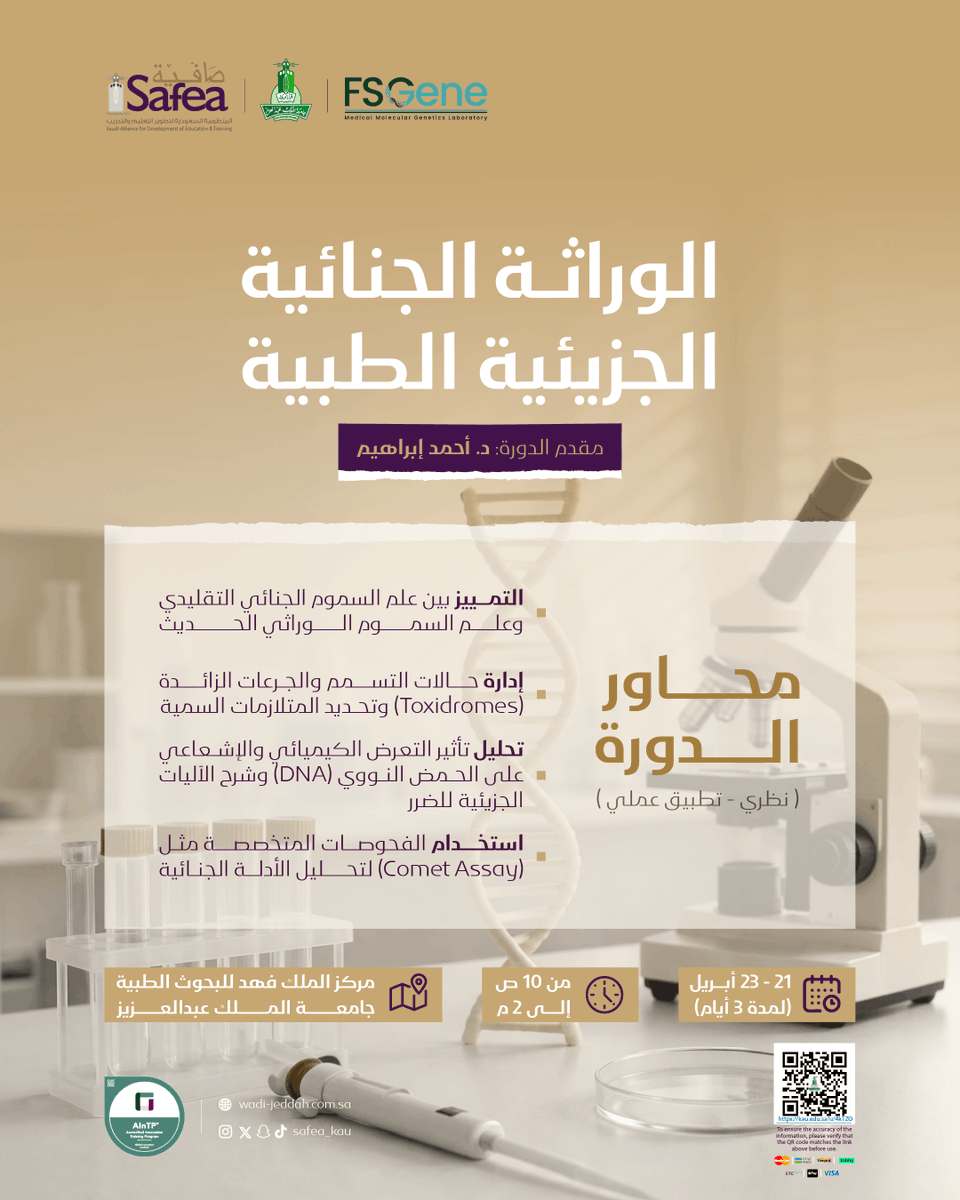
الوراثة الجنائية الجزيئية - (Medical Molecular Forensic Genetics)
هل تهتم بعلم الأدلة الجنائية وتحليل الـ DNA؟ 🧬
انضم إلى برنامج
الوراثة الجنائية الجزيئية (نظري عملي)
التاريخ: 21 – 23 أبريل
الوقت: 10 ص – 2 م
المكان: مركز الملك فهد للبحوث الطبية
للتسجيل: kau.edu.sa/u/4k1ZO
رسوم الدورة: 339 ريال
🎓 شهادة حضور صادرة من SAFEA
البرنامج معتمد من GINI
الحصول على اعتماد GINI متاح (اختياري) برسوم إضافية
#safea_kau #وادي_جدة #DNAAnalysis #ForensicGenetics #GINI #الأدلة_الجنائية #جامعة_الملك_عبدالعزيز
12
76
10,412
Apr 9
🔬🧬 Individual I10507.AG shows a clear West/Central Asian genetic profile rooted in the Caucasus and Iranian Plateau. #Akbari 2026
His deepest ancestry is a mix of two major ancient layers: a dominant West Eurasian component linked to early Caucasus populations, and a significant Ancient North Eurasian element from Siberia. This combination forms a core genetic base still visible today in populations across Iran, the Caucasus, and Central Asia.
At the Mesolithic level, his ancestry is strongly defined by high Caucasus Hunter-Gatherer (CHG) input, alongside notable Ancient North Eurasian (ANE) ancestry. He also carries moderate influences from early Near Eastern groups related to Natufians and Anatolian hunter-gatherers. This specific balance—high CHG and ANE with smaller southern inputs—is most typical of people from the Iranian Plateau and nearby mountainous regions.
In terms of modern genetic similarity, he aligns most closely with Eastern Iranian and Central Asian Iranic populations such as Tajiks and Yaghnobis, as well as North Caucasus groups from regions like Dagestan. This indicates a genetic profile that sits at the intersection of Iranic and Caucasian populations. Minor traces of Arabian, North African, and European ancestry appear at very low levels, likely reflecting distant admixture rather than recent origins.
🧬 His paternal lineage (J-S2667) belongs to the broader J2 haplogroup, which is associated with the spread of early farming and metallurgy from the Near East. This lineage links him to ancient populations of Anatolia and the Caucasus, including groups connected to early complex societies in the region.
🧬 His maternal lineage (HV1a) is much older, tracing back to the late Stone Age and widely distributed across West Eurasia. It is especially associated with ancient populations of the Near East and the South Caucasus.
🔬🗒️🧬 Overall, this individual represents a classic genetic profile of the Caucasus–Iranian corridor: deeply rooted in ancient West Eurasian ancestry, shaped by both northern Eurasian and southern Near Eastern influences, and closely related to modern Iranic and North Caucasian populations.
#Genetics #AncientDNA #WestEurasia #Caucasus #IranianPlateau #CentralAsia #PopulationGenetics #Anthropology #HumanOrigins #DNAAnalysis
2
6
767
Apr 7
🧬 Genetic Profile Summary — I22431.AG.TW
1. Biological Identity
Sex: Male
Y-DNA (Paternal Line): J-Z640
→ A branch of J1 linked to Levantine and Near Eastern populations, especially groups like Samaritans, Druze, and some Jewish communities.
→ Indicates a deep-rooted origin in the Levant, despite modern spread into Arabia.
mtDNA (Maternal Line): H13a2b3
→ A West Eurasian maternal lineage connected to the Caucasus and Near East
→ Dates back to ~6100 BCE
→ Widely distributed, not tied to one specific historical culture
2. Deep Ancestry (Prehistoric Layers)
Upper Paleolithic:
→ 100% Ancient West Eurasian, strongly linked to a Caucasus-related ancestral source
Hunter-Gatherer Composition:
~53.7% Natufian (Levantine)
~32.6% Caucasus-related
~13.5% Anatolian
Early Farmer Ancestry:
38.0% Levantine (Natufian-derived)
33.6% Anatolian Farmer
21.8% Zagros (Iran-related Farmer)
6.6% Caucasus
➡️ Overall pattern:
A classic Early Bronze Age Levantine genetic structure, combining local Levantine ancestry with Anatolian and Zagros farming inputs.
3. Ancient Population Affinity
This individual shows extremely strong similarity to ancient populations from the southern Levant:
Israelites (Megiddo, Iron Age)
Canaanites (Hazor / Megiddo)
Phoenicians
➡️ Interpretation:
The genome falls well within the variation of ancient Levantine populations, indicating continuity with Biblical-era inhabitants.
4. Closest Modern Populations
Strongest affinities are consistently with:
Samaritans (closest overall)
Levantine Christians (Lebanese, Palestinian, Syrian)
Druze communities
➡️ General pattern:
Populations known for historical continuity and endogamy in the Levant.
5. Overall Interpretation
This individual represents a genetically indigenous Levantine male
Shows high continuity from Bronze/Iron Age Levantines to present
Paternal lineage reinforces ties to Levantine minority groups (Samaritan/Druze-related branches)
Maternal lineage reflects ancient West Eurasian roots shared across the Near East
🧾 Final Takeaway
This is a textbook Levantine genetic profile, deeply rooted in the region, with minimal external disruption, and strongest continuity seen today in Samaritans, Druze, and Levantine Christians.
#Genetics #AncientDNA #Levant #Canaanites #Israelites #Phoenicians #Samaritans #Druze #MiddleEastHistory #PopulationGenetics #Archaeogenetics #HumanOrigins #WestEurasia #BronzeAge #IronAge #DNAAnalysis
6
8
16
5,633
Apr 2
🔬🧬 Genetic Profile Summary: I15870.AG.TW
This individual is a male from the ancient Southern Levant genetic cluster, with ancestry deeply rooted in the Near East and surrounding regions.
1. Core Identity
Sex: Male
Y-DNA (father’s line): J-PF4867 (a branch of J1a-P58) ( terminal SNPs PF4879, PF4877, PF4869, PF4872)
mtDNA (mother’s line): T2g
Both lineages are West Eurasian and Near Eastern in origin, with deep historical roots.
2. Deep Ancestry (Ancient Origins)
This individual is 100% Ancient West Eurasian, meaning all ancestry traces back to early populations of the Near East and nearby regions.
Main ancestral components:
Natufian (Levant hunter-gatherers): ~56% → dominant ancestry
Caucasus hunter-gatherers: ~32% → major secondary layer
Anatolian hunter-gatherers: ~12% → minor contribution
🗒️🧬 Interpretation:
Strong continuity with Epipaleolithic Levant populations
Significant input from populations linked to the Caucasus / Zagros region
Minor influence from Anatolia (early farmers and hunter-gatherers)
This combination is typical of ancient and modern Southern Levantine populations.
3. Closest Ancient Matches
Genetically closest to:
Natufians (ancient Levant)
Early Anatolian hunter-gatherers
This confirms that his ancestry is firmly rooted in the Levant since prehistoric times, with minimal external influence.
4. Modern Population Affinities
This individual clusters most closely with:
Samaritans (strongest match)
Palestinian Christians
Jordanian Christians
Lebanese & Syrian Christians (Maronite / Greek Orthodox)
Key point:
These groups are known for preserving ancient Levantine genetic structure, meaning the similarity reflects shared deep ancestry, not necessarily recent descent.
5. Jewish Population Affinity (Interpretation)
There is also a strong similarity to:
Yemenite Jews
Mizrahi Jews
This does not imply recent Jewish ancestry, but rather:
Shared origin in ancient Levantine populations
Long-term genetic continuity and relative isolation in these groups
6. Paternal Line (Y-DNA J-PF4867)
Origin: Near East (J1 lineage)
Estimated age: ~1100 BCE (Bronze Age)
Distribution today:
Levant (Lebanon)
Italy & Sardinia
Interpretation:
Likely spread through ancient Mediterranean networks
Possibly linked to Phoenician or later maritime movements (speculative but consistent)
7. Maternal Line (mtDNA T2g)
Origin: ~11,000 BCE (Early Holocene)
Associated with:
Early Near Eastern populations
Spread of agriculture
This lineage confirms deep-rooted West Eurasian maternal ancestry.
8. 🗒️🧬🔬 Overall Conclusion
This individual represents a classic Southern Levantine genetic profile, characterized by:
Strong Natufian (indigenous Levantine) ancestry
Significant Caucasus-related input
Minimal external admixture
He is genetically closest to populations that preserved ancient Levantine ancestry, especially Samaritans and Levantine Christians.
Both paternal and maternal lineages support a long-standing Near Eastern presence, with possible connections to ancient Mediterranean movements.
#AncientDNA #Levant #Natufian #NearEasternAncestry #PopulationGenetics #Archaeogenetics #HumanOrigins #WestEurasian #BronzeAge #Genetics #DNAAnalysis #MiddleEastHistory #Samaritans #Levantine #Anthropology
3
11
3,459
Apr 2
🔬🧬 Genetic Summary: Individual I1705.AG.TW
#Akbari_2026
Basic Profile
Male individual with paternal lineage J1 (J-P58 branch, downstream #ZS4082) and maternal lineage H14a.
Paternal Line (Y-DNA)
His Y-DNA belongs to J1, a lineage strongly associated with Semitic-speaking populations, especially across the Arabian Peninsula and the Levant.
More specifically, he falls under a downstream branch that today is heavily concentrated in Arabia, particularly:
Saudi Arabia (dominant presence)
Kuwait
Iraq
This lineage likely formed around ~4000 BCE, with more recent sub-branches emerging in the last ~1,500 years, aligning with historical Arabian population expansions.
🗒️🧬 Interpretation:
His direct male line is firmly Arabian in origin, with strong continuity into present-day Gulf populations.
Maternal Line (mtDNA)
His maternal haplogroup H14a traces back to the Near East and surrounding regions, including:
Caucasus
Anatolia
Levant
Southern Europe (to a lesser degree)
Interpretation:
This is not a typically “Arabian-specific” maternal lineage but rather part of a broader West Asian maternal pool, suggesting maternal connections outside strict peninsula ancestry.
Deep Ancestry (Ancient Components)
His genome reflects a classic Southern Near Eastern profile, composed of:
~61% Natufian-related ancestry → core Levantine/Arabian hunter-gatherer base
~28% Caucasus-related ancestry → widespread in West Asia
~11% Anatolian-related ancestry → early farmer influence
🗒️🧬 Interpretation:
This combination places him squarely within the ancient Levant–Arabian genetic continuum, not as a recent mixture, but as part of a long-standing regional structure.
Modern Genetic Affinities
His overall DNA shows strongest similarity to populations from:
Yemen (especially northern regions)
Saudi Arabia (Najd and mixed profiles)
Levant (especially Syrian-related populations)
Some models suggest a mix resembling:
Majority Arabian Peninsula ancestry
Strong Levantine contribution
Minor Eastern Mediterranean (Greek/Cypriot-like) influence
Closest matches:
Yemenite Jews
Saudi Arabs
Yemeni Arabs
🔬🧬🗒️ Final Interpretation
This individual represents a genetic bridge between Arabia and the Levant:
Paternal line: Strongly Arabian
Maternal line: Broader Near Eastern
Autosomal DNA: Arabian core with clear Levantine shift
He is not purely Peninsular Arab, but instead reflects historical gene flow between the Levant and Arabia, which is well-documented over millennia.
#AncientDNA #Genetics #PopulationGenetics #Archaeogenetics #WestAsia
#ArabianPeninsula #Levant #YDNA #mtDNA #HumanOrigins
#NearEast #Anthropology #DNAAnalysis #GeneticAncestry #Natufian
#MiddleEastHistory #AncientPopulations #GenomeAnalysis #ArabGenetics
3
9
30
21,164
Apr 1
🔬🧬 Genetic Profile Summary — I36123.TW (Male)
1. Overall Ancestry Profile (Modern Context)
This individual fits squarely within the Western North African (Maghrebi) genetic spectrum, with strong ties to populations from:
Morocco (especially urban/northern regions like Fès)
Tunisia
North African Jewish communities (Libyan, Tunisian, Algerian)
Core Ancestral Components:
North African (Maghrebi / Berber-derived): ~30–34%
Levantine (Eastern Mediterranean): ~20–30%
Southern European (Mediterranean): ~13–17%
Egyptian-related: up to ~18% (model-dependent)
Arabian Peninsula: ~3–6%
Sub-Saharan African: trace amounts
🗒️ Interpretation:
This profile reflects a classic Western Mediterranean fusion zone, where indigenous North African ancestry is layered with:
Eastern Mediterranean gene flow (Levant)
Southern European input (especially island/coastal populations)
Minor trans-Saharan and Arabian influences
2. Deep Ancestry (Prehistoric Breakdown)
Upper Paleolithic (~25,000 years ago)
Ancient West Eurasian: 96.13%
Ancient African: 3.87%
Closest affinity:
Caucasus-related populations (ancestral to later West Eurasians)
Mesolithic (~10,000–15,000 years ago)
A three-way structure typical of the Southern Mediterranean basin:
Natufian (Levant): 36.64%
Anatolian Hunter-Gatherer: 35.34%
Caucasus Hunter-Gatherer: 20.28%
Minor components:
Ancient East African (Mota-like): ~6%
Trace Ancient North Eurasian
Interpretation:
This combination represents the core genetic foundation of Mediterranean and Near Eastern populations, later transmitted into North Africa through migration and diffusion.
3. Paternal Line (Y-DNA): R-Y16006
Lineage Overview:
Belongs to the R1a-Z93 branch, associated with Bronze Age expansions
Emerged approximately 1350 BCE
Migration Context:
Originates from a lineage that moved:
From Eurasian steppe regions
Into Central Asia → Near East → North Africa
Notable Features:
Rare in North Africa but present through historical migrations
Found today in:
Eastern Europe
Near East
Egypt
Known associations:
Some Jewish Levite lineages
Occasional links to elite or structured male line expansions
🗒️🧬 Interpretation:
This paternal line likely entered North Africa through:
Levantine or Jewish-mediated migration routes
Or broader Bronze/Iron Age population movements
4. Maternal Line (mtDNA): M1b2
Lineage Overview:
Deep-rooted lineage dating to ~10,000 BCE
Part of haplogroup M1, which is unusual because:
It originates outside Africa
Then returns via back-migration into North Africa
Historical Associations:
Strongly linked to:
Early North African populations
Iberomaurusian cultural horizon
Mediterranean coastal populations
Modern Presence:
North Africa
Southern Europe (Spain, Portugal, Italy)
🗒️🧬 Interpretation:
This is a native North African maternal lineage with deep prehistoric continuity and Mediterranean connectivity.
5. Integrated Genetic Interpretation
I36123.TW represents a textbook Western Mediterranean North African profile, defined by:
Indigenous Maghrebi (Berber-derived) ancestry
Strong Levantine genetic influence
Noticeable Southern European admixture
Minor but real African and Arabian inputs
Lineage Contrast:
Paternal line: intrusive, likely from Bronze Age or later migrations
Maternal line: deeply rooted in North Africa since the early Holocene
🔬🗒️🧬 Big Picture:
This individual reflects the historical layering of the Maghreb, shaped by:
Prehistoric Mediterranean populations
Neolithic and Bronze Age expansions
Phoenician, Roman, and later Islamic-era gene flow
Jewish diaspora integration
#NorthAfricanDNA #MaghrebiGenetics #BerberAncestry #MediterraneanGenetics #LevantineAncestry
#AncientDNA #PopulationGenetics #R1aZ93 #M1b2 #HumanOrigins
#GeneticAncestry #WestEurasian #Anthropology #Archaeogenetics #MaghrebHistory
#MediterraneanHistory #Iberomaurusian #LevantineRoots #DNAAnalysis #AncientLineages
1
3
8
670
Mar 29
#Requested
🔬🧬 Genetic Profile Summary – Individual I19469.AG
Biological Overview
Male individual with both paternal and maternal lineages rooted in West Eurasia.
🧬 Paternal Line (Y-DNA): J-ZS8291 (J1-P58 branch) (FGC1721)
This lineage is strongly associated with populations from the Arabian Peninsula, the Levant, and Mesopotamia. It reflects historical expansions of Semitic-speaking groups and indicates a southern Middle Eastern connection in the paternal line.
🧬 Maternal Line (mtDNA): J1d6
A typical Near Eastern and Caucasus-associated lineage, commonly found among populations in the Middle East and surrounding highland regions.
Autosomal Ancestry (Overall Genetic Profile)
The individual is overwhelmingly #Kurdish in genetic makeup, with strongest affinities to #Kurmanji Kurdish populations from:
Northwestern #Iran (Urmia region)
Eastern Turkey (Ardahan, Bitlis regions)
Minor additional ancestry signals suggest limited gene flow from:
Levantine Arab populations
North African groups
These are small contributions and do not alter the core identity.
Deep Ancestral Composition
The genome reflects a classic Zagros–Caucasus genetic structure:
Caucasus Hunter-Gatherer (CHG) → Dominant component; typical of Kurdish, Iranian, and Caucasus populations
Natufian-related ancestry → Links to ancient Levantine populations
Anatolian-related ancestry → Early farming populations of Anatolia
Ancient North Eurasian (ANE) → Minor component tied to broader Eurasian prehistoric migrations
🔬🧬 Interpretation
This individual represents a genetically typical Kurdish profile from the Zagros/Eastern Anatolia region.
The ancestry is deeply rooted in ancient Near Eastern populations, with a strong highland signature (CHG-rich), combined with Levantine and Anatolian influences.
The paternal lineage introduces a southern (Arabian/Levantine) historical layer, while the maternal lineage aligns with indigenous Near Eastern continuity.
🔬🧬 Conclusion
A clear example of a Kurdish individual with:
Strong Zagros/Caucasus genetic foundations
Minor but detectable connections to the wider Middle Eastern and North African world
Deep continuity with ancient Near Eastern populations
#Genetics #AncientDNA #Kurdish #Zagros #Caucasus #NearEast #Ancestry #PopulationGenetics #DNAAnalysis #HumanOrigins #WestEurasia #Anthropology
1
4
1,024
Mar 25
#Requested
🔬🧬 Genetic Profile: Individual I45945.TW
Male individual with a genetic profile positioned between the Central Mediterranean and the Near East.
Closest affinities cluster with:
Southern Italians (Sicily, Calabria, Campania)
Greeks (Peloponnese, Aegean Islands)
Maltese
🧬 Autosomal Structure
The genome reflects a Mediterranean core with eastern input:
Primary layer (~35–40%): Early European Farmer–derived ancestry (Sardinian-like proxy)
Secondary layer: Aegean/Eastern Mediterranean ancestry (Greek islander–like)
Additional Southern European input: South Italian minor North Italian influence
WANA component (~15–25%): Levantine, Arabian, and North African-related ancestry
This combination is typical of populations shaped by Mediterranean maritime connectivity and Near Eastern gene flow.
🧬 Population Affinities
Genetic proximity falls within a tight Mediterranean cluster:
Closest matches:
Peloponnesian Greeks
Sephardic Jews
Also closely aligned with:
East Sicilians
South Italians
Maltese
Interpretation:
Affinity to Jewish populations reflects shared Eastern Mediterranean ancestry, not necessarily recent or direct descent.
Deep Ancestry Components
Reconstructed ancestral layers:
Anatolian Farmer (EEF): ~59%
Levantine (Natufian-related): ~17%
Caucasus-related (CHG): ~17%
Ancient North Eurasian (ANE): ~6%
Western Hunter-Gatherer (WHG): ~1%
Summary:
A classic Mediterranean genetic foundation, dominated by Neolithic farmer ancestry with substantial Near Eastern and Caucasus contributions.
🧬 Paternal Line (Y-DNA): J-BY63730
Belongs to J2 (J-M172), a major Near Eastern lineage (J2a).
Emerged during the Bronze Age (~2000–1500 BCE, approximate)
Associated with:
Early agricultural expansions
Trade networks across the Mediterranean
Distribution:
Found today across parts of Europe and the Near East, including individuals with reported Jewish ancestry (though not exclusive to them).
🧬 Maternal Line (mtDNA): X2b4a
Part of haplogroup X2, an ancient West Eurasian lineage
Present in:
Near East
Southern Europe
Eastern Mediterranean groups
Context:
Consistent with long-term Mediterranean–Near Eastern maternal continuity, including populations like the Druze and others in the region.
🔬🧬 Final Interpretation
This individual represents a genetic bridge between Southern Europe and the Near East:
Core identity: Mediterranean (South Italian/Greek/Maltese-like)
Significant Levantine and Caucasus ancestry
Minor northern Eurasian input
Uniparental markers reinforce a deep Near Eastern connection
Overall, the profile reflects Neolithic farmer ancestry layered with Bronze Age and later Mediterranean gene flow, typical of historically interconnected coastal populations.
#Genetics #AncientDNA #PopulationGenetics #Mediterranean #SouthernEurope #NearEast #Ancestry #G25 #Archaeogenetics #DNAAnalysis #HumanOrigins #BronzeAge #Neolithic #Levant #Europe #Anthropology
1
8
982
Mar 25
#Requested
🔬🧬 Genetic Profile: Individual I24052.AG
Individual I24052.AG is a female with a genetic profile rooted in the West Eurasian highland zone, spanning the Caucasus Mountains, eastern Anatolia, and northern Mesopotamia.
Her maternal lineage (#mtDNA: #X2d1) belongs to a rare branch associated mainly with the Near East and Caucasus, indicating deep regional continuity.
1. Deep Ancestry
Her genome is primarily composed of three ancient West Eurasian components:
Caucasus Hunter-Gatherer (CHG): ~44%
The dominant element, linked to ancient populations of the Caucasus highlands.
Anatolian Hunter-Gatherer (AHG): ~24%
Reflecting early populations of central and western Anatolia.
Natufian (Levantine Hunter-Gatherer): ~22%
Representing ancient Levantine and northern Mesopotamian ancestry.
Minor Components:
~5% Ancient North Eurasian (ANE)
~5% East Eurasian-related ancestry
These minor signals likely reflect limited gene flow from steppe or Central Asian sources.
Conclusion:
Her ancestry is overwhelmingly West Eurasian (~93%), with only slight eastern influence.
2. Modern Genetic Affinities
Her closest matches among present-day populations are:
#Anatolian #Turks (Central/Eastern regions)
Azerbaijanis (both Republic of Azerbaijan and Iranian Azerbaijan)
Regional Position:
She falls genetically between:
Anatolia
South Caucasus
Northern Mesopotamia
Interpretation:
Her profile sits at the intersection of Turkish, Caucasian, and Upper Mesopotamian populations, closely aligning with groups such as:
Azerbaijanis
Eastern Anatolian populations
#Assyrian/Chaldean-related groups
3. Ancient Population Affinities
She shows strongest similarity to:
Mannaeans (Iron Age, NW Iran)
Urartian / Armenian Highland populations
Medieval Armenians
Interpretation:
This indicates strong continuity with ancient highland populations south of the Caucasus and around Lake Urmia.
🔬🧬 Final Characterization
Genetic Type: Highland West Eurasian
Core Identity: Caucasus–Anatolia–Mesopotamia transitional profile
Ancestral Structure:
Dominant CHG
Significant Anatolian and Levantine layers
Minor eastern admixture
Modern Equivalent:
If alive today, she would most closely resemble:
Anatolian Turks
Azerbaijanis
with additional affinity to:
Armenians
Assyrians/Chaldeans
Kurds
#AncientDNA #Genetics #WestEurasian #CaucasusAncestry #Anatolian #Mesopotamia #CHG #PopulationGenetics #Archaeogenetics #HumanOrigins #Azerbaijani #AnatolianTurks #NearEastHistory #AncientCivilizations #DNAAnalysis
2
7
1,530
Mar 24
#Requested
🔬🧬 Individual I46671.TW presents a clear Western Sephardic–Maghrebi genetic profile, combining Levantine, Southern European, and North African ancestry into a tightly clustered Mediterranean identity.
Male individual carrying Y-DNA T-Z20002 (a Bronze Age lineage linked to Western Mediterranean dispersals) and mtDNA U6b2* (a distinctly North African maternal lineage tied to Berber and Iberian back-migration networks).
Genetically, he aligns most closely with Moroccan and Algerian Jews, alongside broader affinity to Sephardic, North African–linked, and Southern Italian populations. This places him firmly within the Western Sephardic genetic continuum, rather than purely Levantine or purely North African groups.
His ancestry can be summarized as:
- A strong Early Farmer–derived Southern European component (Iberian/Italian-like)
- A significant Levantine/Jewish layer
- A clear North African (Maghrebi-Berber) contribution
At deeper time scales, his profile reflects:
- Predominantly West Eurasian ancestry (Anatolian Natufian Caucasus-related)
- A core Mediterranean–Levantine foundation
- Minor but consistent Sub-Saharan African input, typical for Maghrebi-associated populations
The uniparental markers reinforce this pattern:
- Paternal line (T-Z20002) → Western Mediterranean / Sephardic-linked dispersals
- Maternal line (U6b2)* → North African (Maghrebi–Iberian) origin
Overall, this individual represents a classic Sephardic–Maghrebi genetic signature:
a population shaped by movement between the Levant, Iberia, and North Africa, with long-term continuity in the Western Mediterranean basin.
#Genetics #AncientDNA #Sephardic #Maghrebi #PopulationGenetics #Mediterranean #NorthAfrica #Iberia #Levant #Anthropology #HumanOrigins #DNAAnalysis
1
4
758
Mar 24
#Requested
🔬🧬 Ancient individual (I35332.TW) shows a strong West Eurasian genetic profile, mainly linked to the Levant and the broader Mediterranean. When compared to modern populations, the closest matches are North African Jewish groups, especially those from the #Maghreb.
🧬 Paternal Line (Father’s Side)
The Y-DNA haplogroup is J-L227, a branch of J2 that originated in the Near East during the Neolithic and Bronze Age. This lineage is commonly associated with ancient farming populations and later spread widely through the Mediterranean and Europe. Today, it is often found among Jewish populations, including both Ashkenazi and Sephardic groups.
🧬 ⚠️⚠️ Maternal Line (Mother’s Side)
The mtDNA haplogroup is R1a1a, which is unusual in this context. It likely comes from South or Central Asia and is not typical for ancient West Eurasian populations like those in Europe or the Near East. This suggests some distant maternal ancestry from eastern regions, even though the rest of the genome is overwhelmingly West Eurasian.
Overall Ancestry (Autosomal DNA)
The individual’s ancestry is a mix of ancient populations:
Anatolian Hunter-Gatherers (~39%) – early farmers of Anatolia
Natufians (~33%) – ancient Levantine population, a key Near Eastern component
Caucasus Hunter-Gatherers (~19%) – from the Caucasus region
Altogether, this creates a genetic profile typical of ancient Near Eastern and eastern Mediterranean populations, with deep roots going back to early West Eurasian groups.
🔬 Modern Genetic Affinity
When compared to living populations, this individual is extremely close to:
Libyan Jews
Tunisian Jews
Algerian Jews
Moroccan Jews
This indicates a very similar genetic structure to Sephardic/North African Jewish populations, though this does not mean the individual was part of a historical Jewish community. Instead, it reflects shared ancient ancestry from the same Near Eastern and Mediterranean gene pool.
Final Interpretation
This individual represents a population with:
A strong Levantine core ancestry
Significant Mediterranean and North African connections
A typical Near Eastern paternal lineage (J2)
A rare South/Central Asian maternal input
Overall, it shows how interconnected ancient populations were across the Near East, Mediterranean, and beyond, long before modern identities formed.
#AncientDNA #Genetics #Archaeogenetics #WestEurasian #Levantine #Sephardic #Maghrebi #HumanOrigins #PopulationGenetics #AncientHistory #DNAAnalysis #Mediterranean #NearEast #Anthropology
1
3
515