How Did They Build This Massive Wonder? #AncientEngineering #Architectur... youtube.com/shorts/bHbwnmb_L… via @YouTube
1

☀️ कोणार्क सूर्य मंदिर — जहाँ वास्तुकला, विज्ञान और आध्यात्मिकता का अद्भुत संगम देखने को मिलता है।
#KonarkSunTemple #IndianArchitecture #HeritageArchitecture #AncientEngineering #TempleArchitecture
1
6

Jun 12
#MegalithicMovement
#AncientEngineering #Archaeoastronomy #Archeology #Prehistoric #Neolithic #Mounds #StoneCircle #Megalith #StandingStones #Menhir #Solstice #Folklore
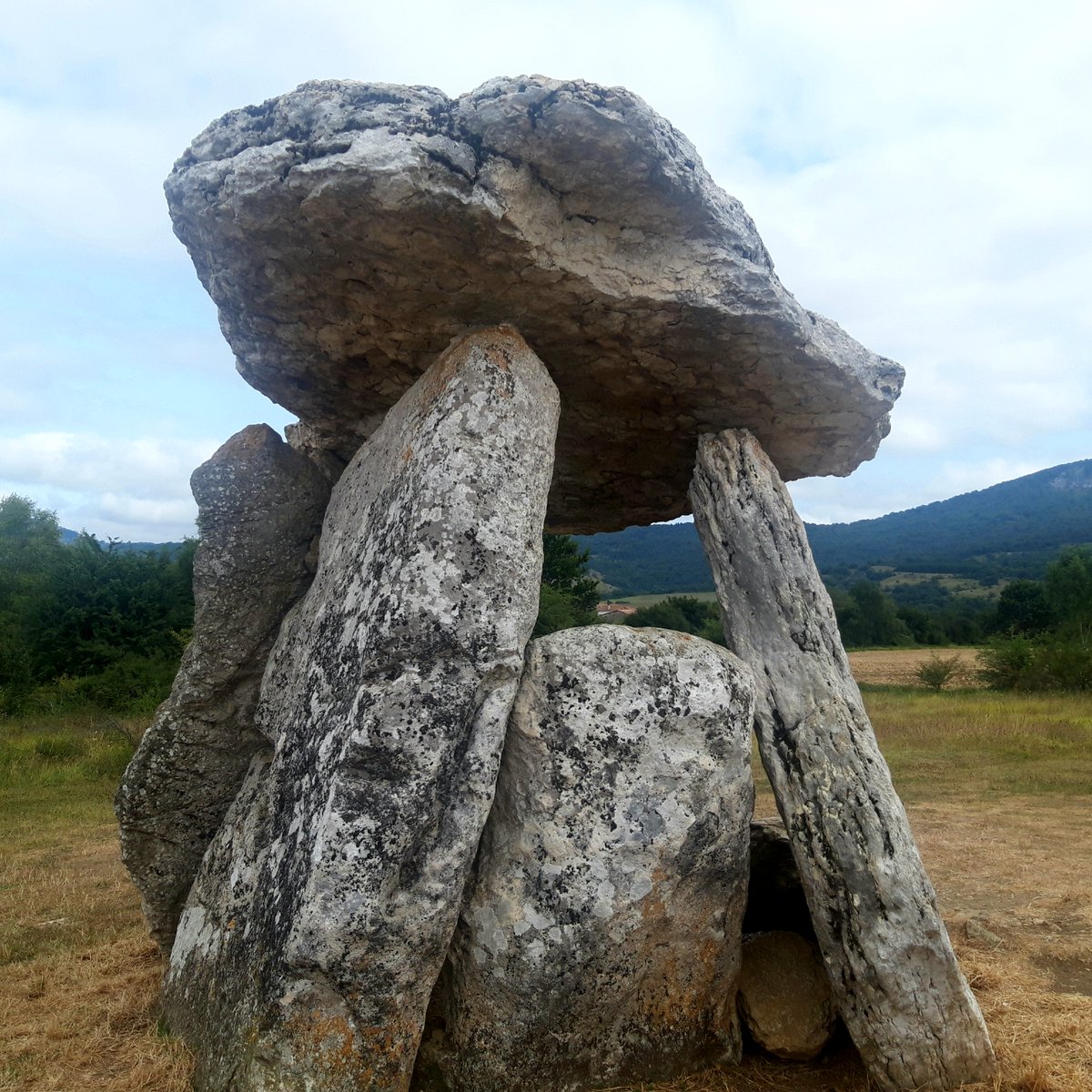
I 💖 #Dolmen
16 Mar 2025

#Arrizala. El #dolmen #Sorginetxe fue descubierto en 1833 y en 1890 Julián de Apraiz lo excavó encontrando puntas de flecha y restos óseos humanos. #Álava
Foto: @fgtez
1
500

Jun 12
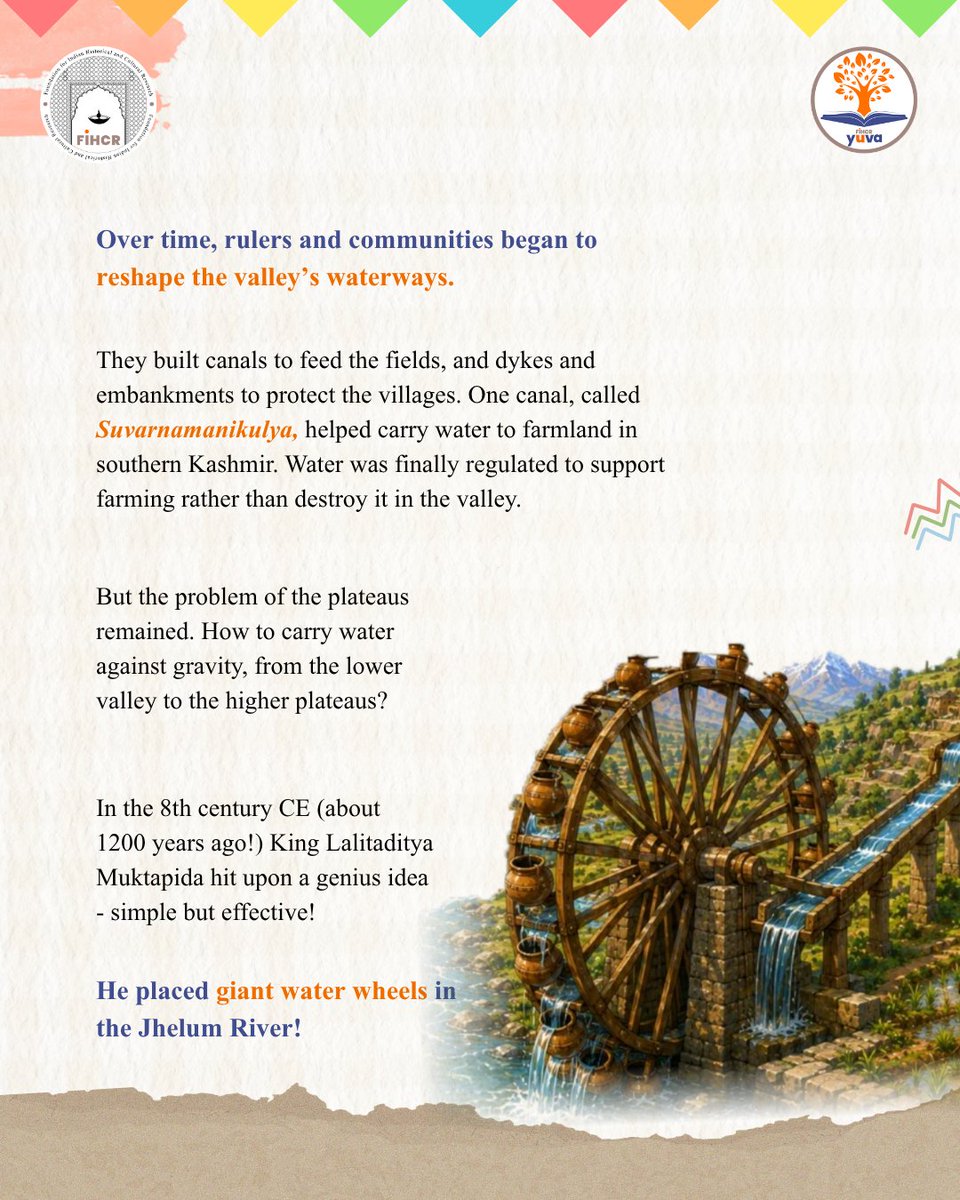
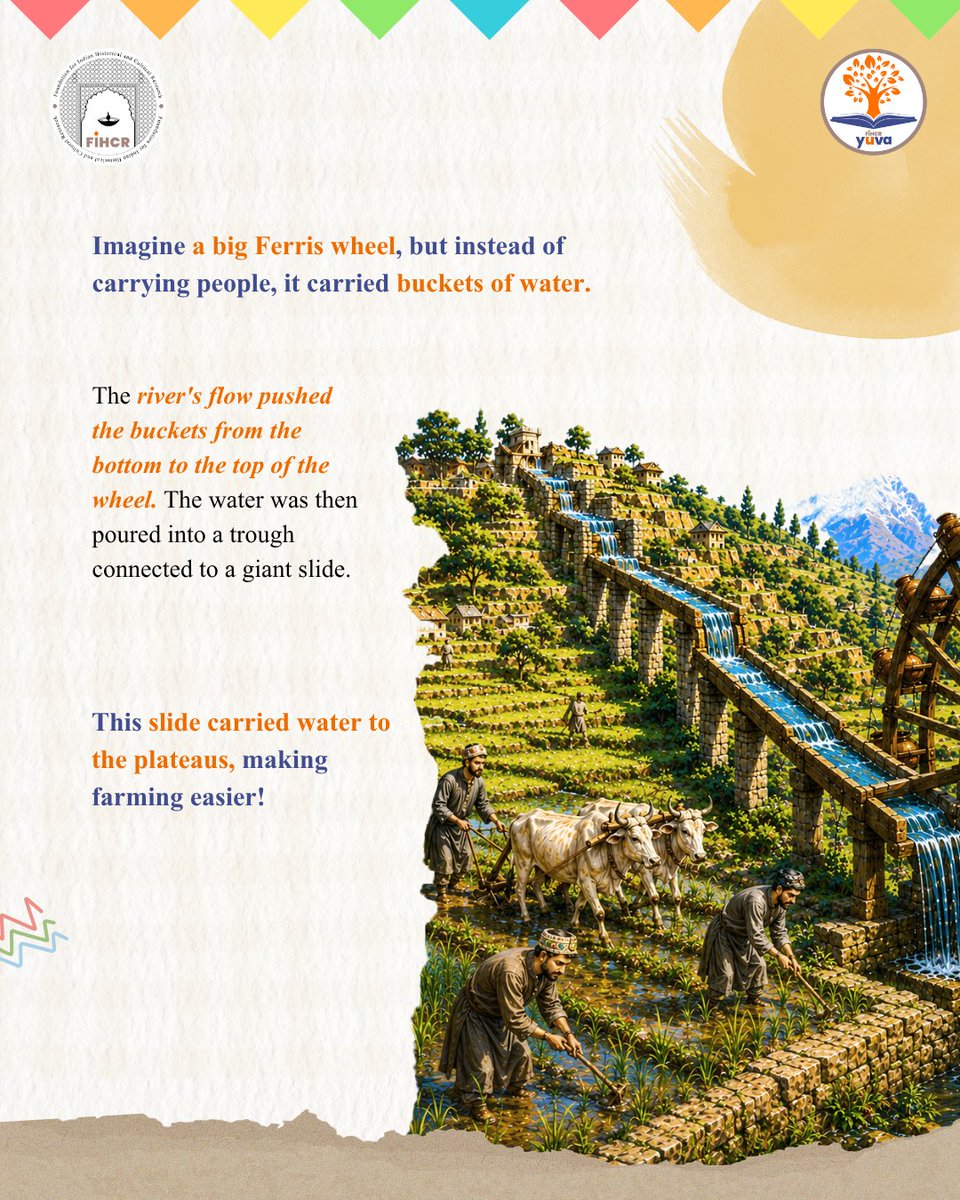
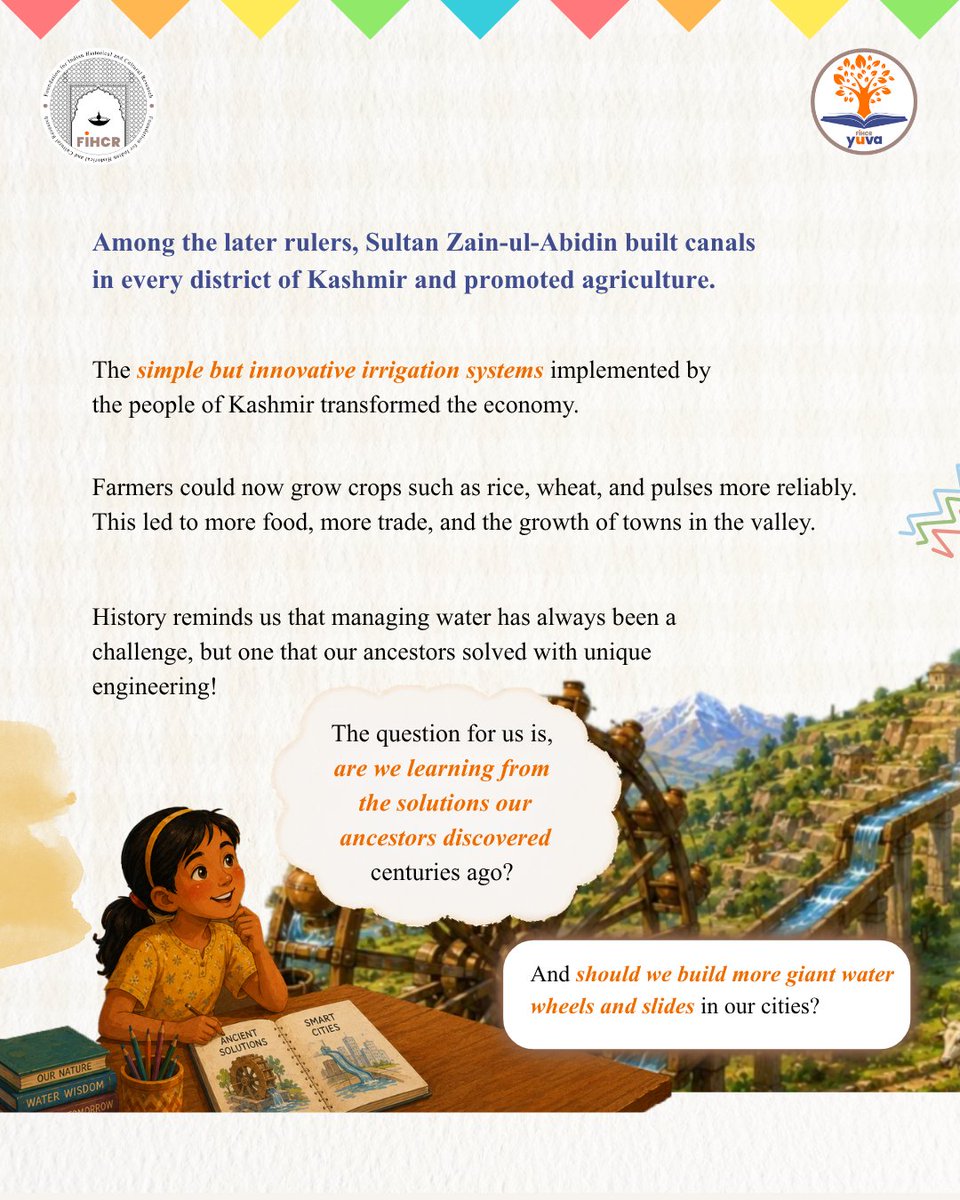
✅ Using the flow of the Jhelum River, giant water wheels lifted water to higher plateaus, helping irrigate fertile farmland.
A simple, sustainable solution to one of Kashmir's greatest water challenges.
#Kashmir #AncientEngineering #WaterHeritage
1
6
255

Jun 11
How They Built Cities Without Modern Tools 🏗️ #ancientengineering #histo... youtube.com/shorts/2hKaZFWFM… via @YouTube
4

Jun 11
🤯 Fun Fact of the Day - Thursday, June 11, 2026
💙 National Making Life Beautiful Day
Did You Know?
The Great Wall of China wasn't built using only stone, brick, and dirt.
In some sections, workers mixed sticky rice porridge into the mortar used to hold the bricks together! 🏯
Scientists studying the wall discovered that ancient builders combined traditional lime mortar with sticky rice soup, creating an incredibly strong and durable bonding material.
In fact, this unique mixture helped some sections of the Great Wall survive earthquakes, harsh weather, and centuries of wear and tear better than many structures built much later.
More than 1,000 years before modern construction materials existed, Chinese engineers had already discovered one of history's most effective building formulas.
Sometimes the strongest foundations come from the simplest ingredients.
👇 Were you surprised that sticky rice helped build one of the world's greatest landmarks?
#FunFactOfTheDay
#DidYouKnow
#June112026
#NationalMakingLifeBeautifulDay
#GreatWallOfChina
#HistoryFacts
#InterestingFacts
#LearnSomethingNew
#AncientEngineering
#FunFacts
16

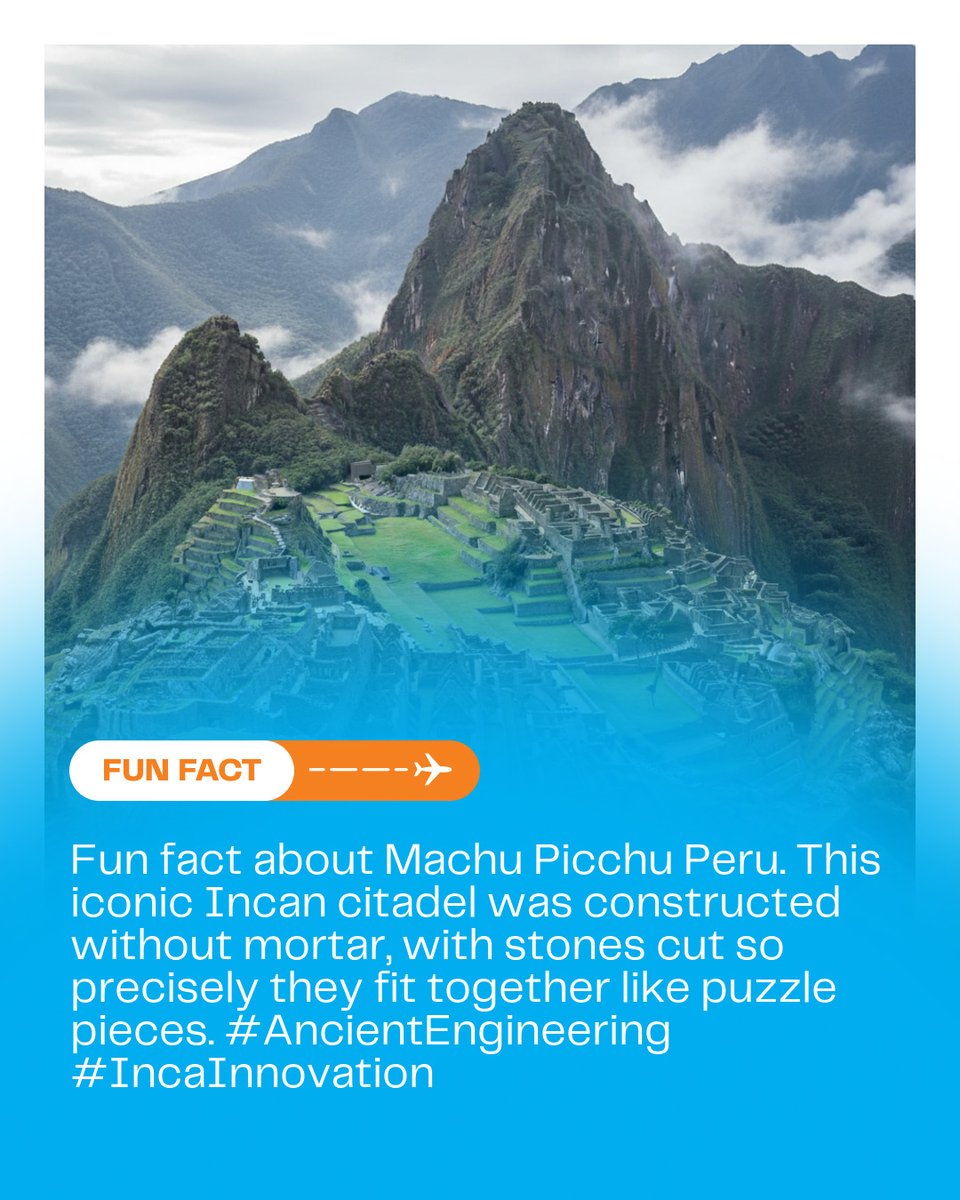
Fun fact about Machu Picchu Peru. This iconic Incan citadel was constructed without mortar, with stones cut so precisely they fit together like puzzle pieces. #AncientEngineering #IncaInnovation #roamfit
53

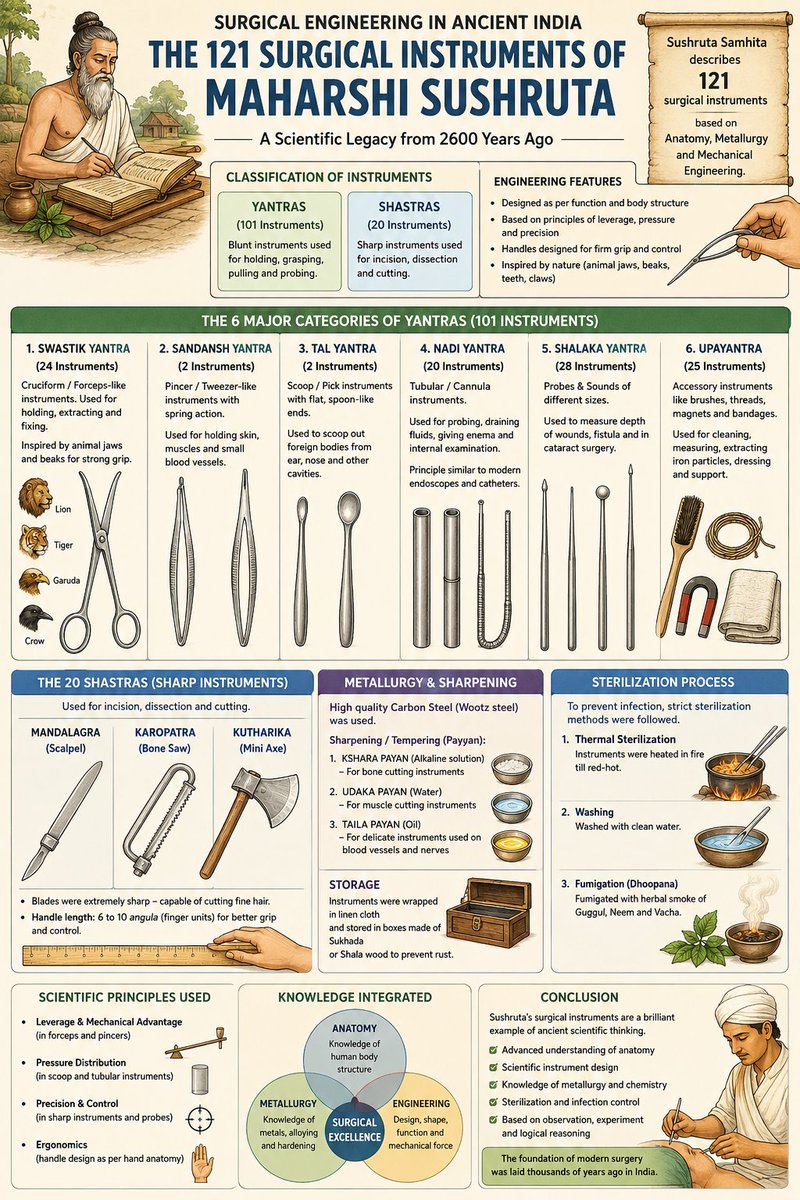
🔬🩺 Ancient Surgical Engineering: The 121 Instruments of Maharshi Sushruta
More than 2,600 years ago, the surgical text Sushruta Samhita described 121 specialized surgical instruments, categorized according to their mechanical function, anatomical application, and surgical purpose.
⚙️ Key Engineering Features:
✅ 101 Yantras (Blunt Instruments)
• Forceps-like grasping tools
• Tubular instruments for probing and drainage
• Probes for measuring wound depth
• Auxiliary tools including magnets, threads, and dressings
✅ 20 Shastras (Sharp Instruments)
• Scalpel-like cutting tools
• Bone-cutting saws
• Precision dissection instruments
🧠 Scientific Concepts Reflected:
🔹 Anatomy-based instrument design
🔹 Mechanical advantage and force transmission
🔹 Ergonomic handle construction
🔹 Material selection and metallurgy
🔹 Edge sharpening and maintenance techniques
🔹 Instrument sterilization using heat and medicinal fumigation
🔍 Notable Categories:
⚡ Swastika Yantras – Forceps-inspired gripping instruments
⚡ Sandansha Yantras – Tweezer-like precision tools
⚡ Nadi Yantras – Tubular diagnostic and therapeutic devices
⚡ Shalaka Yantras – Probes used in wound examination and eye procedures
🛠️ The text demonstrates an early understanding of:
• Surgical ergonomics
• Tool classification systems
• Instrument standardization
• Infection-control practices
• Metalworking and blade technology
The history of surgery is also a history of engineering, materials science, anatomy, and innovation.
#Sushruta #SushrutaSamhita #SurgicalEngineering #BiomedicalEngineering #MedicalHistory #HistoryOfScience #AncientScience #EngineeringHistory #Metallurgy #Anatomy #Surgery #Medicine #STEM #ScienceEducation #Innovation #MechanicalEngineering #Bioengineering #HealthcareInnovation #IndianScience #ScientificHeritage #HistoryOfMedicine #MedicalTechnology #ScienceCommunication #Research #Technology #STEMEducation #AncientEngineering #KnowledgeSystems #ScienceFacts #EngineeringDesign
@WHO @UNESCO @Nature @ScienceMagazine @TheLancet @NEJM @NIH @wellcometrust @IEEEorg @ASMEorg @BiomedCentral @SpringerNature @ElsevierConnect @NASA @ISRO @IndiaDST @DBTIndia @CSIR_IND @InfoGujcost
4
12
255

📣 New Podcast! "Solved: How Modern Science and DNA Forensic Archaeology Explain History’s Greatest Mysteries" on @Spreaker #ancientengineering #ancienthistory #archaeology #digitalimaging #dnaanalysis spreaker.com/episode/solved-…

2

Jun 10
In the desert, water was sacred.
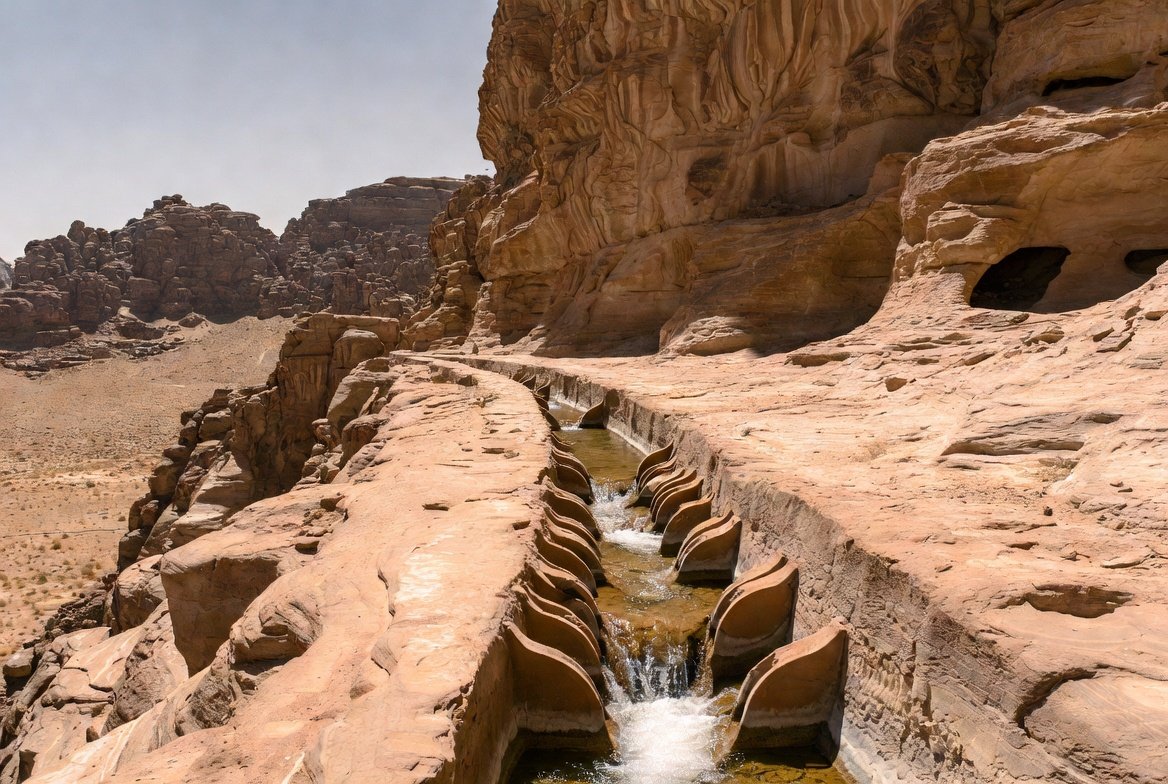
The Nabataeans of Petra revered water so deeply that they became some of the most careful and intelligent planners of the ancient world. Their engineering was an expression of respect for life itself.
They built a multi-source, redundant, gravity-fed system instead of depending on one source.
They combined spring water, runoff harvesting, and extensive storage in cisterns and reservoirs. This redundancy showed they refused to take water for granted.
Their design was precise and thoughtful:
Rock-cut channels followed carefully chosen gentle slopes to control flow and reduce loss. Sequential settling basins cleaned the water. Dams stored water and diverted dangerous flash floods. Every detail reflected deep respect for water’s value.
Water was also part of their sacred life.
High places had ritual pools and basins. Water channels ran alongside processional routes. Libations (liquid offerings) were part of their religious practice. Engineering and spirituality worked together.
The Nabataeans show us that true reverence for something vital leads to wise, careful design.
They didn’t just survive in the desert — they thrived by honoring water through intelligent planning.
A powerful ancient lesson.
#Petra #AncientEngineering #water
26

Jun 9
Once the boxes were winched into the alcoves of the Serapeum, it was time to lower them using a second sand drain. #engineering #egypt #ancientengineering #hydraulics #archeology
1
35

45°C गर्मी में भी ठंडा रहता है ये दरवाज़ा! 😲 जैसलमेर के Hawa Prol का 300 साल पुराना रहस्य
#HawaProl #jaisalmer #rajasthan #ancientengineering #theprintlines #HawaProl #jaisalmer #rajasthan #ancientengineering #indianarchitecture #SonarFort #mysteryofindia #incredibleindia
1
1
20

Jun 8
On June 7, a Portuguese expert visiting the Dujiangyan Irrigation System in Chengdu was deeply impressed by the ancient project, noting that it reflects how China has long prioritized people's well-being and sustainable development.
Built over 2,000 years ago, Dujiangyan continues to benefit millions today, standing as a remarkable example of engineering wisdom that has endured through the centuries. 🌏💧
@ChineseEmbinUS @ChineseEmbinUK @zhang_heqing @CG_GuoShaochun @ChinaConSydney
#Dujiangyan #Chengdu #China #AncientEngineering #CulturalHeritage #SustainableDevelopment #Pandamic #memoriesofchengdu
14
624

🙏Brihadisvara Temple is indeed a marvel of the knowledge and capability of our ancestors. I would also choose it as the greatest surviving temple in India.
However, for academic comparison, I’d like to present a parallel with the Barabar Caves in Bihar.
Summary:
If we tried replicating Brihadisvara Temple, it could take 5 to 10 years to construct approximately 316000 external and 200,000 cubic feet internal space using modern tools, assuming material is locally available.
In contrast, carving just 4 Barabar caves - which together account for less than 10% of Brihadisvara's volume - would take up to 40 years, and even then there’s no certainty of truly replicating the original quality.
👇
Brihadisvara Temple vs. Barabar Caves Comparison
Watch this for Barabar Caves (French team, 3–4 years of study):
youtu.be/6RJ3Epd_SXk?si=6oO6…
Main Features of Barabar Caves:
1. Carved entirely into solid granite rock.
2. Mirror-like interior polish—significantly smoother and shinier than modern machine-polished marble
3. Geometric and acoustic perfection rarely matched even today.
Estimated Age:
Brihadisvara Temple: ~1,015 years (1003–1010 CE), universally accepted.
Barabar Caves: Often dated ~2,307–2,510 years (322–185 BCE), but the dating is debated due to:
Crude Ashokan inscriptions definitely added later to claim credit.
Absence of similar mirror-polish elsewhere (e.g., Ashoka’s Lion Capital).
Possibility of much older origin - could be 5,000, 10,000, or even 20,000 years old.
True builder, purpose, method, and era remain unknown.
Total Size:
Brihadisvara Temple:
External area: ~316,160 sq ft
Internal volume: ~200,000 cu ft
Barabar Caves:
Internal volume (4 caves combined): ~15,200 cu ft
Key Features:
Brihadisvara Temple:
. Monolithic 80-ton granite capstone
. Massive granite block construction
. No-shadow vimana alignment
. Vastu-consistent design symmetry
Barabar Caves:
. Mirror-polished granite interiors
. Echo-perfect chamber acoustics
. Precision rock-cut geometry in hard granite
. Estimated Replication Time:(Modern Tools Available)
Brihadisvara Temple: 5–10 years, assuming local stone availability.
Barabar Caves: 7–10 years per cave = 28–40 years for four caves.
Any minor error could destroy entire geometric and acoustic function.
🔥
#Sanatan
#IndianArchitecture #BrihadisvaraTemple #BarabarCaves #AncientEngineering
2
6
567

🏛️ Masters of Mesopotamia: How Assyrian Soldiers Crossed the Tigris and Euphrates 🌊
This extraordinary Assyrian relief, dating to 865–860 BC, preserves one of the earliest known visual representations of military swimmers in history. Carved nearly 2,900 years ago, it depicts Assyrian soldiers crossing one of the great rivers of Mesopotamia—the mighty Tigris or Euphrates—using an ingenious technique that helped build one of the ancient world's most powerful empires.
The soldiers are shown swimming while supported by inflated animal skins, usually goat or sheep skins, which served as portable flotation devices. These air-filled skins allowed warriors to cross deep and fast-flowing rivers while carrying weapons and equipment. Once ashore, the skins could be deflated, packed, and reused throughout the campaign.
⚔️ Why was this technique so important?
🔹 It allowed armies to cross rivers rapidly without bridges.
🔹 It enabled surprise attacks and swift military campaigns.
🔹 It facilitated the transport of soldiers, horses, weapons, and supplies.
🔹 It demonstrated advanced planning, engineering, and military organization.
Ancient sources indicate that these flotation skins were widely used throughout Mesopotamia for both military and civilian purposes, making them one of the most practical innovations of riverine life in the region.
Far more than a work of art, this relief offers a fascinating glimpse into the ingenuity of the Assyrians—masters of warfare, engineering, and adaptation. Long before modern military pontoon bridges and amphibious units, Assyrian soldiers were already mastering the waters of the Tigris and Euphrates, the lifelines of ancient Mesopotamia.
🌊🏹🐎 A timeless testament to the innovation and resilience of one of history's greatest civilizations.
#Assyria #AssyrianEmpire #Mesopotamia #AncientMesopotamia #Tigris #Euphrates #AncientHistory #MilitaryHistory #Archaeology #Nimrud #Kalhu #NeoAssyrianEmpire #AncientEngineering #RiverCrossing #AncientWarfare #NearEast #HistoryLovers #ArchaeologicalHeritage #Cuneiform #Civilization
2
12
51
970

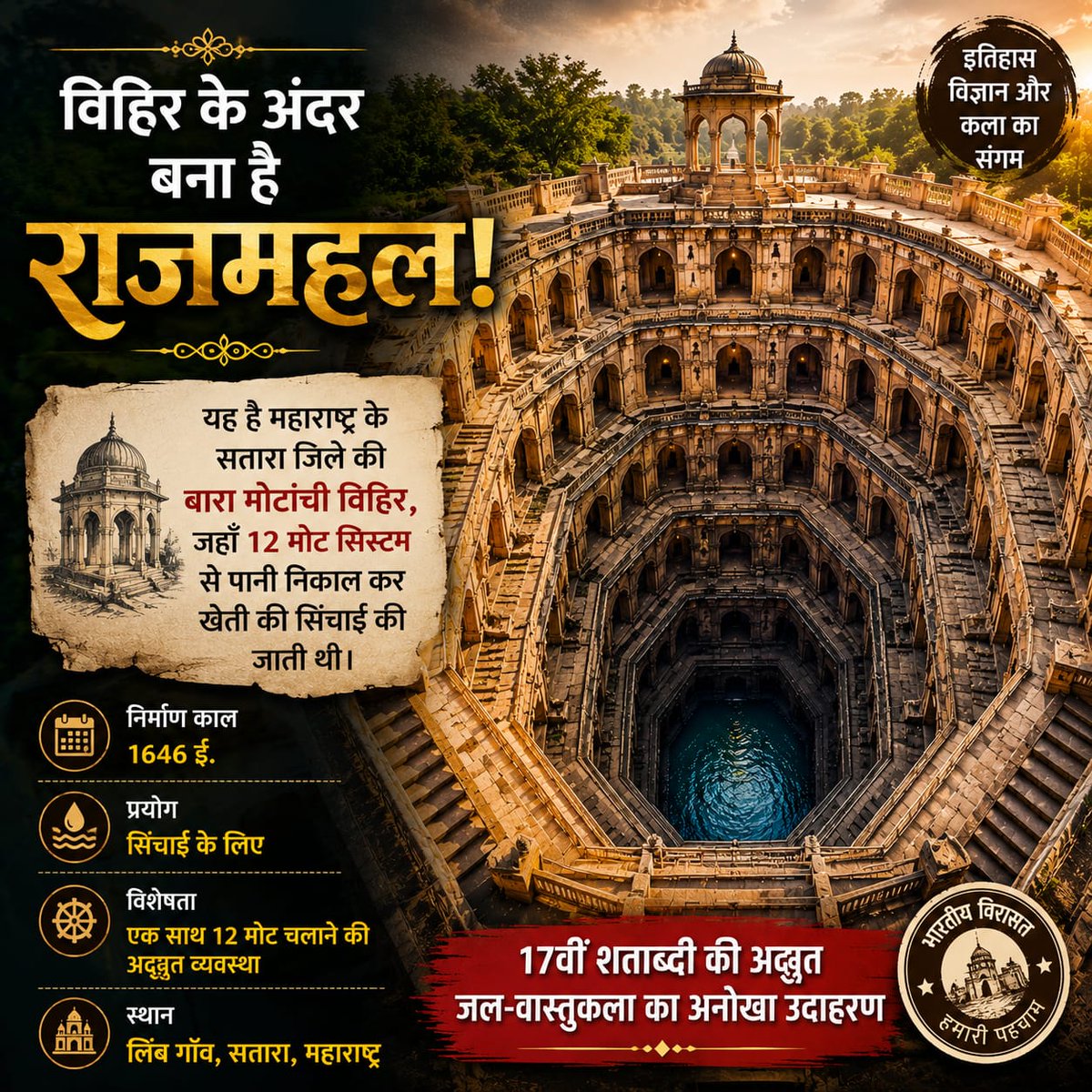
भारत की प्राचीन जल-प्रबंधन और वास्तुकला परंपरा वास्तव में अद्भुत रही है।
बारा मोटांची विहिर जैसी धरोहरें बताती हैं कि सदियों पहले भी हमारे पूर्वज विज्ञान, अभियंत्रण और प्रकृति-संतुलन की गहरी समझ रखते थे।
जल संरक्षण की यह विरासत आज भी प्रेरणा देती है।
#IndianHeritage #WaterConservation #BharatKiPehchan #History #AncientEngineering
1
4
4
80

Jun 4
The Great Pyramid shows how ancient design withstands earthquakes — a marvel across millennia. 🏗️ #GreatPyramid #Earthquake #AncientEngineering #Discovery community.designtaxi.com/top…
239

So… how is this technically stronger than a mortar bond? Let’s geek out (but make it fun):
- Gravity is the ultimate super-glue. Every stone above presses down harder, turning the entire wall into a compressed fortress. More weight = more friction. The deeper you stack, the tighter it grips. Mortar? It’s rigid and proud… until it cracks.
- Joints that flex instead of fail. Dry-stone walls “dance” during earthquakes, settling, or freeze-thaw cycles. Tiny movements? No problem — the stones just shift and lock back in. Cement mortar is brittle; it snaps like dry spaghetti. Inca polygonal walls in Peru? Survived massive quakes for 500 years while modern buildings crumbled.
- Zero weak links that degrade. Mortar erodes from water, salt, temperature swings, and time. Dry joints? Water drains right through. No trapped moisture rotting the structure from inside. Stones themselves (granite, basalt, limestone) laugh at centuries. Many dry-stone walls are still standing after 1,000–2,000 years with almost zero maintenance.
- Pure mechanical genius. Friction interlocking shapes compressive strength = a bond that gets stronger over time. Modern cement? Strong on day one… then slowly loses the war against nature.
This is why Scottish crofters, Inca builders, and ancient Chinese masons built walls, houses, bridges, and temples that outlive empires.
Prerequisites (because you can’t just slap rocks together like Lego):
- Stone whisperer skills: Master masons who “read” every rock — shape, grain, weight. Each piece is hand-fitted like a custom puzzle. Takes serious patience and practice.
- Quality raw material: Durable, non-porous stones in a mix of sizes/shapes. No crumbly junk.
- Perfect foundation & design: Level, stable base. Slight inward “batter” (lean) for stability. Through-stones that tie the wall together. Good drainage behind it.
- Time & teamwork: Labor-intensive but incredibly rewarding. Modern tools speed it up, but the ancient method still wins on soul.
Precautions (stay safe, legends):
- Heavy lifting = serious respect. Use proper slings, cranes, or teams. One slip and you’re in a real-life game of Jenga with boulders.
- Engineering smarts: For load-bearing homes, retaining walls, or anything tall - consult a structural pro. Not a weekend DIY for critical stuff.
- Site matters: Poor soil? Bad drainage? Nature will test you.
- Seismic zones: Amazingly resilient, but incorporate best practices (tie beams, strategic through-stones).
- Maintenance check-ins: Walk the wall every few years. Shifted stones? Just pop them back - way easier than patching cracked concrete.
The best part? This technique is sustainable AF - zero cement emissions, zero waste, and the stones can be reused forever. Modern architects are literally reviving it for eco-homes and flood-resistant walls.
Ancient builders weren’t “primitive.” They were *geniuses* who worked *with* physics instead of fighting it.
Drop a ♥️ if this just rewired your brain.
Would you live in a dry-stone house? Or have you seen one in real life? Tag a builder or history nerd who needs to see this!
#DryStoneMastery #AncientEngineering #StrongerThanCement #GravityGlue #LostAncientTech #SustainableBuilding #IncaSecrets #StonePuzzle #BuildLikeTheAncients #MindBlownEngineering #EcoConstruction #HistoryMeetsFuture

1
26
2,151
May 29
Earthquake‑proof before modern science — the Great Pyramid’s design continues to amaze researchers. 🌍 #GreatPyramid #Earthquake #AncientEngineering #Discovery community.designtaxi.com/top…
2
2
330