🚀 Meta is hiring a Data Engineer (New Graduate)!
📍 Bellevue, WA | Menlo Park, CA | New York, NY
💰 Up to $146,000/year
Skills:
✅ Data Engineering
✅ SQL
✅ Python
✅ ETL Development
✅ Data Modeling
Apply Now 👇
studentscircles.com/caterpil…
#MetaJobs #DataEngineer #TechJobs #NewGradJobs #HiringNow
27

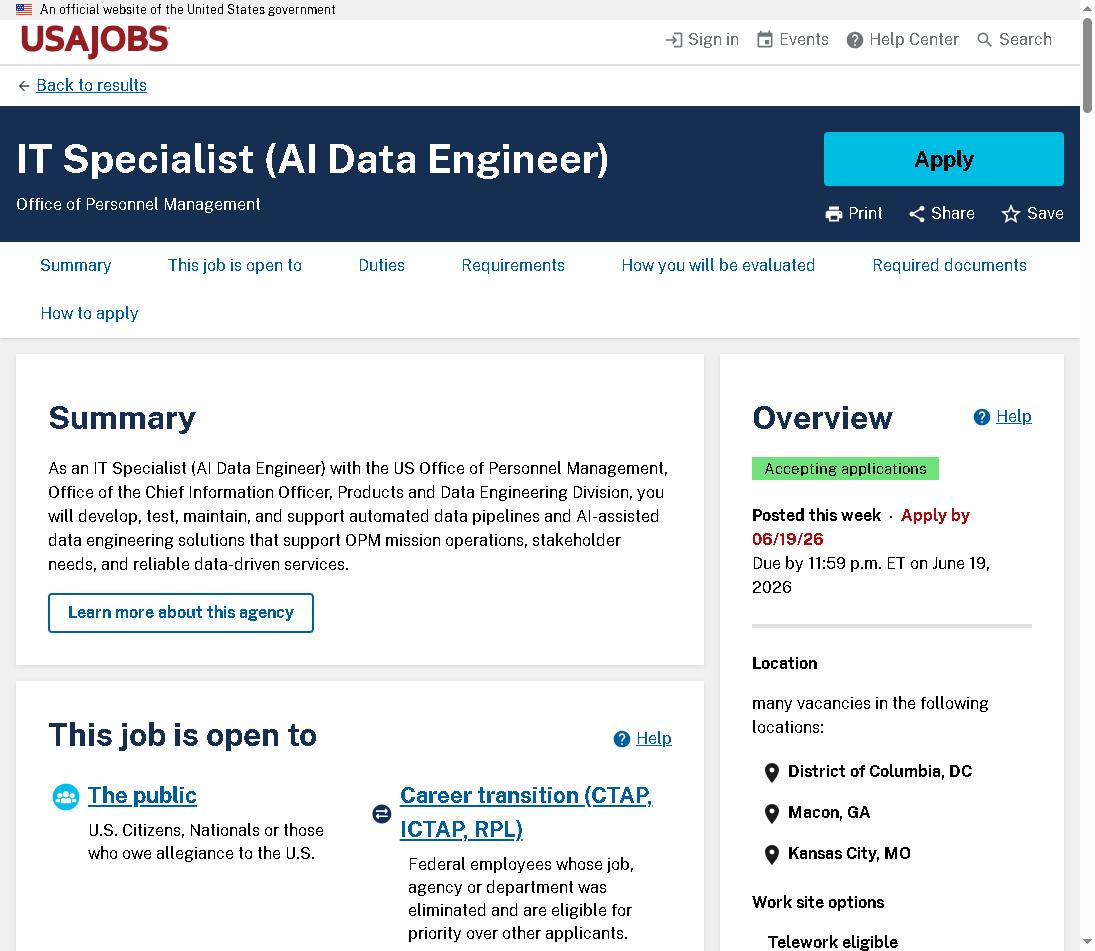
Veteran-Friendly IT Opportunity!
USAJobs: IT Specialist (AI Data Engineer)
Job: usajobs.gov/job/872842700
Prepare: vetsitguide.com/education/pa…
vetsitguide.com
#VetsITGuide #DataEngineer
1
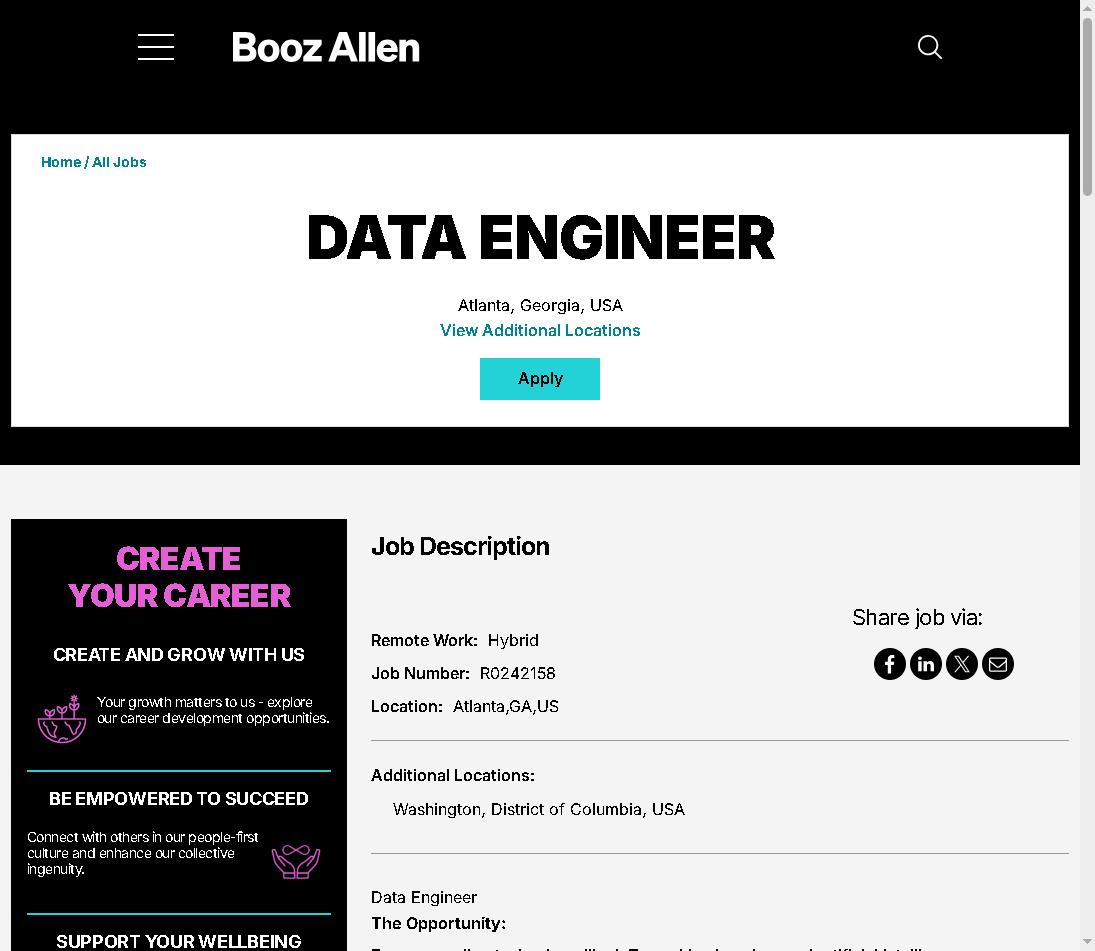
Veteran-Friendly IT Opportunity!
Booz Allen: Data Engineer
Job: careers.boozallen.com/jobs/J…
Prepare: vetsitguide.com/education/pa…
vetsitguide.com
#VetsITGuide #DataEngineer
1
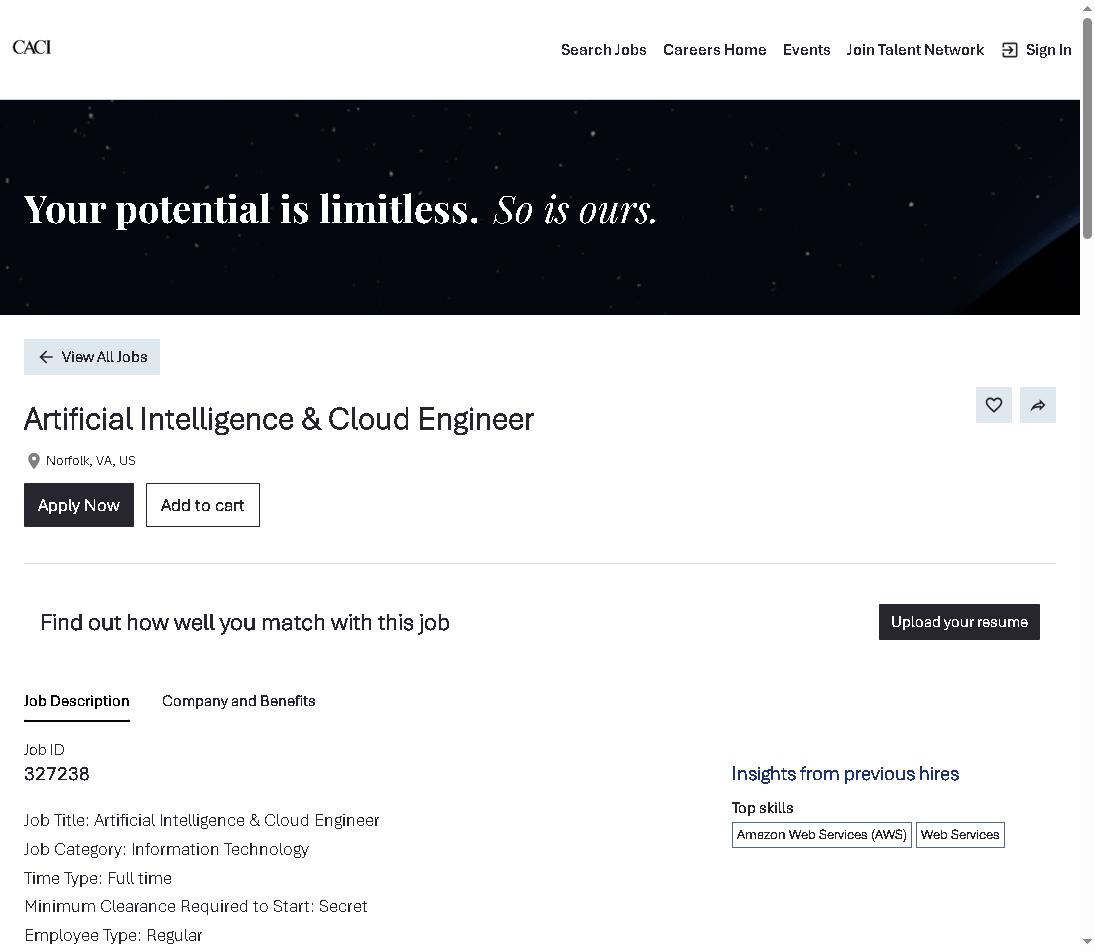
Veteran-Friendly IT Opportunity!
CACI: Artificial Intelligence & Cloud Engineer
Job: searchcareers.caci.com/caree…
Prepare: vetsitguide.com/education/pa…
vetsitguide.com
#VetsITGuide #DataEngineer
1
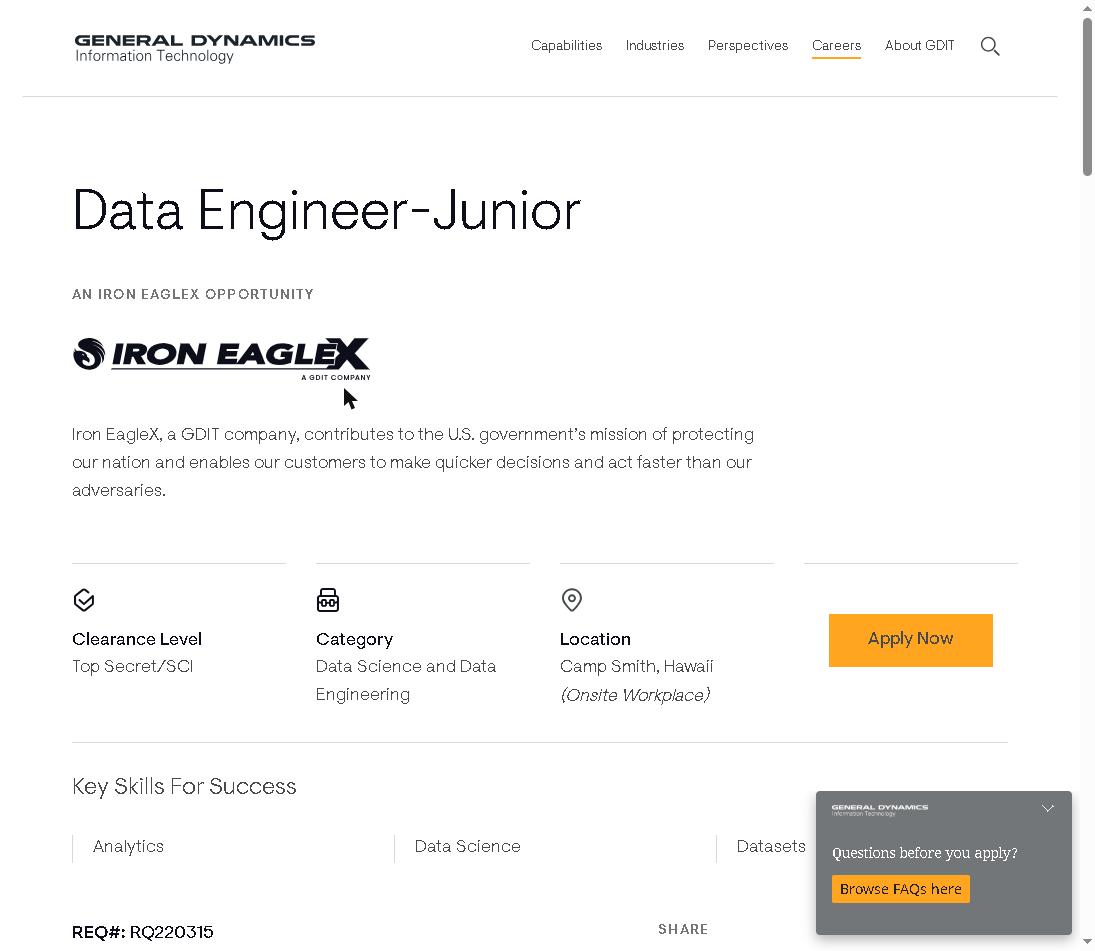
Veteran-Friendly IT Opportunity!
GDIT: Data Engineer-Junior
Job: gdit.com/careers/job/e5d31e0…
Prepare: vetsitguide.com/education/pa…
vetsitguide.com
#VetsITGuide #DataEngineer
2

Stay tuned. The next chapter of your data engineering journey may be closer than you think.
#CDEBootcamp3.0 #CoreDataEngineers #DataEngineering #DataEngineer #CloudEngineering #TechCommunity #CountdownToCDE
4

⚡ Learn Apache Cassandra for Data Engineers
Master NoSQL concepts & build scalable, high-performance data solutions.
👉 Enroll now: buff.ly/uWYiCc8
#ApacheCassandra #NoSQL #BigData #DataScience #AI #MachineLearning #Analytics #Python #OpenSource #DataEngineer

10

Early in my career, I got an IAM error.
AccessDenied: User is not authorized to perform: s3:GetObject
I panicked. Added "Action": "*" to the policy.
It worked.
That single move is one of the most common — and dangerous — mistakes data engineers make.
IAM isn’t “someone else’s job.”
Every Glue job, every Lambda function, every Redshift cluster — needs permissions to talk to other AWS services.
If you’re writing pipelines, you’re writing IAM policies. Whether you realize it or not.
5 things every data engineer must know about IAM:
1. Users vs Roles — know the difference
👤 Users → for people (you logging into AWS console)
🤖 Roles → for services (Glue, Lambda, Redshift assuming permissions)
Your pipelines should never use a user’s credentials. Always roles.
2. Two policies, two jobs
📜 Trust policy → “WHO can assume this role?”
📜 Permission policy → “WHAT can this role do?”
A Glue job’s role trusts glue.amazonaws.com AND has permissions to read S3 write to Glue Catalog.
3. Least privilege isn’t optional
"Action": "s3:*" on "Resource": "*" = an open door.
Scope it down:
"Action": ["s3:GetObject", "s3:PutObject"]
"Resource": "arn:aws:s3:::my-bucket/raw/*"
4. Never hardcode credentials
No access keys in your PySpark scripts. No .env files committed to Git.
Glue, Lambda, EC2 — all can assume roles automatically. Use that.
5. One role per job type
Don’t create one giant “DataEngineerRole” used everywhere.
A Glue ETL role ≠ a Lambda trigger role ≠ a Redshift COPY role.
Separate roles = smaller blast radius if something goes wrong.
That "Action": "*" shortcut I used early on?
In a real production environment, that’s the kind of mistake that shows up in a security audit — and in an interview question.
Full breakdown with real policy JSON common mistakes → medium.com/@mallinathnpatil1…
#DataEngineering #AWS #IAM #CloudSecurity #Python #DataEngineer

35

16h
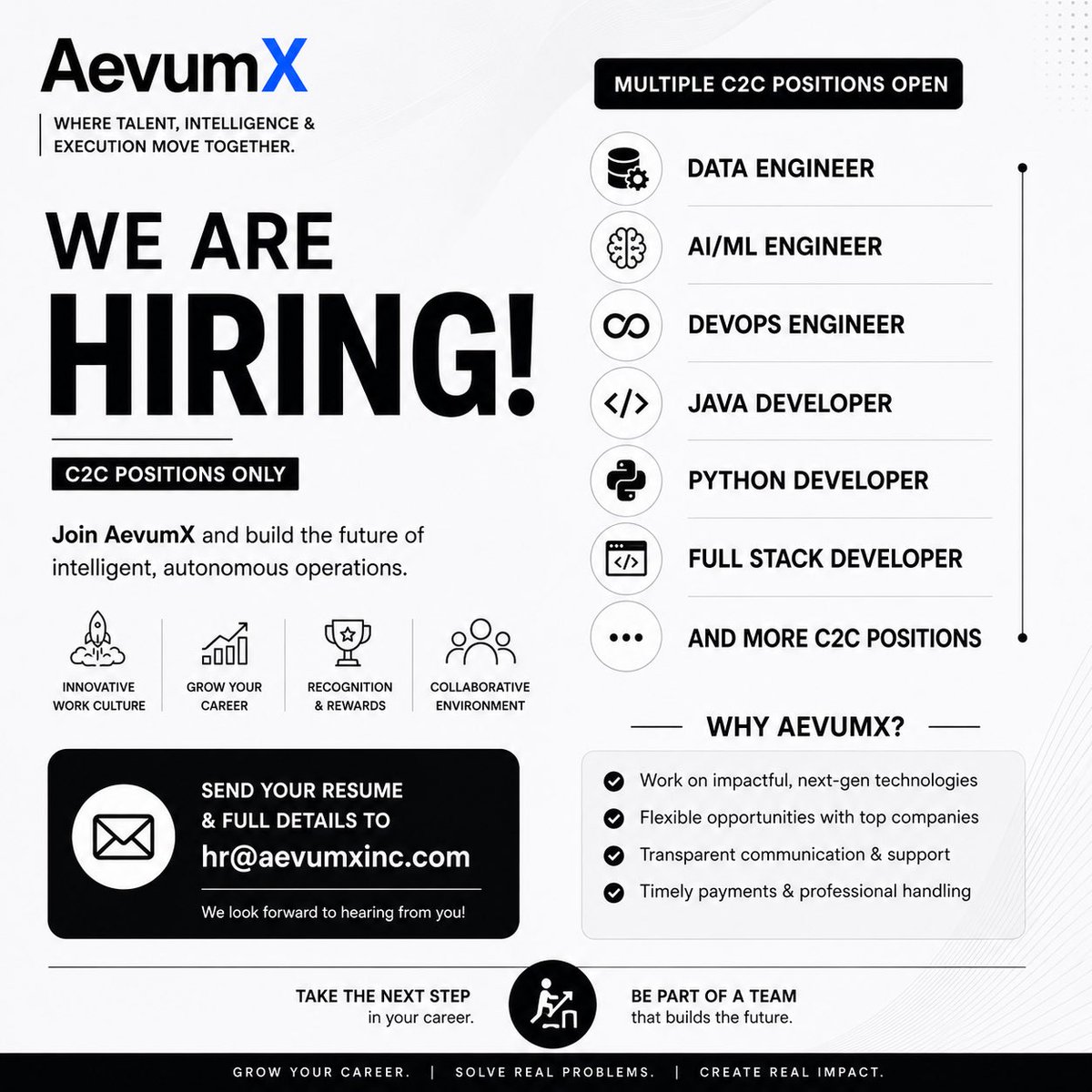
🚀 AevumX is hiring!
Multiple C2C openings for:
▪ Data Engineer
▪ AI/ML Engineer
▪ DevOps Engineer
▪ Java Developer
▪ Python Developer
▪ Full Stack Developer
▪ More IT roles
📩 Send your resume & full details:
hr@aevumxinc.com
#Hiring #C2CJobs #DataEngineer #AIML #DevOps #Java #Python #FullStack #TechJobs #AevumX
1
55

Jun 13
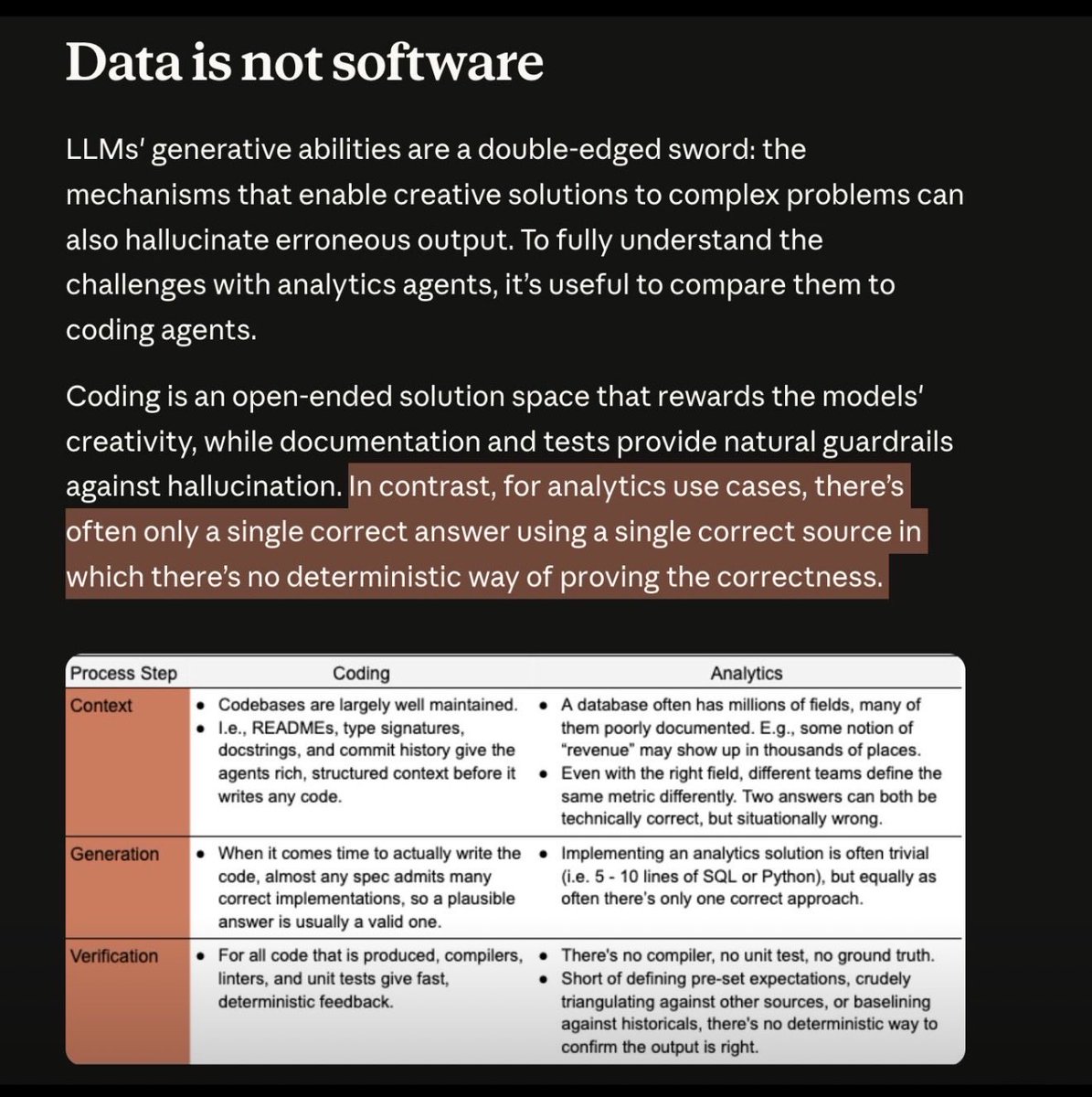
Anthropic say:
Data is not software
I agree, AI won't replace Data Professionals.
Data is ambiguity, business context, and the different perspectives of the humans who depend on it.
Blog:
🔗 claude.com/blog/how-anthropi…
#data #dataengineer #ai #claudecode #anthropic #fable
1
60

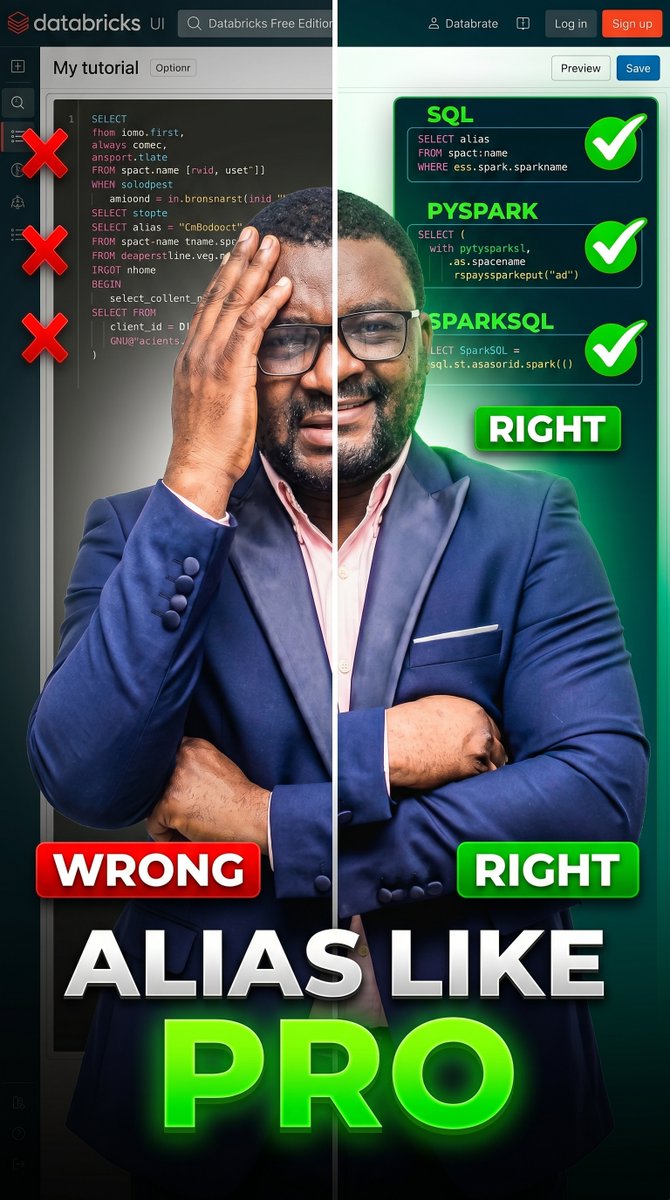
Create a simple alias like expert
Watch the full video: youtu.be/mi4rd2dms_0?si=mj7m…
#databricks #sql #dataengineering #pyspark #dataengineer #datascience #dataanalysis #sparksql #dataanalytics #shorts #short #shortvideo #shortsviral
13

จบการจัดการสมัยใหม่และเทคโนโลยี
เคว้งอยู่ปีนึง ไปสมัครงานเดินสายเน็ต ติดตั้งไวไฟ ลงวินโดว์ ทำอยู่สามปีไปเป็น IT Support อยู่ปีครึ่ง ออกมาทำฝ่ายสนับสนุนข้อมูลหลังบ้าน7-11 อัพเป็น Data Analyst อยู่หลายปี เบื่อทำรายงาน ย้านมาเป็นDataEngineer ตอนนี้ จบที่ ETL Developer เขียนโค้ด
30

Hiring now: Data Engineer (m/w/d) – Fokus Messdatenmanagement & Ownership
Apply ➜ jobwharf.ai/job/data-enginee…
Octopus Energy
📍 Berlin (DE)
💰 Salary negotiable
#dataengineer #octopusenergyjobs #fulltime #hiring #jobsearch
9

Jun 13
Are you a footwear and apparel enthusiast looking for an exciting career opportunity?
Check out this Lead Azure Data Engineer in US bit.ly/3S68idx #wwwcareers #DataEngineer
5

Jun 12
See you next week at booth 533 of Databricks Data AI Summit June 15-18 in San Francisco!
As enterprises deploy more AI agents, the gap between development and production oversight grows wider.
We'll be showcasing the AI Control Plane, purpose-built for:
• Standardized telemetry that discovers and monitors all your agents
• Continuous evaluation without external API costs
• Enforceable guardrails across input, execution, and output
• Enterprise-grade audit trails for compliance and oversight
Stop by our booth to learn more!
#AI #ArtificialIntelligence #ML #MachineLearning #MLOps #LLMs #LLMOps #GenAI #GenerativeAI #DataScience #DataScientist #DataEngineering #DataEngineer #CIO #ResponsibleAI #AIObservability #Guardrails #LLMGuardrails #AIAgent

67

Jun 12
🚨 Hiring Alert: Jr. Data Engineer
🏢 American Systems
📍 Quantico, Virginia, USA
💰 $93K – $156K Salary
Looking to launch or grow your Data Engineering career? This is an excellent opportunity to work with a leading organization and build impactful data solutions.
🔗 Apply Now:
studentscircles.com/american…
Tag someone who should see this 👇
#DataEngineer #Hiring #TechJobs #USAJobs #CareerOpportunity
43

Data & AI Talent — We’re Hiring in NJ.
Data Engineers
Big Data / Spark / Hadoop
Snowflake / Databricks
AI / ML / MLOps
LLM Engineers
NLP / Computer Vision
#DataEngineer #MachineLearningEngineer #AIEngineer #MLOps #BigData #Snowflake #Databrick #LLM #NJTech #H1BJobs #TechCareer
23
🚀 Nail your Data Engineer interview with ChatGPT!
Discover expert tips: buff.ly/xRuYMRn
#DataEngineer #BigData #ApacheSpark #DataScience #AI #Python #100DaysOfCode
11

Data engineers are in high demand! Earning the Databricks Certified Data Engineer Associate certification can help you stand out. Schedule your exam through Kryterion.com & come & take the exam at our Ashburn testing center. #DataEngineer #DatabricksCertified
9