Nita Hodgkinson retweeted

Richard Madeley-‘the only way to increase defence spending is to cut welfare benefits’-he’s so fu(king clueless-he’s a shit journalist thick as two short planks-no insight or integrity
31
44
327
4,778
Aihseyah retweeted

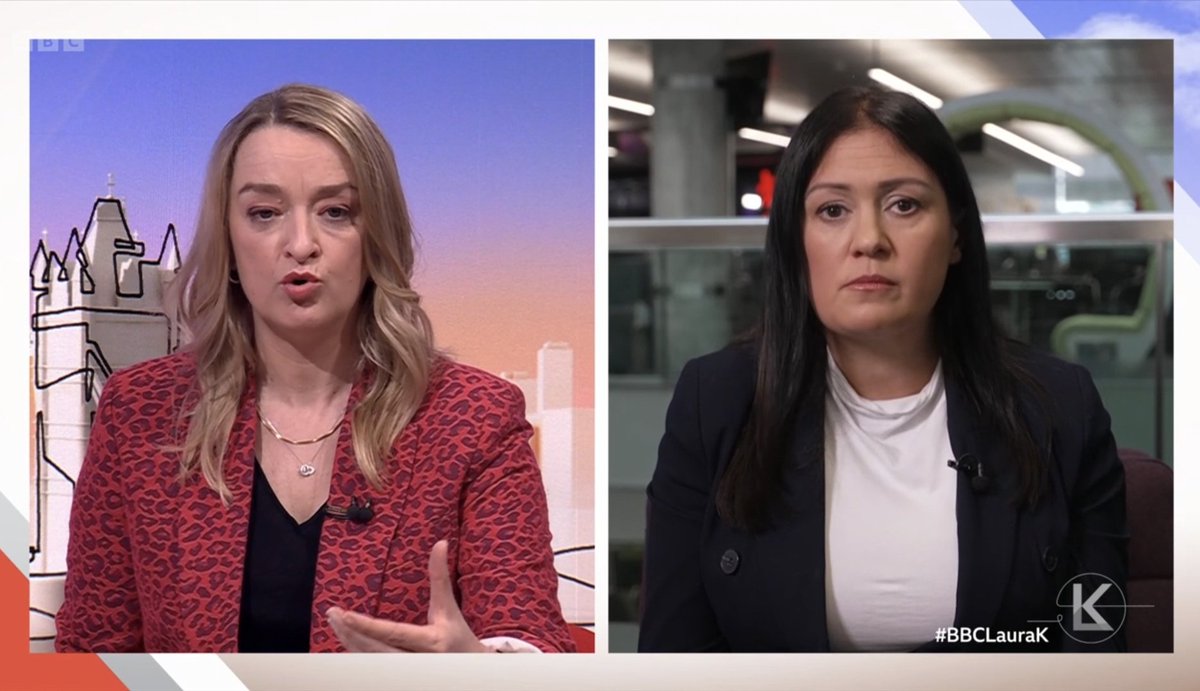
"Defence is underfunded"
"Defence is underfunded"
"Defence is underfunded"
Only five countries spend more on defence than the UK.
#BBCLauraK
4
46
97
1,249


Ewa❤️ retweeted

🇳🇬 Nigeria's Defence Minister attributes global weapons scarcity to Israeli-Iranian and Russian-Ukrainian conflicts
Nigeria's Defence Minister, General Christopher Musa (retired), has blamed ongoing international conflicts—particularly the Israel-Iran tensions and the Russia-Ukraine war—for creating a global arms shortage that's hampering Nigeria's ability to purchase critical military equipment. Speaking at the Nigerian People's Strategic Conference and Defence Exhibition 2026 in Abuja, Musa emphasized that these geopolitical tensions have disrupted the supply chain for military hardware worldwide. Beyond external factors, the minister also highlighted a major domestic challenge: the absence of a comprehensive national database that's crippling law enforcement agencies, especially the Nigeria Police Force, in their efforts to track criminals and prevent crimes effectively.
📰 Source: Daily Post
🔗 naijadailyupdate.ng/story.ph…
Via @9jaDailyUpdates
#NaijaNews #Nigeria #BreakingNews #Politics #Bandits #Insecurity #NigerianArmy #Election #News #Africa
1
35

When Is The Tinubu Government And His Fulani Masters Appoint God As The Minister Of Defence And Brigade Commander Of Operation Lafia Dole?

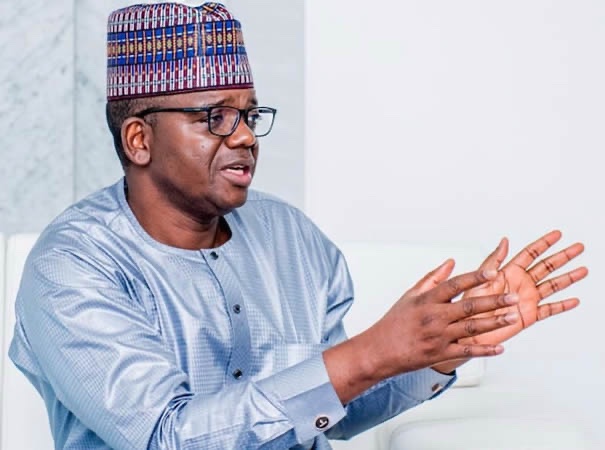
Only God Can Bring an End to Insecurity in Nigeria — Minister Of Defence(State), Bello Matawalle.
love and light retweeted

Jun 12
Keir Starmer: "We don't have £4.5 billion for defence."
Keir Starmer the next day: "I’m announcing £4.5 billion for more cycle lanes and zebra crossings."
He’s just reached the point where he’s just laughing at us all now.
You really couldn't make it up.
686
7,169
26,951
392,503
Dennis Maykowski retweeted

Capital Punishment and the Order of Reason
A Thomistic Defence of the Death Penalty
The Church has always upheld, in continuity with Sacred Scripture and the wisdom of the Greco‑Roman tradition, that capital punishment is just when the sword is wielded by legitimate authority and ordered towards the protection of the common good.
Echoing this perennial teaching, St Thomas maintains that public authority, as minister of the divine order of justice, may licitly take life when a malefactor's deeds gravely rupture the order of justice and endanger the community.
He teaches that the one who threatens the harmony of the polity has, by his own deliberate act, fallen away from the order of reason, and thus may be removed as a surgeon removes a gangrenous limb for the health of the whole body, lest he become a corrupter of the many.
He affirms that such punishment is medicinal, both restoring the violated order of justice and preventing the spread of further wrongdoing, since penalties exist to preserve the good of the whole.
He insists that the possibility of the malefactor's repentance does not override the community's right to safety and security, and the duty to defend itself through proportionate and authoritative punishment, for the judge acts not from private vengeance but from public reason.
However, because modern societies are anti‑Christian, disordered, and often lack a rightly constituted and morally legitimate public authority, the Church warns that such regimes cannot be trusted with the power to take life.

ALT WIKICOMMONS
1
16
69
1,511
Mirabelle retweeted

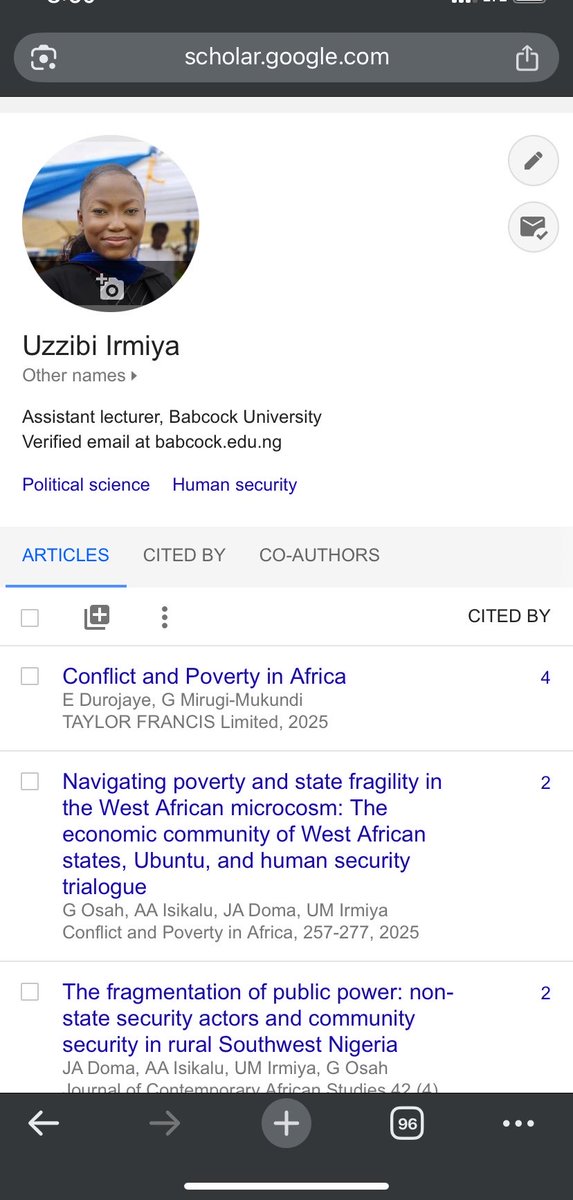
Bsc- International Relations
Msc - Political science
Ph.D - Political science (Defence and Strategic studies
Academic Publications- 16 (at least 5 SCOPUS-indexed)
Citations - 12 (scholar.google.com/citations…)
Certifications - DELF A2
Convener, DSA panel ‘25 plus Travel grant



BA - English and Literary Studies
MA - English Language (Critical Discourse)
PhD - Corpus Stylistics
Academic Publications - 10
Citations 5
Certifications - TEFL, Nigerian National code for health research ethics,
2024 Ife Institute Fellow
Winner 2024 LSA Travel grant

4
60
265
5,395
David Barber retweeted

So then, the treasury offered £10bn for extra defence spending but military chiefs wanted £28bn, an £18bn difference. The money was there but Starmer chose to give £21bn to Ukraine instead. That alone should be enough to force his resignation. bbc.co.uk/news/articles/ce8j…
24
450
1,204
7,096
Malik Khurram Khan Dehwar retweeted

Pakistani special forces, the SSG, is responsible to deploy and execute five doctrinal missions: foreign internal defence, reconnaissance, direct action, counter-terrorism operations, and unconventional warfare.
8
26
241
5,718

🚨 Sweden warns of Russia-NATO conflict in near future
This raises immediate war risk and global supply chain concerns.
🧵👇
──────────────────
🛑 **Action & Reality**
──────────────────
Sweden's Civil Defence Minister issued a stark warning.
They urged citizens to prepare for potential war.
This follows increased Russian aggression near NATO borders.
──────────────────
🌍 **Macro Fallout**
──────────────────
European energy markets could face new shocks.
Baltic Sea shipping lanes become critical flashpoints.
Defense spending across NATO will accelerate sharply.
──────────────────
📊 **Terminal Probabilities**
──────────────────
🏛️ 35%: Deterrence holds, diplomatic channels prevent direct clash.
💥 40%: Border incidents, limited kinetic action in Baltic region.
📉 25%: Prolonged Cold War 2.0, sustained military buildup.
──────────────────
📍 **Zero-Hour Verdict**
──────────────────
NATO's eastern flank is now on high alert.
The global economy braces for potential disruption.
Geopolitical stability hangs by a thread.
♟️🌍
#Geopolitics #NATO #Russia #WW3 #SupplyChains
Cara Ramage retweeted

Oh dear what a pity never mind🙄 surely his Russian and or Israeli paymasters will pay for his defence? Or will he go begging to his flag shagging moronic followers?
4
21
925

It was the first of ~700 since the war began 4 years ago! This isn’t a win you fucking prick, it’s embarrassing! Your defence budget is so bad that 3 people immediately resigned in seeing it. You are a danger to our country. Resign you clueless, dangerous cunt.

What you mean to say is majority are not and a minority are
Weak defence
3

“Students were taught Akbar was great, while Maharana Pratap was overlooked.
Maharana still lives in our hearts.”
- Defence Minister Rajnath Singh at statue unveiling in Agra
10
Danish Ali 🇵🇰 retweeted

You should clarify that this education and health budget is just for Islamabad.But defence budget is for all three sister armed forces of whole Pakistan.
All provinces,Gilgit and AJK allocate hundreds of billions for education and health in their provinces.
5
2
37
1,875
macheather retweeted

Lisa Nandy boasting that Starmer cut the aid budget to fund more 'defence' spending & confirms we need to increase spending even more to "meet this moment"
The UK is already the 5th highest military spender in the world (only the US, China, Russia and Germany spend more than us)
56
125
319
13,551