
⚛️ When My colleague Fell into a Spent Fuel Storage Bay — What Happened Next?
All types of nuclear fuel needs cooling after discharge from the reactor , the need for cooling is different for different fuel, depending on there time and location inside the reactor core, therefore the fuel is stored underwater for 5- 7 years.
Minimum water height above the fuel for shielding is 4.877 m.(for PHWR)
Spent Fuel Storage Bay has 6 -8 times more inventory of fuel than reactor itself.
Most people assume that falling into a spent fuel pool at a nuclear power plant would inevitably result in serious radiation exposure.
A real operating experience tells a different story.
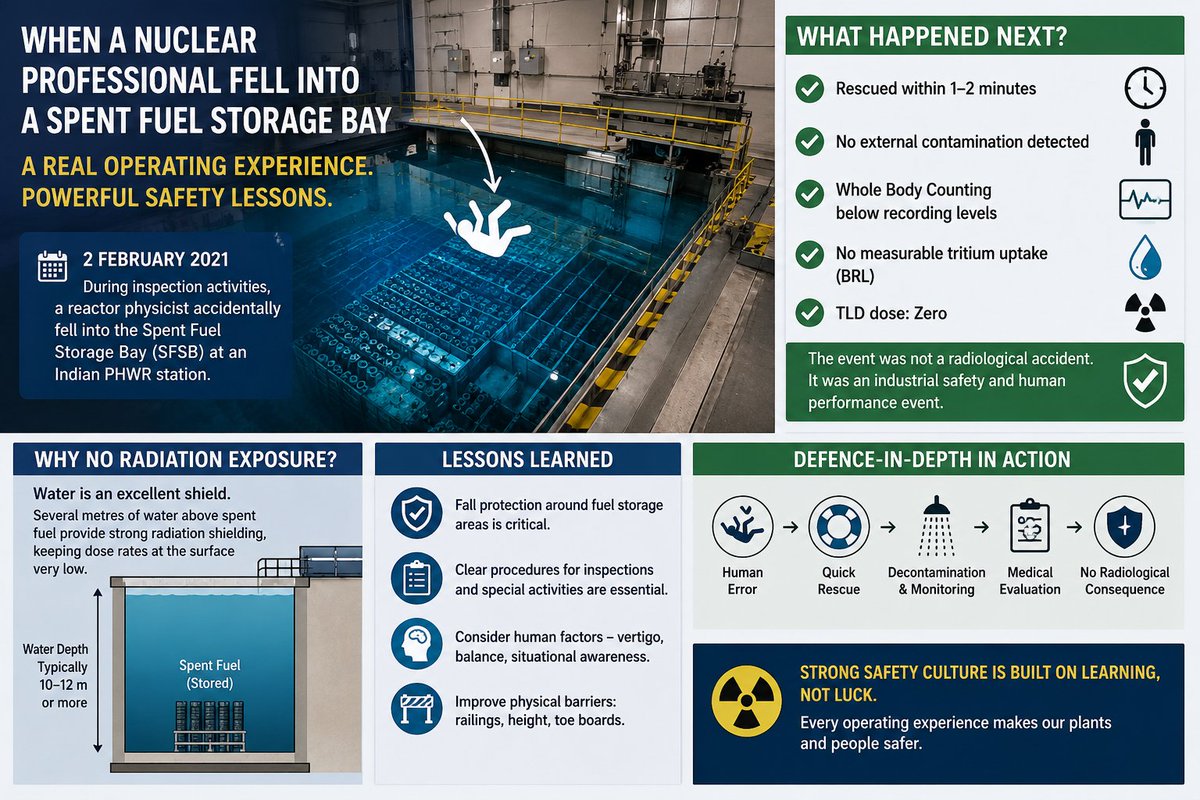
In 02 February 2021around 1340 hrs, during IAEA inspection activities at an Indian PHWR station, a senior person accidentally fell into a Spent Fuel Storage Bay (SFSB).
The outcome?
✅ Rescued by Myself and IAEA inspectors within 3 minutes
✅ No external contamination detected
✅ Whole Body Counting below recording levels
✅ No measurable tritium uptake
✅ TLD dose: Zero
The event was classified not as a radiological accident, but primarily as an industrial safety and human-performance event.
The investigation highlighted several important lessons:
🔹 Fall protection around fuel handling and storage areas matters as much as radiation protection.
🔹 Work procedures must clearly define responsibilities during inspections and special activities.
🔹 Human factors such as vertigo, balance issues, and situational awareness deserve attention when personnel work over open water bodies.
🔹 Physical barriers, railings, and toe boards are critical defence layers that often receive less attention than engineered nuclear systems.
Most importantly, the event demonstrated something many outside the industry do not realize:
Several metres of water above spent fuel provide extremely effective radiation shielding.
Defence-in-depth worked exactly as intended. Even after an unexpected human error, multiple safety layers prevented any radiological consequence.
Nuclear safety is not only about preventing reactor accidents.
It is also about continuously learning from low-consequence events before they become high-consequence ones.
Every operating experience report is a reminder that strong safety culture is built on learning, not luck.
hashtag#OperatingExperience hashtag#PHWR hashtag#NuclearEngineering hashtag#RadiationProtection hashtag#HumanFactors hashtag#DefenceInDepth hashtag#IndustrialSafety hashtag#SafetyCulture hashtag#IAEA
3
3
63

Apr 21
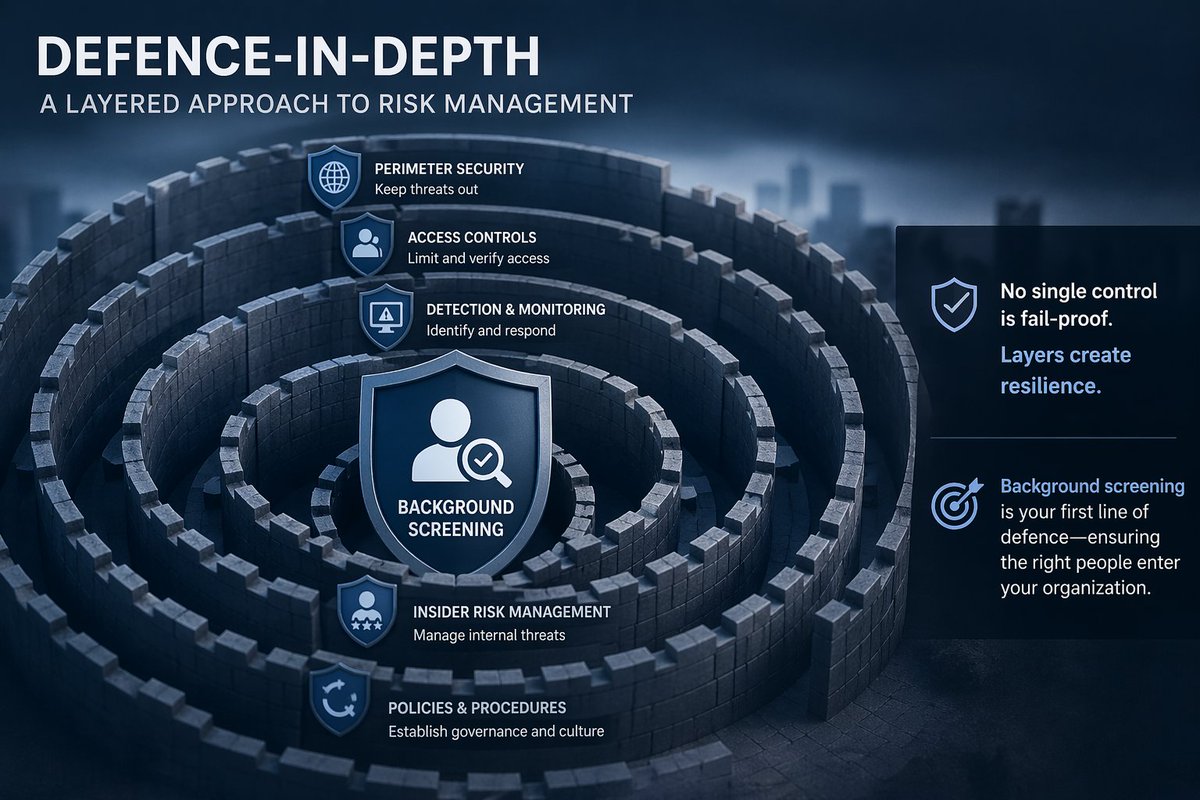
Background screening: Not HR formality—FIRST line of defence in defence-in-depth. Layered controls protect when one fails. People = top risk. Verify identity, history, records & digital footprint to block insiders pre-entry. #BackgroundChecks #DefenceInDepth
1
2
51

Apr 10
Imagine a building with a bouncer at the front door. Big guy, checks everyone coming in, turns away anyone who looks suspicious. Seems solid.
#CyberSecurity #Firewall #DefenceInDepth #100DaysOfCyberSec #LearnInPublic #CyberAwareness #InfoSec
1
2
3
48

Iran has activated a decentralized Mosaic Defense strategy..
Now will the best thing happen..😄
It's impossible to overthrow the government in iran through airstrikes alone.
#DefenceInDepth #DID
#MosaicDefense
#Pentagon
#PentagonDefence
#Tehran
#Iran #IslamicRevolutionaryGuardCorps
#IRGC
2
1,215

4 Dec 2025
is gonna change the security landscape with its cuttingedge defenceindepth hybrid approach 🚀
2
5

31 Aug 2025
defence in depth just changed. Here's how. galdren.com/essential-chatbo… #AI #Compliance #Chatbot #DefenceInDepth #Guardrails
2
6

22 Jul 2025
Recently delivered my #ICSS2025 talk “Secure Your M365 Tenant Like a Boss”. 20 must-know tips for securing M365 - recording & slides are available now.
📺 youtu.be/N7vOIndXDv8?si=vPW_…
📑 welkasworld.com/recordings-v…
#M365 #CloudSecurity #ZeroTrust #DefenceInDepth #Entra #Copilot #Purview
2
14
93
6,020

10 Jul 2025
Can defence innovation succeed without putting people first?
Tara Zammit asks whether the UK’s Strategic Defence Review side-lines personnel and culture in favour of tech-driven priorities.
📰 Read the article: kcl.ac.uk/the-strategic-defe…
#DefenceinDepth
1
4
1,116

10 Jul 2025
Can defence innovation succeed without putting people first?
Tara Zammit asks whether the UK’s Strategic Defence Review side-lines personnel and culture in favour of tech-driven priorities.
📰 Read the article: kcl.ac.uk/the-strategic-defe…
#DefenceinDepth
2
477

10 Jul 2025
Can defence innovation succeed without putting people first?
Tara Zammit asks whether the UK’s Strategic Defence Review side-lines personnel and culture in favour of tech-driven priorities.
📰 Read the article: kcl.ac.uk/the-strategic-defe…
#DefenceinDepth
2
277

6 Jun 2025
Oh, "VERY FAST-TRACK induction in 6 months"? Sounds like someone’s timing their chai break at HQ!
HQ-19 or not, Pakistan Air Force has been silently upgrading with JF-17 Thunder block 3 and indigenously producing critical tech *while* others are busy making headlines. Range is one thing, but operational readiness and pilot mastery win battles
not just flashy graphs.
Remember, it’s not about the system you buy; it’s about how well you fly, fix, and fight with it. Meanwhile, our skies remain secure, and the nation sleeps peacefully.
#PAFPower #DefenceInDepth #MadeInPakistan #SkyGuardians
Mic drop.
1
441
23 Apr 2025
📣New blog post
Your sensitivity labels won’t stop a data breach if your user’s been phished. Attackers want your data - so start by protecting identity and focus on defence in depth. Here’s how: welkasworld.com/post/modern-…
#DataSecurity #DefenceInDepth #Cybersecurity #CyberThreats
4
14
731

13 Aug 2024
On the importance of HardSec -
thehackernews.com/2024/08/wh… #cybersecurity #hardsec #DefenceInDepth
2
24

18 Mar 2024
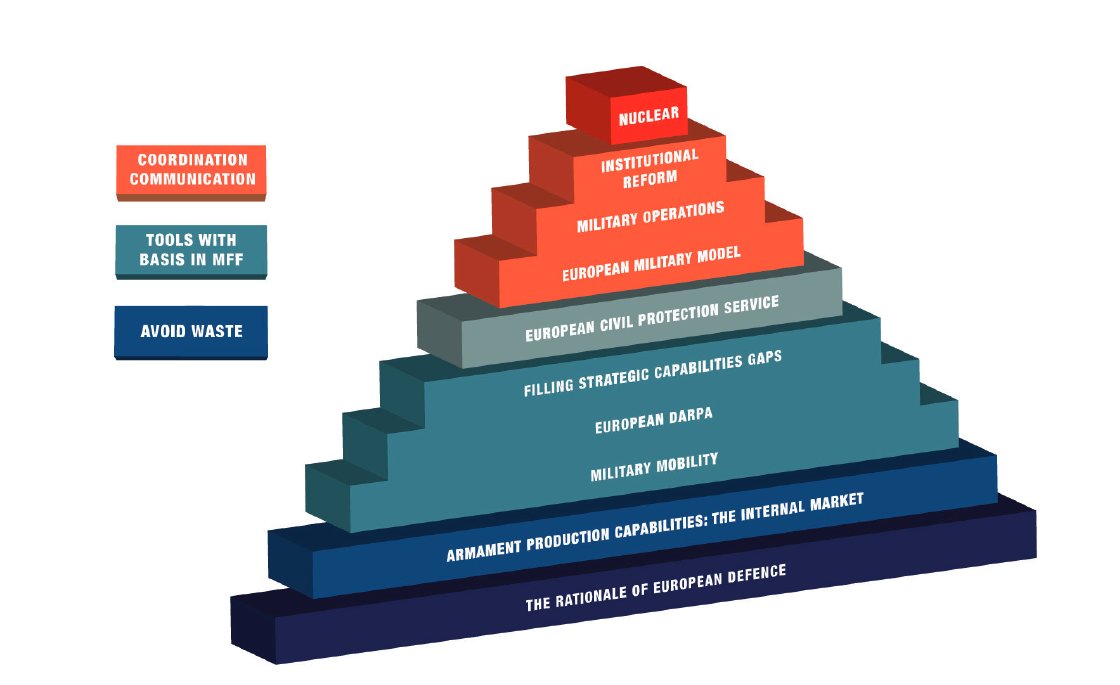
🎉 🇪🇺 I am excited to announce that the Wilfried Martens Centre for European Studies has launched the #DefenceInDepth paper during the European People's Party Congress in Bucharest on 6-7 March. The paper is part of our #EuropeanDefenceUnion project...(1/10)
3
4
16
2,468

13 Dec 2023
Advent of Cyber 2023 Day 12 from @tryhackme
is out, Learn Defence in Depth, Basic Endpoint Hardening & Simple Boot2Root Methodology
tryhackme.com/room/adventofc…
#tryhackme #adventofcyber2023 #adventofcyber #defenceindepth #Boot2Root

3
131


18 Sep 2023
Pretty certain this wouldn’t be the first, nor the last step of the defence plan. But if 🇷🇺 would have penetrated 200 km into 🇵🇱 from east, like they did with Kyiv, it would be better to stop them at the River, than just looking on. This is called #DefenceInDepth incl reconquer!
18 Sep 2023

The defence minister has published a document he says shows the opposition, when in power, planned to give up half of Poland if Russia invaded
The opposition accuses him of treason for declassifying the file to benefit the ruling party's election campaign notesfrompoland.com/2023/09/…
1
2
408
18 Sep 2023
Pretty certain this wouldn’t be the first, nor the last step of the defence plan. But if 🇷🇺 would have penetrated 200 km into 🇵🇱 from east, like they did with Kyiv, it would be better to stop them at the River, than just looking on. This is called #DefenceInDepth incl reconquer!
4
24
3,275

10 Aug 2023
‘Cyber resilience - Defence-in-depth principles’ is now available! 💻📱
This book will give you a good understanding of the fundamentals of cyber security and resilience.
Find out more today!👇
ow.ly/M5Gx50PwvgZ
#cyberresilience #defenceindepth #publishedtoday
2
1
11

29 Jul 2023

2
15