









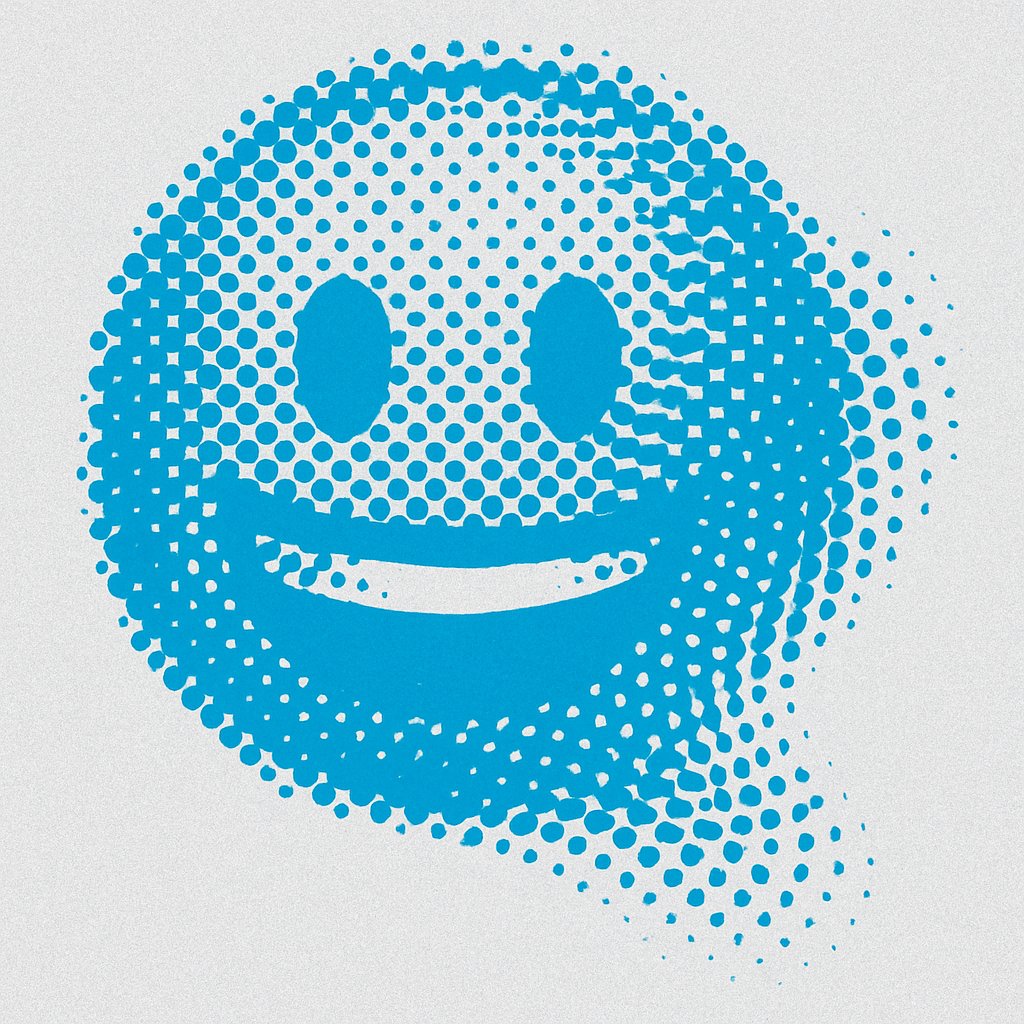
ALT Create image. Transform 😃 emoji into a monocolor halftone poster artwork using modular dot-based distortion, inspired by early 2000s digital graphic aesthetics. Use only vivid halftone techniques—varying dot sizes, densities, and interlocking waveforms—to recreate the emoji form in a dynamic, sculptural silhouette. The entire image must be composed of a single bold color (e.g., magenta, cyan, or lime) over a grain-textured light gray background. Focus on optical depth, flow, and abstraction: Construct the emoji’s body using tightly packed halftone circles that vary in size to simulate volume. Allow parts of the form to dissolve into pure dot arrays, creating a sense of motion or glitchy disappearance. Do not outline the emoji or use flat fills—only halftone dots define the shape. Prioritize visual rhythm and modularity so the halftone style can universally adapt to any emoji silhouette. Design should reference the expressive pixel geometry of 2000s tech branding, motion capture
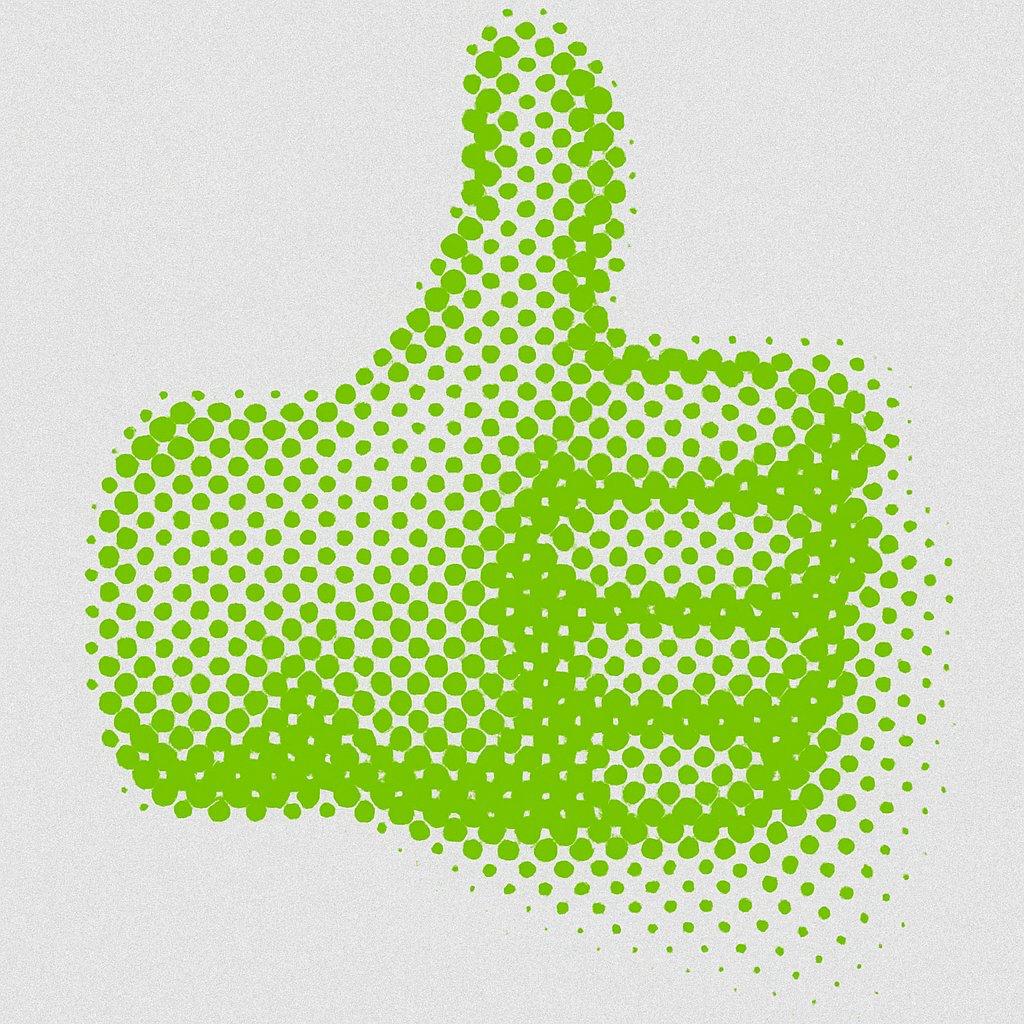
ALT Create image. Transform 👍 emoji into a monocolor halftone poster artwork using modular dot-based distortion, inspired by early 2000s digital graphic aesthetics. Use only vivid halftone techniques—varying dot sizes, densities, and interlocking waveforms—to recreate the emoji form in a dynamic, sculptural silhouette. The entire image must be composed of a single bold color (e.g., magenta, cyan, or lime) over a grain-textured light gray background. Focus on optical depth, flow, and abstraction: Construct the emoji’s body using tightly packed halftone circles that vary in size to simulate volume. Allow parts of the form to dissolve into pure dot arrays, creating a sense of motion or glitchy disappearance. Do not outline the emoji or use flat fills—only halftone dots define the shape. Prioritize visual rhythm and modularity so the halftone style can universally adapt to any emoji silhouette. Design should reference the expressive pixel geometry of 2000s tech branding, motion capture
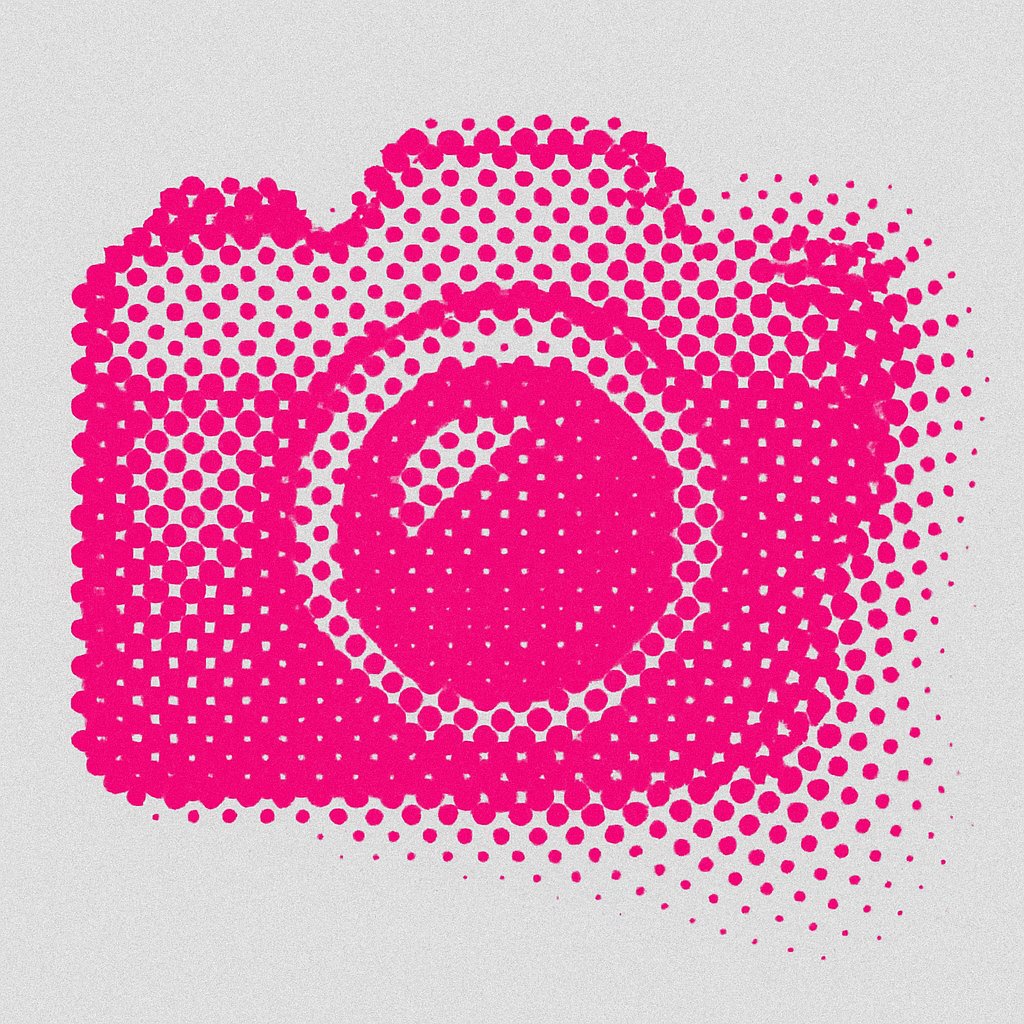
ALT Create image. Transform 📷 emoji into a monocolor halftone poster artwork using modular dot-based distortion, inspired by early 2000s digital graphic aesthetics. Use only vivid halftone techniques—varying dot sizes, densities, and interlocking waveforms—to recreate the emoji form in a dynamic, sculptural silhouette. The entire image must be composed of a single bold color (e.g., magenta, cyan, or lime) over a grain-textured light gray background. Focus on optical depth, flow, and abstraction: Construct the emoji’s body using tightly packed halftone circles that vary in size to simulate volume. Allow parts of the form to dissolve into pure dot arrays, creating a sense of motion or glitchy disappearance. Do not outline the emoji or use flat fills—only halftone dots define the shape. Prioritize visual rhythm and modularity so the halftone style can universally adapt to any emoji silhouette. Design should reference the expressive pixel geometry of 2000s tech branding, motion capture
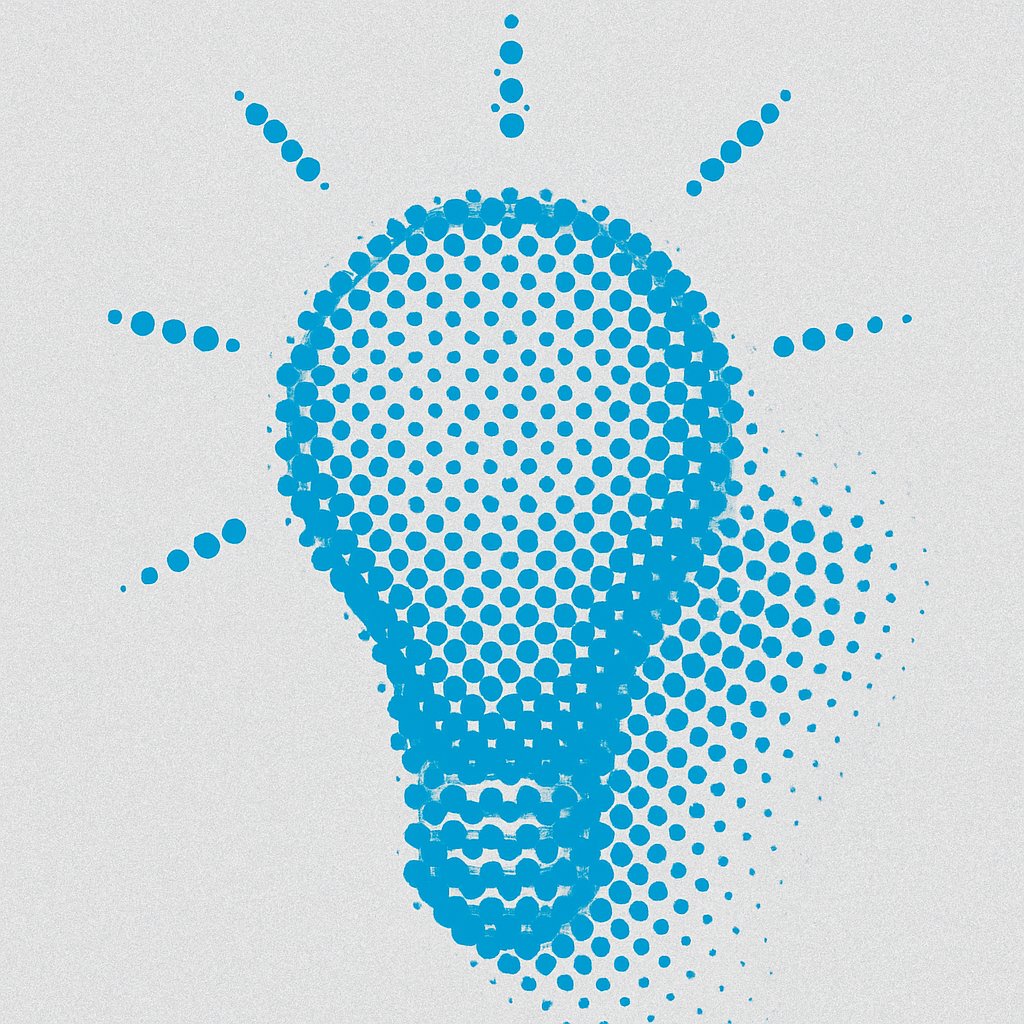
ALT Create image. Transform 💡 emoji into a monocolor halftone poster artwork using modular dot-based distortion, inspired by early 2000s digital graphic aesthetics. Use only vivid halftone techniques—varying dot sizes, densities, and interlocking waveforms—to recreate the emoji form in a dynamic, sculptural silhouette. The entire image must be composed of a single bold color (e.g., magenta, cyan, or lime) over a grain-textured light gray background. Focus on optical depth, flow, and abstraction: Construct the emoji’s body using tightly packed halftone circles that vary in size to simulate volume. Allow parts of the form to dissolve into pure dot arrays, creating a sense of motion or glitchy disappearance. Do not outline the emoji or use flat fills—only halftone dots define the shape. Prioritize visual rhythm and modularity so the halftone style can universally adapt to any emoji silhouette. Design should reference the expressive pixel geometry of 2000s tech branding, motion capture


ALT Aetheria Botanicals packaging design