
Jun 13
wait so rpc is basically turning into a database now?? wild seeing sol devexp lool back to sql roots
1
31

May 30
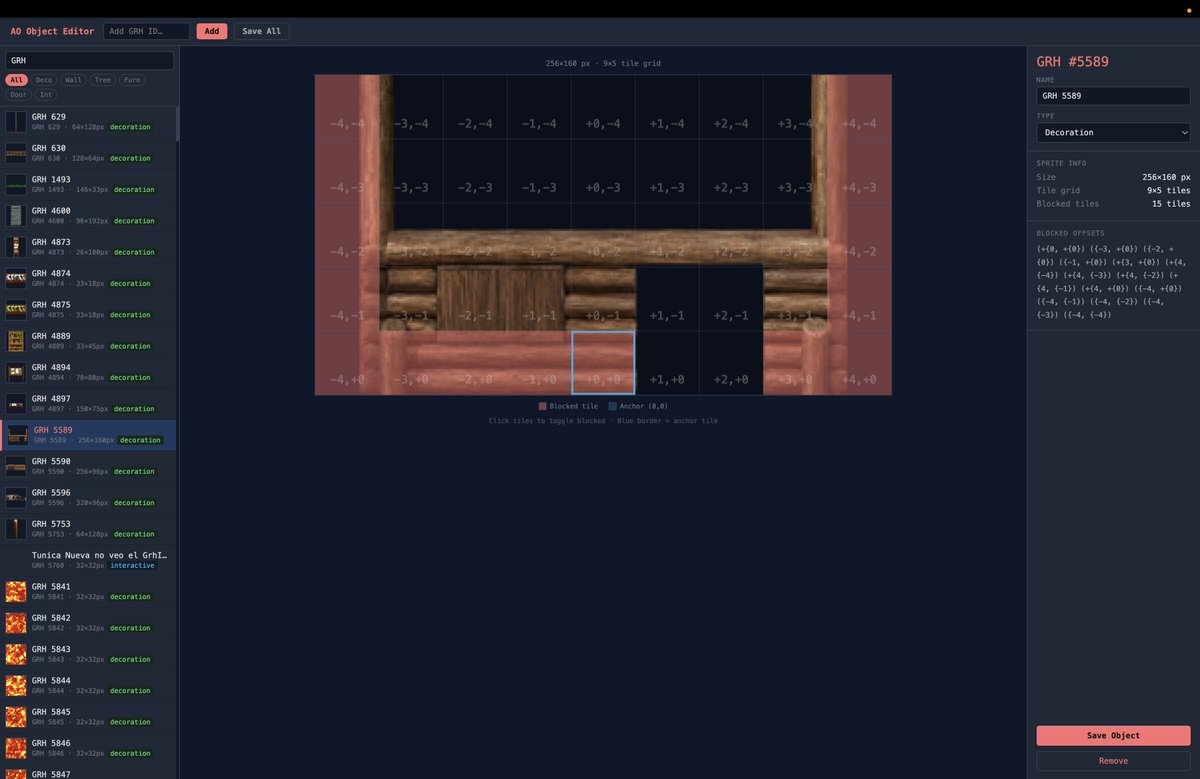
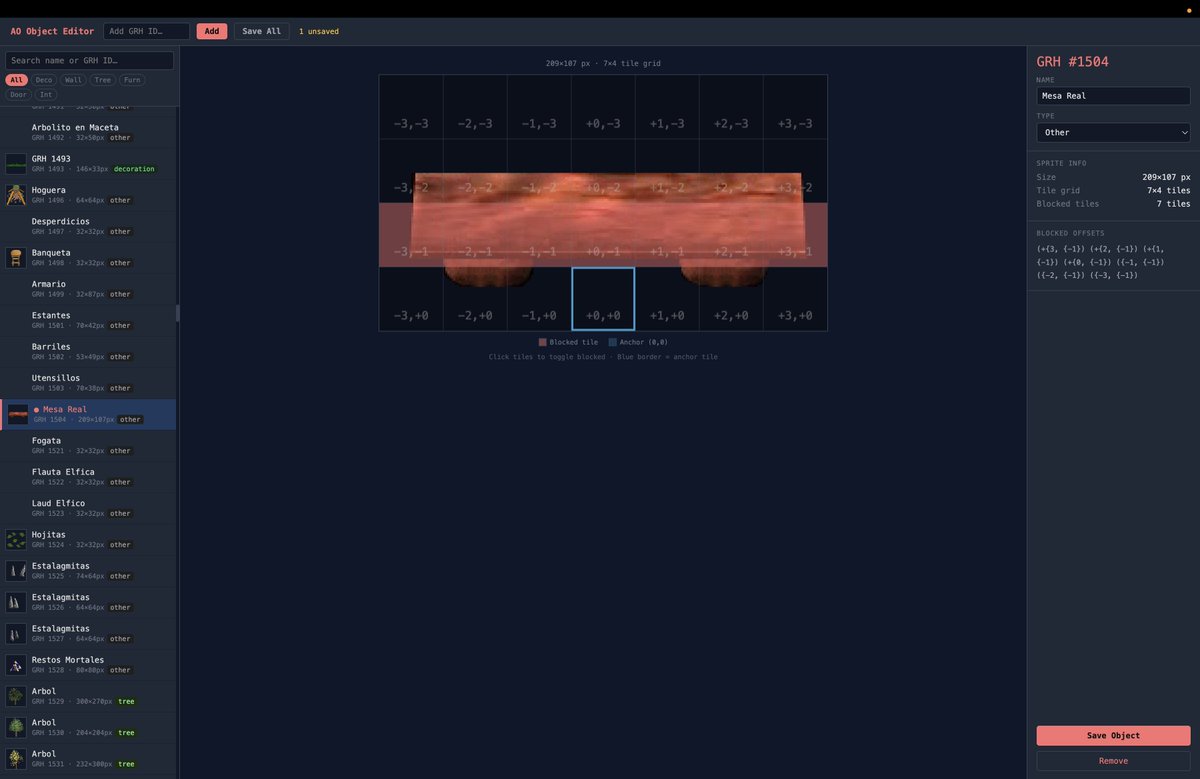
Antes de encarar algo, siempre me gustó tener una buena DevExp.
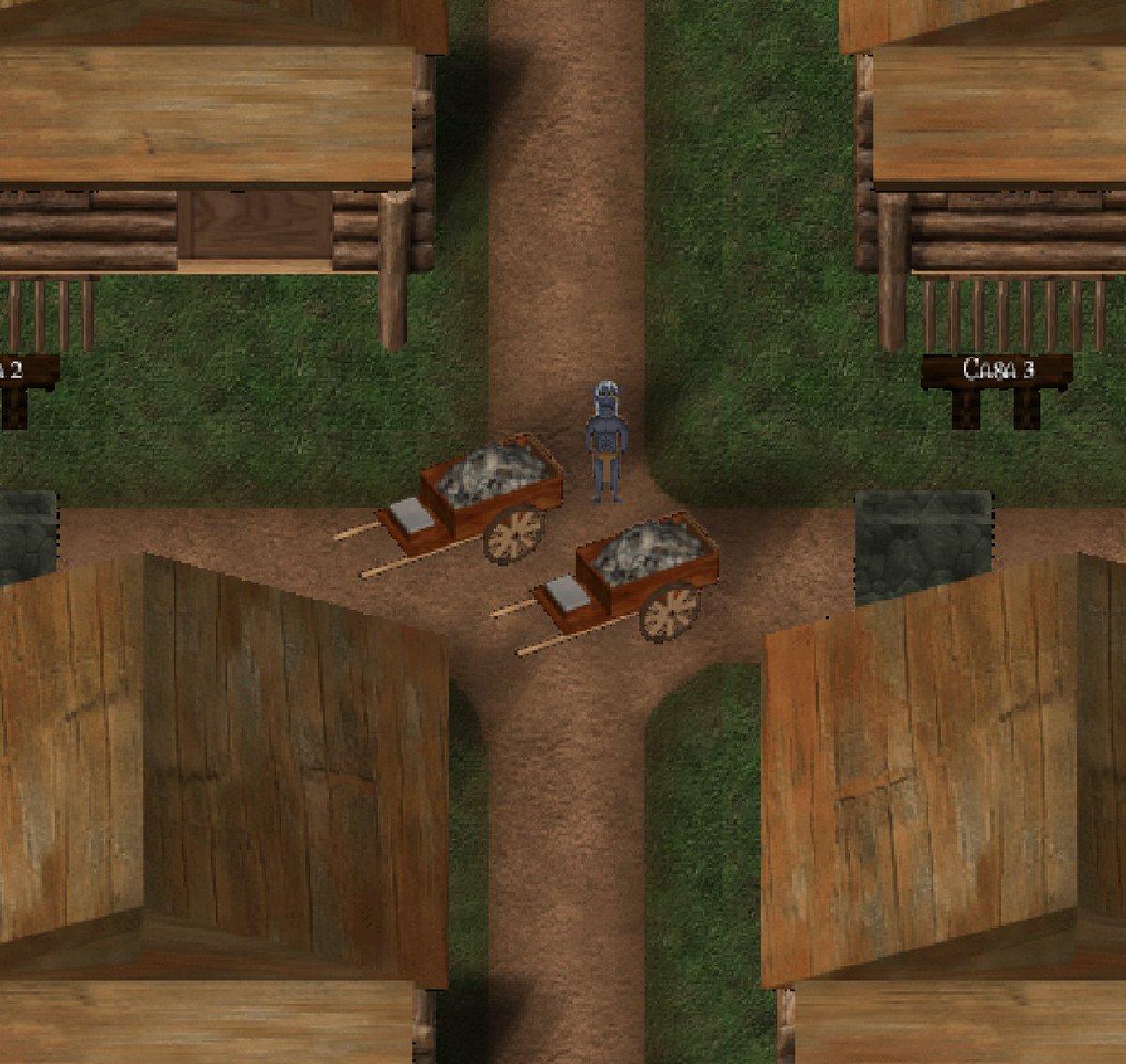
Le armé un sistema de "game objects" para definir los bloqueos directamente en el grh sin tener agregarlos a mano en el mapa, como hicimos toda la vida, y los aplica al "buildear" los mapas.
Y ya la edición de los mapas desde TiledMap funciona 10/10.
2
36
3,665


Apr 25
1/ Now you understand why in some voting systems, privacy is important. It's exactly to avoid some people attacking you for your own opinion. We should continue to speak up but just be prepared to be blocked.
2/ In politics, parties fight a lot, everywhere, just in close rooms, sometimes this leaks in television. On public forums related to politics people call each other idiots all the time. IMHO, you can only control ethics / empathy of this because discourse is unavoidable and in fact healthy and necessary. Other ecosystems solve this problem by not having governance and letting foundations take all critical and important decisions. As long as those foundations are around...
3/ IO let go of quite a few people in this bear market, some people joined CF, others kept, yet some other working on Midnight.
4/ In a way, we reached a state that Cardano Community is literally like "a decentralised board of an organisation", that as always by design. So if you vote a not to a proposal (there maybe a team at IO that will literally have to pack up), this is the same like a Board in an organisation, Oracle Board letting go of 30.000 people. There is no difference other than Cardano Community and ADA Holders are the board.
5/ My personal gut feeling (I could be wrong) is that some proposals from I/O especially are more to save more people from being let go. So I do not want to defend CH for behaving like he is but to some extend this is like being a general and you have troops (employees on a payroll at IO), so if certain proposals are not funded you may have to let go the teams. If not then your stress and misbehavior is in fact because you as a leader (CH) will have a choice - do I keep them on my payroll and pay them salary and 'burn money' or do I let them go. So in a way this passion, that many attribute to immature behaviour could in fact be empathy to own employees. A sceptic could argue that IO could finance this out of their own balance sheet but obviously since this is private company we have no idea how healthy it is or not (there is no Reeve for I/O). It's a private company after all. It does not mean the acting and tantrums of CH are justified at all, in fact it only shows how difficult is to do this job and that such a difficult position requires more professional training and empathy and self control.
6/ As for Blockfrost proposal, there are different aspects there, there is keeping team alive but also decentralisation. My vision is very similar to @santicarmuega with Super Node, where SPOs can just install additional nodes and run them but then via P2P or some mechanism those nodes would be discoverable in the network. Personally I would prefer to invest more into Super Node than specifically blockfrost. Super Node idea is very generic, it applies to Koios, Yaci-Store, Blockfrost, Dolos as much as to others.
7/ I really like Formal Verification proposal from IO and this is worth investing as well as Cardano Updates proposal. 13 13 mln ADA each.
8/ As for Hydra / Midgard, I think it is also worth to invest but not now, simply timing is not right for this. L2 typically is needed when you have L1 saturated and we have @fluxpointstudio that are iterating and trying our some partner chain, we will have Midnight, it is not like we do not have options (maybe not L2s) but we have partner chains for high frequency apps. Hydra still has a lot to do but it is already quite usable for certain class of problems (unfortunately minority for now).
9/ Cardano DevExp proposal for 3 mln ADA I do not like, because we have tons of work already done on developers.cardano.org, we have Yaci-Store done by @satran004 and supported by @Cardano_CF. We also have Aiken Book from John Green, tutorials, a book by @elraulito. It is simply way too expensive for tutorials and more importantly there is already a lot of work being done by CF employees on DevExp. In fact I would say comparing to 3 years ago, DevExp is now on another level on Cardano and smooth experience (of course can always be improved).
10/ A large software vendor also often has similar challanges as IO and then they often in harsh market conditions or when loosing a major client they have to find work items outside. New clients, to survive and then once market conditions improve maybe win back a client. It is not always so easy as knowledge you may have is very specialised. In a way employees and organisations work in a waterfall way and agility is very hard.
So it is not all doom and gloom, there are IMHO good proposals from I/O and timing is right for them. I do not envy Charles his job to be honest, I personally do not know if I would have guts / stamina and temper (I doubt it) to do this myself, however, unfortunately such positions require you to be almost like a robot. Put emotions aside and understand that now in terms of Governance Cardano Community is the "Board" and control of the ecosystem is in people's and dReps hands.
#Cardano
6
5
26
1,101
Apr 24
Its not worth 3 mln USD. All components are in place, financing needs to go to completely different areas in Cardano, not DevExp. That was a big deal, lets say 1-2 years ago, not today. DevExp is great.
1. github.com/bloxbean/yaci-dev…
2. developers.cardano.org
Yaci-Dev-Kit development continues and developers.cardano.org gets more and more tutorials updates every single day.
Like Germans say, this proposal is "Schnee von Gestern", a classic one.
2
1
47

Apr 14
Ready for Spring I/O 2026 🚀
Excited to dive into the latest in tech, connect with brilliant minds, and bring back fresh ideas. Let’s go! 🌱💡
#SpringIO #TechConference #DevExp
2
52

Apr 14
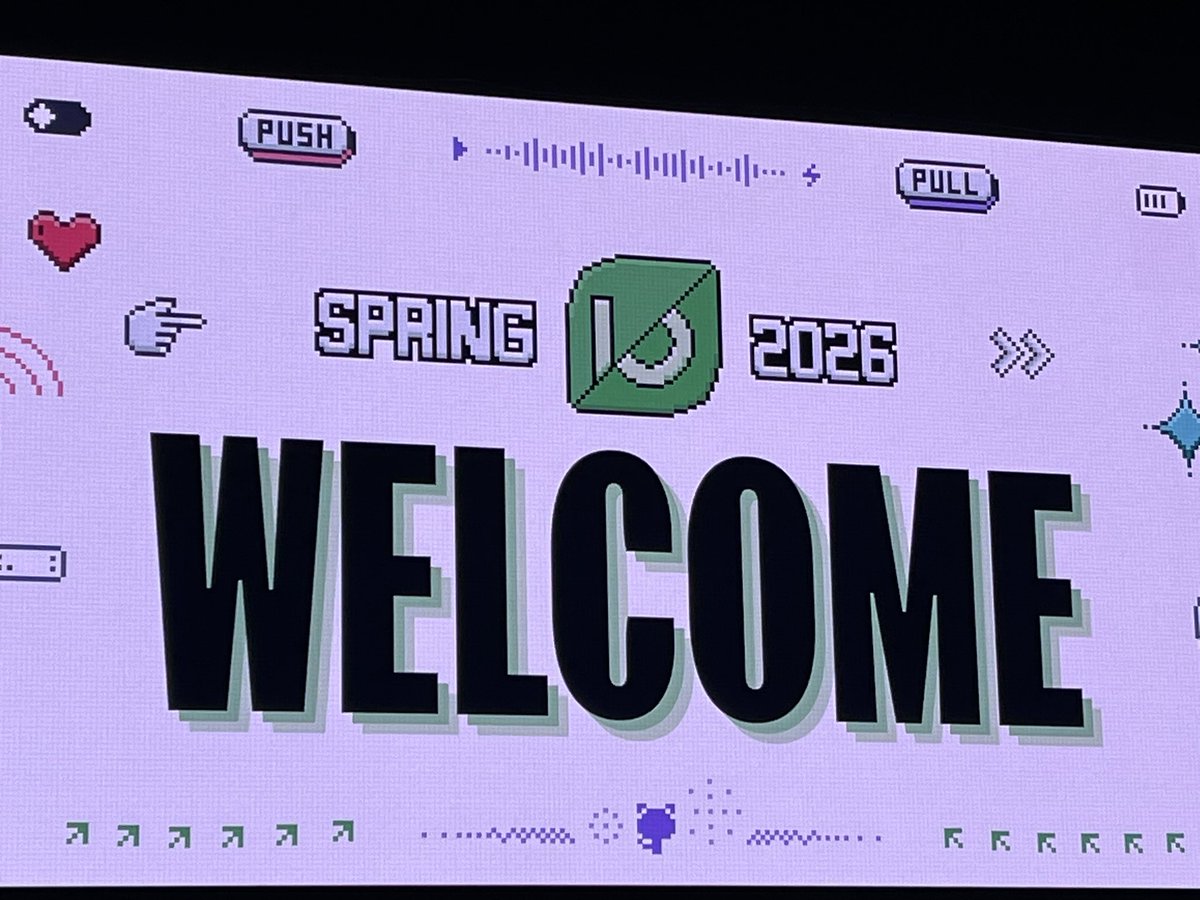
@spring_io here I am! Ready for 2 days of knowledge sharing with the spring community 🙌
Say hi if you’re around and don’t miss our workshop with @salaboy this afternoon! Exciting stuff around developing and testing AI and cloud native apps with enhanced #DevExp 👩🏻💻
1
4
194


Mar 26
Nice addition from @joshpensky today: new enum format in our API docs quick-copy buttons. Functional but also very satisfying to click 💜 #evervault #devex #devexp
1
3
293

Feb 27
Followers: Do I do an internal transfer to a team building devexp at Uber (super solid, exciting work) or do I quit my toxic team and go look for greener pastures (starting a company, joining some cool startup doing exciting work)
33%
Quit (startup)
48%
Quit (new job)
19%
Stay
21 votes • Final results
1
8
402

DevExp 2026 : cinq millions de gourdes pour supporter des projets d’IA à impact social
passioninfosplus.com/2026/02…
2
311

Feb 2
honest take on kimi-cli K2.5
swarms for coding. did a big refactor (20k lines) with kimi swarm in 5 minutes that took opus an hour
swarms for agentic applications. everyone is sleeping on this but it’s a big deal. delete your brittle multi-agent harness. let the swarm orchestrate.
visual. kiki’s visual intelligence feels gemini-3 level
- coding iq still not as good as opus. often leaves placeholder code/todo’s/ empty shims.
-devexp. no agent-sdk for kimi, need to plumb data around and build shims
1
10
1,040

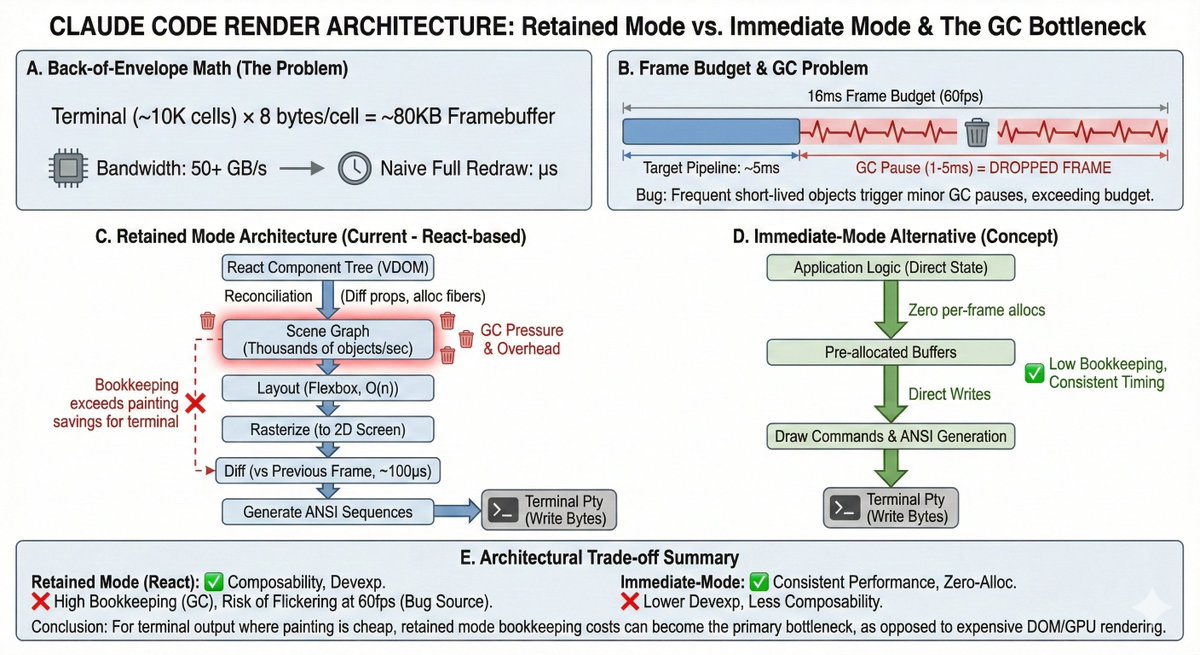
IS CLAUDE CODE'S "GAME ENGINE" A SKILL ISSUE?
Some back-of-envelope math:
A terminal is approx 80x24 to 200x50 cells. Call it 10K cells, 8 bytes each (char colors attributes) = 80KB framebuffer. Modern memory bandwidth is 50 gigs/s. A naive full redraw takes microseconds. So where does 5ms go?
Layout is real work - flexbox-style constraint resolution is O(n) with non-trivial constants. For nested panels and streaming text, low single-digit ms is plausible. Diffing is smart (ANSI cursor movement is expensive on some terminals) but diffing 10K cells is ~100μs, not ms. So this is not it ...
The real cost is upstream: React reconciliation. Every frame you're walking the component tree, comparing props, allocating fiber nodes and closures. Thousands of short-lived objects per second. V8 handles this fine, until a minor GC pause (1-5ms) hits and you drop a frame. Exactly the bug they described!
The architectural question is that retained mode pays bookkeeping cost to minimize painting cost. Makes sense for DOM/GPU where painting is expensive. For a terminal, painting is nearly free, since you're writing bytes to a pty. The bookkeeping might exceed what you save!!!
Immediate-mode (imgui-style) would mean: pre-allocated buffers, zero per-frame allocs, direct writes. You lose React's composability and devexp, but you don't fight GC at 60fps.
Not wrong! Just a choice with known costs that eventually came due.

Most people's mental model of Claude Code is that "it's just a TUI" but it should really be closer to "a small game engine".
For each frame our pipeline constructs a scene graph with React then
-> layouts elements
-> rasterizes them to a 2d screen
-> diffs that against the previous screen
-> finally uses the diff to generate ANSI sequences to draw
We have a ~16ms frame budget so we have roughly ~5ms to go from the React scene graph to ANSI written.
2
14
2,010

Jan 14
Мне начинает казаться что в фронтенде devexp-ом занимаются люди без базовых представлений о computer science. Меньше всего на свете я, открывая текстовый файл, ожидаю исполнения какого-то кода на своей машине.
2
2
315

💎Roadmap or Map of Road
📌 @GenLayer is not just another chain. It’s the moment when blockchain stops being a rule machine and becomes a thinking system. Subjectivity, LLMs, on-chain web browsing, and non-determinism converge into one ecosystem. Here, consensus isn’t formalism—it’s a living, evolving decision-making process.
📌At the core - the duet of Optimistic Democracy and the Equivalence Principle. This isn’t just an algorithm. It’s a multi-role process where the network reacts, evolves, and makes decisions through the interaction of actors, not rigid math.
📌GenVM is the heart of the system. Intelligent Contracts in Python, executed in WASM, with image processing and grayboxing for validators. A space where non-determinism becomes a tool, not a threat. Builders gain freedom to create things that were impossible before.
📌Consensus sets the pulse: selections, voting, rotations, staking, rewards. The Node stitches execution and commit-reveal, turning it all into a unified architecture. DevExp proves everything in practice — projects are built here and now, not “sometime after mainnet.”
📌We don’t reinvent what’s already solid. Determinism is handled by ZKsync. GenLayer Chain as an L2 EVM holds the foundation. On top of it - the GenLayer Network, where the real magic happens: Intelligent Contracts, appeals, non-determinism, and entirely new interaction scenarios.
📌The testnet ecosystem is not a series of stages—it’s evolution.
▫️Asimov - limits, stress, exploits.
▫️Bradbury - an AI lab for validators and real-time experimentation.
▫️Clarke - a mainnet candidate, the final proving ground before launch.
📌We’re approaching the final arc: Bradbury → Clarke → audits → Mainnet. Years of work converge into a new class of networks.
@GenLayer is a network that thinks. A new way to make decisions. The next step for Web3 and it’s happening now.

3
14
134

22 Dec 2025
We are all constantly waiting for news from @GenLayer. Some are updating nodes on Asimov, some are looking forward to the launch of Bradbury, and some just want to see how Mainnet will change everything. And now, with the holidays approaching, everyone has their own number of anticipation.
The team shared a major update showing how everything has come together into one system. GenVM is almost ready, now with image processing support. It is GenLayer’s own virtual machine that runs Intelligent Contracts written in Python in a WASM environment. For validators, there is grayboxing - an extra layer of security through LUA scripts.
Consensus is Optimistic Democracy, with mechanics for leader selection, voting, appeals, rotations, and staking. The contracts are written in Solidity and are already partially live. Staking is active, while fees and rewards are still in development.
The Node is a separate implementation in golang that syncs data, executes GenVM, and reports results back to consensus. It is already functional, with scalability tasks remaining.
DevExp created Studio - a centralized simulation of GenLayer that is already used in production. After Rally, its scalability improved significantly. Explorer is updated after every consensus upgrade.
The team is also working on protocol correctness: simulations of attacks, validator behavior, and fee economics. A formal TLA specification is being finalized.
GenLayer architecture is composed of two main components:
✅ GenLayer Chain - an L2 on ZKsync that manages the deterministic side
✅ GenLayer Network - an overlay with validator nodes, GenVM, and the Optimistic Democracy consensus
Testnet Asimov is already in phase 4, testing infrastructure and stability with frequent updates and stress tests. Bradbury will launch in a few weeks - an AI‑focused testnet for validators and researchers, experimenting with LLMs, appeals, penalties, and rewards. Clarke will be the stable Mainnet candidate, where new features will be tested before launch.
I created a timer video that everyone can interpret in their own way. For some it’s the countdown to Bradbury, for others to Mainnet, and for some simply to the moment when everything comes together.
Full article is linked below. 👇
x.com/raskovsky/status/20013…
@raskovsky @RuzgarFlns
17 Dec 2025

20
3
100
759

18 Dec 2025
🎄 Roadmap to Mainnet 🚀
@GenLayer is on the final stretch - just in time for a Christmas miracle on-chain.
A deep dive from the latest @raskovsky update on what makes GenLayer unique - and where it is headed.
Core components nearly complete (all wrapped like presents under the Mainnet tree):
GenVM – The heart of Intelligent Contracts (Python → WASM). Now supports image processing Grayboxing security layer. Basically mainnet‑ready.
Consensus – Optimistic Democracy mechanics fully implemented. Staking is live; fees and rewards in the final stages.
Node – Go‑lang binary connecting everything. Most work done; final scaling ops underway.
DevExp – Studio (full simulator) and Explorer polished. Builder tools solid and stable.
Architecture (the sleigh runners under the hood):
The deterministic foundation is GenLayer Chain – an EVM‑compatible L2 built on @zksync
This layer runs Solidity consensus contracts handling staking, leader selection, commit‑reveal voting, appeals, and tribunals, with ZK proofs delivering fast, cheap settlement and Ethereum‑level security.
On top sits the GenLayer Network overlay, where the real holiday magic happens:
Validator nodes execute GenVM (Python → WASM), enabling Intelligent Contracts to browse the web, call LLMs, and resolve subjective disputes via Optimistic Democracy – a decentralized “jury” of diverse AI models voting to reach consensus. No oracles, no centralization 🤖🎄⚖️
Multi‑stage Testnet rollout (three festive stops on the sleigh ride):
🧠 Asimov (live, Phase 4) – Stress‑testing infra, rotations, tribunals. Perfect for node operators & security researchers.
🤖 Bradbury (launching in weeks) – AI‑focused: LLM benchmarking, penalty/reward tuning, and validator community experiments.
🚀 Clarke – Mainnet candidate: stable, subsidized for builders, final feature testing before launch.
After Clarke → full security audits → Mainnet🔥 – the star on top of the GenLayer tree.
Years of whitepaper vision turning into reality. ✨
x.com/raskovsky/status/20013…
🎁 Join the Builders Program →
points.genlayer.foundation?r…
17 Dec 2025
9
90
755


1 Dec 2025
@IOHK_Charles love this vision!
@hlabs_tech could help on almost all fronts
On the DeFi side @gravitycardano will be source-available and can push the entire DeFi ecosystem forward with its patterns designed specifically for eUTxO, which also means we can get apps that take advantage of improvements like Leios without the tradeoffs a L2 like hydra might introduce
On the DevExp side @pebble_lang could be as helpful as Aiken as soon as the tooling for the language improves
And with Gerolamo we are involved on the infrastructure side from the bottom up
Just letting you know we are right behind you ready to help
1
6
74
2,337

20 Nov 2025
Mastra 1.0 [beta] is just perfect for building Slack agents!
Slack is built for business-specific agents:
❇️ they live where the team works
❇️ they keep everyone synced
❇️ they distribute knowledge timely
The hardest part in Slack is orchestrating memory around Slack primitives:
🔼 channel
🔼 thread
🔼 user
🔼 team
Can pretty tricky:
make one mistake → your agent will become incoherent or harmful.
Mastra gives you super granular control over
[memory ←→ primitive] config
for all three memory types:
❇️ Conversational [short-term, sliding window]
❇️ Semantic [snippets from previous threads]
❇️ Working [user preferences, persistent]
And there is more:
RequestContext [ex RuntimeContext]
It allows you to dynamically & predictably inject dynamic context:
📅 dates
🕒 events
📍 location-specific updates
and so on...
Slack agent easily adapts to Bob from sales in SF and Jen from client service in NY
Mastra is the first framework I've used that makes building Slack agents a nice DevExp.
This feature [↓] is next level: 3-click Slack deploy🔥
Now you can skip app manifest/tokens/keys
[I assume] Mastra gives you Slack-native memory config right away.
Setting up all these can be demoralizing if you new to this.
Now you can deploy your Slack agent fast, test it, use it.
And go to the technical stuff when you get the base orchestration right.
Just 💎

bring mastra agents into your company slack
chat with them, tag them in channels, interact with them like they are your coworkers
DM for early access
3
283