
May 9
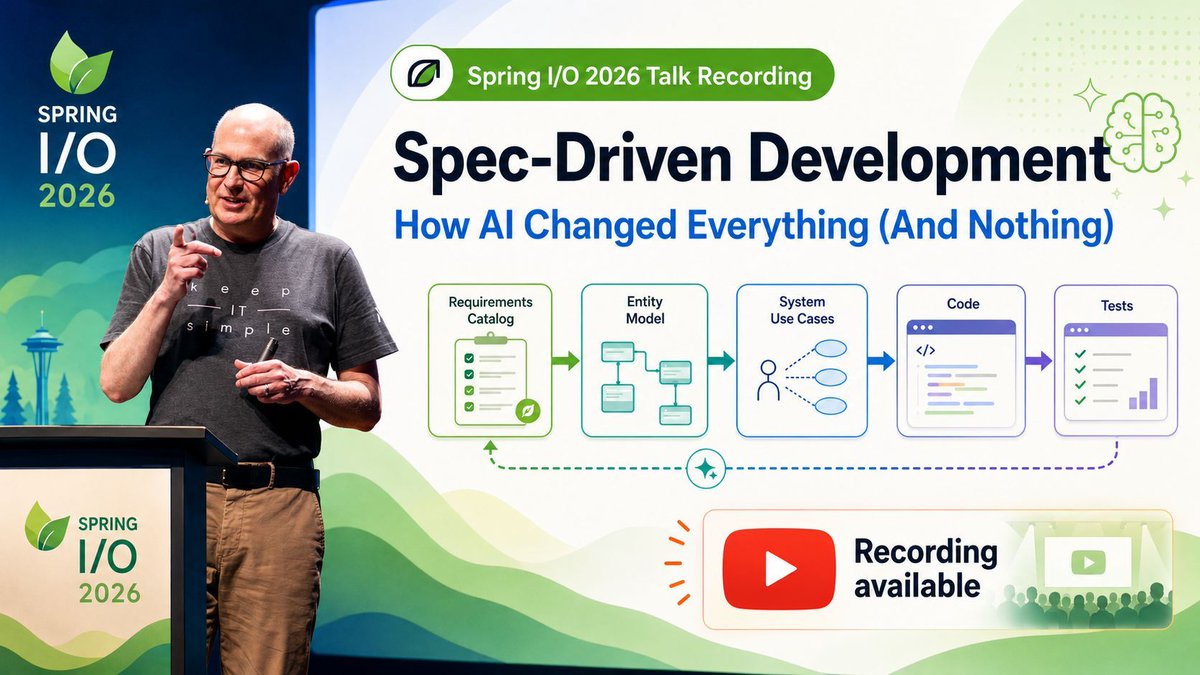
The recording of my Spring I/O 2026 talk is now online 🎥
Spec-driven Development: How AI Changed Everything (And Nothing)
AI is changing how we build software. But one thing has not changed: unclear requirements still lead to unclear software.
In this talk, I show why specs become even more important when we use AI coding agents. The better we describe the intended behavior, the better AI can help us implement, test, and evolve the system.
I also explain how the AI Unified Process uses:
- Requirements Catalog
- Entity Model
- System Use Cases
- Traceability from specs to code and tests
The goal is not to replace developers. The goal is to give AI the right context, so developers can focus more on design, review, and domain correctness.
Recording:
youtube.com/watch?v=35dH6q18…
Thanks to Spring I/O for publishing the recording.
#SpringIO #AI #SoftwareDevelopment #SpecDrivenDevelopment #Java #SpringBoot #Architecture #AIUnifiedProcess
54
267
16,226

One of the best parts of speaking at or attending tech conferences is the opportunity to have meaningful conversations with fellow developers and speakers.
While attending the @spring_io 2026 conference in Barcelona, I had the pleasure of speaking with @odrotbohm over breakfast.
We discussed Spring Boot, Spring Modulith, Hexagonal Architecture, and the trade-offs between different approaches to organizing code.
During our discussion on code organization, Oliver shared a fantastic analogy.
Modularity, he explained, helps us organize code in much the same way we organize spaces in a house.
A house may have a living room, bedroom, children’s room, kitchen, and so on. Each room can be maintained differently depending on its purpose. Not every room is equally clean or equally messy at all times. Children’s rooms are often less organized. The living room is usually kept tidy because it is the space visitors see first. The kitchen is especially important, so we make an effort to keep it clean and hygienic.
The same principle applies to software modules.
Different modules in a system may have different levels of maturity. Some modules have stable requirements and a well-established structure. Others may still be exploratory, where imposing a strict design upfront may not be practical or even necessary. Some teams may prefer a Hexagonal Architecture style, while others may choose a simpler, flatter code organization.
One of the strengths of a modular monolith is that each module can evolve using the approach best suited to the team and the problem domain, without negatively affecting other modules or teams. If one module becomes messy, that complexity remains contained. At the same time, teams can experiment with approaches such as Hexagonal Architecture and evaluate whether they work better than the alternatives.
The analogy of a house with rooms maintained at different levels of cleanliness resonated strongly with me.
While we may not ultimately want every module to follow a completely different architectural style, a modular monolith gives teams the flexibility to experiment and evolve independently without disrupting the rest of the system.
Thank you Oliver for sharing your thoughts and it was wonderful meeting you in-person.
One of the best parts of attending conferences is the hallway conversations.
#Java #SpringBoot #SpringModulith #SoftwareArchitecture #SpringIO
1
3
32
1,622

Apr 22
How was it on #SpringIO last week?
Oh, let me show some photos - maximnikitin.com/v/gallery/p… with a lot of bootiful and sporty people and me on special #RunWithRunzo event hosted by @intellijidea.
3
63

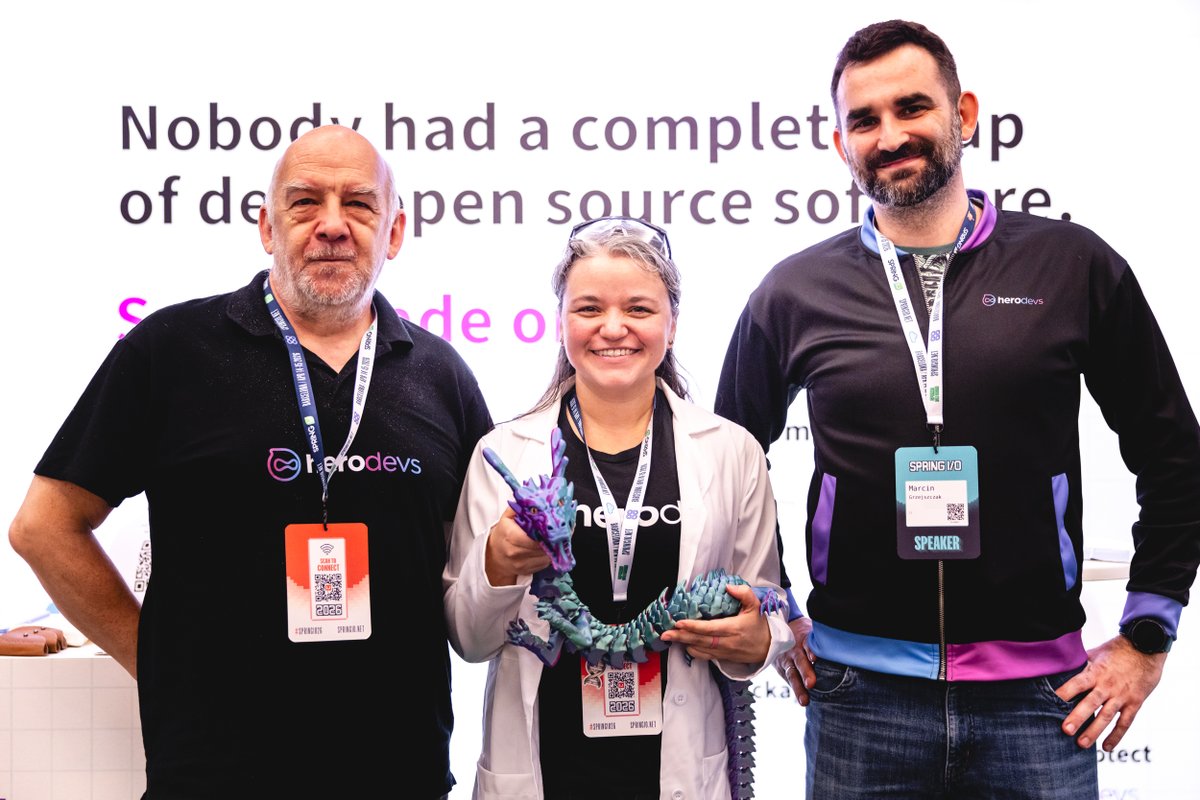
That’s a wrap on Spring I/O 2026. 🐉
From deep dives into Spring Boot 4 and AI-driven development to real conversations about modernization and security, this year’s event brought together a global community pushing the Java ecosystem forward.
Highlights for us:
→ Connecting with developers and architects tackling real-world migration challenges
→ Talking through EOL risk, long-term support, and keeping production systems secure
→ And crowning a few lucky raffle winners as official dragon parents 🥚🐉
Until next time, Spring I/O 👋
#SpringIO #SpringBoot #Java #OpenSource #DevCommunity #HeroDev
2
97


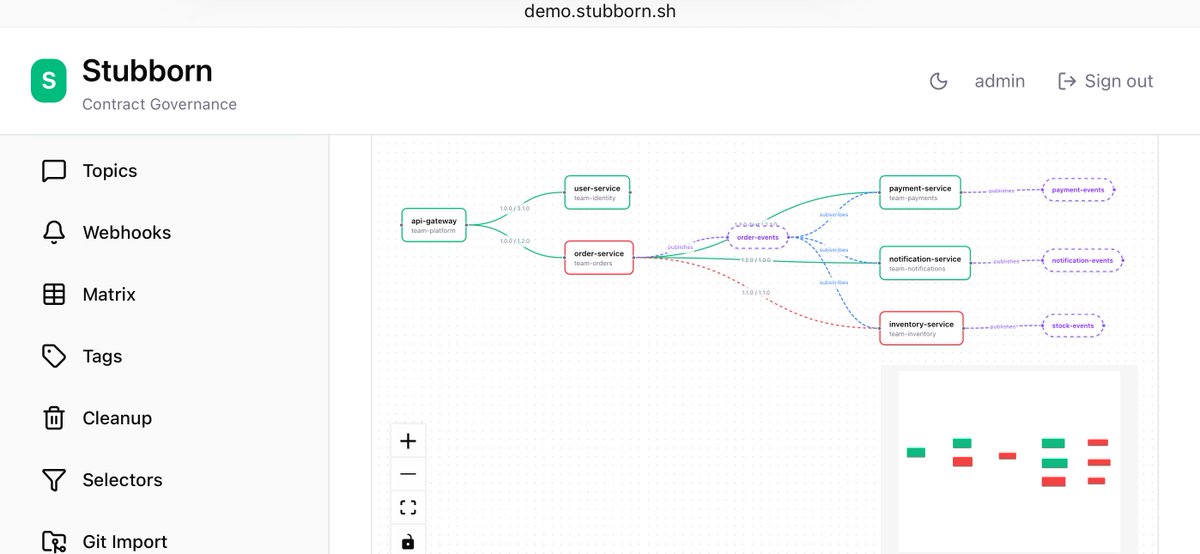
There's no better place to make an announcement than SpringIO Barcelona! I'm happy to announce stubborn.sh - a broker for Spring Cloud Contract contracts! Check the demo at buff.ly/3QLaVka
1
2
9
611

Apr 15
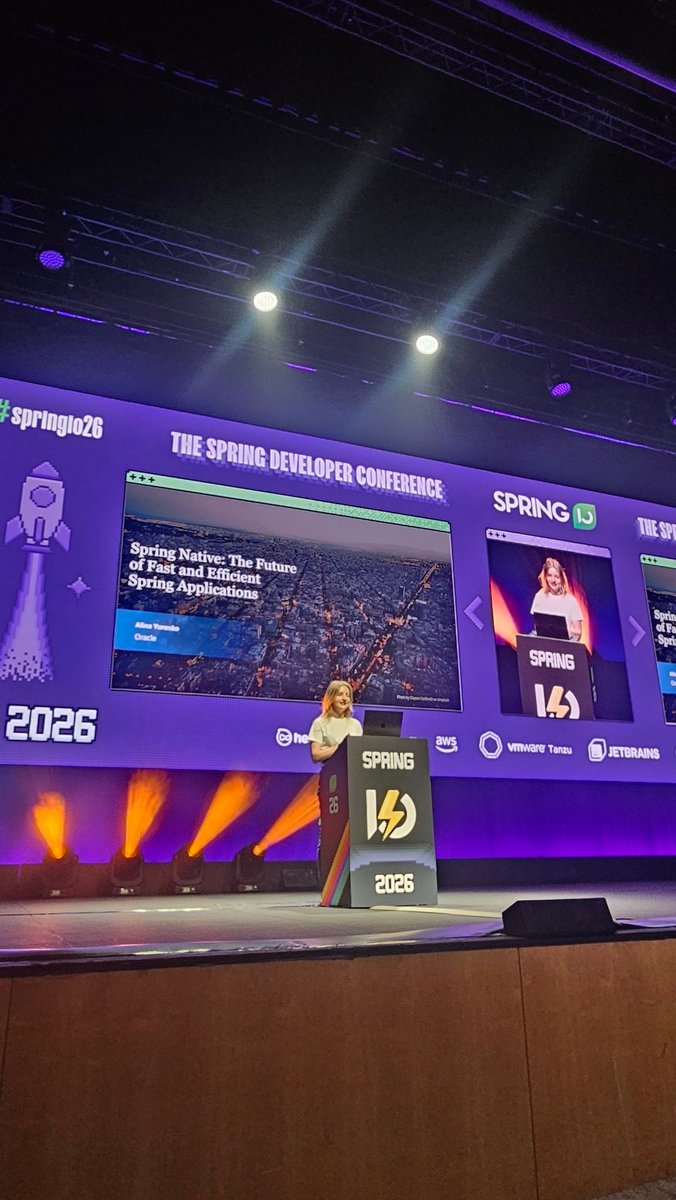
Time for one of the best! @alina_yurenko on native Spring apps, what's new and what's next #SpringIO
4
157

Apr 15
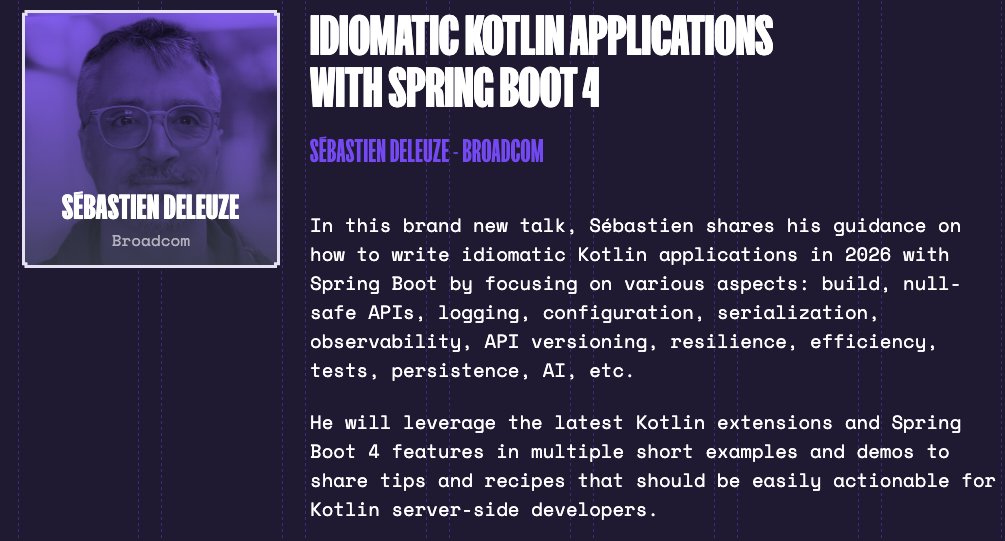
Kotlin server-side developers, level up your apps! Sébastien Deleuze is sharing actionable tips and recipes leveraging the latest Kotlin extensions and Spring Boot 4 features.
#SpringIO, Wed @ 12:30 PM.
bit.ly/41vzoMH
1
2
289
Apr 15
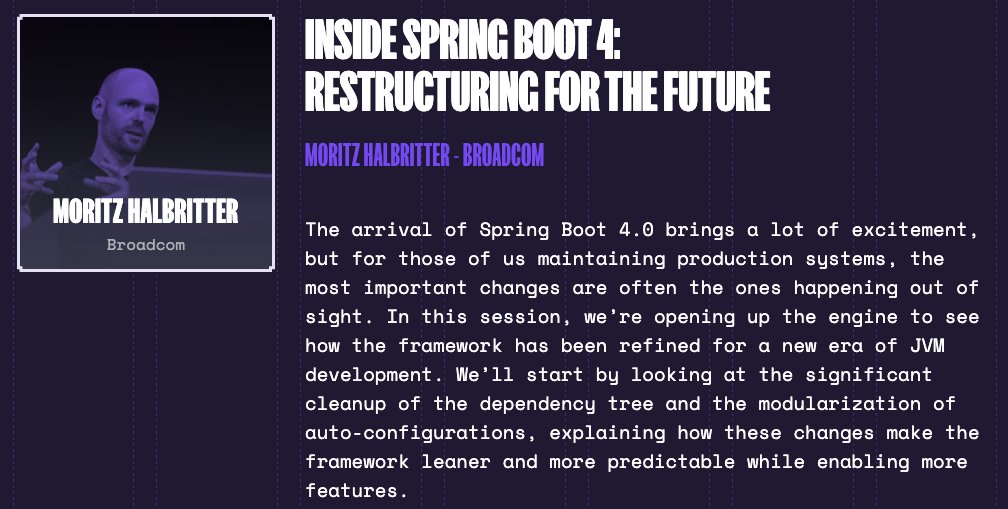
Upgrading to Spring Boot 4.0? Don't miss Moritz Halbritter's session at 10AM for the technical details you need! We're diving into the transition to #Jackson30, improved HTTP service client support, and the specialized #OpenTelemetry starter.
bit.ly/4vAaeKA
#SpringIO
2
3
353
Apr 15
It's the LAST DAY of #SpringIO Barcelona! Stop by the VMware Tanzu booth to meet Spring experts & collect all 24 trading cards for a prize! Catch Spring AI sessions, the AMA with the Spring Team, and more. Full agenda: bit.ly/3OlVVsc
#Spring #SpringBoot #AI

1
2
1,180

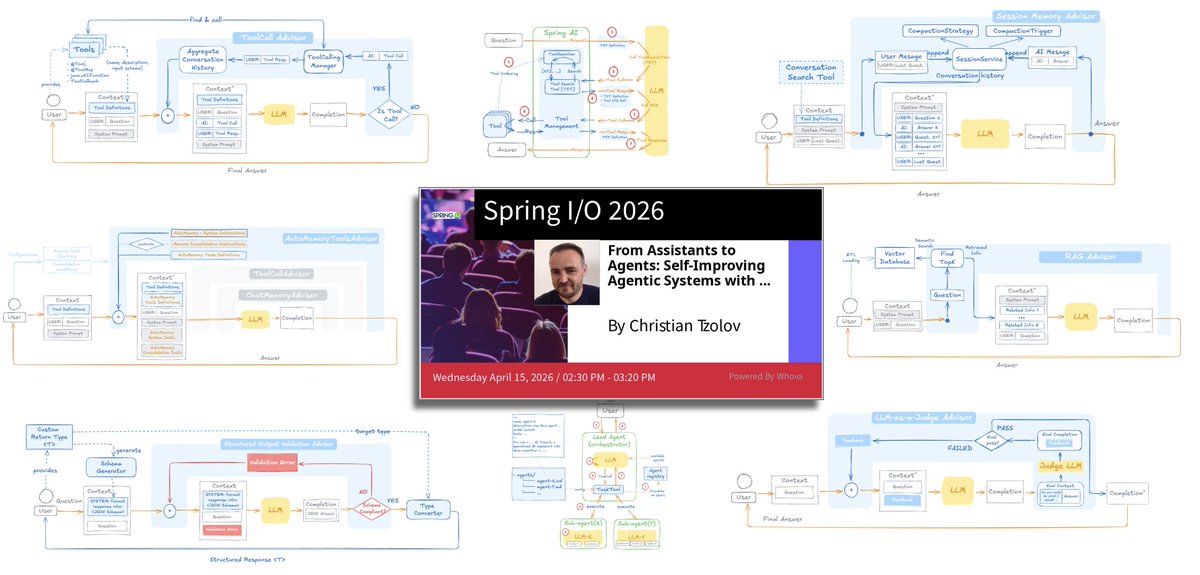
2nd talk at #SpringIO today 🌱 — One abstraction rules them all 💍
The Advisor pattern is all you need for any Agentic Harness — Tool Calling, Memory, RAG, Guardrails, LLM-as-a-Judge & more.
📅 14:30–15:20 · Track 2
2026.springio.net/sessions/f…
#SpringAI #Agents #Java
1
2
16
585
Apr 15
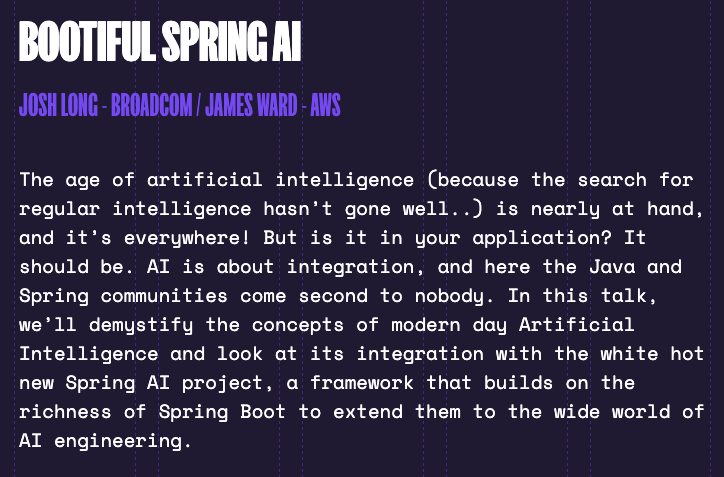
The age of AI is here! Join @starbuxman and James Ward at #SpringIO for Bootiful Spring AI. We’ll introduce the white-hot new Spring AI project, a framework that extends Spring Boot for the wide world of AI engineering.
Wed, April 15 @ 9AM | Auditorium.
bit.ly/41CyHRF
2
4
1,480

@JamesWard are you in SpringIO tomorrow? Just to discuss github.com/skillsjars/skills… We can discuss in the issue too, no problem :)
1
2
82
Apr 14
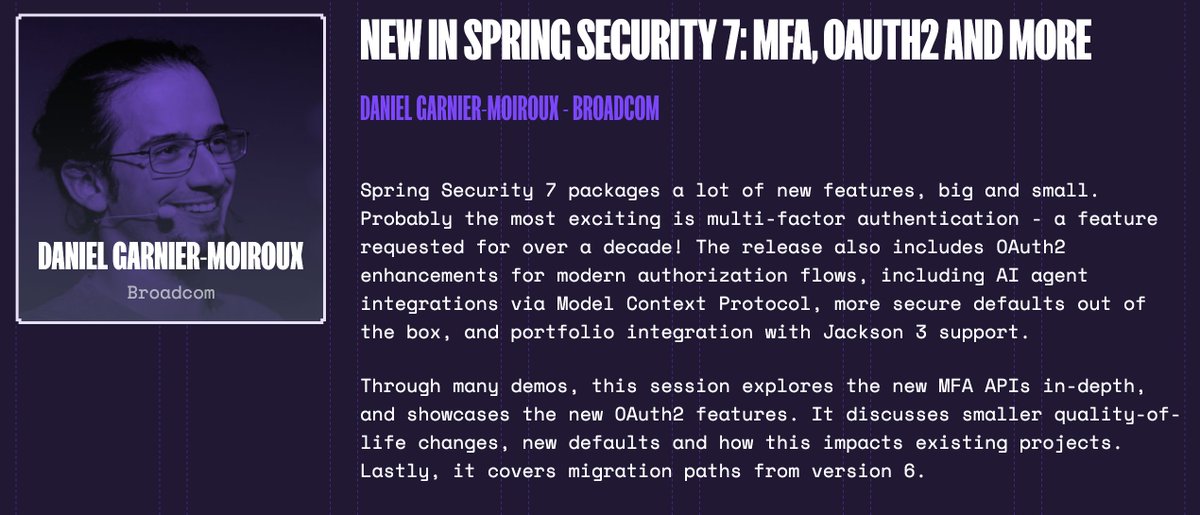
Upgrading to Spring Security 7? Don't miss this deep dive with Daniel Garnier-Moiroux. Get a walkthrough of the new secure defaults, quality-of-life changes, and a crucial session on migration paths from version 6. Plenty of demos included!
bit.ly/4syn8WH
#SpringIO
1
2
1,169
Apr 14
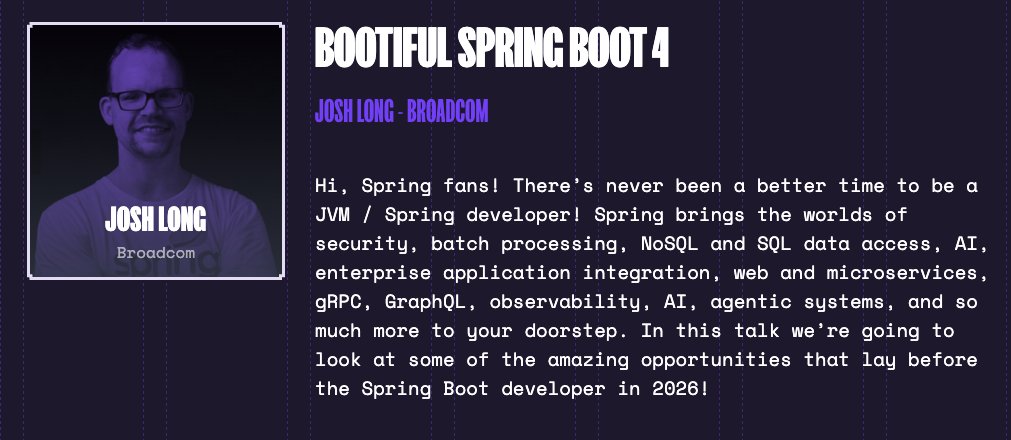
Don't miss the legendary Josh Long (@starbuxman) later today at 11:00 AM in the Auditorium!
Dive into "Bootiful Spring Boot 4" and discover new opportunities in AI, agentic systems, and microservices for 2026. bit.ly/41rV6B9
#AI #Spring #SpringIO #SpringBoot
2
2
1,621

Apr 14
Ready for Spring I/O 2026 🚀
Excited to dive into the latest in tech, connect with brilliant minds, and bring back fresh ideas. Let’s go! 🌱💡
#SpringIO #TechConference #DevExp
2
52

You may have heard the quote by Abraham Lincoln: "Give me six hours to chop down a tree, and I will spend the first four sharpening the axe."
This perfectly reflects the experience of working with frameworks like #SpringBoot. It may take significant time upfront to understand how things work, but once you grasp its inner workings, you can accomplish a great deal by simply adding a starter dependency or configuring a property.
Developers working with Spring Boot come from diverse backgrounds such as freshers, junior developers, or those transitioning from other programming languages. For many, Spring Boot features can initially feel like "magic," and it often takes time to fully understand how everything works. Even experienced developers sometimes spend considerable time debugging Spring configuration issues.
One of the primary goals of the #IntelliJIDEA Spring Debugger Plugin is to demystify this "Spring Boot magic" and make it easier to understand your application's runtime behavior. With Spring Debugger, you can quickly see which beans are loaded, which profiles are active, the actual values of configuration properties, where transactions start, and much more.
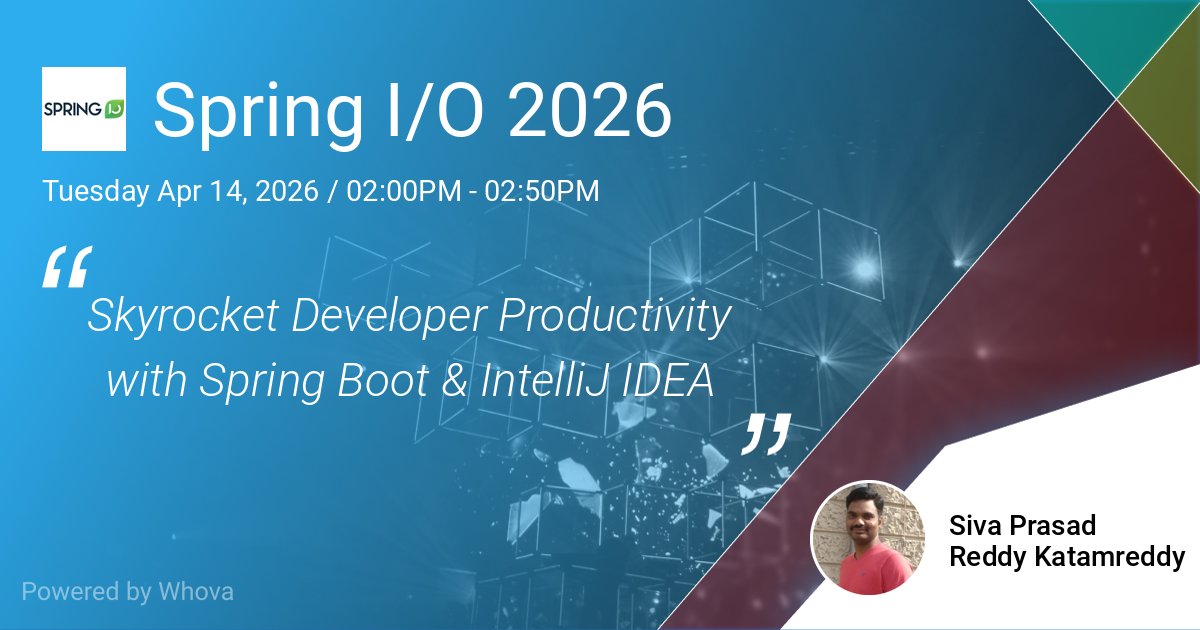
At Spring I/O 2026, I will be conducting a workshop titled "Skyrocket Developer Productivity with Spring Boot & IntelliJ IDEA," where you will learn powerful IntelliJ IDEA features to enhance your productivity.
Join me at Spring I/O on April 14th.
#java #springboot #springio #intellijidea
2
1
39
1,442
Apr 7
Join VMware Tanzu at #SpringIO Barcelona, April 14-15! We're showing how #Spring bridges the agentic frontier with enterprise systems. Check out our site to see all of the fun activities we have planned next week: bit.ly/3OlVVsc #AI #Developers #Conference
2
394