Single intent visa = one purpose only. Dual intent visa = temporary status that can convert to permanent. Under the new USCIS memo, knowing the difference could determine your green card path.
#H1BVisa #L1Visa #F1Visa #DualIntent #SingleIntent #GreenCard
youtu.be/eNsAz4OQG0o
1
110

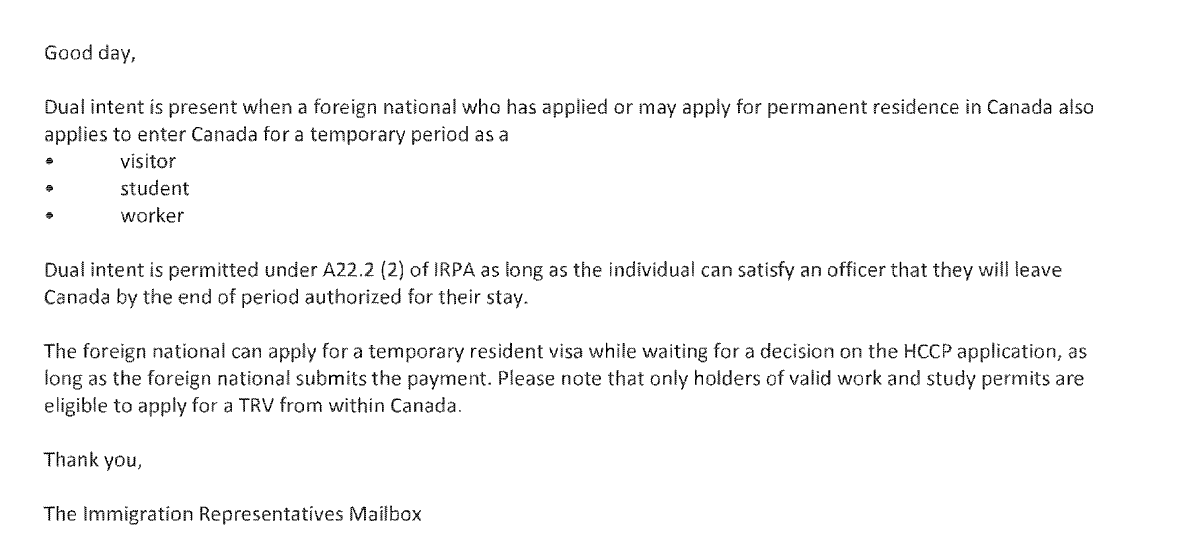
Q: Can a Home Child Care Provider Pilot (HCCP) applicant apply for a TRV while PR is in process?
A: Yes. IRCC confirmed that a foreign national with an HCCP application in process may apply for a Temporary Resident Visa (TRV) while waiting for a decision, as long as the required fees are paid and dual intent requirements are met.
#Dualintent #IRCC #TRV
1
3
711

25 Jul 2025
Dual Intent, Nonimmigrant Intent, and the Quasi-Dual Intent Middle Ground
One of the most misunderstood areas of U.S. immigration law is the concept of “intent.” Specifically, whether someone applying for a visa is allowed to have the intent to permanently immigrate to the U.S.
Here’s the basic framework:
🇺🇸 U.S. immigration law is built on the assumption that everyone has immigrant intent unless they prove otherwise.
If you're applying for an F-1 student visa, J-1 exchange visitor visa, B-1/B-2 visitor visa, or M visa (vocational student), the consular officer assumes you plan to immigrate—unless you present strong evidence to overcome that presumption. These are all explicit nonimmigrant intent visas, and the burden is on the applicant to show ties to their home country and no intent to stay permanently.
📅 Enter the 90-Day Rule
The Department of State has a rule, found in the Foreign Affairs Manual (FAM), that flags changes in status within 90 days of entering the U.S. on a nonimmigrant intent visa. If you apply for adjustment of status or a different visa (like H-1B or marriage-based green card) within that period, it can be seen as evidence that you misrepresented your intent at the time of entry. This is why timing matters.
✅ Explicit Dual Intent Visas
H-1B and L-1 visas are explicitly dual intent. Why? Because both the Immigration and Nationality Act (INA) and corresponding regulations allow an applicant to pursue permanent residency while on these visas without jeopardizing their nonimmigrant status. You can file for an I-140 or I-485 without it being held against you in future entries or visa renewals. This is one reason H-1Bs are so prized.
⚖️ The Gray Area: Quasi-Dual Intent
Then you have O-1 visas. These aren’t formally designated as dual intent, but they’re not strictly nonimmigrant either. You don’t need to show a foreign residence you have no intention of abandoning. The FAM carves out space that makes the O-1 feel more flexible—especially in practice. But be careful: O-1s don’t get the full protection that Hs and Ls do when it comes to immigrant intent, so strategy matters.
Immigration law is nuanced—and “intent” plays a huge role in how cases are handled, scrutinized, and approved. If you’re navigating this landscape, especially in categories like F, O, or H, make sure your immigration timeline and paperwork reflect the right intent at the right time.
#ImmigrationLaw #DualIntent #F1Visa #O1Visa #H1BVisa #VisaStrategy #AdjustmentOfStatus #NonimmigrantIntent #90DayRule #USImmigration #ImmigrationAttorney #StartupVisas #ImmigrationTips #GreenCardPathway #ForeignTalent #ImmigrationJourney #LarsonLegal
1
2
8
820

27 May 2025
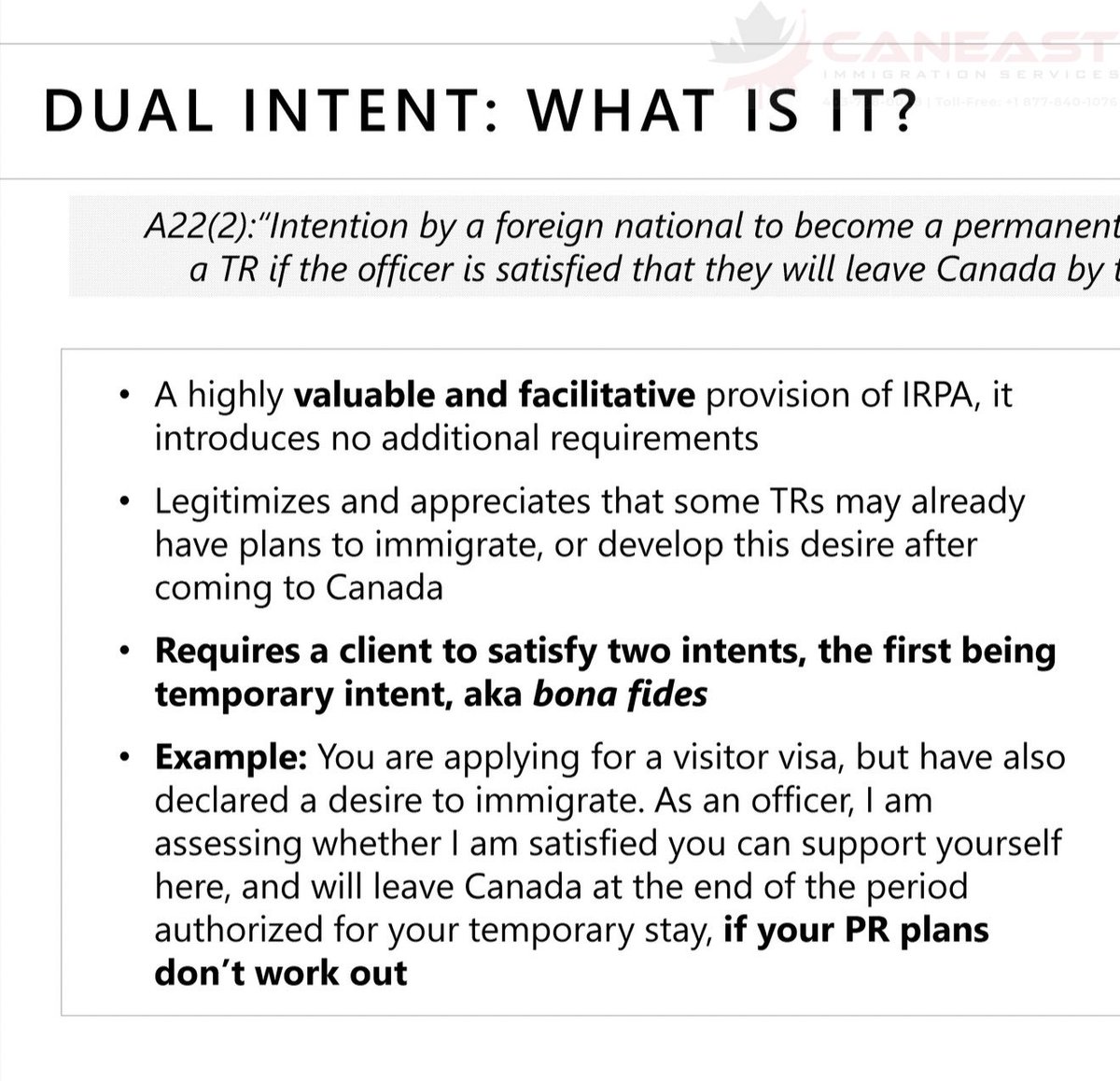
Dual Intent in Canadian Immigration – IRCC’s Internal Guide
Under IRPA s.22(2), dual intent is recognized: a foreign national may seek PR in the future while still being expected to leave Canada at the end of their temporary stay.
Applicants must satisfy:
1.Bona fide temporary intent (R179)
2.Future intent to immigrate does not override the requirement to depart if PR fails
Officers assess whether the applicant can support themselves and will comply with conditions even if their PR plans don’t work out.
#IRCC #DualIntent #TemporaryResidentVisa #ImmigrationLaw #CanadaPR #R179 #IRPA #CanadaImmigrationLaw #CanadaVisa #VisitCanada #VisitorVisaCanada #cdnimm #ExpressEntry #CanadianImmigration
1
7
2,079

15 May 2025
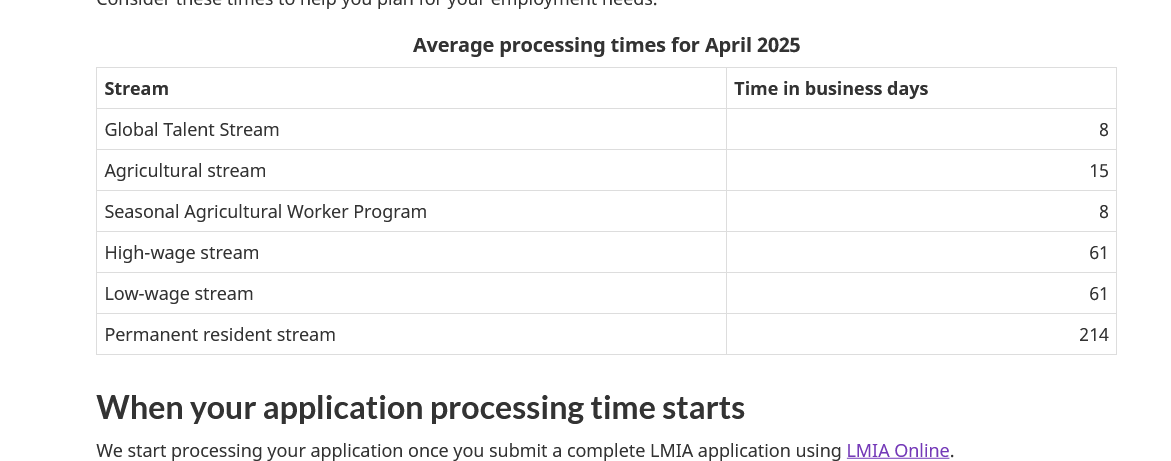
Service Canada has just increased the processing times for #DualIntent #LMIAs to 214 business days (7 months) - IRCC refuses work permit extension applications if they are not provided with a positive #LMIA within 60 days @ESDC_GC @CitImmCanada @LenaMetlegeDiab
5
6
36
6,947

27 Aug 2023
How to Apply for a Temporary Resident Visa (TRV) in Canada
#ApplicationProcess #Canada #CanadaVisa #DualIntent #Extension #ProcessingTime #TemporaryResidentVisa #TRV #VisaGuide #WorkInCanada
travelobiz.com/how-to-apply-…

1
3
179

5 Apr 2023
#BREAKING Canada updates dual intent to prevent unnecessary rejections.
Canada is expanding the definition of dual intent to prevent immigration officers from needlessly rejecting work and study permit applicants.
Learn more here:
ow.ly/tnnT50NBFNP
#dualintent
2
276

20 Dec 2022
END #dualintent and #AC21 for the #H1B #visa. Put the burden back on #BigTech instead of #American workers. Zero out the “#backlog”…it has no value to #USA. END all #chainmigration. Close the borders. We need a break. #NoAmnesty (#EagleAct) #NoEagleAct #EagleActBetrayal
2
537

5 Apr 2022
#DualIntent visas are a backdoor to MASS #Migration.
@SenateDems @SenateGOP
@ChuckGrassley @SenatorDurbin
2
14 May 2021
@USCIS and @USDOL looked underneath the covers, and saw the H-1B for what it really is/has become - a BACKDOOR to mass #migration from third world countries.
And WHY is #H1B tied to #DualIntent???
#American #citizens have had enough of this chicanery!
@SenateDems @SenateGOP
2

11 Nov 2020
9 Nov 2020

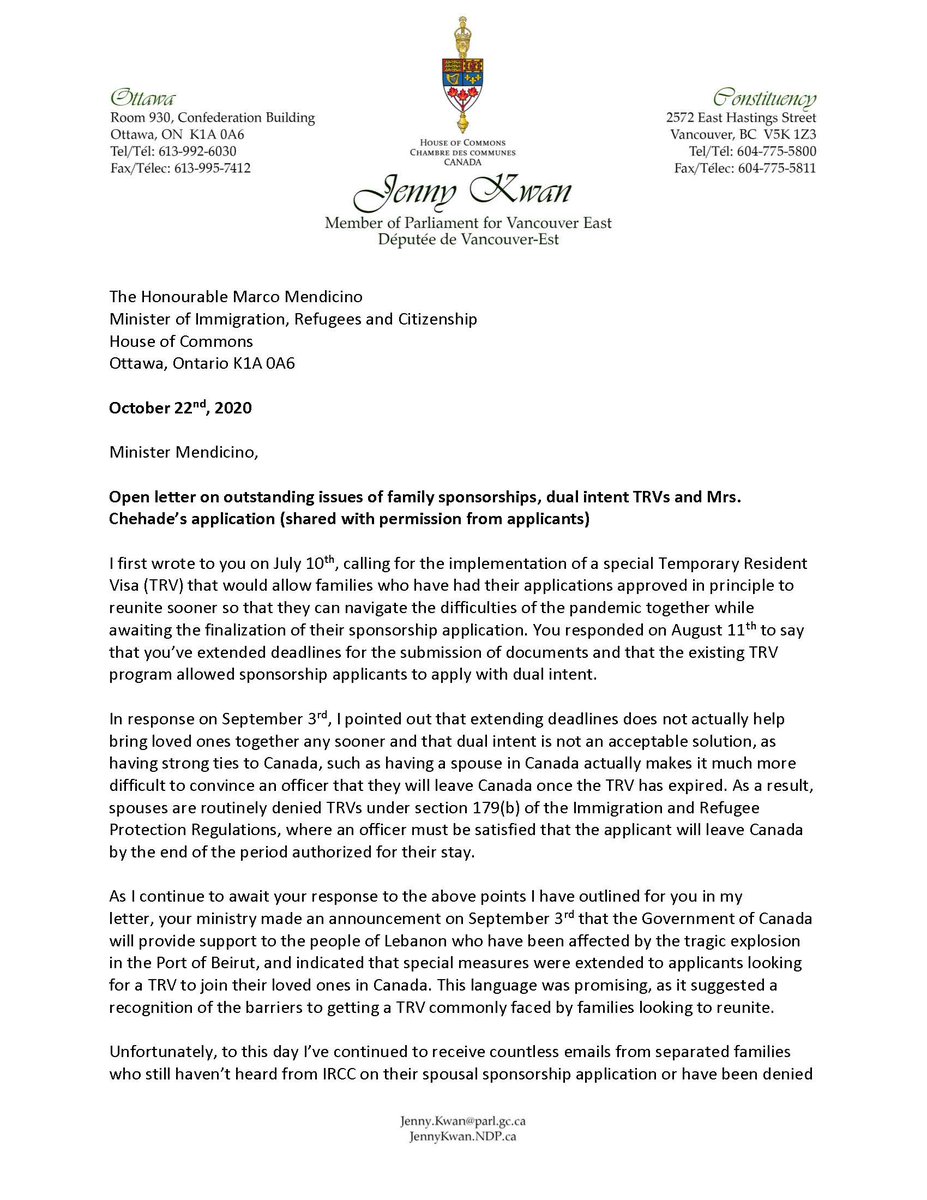
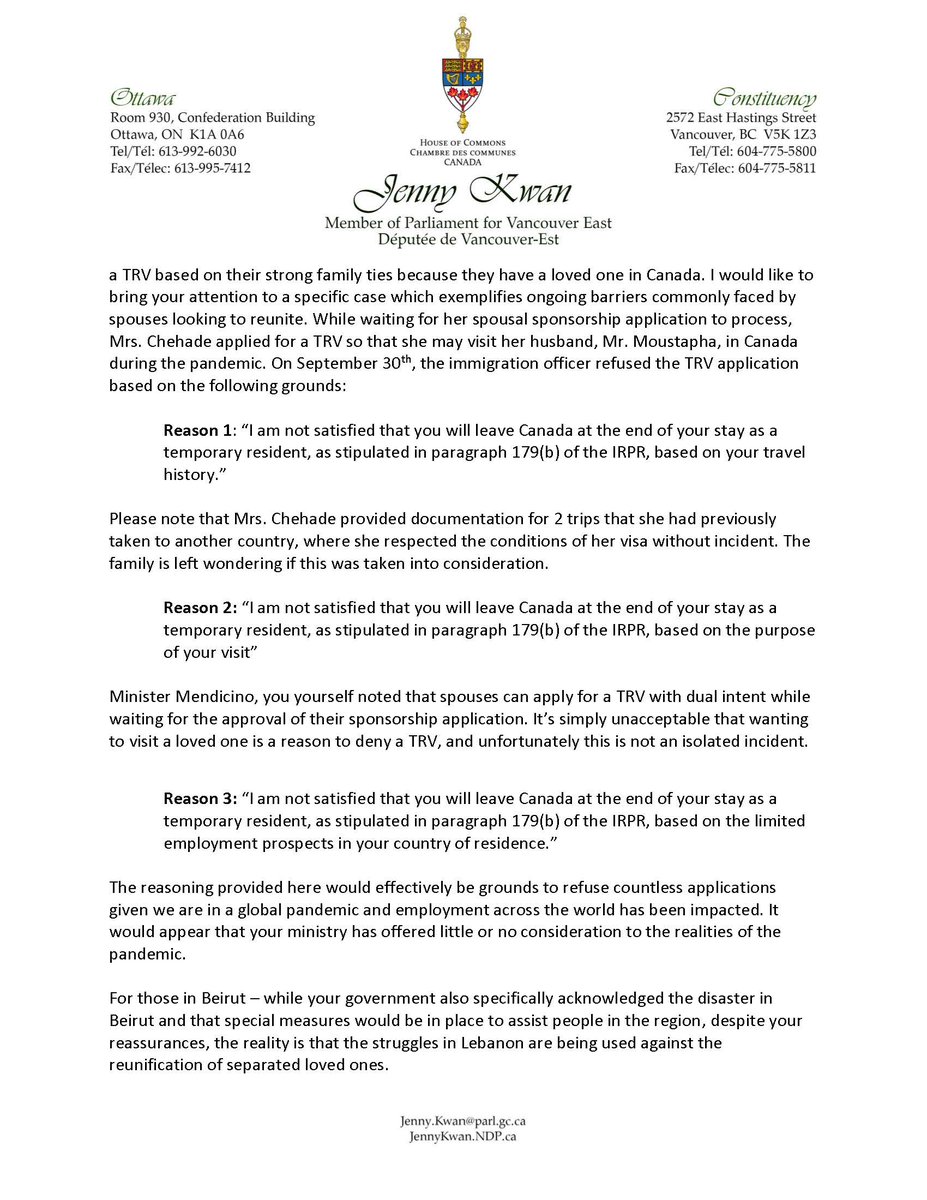
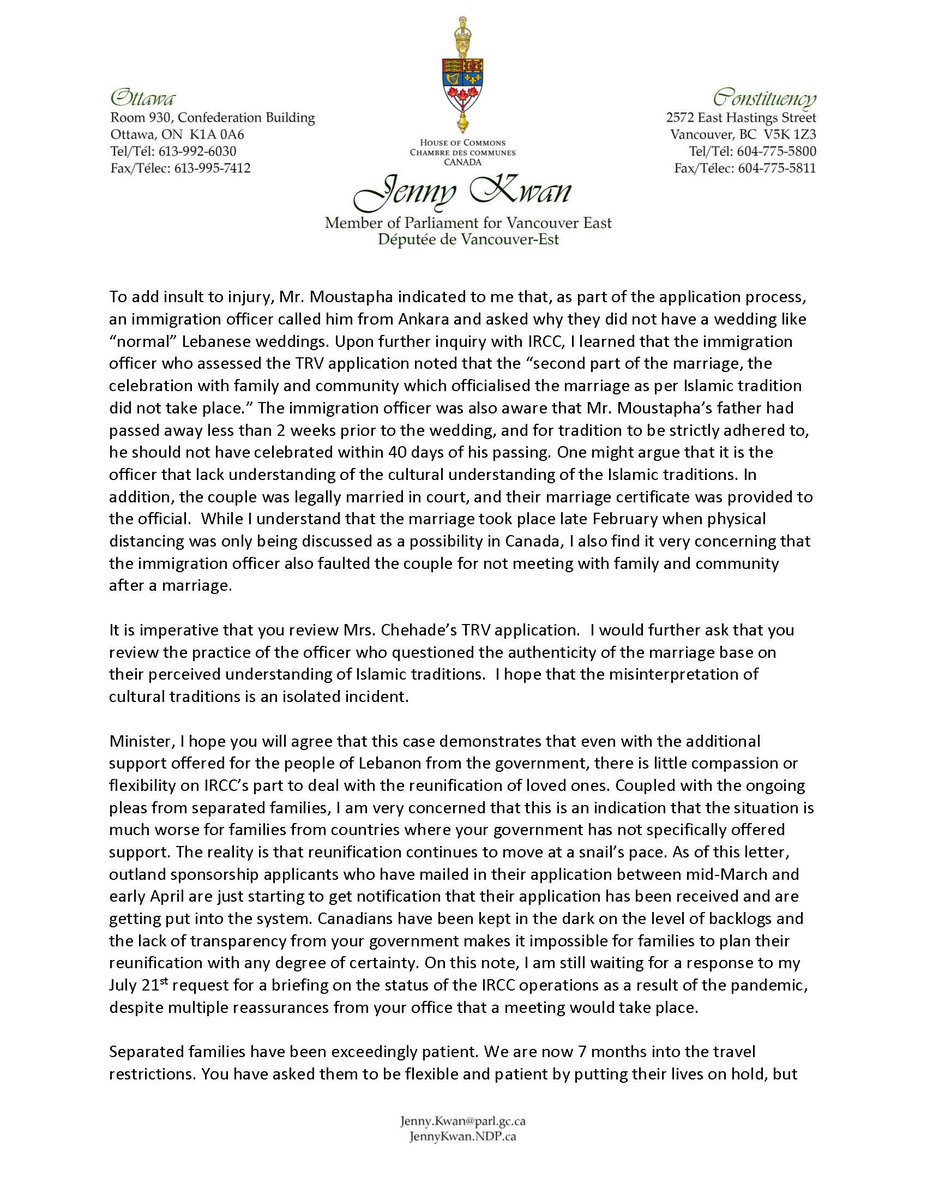
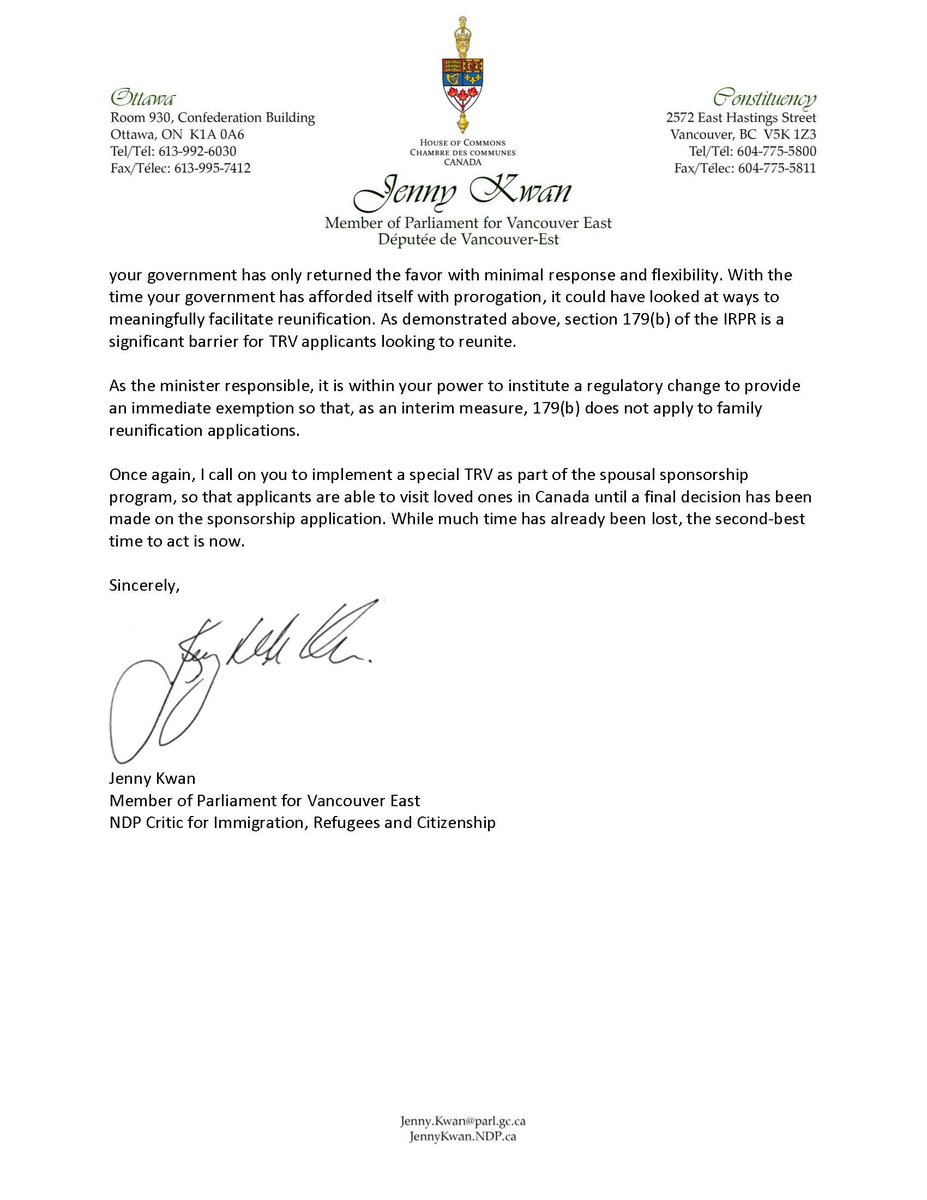
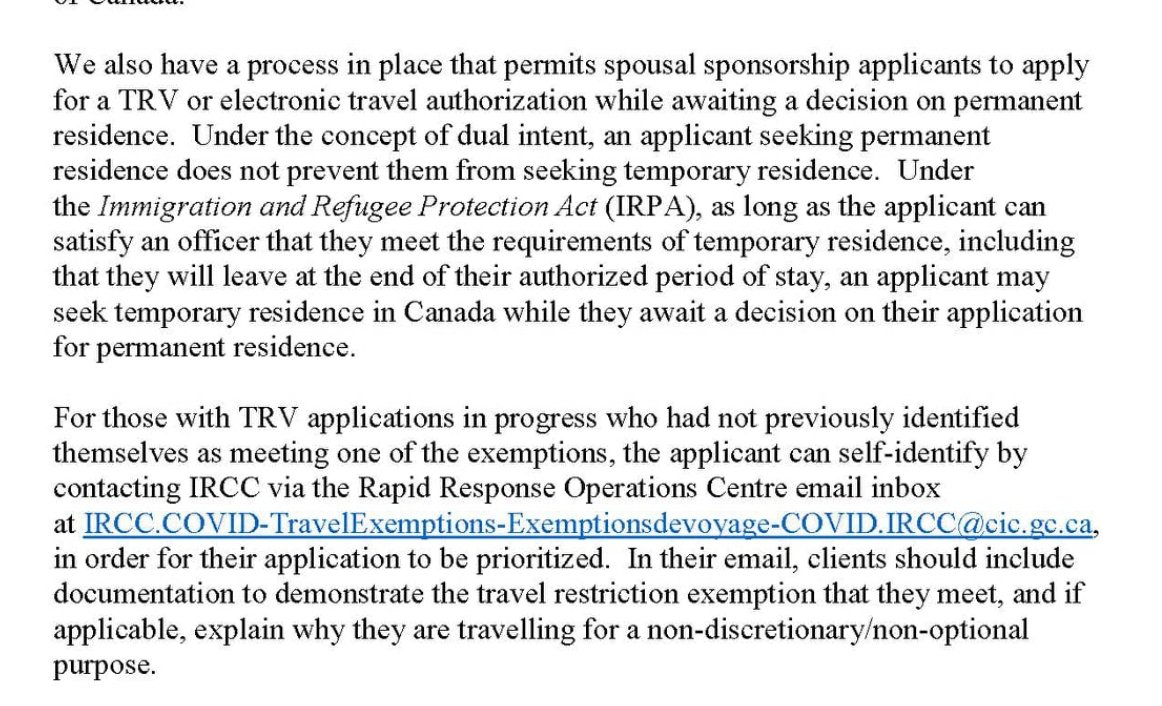
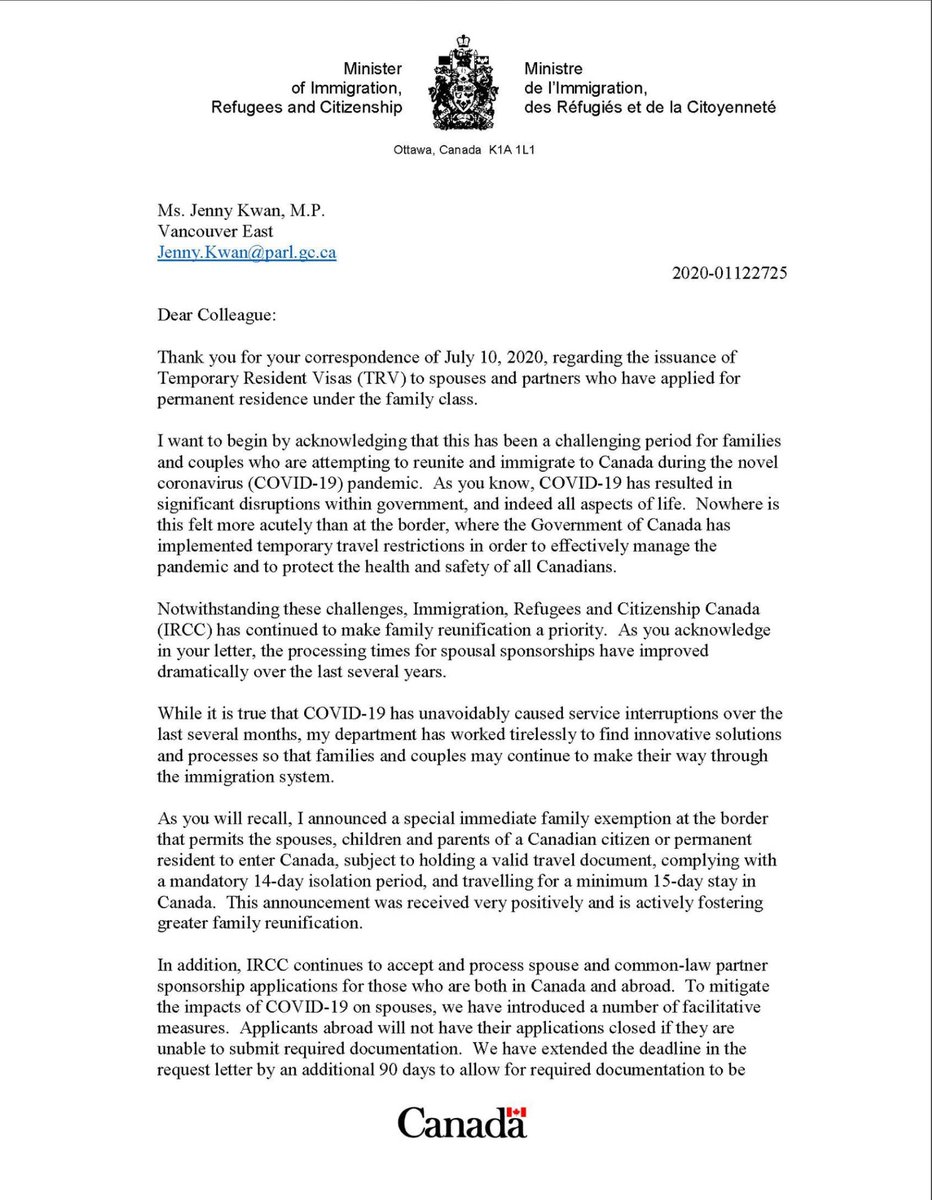
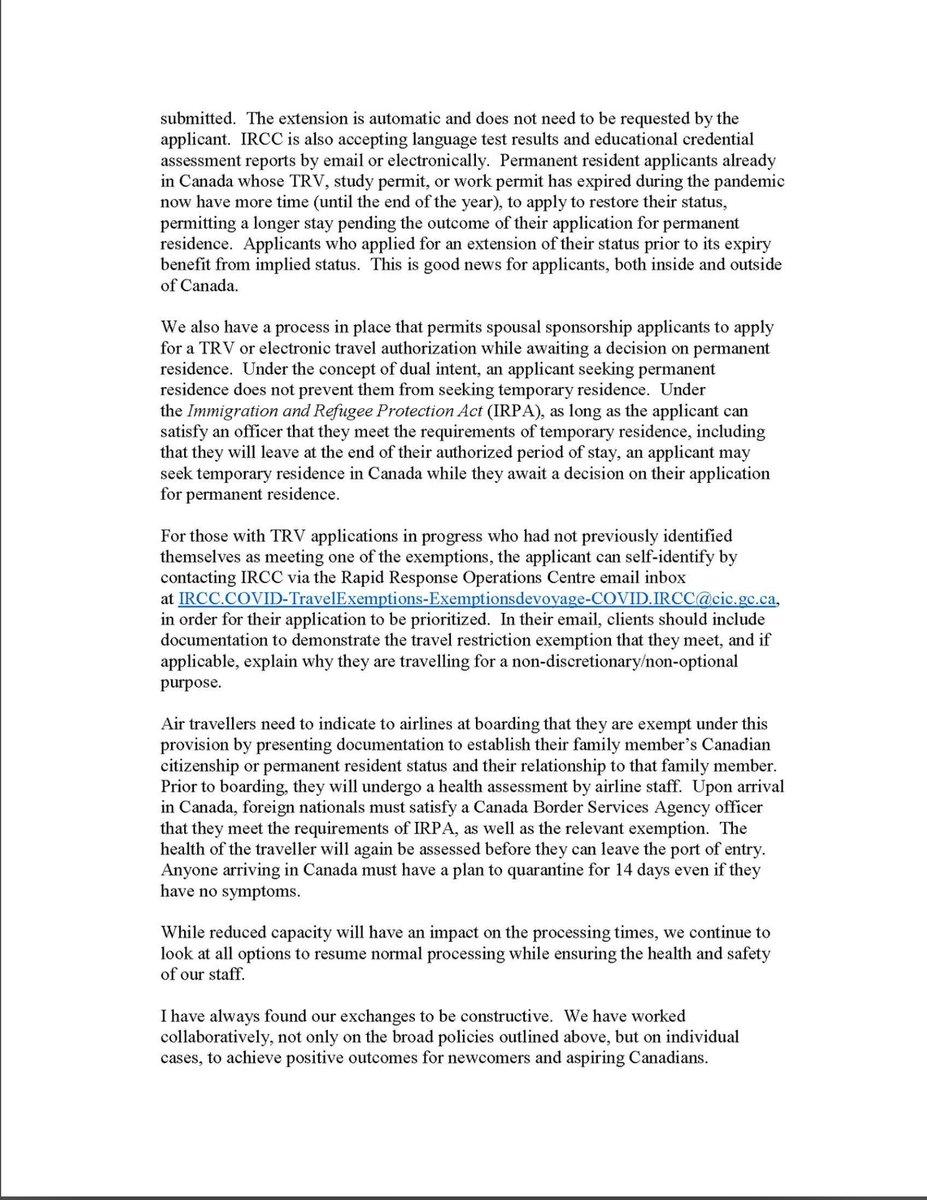
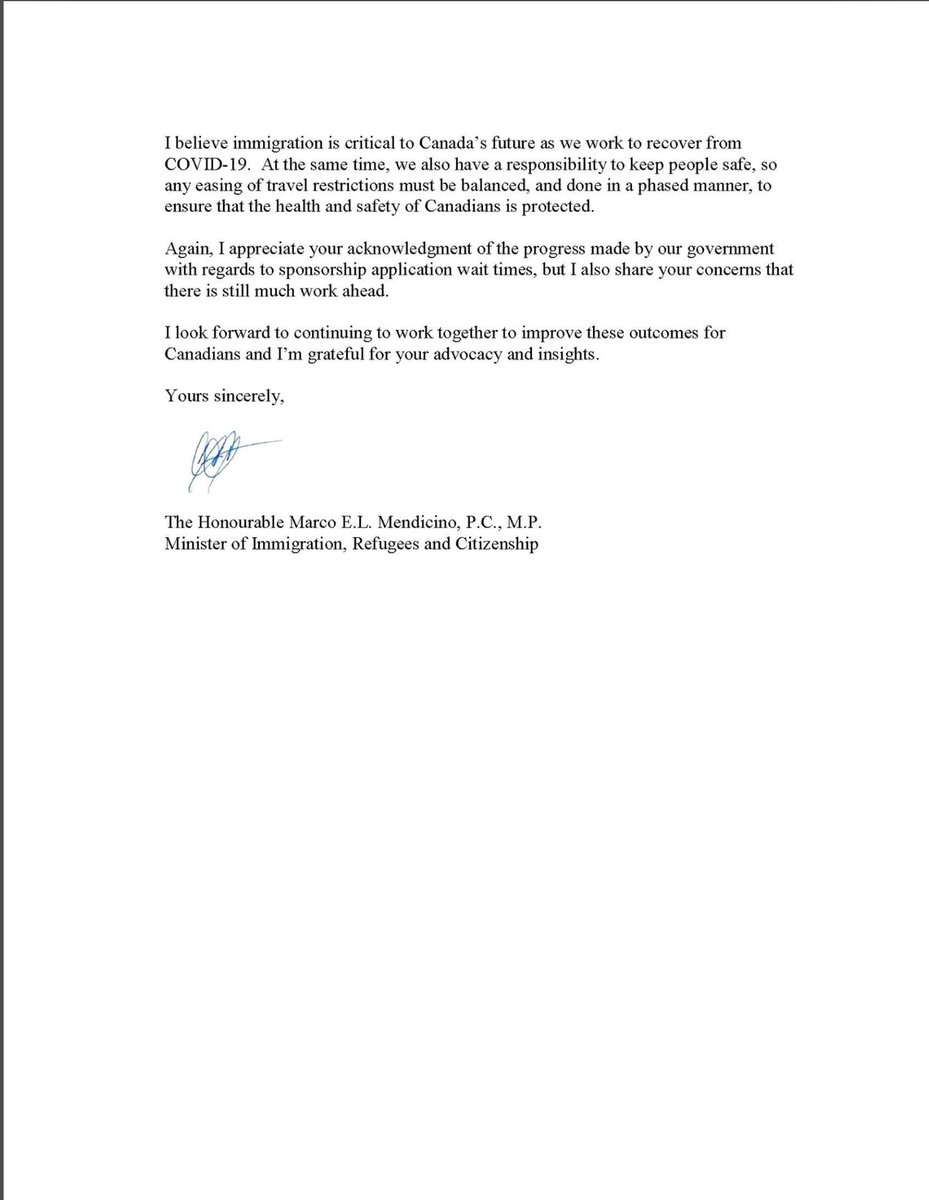
In response to calls for a special TRV, @MarcoMendicino said sponsorship applicants can apply for a TRV w/ dual intent. This letter to the Minister reflects the types of refusals separated families commonly face and shows that this isn't a solution.
#prioritizefamilysponsorship
3
8

30 Oct 2020
#dualIntent #TRV #visitvisa
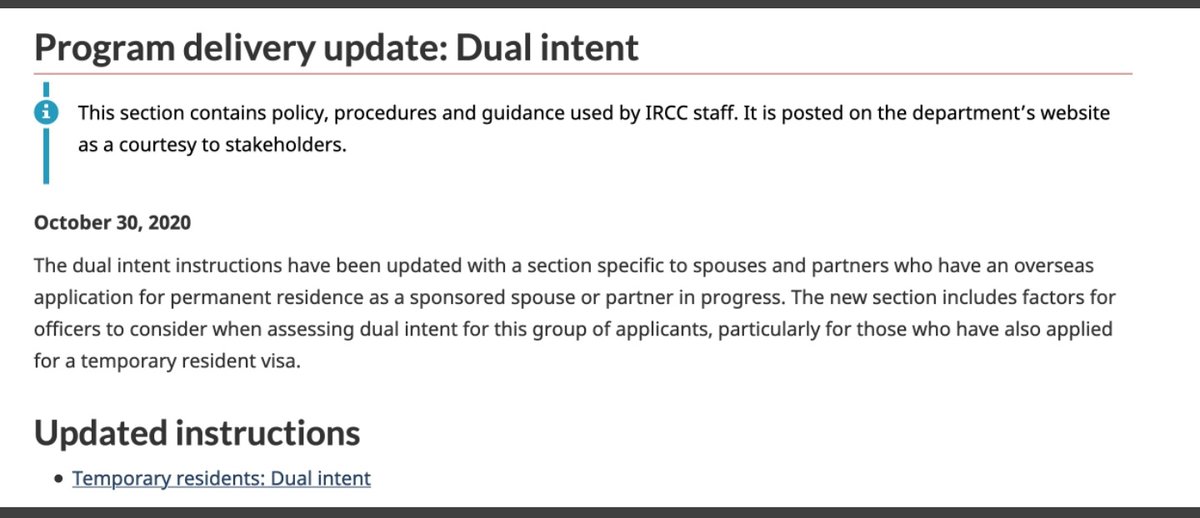
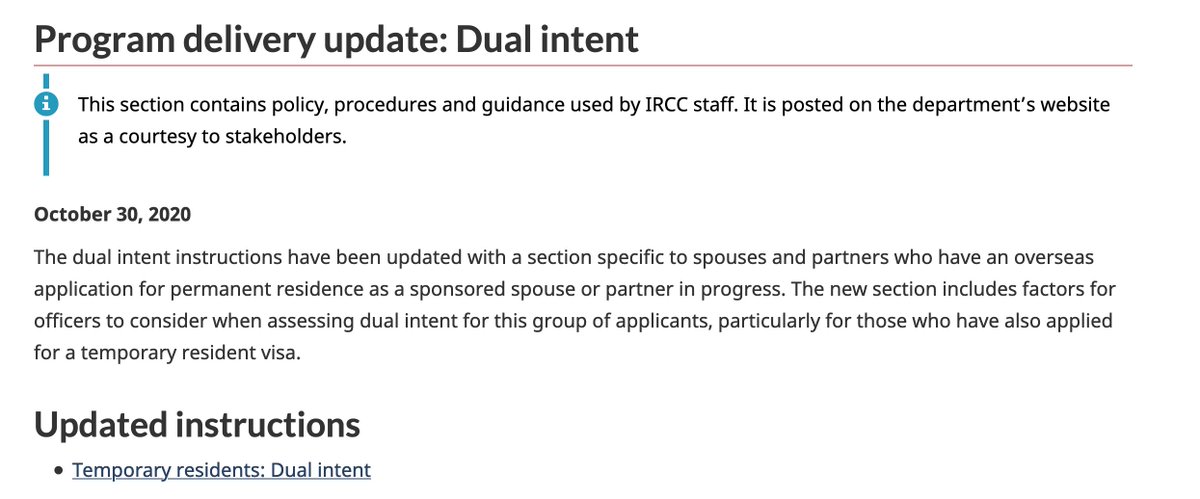
A recent update to the #dualIntent indicates that IRCC has finally made the program update to specifying dual intent for visit visa (TRV) application for spouse's who have a spousal PR application in process.
bit.ly/3jNheNY
#foreverhopeful
8
30 Oct 2020
Love the updates to the instructions on assessing #dualintent, now @marcomendicino @CitImmCanada what is the plan for making sure the visa offices follow this new messaging? #cndimm

2
6
20

13 Aug 2020

We are moving in the right direction, but millions of Americans remain out of work & #SmallBiz across the country are struggling to reopen. Now more than ever, we need a recovery plan. That’s exactly what I’m working in the Senate to do. bloomberg.com/news/articles/…
1
2
8
12 Aug 2020
Wonder if @marcomendicino @CitImmCanada is aware of of the extremely high refusal rate for #TRV applicants who have a pending #spousal #sponsorship - perhaps the processing centers should be made more familiar with the concept of #dualintent
12 Aug 2020
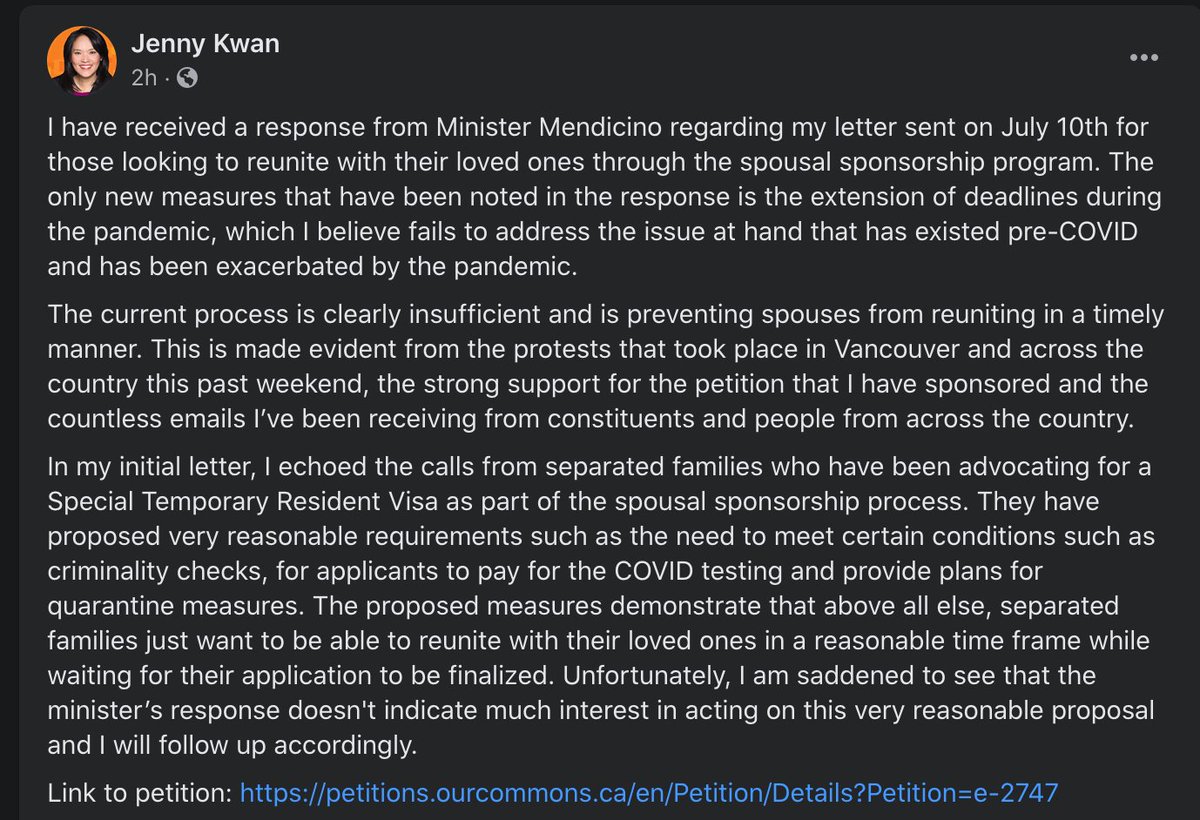
Post from @JennyKwanBC re her letter to @marcomendicino on Reuniting Spouses and his response #cndimm #Spousal #Sponsorship #ReunitingFamilies facebook.com/JennyKwanVanEas…
3
6
H-1B temporary #worker #visas are a backdoor to mass #migration
STOP #S386
#ReformH1B : Fix the #DualIntent loophole
@SenSasse @HawleyMO @SenJoniErnst @SenJohnKennedy @MarshaBlackburn @SenRickScott
@realDonaldTrump @parscale
7 Aug 2020

"The [Green-Card Lite] legislation will make the problem worse … [because] it is basically turning a temporary visa into a permanent visa, and once you do that, anyone here on that visa will claim a right to say permanently." --Rosemary Jenks, NUSA
breitbart.com/immigration/20…
3
4

27 Aug 2019
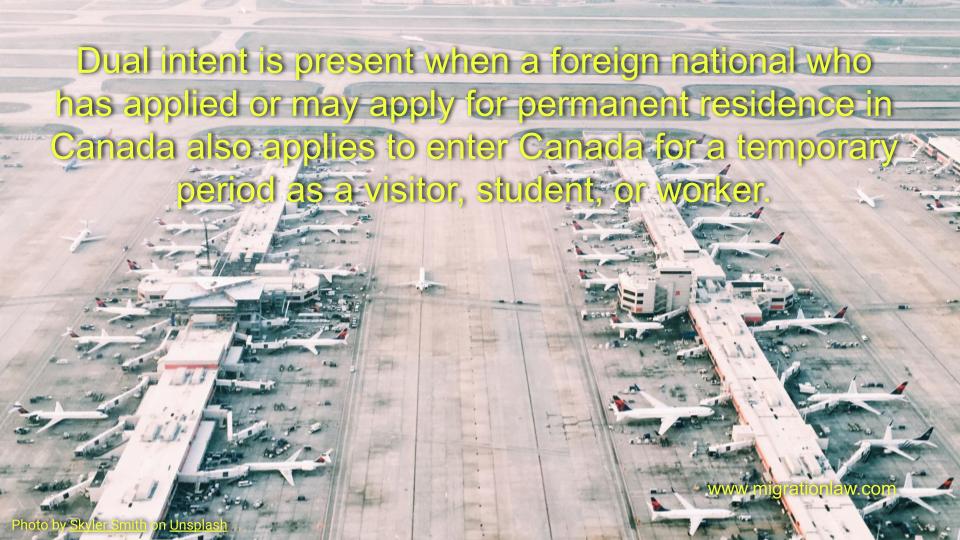
Dual intent is present when a foreign national who has applied or may apply for permanent residence in Canada also applies to enter Canada for a temporary period as a visitor, student, or worker. #dualintent #cdnimm
1
2

7 Jul 2017
Immigrant Intent is important. Do your actions make sense with the applications you submit?
hubs.ly/H07_r750 #dualintent #immigration

1
16 Jun 2017
Immigrant Intent is important. Do your actions make sense with the applications you submit?
hubs.ly/H07P_nX0 #dualintent #immigration

1
1
6 Mar 2017
Immigrant Intent is important. Do your actions make sense with the applications you submit?
hubs.ly/H06yNKQ0 #dualintent #immigration