
10 Apr 2024
Day 1 of #20DaysOfJavascript 🚀
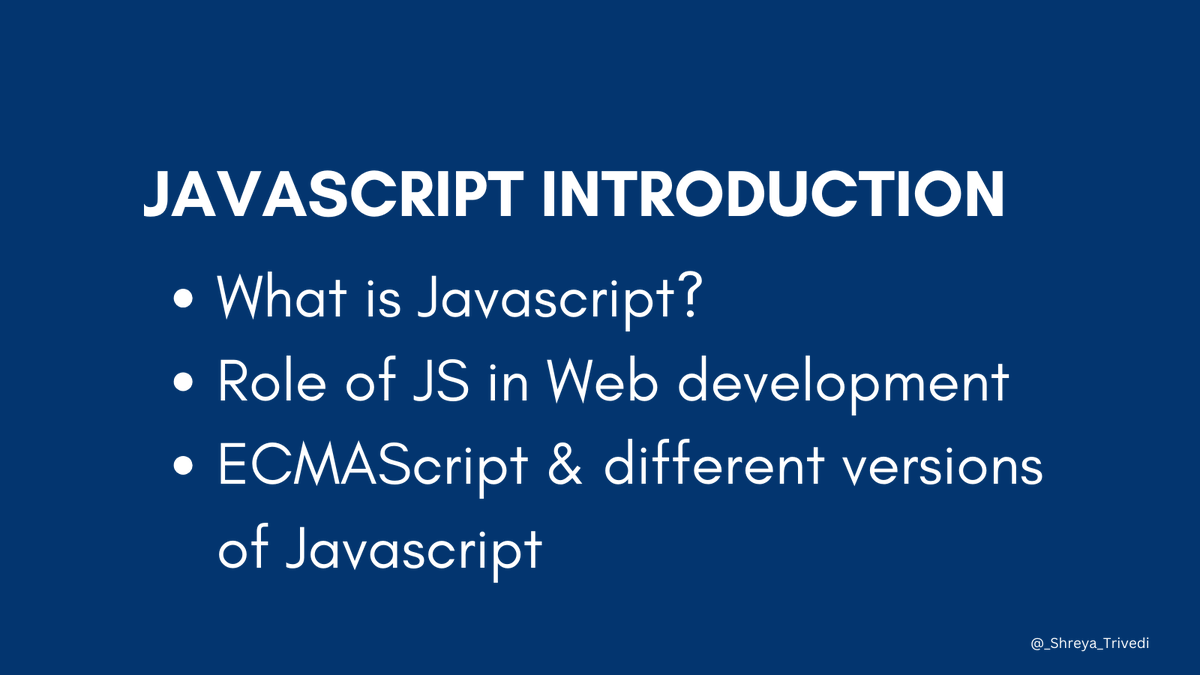
Today we will discuss:
- What is Javascript & it's role in web development
- ECMAScript & different versions of JS
What is Javascript?
JavaScript is a versatile programming or scripting language developed by Brendan Eich in 1995. It is used for making web pages more dynamic. It allows you to add features like animations, dynamic content updates, and interactive elements to websites.
Role of Javascript in Web Development
- Enhanced Interactivity: JavaScript enables dynamic responses to user actions, enhancing user experience.
- DOM Manipulation: JavaScript allows developers to dynamically alter webpage content, structure, and style forming the basis of modern web apps.
- Asynchronous Programming: JavaScript facilitates asynchronous programming, enabling tasks to run without blocking the main thread. This capability is vital for handling data fetching, user interactions, and animations efficiently through techniques like callbacks, promises, and async/await.
- Web APIs: JavaScript provides access to browser functionalities, enriching web apps with diverse features.
- Frameworks and Libraries: JavaScript offers frameworks like React and libraries like jQuery, simplifying web development tasks.
- Server-Side Capabilities: Node.js enables JavaScript execution on servers, streamlining web app development.
ECMAScript & Different Versions of JS
ECMAScript serves as the blueprint for scripting languages like JavaScript. It's a specification managed by Ecma International, ensuring consistency and standards for languages like JavaScript.
Over time, ECMAScript has evolved through different versions, with each version introducing new features, improvements, and syntax enhancements to the language. Developers commonly refer to specific ECMAScript versions when discussing JavaScript capabilities and compatibility.
Version - ES1
Name - ECMAScript1
Release year - 1997
Feature - Initial Release
Version - ES2
Name - ECMAScript 2
Release year - 1998
Feature - Minor Editorial Changes
Version - ES3
Name - ECMAScript3
Release year - 1999
Feature Added:
Regular Expression
try/catch
Exception Handling
switch case and do-while
Version - ES4
Name - ECMAScript4 (Abandoned due to conflicts)
Version - ES5
Name - ECMAScript5
Release year - 2009
Feature Added:
JavaScript “strict mode”
JSON support
JS getters and setters
Version - ES6
Name - ECMAScript2015
Release year - 2015
Feature Added:
let and const
Class declaration
import and export
for..of loop
Arrow functions
Version - ES7
Name - ECMAScript2016
Release year - 2016
Feature Added:
Block scope for variable
async/await
Array.includes function
Exponentiation Operator
Version - ES8
Name - ECMAScript
Release year - 2017
Feature Added:
Object.values
Object.entries
Object.getOwnPropertiesDescriptors
Version - ES9
Name - ECMAScript2018
Release year - 2018
Feature Added:
spread operator
rest parameters
Version - ES10
Name - ECMAScript 2019
Release year - 2019
Feature Added:
Array.flat()
Array.flatMap()
Array.sort is now stable
Version - ES11
Name - ECMAScript2020
Release year - 2020
Feature Added:
BigInt primitive type
nullish coalescing operator
Version - ES12
Name - ECMAScript2021
Release year - 2021
Feature Added:
String.replaceAll() Method
Promise.any() Method
Version - ES13
Name - ECMAScript2022
Release year - 2022
Feature Added:
Top-level await
New class elements
Static block inside classes
Version - ES14
Name - ECMAScript2023
Release year - 2023
Feature Added:
toSorted method
toReversed
findLast, and findLastIndex methods on Array.prototype and TypedArray.prototypet
Reference- @geeksforgeeks
Here we come to an end to Day 1 concepts, stay
connected for more advanced topics and concepts, see you tomorrow in Day 2 of 20DaysOfJavascript
Till then do drop your Day 1's queries below 👇
10
22
144
10,720

13 Jul 2023
ECMAScript 2023 arrive fin juin.
Voici les 4 fonctionnalités attendues.
#ECMAScript2023 #JavaScript
1
4
16
8,416

12 Jul 2023
🚀 Excited to share my latest article on LinkedIn: "ECMAScript 2023 Highlights | The Features You Can't-Miss."
Discover the game-changing updates shaping the future of JavaScript!
#ECMAScript2023 #JavaScriptUpdates
theuigirl.hashnode.dev/ecmas…
161

6 May 2023
Ya está disponible el ✨ episodio 2.1 ✨ en todas las plataformas 💃🏼
Hablamos sobre desarrollo mobile con @fischesil, de #ECMAScript2023, #Vite 4.3, Code Whisperer, de @MarkoDevTeam, entre otras muchas cosas 🤪
Os dejamos el vídeo, el pódcast y las notas del episodio 🧵

ALT Portada del episodio 2.1 de No me da la vida para hablar de desarrollo mobile con Silvia España Gil
1
3
14
2,718

4 May 2023
Pro nosso artigo de hoje, eu vou mergulhar em mais novidades! Além do #Node o #JavaScript também está recebendo a sua mais nova versão com o #ECMAScript2023! 🚀
Bora entender o que ta vindo de novo pra gente! 🥰🔥
👉 blog.lsantos.dev/ecma-2023/

1
3
18
2,175

14 Mar 2023
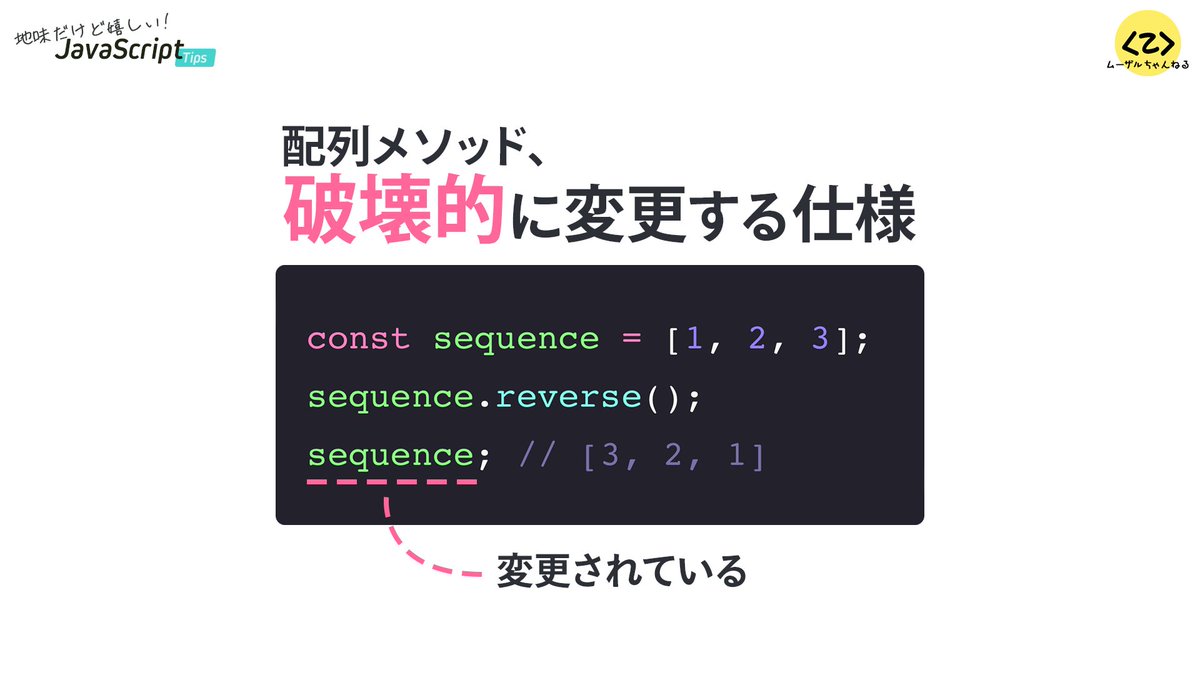
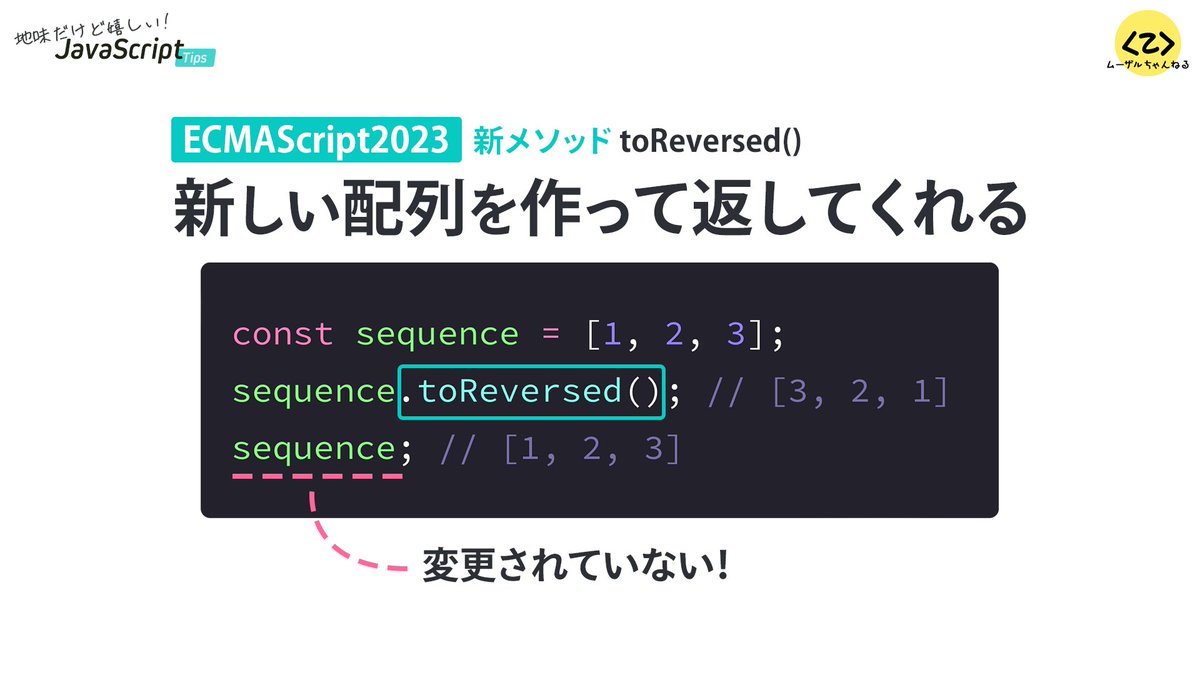
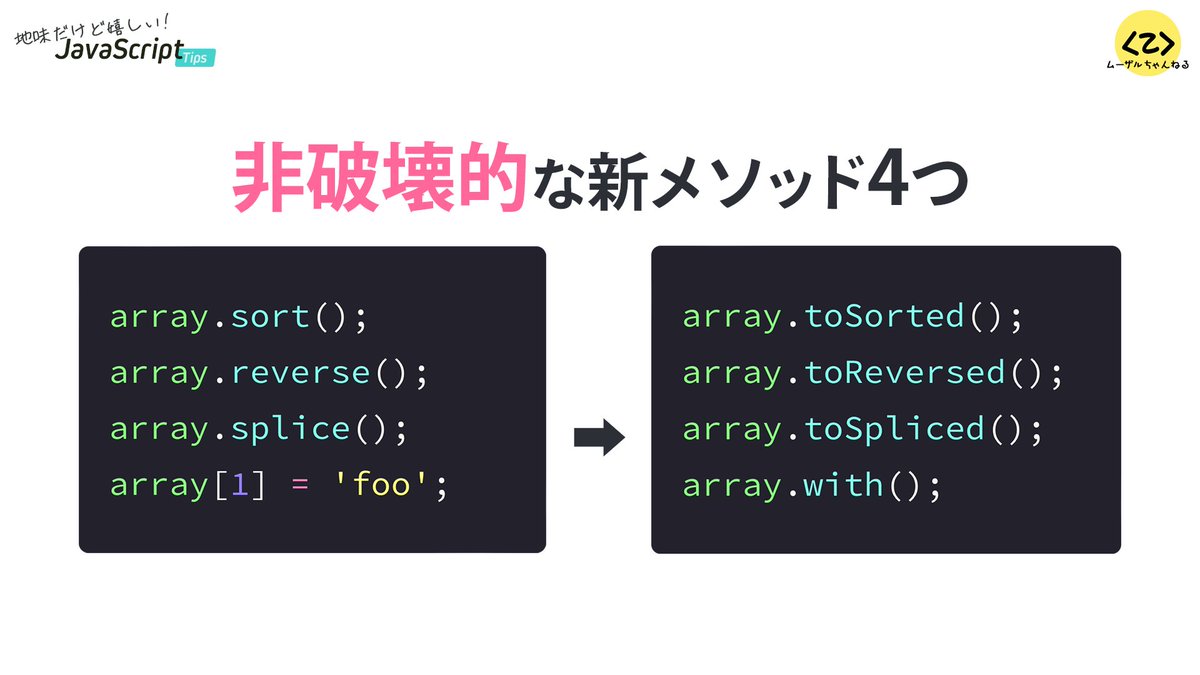
JavaScriptのreverse()やsort()は破壊的で元の配列自体を変更してしまいます。これはこれで便利な場面もありますが、思わぬ不具合の原因になったりもするため手軽にコピーして新しい配列が欲しいときもあります。
そんなときはECMAScript2023で新しく入る予定の新メソッドを使いましょう🥳
1
1
14
1,435

9 Sep 2022
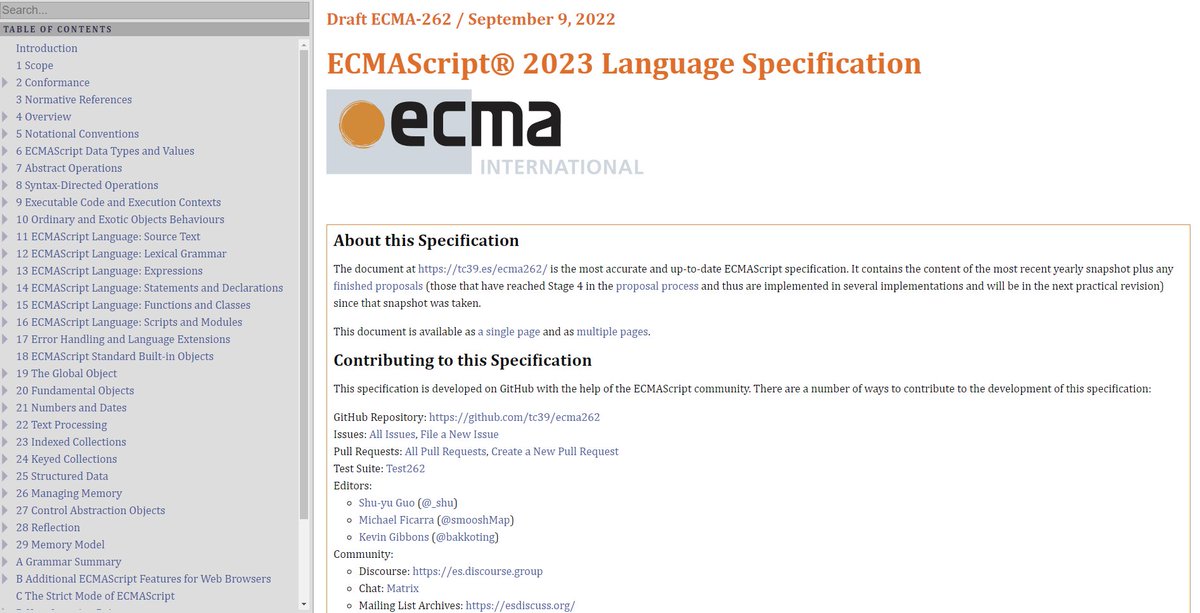
Hoy Fue Lanzado El Borrador de ECMAScript 2023 !
tc39.es/ecma262/
#envivo #comunidaddeprogramadores #devs #programar #frontendDev #backendDev #desarrollodesoftware #programación #evento #endirecto #100DaysOfCode #devcommunity #worldcode #javascript #ecmascript2023 #js
1

15 Aug 2022
Tell me, what feature do you miss in the JavaScript that other languages have?
#javascript #tutorial #ecmascript2023 #tc39 #news #nodejs #testing /7
4
2
8 Aug 2022
The JavaScript language is changing fast, fixing old problems and it's exciting to follow all those changes and be part of it as soon as possible
#javascript #tc39 #ecmascript #jsonwithparse #ECMAScript2023 #js #nodejs #tutorial #devtips #news #ES23 /6
6
8 Aug 2022
The JSON API as you know will change soon. Here's Why | ECMAScript2023
🧵 /1

1
8
67