
Mar 21
Good points by @SoLInTheWild regarding student #choice. Also, to be effective, choices need to be optimally challenging. In many cases, allowing students to draw a pic or create a visual representation isn't the same level of challenge as a writing product.
#EdPsychModules
Mar 20

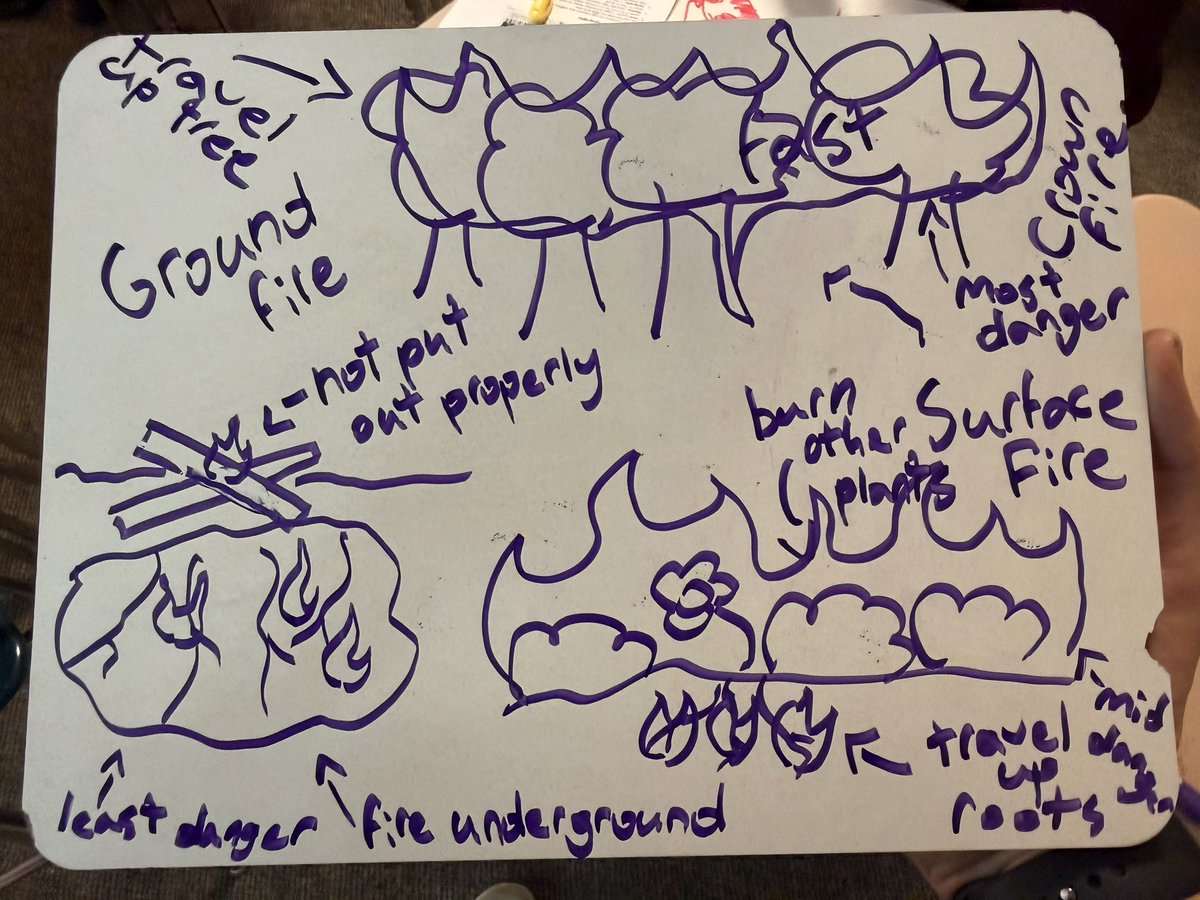
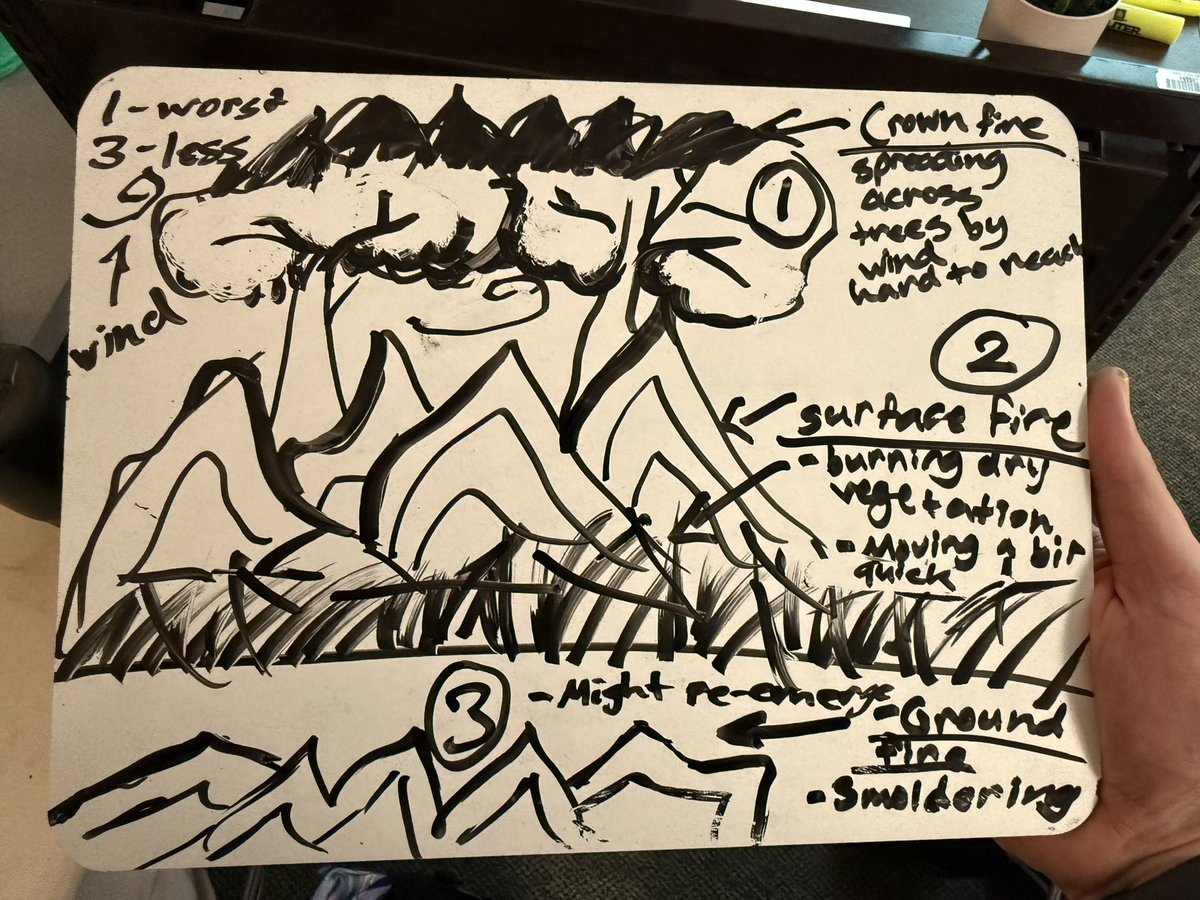
When we provide novice students with endless choice—“draw a picture or write a paragraph”—in how they process and show their learning (often a learning styles dog whistle), we let them become the expert in something they are not experts in. In certain situations, a visual representation of learning is more appropriate than a verbal one—or vice versa.
Some content demands verbal precision like explaining the steps of cellular respiration or building a historical argument about the causes of the Civil War. Other content demands visual clarity like showing the layers of the Earth.
Better yet, when advantageous, which is in most situations, we should require students to integrate both visual and verbal representations, but again, at our discretion. See the images for example.
We are the experts. We understand how their brains and memories work best; they do not. They are novices in both the content and the learning.
We should be determining how, when, where, and why students learn, based on evidence from cognitive science. Don’t defer to the novices. You’re the expert. The choice needs to be yours.
1
1
3
533
Mar 21
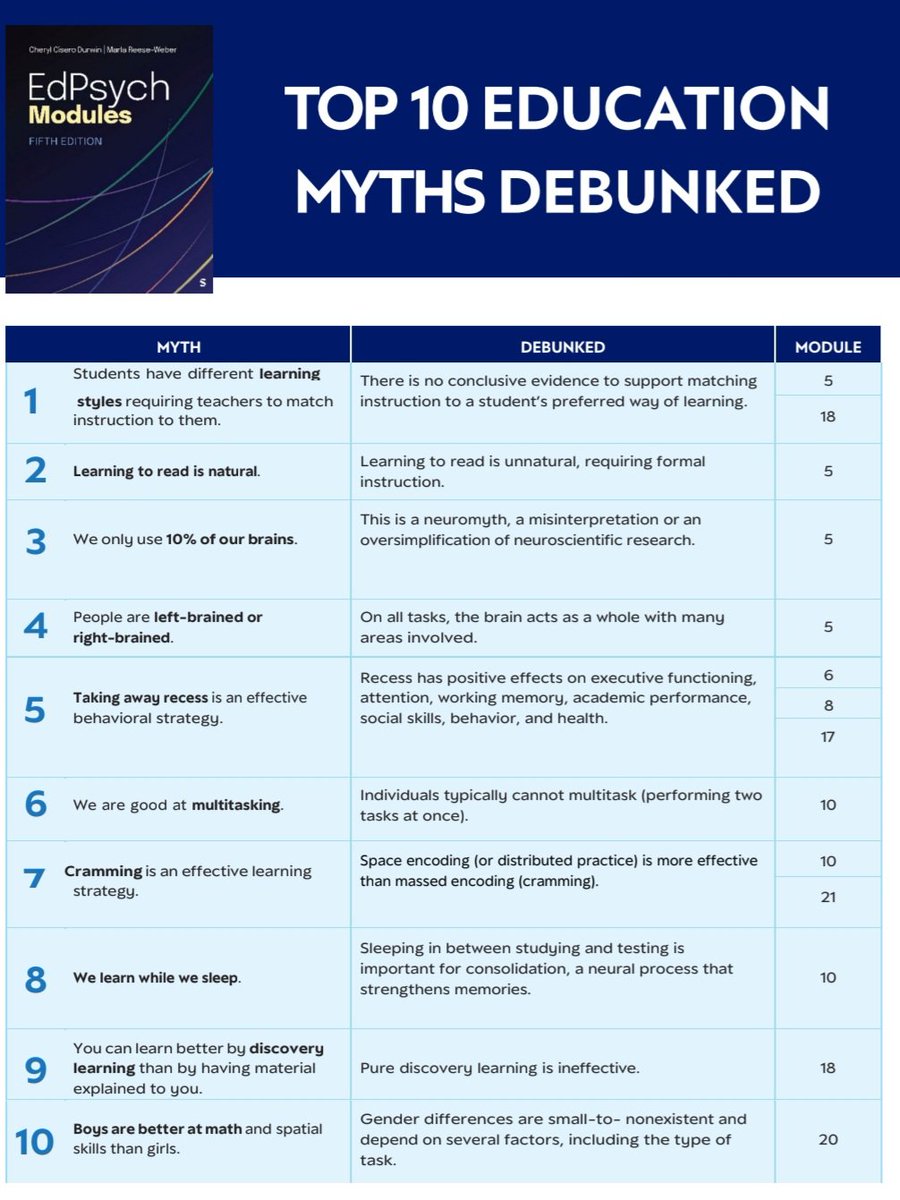
This is why I will continue to cover the #learningstylesmyth in #EdPsychModules published by @SageEducation.
Mar 20

👀
2
4
702
Mar 21
This is why I will continue to cover the #learningstylesmyth in #EdPsychModules published by @SageEducation.
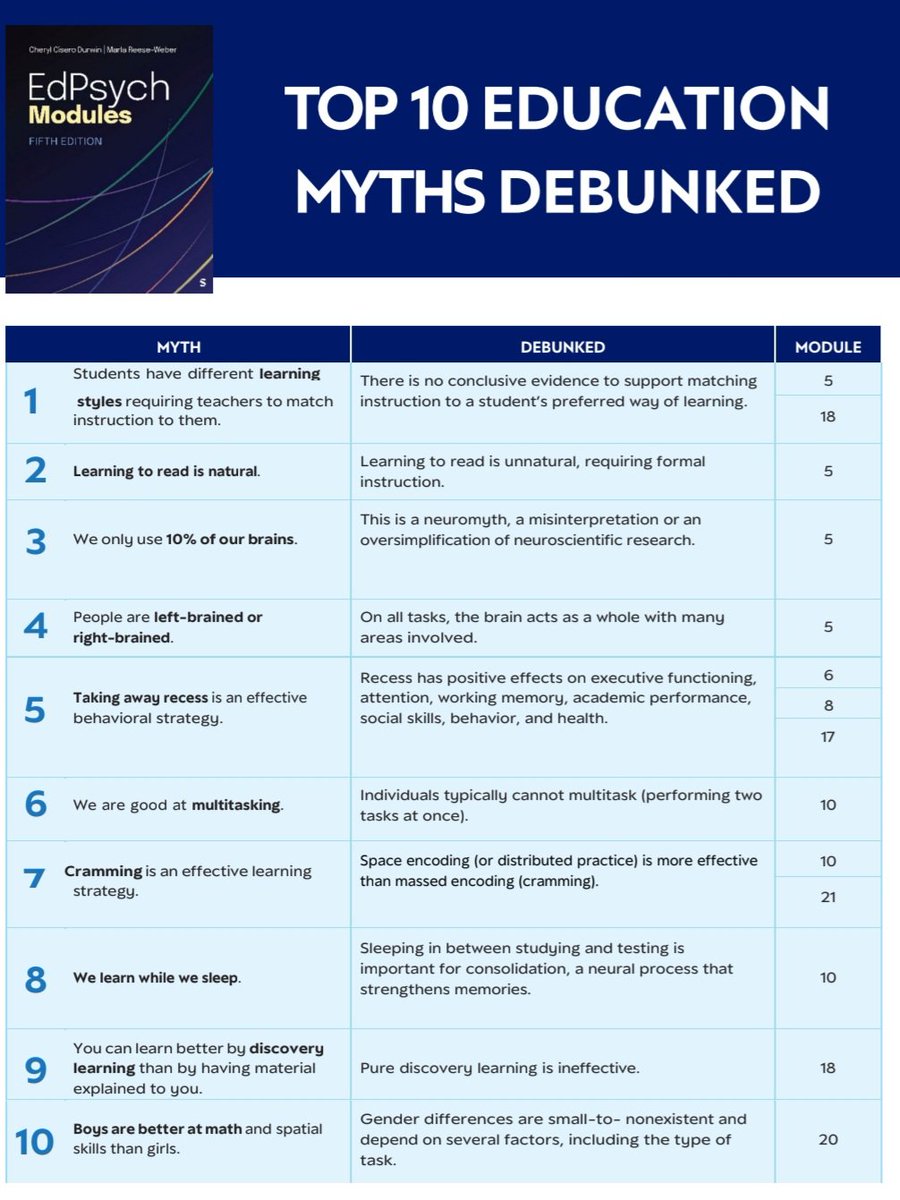
Mar 19

The education system has been lying to you since second grade.
You think you're a visual learner? Or a hands-on learner?
You're not.
"Learning styles" are a myth.
1
6
11
1,045
Mar 17
This is why we cover these topics in #EdPsychModules...
@SageEducation

I've concluded that teaching elementary math is nearly impossible to do well without strong number sense and mental math skills. Without them, teaching becomes inefficient.
1
2
312
Feb 20
Yep, this is basic #informationprocessing. We cover this and more related to evidence-informed #teaching in #EdPsychModules. How I wish more schools of #education would include #educationalpsychology in their curriculum. @SageEducation
Feb 19

If you want to retain info, you have to repeatedly pull it out of your brain, not out of your notes.
The info needs to enter working memory and the way it needs to get there is via long-term memory, not sensory memory.
3
59
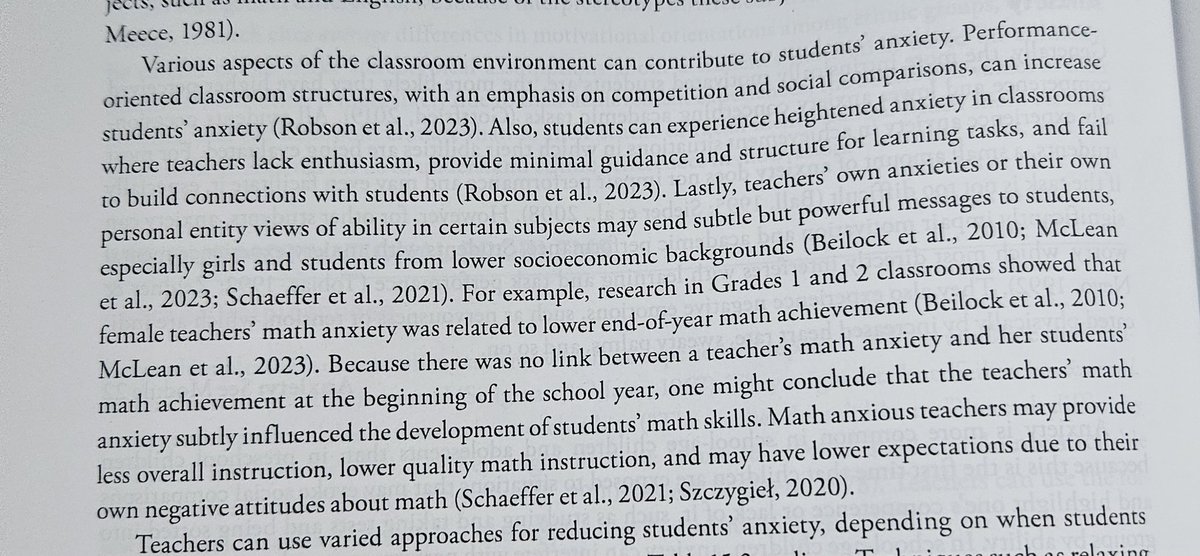
Great piece on #teacher #math #anxiety by @P_A_Kirschner. I look forward to reading the 2025 multi-country study cited in it. Here's what we have in #EdPsychModules, 2025, 5th ed (@SageEducation), still very relevant:
1
2
74
11 Nov 2025
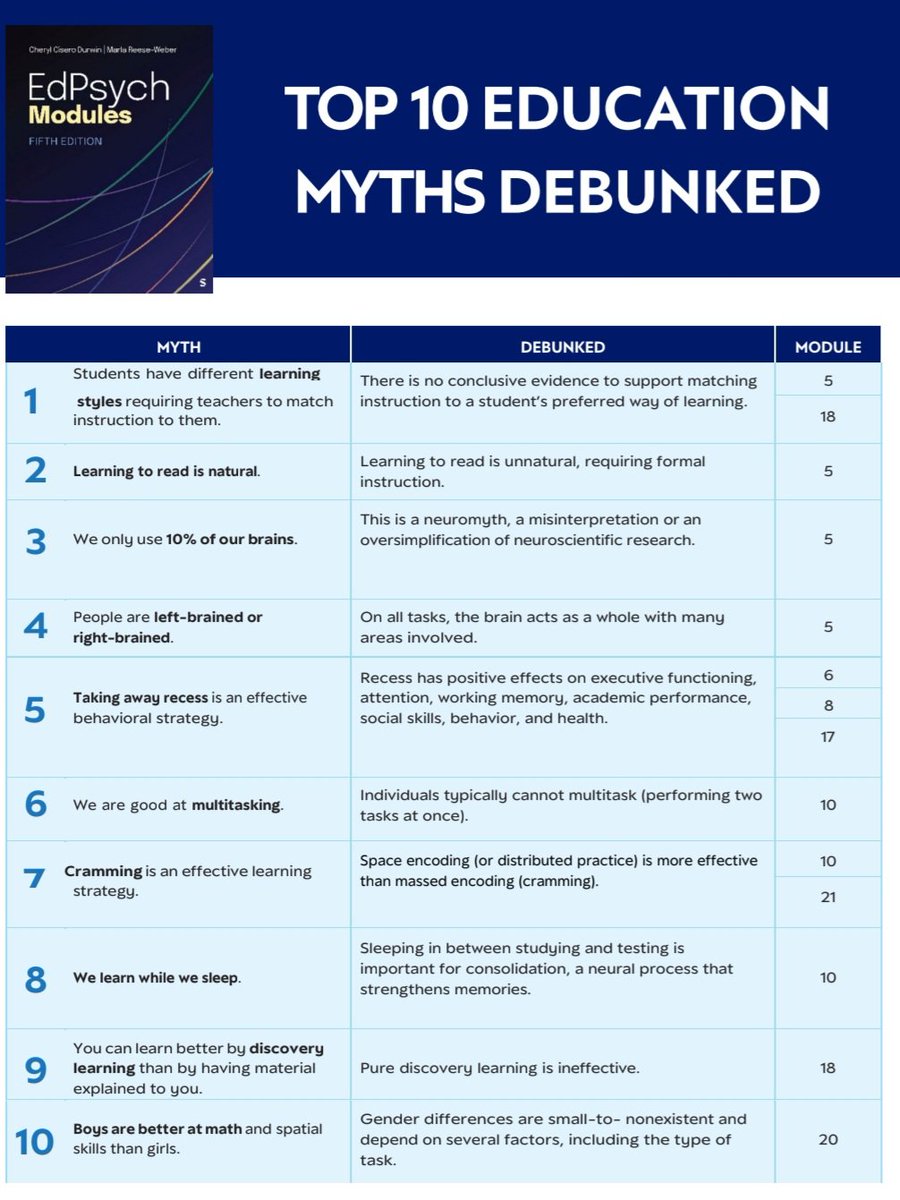
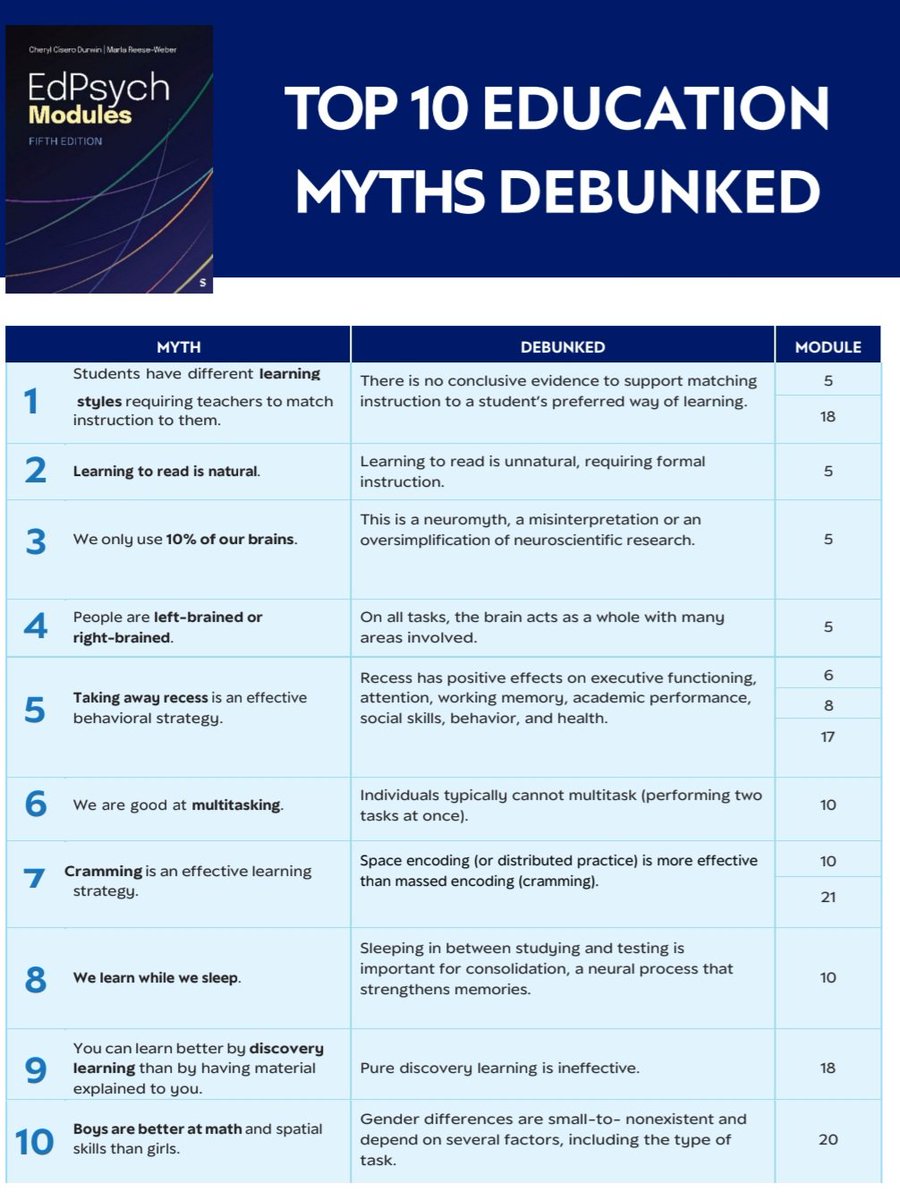
The #learningstylesmyth in a nutshell. Thanks, @justinskycak.
We debunk this myth and others in #EdPsychModules, 5e (@SageEducation ).
9 Nov 2025
There’s a common myth that goes like this: “everybody has the same cognitive horsepower and learns at the same rate, but different people learn differently depending on their preferred learning style.”
In reality, the exact opposite is true. Different people generally have different working memory capacities and learn at different rates. While people may have preferred learning “styles” (e.g. visual vs verbal), they do not actually learn better when given information in their preferred style.
The myth is that different people need the same amount of practice but in different forms – whereas the reality is that different people need the same form of practice but in different amounts.
1
3
392
17 Sep 2025
This is why I will continue to cover the #learningstylesmyth in #EdPsychModules published by @SageEducation.
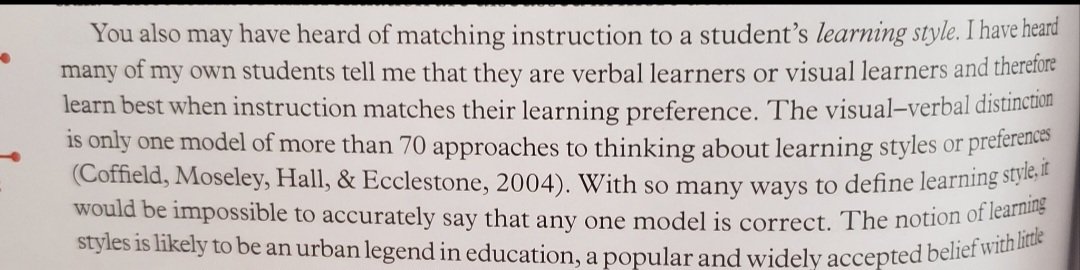
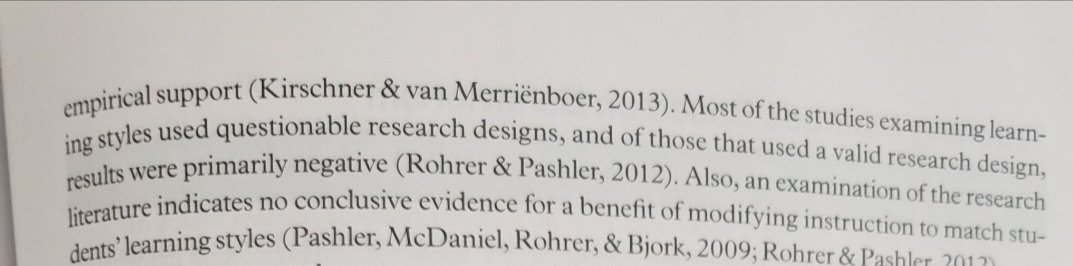
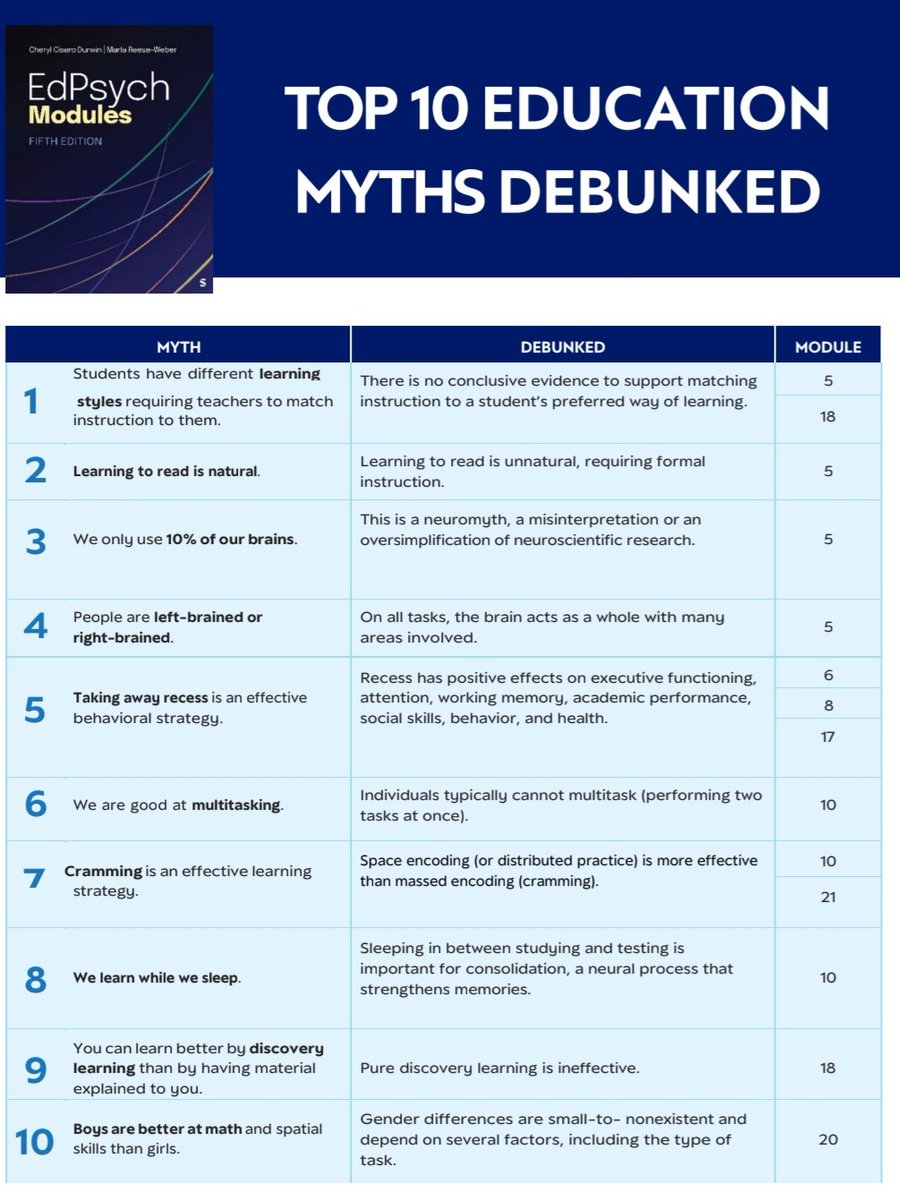
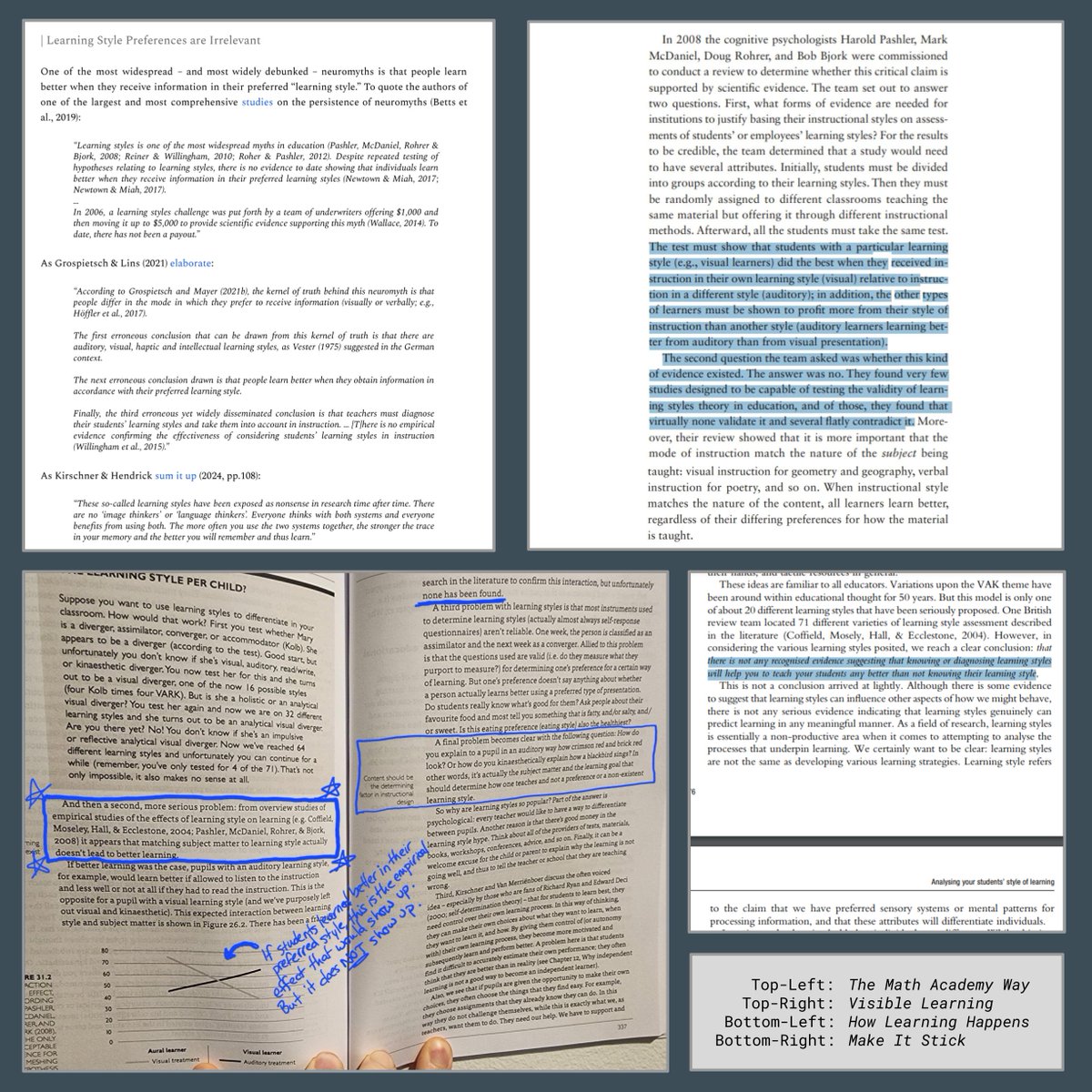
17 Sep 2025
There is no such thing as a "visual learner."
While students may have learning style *preferences* (e.g., visual vs. verbal), they do not actually learn better when receiving information via their preferred learning style.
This has been empirically tested over and over again. But despite having countless stakes driven through the heart, the myth continues to rise up from the grave like an unkillable zombie. It is the educational equivalent of astrology.
To get ahead of the a common follow-up confusion:
Q: "But math topic XYZ clicked for me when I saw an image/diagram!"
A: What you're thinking of is matching instructional design to the content, not matching teaching style to the learner.
Lots of math topics benefit from images/diagrams regardless of what the learner might claim is their learning style.
Yes, an image/diagram may help you learn a particular math topic. That doesn't mean you are a visual learner.
What it means is that the particular information being taught is effectively communicated through an image/diagram. For everybody, not just for you.
What you're experiencing is that you learn better when the instructional design is properly tailored to the information being taught.
From the bottom-left reference in the screenshot, "How Learning Happens" by @P_A_Kirschner and @C_Hendrick:
"How do you explain to a pupil in an auditory way how crimson red and brick red look? Or how do you kinaesthetically explain how a blackbird sings? In other words, it's actually the subject matter and the learning goal that should determine how one teaches and not a preference or a non-existent learning style."
4
320
3 Sep 2025
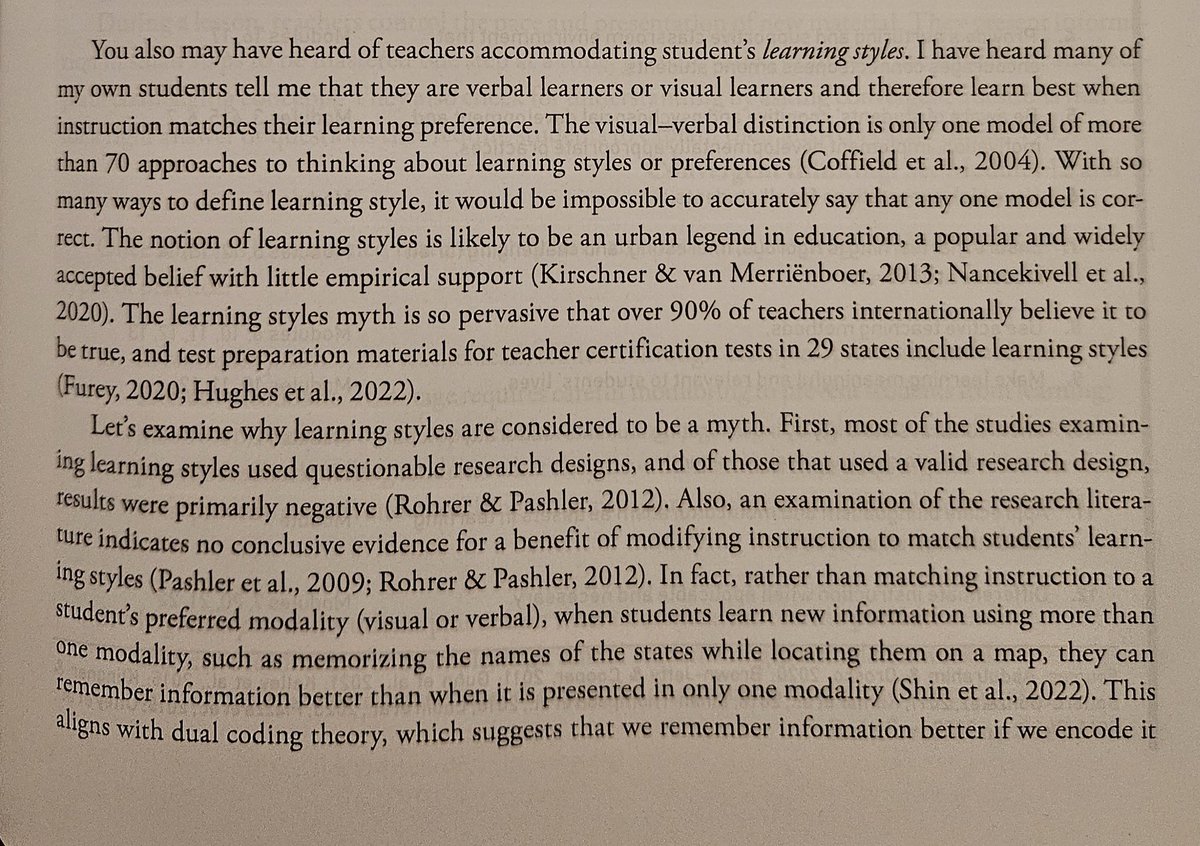
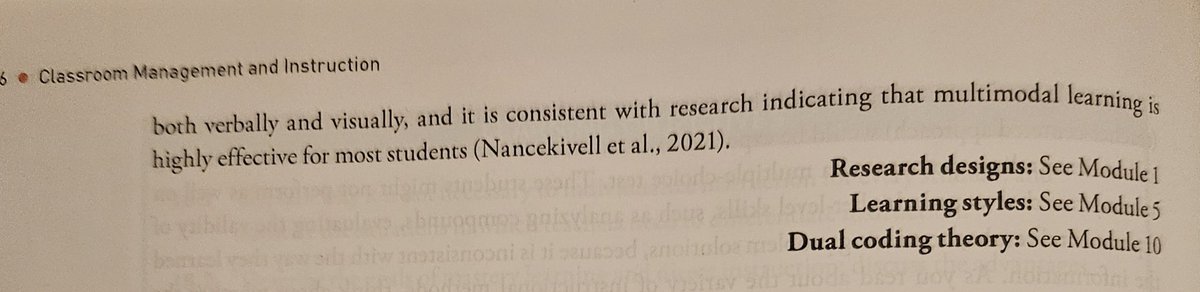
To answer your question @Apatim56, here's an explanation of the #learningstylesmyth from #EdPsychModules. Hope this is helpful.
3
132
30 Aug 2025
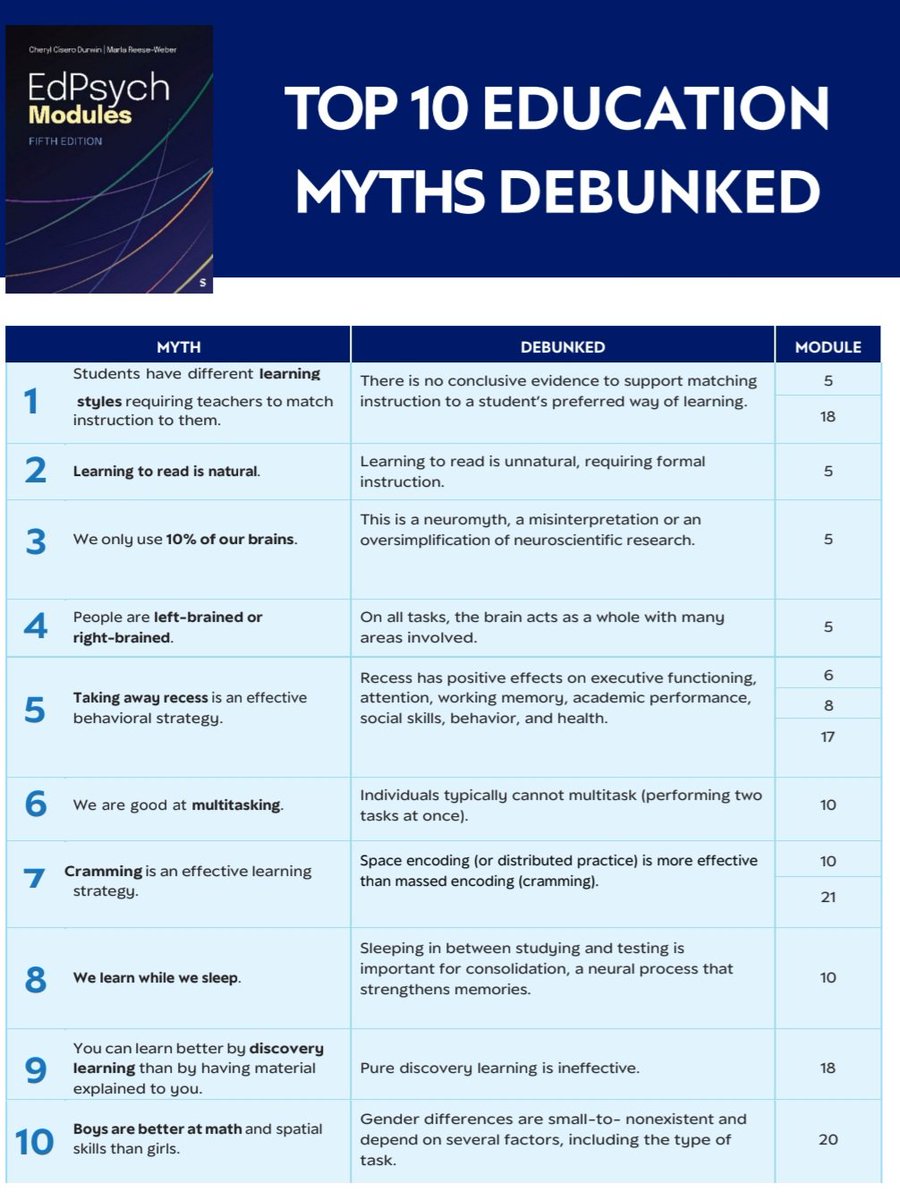
This is why it is important for #teacher #education programs to minimally require a course in #educationalpsychology, and why I will continue to include the #learningstylesmyth in #EdPsychModules (@SageEducation).
28 Aug 2025

The majority of the teachers in my workshop this week said they thought learning styles were real and important.
2
3
13
612
20 Aug 2025
Yes, thanks for pointing that out, @MrZachG. #teachers, you can learn about how to effectively use #workedexamples in #EdPsychModules (Module 12).
20 Aug 2025

I urge you to read the research on the worked example effect.
2
8
1,100
20 Aug 2025
I'm still continually amazed that what we researchers have known for decades about #automaticity of skills (e.g., in reading, math) has only recently become "mainstream" and that many #teachers still have a problem understanding the importance of this concept.
#EdPsychModules
20 Aug 2025
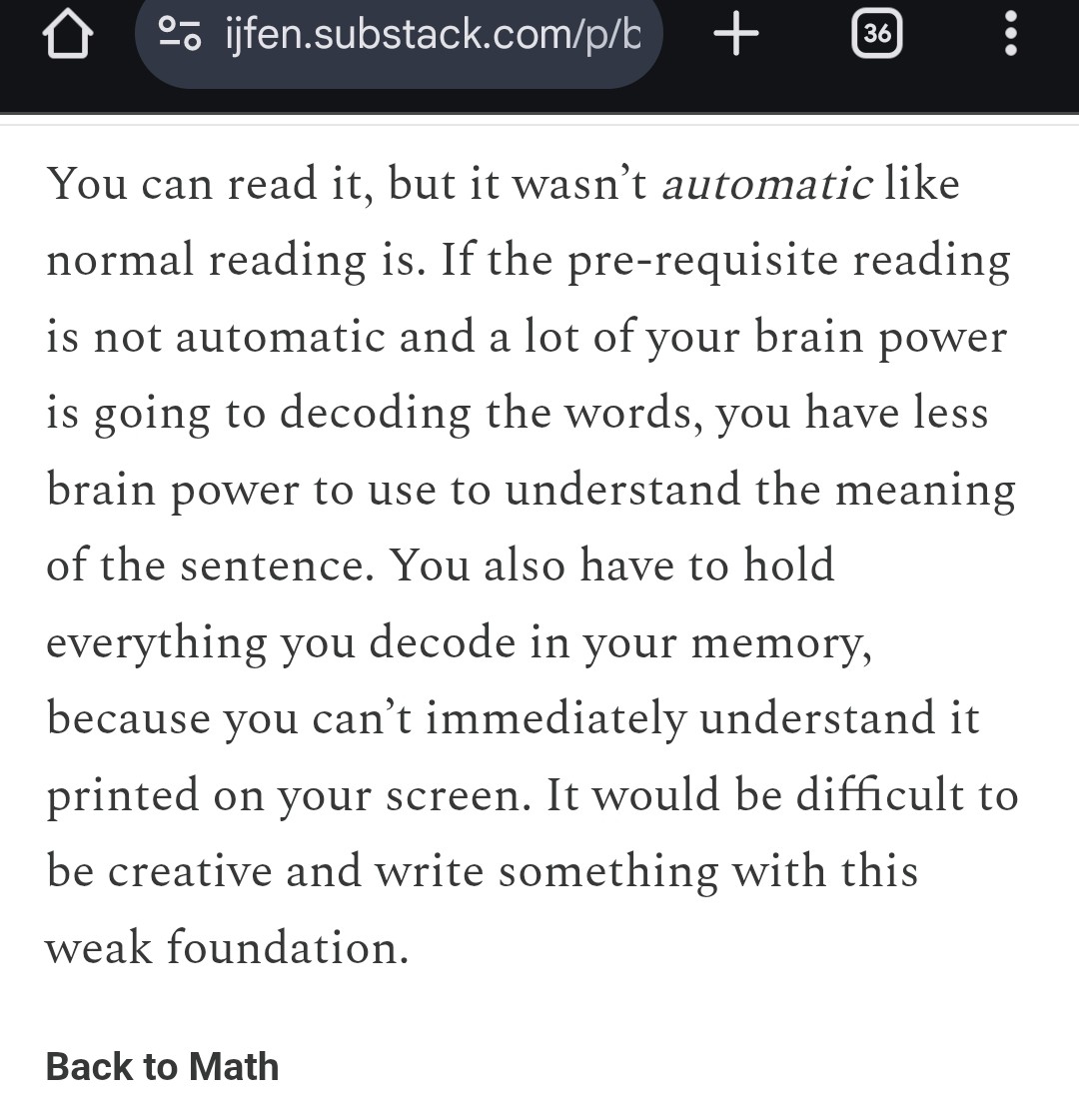
🎯 "[If] a lot of your brain power is going to decoding the words, you have less brain power to use to understand the meaning of the sentence."
This applies to reading, math, everything really.
As Hattie & Yates (2013) so eloquently put it:
"You cannot comprehend a 'big picture' if your mind's energies are hijacked by low-level processing. Continuity is broken. The goal shifts from understanding the context to understanding the immediate"
1
2
129
14 Aug 2025
Maybe preservice #teachers need #educationalpsychology taught by psych, not education, departments?
#EdPsychModules
12 Aug 2025

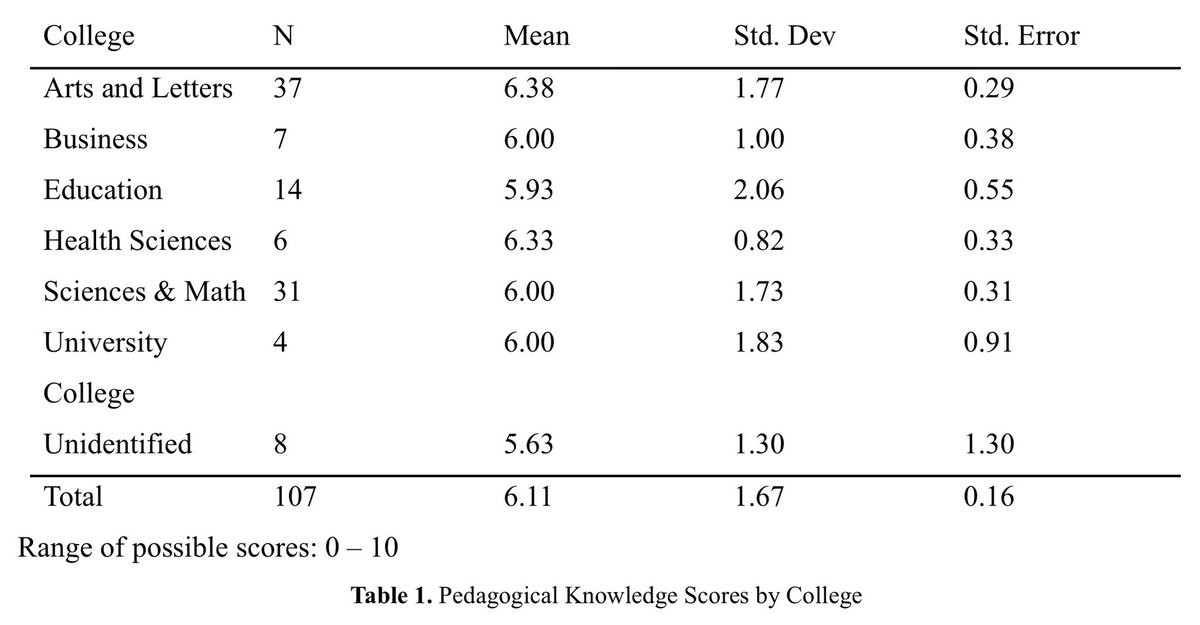
University education colleges have the weakest pedagogical knowledge
You can’t make this up. 🤦♂️😓
(highest standard deviation though, implying there is some hope that there are some well-informed professors well placed to lead change)
3
155
14 Aug 2025
2
267
14 Aug 2025
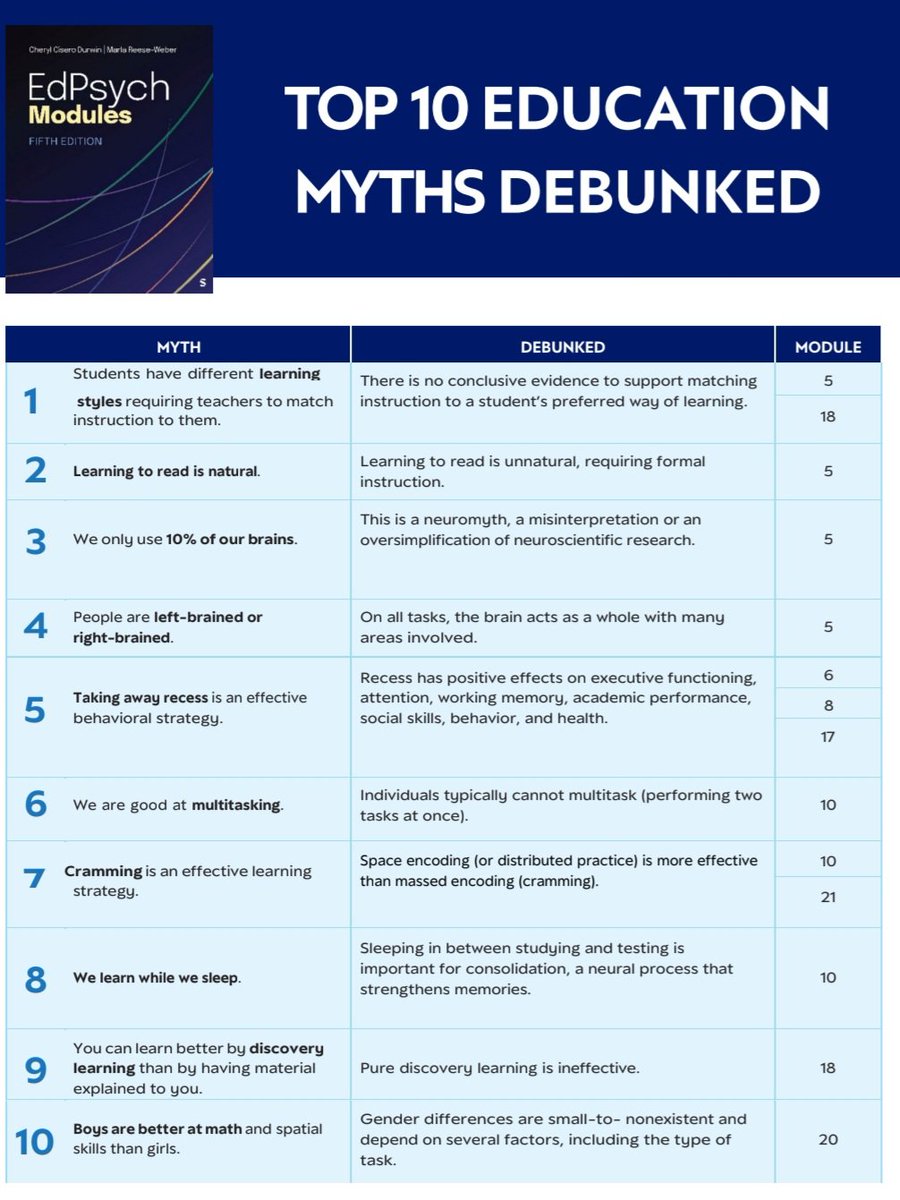
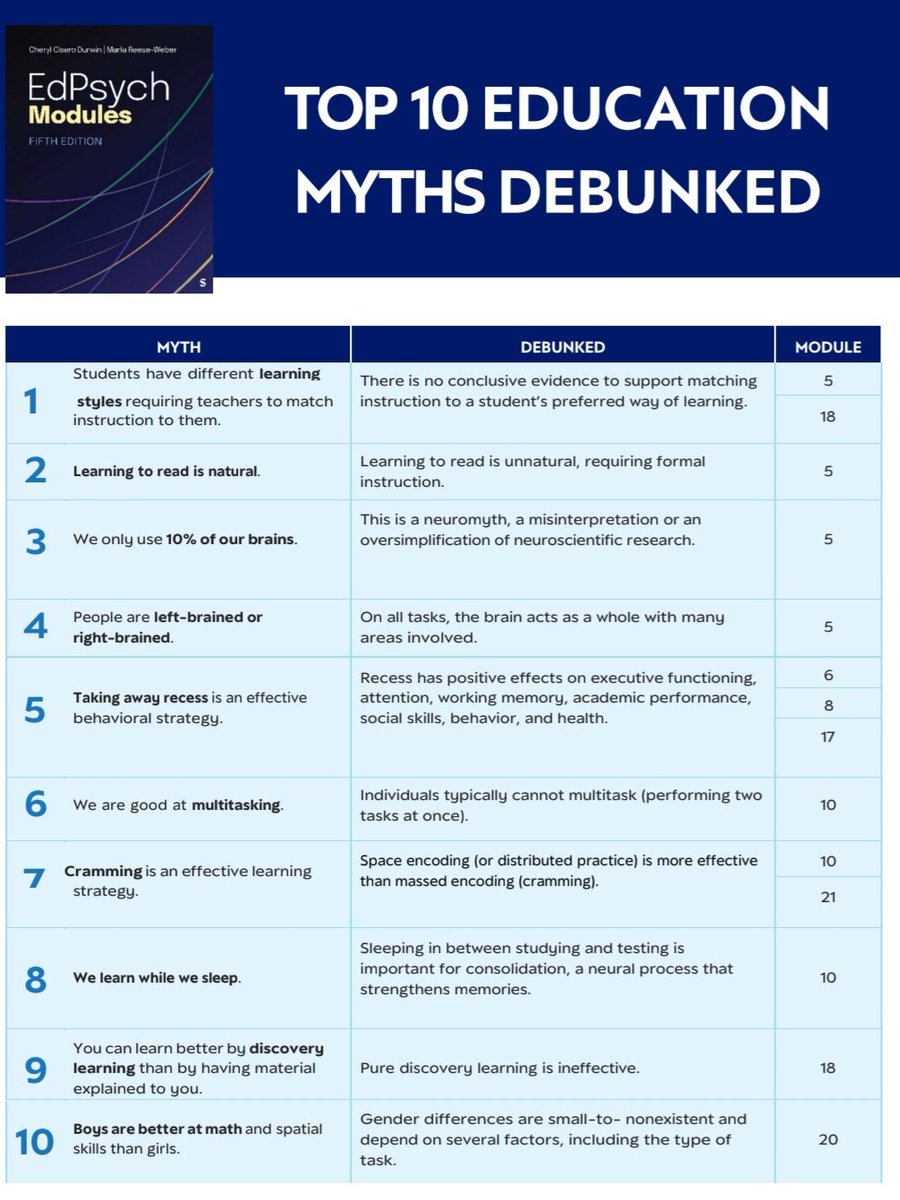
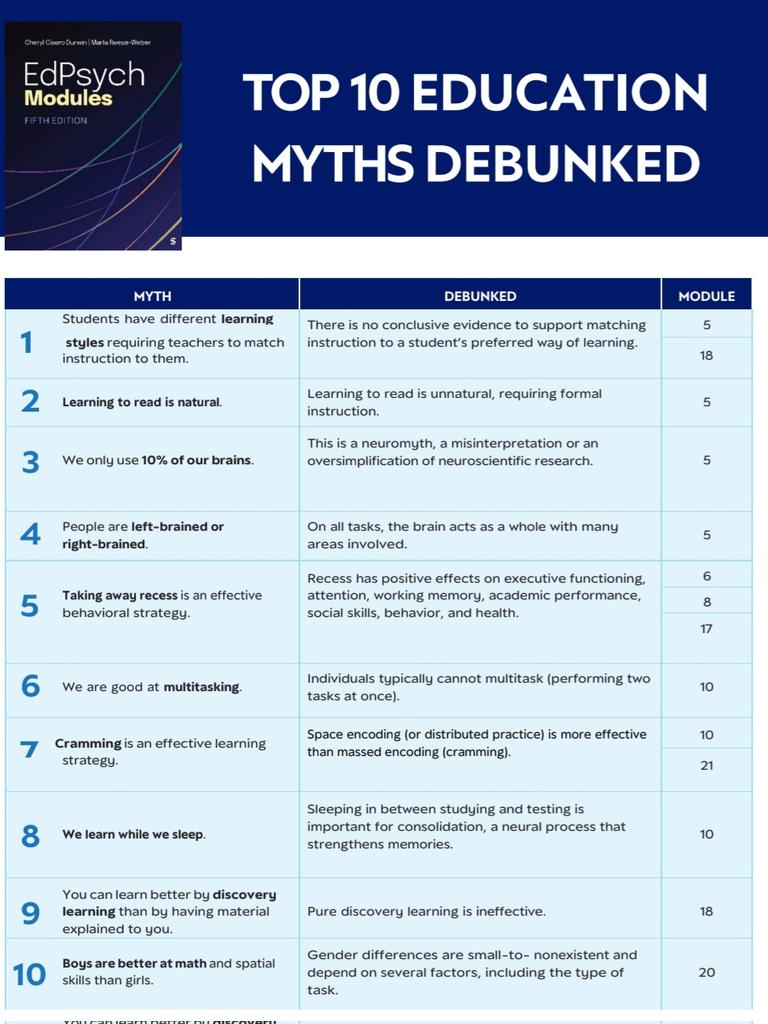
Yes, #learningstyles, "we only use 10% of our brains,"
"left-brain, right-brain learners," etc. I include these and other #education #myths in my textbook, #EdPsychModules published by @SageEducation. This is why preservice #teachers need #educationalpsychology.
1
3
24
3,976
22 Jul 2025
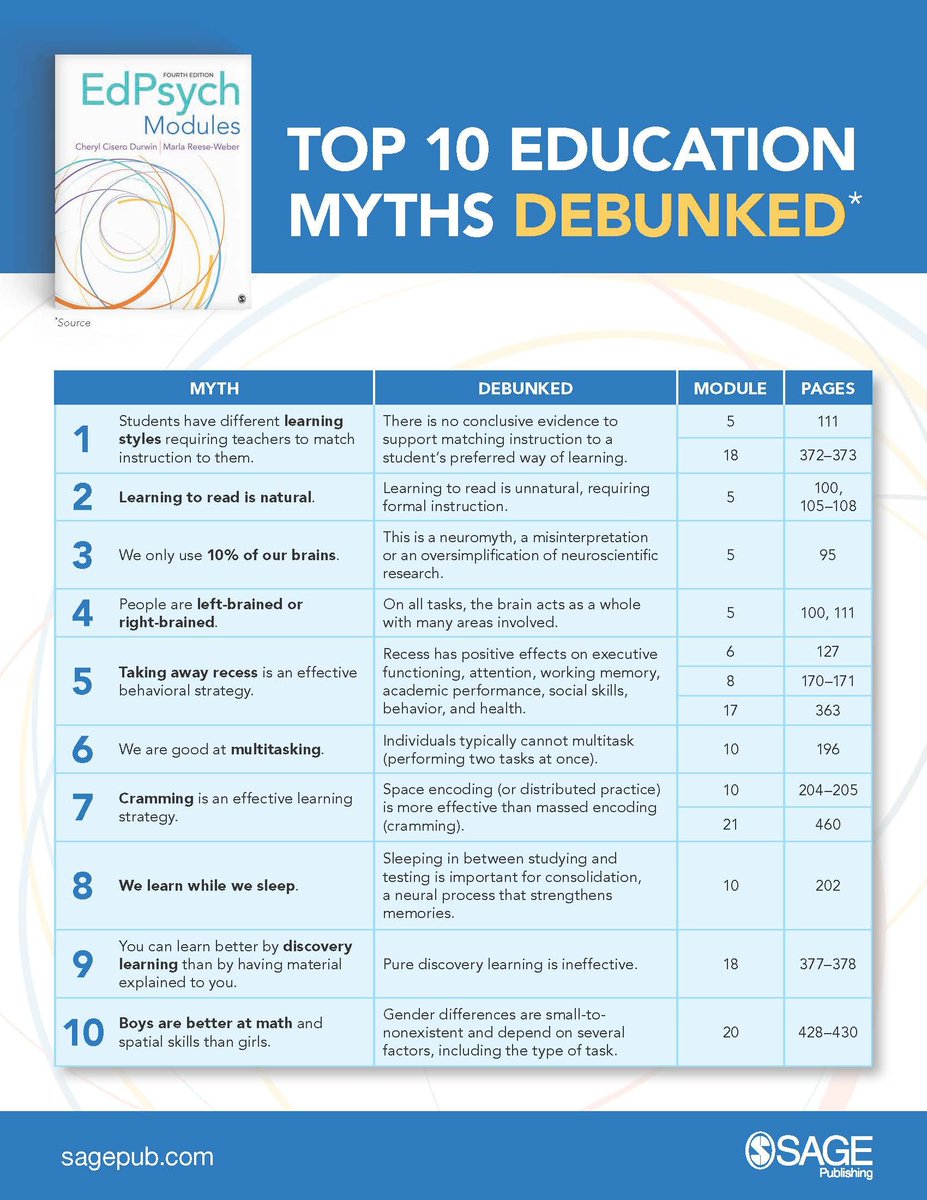
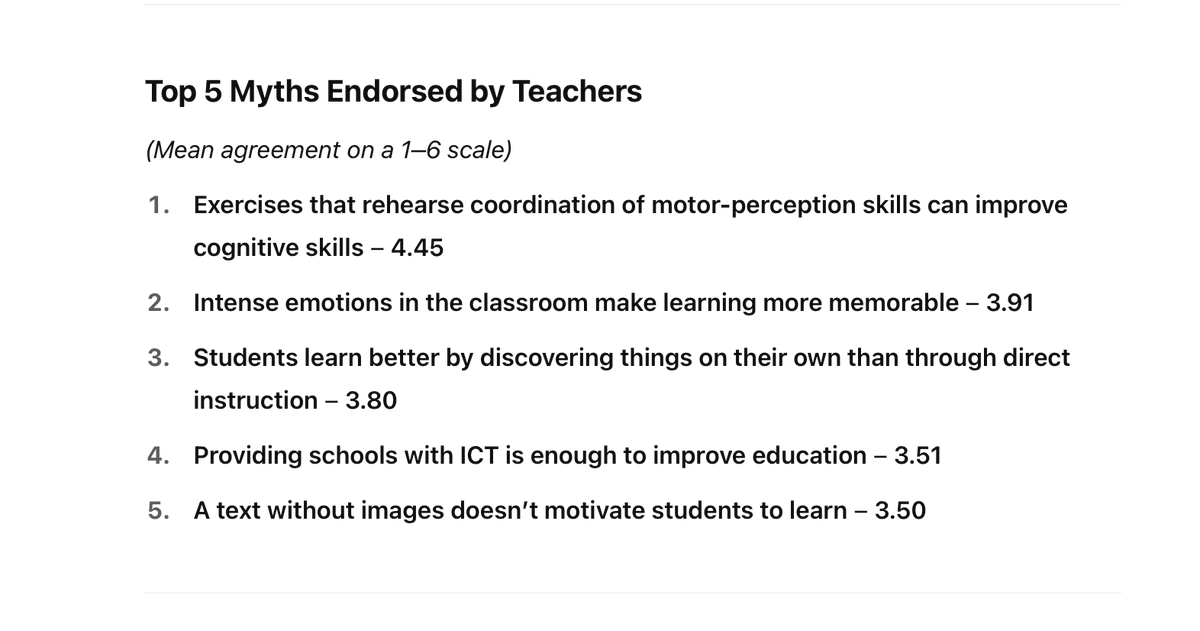
This is why I will continue to address the most pervasive #education #myths in #EdPsychModules (5th ed) published by @SageEducation. So much work left to be done!
20 Jul 2025

*NEW POST* - The Enduring Persistence of Neuromyths in Education. A new study surveying over 3,000 Spanish teachers provides one of the most detailed snapshots to date of educational misconceptions in the field. Link in reply ⬇️
2
9
535
18 Jun 2025
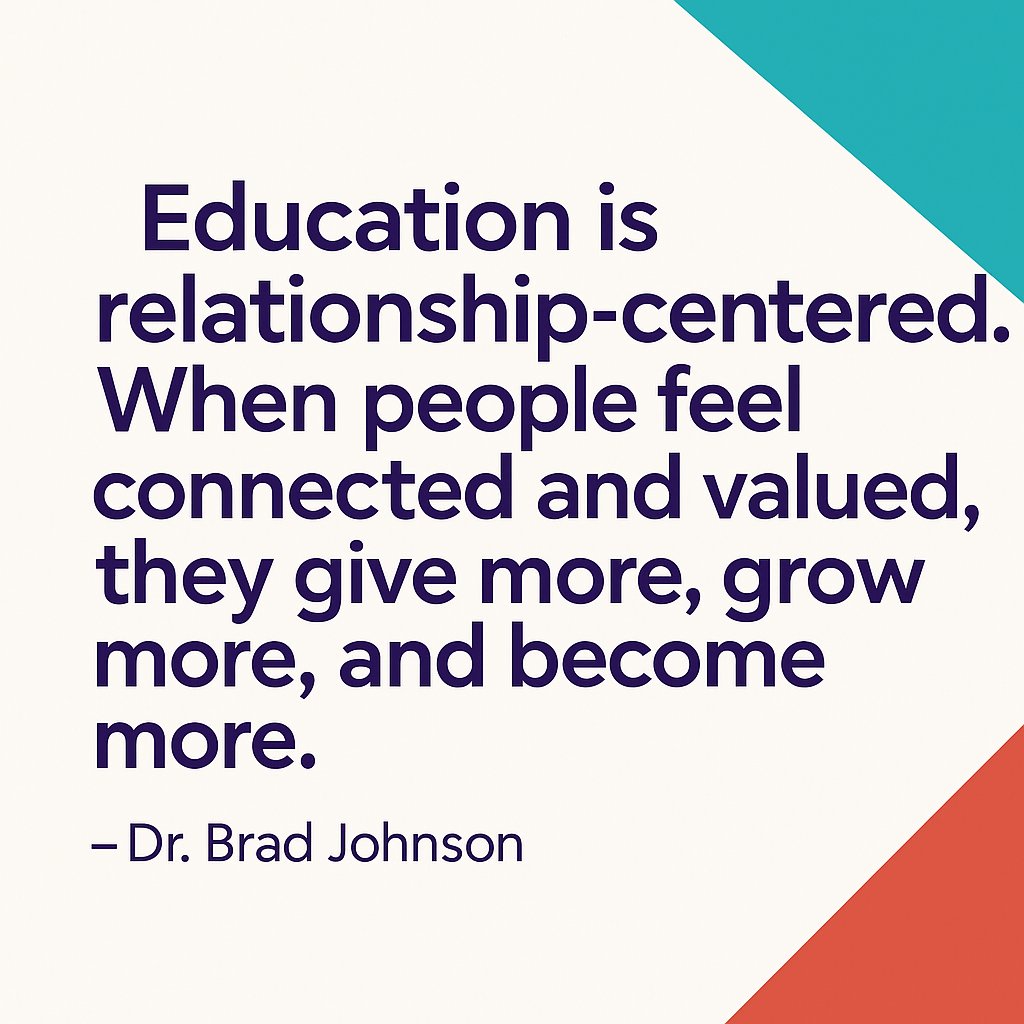
True. Relationship centered. But that doesn't mean you have to be (nor should be) your students' friend. It means fostering a sense of belongingness in the classroom--through #autonomysupportive #teaching. For more info, see #EdPsychModules (Module 16) pub by @SageEducation.

2
100
18 Jun 2025
Awesome webinar by @MrZachG & @effortfuleduktr! Highly recommend for #teachers. Found myself nodding the whole time, as it covered so many concepts in my #EdPsychModules textbook for preservice teachers:
Information processing model
#attention & WM
#overlearning
#consolidation
1/
16 Jun 2025
If you missed the free webinar I put on with Blake Harvard (@effortfuleduktr) about attention and teacher explanations, the recording is now available:
educationrickshaw.com/2025/0…
1
1
5
867
17 Jun 2025
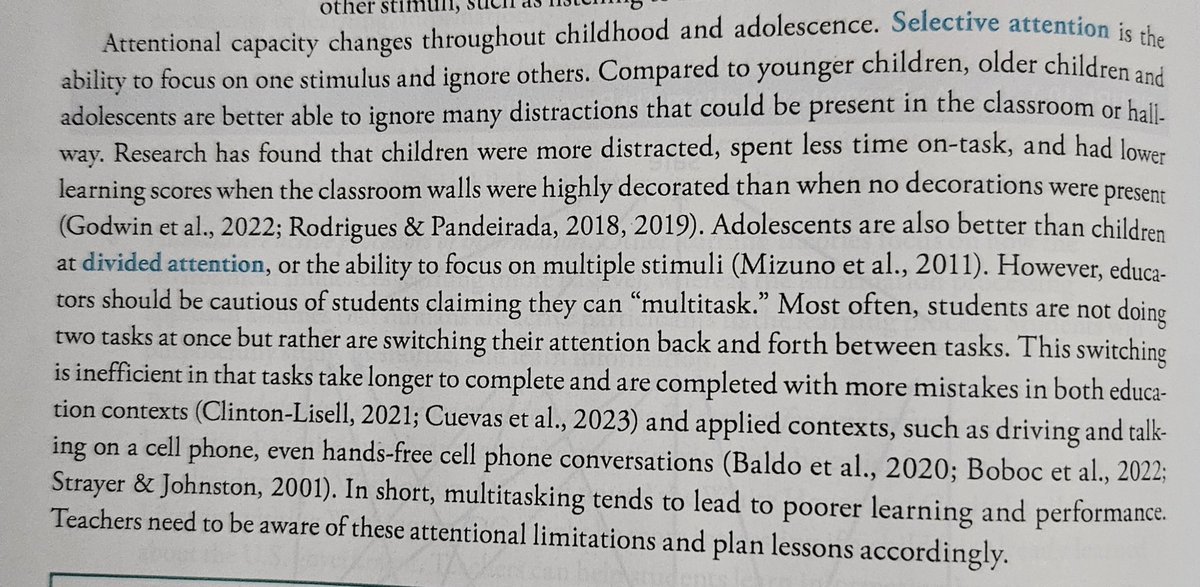
Great thread by @PepsMccrea. Yes, classroom displays can have a negative effect on #attention. We include this research in #EdPsychModules (Module 10) published by
@SageEducation.
15 Jun 2025

Consider classroom displays, such as posters or student work positioned in student lines-of-sight. Are these a distraction?
In short, yes... there is evidence that displays DO have a negative impact on student attention (and so learning).
2
145
10 Jun 2025
Yes, @MrZachG is spot on. Instructional planning should begin with #learningobjectives, then decide how you want students to show they've met the LOs (i.e., #assessments). Lastly, choose instructional methods & materials to align to LOs & assessment.
#EdPsychModules
8 Jun 2025
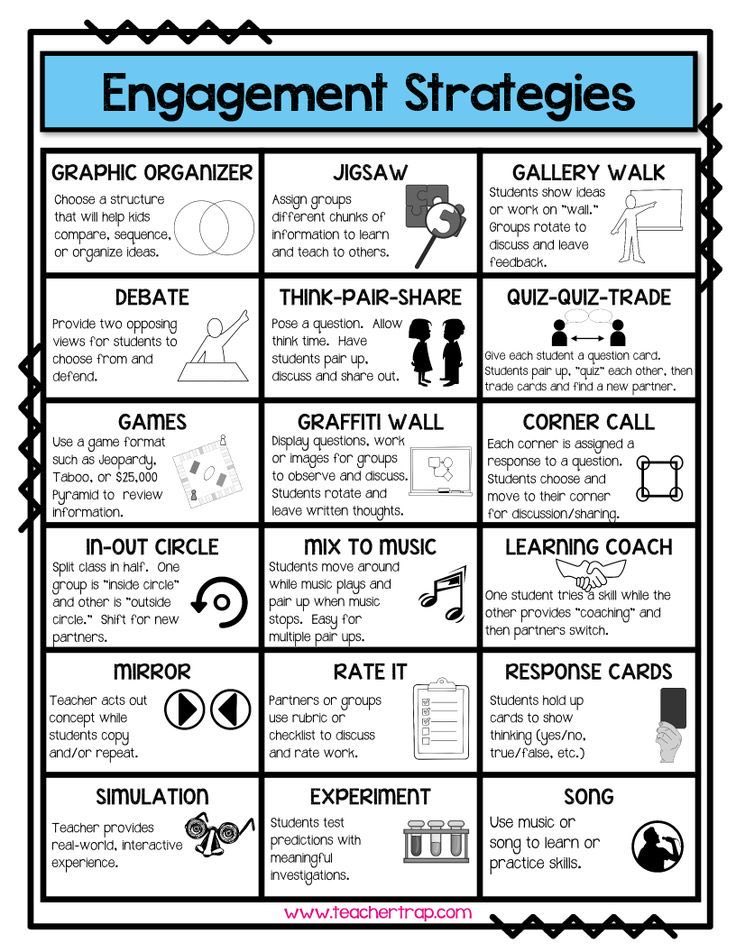
I was taught about activities, but never how to plan a lesson. It’s not that the below are bad - it’s that starting with activities rather than designing around targeted goals leads to disjointed learning. I see new and old teachers doing activity-based lesson planning everyday.
2
5
1,297