
1 Nov 2025
🚀 Day 37 — Effective Python Coding Series
Asyncio Beyond I/O: Handling CPU-Bound Tasks Efficiently ⚙️
Most people know asyncio as the go-to tool for I/O-bound tasks — like network calls or database requests.
But did you know it can also handle CPU-bound workloads effectively? 👀
💡 Here’s the trick:
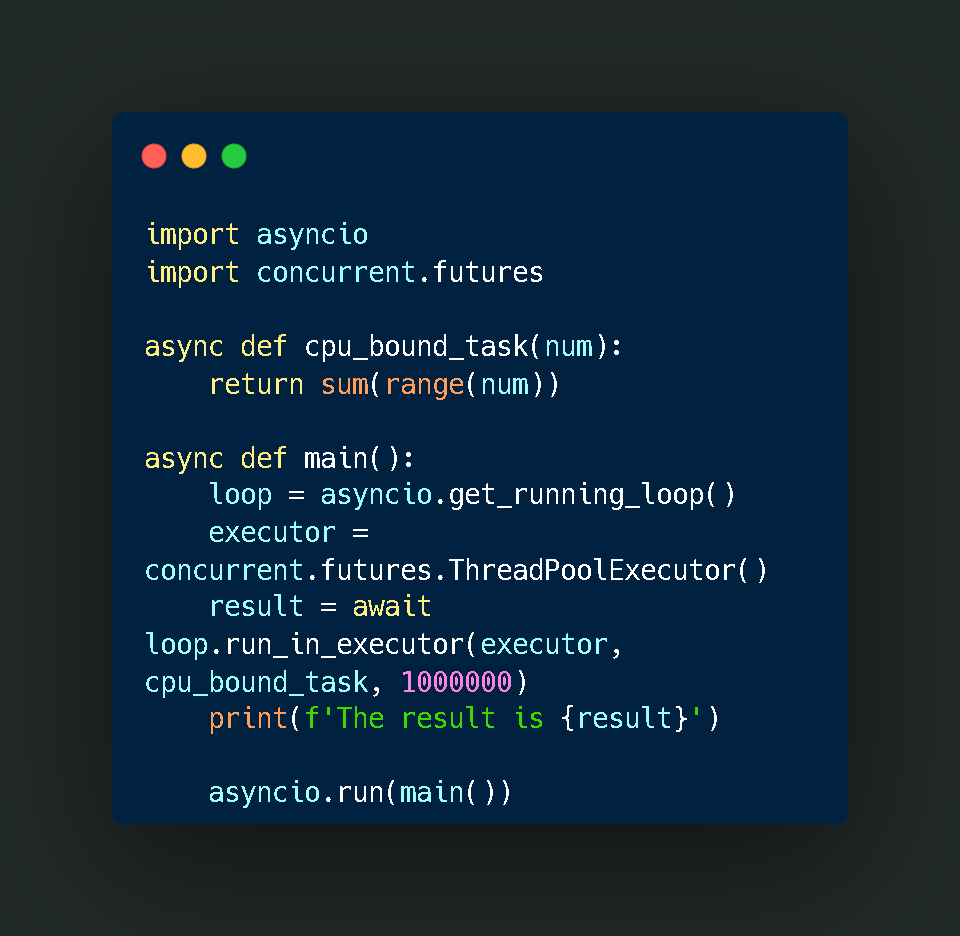
When CPU-heavy tasks block the event loop, your async app can freeze.
To avoid that, offload those heavy computations to a ThreadPoolExecutor or ProcessPoolExecutor — while the event loop stays responsive.
🧠 Core Idea:
loop.run_in_executor() lets you execute CPU-heavy tasks elsewhere
Async code remains non-blocking
You get both responsiveness and parallelism
✅ Benefits:
Offload CPU-intensive computations
Mix I/O CPU concurrency
Keep apps fast and responsive
⚙️ When to use which:
ThreadPoolExecutor → lightweight CPU tasks
ProcessPoolExecutor → heavy, multi-core computation
In short:
Asyncio Executors = True Hybrid Concurrency in Python 💪
#Python #Asyncio #Concurrency #EffectivePython #BackendDevelopment #Developers
3
118
28 Oct 2025
🚀 New post is live — Day 35!
Master Asyncio, the key to true concurrency in Python 🧠
No threads. No blocking. Just performance.
Full breakdown’s waiting in the pinned post 🔝
#Python #Asyncio #EffectivePython #Developers
1
2
58
28 Oct 2025
🔥 Day 35 — Effective Python Coding Series
Today’s focus: Mastering Asyncio — The Heart of Asynchronous Python ⚙️
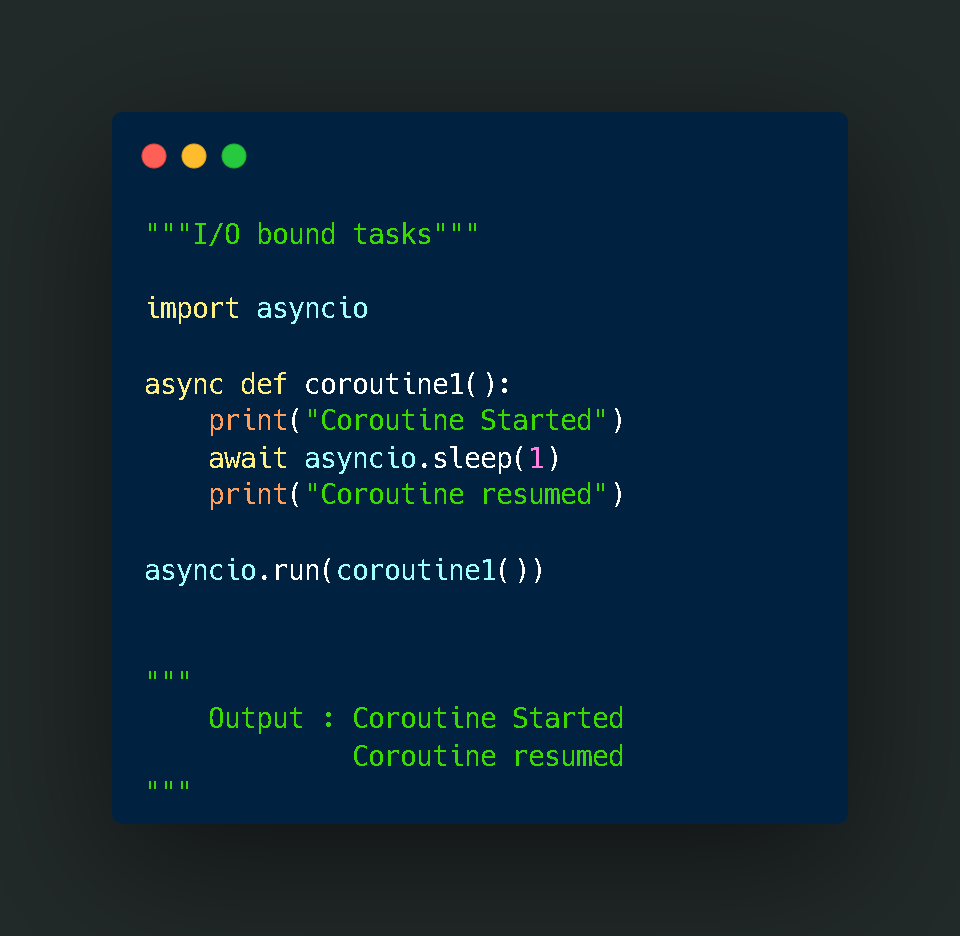
asyncio is a powerful library in Python that allows developers to write asynchronous code — perfect for applications that handle many I/O-bound operations like API calls, file reads, or database requests. 🌐
✨ Why Asyncio Matters:
When your program performs I/O tasks, it often spends most of its time waiting for responses.
Instead of idling, asyncio lets your code switch to another task, efficiently utilizing resources and improving performance. ⚡️
✨ How It Works:
✔️ Event Loop — The core engine that manages and schedules async tasks.
✔️ Coroutines (async def) — Functions that can pause and resume during execution.
✔️ await keyword — Used to pause execution until an async task finishes.
✔️ Task Switching — When one task waits, another gets CPU time — no blocking.
⚡️ Key Benefits:
✅ Perfect for I/O-bound applications (networking, APIs, file I/O)
✅ Keeps your application responsive
✅ Enables concurrency in a single-threaded program
⚠️ Remember:
asyncio improves concurrency — not parallelism.
For CPU-heavy work, you still need multiprocessing.
In short —
Asyncio = concurrency responsiveness efficiency 🚀
👉 This series is for Python Developers, Data Engineers, Backend Engineers, and ML Practitioners who want to master efficient and modern Python coding patterns.
If this post helped you learn something new today, drop a ❤️ or 🔁
and stay tuned for more Effective Python Coding insights!
#Python #Asyncio #AsynchronousProgramming #EffectivePython #CodingSeries #BackendDevelopment #DataEngineering #Developers #ML
3
215
27 Oct 2025
🔥 Day 34 — Effective Python Coding Series
Today’s focus: The Power of Coroutines in Python ⚙️
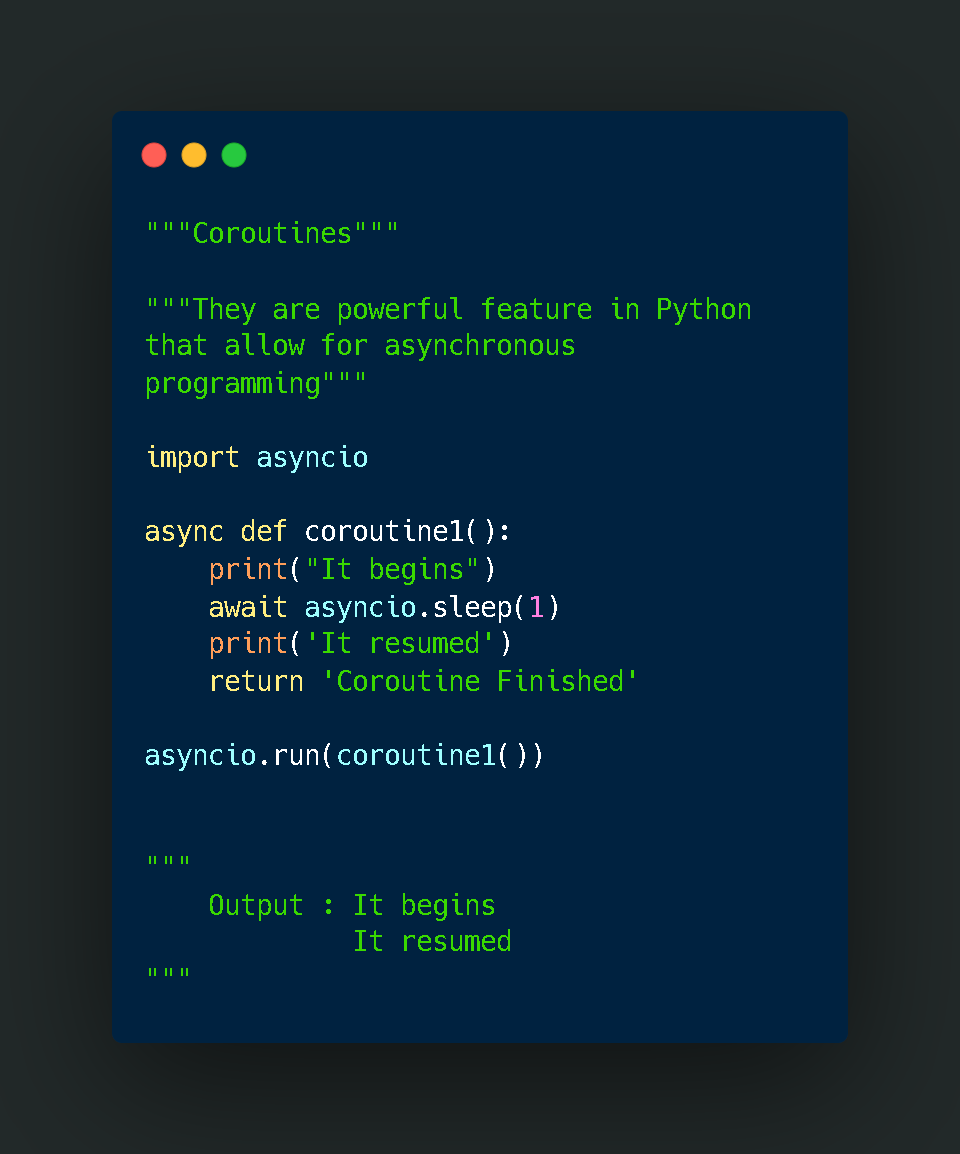
Coroutines are one of Python’s most powerful tools for asynchronous programming.
They allow functions to pause, save their state, and resume later — enabling efficient multitasking without using multiple threads or processes. 🧩
✨ Why Coroutines Matter:
When handling I/O-bound operations (like API calls, DB queries, or network requests), traditional code blocks execution.
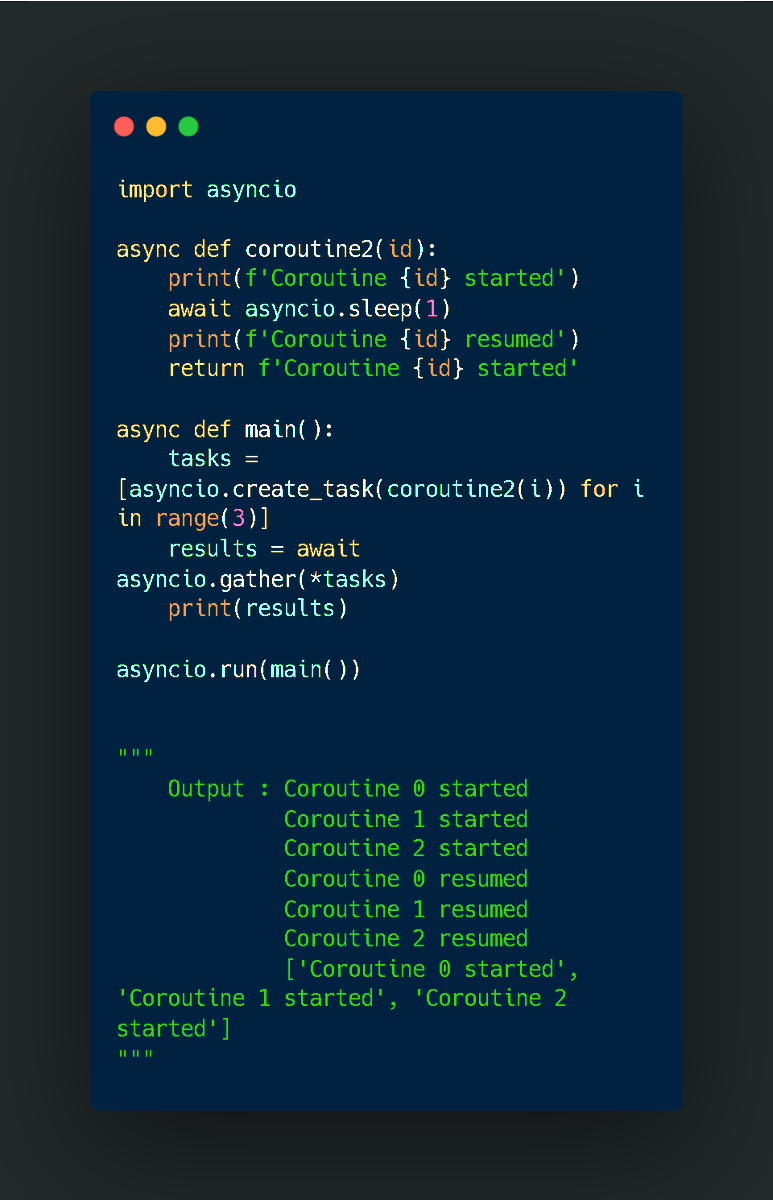
But coroutines, powered by the asyncio module, keep your app running smoothly while waiting for responses. ⚡️
✨ Core Concepts:
✔️ async / await — Define and pause coroutine functions.
✔️ Event Loop — The engine that schedules and runs async tasks.
✔️ asyncio.gather() — Run multiple coroutines concurrently.
⚡️ Key Benefits:
✅ Handle thousands of concurrent I/O tasks efficiently
✅ Keep your app responsive
✅ Ideal for modern backends, APIs, and data pipelines
⚠️ Remember:
Coroutines don’t create true parallelism like multiprocessing — they’re for concurrent I/O-bound workloads, not CPU-heavy ones.
In short —
Coroutines = concurrency responsiveness scalability 🚀
👉 This series is for Python Developers, Data Engineers, and ML Practitioners who want to master writing efficient, async, and production-ready Python code.
If this post helped you learn something new today, drop a ❤️ or 🔁
and stay tuned for more Effective Python Coding insights!
#Python #AsyncProgramming #EffectivePython #CodingSeries #Developers #BackendDevelopment #DataEngineering #ML
2
3
157
24 Oct 2025
🔥 Day 32 — Effective Python Coding Series
I hope you all had an excellent holiday! 🌴
Let’s resume our Effective Python Coding journey with today’s focus: The Power of Multiprocessing in Python ⚙️
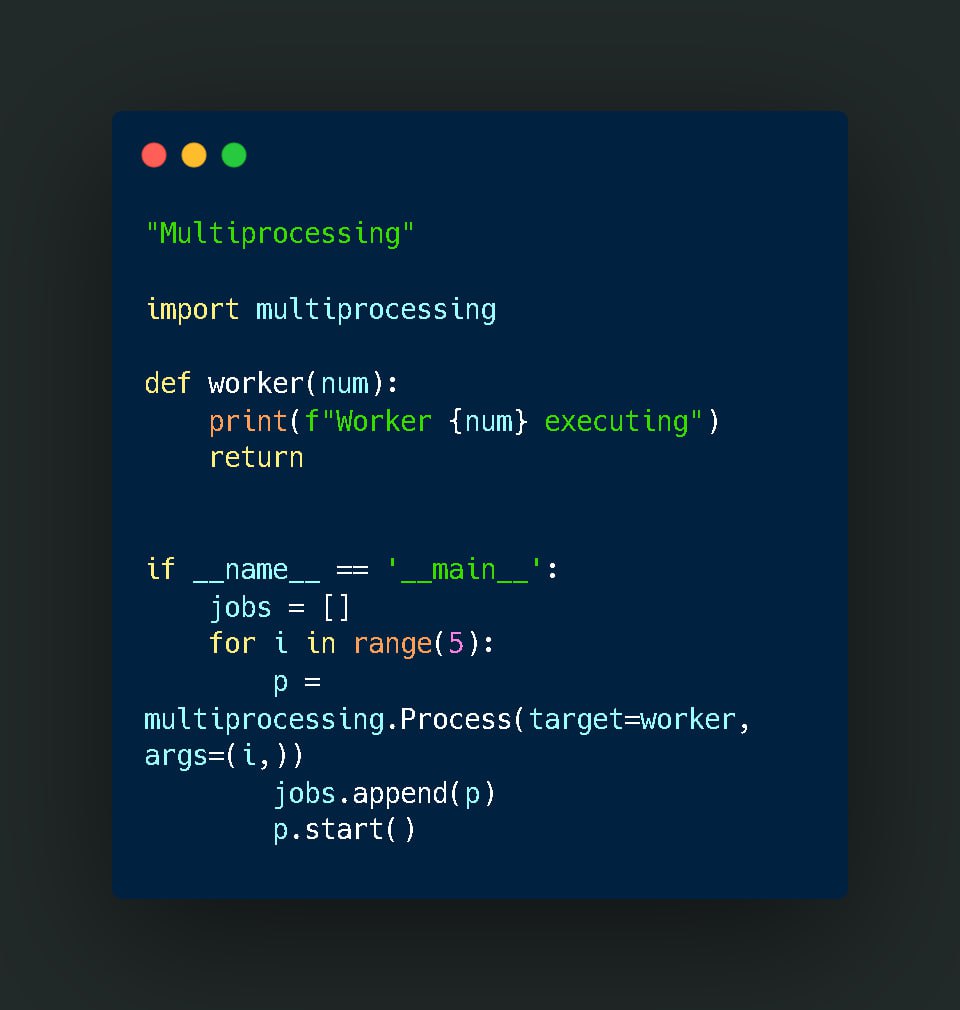
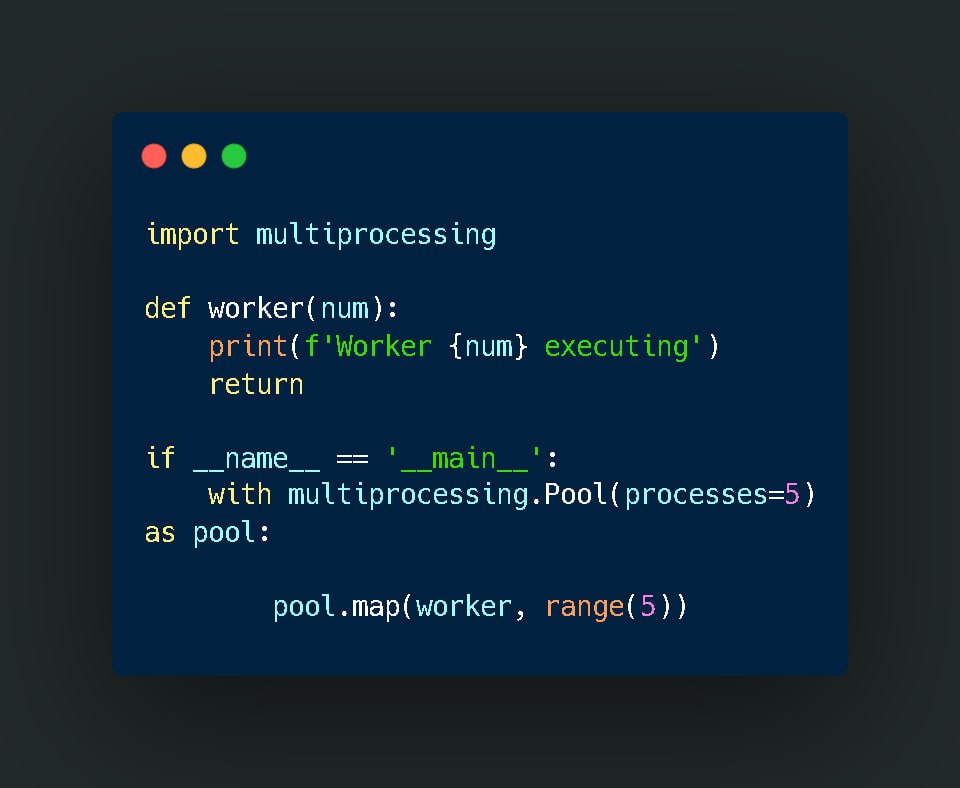
In Python, the multiprocessing module allows us to spawn multiple processes to execute code concurrently — a must-know concept for anyone dealing with CPU-bound tasks that need to leverage multiple CPU cores efficiently. 🧠
✨ Why Multiprocessing Matters:
When your program spends most of its time performing CPU-intensive work (like numerical computations, data transformations, or ML preprocessing), threads alone won’t help due to the Global Interpreter Lock (GIL).
But with multiprocessing — each process runs in its own interpreter and memory space, allowing true parallelism across cores. 💪
✨ How It Works:
✔️ The Process class lets you spawn independent processes.
✔️ The Pool class manages a group of worker processes for distributing tasks automatically.
✔️ Using pool.map() applies a function to each element of an iterable, distributing work evenly across cores.
⚡️ Key Benefits:
✅ Take full advantage of multi-core CPUs
✅ Improve performance of CPU-heavy workloads
✅ Keep your main application responsive while offloading heavy computation
⚠️ A Note of Caution:
With great power comes great complexity — be careful with shared resources like memory or database connections when using multiple processes.
In short — Multiprocessing = true parallelism performance efficiency 🚀
👉 This series is for Python Developers, Data Scientists, Backend Engineers, and ML Practitioners who want to master the art of writing efficient, scalable, and performance-oriented Python code.
If this post helped you learn something new today, drop a ❤️ or 🔁
and stay tuned for more Effective Python Coding insights!
#Python #Programming #EffectivePython #CodingSeries #Developers #AI #ML #DataScience #BackendDevelopment
2
108
17 Oct 2025
🔥 Day 31 — Effective Python Coding Series
Today’s focus: Processes for CPU-Bound Tasks ⚙️
In Python, when your task involves heavy computation — such as mathematical operations, data processing, or ML model training — threads alone won’t help much.
That’s because the Global Interpreter Lock (GIL) allows only one thread to execute Python bytecode at a time.
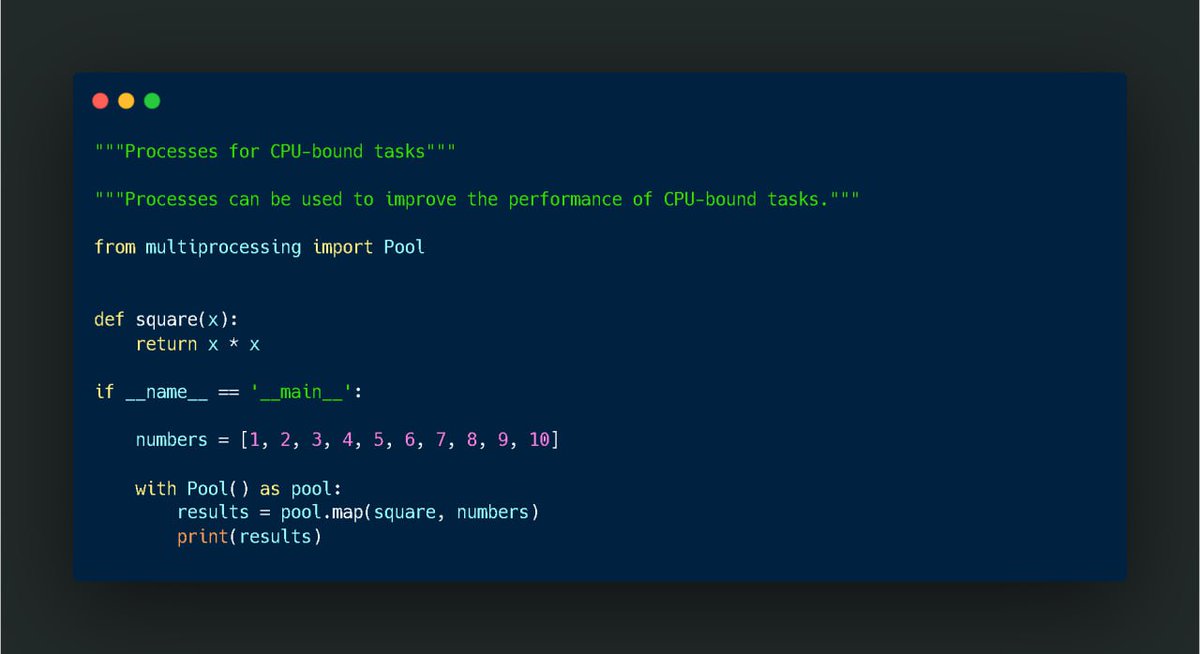
To truly utilize multiple CPU cores, we use the multiprocessing module — it creates separate processes, each running its own Python interpreter. This enables true parallel execution across multiple cores. 🧠
✨ How It Works:
Each process runs independently with its own memory space.
The Pool class manages a group of worker processes.
The map() method distributes tasks across these processes efficiently.
✨ Why Use Processes:
✔️ True Parallelism: Fully utilize all CPU cores for computation-heavy tasks.
✔️ Improved Performance: Perfect for operations like numerical computations, simulations, or data transformations.
✔️ Independent Execution: Each process runs safely without GIL interference.
⚠️ Keep in Mind:
While processes speed up CPU-intensive workloads, they also introduce overhead — creating and communicating between processes is heavier than threading.
So use multiprocessing where tasks are CPU-bound, not I/O-bound.
In short:
Threads = best for I/O-bound tasks 🕸
Processes = best for CPU-bound tasks ⚡️
👉 This series is designed for Python Developers, Data Scientists, ML Engineers, and Backend Developers — helping you master both performance and design in Python.
If this post helped you learn something new, drop a ❤️ or 🔁
and stay tuned for more “Effective Python Coding” posts!
#Python #EffectivePython #CodingSeries #100DaysOfCode #Developers #Backend #ML #AI #Multiprocessing
4
169
16 Oct 2025
🔥 Day 30 — Effective Python Coding Series
🧠 Today’s focus: I/O Bound Tasks in Python
Ever noticed how some Python programs perform better with threads, even though we have the GIL? 🤔
That’s because of I/O-bound tasks — where most of the time is spent waiting for input/output operations (like API calls, file reads, or network requests) rather than executing Python bytecode.
⚙️ Example:
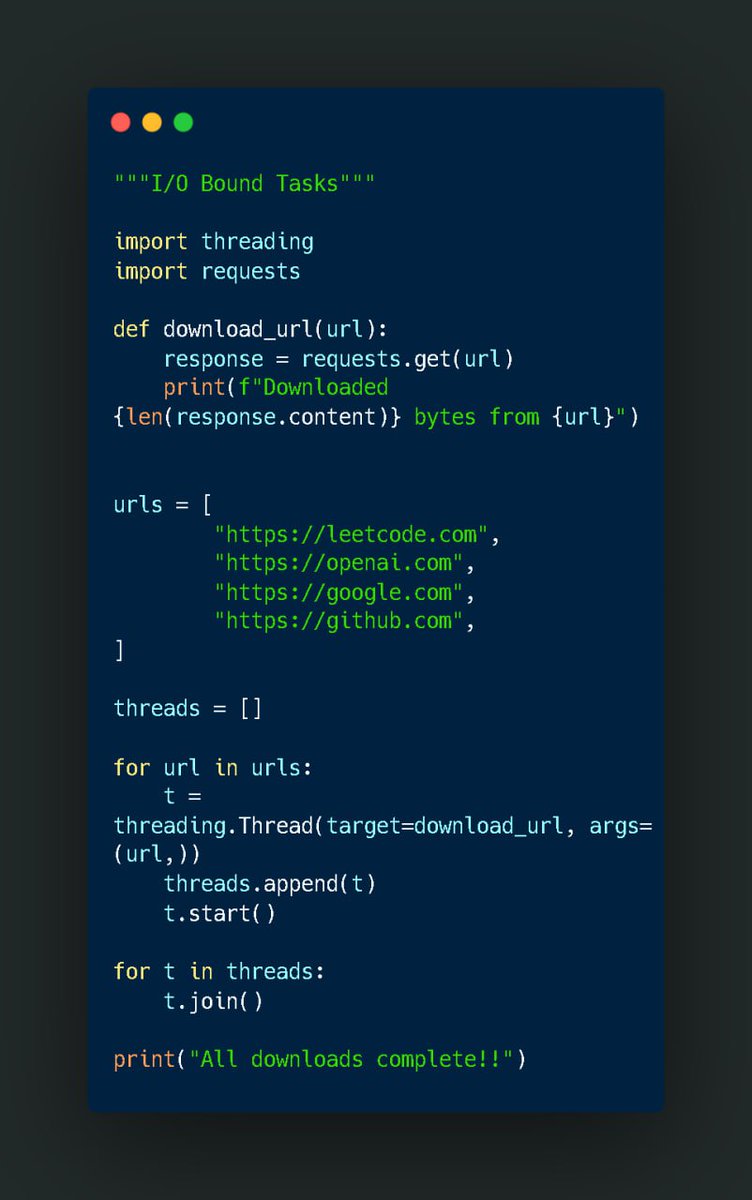
When you make multiple network requests — like downloading from several URLs — your program waits for responses.
Instead of sitting idle, you can use multithreading to start the next request while waiting for others to complete.
This improves overall performance and responsiveness. 🚀
💡 Key Takeaways:
✅ Perfect for tasks like network requests, file I/O, or database queries
✅ Threads can overlap waiting time, even with the GIL
✅ Use threading or concurrent.futures.ThreadPoolExecutor for simplicity
✅ For CPU-heavy work, use multiprocessing instead
⚠️ Remember:
Threads help when tasks spend time waiting.
If your task spends time computing, the GIL will limit performance gains.
👉 This series is designed for Python Developers, Backend Engineers, ML Engineers, Data Scientists, and Automation Engineers — helping you write faster and more efficient Python code every day.
If this helped you learn something new, drop a ❤️ or 🔁
and stay tuned for more “Effective Python Coding” posts!
#Python #Multithreading #Concurrency #BackendDevelopment #DataScience #AI #ML #CodingSeries #EffectivePython #Developers
3
138
15 Oct 2025
🔥 Day 29 — Effective Python Coding Series
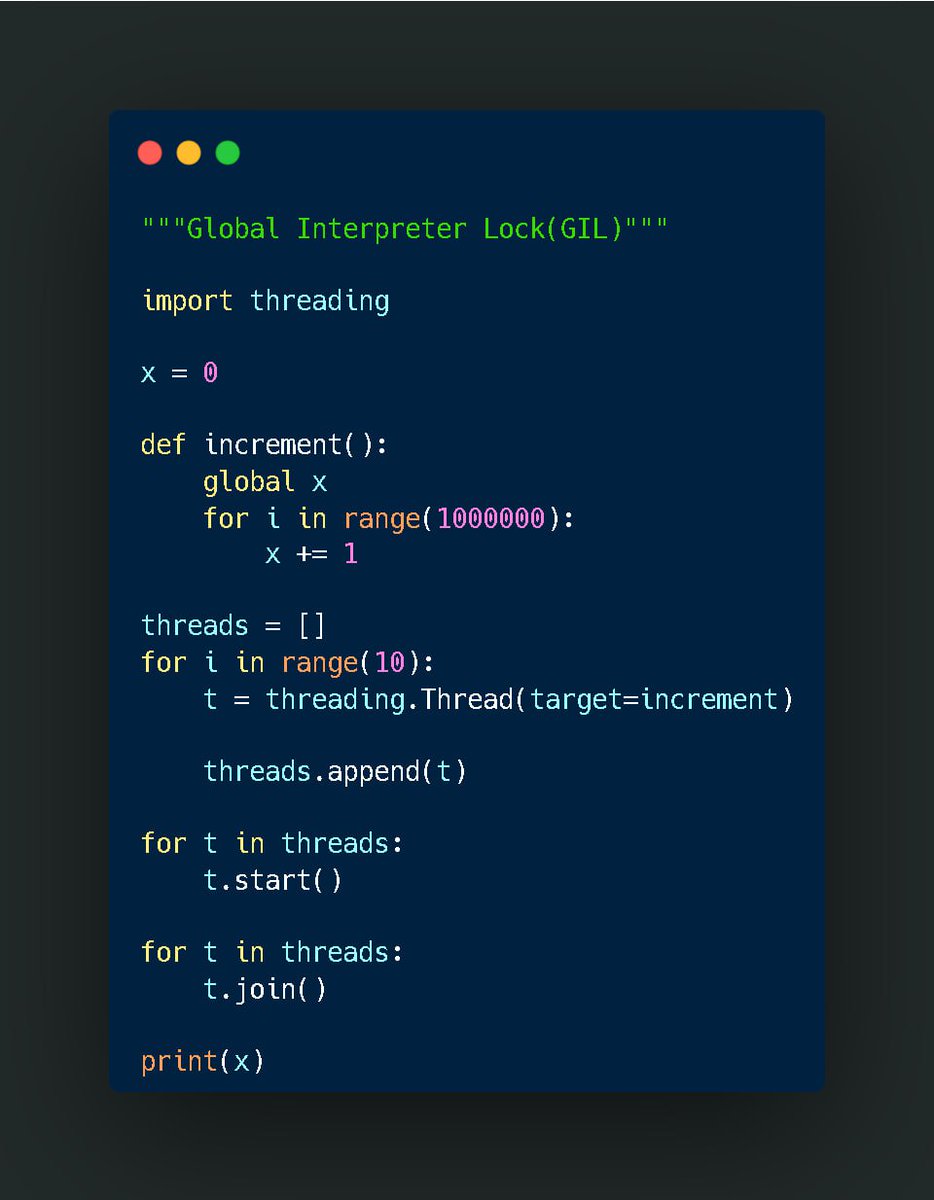
🧠 Today’s focus: The Global Interpreter Lock (GIL)
In Python, the Global Interpreter Lock (GIL) is a mechanism that ensures only one thread executes Python bytecode at a time.
Even if you create multiple threads, only one can run Python code at any given moment. 😮
⚙️ Why does the GIL exist?
Python’s memory management system isn’t inherently thread-safe. Without the GIL, multiple threads modifying objects at the same time could cause data corruption or unpredictable behavior.
So, the GIL protects your program’s integrity — ensuring only one thread manipulates Python objects at once.
🚧 The Downside:
While the GIL keeps your program safe, it also limits true parallelism.
CPU-bound tasks — like heavy computation or data processing — don’t benefit much from threading, since only one thread runs Python code at a time.
⚡️ When the GIL isn’t a problem:
✔️ I/O-bound tasks (like network calls or file operations) can still benefit from threading since they spend time waiting for I/O operations.
✔️ Multiprocessing (spawning multiple processes) bypasses the GIL entirely — each process has its own interpreter and memory space.
💡 Key takeaway:
The GIL is both a protector and a limiter. It keeps your Python programs safe — but if you need true parallelism, use multiprocessing or external libraries written in C/C that release the GIL during execution.
👉 This series is designed for Python Developers, Backend Engineers, ML Engineers, AI Practitioners, and Data Scientists who want to write cleaner, more efficient, and scalable Python code.
If you found this breakdown helpful, drop a ❤️ or 🔁 to help others discover it too!
#Python #Multithreading #BackendDevelopment #DataScience #AI #ML #Programming #EffectivePython #CodingSeries
1
3
149
11 Oct 2025
✅ Day 25 — Effective Python Coding Series
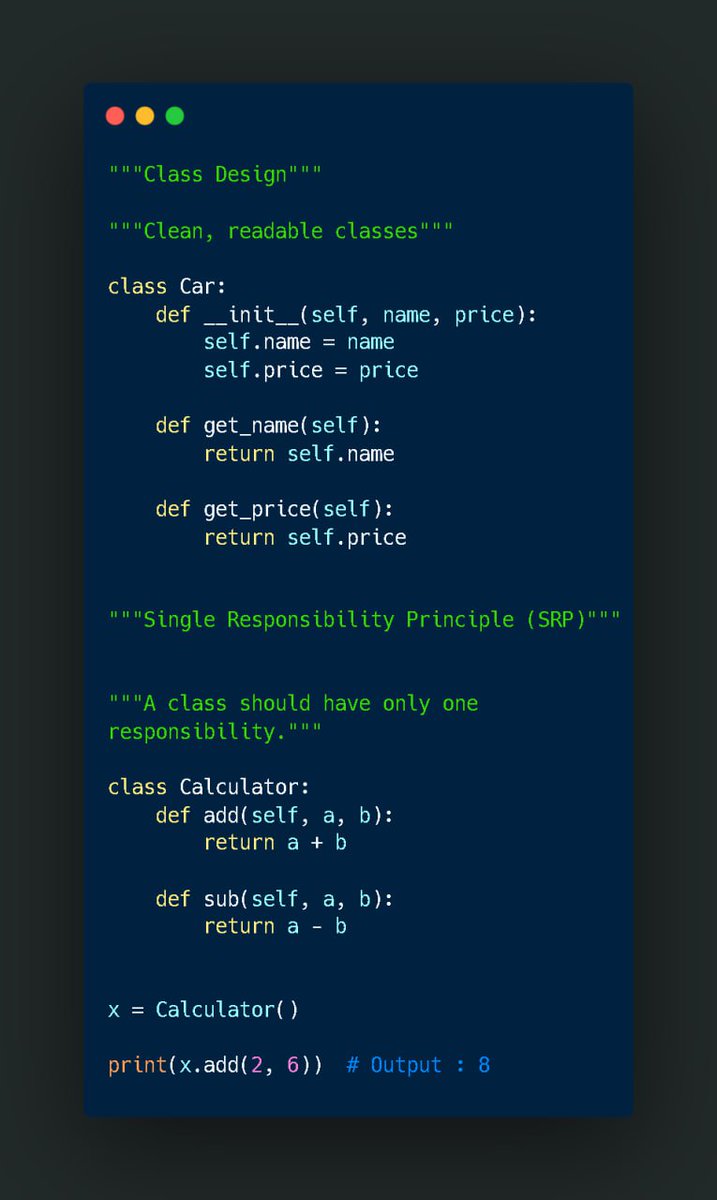
Today’s Focus: Class Design 🧩
Writing classes in Python isn’t just about making things work — it’s about keeping your code clean, readable, and maintainable for the long run.
✨ Core Concepts:
🔹 Descriptive Naming: Choose meaningful class and method names so your code explains itself.
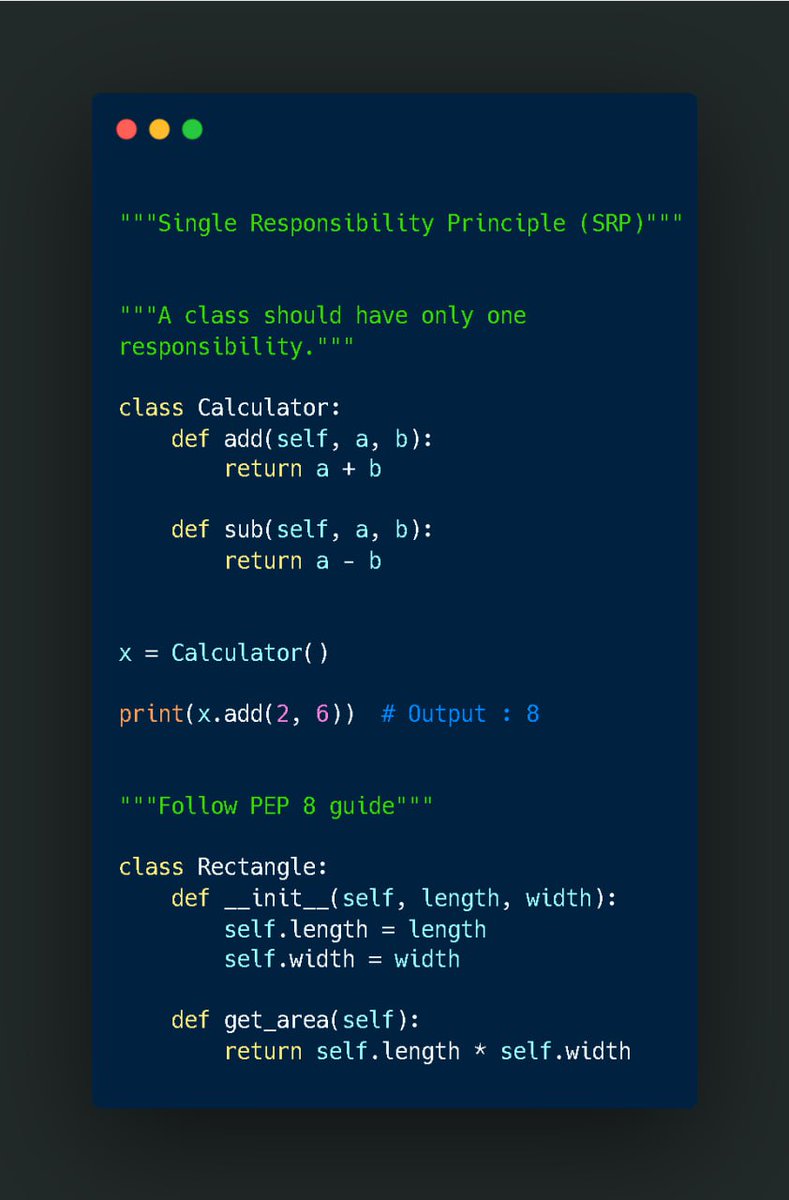
🔹 Single Responsibility Principle (SRP): A class should do only one job — this keeps your design modular and easy to maintain.
🔹 Readable Logic: Use comments only when necessary to clarify complex logic.
🔹 PEP 8 Compliance: Follow Python’s official style guide for consistency and professionalism.
💡 Why It Matters:
Readable and well-structured classes make your codebase scalable, bug-free, and easier for others (and your future self) to understand.
👉 Perfect for Python Developers, Data Scientists, Automation Engineers, and Software Engineers aiming for production-quality Python code.
If you learned something new today, show some ❤️ or 🔁
and stay tuned for the next post in the Effective Python Coding Series!
#Python #EffectivePython #CleanCode #100DaysOfCode #OOP #Programming #SoftwareEngineering #Developers #AI #ML
1
4
140
10 Oct 2025
🚨 Attention all Python developers! 🐍
Day 24 of my Effective Python Coding Series is LIVE — and today we’re diving into Multiple Inheritance 🧬
If you write Python, you need to understand how multiple inheritance and the Method Resolution Order (MRO) work — it’s a game-changer for mastering OOP in Python. 💡
📌 The full breakdown is pinned on my profile — go check it out and level up your Python skills today! 🚀
#Python #EffectivePython #CodingSeries #100DaysOfCode #OOP #Developers #Programming #ML #AI #DataScience
3
64
10 Oct 2025
🔥 Day 24 — Effective Python Coding Series
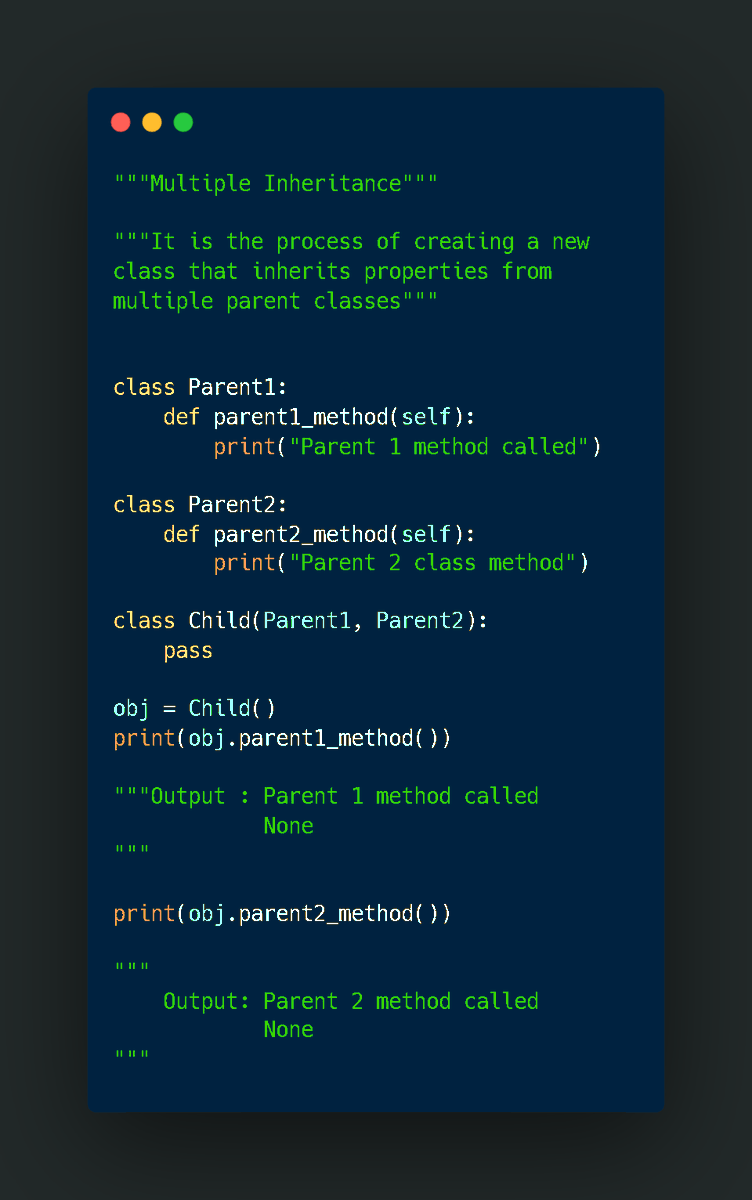
Today’s focus: Multiple Inheritance 🧬
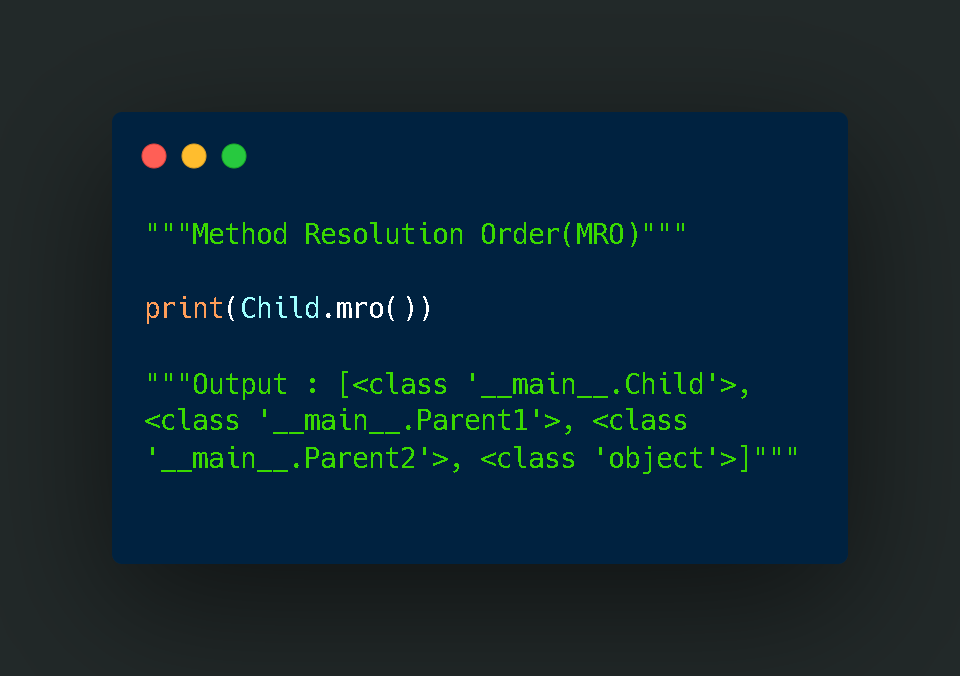
In Python, multiple inheritance is the process of creating a new class that inherits properties and methods from multiple parent classes.
It’s a powerful concept in Object-Oriented Programming that allows you to combine behaviors from different sources into one unified class.
✨ How it works:
A class can inherit from two or more parent classes.
When a method is called, Python determines which method to execute using the Method Resolution Order (MRO) — a built-in mechanism that defines the order in which base classes are searched.
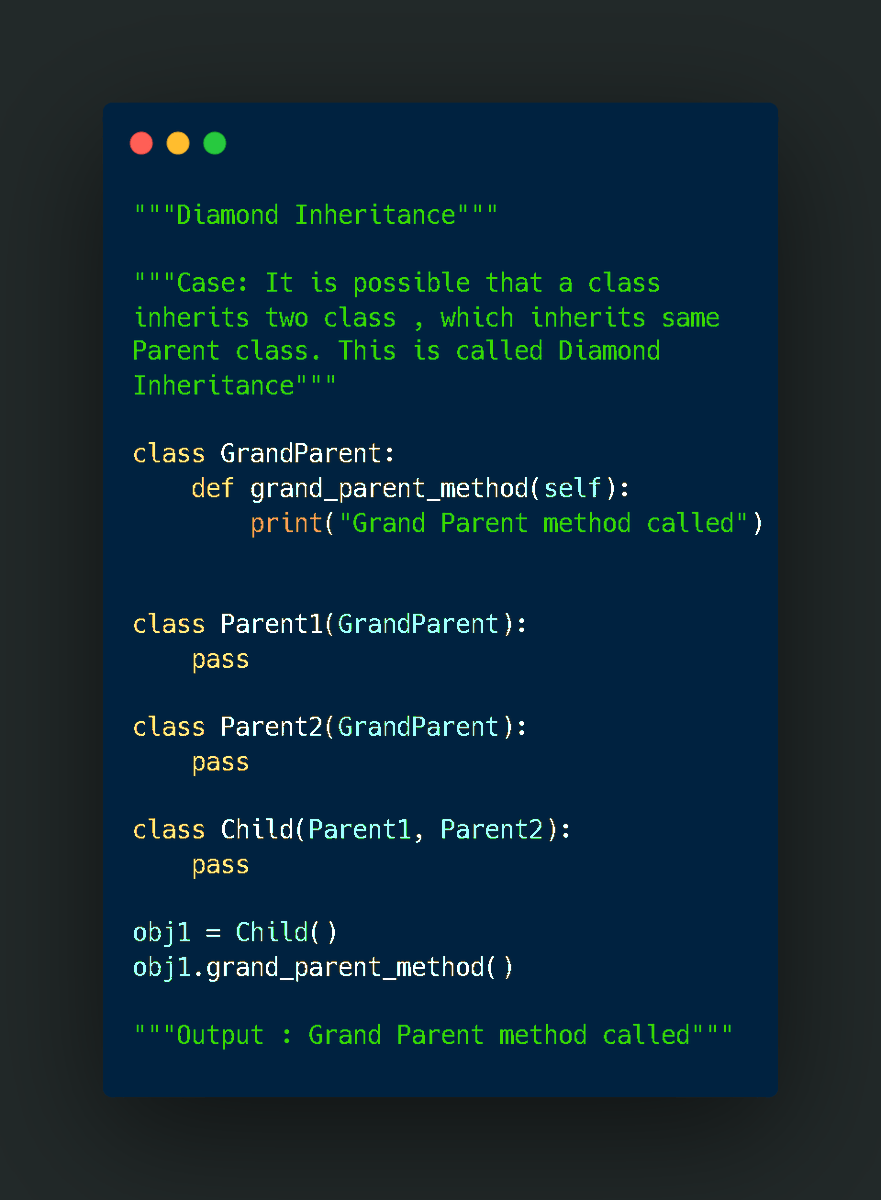
✨ Key Concept — Diamond Inheritance:
This occurs when a class inherits from two classes that both inherit from the same parent.
Python handles this neatly using the C3 linearization algorithm, ensuring each class in the hierarchy is called only once.
✨ Why Multiple Inheritance Matters:
✔️ Promotes code reuse across multiple base classes
✔️ Helps in composing complex behaviors elegantly
✔️ Enables more flexible and modular code design
⚠️ But use it wisely: Multiple inheritance can also increase complexity — always keep readability and clarity in mind.
In short, multiple inheritance = power flexibility → advanced OOP mastery in Python.
👉 This series is designed for Data Analysts, Data Scientists, Python Developers, and Automation Engineers — helping you write cleaner & more efficient Python code.
If this helped you understand something new, drop a ❤️ or 🔁
and stay tuned for more “Effective Python Coding” posts!
#Python #EffectivePython #CodingSeries #100DaysOfCode #OOP #Programming #Developers #DataScience #ML #AI
2
1
5
252
9 Oct 2025
🐍 Hey Python fans & fellow developers!
I’ve just dropped Day 23 of my Effective Python Coding Series — today’s topic is all about Class Inheritance 🧬
If you use Python, this one’s worth checking out — it’s all about building reusable, modular, and cleaner code that scales beautifully 💡
📌 The full breakdown is pinned on my profile — go take a look and let me know what you think! 💬
#Python #EffectivePython #CodingSeries #100DaysOfCode #OOP #Developers #DataScience #ML #AI
1
2
94
9 Oct 2025
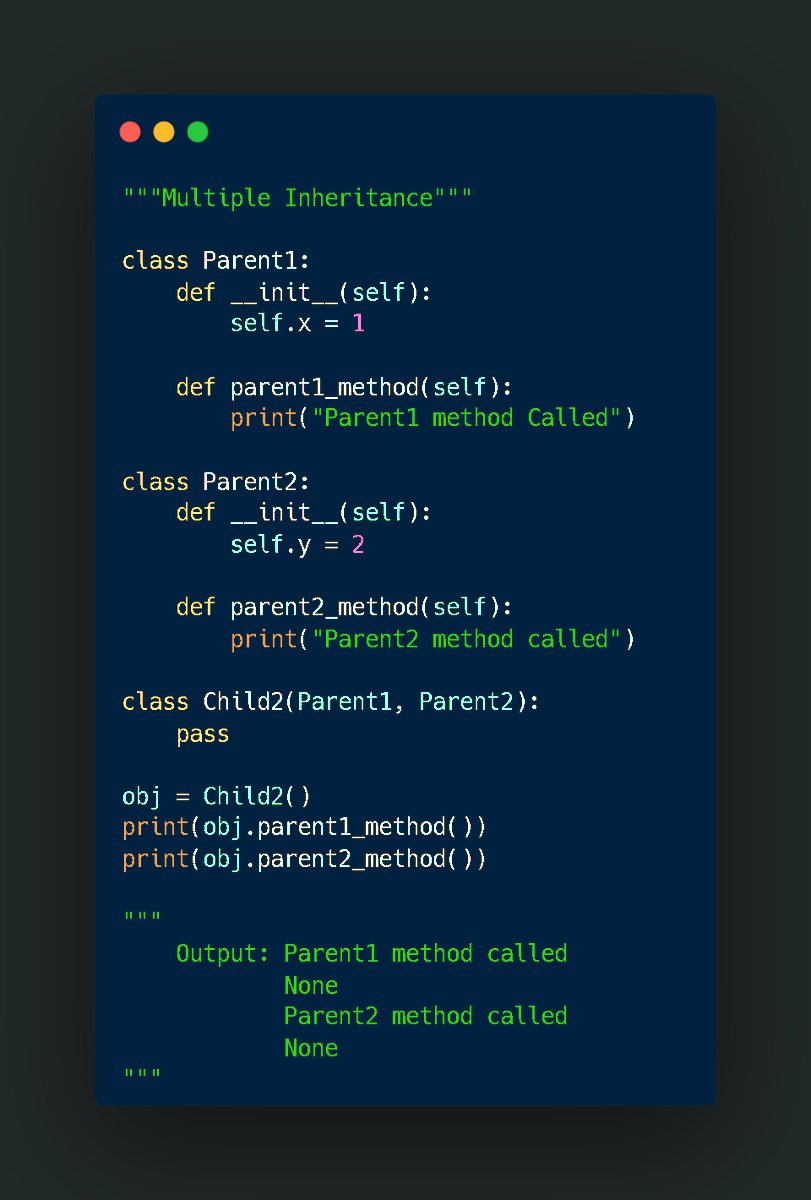
🔥 Day 23 — Effective Python Coding Series
Today’s focus: Class Inheritance 🧬
In Python, classes can inherit attributes and methods from other classes — a concept known as inheritance.
This allows you to build new classes that are variations of existing ones, promoting reusability and clean design.
✨ What is Class Inheritance?
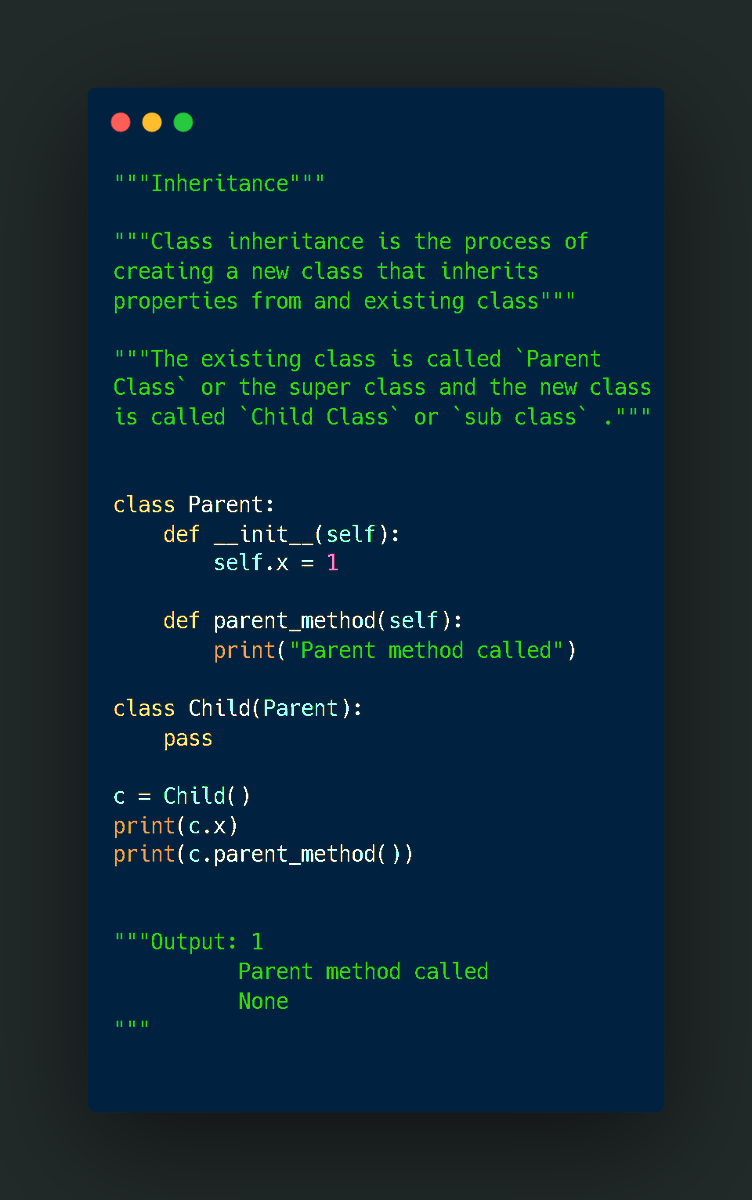
Class inheritance is the process of creating a new class (child or subclass) that inherits properties and behaviors from an existing class (parent or superclass).
The child class automatically gets access to all attributes and methods of the parent, while still allowing customization.
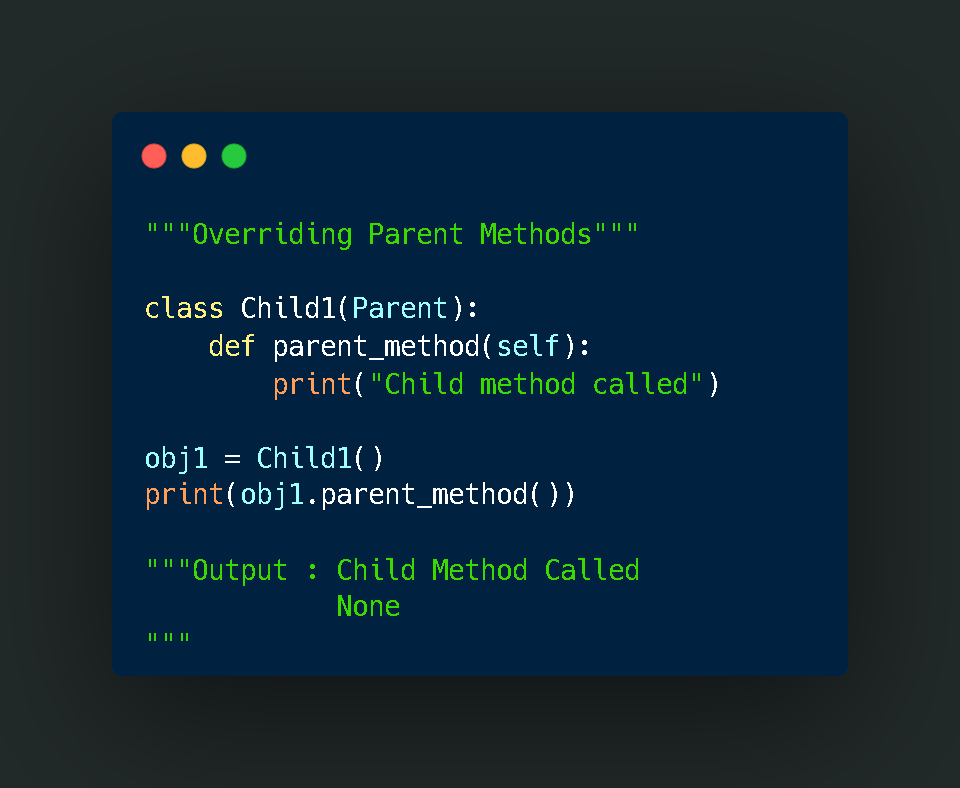
✨ Overriding Parent Methods:
A subclass can redefine (or override) a method from its parent class to provide specialized behavior.
This is key to making code flexible and extensible.
✨ Multiple Inheritance:
Python also supports multiple inheritance, where a single class can inherit from multiple parent classes.
This helps combine features and behaviors from different sources into one unified class.
✨ Why Inheritance Matters:
✔️ Promotes modular and reusable code
✔️ Reduces duplication
✔️ Enables polymorphism for flexibility
✔️ Supports scalable and maintainable design
In short, inheritance = code reuse flexibility → cleaner, more powerful Python programs.
👉 This series is designed for Data Analysts, Data Scientists, Python Developers, and Automation Engineers — helping you write cleaner & more efficient Python code.
If this helped you understand something new, drop a ❤️ or 🔁
and stay tuned for more “Effective Python Coding” posts!
#Python #EffectivePython #CodingSeries #100DaysOfCode #OOP #Programming #Developers #ML #AI #DataScience
4
226
8 Oct 2025
🐍 Hey Python fans!
I’ve just dropped a fresh post in my Effective Python Coding Series — Day 22: slots in Python ⚙️
If you’re into writing faster, memory-efficient, and cleaner Python code, this one’s for you 🔥
📌 The full breakdown is pinned on my profile — go check it out and share your thoughts! 💬
#Python #EffectivePython #CodingSeries #100DaysOfCode #Developers #DataScience #ML #AI
3
90
8 Oct 2025
🐍 Hey Python fans!
I’ve just dropped a fresh post in my Effective Python Coding Series — Day 22: slots in Python ⚙️
If you’re into writing faster, memory-efficient, and cleaner Python code, this one’s for you 🔥
📌 The full breakdown is pinned on my profile — go check it out and share your thoughts! 💬
#Python #EffectivePython #CodingSeries #100DaysOfCode #Developers #DataScience #ML #AI
4
78
8 Oct 2025
🐍 Hey Python fans!
I’ve just dropped a fresh post in my "Effective Python Coding" Series — Day 22: slots in Python ⚙️
If you’re into writing faster, memory-efficient, and cleaner Python code, this one’s for you 🔥
📌 The full breakdown is pinned on my profile — go check it out and share your thoughts! 💬
#Python #EffectivePython #CodingSeries #100DaysOfCode #Developers #DataScience #ML #AI
1
4
109
8 Oct 2025
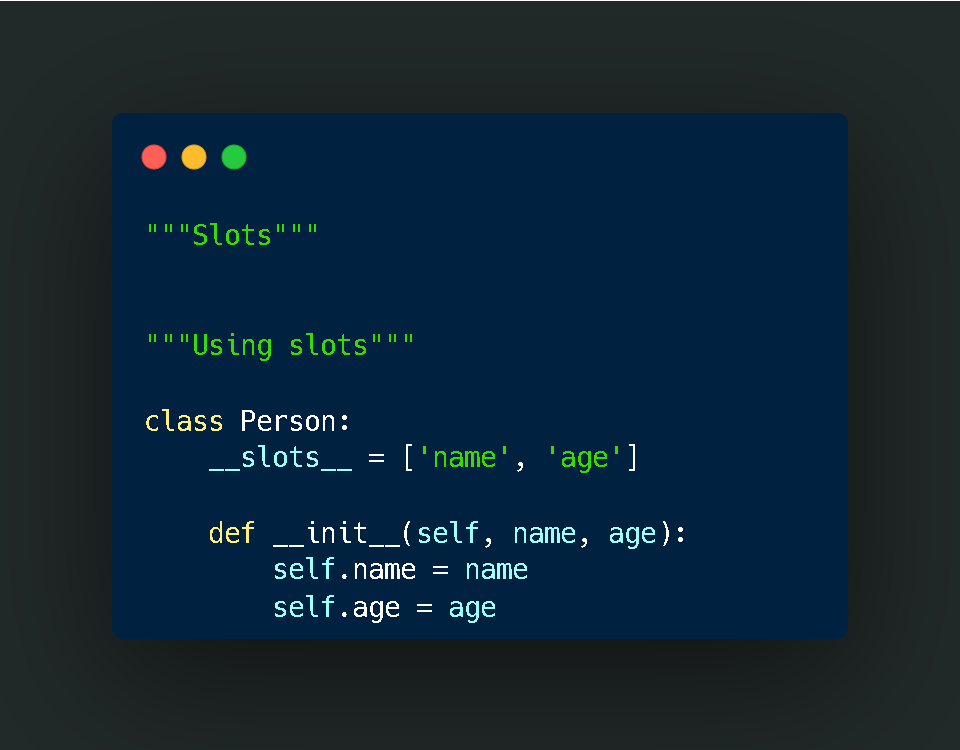
🔥 Day 22 — Effective Python Coding Series
Today’s focus: slots in Python 🧠
In Python, slots are a way to define a fixed set of attributes for a class.
Instead of creating a dynamic dictionary for each instance, Python allocates a fixed amount of memory for the specified attributes — making your objects faster and more memory-efficient.
✨ Why use slots?
✔️ Memory optimization: Reduces memory usage, especially when creating a large number of instances.
✔️ Faster attribute access: Since memory is pre-allocated, attribute lookup is quicker.
✔️ Prevents dynamic attributes: Helps avoid accidental attribute creation due to typos or logic errors.
✨ Limitations to consider:
⚠️ You must define all attributes in advance — making the class less flexible.
⚠️ Subclassing can be tricky; subclasses need to declare their own slots (including parent attributes).
In short, slots = memory efficiency speed boost 🚀, but with trade-offs in flexibility.
👉 This series is designed for Data Analysts, Data Scientists, Python Developers, and Automation Engineers — helping you write cleaner & more efficient Python code.
If this helped you understand something new, drop a ❤️ or 🔁
and stay tuned for more “Effective Python Coding” posts!
#Python #EffectivePython #CodingSeries #100DaysOfCode #MemoryOptimization #OOP #ML #AI #DataScience
2
5
251
7 Oct 2025
🐍 Attention all Python Developers!
I’ve just dropped Day 21 of my "Effective Python Coding" Series — today’s topic is Classes
If you use Python, this one’s a must-read! 🔥
My full breakdown is pinned on my profile — go check it out & level up your Python game 💪
#Python #Coding #Developers #EffectivePython #100DaysOfCode #DataScience #ML #AI
2
5
92
7 Oct 2025
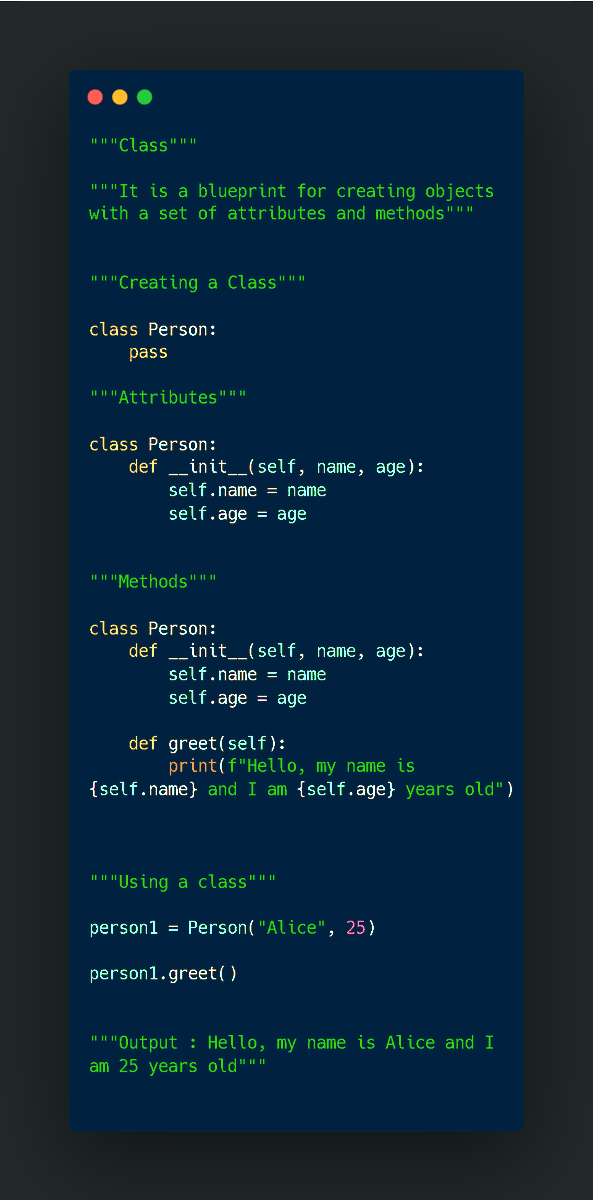
🔥 Day 21 — Effective Python Coding Series
Today’s focus: Classes 🐍
In Python, a class is a blueprint for creating objects — combining data (attributes) and behavior (methods) into one logical unit.
Think of it as a way to structure your code to model real-world entities more efficiently.
✨ How it works:
You define a class with attributes (like name, age) and methods (like greet).
When you create an object from that class, it inherits all those attributes and behaviors.
✨ Why classes matter:
✔️ Help organize and reuse code efficiently
✔️ Enable Object-Oriented Programming (OOP)
✔️ Make complex programs easier to maintain
✔️ Allow encapsulation and abstraction for cleaner design
In short, classes = structure behavior → organized, reusable, and scalable Python code.
👉 This series is designed for Data Analysts, Data Scientists, Python Developers, and Automation Engineers — helping you write cleaner & more efficient Python code.
If this helped you understand something new, drop a ❤️ or 🔁
and stay tuned for more “Effective Python Coding” posts!
#Python #EffectivePython #CodingSeries #100DaysOfCode #OOP #Programming #ML #AI #DataScienceTools
1
6
314
6 Oct 2025
🐍 Attention all Python Developers!
I’ve just dropped Day 20 of my "Effective Python Coding" Series — today’s topic is Partial Functions ⚙️
If you use Python, this one’s a must-read! 🔥
My full breakdown is pinned on my profile — go check it out & level up your Python game 💪
#Python #Coding #Developers #EffectivePython #100DaysOfCode #DataScience #ML #AI
2
82