
暗号資産やブロックチェーンの世界を語るうえで、必ず登場するキーワードが EVM(Ethereum Virtual Machine) です。
続きはこちらから→cryptotks.liblo.jp/archives/…
#暗号資産
#仮想通貨
#イーサリアム
#Ethereum
#ETH
#EVM
#EthereumVirtualMachine
#スマートコントラクト
#Solidity
1
1
49

Ok i see a lot of people do not properly understand what this DCME tweet is saying, but its beyond genius and this could be very well the last step in the process. I will try to explain as detailed as possible.
Let me first explain L0.
L0, is a neutral underlying layer which is not specifically made for arbitrage trading, but it opened the probability to do it and its perfect by design to do handle cross-chain Arbitrage. This is why chains are quite good interconnected, and also the stablecoins other wrapped coins are on the same pricelevel accros different chains.
This is what arbitrage does, keeping the price the same everywhere. If arbitrage bots see; "ah, price is cheaper there, then ill buy it there and sell it on the other side so i get more money on the other side.
For example (easy example to explain),
On binance ETH is 1k
On kucoin ETH is 500usd
Its no rocketscience to buy the 500usd coin on kucoin to sell it for 1K on binance right? Kucoins ETH-price increases coz of the buys, binance ETH-price drops coz of the sells there. This will creep toward eachother until they reach parity and therefore are the same price. (Extremely simplified example for people who dont know how arbitrage works).
Now lets get to what DCME's twitterpost says here;
L0 (LayerZero) is a neutral trustplatform for coins to be arbitraged this way. So for example; ETH USDT and $BNB USDT , are both USDT.
Like DCME says in his post here;
Bots query the L0 registry and see:
Asset A ↔ Asset B Redeemable: yes
Rate: 1:1 Path: module_137 → module_369
This completely kills the ‘different contract address’ argument.
Bots don’t need matching CAs. They need the L0 registry mapping.
This is correct. Bots nowadays do not look at the CA as the L0 registry is leading instead of CA.
This is probably because not all USDT is EVM (EthereumVirtualMachine). Because of this, the contract addresses do never match because a $Solana address is very different from an Ethereum address.
USDT-EVM-CA; 0xdac17f958d2ee523a2206206994597c13d831ec7
USDT-SPL-CA; Es9vMFrzaCERmJfrF4H2FYD4KCoNkY11McCe8BenwNYB
In this example, you cannot possibly link the 2 CA (contractaddress) together because the addresses do not match accordingly.
This is what LayerZero is for, its messages are trusted, crossblockchain, to make things easier.
So the L0 registry mapping DCME is talking about hereis what they call a Canonical Asset Mapping and these are distributed by L0 (LayerZero). In the sol/evm example it will look like this;
Ethereum: 0xdAC17F958D2ee523a2206206994597C13D831ec7 (USDT)
Solana: Es9vMFrzaCERmJfrF4H2FYD4KCoNkY11McCe8BenwNYB (USDT)
Redeemable: yes
Rate: 1:1
Execution: guaranteed
Path: module_x → module_y
Do you see where this is going?!
Now, you might ask yourself; but that would be centralization, who is this LayerZero party?
Yes and no. This L0 is brought in for several reasons to make interblockchain connection possible. But here's the catch;
In order to get a Canonical Asset Mapping on the L0, both parties must sign for it and LayerZero cannot do it by theirselves.
So in case of the example; $USDT on $ETH must sign for the mapping on Solana and vice versa, so theres no way that anyone can do this, except for the "builders" of this mechanism.
If we then take a look at $pDAI and eDAI.
We know RH has good connection with eDAI team and has alot of them himself.
eDAI canonical-asset-mapping on the L0 regristry with pDAI.
Both parties must agree, but seen the above circumstances, RH had alot of influence at the eDAI protocol...
This means that ALL active arbitrage bots are going to arbitrage between eDAI and pDAI until they reach parity. As all arbitrage bots will consider them the same coin.
Which will eventually lead to 1$ as eDAI cannot go below 1$ anymore because of the MakerDAO mechanism.
GG, wp.
19 Nov 2025

Most people arguing ‘L0 has no role in arbitrage’ are stuck in a 2019 mental model of bridges.
They imagine:
- a single lock/mint contract
- no data layer
- no routing
- no messaging
- bots manually coded for every token, on every chain
That world is gone 👎
Modern cross-chain arbitrage works very differently.
What an L0 actually brings to arbitrage…
1️⃣ Shared messaging layer
Bots don’t ‘trust’ chain A or chain B - they trust the L0 messages.
If the L0 says:
Token X on chain A ↔ Token Y on chain B are 1:1 redeemable, bots treat them as economically identical.
This is the same mechanism that lets USDC, USDT, ETH, wstETH, frxETH, etc. stay synced across chains.
2️⃣ Unified asset mapping (dynamic token discovery)
🗑️Old bridges = hard-coded addresses.
⚡️New bridges = discovery-based routing.
Bots query the L0 registry and see:
Asset A ↔ Asset B
Redeemable: yes
Rate: 1:1
Path: module_137 → module_369
This completely kills the ‘different contract address’ argument.
Bots don’t need matching CAs.
They need the L0 registry mapping.
3️⃣ Deterministic cross-chain execution guarantees
A bot knows:
- buying wrapped #pDAI on #ETH is redeemable
- the L0 guarantees message delivery
- the execution is instant
So wrapped pDAI is treated exactly like eDAI for economic routing, even with a different CA.
This is the foundation of modern cross-chain arbitrage.
TL;DR:
Without L0 → bots see two unrelated tokens.
With L0 → bots see one asset, two wrappers.
#pDAI is effectively currently hidden from these bots.
Once the L0 is open. The floodgates open.
#pDAI to $1
#PulseChain season
22
14
87
6,278

24 Oct 2025
Today, I don't feel like making content, but while on my way to get fuel, something just struck my mind.
Why not make simple keyword meaning for those Zama/blockchain tech words.
Cross-chain refers to the ability to transfer digital assets or information between two completely different blockchain networks
Encryption: is a way to turn readable information (like a text message or your credit card number) into a scrambled, secret code.
Evm(EthereumVirtualMachine): is the shared "world computer" that powers the entire Ethereum blockchain.
It is not a physical computer but a piece of software that runs identically on every machine (node) participating in the Ethereum network.
FHE(Fully Homomorphic Encryption) : is a type of encryption that lets you perform calculations on data while it is still encrypted, without ever needing to decrypt it first.
Fhevm: Fully Homomorphic Ethereum Virtual Machine (FHEVM) framework is a technology that lets Ethereum smart contracts work with data that remains encrypted (hidden) throughout all the calculations.
Framework in blockchain is like a pre-built blueprint or a toolkit for creating a blockchain or an application that runs on a blockchain.
Genesis Block: This is the very first block (Block 0) in any blockchain. It's the "start button" that sets the initial rules and state of the entire digital ledger.
KMS: A Key Management Service (KMS) is essentially a highly secure digital vault for your most sensitive digital secrets.
Its main job is to create, store, manage, and protect the encryption keys that are used to lock and unlock your data.
TPS(TransactionPerSecond): is simply a measurement of how fast a system can work.
For example, you're running a checkout counter in a very busy store.TPS is the number of customers (transactions) you can fully serve and process in one single second.
Node: is a single computer or device (like a server or even your own PC) that is connected to the blockchain network.
Protocol in blockchain is simply the set of fundamental rules that govern how the entire network operates.
Think of a blockchain protocol as the operating system of the network or the rules of a game that everyone agrees to before playing.
Tokenomics is just a term made by combining "Token" (the digital coin or asset) and "Economics" (the study of how money works).
Tokenomics is the design and study of the economic system built around a crypto token.
Zero-Knowledge Proof (ZKP) is a cryptographic method that allows one person (the Prover) to convince another person (the Verifier) that a statement is true, without revealing any information other than the fact that the statement is true.
#ZamaCreatorProgram
@zama_fhe

33
25
206




5 Apr 2025
#ethereumvirtualmachine testnet is live #xrpledger innovation unfolds #fintechbets leads the charge on the frontlines of development #xrpl ecosystem expands $xrp $fbx $xrpina #divinedigital

5
13
179

🔍EVM (Ethereum Virtual Machine) Nedir?
“Ethereum Sanal Makinesi” EVM olarak kısaltılır. Tek bir varlık şeklinde, küresel çapta ve blokzinciri tabanlı, Ethereum istemcisi çalıştıran binlerce bilgisayarın bir araya gelmesi ile oluşur.
Ethereum protokolü sayesinde Ethereum Sanal Makinesi’nin işleyişi kesintisiz olarak devam eder. EVM ifadesi, tüm Ethereum hesaplarının ve akıllı sözleşmelerin bir arada olduğu ortamı tanımlamak için kullanılır.
🌐 EVM'in Temel İşlevi
EVM, akıllı sözleşmelerin yürütülmesini sağlar. Akıllı sözleşmeler, belirli koşullar gerçekleştiğinde otomatik olarak yürütülen kod parçalarıdır.
EVM, bu sözleşmelerin yürütülmesi için gerekli olan tüm hesaplamaları gerçekleştirir ve bu süreçte gereken kaynakları sağlar. EVM, Ethereum ağındaki tüm düğümler tarafından paylaşılan bir veri tabanı gibi çalışır.
📍 blog.coino.com.tr/tr/sozluk/…
#CoinO #Kripto #KriptoVarlık #KriptoPara #KriptoEğitimi #Blockchain #Blokzinciri #EthereumVirtualMachine
1
77

🚀 Exploring Ethereum: The Backbone of Decentralized Applications
As the CTO of Pharos Production, I'm excited to present an in-depth exploration of Ethereum, the groundbreaking platform that has revolutionized the blockchain landscape. In this article, I delve into the intricacies of Ethereum, shedding light on its architecture, functionalities, and the transformative impact it has on decentralized applications (DApps). 🌐
🌟 Key Insights You'll Discover in My Article:
🔗 The Genesis of Ethereum: An overview of Ethereum's inception, its visionary creators, and the problems it aims to solve beyond Bitcoin's capabilities.
🛠️ Smart Contracts Demystified: A comprehensive explanation of smart contracts, their self-executing nature, and how they facilitate trustless agreements on the blockchain.
🌉 The Ethereum Virtual Machine (EVM): Insights into the EVM's role as a decentralized computer that executes smart contracts and applications.
🔄 Transition to Proof-of-Stake (PoS): An analysis of Ethereum's significant shift from Proof-of-Work (PoW) to PoS, known as "The Merge," and its implications for energy efficiency and security.
💡 Why It Matters:
Understanding Ethereum is crucial for:
🌐 Embracing Decentralization: Recognizing how Ethereum empowers developers to create decentralized platforms, reducing reliance on centralized authorities.
💼 Innovating Business Models: Exploring how smart contracts can automate and streamline operations across various industries, from finance to supply chain management.
♻️ Promoting Sustainability: Appreciating Ethereum's efforts to minimize its carbon footprint by adopting PoS, making blockchain technology more environmentally friendly.
📖 Ready to Deepen Your Understanding?
I've crafted this article to be informative and engaging. It thoroughly explains Ethereum's architecture and pivotal role in the decentralized ecosystem.
👉 Read the full article here: medium.com/pharos-production…
Let's explore the future of decentralized applications together! 🚀
#Ethereum #Blockchain #SmartContracts #DecentralizedApplications #ProofOfStake #EthereumVirtualMachine #PharosProduction
ALT dapp smart contracts development pharos production
23
30
18
81,251

4 Feb 2025
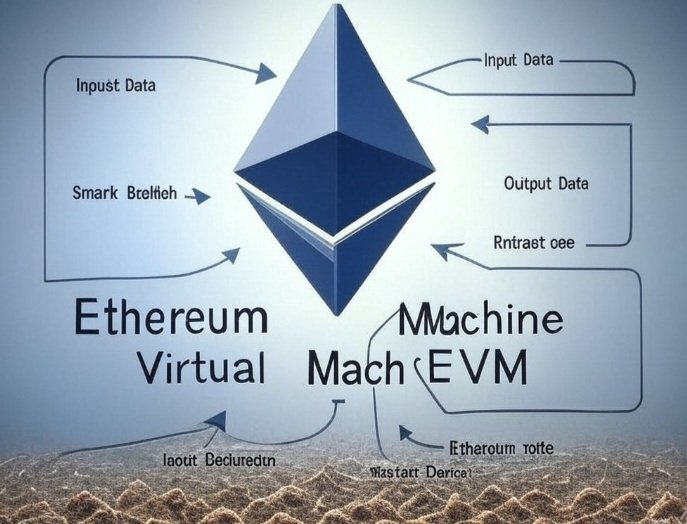
The #EthereumVirtualMachine (#EVM) is a crucial component of the #Ethereum #Blockchain. Here's an overview:
What is the #EVM?
Definition: The #EVM is a runtime environment for smart contracts in #Ethereum. It's a stack-based, 256-bit virtual machine that executes bytecode.
Function: It processes transactions on the #Ethereum network by executing smart contract code, ensuring that each node running Ethereum comes to the same state after each transaction.
Key Features:
Turing Completeness: The EVM can theoretically solve any computational problem given enough resources, although it's constrained by gas limits in practice.
Sandboxed Environment: Smart contracts run in isolation, ensuring that one contract's execution doesn't affect others or the network's integrity.
Gas Mechanism: Operations in the #EVM require "gas" to execute, which limits the computation and prevents infinite loops. Each operation has a gas cost, and if a transaction runs out of gas, it's reverted but still costs the gas used.
Deterministic: The #EVM ensures that the execution of code will always yield the same result given the same initial state, which is vital for consensus in a distributed system.
How It Works:
Bytecode Execution: Smart contracts are compiled to bytecode from high-level languages like Solidity. This bytecode is what the EVM executes.
State Changes: The #EVM modifies the state of accounts (like balances, storage, and code) through transactions. These changes are recorded on the #Blockchain.
World State: All accounts and their states are kept in something called the "world state", which gets updated with each block.
Security & Limitations:
Security: The #EVM has built-in mechanisms like gas limits to prevent abuse, but smart contract bugs can still lead to vulnerabilities.
Scalability: Due to the gas system and the need for all nodes to process transactions, Ethereum's throughput is limited, leading to research into scaling solutions like sharding and layer 2 solutions.
Development:
#EVM Opcodes: There's a set of opcodes (operation codes) that define what operations the #EVM can perform, from arithmetic and control flow to contract calls.
#EVM Upgrades: #Ethereum has seen updates like the London hard fork which introduced EIP-1559, changing how gas fees are calculated, among other enhancements...
1
3
452

14 Oct 2024
🌐 KONET is pushing blockchain boundaries by integrating EVM compatibility, allowing developers to access the latest in Ethereum Virtual Machine functionality🚀
#KONET #EVMCompatibility #BlockchainInnovation #EthereumVirtualMachine #Web3 #DeFi #CryptoTech #BlockchainDevelopment
35
3,212

22 Sep 2024
Ethereum Sanal Makinesi Nedir? EVM Nasıl Çalışır?
Ethereum Sanal Makinesi (EVM), Ethereum ekosisteminin temel taşlarından biridir. EVM, Ethereum blokzincirinde çalışan akıllı sözleşmeleri yürüten bir sanal makinedir. Bu sanal makine, programlama dili olarak Solidity gibi dillerde yazılmış olan akıllı sözleşmeleri anlayabilir ve gerçekleştirebilir.
Daha Fazlası İçin: keyexakademi.com.tr
#ETH #EthereumVirtualMachine #DeepLearning #ArtificialIntelligence
8
120

17 Jul 2024
📢 NOTICIAS DE ÚLTIMA HORA 🔔
1⃣ #Plonky3 la iteración más reciente del sistema de comprobación de conocimiento cero de #PolygonLabs ya está "lista para la producción" para los desarrolladores, según los investigadores.
2⃣La competencia por el dominio del mercado de #NFT se intensifica una vez más, ya que la cuota de mercado de #OpenSea ha aumentado hasta el 37,34%.
3⃣ #UniswapLabs lanza públicamente una extensión de navegador de monedero compatible con 11 blockchains, incluidos Ethereum, Base, Blast y Arbitrum.
4⃣ #LiFi una API para intercambios y puentes de #EthereumVirtualMachine y #Solana, está siendo atacada, y ya se han drenado más de 10 millones de dólares en fondos de criptomonedas.
5⃣ #CraigWright, que afirmó ser el creador de #Bitcoin, Satoshi Nakamoto, fue llamado a declarar ante la Fiscalía de la Corona (CPS) por cargos de perjurio.
Canales:
📌Telegram: bit.ly/4dKh4UP
📌YouTube: bit.ly/3Kd26ZR
📌WhatsApp: bit.ly/3V6Hc4R
📌Instagram bit.ly/3ypRuEz
📌Sitio Web: bit.ly/4bM0Jgy
3
7
335

10 May 2024
RT @Nakama_Labs: 🚀 Unlocking Innovation: The Power of EVM Integration in the IOTA Ecosystem
The integration of the #EthereumVirtualMachine…
1
16
1,314

9 May 2024
🚀 Unlocking Innovation: The Power of EVM Integration in the IOTA Ecosystem
The integration of the #EthereumVirtualMachine (EVM) into the @iota ecosystem is a game-changer for several pivotal reasons:
Enhanced Interoperability: EVM integration enables seamless interaction between IOTA and Ethereum-based applications, facilitating robust cross-chain communication.
Access to Ethereum Tools & Resources: Developers now have access to a rich repository of tools and libraries from the Ethereum ecosystem, streamlining the development of decentralized applications (dApps) on IOTA.
Smart Contract Support: This integration brings smart contract capabilities to IOTA, automating and securing transactions and agreements, thereby attracting a wider developer and user base familiar with Ethereum.
Driving Adoption & Network Growth: By supporting EVM, IOTA broadens its appeal, encouraging adoption and fostering network effects that drive growth.
Fostering Diversification & Innovation: Developers gain flexibility in their approach to dApp development, leading to innovative solutions and unique use cases within the IOTA network.
Let’s build the future of decentralized applications together!🌟
#IOTA #EVM #Blockchain #DeFi #Innovation #SmartContracts #Interoperability
7
41
158
8,916

3 May 2024
DogeChain Shutting Down: Withdraw DOGE Immediately - cryptonewsupdate.net/2024/05… - #Dogecoin #DogeChain #Cryptocurrency #Blockchain #NFTs #DeFi #CryptoWallets #EthereumVirtualMachine
The announcement from DogeChain, a prominent service...
2
73

25 Apr 2024
3
38

17 Apr 2024
Exploring the #HarmonyOne #Blockchain with its Dedicated Explorer
#Crypto #Cryptocurrency #Ethereum #DigitalCurrency #DigitalCoins #cryptonews #EthereumVirtualMachine #EVM #SmartContracts
buff.ly/4aD4aWy
1
61

2 Apr 2024
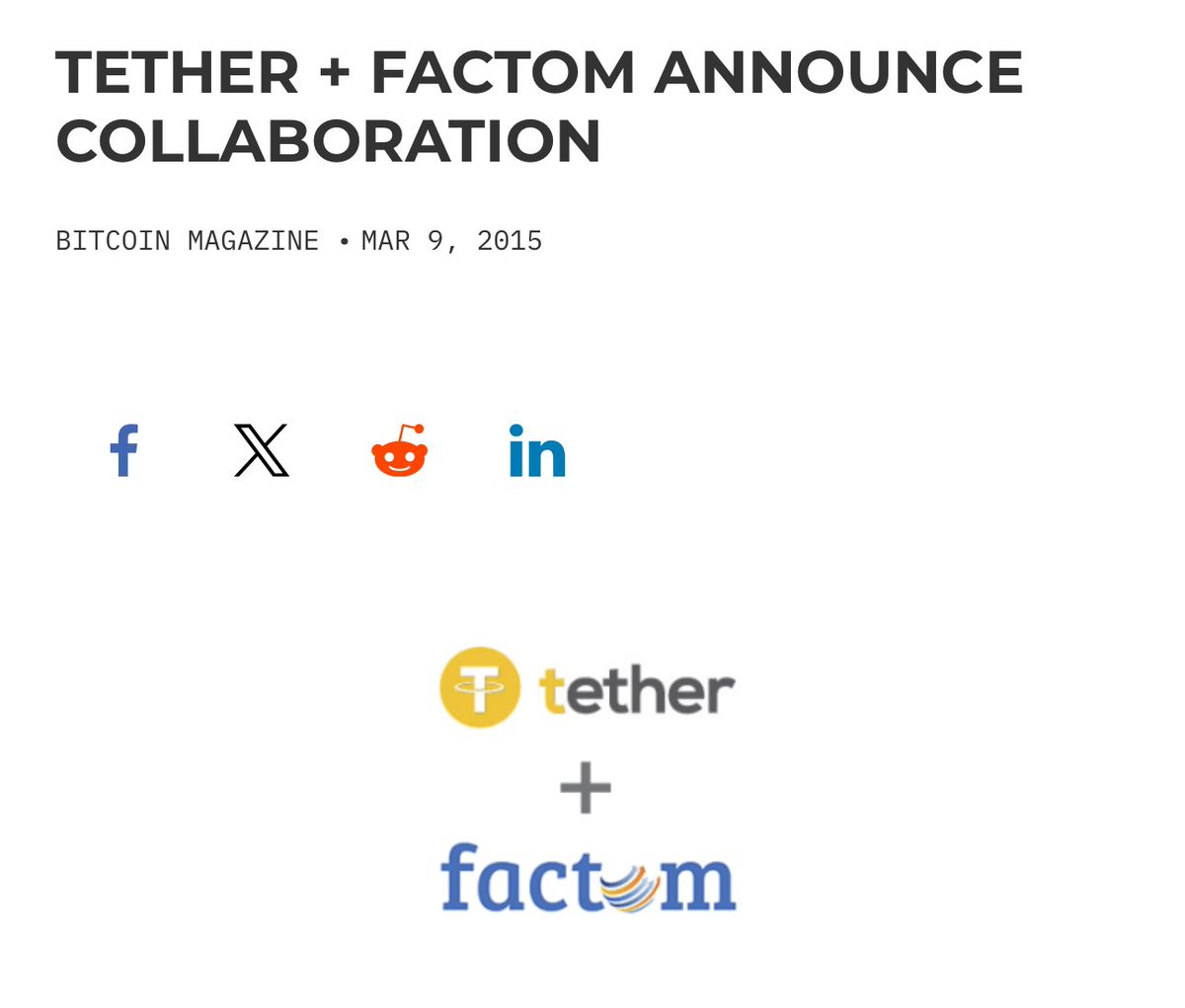
Remember when back in 2015 #Tether announced partnership with #Factom to help it manage its tethers?
Stuart Hoegner who was involved in the poker scandal and the FTX scandal is General Counsel at #Bitfinex
The founder of Factom Paul Snow was involved in the creation of the #EthereumVirtualMachine.
Factom was also being used by #TFALabs through a partnership with the US Dept. of Energy to secure its power grid. Factom was also in partnership with Dept of Homeland Security in 2016.
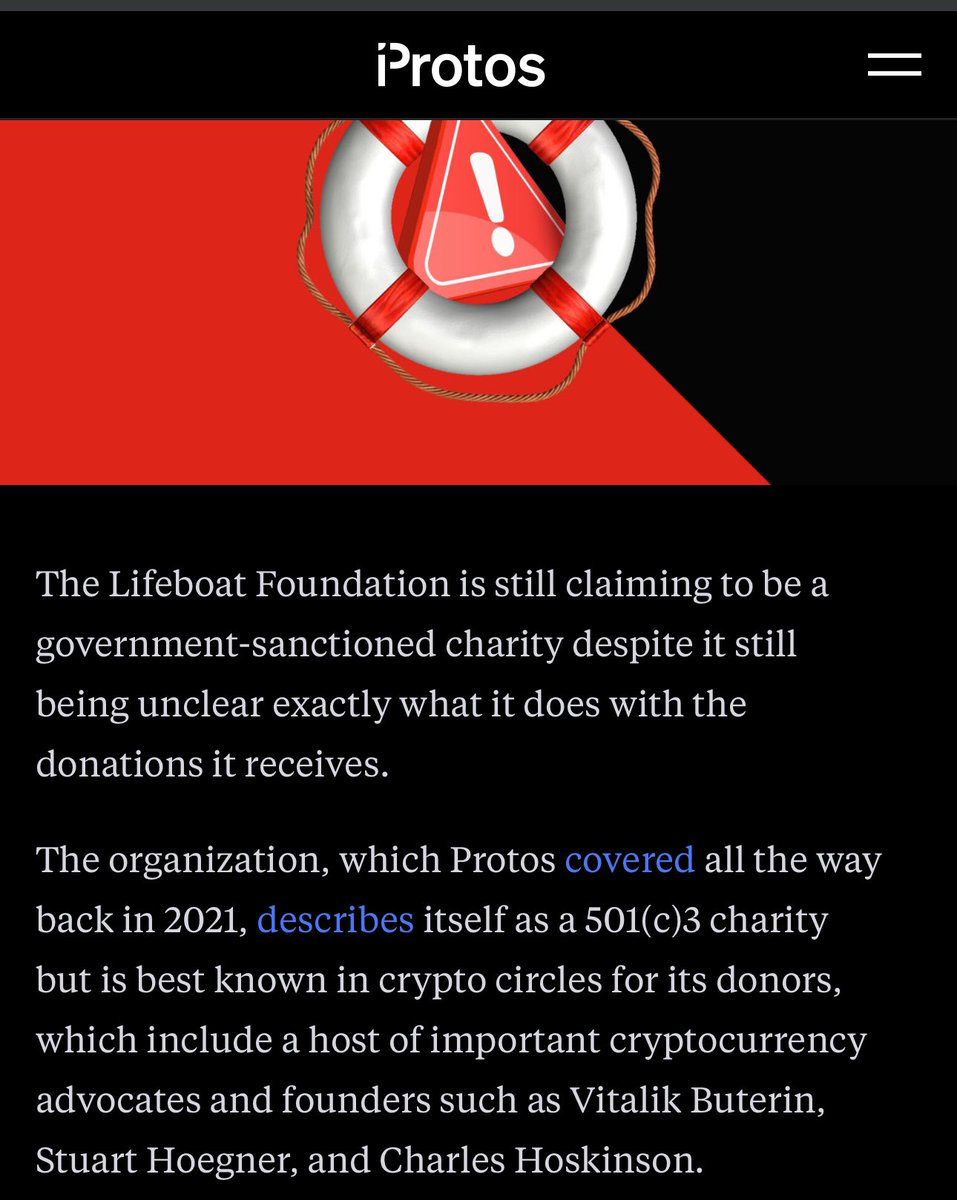
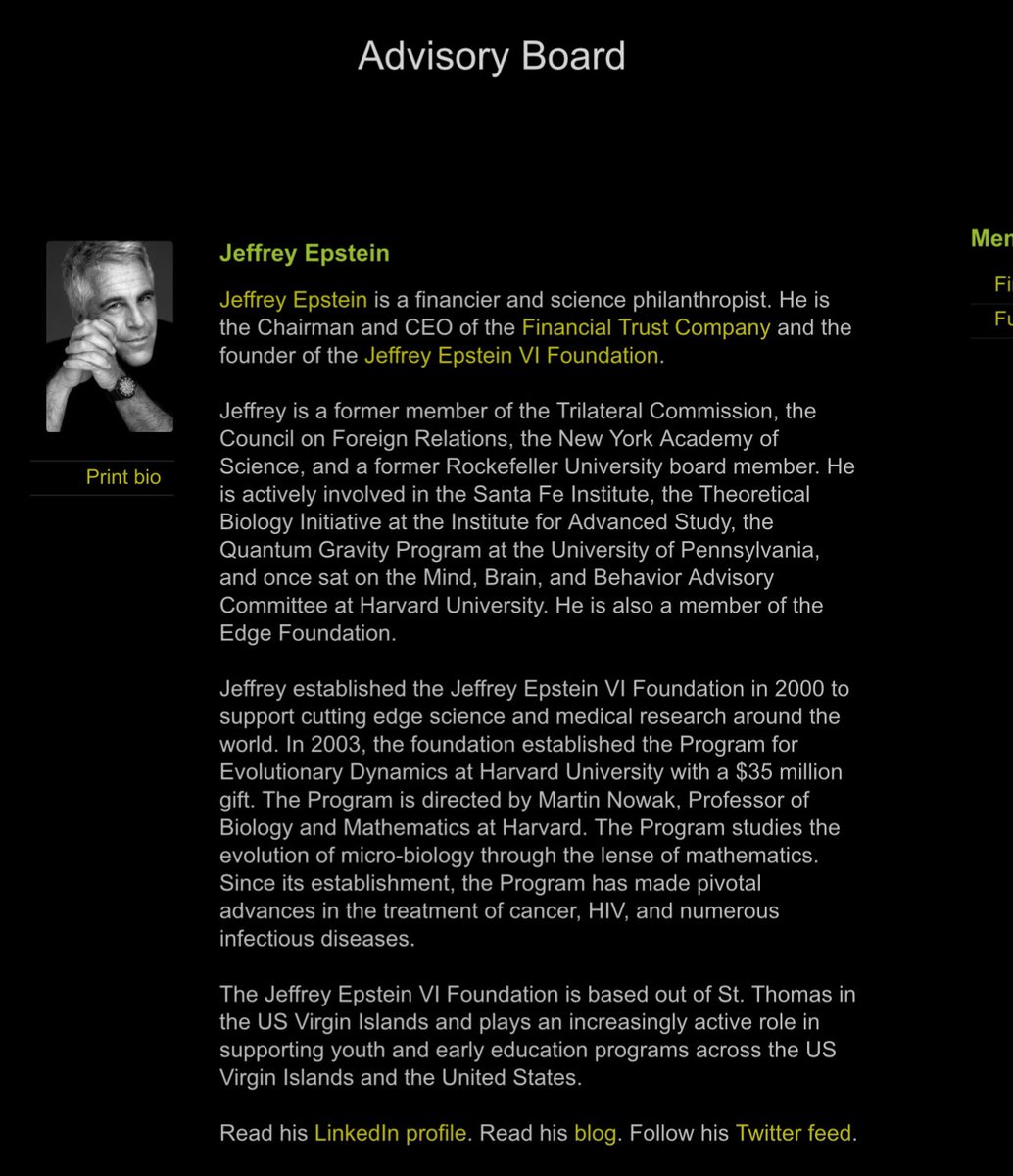
Hoegner is allegedly also a big donor of The Lifeboat Foundation. Epstein was part of the advisory Board of Lifeboat. Explains why Tether is untouchable
4
11
43
6,499

28 Mar 2024
⚡️#EVM is an essential component for operation. For those who are not yet fully acquainted with this infrastructure, want delve deeper into #EthereumVirtualMachine, this information from #PhykenNetwork team will help you
#GreenEnergy spreading new horizons in #Digital realm #WEB3
25 Mar 2024

𝗪𝗵𝗮𝘁 𝗶𝘀 𝘁𝗵𝗲 𝗘𝘁𝗵𝗲𝗿𝗲𝘂𝗺 𝗩𝗶𝗿𝘁𝘂𝗮𝗹 𝗠𝗮𝗰𝗵𝗶𝗻𝗲 (#𝗘𝗩𝗠)?
1⃣ The Ethereum Virtual Machine (#EVM) is a decentralized computation engine that executes smart contracts on the Ethereum network. It is a crucial component of Ethereum's infrastructure, enabling code execution precisely as intended.
2⃣ #EVM is not a physical machine but a virtual one, operating across thousands of computers, or nodes, participating in the @ethereum network. This distributed nature of #EVM ensures the security and reliability of the @ethereum network.
3⃣ #EVM acts as a state machine, computing valid states based on predefined rules from block to block. These rules oversee smart contract execution and #Ethereum blockchain state updates. It interprets Solidity-written contract code, converting it into bytecode. This bytecode guides the #EVM in executing tasks precisely as defined, ensuring adherence to the contract's original code.
4⃣ #EVM is pivotal in upholding consensus within the #Ethereum blockchain. All nodes in the network run the #EVM, ensuring unanimous agreement on the blockchain's state, which is crucial for security and integrity. By executing smart contracts, the #EVM enables decentralized applications (dApps), shifting operations from centralized servers to the blockchain. This fosters diverse opportunities, from decentralized finance (#DeFi) to non-fungible tokens (#NFTs), enriching possibilities for developers and users.
5⃣ While the #EVM is a core component of the #Ethereum network, it is not exclusive to #Ethereum. Many other blockchains, including @0xPolygon, @arbitrum, and @avax, also use the #EVM. This is because the #EVM provides an environment for executing smart contracts, making it easier for developers to build applications that can run on multichains. This interoperability is a crucial advantage of the #EVM and contributes to widespread adoption.
#EVM #DeFi #Ethereum #NFTs
3
77

26 Mar 2024
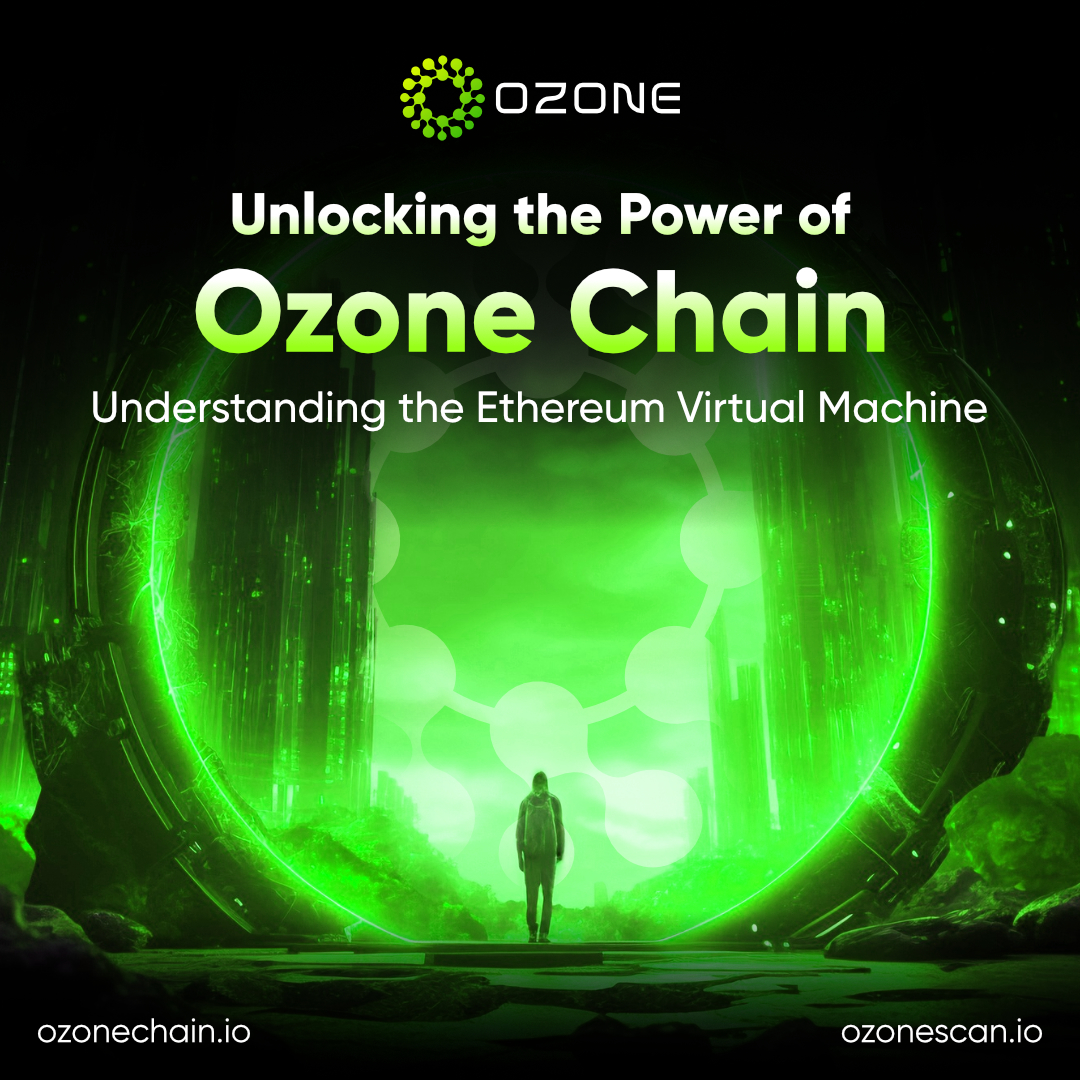
Unlocking the Power of Ozone Chain: Understanding the Ethereum Virtual Machine 🚀🌐
Ozone Chain emerges as a versatile blockchain framework, boasting Turing completeness to facilitate the creation of smart contracts capable of addressing a myriad of computational challenges. At its core lies the Ethereum Virtual Machine (EVM), a pivotal component responsible for orchestrating the execution of compiled contracts encoded in bytecodes across the Ozone chain network nodes. 💡
The EVM operates on a consensus-based model, meticulously decoding and executing smart contracts while safeguarding against potential denial-of-service attacks prevalent in cryptocurrency ecosystems. This intricate process ensures the seamless execution of transactions, maintaining the integrity and security of the Ozone chain network. 🔒
Visualizing the Ozone chain network unveils a dynamic ecosystem, comprised of interconnected EVMs or nodes, meticulously synchronized through a peer-to-peer mechanism. Each node hosts a comprehensive replica of the blockchain data store, engaging in a competitive race to validate transactions and produce the subsequent block. With the addition of a new block, the blockchain undergoes seamless updates, propagating across the network to ensure uniformity and coherence among all nodes. 🔄
As Ozone Chain continues to redefine the landscape of blockchain technology, the Ethereum Virtual Machine stands as a cornerstone, empowering developers and users alike to harness the full potential of decentralized applications with unparalleled efficiency and security. 🌟
#OzoneChain #EthereumVirtualMachine #BlockchainTechnology #SmartContracts #DecentralizedApplications #CryptocurrencySecurity
5
6
13
957

7 Mar 2024
PixelRealm Embraces Sei to Transform Web3 Gaming
buff.ly/3TpKmA1
#PixelRealm #Sei #Web3Gaming #Blockchain #EthereumVirtualMachine #Crypto #GameFi #NBTC
2
98