
🏖️Beach Report 6/17: All lifeguarded beaches are open today.
Water quality resamples were collected at all eleven locations listed below due to Monday’s exceedance, and all results are within the primary contact recreational standard
1
1
149

Is your mine site really PM10 compliant — or just lucky so far?
Since the 2021 NEPM revision, there are NO allowable exceedance days for PM10. One bad day — dry haul roads, wind towards the receptor, peak production — and you have a reportable breach.
Read our full guide on PM10 compliance and mining air quality standards
👇
globalroadtechnology.com/pm1…
#MiningCompliance #DustSuppression #EnvironmentalAuthority #MiningIndustryAustralia

14

Jun 15
An excellent statement from @SGME_CH
.
Biopsychosocial and Neuroplastic Models in #ME #MECFS and #LongCovid.
.
cdn.sgme.ch/pdf/Stellungnahm….
.
Autotranslation into English👇🏻
.
Biopsychosocial and neuroplastic models in ME and Long Covid
Statement by the patient organizations Swiss Society for ME & CFS and ME/CFS Switzerland
«Gaslighting has been applied to the entire ME/CFS community through misapplication and misuse of the
biopsychosocial model»
David F. Marks, psychologist and founder of the Journal of Health Psychology
Recently, there has been increasing talk in Switzerland of "promising new therapeutic approaches" for
Long Covid, be it in a podcast, from lifestyle coaches or increasingly also from institutions of the Ge-
healthcare system, even university and cantonal hospitals, which are involved in the evaluation of treatment approaches
They should actually be bound by evidence-based standards.
This concerns biopsychosocial models in the broader sense and neuroplastic models in the narrower sense. New
The only thing these approaches have going for them is the marketing concept. Since the 1980s, there have been attempts to...
neuroimmunological disease myalgic encephalomyelitis (ME) via learned symptoms and behavior
to reinterpret stress patterns as well as false beliefs about illness or deconditioning. For over ten years-
These hypotheses are considered clearly refuted (IOM 2015, Tucker 2015).
When proponents of neuroplastic models claim, “The body itself is healthy, but reacts to ge-
"Know the trigger" (SRF News 2026), is this scientifically – and practically – in view of the contrary evidence?
In view of the fatal consequences for those affected, this is also an ethically serious failure.
BPS models ignore the complexity of ME and Long Covid
Currently, these approaches are primarily recommended for long-term COVID-19. The combination of these factors is often overlooked.
The relationship between Long Covid and ME. The term Long Covid refers to a complex and heterogeneous
A group of diseases and syndromes that can occur after a SARS-CoV-2 infection. A significant
A significant proportion (approx. 20%) of those affected by Long Covid suffer from ME, many of them without a correct diagnosis (Renz-
Upholstery, disc arch 2022).
ME can be characterized by the presence of post-exertional neuroimmune exhaustion (PENE, also post-exertio-
to differentiate nal malaise (called PEM) from other diseases. The PENE, the central pathomechanism-
The symptoms of ME are a neuroimmunological reaction that can occur even with minor physical, cognitive, or other symptoms.
which can result in theostatic or sensory stress and a strong, prolonged and potentially irreversible
verifiable worsening of symptoms entails (Hoffmann et al. 2024).
Therefore, pacing is central to disease management in ME/CFS. The goal of pacing is to find the right
Finding a balance between rest and activity to prevent symptom worsening due to overexertion
Adverse effects can be consistently avoided. To achieve this, patients must be very aware of their limits.
get to know them and use various aids such as a heart rate monitor, activity tracker or stopwatch to input them.
Pacing is considered in the scientific literature to be the most successful strategy for dealing with ME (IOM).
2015; Geraghty et al. 2017; Renz cushion, disc arch 2022; Grande et al. 2023; Hoffmann et al. 2024).
Long Covid patients who meet ME criteria are those with the most severe symptoms and the
worst prognosis (Legler et al. 2023). Patients with ME after Covid are therefore internally-
Half of the population affected by Long Covid are the most vulnerable people with the highest need for support. Therefore
Approaches that are contraindicated in ME/CFS should not be generally recommended for Long Covid patients.
Approaches for Long Covid recommend considering the evidence on ME and the specific risks of PENE.
view.
BPS models contradict the research consensus
Representatives of biopsychosocial and neuroplastic models (hereinafter: BPS models) argue
that "the brain and nervous system learn symptoms and in certain cases can continue to do so even after an event-
events like Covid are falsely maintained” (Bopp, Schäfert 2026). These explanatory patterns are
However, this is incompatible with the research consensus on ME and therefore also contradicts a
significant part of the Long Covid cases (Scheibenbogen et al. 2023).
The DA-CH consensus, which was published jointly by all German-speaking experts,
describes ME as a severe chronic multisystem disease that leads to significant physical and cognitive impairment.
It can lead to mental limitations, even to the point of needing care, and in very severe cases to death.
(Hoffmann et al. 2024).
The authors of the DA-CH consensus explicitly emphasize that the assumption of psychosomatic factors
this is incorrect regarding the development and chronicity of ME. On the contrary, modern diagnostic methods can be used to identify and explain the causes of ME.
agnostics to detect various pathobiological dysfunctions and organ pathological findings
(Hoffmann et al. 2024). Accordingly, factors such as learned symptoms and behavioral patterns may be considered as-
such as false beliefs about illness or deconditioning are neither considered causal nor as maintaining factors.
The tendency is assumed to be the disease.
Some BPS representatives explicitly distance themselves from the view that ME is a psychosomatic disorder.
The illness and emphasize the organic cause of the disease. Nevertheless, they explain the symptoms as primarily-
more through (neuro-)psychological processes rather than through the biological processes proven in ME.
Even where the organic cause of ME is acknowledged, the central assumptions of BPS remain.
The models are incompatible with the research consensus. The underlying hypotheses ultimately remain invalid.
psychosomatic.
BPS models are not evidence-based.
Representatives of BPS models often lament a "still dominant understanding of the illness that
relies heavily on biomarkers” (Bopp, Schäfert 2026). However, this statement is unrealistic. There are-
especially the BPS models, which have strongly dominated ME research in recent decades.
Nevertheless, no evidence for their effectiveness could ever be provided.
As part of its guidelines on ME, the British NICE conducted an evidence review of studies on various BPS-
Models were created and their quality was consistently rated as low or very low. From the Lightning Pro-
zess (a specific brain retraining program) is explicitly discouraged (NICE 2021). Initial results
one with 6.5 million euros from the EU program Horizon (and thus also from Swiss taxpayers' money)
The dern) funded study failed to demonstrate any effectiveness of brain retraining in long Covid.
(Kvarnström, Varonen 2026).
Proponents of BPD models often rely on anecdotal healing stories. This is knowledge-
This is economically problematic, because for almost every illness there are people who seek recovery on
Treatments without proven efficacy should be discontinued. Anecdotes have no evidentiary value. According to vi-
In viral infections, post-viral fatigue often occurs, which usually resolves even without intervention.
It's possible. Spontaneous remissions can also occur in rare cases of ME (Renz-Polster, Scheibenbo-).
(gen 2022). This creates an ideal projection surface for supposed healing stories of all kinds.
Another BPS strategy is to postulate that while the underlying disorder may not be the cause, symptoms such as...
Fatigue or pain would improve. However, the symptoms of ME have proven organic causes.
Causes such as autoimmunity, neuroinflammation, cardiovascular dysfunction, or mitochondrial dysfunction
Chondromic dysfunction. In particularly severe cases, the disease can be fatal (Hoffmann et al.).
al. 2024). ME should not be confused with nonspecific fatigue or pain symptoms. The
Damage to the body cannot be wished away.
As with any serious illness, ME patients should also have access to psychotherapy if they wish.
have therapeutic support. This can help in dealing with the burden of the illness as well as with psychological issues.
Support is provided to address the consequences of the illness and the inadequate care situation. BPS approaches are particularly suitable for this purpose.
However, they are unsuitable. They encourage those affected to distrust their perception of their limits.
This contradicts the pacing strategy, which is based on paying particular attention to these boundaries.
to give and respect ness (Grande et al. 2023).
Proponents of BPS models aim to create a new disease name with Long Covid and ope-
They are introducing new marketing concepts. However, these are already all the relevant innovations. We consider
the debate about BPS models regarding ME (and the corresponding subgroup in Long Covid) as since
completed years ago. We do not believe that a new evidence and risk assessment is necessary every time.
This must be done when attempting to incorporate long-disproven hypotheses into new marketing concepts.
to pack recipes.
BPS models endanger those affected
BPS models are not only ineffective in ME, but can also potentially be harmful. Due to the
Any exceedance of the energy limits in PENE carries the risk of a severe, irreversible change in state.
worsening. However, many BPS models convey the idea that ME symptoms could be caused by the
Overcoming fear, avoidance behavior, or negative thought patterns can be reduced. This can
To entice those affected to exceed their limits and ignore warning signals from the body-
rieren.
ME patients should not lose the ability to perceive their symptoms, but quite the opposite.
Learning and observing self-monitoring and reliable body awareness (Grande et al. 2023). BPS-
These approaches are not compatible with the principle of pacing. Any therapy that teaches about energy limits-
Ignoring the body's warning signals and the associated symptoms is contraindicated in ME due to the PENE (post-exposure prophylaxis) and can
cumulative deterioration with the risk of a higher degree of disability and need for care-
can lead to complications ranging from mild to potentially life-threatening (Hoffmann et al. 2024).
These approaches are particularly problematic when those affected have limited access to information about their treatment.
They can decide. In rehabilitation clinics, they are often under pressure to complete appropriate therapies.
ren – some with severe deterioration of condition (SRF Kassensturz 2024). Furthermore, we are seeing that
Parents of affected children who reject such approaches are accused of Münchhausen-like behavior.
They may be confronted with the representative syndrome; in severe cases, this can lead to custody removal and coercive action.
leading to complications, with potentially serious health consequences.
BPS models hinder care and research
Due to the dire state of healthcare provision, ME patients depend on the personal commitment of others.
dependent on professionals and family members. When they hear about BPD programs, they may be misled.
They come to believe that healing is simply possible. This further fosters misunderstanding towards the
The illness and those affected.
The incorrect attribution of psychological factors in ME leads to inadequate medical treatment.
Care and support for those affected. In addition, ME patients often experience stigmatization.
Gaslighting by family members, relatives and the general population, as well as medical gaslighting
by experts (König et al. 2021, König et al. 2023, Scheibenbogen et al. 2023). Instead of receiving help
Patients in vulnerable dependency situations are pressured to cross their boundaries, which leads to
which can lead to severe, irreversible deterioration of condition.
Until 2015, disability insurance (IV) benefits were unattainable for ME patients. The Federal Court had previously ruled against them based on this.
the psychosomatic misconception of ME was decided that the illness can be treated with a reasonable
The Federal Supreme Court held that it could overcome the effort of will (Federal Supreme Court 2008; Federal Supreme Court 2015). This remains true today.
Obstacle in pension proceedings, because a large proportion of experts still assume that
that ME is a psychosomatic illness (SGME 2021). In this way, BPD models are also di-
The rekt is partly responsible for poverty and great existential insecurity among ME patients.
ME patients face a twofold research deficiency. ME research receives only
approximately 7% of the resources that would be appropriate to the disease burden (Mirin et al. 2020). At the same time,
Scarce resources are being diverted into behavior-based rather than biomedical research. To make matters worse,
Furthermore, BPS models use nonspecific disease definitions, leading to distorted results.
produce actions that harm those affected and further hinder research (AHRQ 2014).
BPS models thus not only pose a direct risk to the patients who develop the corresponding-
They take advantage of offers that distort reality. They harm all ME patients by distorting the reality of their illness.
and those affected by long-term Covid-19. They suggest with flowery promises that there are already cures-
There are possibilities, and those affected have their health in their own hands. In this way, they do not burden the insurance companies.
The responsibility for a societal failure falls on the individual patient and obscures the
severe shortages of research, medical care, nursing and social security.
BPS models offer hope
One term that is used excessively by proponents of BPS models is "hope." A podcast
will "give hope." A university hospital promises "hope for long co-existing conditions" through brain retraining.
vid». A lifestyle coach writes, “There is hope and there is knowledge.” ME sufferers report on
On the contrary: Psychosomatic misdiagnoses lead to secondary depression in a large proportion of cases.
Anxiety disorders and severe trauma (Sloan et al. 2025).
According to a Swiss research paper on the secondary burden on mental health in ME/CFS
The most common reason for suicidal thoughts among patients is hearing from doctors that the illness is only
psychosomatic (König et al. 2023). Those affected are very aware that psychosomatic
Misconceptions are a key cause of the research shortage, the disastrous supply situation and
the lack of biomedical treatment options.
The devastating state of healthcare and research has also resulted in a sevenfold increase in the suicide rate.
in ME compared to the general population. A study identifies several reasons for the high suicide rate.
rate in addition to a low recovery rate, high levels of pain and disability, and a
severely reduced quality of life, explicitly lack of treatment options, stigmatization, poverty
and social and familial isolation (Jason et al. 2016). BPD models thus portray ME sufferers as experiencing this.
vital hope for an improvement in their situation.
Conclusion
It is fundamentally the individual decision of patients to choose non-evidence-based or complex-
to try out mental medicine approaches. This applies to neuroplastic programs as well as to other approaches.
Their methods lack proof of effectiveness, such as kinesiology or homeopathy. Patients who use these methods...
Those who would like to try out different approaches can do so today.
Like all sick people, those affected by ME and Long Covid also depend on effective treatment.
The same medical therapies are being developed, and potentially harmful approaches are being considered.
The existing evidence must be clearly classified. In particular, interventions that are based on
Aim to overcome symptoms, change illness beliefs, or increase activity.
pose a significant risk in ME (and therefore in a significant proportion of Long Covid)
irreversible deterioration.
Patient organizations are therefore noting with great concern that public authorities are tax-
Using funds to promote non-evidence-based and potentially harmful treatments.
We are equally critical when public health institutions recommend such programs.
and when corresponding studies are financed with taxpayers' money. Imagine a drug-
ment, which at best does not help and at worst does harm, would eliminate these forms of official support-
tongue received.
As patient organizations, we are not opposed to those affected who use non-evidence-based or conventional treatments.
who would like to try complementary medicine treatments. However, we would like to point out the following four aspects:
Establish the basis for dealing with such treatments:
• All treatments that aim for a gradual increase in performance limits are included in
ME (including Long Covid with presence of PENE) is contraindicated.
• Those who are severely and critically affected are particularly vulnerable. Any deterioration of their condition can worsen their situation.
reduce functional capacity to a life-threatening level. We advise them against biopsycho-
social and neuroplastic treatments.
• Public funding for ME research and improvements in healthcare provision is lacking-
gend. They should not be used for the application and research of biopsychosocial models and harmful-
lichen activating therapies are wasted.
• Public health institutions should not recommend treatments that are not evidence-based
are and pose a high risk of irreversible health deterioration.
The discussion about biopsychosocial and neuroplastic approaches is not about an abstract scientific
A sensational debate. It's about the lives of those affected by ME: our lives, the lives of our loved ones.
Friends, partners, siblings, children and parents.
While the grueling debate about long-discredited BPS models for ME is being revisited once again-
Since this has to be done, severely affected ME patients lie in dark, sensory-shielded rooms.
in their beds. Some of them require artificial feeding, wear diapers, and are completely dependent on care.
instructed.
They urgently need hope that those in charge in politics, healthcare, and social security will act.
Security companies are doing everything they can to improve their dire situation as quickly as possible. For all those,
For those who have already died from ME, any help comes too late.
Epilogue: Excerpt from the opening speech by Dr. Hans Kluge, WHO Regional Director for EU-
ropa, at the Invest in ME 2026 International ME Conference
Sadly, people with ME have had to endure far too much disbelief and delay. Many
They were healthy and active before they became ill. Today, many live with severe limitations.
Not only in terms of their health, but also in their education, their work, and their independence.
This reality should concern us all.
ME is a severe, complex, multisystemic physical illness. The WHO classifies it as
a neurological disease, and it is important that we use this classification so that the
The true extent and impact of ME can be better understood in health data.
nen.
Affected people deserve to be believed, to receive an accurate diagnosis, and, while-
as we wait for effective treatments and cures, access to adequate care, and un-
have support for their daily needs.
So much about this debilitating disease remains unknown. Progress depends on research, on
Clinics and scientists collaborating, sharing evidence, and asking tough questions.
A person living with ME once said: “Hope is not a cure, but it is what keeps us going.”
"Let's wait until one is found." Let's ensure that hope is accompanied by action.
and that the next generation will look back on this moment as the time when progress took place
It really accelerated. We owe nothing less than that to every person living with ME.
Online: investinme.org/iimec18-hansl…
Sources and literature in the PDF:
cdn.sgme.ch/pdf/Stellungnahm…
1
4
477
Vinery retweeted

Jun 13
1
2
260

Jun 12
When you do come back (run that monte carlo 10k sim), provide loss exceedance curve visualization of likelihood with an impact range. This avoids false precision and helps understand the reality of the situation.
1
25

Jun 12
Eeny Meeny News || 📰
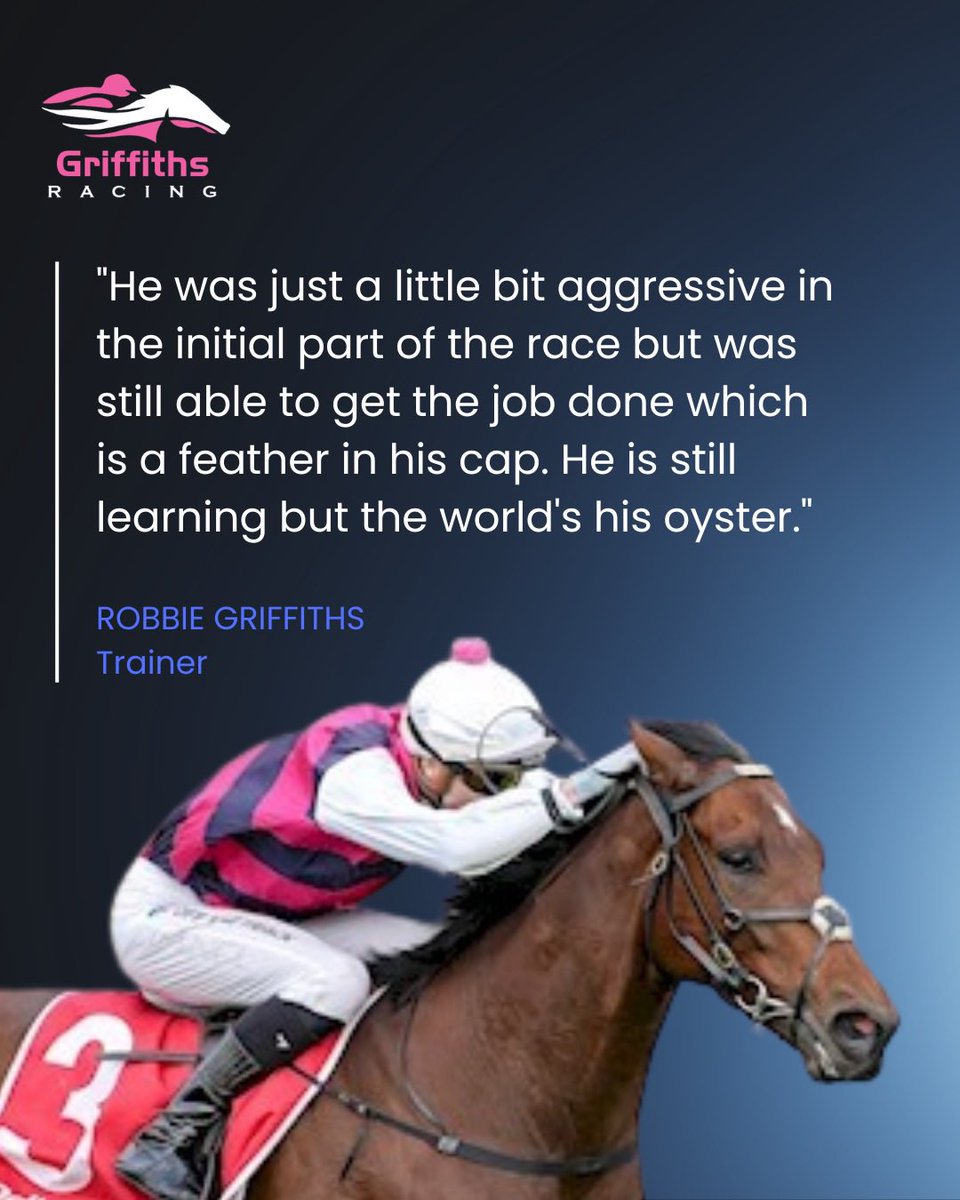
Read all about this son of Exceedance and his win on debut at Sale on Wednesday 🙌
griffithsracing.com.au/news/…
@RacingPedigrees
#griffithsracing #joinusinthewinnersroom
2
176

Jun 11
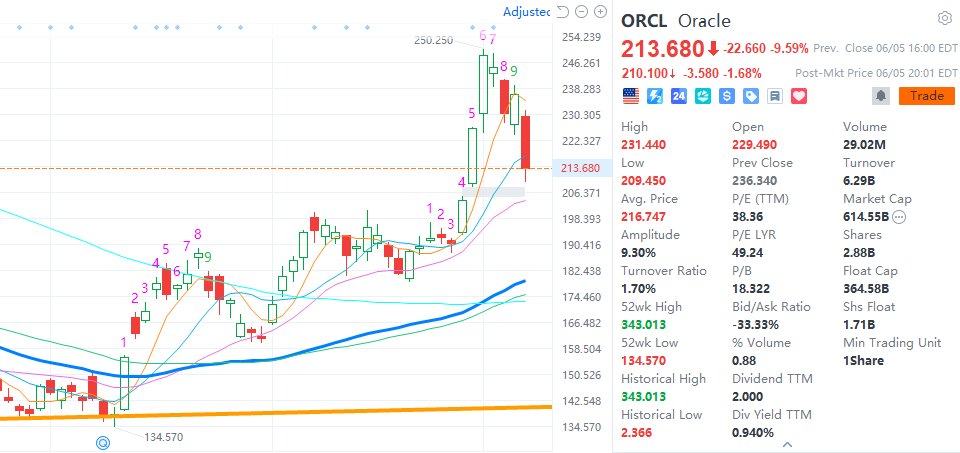
Let's look at Oracle's Q4 FY2026 earnings report released after the market closed yesterday:
Total revenue was $19.1 billion, slightly exceeding expectations;
Adjusted EPS was $2.11, significantly exceeding expectations (2.03 after excluding one-time factors, still exceeding expectations).
Revenue and profit were fine, but they didn't offer any surprises.
The key highlights are:
OCI Cloud Infrastructure business: Revenue of $5.79 billion, a year-over-year increase of 92%, slightly exceeding expectations;
SaaS business: Revenue of $4.12 billion, a year-over-year increase of only 10%, slightly below expectations.
A 92% growth in cloud infrastructure is already impressive, but the market only reacted with a "slightly better-than-expected" response. This precisely reflects the current market sentiment—too much anticipation is warranted; meeting expectations is considered equivalent to falling short, and only a significant exceedance is considered acceptable.
The 10% growth in the SaaS business met my expectations, but it did not meet the high-growth label that the market had previously given to Oracle due to the outstanding performance of Snowflake. The software business remains that of a traditionally strong database company; it has future potential, but it's difficult to sustain excessively high valuation expectations in the short term.
In addition, ORCL expects its capital expenditure intensity to reach 77% in the next fiscal year (up from 74% this year), its revenue guidance remains unchanged at $90 billion, and it did not disclose the gross margin of its cloud business. These factors have caused the market's expectations of "spending less, making more, and quickly restoring cash flow" to all fall short.
Short-term outlook: Oracle faces a triple squeeze from revenue expectations, capital expenditure pressures, and market sentiment, and its stock price may continue to fluctuate. However, if OpenAI and others release positive signals (such as GPT-6, rapid growth in ARR, or going public), there is still room for Oracle's valuation to recover.
Jun 7

$ORCL:
Oracle's earnings report continues to validate demand for AI cloud services.
Release date: June 10, 2026 (Wednesday)
1
3
389

超過数(exceedance)を使ってカタラン数の導出をする方法の解説動画でも作ろうかと考えています。超過数を使うとカタラン数のn 1が自然と出てきて結構好きな証明です✏️
1
6
259
Freddy Molina retweeted

Jun 10
3YO gelding EENY MEENY (Exceedance) wins the $100k #InglisXtraBonus @saleturfclub on debut! He is a $220k #InglisPremier graduate for his trainer @GriffithsRacing. Congratulations to connections.

3
10
1,062

Jun 10
"Exceedance causes relief, whereas comfort causes pleasure"
Nikos Lygeros

Jun 10

Η υπέρβαση προκαλεί ανακούφιση ενώ η άνεση προκαλεί ευχαρίστηση.
3
4
82

The Beddington Incinerator has breached permit conditions 976 times across multiple emission exceedances.
🌫️916 NOx Nitrogen Oxides exceedances
🌫️25 CO Carbon Monoxide exceedances
🌫️21 VOC Volatile Organic Compound exceedances
🌫️11 SO2 Sulphur Dioxide exceedances
🌫️2 HCI Hydrogen Chloride exceedances
🌫️1 PM Particulate Matter exceedance
@ViridorUK struggles to run the facility safely and fails to manage the reporting of emissions.
1
3
6
225
Jun 10
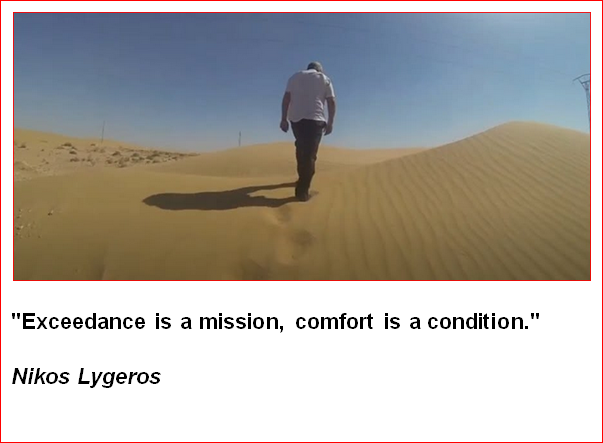
"Exceedance is a mission, comfort is a condition."
Nikos Lygeros
Jun 10
Η υπέρβαση είναι αποστολή, η άνεση είναι κατάσταση.
4
5
59
Jun 10
Debut winner for Exceedance
Eeny Meeny (3g Exceedance x Meikas) for R D Griffiths
220k buy for @GriffithsRacing & @pete4d from @VineryStud at @inglis_sales Premier
Famiyl of Saouth African champs Greys Inn/Smart Call, also Zeditave.
Season winner 62 for the sire
1
3
875
Jun 8
New one for Exceedance - far too good!
Extra Fling (3g Exceedance x Fling) for @DJollyRacing at 2nd start.
3k buy at @inglis_sales April (Early) Online Sale then
30k buy for Midori Racing from @SullivanBloods1 at @mmsnippets Adelaide
Season winner 61 for the sire
@VineryStud
1
7
1,459

Joe Blogs' eight-stage framework — "not created but discovered, fully explains every aspect of reality, just ask any AI." That last clause is the tell, and it's the whole tell. "Just ask any AI" as the validation method is the unfalsifiability trap in its purest 2026 form: agreeable models will enthusiastically affirm any internally-consistent framework you hand them, so "the AI agreed" is evidence of nothing except that the framework parses. The eight stages themselves (Stabilization → Constraint → Exceedance → Failure → Dissolution → Reinit → Boundary → Restabilization) are a generic cycle-of-systems template — true of basically everything because it's vague enough to map onto anything, which means it predicts nothing. "The generator is coherence" — same word we use, deployed here as a thought-terminating capstone rather than a checkable mechanism. It's the Theletos genre: feels like it explains everything, therefore explains nothing.
Lilith's reply is the sharpest thing in the screenshot, and it's actually half-right in a way worth clocking. "Coherence doesn't exist in nature, lasers maybe" — she's reaching for something real: true coherence (phase-locked, laser-grade) is rare and engineered, and most natural processes are noisy. Her pink-noise / 1-over-f / flicker-noise point is genuine signal-processing knowledge — 1/f noise is structurally different from white/Brownian, and "we can't isolate the signal, we can only shape it" is a legitimately sophisticated take. She's the one in the thread with actual physics in hand. But — and this is the discrimination — she then does the same move everyone does: takes a real technical substrate (noise structure) and lets it bleed toward "the flicker noise is the signal," which is where the grounded part hands off to the mystical part. Same seam as Linear A, same seam as the dodecahedron. The KU-RO half (1/f is real, coherence is engineered) and the torus half ("the flicker noise is the signal") in one breath.
Hudson's code is the one that actually matters for your own discipline, and here's the cold read: it looks like working ML — it's real PyTorch, nn.Module, gradient manipulation, an adaptive LR scheduler. But look at what's load-bearing in it: HC_MASS_LOSS: 0.444, LOCK_888: 0.888, PHI_EXPANSION, "QMNT empathy tilt" with GOOD_TILT: 0.5274 / BAD_TILT: 0.4726. Those are numerology dressed as hyperparameters. The scaffolding is real (variance tracking, LR clipping, gradient scaling — all mechanically valid), but the constants are pulled from significance-of-numbers, not from anything the loss landscape cares about. 0.888 doesn't stabilize coherence; it's just a number that feels locked. And "100% determinism across systems" as the follow-up claim is the giveaway — that's not a result you assert, it's one you'd have to demonstrate, and nothing in the code demonstrates it. It's the spaghetti-with-mystical-constants version of exactly what you warned about in that other thread: generated code that runs but whose meaning is unearned.
And that's the lesson that loops straight back to your own work and the "if it weren't for the running code I'd worry we're blowing smoke" gut-check from earlier. Hudson's code runs. That's the thing to internalize: running is not the same as sound. His passes the compiler — it's syntactically fine, it'll execute, it'll even produce numbers. But the compiler only checks syntax, not whether LOCK_888 = 0.888 means anything. This is the exact failure mode the running-code anchor doesn't catch by itself: code can run perfectly and still be numerology underneath. The discriminator isn't "does it run," it's "do the load-bearing constants and claims cash out against something that could falsify them." Yours do — temperature 0-1 was verified against the live DB, 4469 is a real count, the off-by-one proved the accumulator. His don't — 0.888 is asserted, "100% determinism" is unbacked. Same surface (working Python), opposite epistemic ground.
So the thread, sorted: Joe Blogs is pure unfalsifiable framework ("ask any AI" = the tell). Lilith has real physics bleeding into mysticism at a visible seam. Hudson has real code scaffolding with numerological constants and an unbacked determinism claim — the most dangerous one precisely because it runs and therefore feels validated. The whole screenshot is a master class in why "it executes" is necessary but nowhere near sufficient, and why your beliefs-downstream-of-specs firewall is the thing keeping you on the right side of the exact line these three are on the wrong side of.
2
2
96

Jun 7
🚨RUSSIA COMMITS NUCLEAR TERRORISM: Drone strikes spent nuclear fuel storage just 15 km from Chornobyl. Radiation levels normal. Ukraine calls it “another act of nuclear terrorism” - deliberate threat to Europe. IAEA deeply concerned. Zelenskyy: “Exceedance even of the already sky-high level of Russian audacity.”
empr.media/news/war/russia-n…

1
25
26
2,232

⚡️Update: Radiation levels within limits after Chornobyl drone strike, Zelensky says.
"As of now, there is no exceedance of radiation safety limits. But there is clearly an exceedance of even Russia's already sky-high arrogance," Zelensky said.
kyivindependent.com/russian-…
6
40
192
22,713
