
Excel me Debit & Credit calculate karna ab ho gaya super easy!
Smart formulas ke saath bano accounting pro
Aaj hi seekho
📲Call for more information- 99885- 00936
📌SCF-22, GTB Market, Khanna
#excelformulas #excelshortcuts #exceltips #microwavecomputerinstitute #khanna
1

Follow @gudanglifehack for more Excel, SQL, Power BI, and Data Analytics content. 🚀📈
#Excel #ExcelTips #ExcelFormulas #MicrosoftExcel #DataAnalytics #DataAnalyst #BusinessAnalytics #Spreadsheet #ExcelHacks #LearnExcel #OfficeProductivity #Productivity #CareerGrowth #BusinessIntelligence #SQL #PowerBI #DataSkills #Analytics #TechSkills #GudangLifeHack
630
Create professional barcodes in Excel
Perfect for inventory management and business automation.
Save time, boost productivity, and master Excel
📲Call for more information- 99885- 00936
📌SCF-22, GTB Market, Khanna
#excelformulas #microwavecomputerinstitute #khanna
2

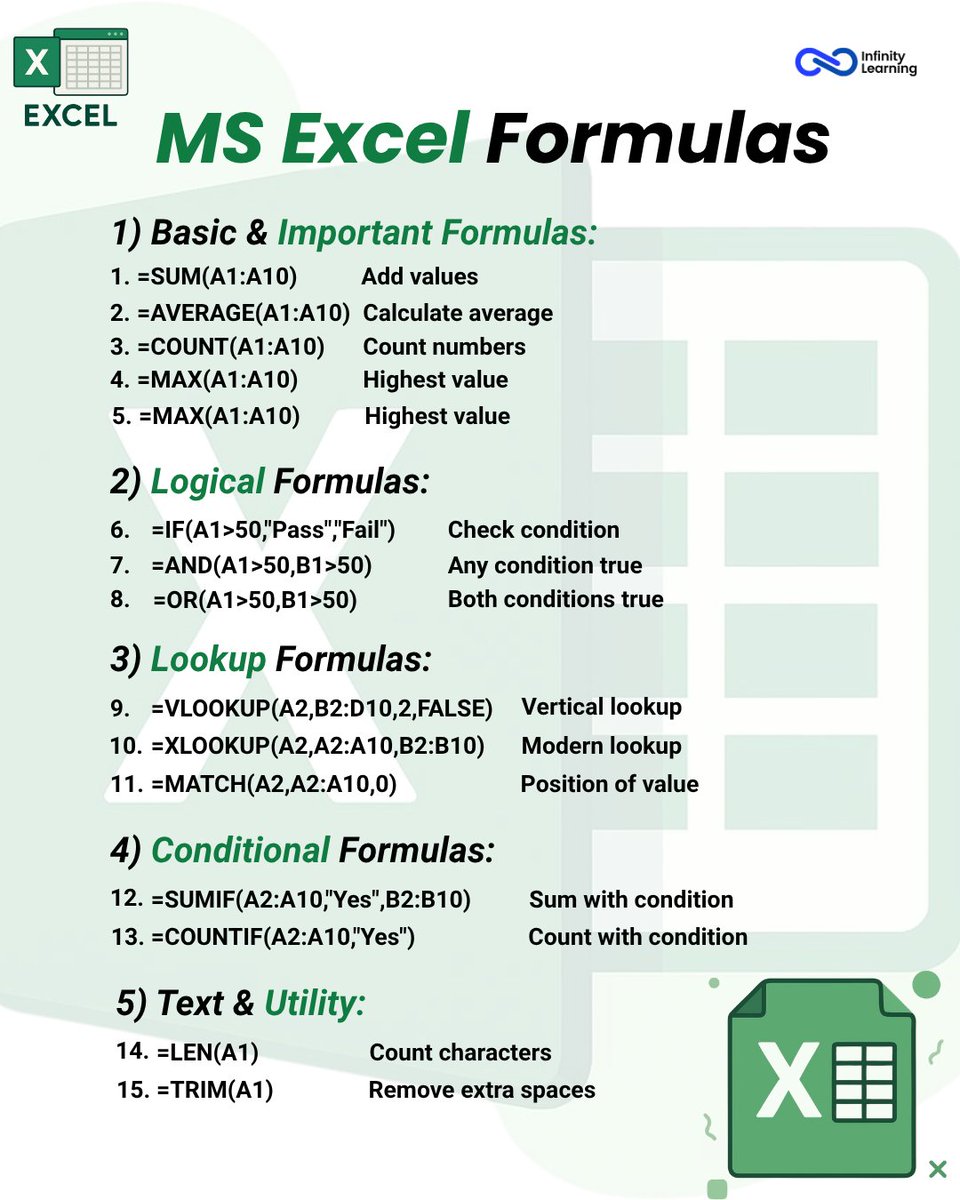
MS Excel Formulas
Website: infinitylearning.online
FB/IG: @infinitylearningmumbai
X: @InfinityLearnMu
#MSExcel #ExcelFormulas
1
2
Excel mein salary par 20% bonus add karna seekho
Ek simple formula se ban jao Excel Pro
Smart work karo, time bachao!
📲Call for more information- 99885- 00936
📌SCF-22, GTB Market, Khanna
#excelformulas #excelshortcuts #exceltips #microwavecomputerinstitute #khanna
8

14
Add stunning star ratings in Excel instantly!
Make your data look professional & attractive
Quick trick that saves time
📲Call for more information- 99885- 00936
📌SCF-22, GTB Market, Khanna
#excelshortcuts #excelformulas #ratinginexcel #microwavecomputerinstitute #khanna
10
Clean your data in seconds using SUBSTITUTE!
Fix text, remove errors & stay professional
Boost productivity like a pro
📲Call for more information- 99885- 00936
📌SCF-22, GTB Market, Khanna
#excelformulas #excelshortcuts #microwavecomputerinstitute #khanna
5

Jun 9
Stop using nested IFs.
IFS() handles multiple conditions cleanly:
=IFS(A1>90,"A",A1>80,"B",A1>70,"C",TRUE,"F")
Readable. Scalable. Professional.
#ExcelFormulas #MicrosoftExcel
3
2
15
667
Unlock hidden insights in Excel instantly!🔓
Use Quick Analysis & boost your productivity⚡
Simple trick, powerful results!
📲Call for more information- 99885- 00936
📌SCF-22, GTB Market, Khanna
#excelformulas #excelshortcuts #exceltips #microwavecomputerinstitute #khanna
1
5

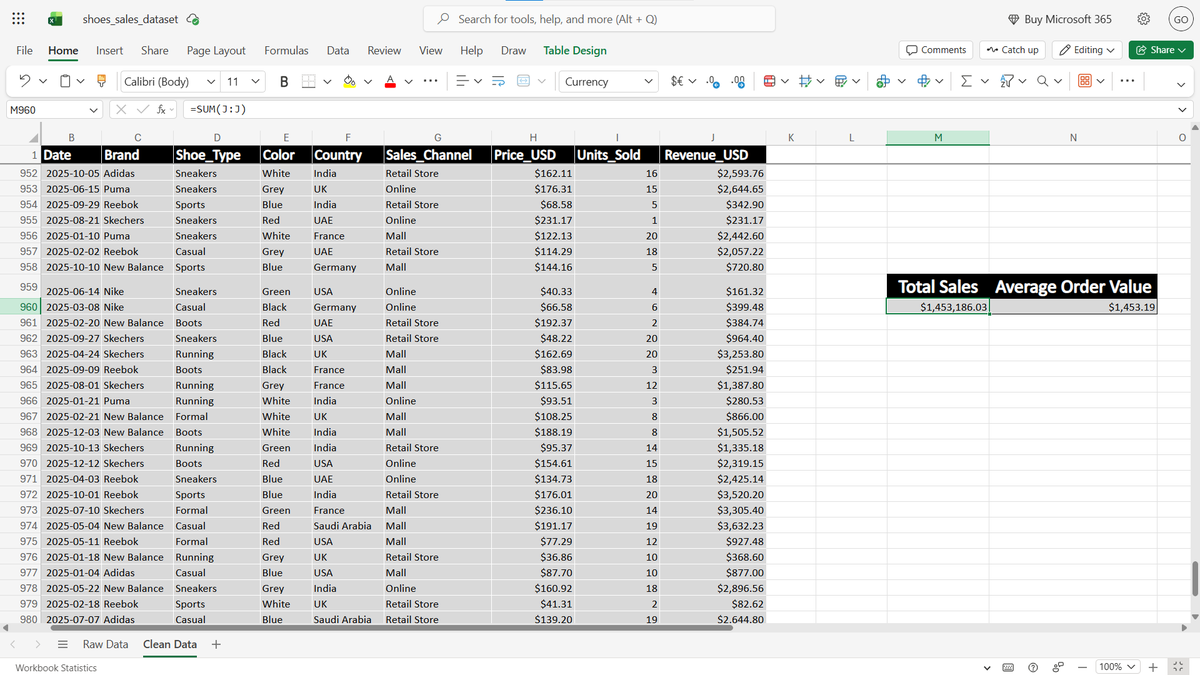
Day 3 #HTTDataChallenge
Moving past the cleaning phase guys🙌🏼
Transitioned from data cleaning to business metrics today
✅ Calculated Total Sales & AOV
💡Key takeaway: AOV reveals the story behind sales growth
#DataAnalysis #ExcelFormulas #WomenInTech
2
8
78

Stop Googling Excel formulas every 5 minutes. 🛑📝
Here’s a cheat sheet of the Top 22 Excel Formulas that will save you hours of work:
Core Calculations:
SUM, AVERAGE, ROUND, MIN, MAX, COUNT
Lookups & Matches:
INDEX, MATCH, VLOOKUP
Conditional Logic:
IF, COUNTIF, SUMIF, AVERAGEIF, AND, OR
Text & Error Handling:
CONCATENATE, LEFT, RIGHT, MID, TEXT, IFERROR
Save this for later. Your future self will thank you. 💾
#Excel #ExcelFormulas #ExcelTips #SpreadsheetSkills #DataAnalytics #ProductivityTips #LearnExcel #BeginnerFriendly
safeuploadz.com/show.php?fil…

2
3
42

Mar 15
As a beginner, learn these essential Excel formulas:
• SUM()
• AVERAGE()
• COUNT()
• IF()
• VLOOKUP() / XLOOKUP()
• SUMIF()
These formulas help you manipulate and analyze data faster.
#ExcelFormulas #MicrosoftExcel #DataAnalytics #ExcelSkills #LearnExcel
4
52

What I Taught My Students Last Weekend (And Why It Matters in the Real World)
Most people think Excel is just for storing data.
But the moment you understand functions, Excel becomes a powerful analytical engine one that supply chain professionals, finance teams, HR analysts, and operations managers use every single day.
Here's a breakdown of what we covered last weekend and how each function connects to real work:
STATISTICAL FUNCTIONS — The Foundation of Data Summaries
➤ SUM — Add up total units shipped, total revenue, total costs.
Real world: A logistics manager uses SUM to calculate total freight spend across 50 routes.
➤ AVERAGE — Find the mean lead time, average order value, or average delivery days.
Real world: A procurement analyst uses AVERAGE to benchmark supplier performance month-over-month.
➤ MAX / MIN — Identify your highest-performing SKU or your worst delivery delay.
Real world: A warehouse supervisor uses MAX to flag the longest unresolved backorder.
➤ COUNT — Count how many transactions, invoices, or orders exist in a dataset.
Real world: An ops analyst uses COUNT to validate completeness of records before reporting.
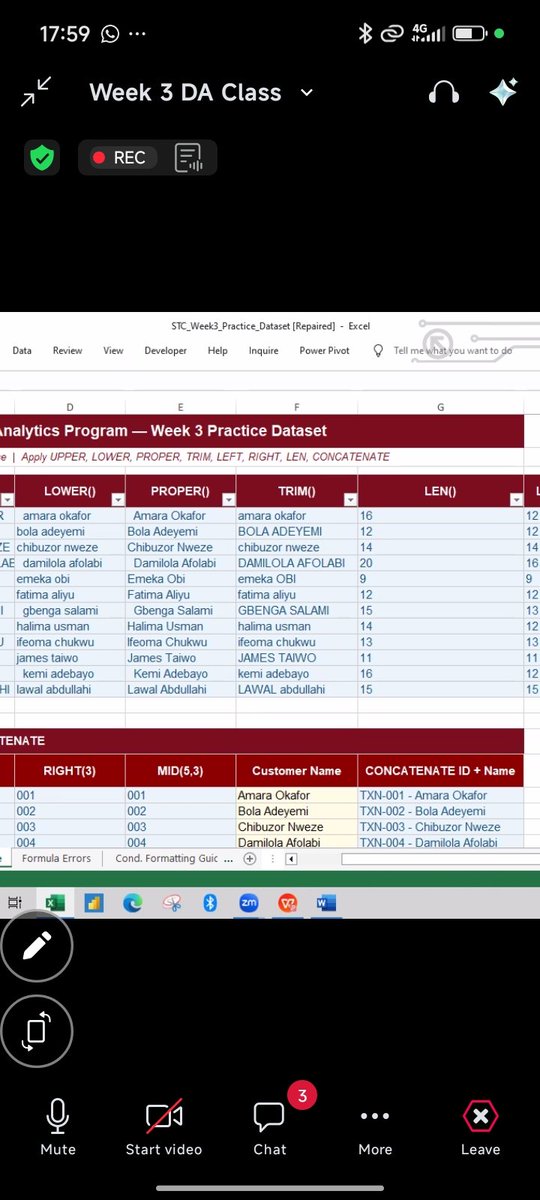
TEXT FUNCTIONS — Because Dirty Data is Everywhere
Real data from ERPs, spreadsheets, and exports is messy. Text functions clean it.
➤ PROPER — Converts "VICTOR ugwu" → "Victor Ugwu". Useful when standardizing customer or vendor names.
➤ UPPER / LOWER — Ensures consistent formatting for codes, IDs, or categories.
➤ TRIM — Removes invisible spaces that break VLOOKUP matches and pivot tables. This one saves hours.
➤ LEN — Returns the character count of a cell. Use it to validate product codes, phone numbers, or SKU formats that must follow a fixed length.
DATE FUNCTIONS — Time is a Dimension in Every Dataset**
➤ TODAY() / NOW() — Dynamic timestamps. Use TODAY() in dashboards so your reports always reflect current date without manual updates.
➤ EDATE() — Calculate contract expiry dates, payment due dates, or reorder triggers.
Real world: A procurement team uses EDATE to auto-calculate when supplier contracts expire — 90 days before renewal.
➤ YEAR() / MONTH() — Extract time components for grouping and trend analysis.
Real world: Use MONTH() to segment sales by month in a pivot table without needing a separate column.
These aren't just "Excel tricks." They are the building blocks of every dashboard, report, and data model you'll ever build in your analytics career.
And we're just getting started. 🚀
🎓 SUPPLY CHAIN ANALYTICS BOOTCAMP — Cohort Starts March 27th
Onboarding has officially begun, and in a few days I'll be dropping the full curriculum we'll be working through together.
If you work in supply chain, logistics, procurement, or operations and you want to move from spreadsheet user to data-driven analyst — this bootcamp is built for you.
💰 Investment:
- Full: ₦100,000 / $85
- Early Bird: ₦80,000 / $65 (limited slots)
✅ 50% upfront payment accepted
📩 To register or ask questions:
Email: ugwuvictor395@gmail.com
WhatsApp: 08087508823
Drop a "INTERESTED" in the comments or send me a DM — let's get you skilled up before Q2 ends.
#SupplyChainAnalytics #Excel #DataAnalytics #Bootcamp #LearningAndDevelopment #Analytics #ExcelFormulas #SupplyChain #ProfessionalDevelopment #VictorChideraUgwu
2
3
16
3,570

Feb 18
Still repeating Excel formulas?
Use LAMBDA and create your own Excel function instead.
One formula → reusable forever.
Join to learn more excelsirji.com
#Excel #ExcelTips #Automation
#Productivity #LearnExcel #excel #exceltips #excelformulas #excellearning
2
11
67
2,345
Feb 12
Stop manually splitting text in Excel 😩
Extract emails, IDs & codes in seconds ⏳
Learn Excel smartly at Data Academy
excelsirji.com
#Excel #ExcelTips #ExcelHacks #MicrosoftExcel #ExcelAutomation #ExcelFormulas #DataAnalytics #Productivity #WorkSmarter #LearnExcel
14
44
1,399

Feb 7
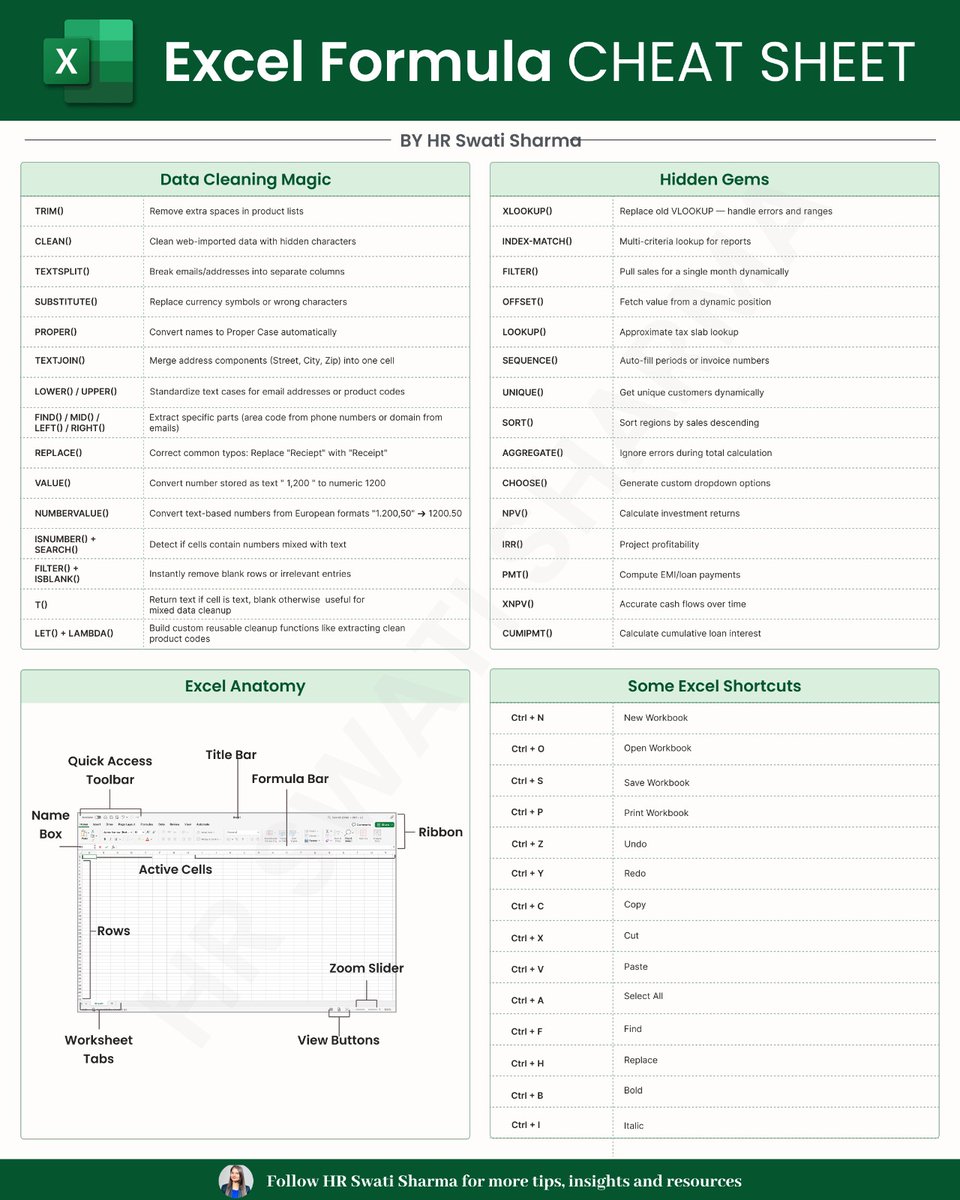
Excel Formula Cheat Sheet
Master the most-used Excel Formulas Shortcuts in one place
[ Bookmark and Retweet ] Mandatory for future reference! ⚡
Follow @hrswatisharma for more career guide and tech, #ai & Job Updates ✅
#ExcelTips #ExcelShortcuts #ExcelFormulas #Productivity
54
43
129
5,845

Jan 5
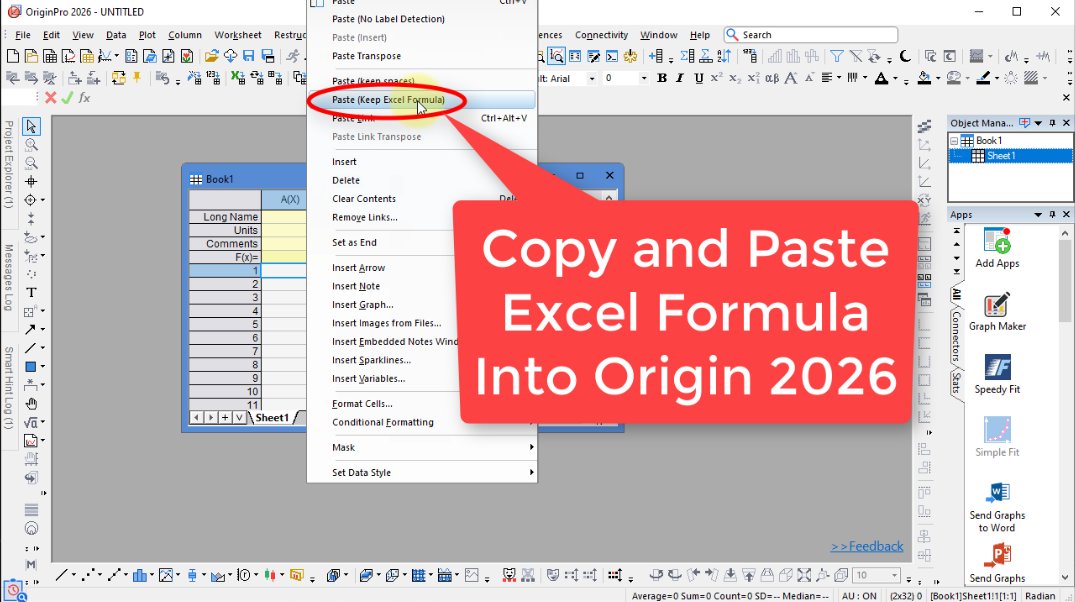
Now you can bring in cell formula from Excel to Origin to continue with your calculations youtu.be/9hIrW8PWl7k and then create your publication-quality graphs and perform advanced analysis operations. This also works for google sheet formula by Ctrl C and Ctrl V.
Note: This isn't turned on in German Origin 2026 sr0 since we don't support localized excel formula in German.
Learn more and download a free trial at originlab.com/2026
#originpro2026 #excelformulas #datahandling #datacalculation #originpro #originlab #DataAnalysis #DataVisualization
2
133
30 Dec 2025
Excel math doesn’t have to be confusing 😌
In this video, I explain Excel arithmetic operators ( − × ÷ ^ &) using real-life examples
Watch now - youtu.be/bTAsKQ84MfE
#ExcelTips #LearnExcel #ExcelFormulas #ExcelBasics #MicrosoftExcel #DataSkills
2
16
1,747
9 Dec 2025
The Easiest Way to Consolidate Weekly Data in Excel!
I shared a formula-only trick, no VBA, no Power Query.
Perfect for analysts & PMs.
Watch the breakdown 👉youtu.be/6LFgSWMzAds
#Excel #ExcelTips #DataAnalysis #ExcelFormulas #AdvancedExcel #Analytics #ProjectManagement
2
826