
The era of manual Web3 trading is ending. The future belongs to decentralized, low-latency execution pipelines.
Stop gambling on chart patterns. Start engineering the backend.
Watch the Falcon fly. 🦅⚡🦀
#Crypto #Web3 #RustLang #HighFrequencyTrading #SystemArchitecture #FalconEngine #Blockchain
growwithmahadev.com
1
2
43
Binance’s matching engine is an absolute beast at scaling volume. But retail traders are still bleeding on execution. Why? 📉
The Problem
Retail is hitting the public REST/WebSocket APIs using bloated Python/Node wrappers. When volatility spikes, WebSocket jitter and OS-level garbage collection add 50-100ms of latency.
The Binance engine doesn't lag; your local infrastructure does.
The Solution
This is exactly why I engineered the Falcon Engine in bare-metal Rust. We bypass standard API wrappers entirely. Zero-allocation memory. Sub-10ms L2 parsing. You can't beat institutional flow until you respect the microsecond. ⚡🦀
github.com/mukherjeemahadev8…
Massive respect to @cz_binance for building the liquidity hub, but the execution alpha belongs to those running bare-metal. 🦅💻
Cc: @Momotrader777 @alice_und_bob @Speculator_io
#Binance #HFT #RustLang #FalconEngine #MarketMicrostructure #AlgorithmicTrading
1
1
2
152
Your trading algorithm isn't losing. Your infrastructure is. 📉
During massive $BTC breakouts or high-volatility events, standard execution stacks freeze. OS-jitter and garbage collection pauses (in Java/Python/C#) add 15ms of delay.
By the time your order actually hits the exchange, the price has already moved. You bleed thousands in slippage every single day.
Stop gambling on latency.
I built the Falcon Engine to eliminate execution bleed. 🦀 100% Rust-Native & Bare-Metal ⚡ Zero-Allocation Memory Management 🎯 Strict CPU Core-Affinity
Deterministic sub-10ms execution. Zero stutter when it matters most.
Check out the Falcon Core architecture here: 🔗 github.com/mukherjeemahadev8…
📩 DM me to integrate deterministic, low-latency routing into your Prime Brokerage or Momentum desk. Let's fix your slippage.
Cc: @akshaygulati @raghu_y @EvgenyGaevoy @JordiAlexander @paoloardoino @style_of_it @shayne_coplan @Momotrader777 @chartingthemkt
#HFT #RustLang #CryptoTrading #MarketMicrostructure #FalconEngine #AlgorithmicTrading
1
3
200
Stop blaming the Exchange for slippage.
Calculate your Infrastructure Bleed.
Retail traders see slippage as bad luck. System Architects see it as a mathematical certainty caused by Non-Deterministic Tail Latency (OS-Jitter) during order book flushes. Let’s do the math on a Bitcoin breakout.
Your Expected Slippage ($E_s$) is a strict function of the market's price velocity ($v$) and your system's latency jitter ($\Delta t$).The formula for Infrastructure
Bleed:$$E_s = v \times \Delta t \times Q$$Where:$v$ = Price velocity (e.g., $ $5 $ per millisecond during a $78k BTC liquidation cascade)$\Delta t$ = Your system's unpredicted latency spike (e.g., $15$ ms Garbage Collection pause in Java/C# or OS thread-context switch)$Q$ = Quantity routed (e.g., $2$ BTC)The Calculation on a standard stack:$$E_s = 5 \times 15 \times 2 = \$150$$You just bled $150 on a single market order simply because your infrastructure isn't strictly core-affined. Over 1,000 automated momentum trades, that's $150,000 donated to the market makers because your code had to think for 15 milliseconds.
This is exactly why Falcon is built entirely in bare-metal Rust. Zero-allocation memory management means $\Delta t \to 0$
If you aren't calculating your microsecond decay, you aren't trading,you are just providing free liquidity to deterministic engines.github.com/mukherjeemahadev8… 🦀⚡🦅Cc: @akshaygulati @raghu_y @EvgenyGaevoy @JordiAlexander @paoloardoino @style_of_it @shayne_coplan @Momotrader777 @chartingthemkt#Bitcoin #HFT #RustLang #AlgorithmicTrading #MarketMicrostructure #FalconEngine
2
52

16 Mar 2024
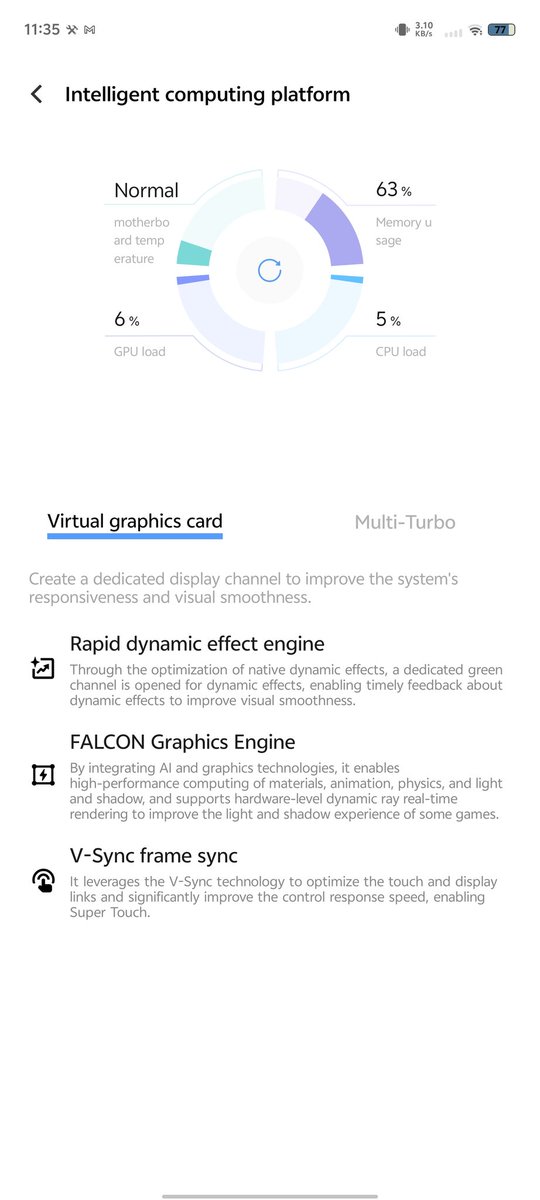
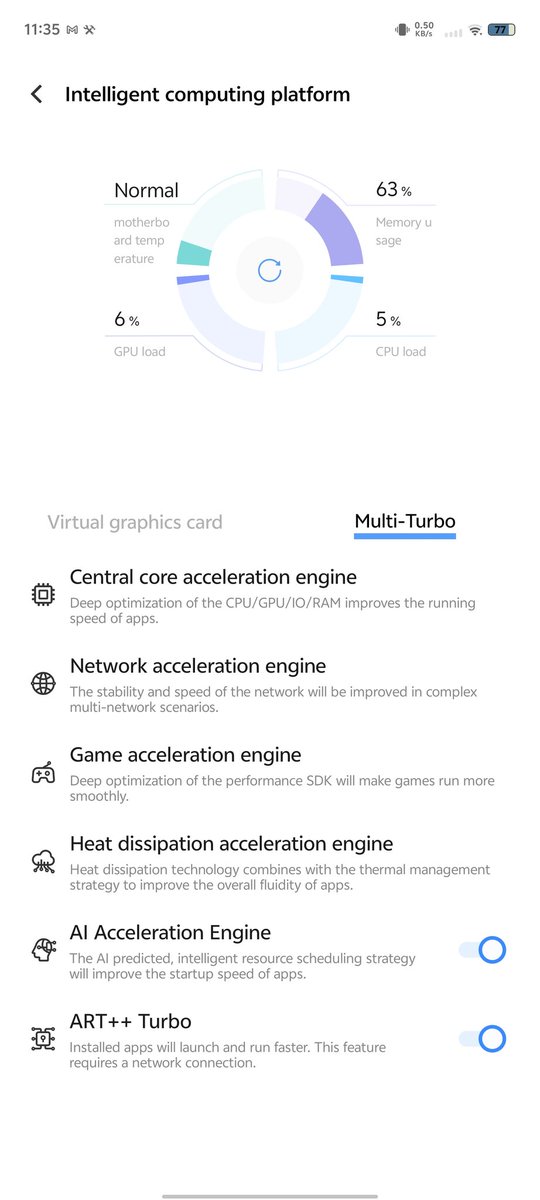
The Intelligent Computing Platform of the #vivoX90ProPlus with #OriginOS4.
#computing #GPU #FalconEngine @vivo_europe @Vivo_India
5
272