
Noooo do not cater for the low effort mfs, it's easily findable and no reason to brag and share to the masses to get it fucked.
Now my F1, Tennis and WEC streams are in jeopardy
6h

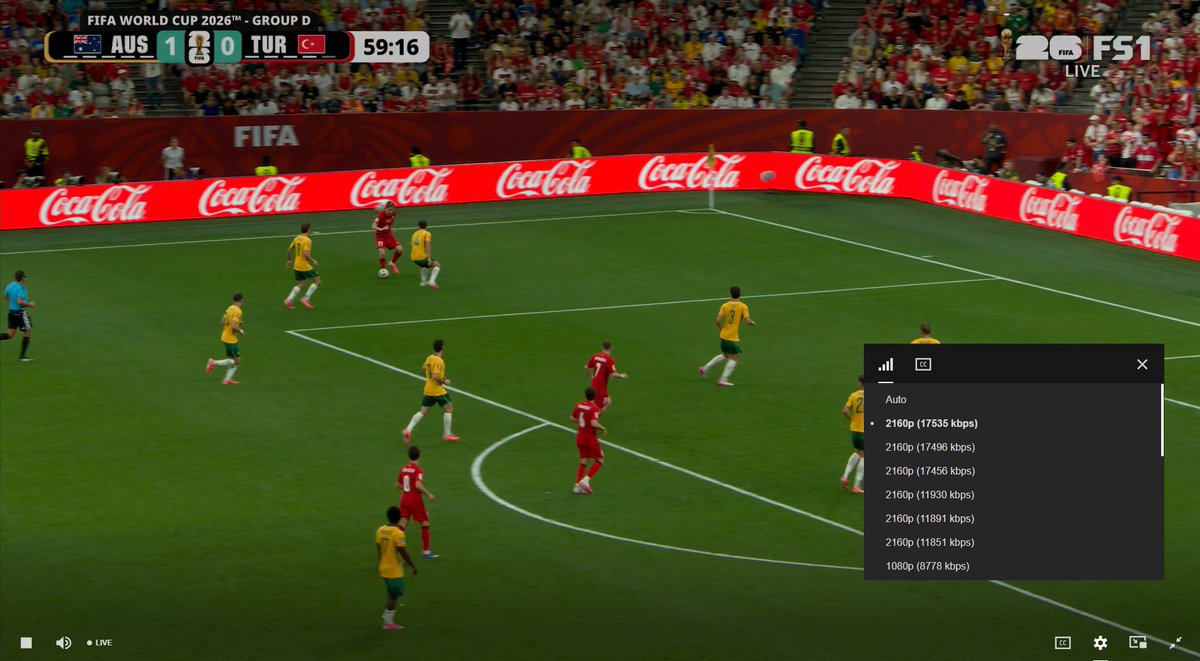
I thought they were kidding when they told me about Fox 4K. I don't care if it is upscaled; it is free of lag and better than Zee streaming. No VPN, No Login. Watch using Brave, and there are no pop-ups or annoying ads that lead to porn or betting sites too.
13

You clearly need to work on your reading comprehension. The flags pictured are not violating any guidelines and therefore won't be findable. It's pretty specific circumstances which will lead to fining
2

Have you tried using something like Recuva (deleted files maybe) or shadowcopyview (Nirsoft, shadow volumes of files) to see if it may be findable?
1
7

Is it just me or is the Brighter days ahead Foundation not findable at all when u search it?
Only articles about it.
But not the actual website.
@TeamAriana Can u forward to check the SEO?
4

Series is now part of Mediatoon / Média Participations catalogue. The creation/distribution rights are easily findable and the writer and director form part of a different studio altogether
2

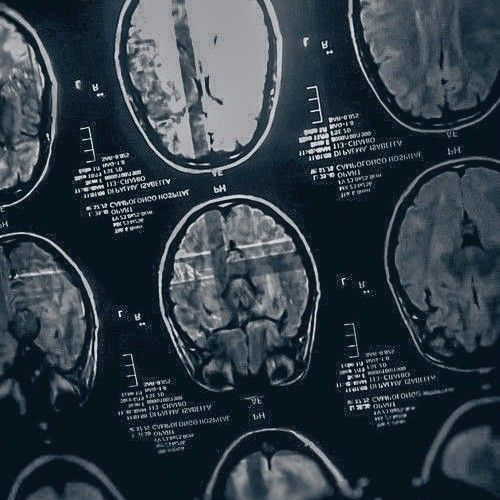
Wouldn’t the entirety of the human brain be the consciousness. So not findable

🚨: A neuroscientist analyzed 100 years of brain research and found NO evidence of where consciousness is located in the brain.
This indicates that the theories saying that consciousness is directly connected to the universe itself are important!
4

The 3 things that move the needle for any business online:
1. Be findable (SEO presence)
2. Be credible (design proof)
3. Be clear (copy CTA)
Most businesses are 0 for 3.
Fix one this week. Just one.
#Tech #Software #Business #HealthCoach #Clinic
1
2

You do not have to be loud. You have to be findable.
Always been true. The internet just made the gap more obvious.
If the right person cannot find you when they are ready to bu 𝗦𝘂𝗽𝗽𝗼𝗿𝘁 𝘂𝘀 𝘄𝗶𝘁𝗵 𝗮 𝗹𝗶𝗸𝗲! go.thesuccessacademy.co.uk/t…
1

Black shirt, do u remember any of this? In case you do, it’s forever findable on the internet. 😂
902

im trying not to repost as much on this acc so my posts dont get lost in the void and are actually findable 😭✌️
3
18
☆ミKoi Gayman☆ミ retweeted

Im so thankful my early digital footprint isn't easily findable because I've been posting online since I was 11😭😭
1
2
28

I don't know if this is findable, but most colleges publish their lists of honors, in the graduation program if nowhere else. It doesn't require him to release his transcripts.
36

I asked Claude about this and its reply is below. In brief, Claude recommends that you use OpenEvidence for its superior medical capabilities:
"On the OpenEvidence comparison: there's a Nature Medicine paper getting circulated on social media claiming frontier general-purpose LLMs (Google, OpenAI, Anthropic models) outperformed OpenEvidence and UpToDate Expert AI across medical knowledge benchmarks and blinded clinician evaluation of real queries. The source I found is a Digg aggregation of tweets discussing the paper, with one radiation oncologist pushing back, arguing OpenEvidence still gives more detailed and accurately-referenced answers for complex cases in his experience.
I'd treat this cautiously — it's a single secondhand source discussing a study I haven't read directly, and "physicians preferred X in a blinded test" claims tend to get oversimplified as they spread on social media. If you want, I can try to pull the actual Nature Medicine paper to see what it really shows methodologically.
On your actual question — no, I don't have the kind of access OpenEvidence has. OpenEvidence runs a retrieval-augmented system against a curated, continuously-updated index of peer-reviewed literature and guidelines, then generates referenced summaries from that retrieval. I don't have that standing infrastructure.
What I can do:
I have substantial medical knowledge baked into training (up through roughly August 2025), and I can use web search to find and read individual papers, abstracts, or guideline pages in real time — including fetching full pages when accessible.
So for a specific clinical question, I can search and synthesize from what's findable online, citing sources as I go. What I can't do is systematically scan "thousands of peer-reviewed studies" the way OpenEvidence's retrieval pipeline is built to — my search is more like targeted lookups than a comprehensive literature index.
For charts and data: if you give me numbers (trial results, lab values, whatever), I can absolutely build visualizations or tables from that. What I can't do is autonomously pull structured trial data from a database the way OpenEvidence might surface a forest plot from a meta-analysis it has indexed.
Given that you already use OpenEvidence and UpToDate as primary tools, I'd see my role as more complementary — good for synthesis, second opinions, working through reasoning, or digging into something not well-covered by those tools, rather than a replacement for the literature-retrieval function they're built for.
1
95

Damn you got me there. My person doesn’t even like their ass eaten sooooooo… it’s still findable without a big tongue 😇😅😂☺️
28

It wouldn’t be humility for me to pretend like you know what you’re talking about.
Your question is answered in the origin post, various comments under this post, and various other posts that are easily findable. I don’t believe you’ll like those answers, but again, I’m not going to play pretend with you and act like I haven’t answered this question. Nor am I going to continue to answer the same question over and over again.
1
1
26

it's a really common and easily findable combo of clothes and it's june so it's not like they want to be covered up, it's really not that big of a deal
2
36
Prowertastic retweeted

All of the evidence she insists is fake is very easily findable with a little bit of searching on the internet, you’ll notice she ignores most of the things addressed in the doc and attempts to shift the blame to others instead of taking any responsibility for her actions
1
2
109

VibeWant NewCryptoSpace — A Human- or AI-Created Knowledge Valuation Framework
VibeWant's knowledge valuation framework is ruthlessly optimized for the post-Nobel world. It bypasses centralized authorities entirely, empowering groundbreaking theories, algorithms, and discoveries—human or AI—to compete through natural selection and market filtering on equal footing. This is especially powerful as massive-scale AI systems generate novel knowledge that may surpass human comprehension.
Creators inscribe clean, minimal URLs—supporting both centralized links like DOIs and decentralized protocols such as IPFS and Arweave—directly onto blockchain ledgers. This elegantly separates the value layer from the storage layer.
Quick note on DOI: DOI (Digital Object Identifier) is a simple, permanent unique link for digital content like research papers or datasets. It keeps content findable and accessible forever, even if regular web URLs change.
x.com/newcryptospace/status/…
Jun 13

The Problem with the Traditional Approach (Inscribing Entire Papers On-Chain):
- Extremely expensive and bloated
- Copyright complications
- Inconsistent formats creating valuation chaos
- Storage and "proof of value" permanently coupled, killing flexibility
#VibeWant #NewCryptoSpace's Approach:
Value Layer (On-Chain): Inscribe only a tiny, permanent DOI link. This creates an immutable, ownable, and tradable "Knowledge Asset" on Bitcoin.
Storage Layer (Off-Chain): Leave the actual paper in the most authoritative academic repositories (or migrate to decentralized storage in the future).
This elegantly preserves academic credibility while teleporting real knowledge into Bitcoin's immutable world — and lays the foundation for massive on-chain knowledge in the AI era.
VibeWant NewCryptoSpace achieves a clean separation between the Storage Layer and the Value Layer. These ultra-minimal inscriptions leverage the permanence of DOIs to point at papers that already carry deep, battle-tested consensus from traditional academia.
Three Key Advantages:
- Preserves Existing Academic Consensus: No need to re-prove a paper’s importance on-chain. Simply inherit decades (or centuries) of established scholarly trust.
- Sidesteps Copyright & Ownership Issues: Since only a link lives on-chain — not the full text — there is no direct infringement.
- Eliminates Technical and Valuation Chaos: Full papers are large, come in wildly different formats (PDF, LaTeX, HTML, etc.), and would be prohibitively expensive to inscribe. Uniform valuation across such heterogeneous "Knowledge NFTs" would be nearly impossible.
By fully decoupling storage from value, VibeWant enables flexible, future-proof combinations:
- Today: Trusted centralized repositories (Wiley, arXiv, university databases) with strong institutional backing
- Tomorrow: Decentralized storage (IPFS, Arweave, etc.)
This architecture is especially powerful for AI-generated knowledge. As AI produces content at unprecedented scale, decentralized storage will become the default — and VibeWant's design is natively built for that future.
In short: VibeWant NewCryptoSpace doesn't put papers on-chain. It gives them a permanent, Bitcoin-native official stamp — an unbreakable seal of ownership and provenance — while keeping storage modular and flexible.
1
4
5
433