Jaya Gupta retweeted

If you’re a software engineer worried about AI eating your job, become the person who can deploy, customize, evaluate, and operate *****open-source models***** inside companies. Organizations are finally optimizing for AI cost, privacy, and control and many will want this capability in-house.
18
21
177
10,052
Good Girl Kate 💗 retweeted

Today, the dynamics of obsolete tech imports have largely given way to a focus on IT services, software development, and modern manufacturing.
1
1
6

EU is actually spending billions in AI hardware & software and quantum computing (IPCEI programs). But every single bit is full of red tape, broken into small per-state pieces that won't collaborate or form a knowledge mass or scale to market. It ends mostly wasted.
Judgey retweeted

I spoke to a software dev at one of Britain's biggest brands & major employers this week. He said they were still being banned from using AI tools in their dev stack.
In 2026, this is like banning using steam engines in 1850.
British employers are in for a violent awakening.

I do find it extraordinary that current events in AI don’t make the top ~30 stories on the BBC News homepage
6
6
64
3,718

24. The Real Cost of Cheap Hardware
The guy stood there completely stunned. A television that took five seconds just to register a volume click was now flying through menus like a brand new smartphone. He did not need to spend a thousand dollars. He just needed to turn off the corporate spyware.
We live in an era where consumer hardware is actually incredible, but it is entirely suffocated by software bloat and aggressive data harvesting. You already paid for the television with your hard-earned money. You do not owe these massive companies every single detail of your private viewing habits just so they can squeeze a few more pennies out of your household data profile.
Take ten minutes today to go through these settings. Reclaim your privacy. Reclaim your processor speed. Give your television the breathing room it desperately needs to function properly.

Man I know it's been time but Nvidia has seriously cooked.
I've not been a fan of Macs and this is groundbreaking, the efficiency RTX Spark offers is amazing with collab multi-billion dollars software companies to make it even more optimized is going to be over the top!
Jun 1

🚨 ULTIMA HORA: Microsoft acaba de presentar el Surface Laptop Ultra, y es el primer PC Windows que se enfrenta directamente al MacBook Pro.
Ultrafino, con un chip ARM de NVIDIA con RTX Spark y hasta 128GB de memoria unificada.
Está diseñado para desarrolladores que quieren correr agentes de IA en local, sin depender de la nube.
Lanzamiento previsto para otoño.
Apple estaba acostumbrado a ser el único en este terreno. Eso ya no es así.
1
2
16. Auto Software Update Checks
What it does:
The TV reaches out to the manufacturer's servers at totally random intervals while the TV is powered on to download massive firmware payloads in the background.
Why it kills performance:
Imagine trying to navigate a sluggish menu while the TV is silently downloading a 1.2GB firmware file and desperately trying to verify the complex security checksums in the background. It absolutely tanks the system resources.
How to fix it:
Settings → Support → Software Update → Auto Update → OFF. Just set a reminder to check for updates manually once every few months when you are not actively trying to sit down and watch a movie.
1
12. HDMI-CEC Device Polling Overdrive
What it does:
HDMI-CEC allows your TV remote to control your soundbar or your Apple TV. Samsung calls it Anynet and LG calls it Simplink.
Why it kills performance:
Sometimes, the TV gets completely stuck in a software loop. It will aggressively ping the HDMI ports every few seconds just to see if the connected device is still awake. This constant digital handshaking game of Marco Polo can totally freeze the TV's user interface.
How to fix it:
If you do not care about using your TV remote to control your other devices, turn this off immediately. Settings → General → External Device Manager → Anynet or HDMI-CEC → OFF.
1
1

Greetings there Just one creative software engineer turning ideas into CleanTech Open for freelance 🪐

I was paying for cloud storage, a password manager, a VPN, and ChatGPT.
Then I found this GitHub repo and started replacing all of them.
It's called Self-Hosting Guide. 19,000 developers have starred it. And it's the closest thing the internet has to a bible for replacing every paid SaaS you use with software running on your own hardware.
Here's what it actually covers:
→ Self-hosted ChatGPT alternatives. Ollama, llama.cpp, LocalAI, GPT4All, LM Studio. Walked through with install steps.
→ Cloud storage to replace Dropbox and Google Drive. Nextcloud, Seafile, ownCloud, Syncthing, MinIO.
→ Full WireGuard setup guides for PiVPN, Unraid, pfSense, OpenWRT, and Home Assistant.
→ Self-hosted Git replacing GitHub. Gitea, GitLab, Gogs, OneDev.
→ Media servers, password managers, smart home automation, video surveillance, podcast hosting.
→ Docker, Kubernetes, Proxmox, Ansible. Every piece of infra you actually need to run this stuff.
→ Hardware breakdowns for Raspberry Pi, NAS builds, and home server upgrades.
→ Linode, DigitalOcean, and bare metal hosting walkthroughs for when you actually want to deploy.
It's not just a curated list. It has install commands, config files, and step-by-step setup guides for every category.
Most people pay hundreds a month for SaaS this repo teaches you to run for the cost of electricity.
19.1K stars. 941 forks. 100% Opensource.

1
1

Realise now that AI is not building Data Centers.
Revival of Scientific temperament and pronto.
We have lost precious time and wasted demographic dividend.
Anthropic's top new models (Fable 5: high-capability generalist; Mythos 5: cyber-focused with lifted safeguards) — released just days ago — are now fully disabled globally for all users. This hits paying customers hard (disrupted workflows, coding, research, vibe projects), forces refunds/complaints, and wastes recent subscriptions. Anthropic calls it a "misunderstanding" over a reported jailbreak and is pushing to restore access.
Future Shock: AI as regulated munition — Frontier models now face sudden export-style controls like weapons tech. Governments can flip the switch on global access, exposing reliance on US-centric closed AI.
Geopolitical fragmentation — Accelerates "build sovereign/local/open-source" pushes (EU, China, India already reacting). Trust in foreign APIs erodes; more distillation, local runs, and non-US alternatives.
Chilling effect — Labs may delay releases or add heavier geo-gates. Innovation slows under uncertainty, while highlighting risks of centralized control vs. open models.
Broader precedent — Signals escalating US national security grip on dual-use AI (esp. cyber), with blunt tools harming allies/innovation more than targeted fixes.
In essence: A wake-up shock showing advanced AI is no longer "just software" — it's strategic infrastructure that can be nationalized or restricted overnight
4

Sergi retweeted

Story points are useless. The real measure of productivity is shipping software.
2
2
31
1,371

Hi everyone Name's one growthLet's talk techminded software craftsman shipping Web Dev Let's connect 💡

Hello friends Call me your dedicated software engineer experimenting with UI/UX Let's grow together 💰

(from what i'm currently writing of tomorrow's letter)
* there's the separation of the reality of software (the subjective: "maybe this is totally true?") and the reality of hardware (the objective: unavoidable "deal with it" business; the metonymical staple half stuck inside your finger and bleeding)
-- however, the world of fantasy and dreams & the world of fact and hardware must have an overlap; how else will messages reach either?
-- therefore, the world of fantasy must have tangible representatives here, as do the world of fantasy have representatives of fact there.
-- dare i say one-to-one identical ones.
-- therefore, we should be able to see spirits with a device one day.
1
All_Dbest HR retweeted

Hiring : Software Engineer
📍Fully remote
Employer: Sticker Mule
Location: Worldwide (Remote)
Salary:$150,000-$250,000/year
Tech Stack: Go, TypeScript, React,
GraphQL, Postgres, GCP
Interested?????
4
2
825

Sup folks I'm an dedicated software craftsman diving deep into AI Chasing goals 📱
JennyGoyet retweeted

7 Nov 2023
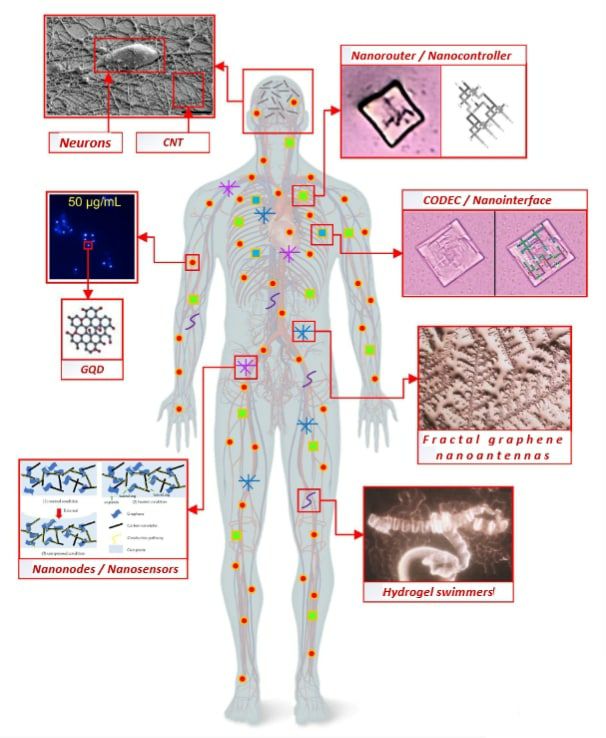
Intra-Body Nano-Network
The repeated "Con-Vid19"💉 &so-called boosters serve2smuggle hardware&software in2the human body over time.Self-assembling graphene-based microfibersRslowly forming in2a kind of bio-motherboard.5G technology makes it possible2program software in the body
11
119
170
25,407
tttaaa retweeted

21h
Burp Suite Professional costs 475 dollars a year per seat.
A senior software engineer in Amsterdam built the open source replacement as a side project. He put it on GitHub for free. It has 10,569 stars.
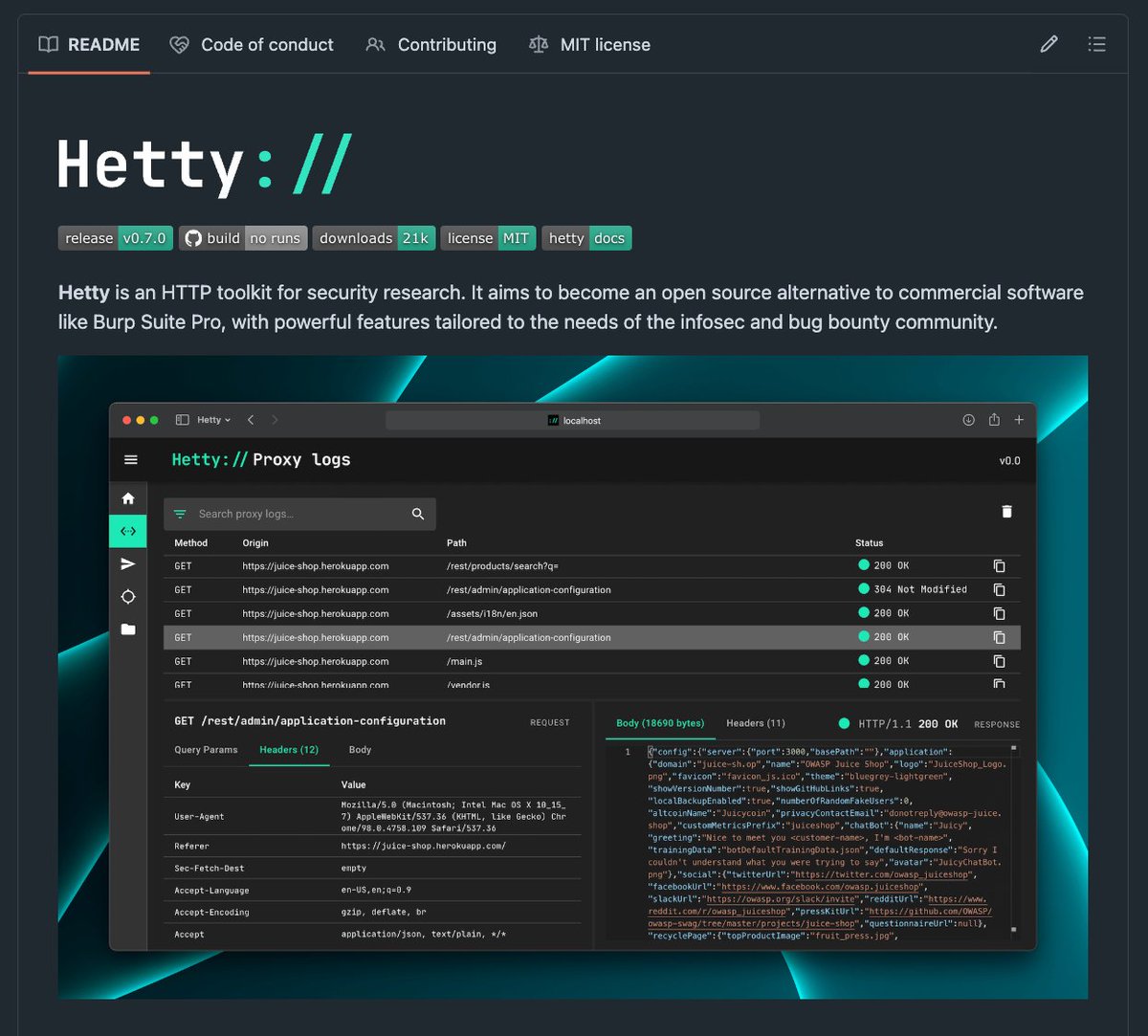
His name is David Stotijn. The software is Hetty.
Here is what Hetty is.
An HTTP toolkit for security research. A machine-in-the-middle proxy that sits between your browser and the target. Every request and every response flows through Hetty. You can read them, search them, intercept them, edit them, replay them, and send them again.
This is the core loop of every web application security test ever performed. Burp Suite charges 475 dollars a year for it. Hetty does the same job for zero.
Here is the feature set.
A machine-in-the-middle HTTP proxy with full logs and advanced search. An HTTP client for manually creating and editing requests, and replaying any request you already proxied. Request and response interception for manual review, with full edit, send, receive, and cancel control. Scope support to keep your work organized to a single target. A web-based admin interface that runs in your browser. Project-based database storage so multiple engagements stay separate. A GraphQL service for programmatic access.
The installer is a single Go binary. Works on macOS, Linux, and Windows. No Java runtime, no enterprise license server, no machine fingerprinting, no telemetry.
Here is the price ladder.
Burp Suite Professional: 475 dollars a year per seat.
Burp Suite Enterprise: thousands per year, contact sales for a quote.
Burp Suite Community Edition: free, but throttled, no scanner, no project save, no intruder rate.
OWASP ZAP: free and open source, now owned by Checkmarx after a 2024 acquisition.
Hetty: zero. Forever. One binary. No account.
A pentester working full time pays Burp 475 dollars a year. A team of 10 pentesters pays 4,750 dollars a year. A bug bounty hunter who finds one vulnerability has already paid for Burp twice over.
Or they download a 30 MB Go binary written by a freelancer in Amsterdam and keep every dollar they earn.
David has not pushed a new commit in 16 months. The last commit was January 13, 2025. That is normal for a tool that is feature-complete. HTTP has not changed. The proxy still proxies. The intercept still intercepts. MIT licensed code does not expire when the maintainer takes a break.
Buy a domain. Find a bug. Cash a bounty.
PortSwigger took a free industry tool and put it behind a 475 dollar paywall. A freelancer in Amsterdam gave it back. On every platform. For zero dollars.
Your proxy. Your binary. Your bounties.
(Link in the comments)
22
163
997
56,926