

Jun 14
#PrisonPenPal #PenPal #DoingTime #LockedUp #WriteMe #Hmu #GettingOut #Emessageing #PrisonText #OhioPrison #Incarcerated #Friendships #Looking4Bond #BuildWithU ##SpecialBond #Communication
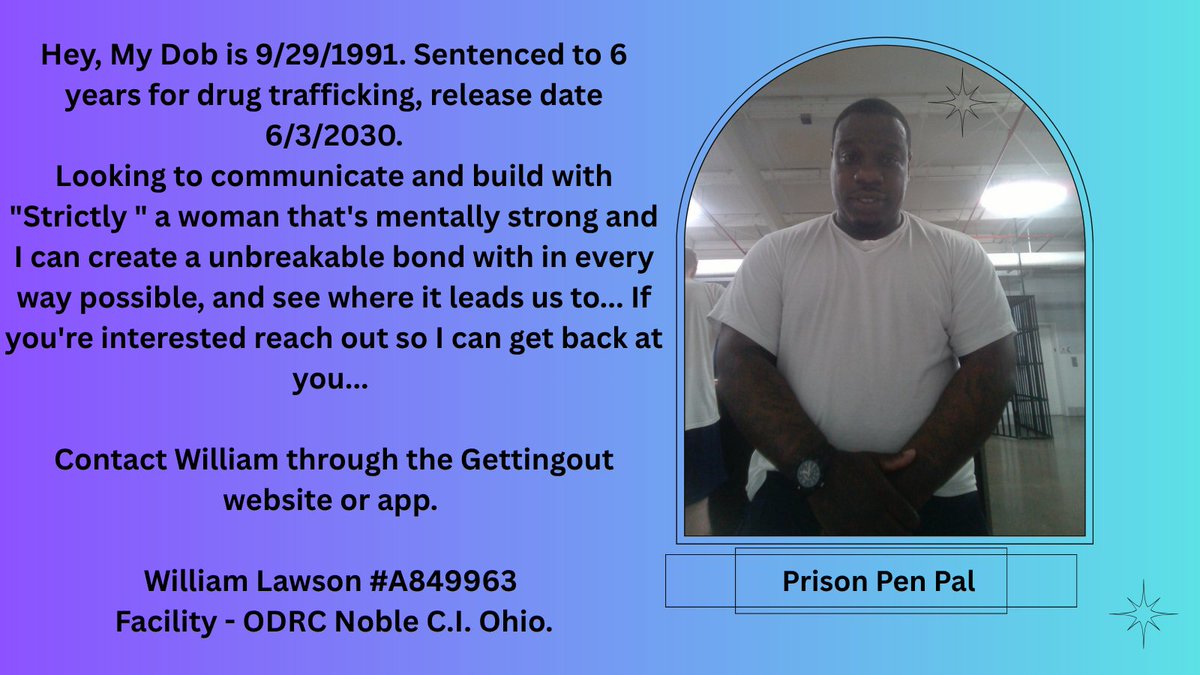
ALT Looking to create a bod witha woman
28

I must say yoursoul has a fragrancethat ever lasts andnever can bemimicked and theirony is you haveto beme to getit's signature and the otherway is gettingout ofthis sim and being the observer of your primes to your current placebo version ..haha a fragrance that self cant smell
5
Jun 12
Part 1: Armone Kinney #A857578 Facility - ODRC Noble C.I. Ohio USA. Contact through GettingOut .Com #PrisonPenPal #VideoGram #PrisonVideo #OhioPrison #PenPal #Vibe #Real #lockedUp #Incarcerated #InmateVideo #Hmu #WriteMe #GetWitMe
38
Jun 12
Part 2: Armone Kinney #A857578 Facility - ODRC Noble C.I Ohio USA. Contact on GettingOut .com #PrisonPenPal #Part2 #VideoGram #PenPal #incarcerated #LockedUp #GetWitMe #WriteMe #Hmu #InmateVideo #Vibe #WantsReal #DontJudge
152


May 4
YAYYYYYY!! they are sooo cute-- glad they are gettingout there
1
3
20

Apr 19
I left when he had a doctor appointment. I put things that I could in garbage bags. My kids toys in a box , stuffed everything in my car. He put a gun to my head the night before cause I took too long at my mom's. Gettingout was terrifying, I kept thinking he was on his way back.
2
139

I AM BUT PLEASE JUST GO TO THE KAISER ITS GETTINGOUT OF HAND
1
2
36
Mar 17
Still open to receiving #Donations and #Reshares for my #Gofundme #Campaign #AnythingHelps #DomisticAbuse #Surivor #GettingOut #HelpNeeded gofund.me/3be48feeb
9
5
10
243

AIAYAHAAUYAGAYAH WAIT THAT WAS TODAY I FORGOT IM SO SORRY GUITA IM GETTINGOUT OF BED RNNNNN
1
2
16


Feb 14
gettingout of 12 hoursof vc to find out they made akito mention mita kotaro out of all pjsk characters in his bitchass valentines quote i genuinely hope someone gets fired today
1
1
3
251

Feb 7
@Sen_Adedotun and @EdetRichy have already said most of what needs to be said, so I’ll just add this bit.
Contracts aren’t just formalities, they’re reference points for a reason. If your contract doesn’t include an option for payment in lieu of notice, and you went ahead to sign it anyway, then that agreement is binding. Simple.
In many cases, that omission isn’t accidental. Companies usually think through things like succession planning, cost exposure, operational disruption, or what it would mean for the business if someone leaves abruptly. Any of those could be why the payment in lieu option wasn’t included in the first place.
That’s also why negotiations matters, before you sign. If payment in lieu was important, that was the time to push for it. Once the contract is signed, the terms are no longer flexible by default.
Now, how do you move forward without things gettingout of hand?
Strategic and diplomatic negotiation.
Yes, practically speaking, a company may not be able to physically stop you from leaving. But the law still applies. And things like reference checks or background verifications can quietly influence whether you get the next opportunity or not.
So while the door may be open to exit, how you exit, and whether you breach agreed terms, can follow you longer than you expet.
Thanks.
Feb 7

Let's look at this scenario
Let's say you get a job, sweet pay, and all that. But they want you to resume immediately.
Meanwhile at your current job you have signed in your contract that you will give them 4 weeks notice before you leave. And there is no payment in lieu of notice.
How best can one handle the situation without burning bridges?
@Sen_Adedotun kindly share your opinion and possibly help us pull some of your HR mutuals on this.
2
7
1,606

Jan 8
I would have knocked her teeth out for sure these little internet gangsters are really gettingout of fucking control
1
36

Jan 5
super favs that are cats thread bcs this is gettingout of hand 🧵🧵🧵🧵🧵🧵🧵🧶🧶🧵🧵🧵🧵🧶🐈 will add more if i remebrr them later
6
6
268


30 Dec 2025
@VenkeyReacts these are gettingout of hand 🤣🤣🤣
1
6
3,146

8 Dec 2025
She has a point. Mondays suck. Not off 2 people suck but definitely pull up the covers and say eff this, I'm not gettingout of bed.
2
10

9 Nov 2025
Be fun to have a TPUSA awards where the organization can recognize the patriots that are working so hard within TPUSA on the ground gettingout the vote! You may already do this, and if not the enthusiasm generated from this would be infectious!
1
1
4
213