
GitLab Patches 11 Flaws Including 3 High-Severity CVEs
thecybrdef.com/gitlab-patche…
#GitLabSecurity #CVE #CyberSecurity
35
Zoom and GitLab issued security patches fixing critical flaws including remote code execution in Zoom Node Multimedia Routers, and DoS plus 2FA bypass vulnerabilities in GitLab Community and Enterprise editions. #ZoomNodeMMR #GitLabSecurity #USA
ift.tt/KLVC3G6
101

GitLab has released critical security updates addressing a high-severity two-factor authentication (2FA) bypass vulnerability, CVE-2026-0723, in its Community and Enterprise editions. This flaw allows attackers who obtain a user’s username and password to bypass 2FA protections by submitting forged device responses during login. The vulnerability is part of five total fixes, three of which are classified as high severity. If exploited, it could enable full account takeover, enabling adversaries to access, modify, or delete sensitive code repositories. GitLab warns that compromised code in developer accounts could lead to supply chain attacks, as seen in the Shai-Hulud worm incident, where a hacked npm account facilitated malware distribution. Attackers might also access cloud secrets stored in repositories, granting further access to infrastructure platforms like AWS or Azure.
The 2FA bypass highlights a critical limitation in authentication systems: while multifactor authentication adds a verification layer, it is not inherently infallible. Experts emphasize that 2FA mitigates risks like brute-force attacks but cannot fully prevent breaches if credentials are stolen through phishing or social engineering. For instance, session hijacking techniques—where attackers steal active session cookies—can bypass 2FA entirely without needing to forge device responses. Even advanced solutions like hardware tokens (e.g., YubiKeys) are not immune to flaws, as they are designed for human interaction and may introduce vulnerabilities over time. The incident underscores the importance of combining 2FA with additional safeguards, such as monitoring for suspicious login activity, enforcing strict access controls, and educating users about phishing threats. Organizations must also recognize that security is a layered effort; no single control can fully eliminate risk.
The broader lesson here is that authentication systems must evolve alongside attacker tactics. Two-factor authentication remains a foundational security measure, but its effectiveness depends on implementation quality and complementary strategies. For example, adaptive authentication systems can analyze login patterns (e.g., location, device, time) to flag anomalies, while multi-factor authentication (MFA) adds multiple verification steps. However, these measures do not eliminate the need for user vigilance or infrastructure hardening. The GitLab vulnerability serves as a reminder that even well-regarded security controls require continuous evaluation and updates. Developers and administrators should prioritize patching known vulnerabilities promptly and adopt a zero-trust architecture to minimize the impact of potential breaches.
csoonline.com/article/412031…
#GitLabSecurity #2FABypass #CVE20260723 #CyberSecurity #SupplyChainAttack
#CVE20260723 #CVE202513927 #CVE202513928 #CVE202513335 #GitLabSecurity
71

29 Nov 2025
GitLab leaks revealed 17000 live secrets tied to real cloud systems and the risk feels sharp. jenisystems.com/gitlab-publi…
#GitLabSecurity #SecretScanning #CyberRisk

35

13 Nov 2025
🚨 9 GITLAB FLAWS: Prompt injection, XSS & data theft! CVE-2025-6945 (3.5) leaks issues via AI. High risk XSS CVE-2025-11224 (7.7).
⚠️ Details: cyberpress.org/multiple-gitl…
@GitLab @TheHackersNews @SwiftOnSecurity #GitLab #CVE20256945 #ZeroDay #CyberSecurity #GitLab #CVE20256945 #PromptInjection #ZeroDay #CyberSecurity #InfoSec #Vulnerability #XSS #Hacking #PatchNow #DevSecOps #AI #CriticalVuln #ThreatIntel #DataTheft #Exploit #NetSec #GitLabSecurity #SecurityAlert #AccessControl
1
97

4 Nov 2025
New Post: gitlab-runner-research – PoC for abusing self-hosted GitLab runners
PoC scripts demonstrating abuse of self-hosted GitLab runners and practical hardening and detection guidance.
darknet.org.uk/2025/11/gitla…
#gitlab #gitlabsecurity #gitlabrunners #gitlabrunnersecurity
1
256

24 Jul 2025
GitLab patched multiple high-severity XSS and data exposure vulnerabilities in CE/EE, urging users to update to 18.2.1, 18.1.3, or 18.0.5.
#GitLabSecurity #XSS #DataLeak #CybersecurityAlert #PatchNow
securityonline.info/gitlab-u…
310
10 Jul 2025
GitLab releases urgent security updates to fix critical vulnerabilities, including an 8.7 CVSS score XSS flaw. Update your instances now to prevent attacks.
#GitLabSecurity
securityonline.info/gitlab-r…
1
4
470

19 May 2025
The Pakistan Telecommunication Authority (PTA) has flagged multiple high-risk vulnerabilities in GitLab Community and Enterprise Editions, affecting versions from 8.0 to those prior to 17.4.2.
#GitLabSecurity #PTAAlert #CybersecurityPakistan #DevOpsSecurity #Infosec

104

6 Mar 2025
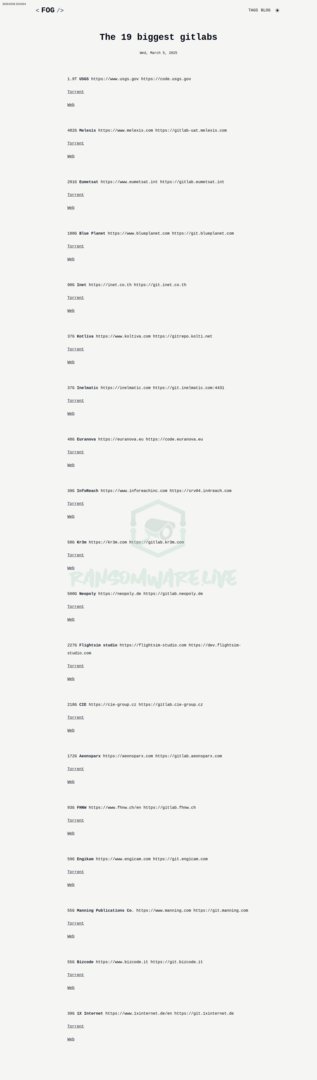
Ransom alert for the 19 biggest GitLabs! A major incident exposed significant vulnerabilities affecting key companies on the platform. Stay informed on this evolving situation. 🛡️🚨 #GitLabSecurity #Ransomware #Estonia
link: ift.tt/2qwOhaX
1
68
8 Dec 2024
Exploring GitLab vulnerabilities can lead to valuable insights for ethical hackers. Misconfigured CI/CD tools pose risks; learn from $5K bug bounties! Check out CI/CD Goat for more. 🔍💻 #GitLabSecurity #DevSecCon #CICDInsights #Youtube
link: ift.tt/BCX0Tw9
7

🚨 CVE-2024-6826: Critical vuln in GitLab CE/EE up to 17.5.0. XML manifest file handler flaw allows resource allocation. Upgrade GitLab immediately to mitigate risks. #CyberSecurity #GitLabSecurity
65

13 Oct 2024
2/7 This critical @GitLab flaw (#CVSS96 !) could let attackers compromise your projects. 🚨 Don't become a victim! Update to the latest version ASAP for protection. #SecurityUpdate #PatchNow #GitLabSecurity
5
22 Sep 2024
1/6 🚨 Critical GitLab Security Alert! CVE-2024-45409 allows attackers to bypass SAML authentication. Update now to versions 17.3.3, 17.2.7, etc. #GitLabSecurity #CyberSecurityAlert 🔒
73
🚨 CVE-2024-8640: Critical vuln in GitLab Enterprise Edition up to 17.3.1. Remote command injection via Cube Server Handler. Upgrade GitLab immediately to mitigate risks. Patch now to protect your systems and data! #CyberSecurity #GitLabSecurity
82
🚨 CVE-2024-4660: GitLab Enterprise up to 17.3.1 vulnerable to missing authorization in Private Project Handler. Risk: Unauthorized access to private projects. Upgrade GitLab immediately to mitigate threat. #InfoSec #GitLabSecurity
1
1
47
🚨 CVE-2024-2191: Critical vuln in GitLab CE/EE up to 16.11.4/17.0.2/17.1.0. Improper access controls in Merge Request Handler. Impact: Unauthorized access. Action: Upgrade affected versions immediately. #InfoSec #GitLabSecurity
2
115
🚨 Critical vuln in GitLab up to 16.11.4/17.0.2/17.1.0 (CVE-2024-4557). Banzai Pipeline flaw leads to resource consumption. Upgrade GitLab immediately to mitigate risks. #InfoSec #GitLabSecurity
97

"Secure your code & infrastructure: Uncover GitLab's vulnerabilities, strengthen defenses against cyber threats.#GitLabSecurity #CyberDefense"#CyberSec #InfoSec #SecureTech #dataprotection #OnlineSafety
contact us:-9004527361
website:-www.careertechnology.co.in
@msanjeet2u
28

11 Mar 2024
GitLab users beware! A critical vulnerability (CVE-2024-0199) bypasses approval checks, potentially exposing financial data or code. Upgrade to GitLab versions 16.9.2, 16.8.4, or 16.7.7 immediately to patch the hole.
#GitLabSecurity #CVE #vulnerability #securitypatch

4
205