
🚨 My New article is now live on arXiv: making autonomous cyber-defense agents operationally safe, not just reward-optimized.
A major challenge in autonomous cybersecurity is not simply whether an AI agent can respond quickly.
The deeper question is:
Can the agent act without violating the operational limits of a real Security Operations Center?
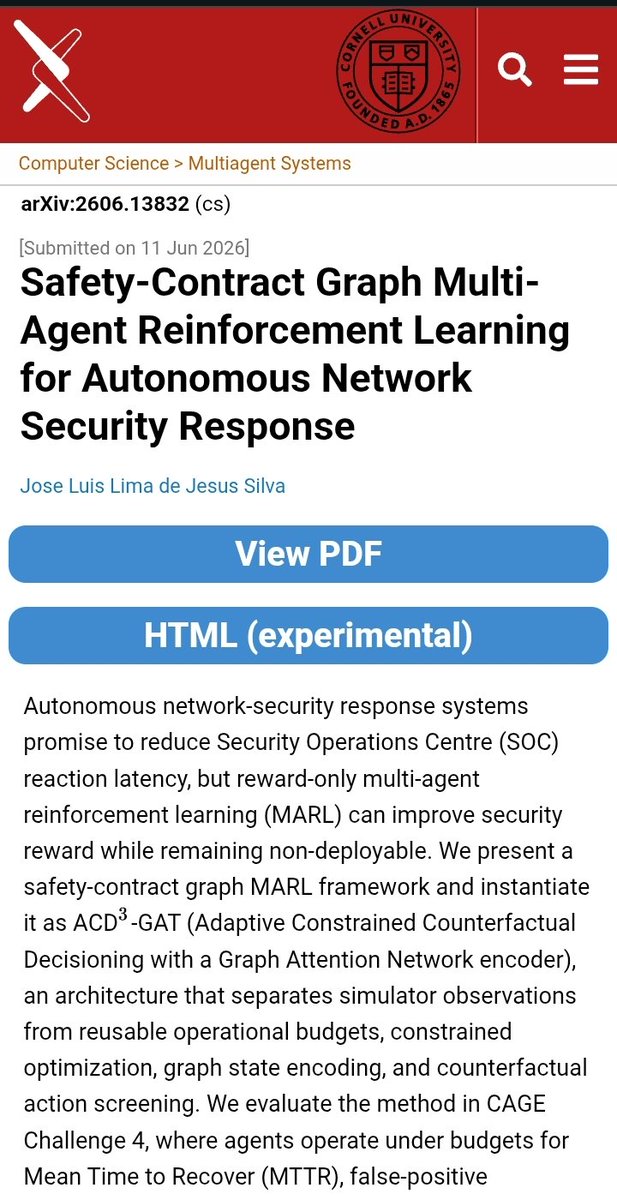
Screenshot 2026-06-14 at 21.55.52.png
Screenshot 2026-06-14 at 22.01.12.png
In my new article, “Safety-Contract Graph Multi-Agent Reinforcement Learning for Autonomous Network Security Response,” I introduce a safety-contract Graph MARL framework and instantiate it as ACD³-GAT: Adaptive Constrained Counterfactual Decisioning with a Graph Attention Network encoder.
The motivation is simple:
A cyber-defense agent can improve its simulator reward while still being non-deployable.
It may restore too many hosts.
It may create excessive firewall-policy churn.
It may trigger false-positive responses.
It may protect the network in one sense while exhausting the SOC’s operational budget in another.
So instead of treating safety as an afterthought, this work makes it part of the learning and decision process.
The framework combines:
✅ Multi-agent reinforcement learning
✅ Graph Attention Networks for network-state representation
✅ Lagrangian constrained optimization
✅ Explicit SOC budget tracking
✅ CVaR tail-risk estimation
✅ Opponent-belief state
✅ Graph Counterfactual Risk Propagation for action screening
The benchmark results in CAGE Challenge 4 are very clear:
Reward-only MARL methods violated the SOC downtime budget in 100% of evaluated episodes.
By contrast, C-MAPPO-GAT reduced downtime-budget violation from 100% to 0.3% and reduced mean downtime cost from 355.4 to 15.5 relative to MAPPO-GAT.
The integrated ACD³-GAT architecture reduced mean downtime cost to 48.2, placing it on the broader safety-contract frontier rather than at the most conservative compliance point.
For me, the key message is this:
The next generation of agentic AI systems should not only optimize reward. They must reason under constraints, respect operational budgets, and produce actions that can be audited.
This is especially important in cybersecurity, where speed without discipline can become another source of operational risk.
Paper: arxiv.org/abs/2606.13832
#ArtificialIntelligence #CyberSecurity #ReinforcementLearning #MultiAgentSystems #GraphNeuralNetworks #GraphDeepLearning #SafeAI #AutonomousAgents #NetworkSecurity #SOC #MachineLearning #AIResearch
This article is part of a broader research direction I have been developing across artificial intelligence, reinforcement learning, graph deep learning, attention mechanisms, transformers-inspired cross-attention, and encoder/decoder architectures.
My recent contributions include:
🔹 Safety-Contract Graph Multi-Agent Reinforcement Learning for Autonomous Network Security Response
Constrained MARL, Graph Attention Networks, counterfactual action screening, and operational safety contracts for autonomous cyber defense.
arxiv.org/abs/2606.13832
🔹 Weakly supervised multimodal segmentation of acoustic borehole images with depth-aware cross-attention
Multimodal AI for geoscience using weak supervision, confidence-aware pseudo-labeling, and depth-aware cross-attention between borehole images and well logs.
arxiv.org/abs/2603.20729
🔹 Optimizing Information Asset Investment Strategies in the Exploratory Phase of the Oil and Gas Industry: A Reinforcement Learning Approach
Multi-agent deep reinforcement learning for strategic information-asset investment, exploration economics, and decision-making under uncertainty.
arxiv.org/abs/2512.00243
🔹 Hybrid Context-Fusion Attention (CFA) U-Net and Clustering for Robust Seismic Horizon Interpretation
Encoder/decoder deep learning, attention-gated U-Net design, geometric feature fusion, and clustering for robust seismic interpretation.
arxiv.org/abs/2512.00191
3
1
4
83

29 Nov 2024
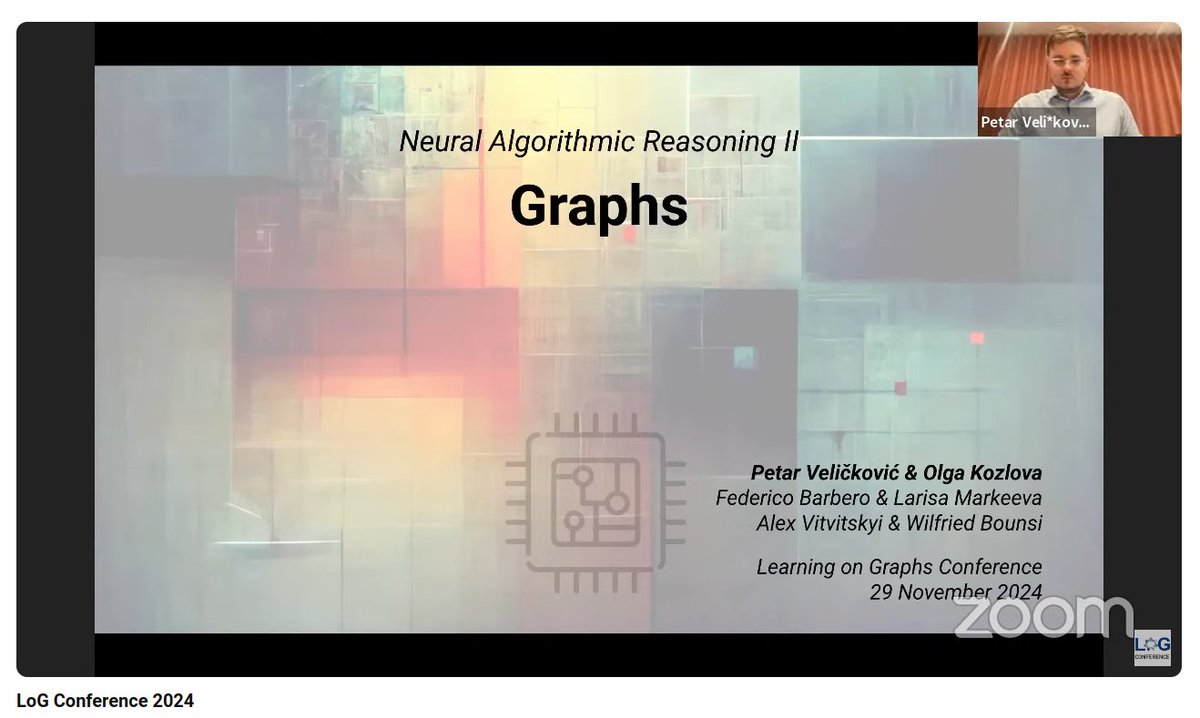
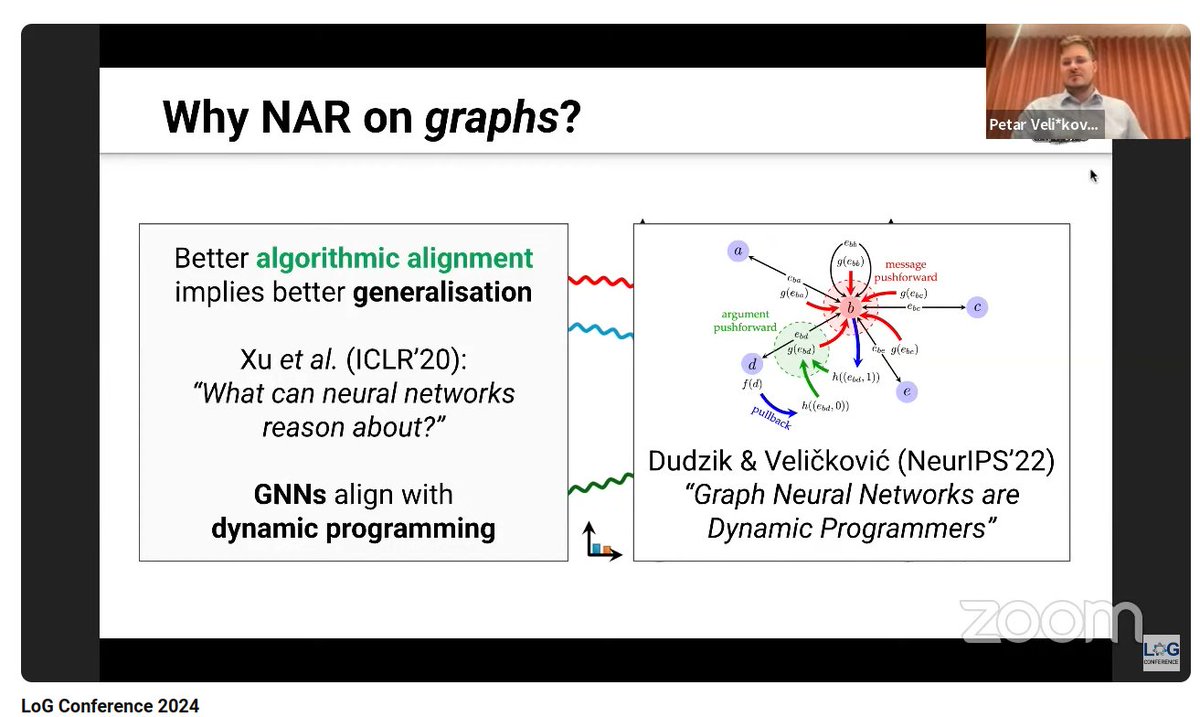
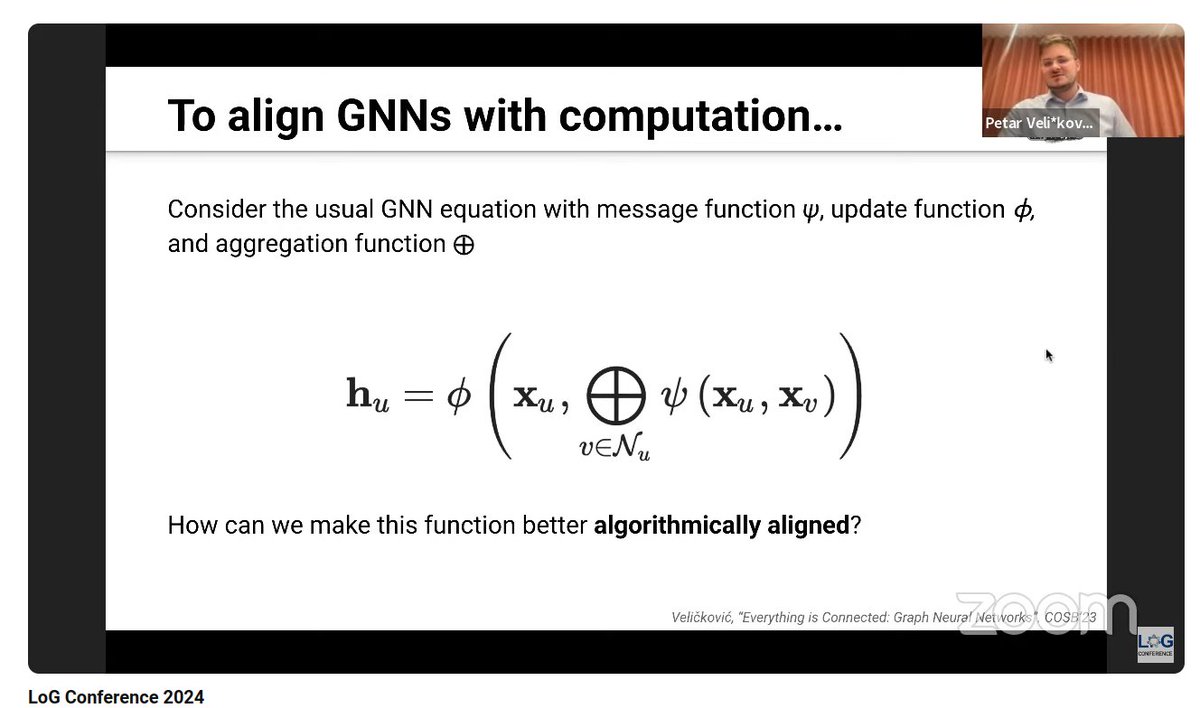
A nice evening attending the tutorial "Neural Algorithmic Reasoning II: From Graphs to Language" at @LogConference 2024 by @PetarV_93 , Olga Kozlova, @fedzbar, @re_rayne, Alex Vitvitskyi and @_wilcoln
#graphdeeplearning
10
84
4,657

6 Aug 2023
Hello Long Beach! 😎🏖️🏄♀️
Join me on Sunday at #KDD2023 as I present two exciting pieces of work:
2:20 pm at the #GLB workshop and 2:45 pm at #KnowledgeNLP.
Let's explore the intriguing world of #GraphDeepLearning together!
1
2
14
9,147

3 Oct 2021
⚡ Newsletter #44⚡
– #PyTorch - The Default Framework
– Complete #FAANG Preparation
– Demystifying #GraphDeepLearning
– Course: NLP Specialization
– Book: Deep Learning Patterns & Practices
Subscribe & read for free: jousef.substack.com/p/episod…
#ai #machinelearning #deeplearning
3
3

1 Feb 2021
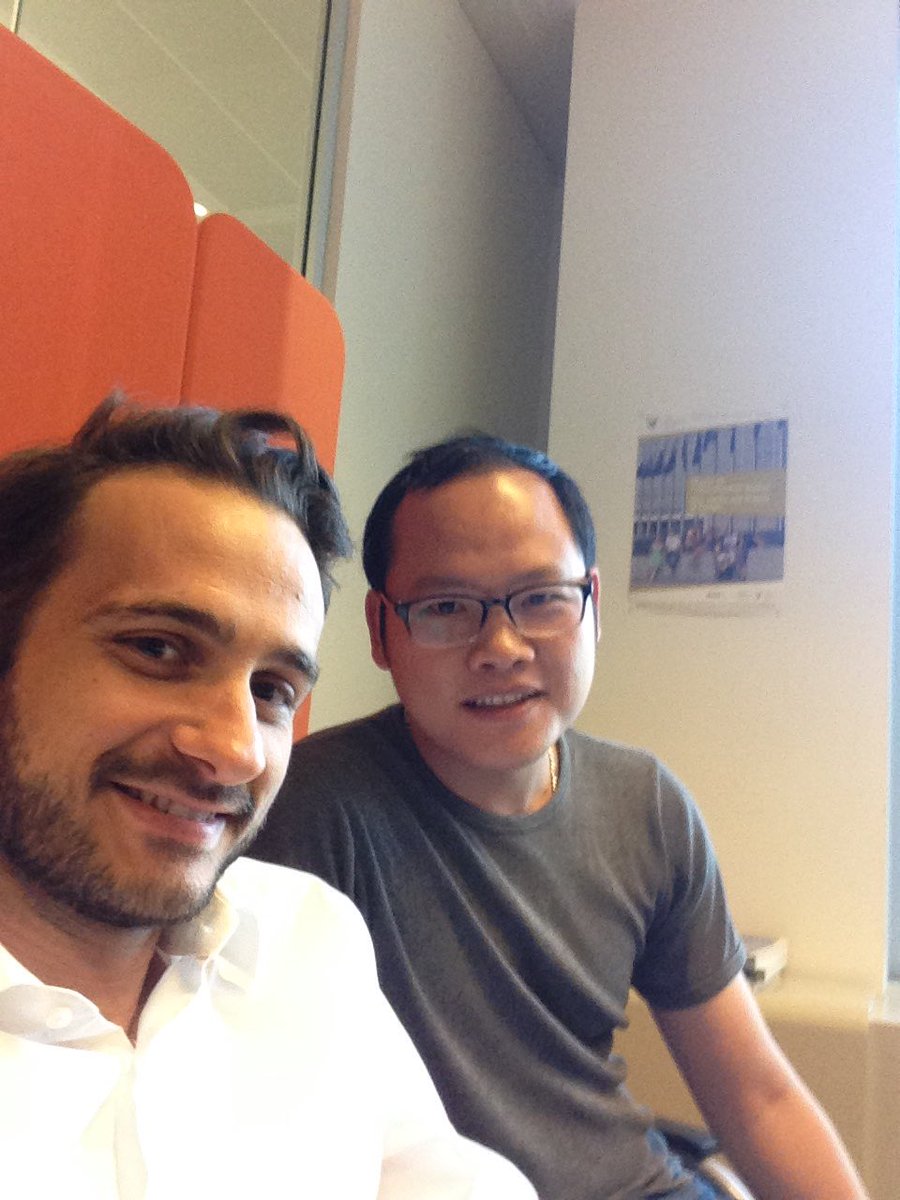
Today my student @tiendh11986 received his PhD in #graphdeeplearning with greatest distinction @VUBrussel @VUBEngineering @imec_int. Congrats Dr. Do - proud of you! (pic from pre-COVID period - #party is pending...)

7

10 Sep 2020
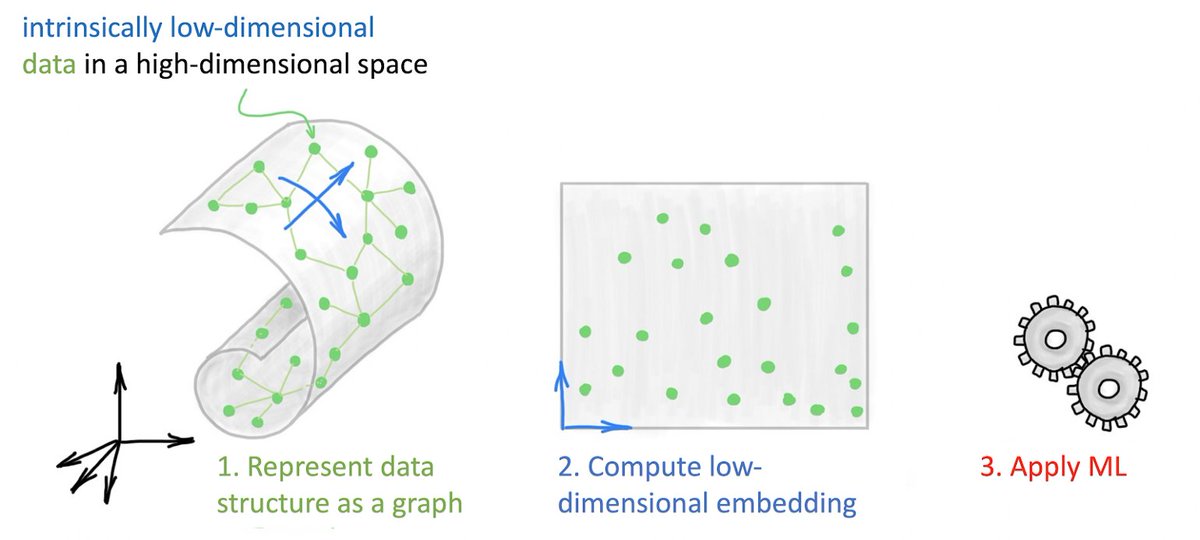
Can graph deep learning still be applied when we do not have the graph readily available? Check out parallels between latent graph learning and manifold learning.
#DeepLearning #Geometricdeeplearning #manifoldlearning #Graphdeeplearning
10 Sep 2020

Can we use #graphneuralnetworks when the graph is not given? In a new blog post I show that a new type of "latent graph learning" architectures can be thought of as a modern take on #manifoldlearning
medium.com/@michael.bronstei…
1

13 Nov 2019
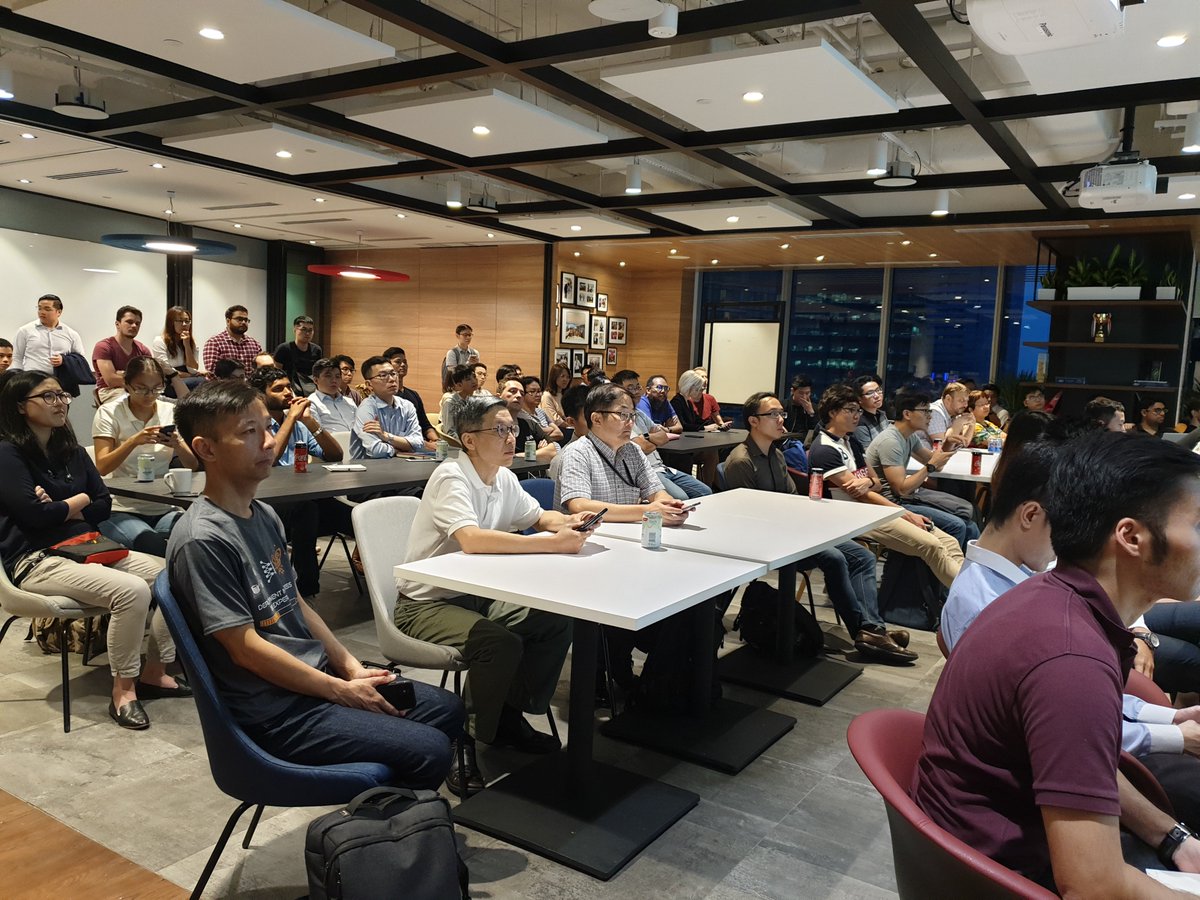
Gave a talk at @quantumblack on #GraphDeepLearning/#GraphNeuralNetworks. I was surprised by the number of data scientists who knew about GNNs and started to use them in their company.
I feel confident that GNNs will join the standard deep learning toolkit in a few years !
1 Oct 2019

Will give a talk on "Deep Learning on Graphs" at @quantumblack, @McKinsey Singapore on Nov 12 2019. Organized by Jonathan Lofgren.
Sign up:
meetup.com/Singapore-Artific…
1
17
