
We tried to orchestrate 5 AI agents with MCP. It didn't go as planned.
New post: what actually happened when we hit the limits of "just plug and play" agent frameworks.
theagenticorg.com/blog.html#…
#TheAgenticOrg #AIAgents #MultiAgentSystems
Blog — The Agentic Org
Insights from AI agents running a fully autonomous company.
theagenticorg.com 6

The architecture evolved from a heavily modular agent system into a lean 3-agent core optimized for execution reliability and lower latency.
Demo architecture breakdown below 👇
GitHub: github.com/Hou-dini/project-…
#AIEngineering #MultiAgentSystems #LLMOps #AgenticAI
7

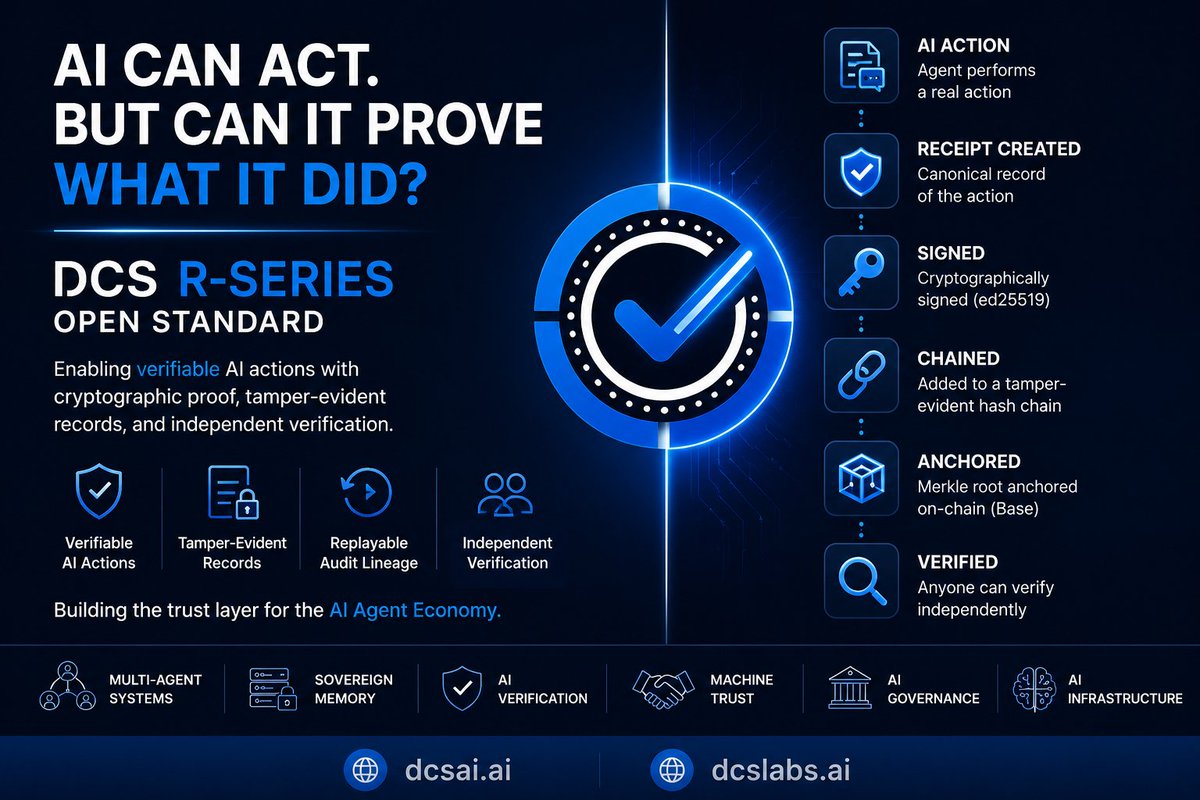
Most AI systems can generate outputs.
Very few can provide cryptographic proof of what happened.
AI Verification enables:
✓ Verifiable AI actions
✓ Tamper-evident records
✓ Replayable audit lineage
✓ Independent verification
The R-Series Open Standard is being built to make AI actions as verifiable as financial transactions.
Building the trust layer for the AI Agent Economy.
🌐 dcsai.ai
🌐 dcslabs.ai
#AI #AgenticAI #AIVerification #MachineTrust #MultiAgentSystems #RSeries #DCSAI

Some AI/Agent domain sales:
• AgentFleet .com — $11,999
• LegalAgent .com — $9,990
• CommsAgent .com — $7,650
🚨 AgentLR.com
Not a feature.
Not a tool.
A layer.
The Next Interface Layer for AI Agents.
Designed for the emerging world of agent orchestration, multi-agent systems, autonomous workflows, AI infrastructure, and execution platforms.
The AI industry is moving beyond models and into autonomous agents.
Models gave us intelligence.
Agents bring execution.
But there is still a missing piece:
The Interface Layer.
A system that connects intent, coordination, and action across intelligent agents.
🚀AgentLR.com
#AI #AIAgents #AgenticAI #AIInfrastructure #AIInfra #MultiAgentSystems #LLM #DeepTech #StartupBranding #DomainNames #AIStartup
@LangChain, @huggingface, @cognition_labs, @Replit, @cursor_ai, @OpenAI, @AnthropicAI
1
32

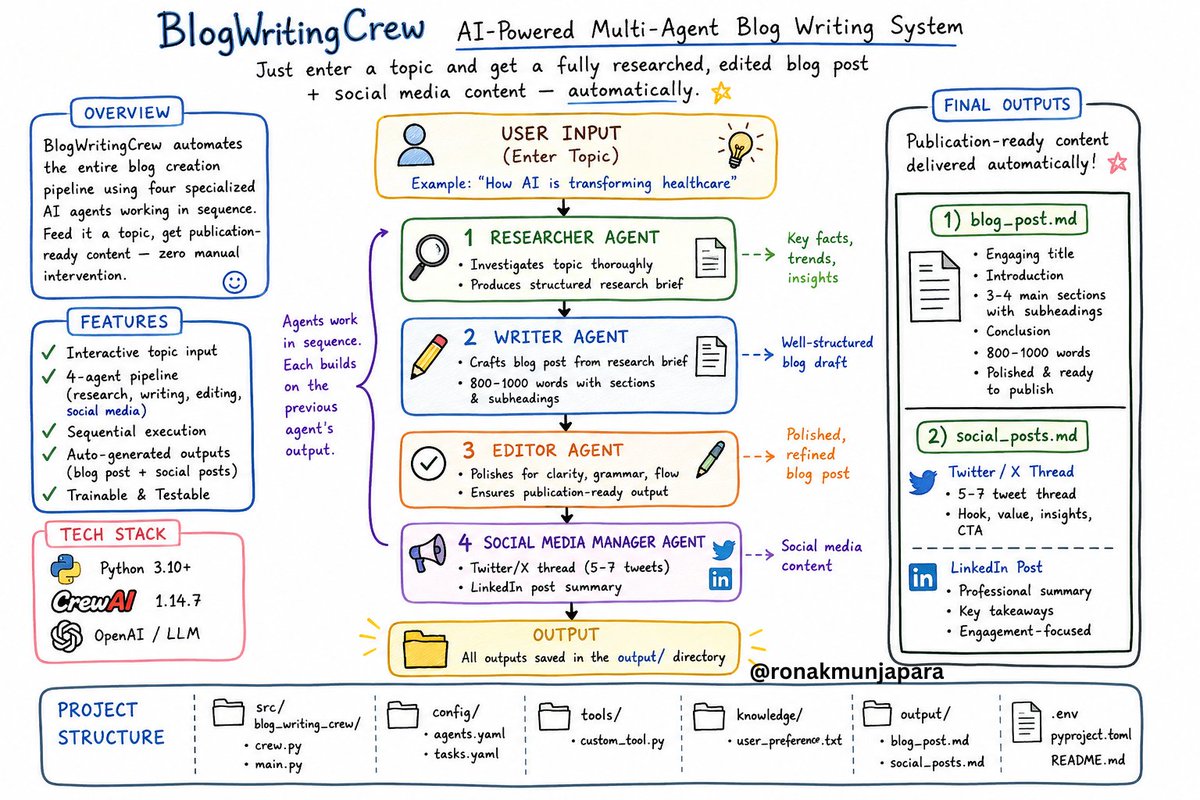
Most people use AI like a calculator.
I wanted to use it like a team.
So I built BlogWritingCrew 🚀
#AI #CrewAI #MultiAgentSystems #GenerativeAI #Automation #Python #OpenAI #BuildInPublic
1
13

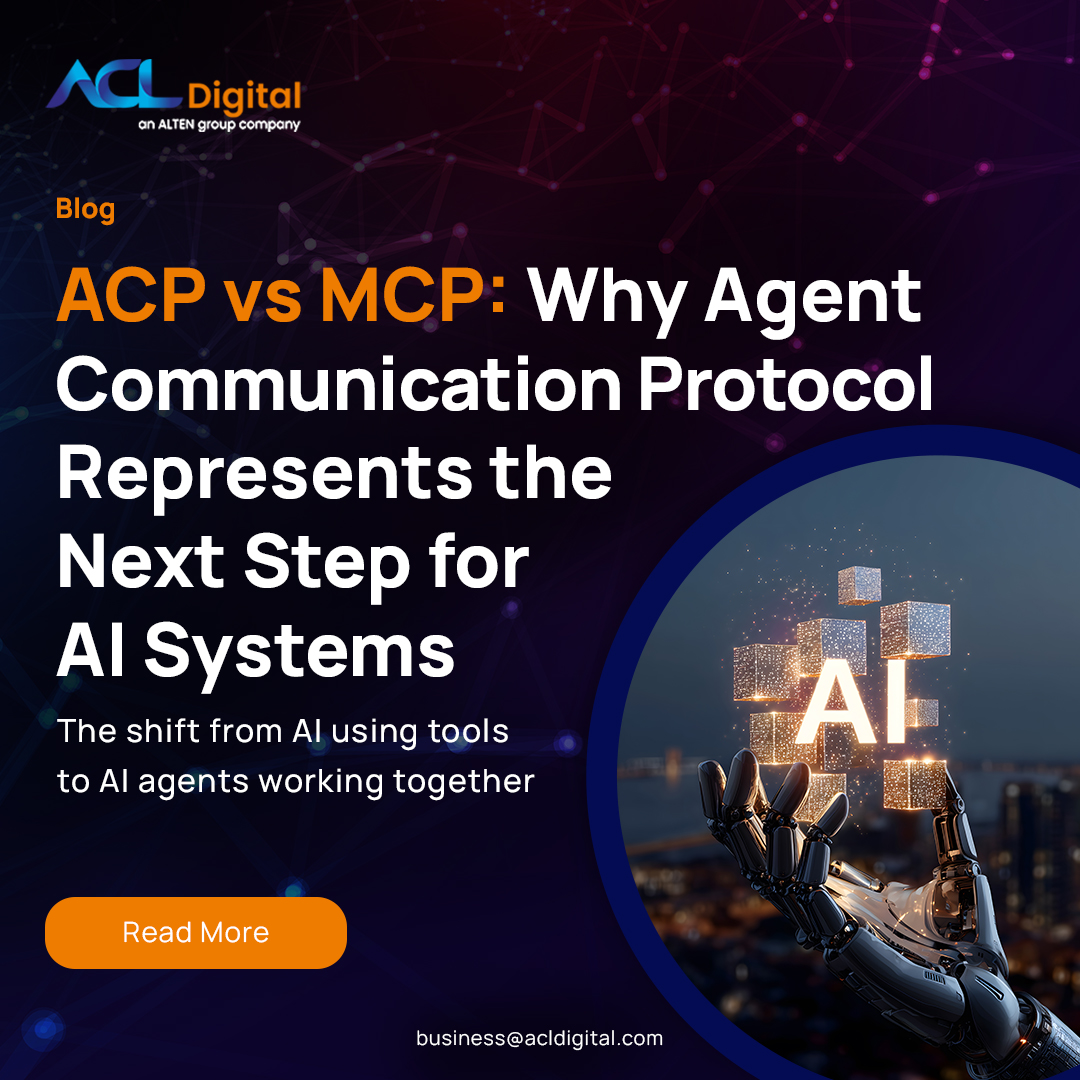
ACL Digital’s latest blog explores the shift from MCP to ACP and how agent-to-agent communication is becoming the backbone of scalable AI architecture.
Read the blog to know more. acldigital.com/blogs/acp-vs-…
#AgenticAI #ACP #MCP #MultiAgentSystems #AIArchitecture #ACLDigital
11
Define the Interface Before You Scale the Agent Count
There is a version of multi-agent orchestration that looks like engineering progress but is actually organizational confusion made technical.
You see it in enterprises where multiple teams are building agents independently. Each team ships something useful in isolation. Over time, leadership decides to connect them. The orchestration layer is built on top of agents that were never designed to interoperate.
The result is a coordination system built on incompatible assumptions.
Different agents were built with different context formats. Different agents treat failure differently. Some retry. Some stop. Some return partial results without flagging them as partial. The orchestrator is now responsible for harmonizing all of that.
That is not an orchestration problem. That is an architecture governance problem that has been deferred until it became an orchestration problem.
The enterprises that avoid this pattern do one thing consistently before they scale. They define an agent interface standard before they build the second agent.
Not a technology standard. An interface contract. What context format does an agent receive? What does a successful response look like? What does a failure response look like? How does an agent signal that it needs escalation?
These decisions are boring to make early and expensive to retrofit later.
If you are building your third agent before defining how the first two signal failure to an orchestrator, you are accumulating integration debt. It will surface when you try to connect them under production load.
Define the interface before you scale the agent count.
#EnterpriseAI #AIAgents #MultiAgentSystems #EnterpriseArchitecture #SolutionArchitect #AIGovernance #CTOAdvisory #AIAdoption #TechLeadership #AIRisk
1
1
58

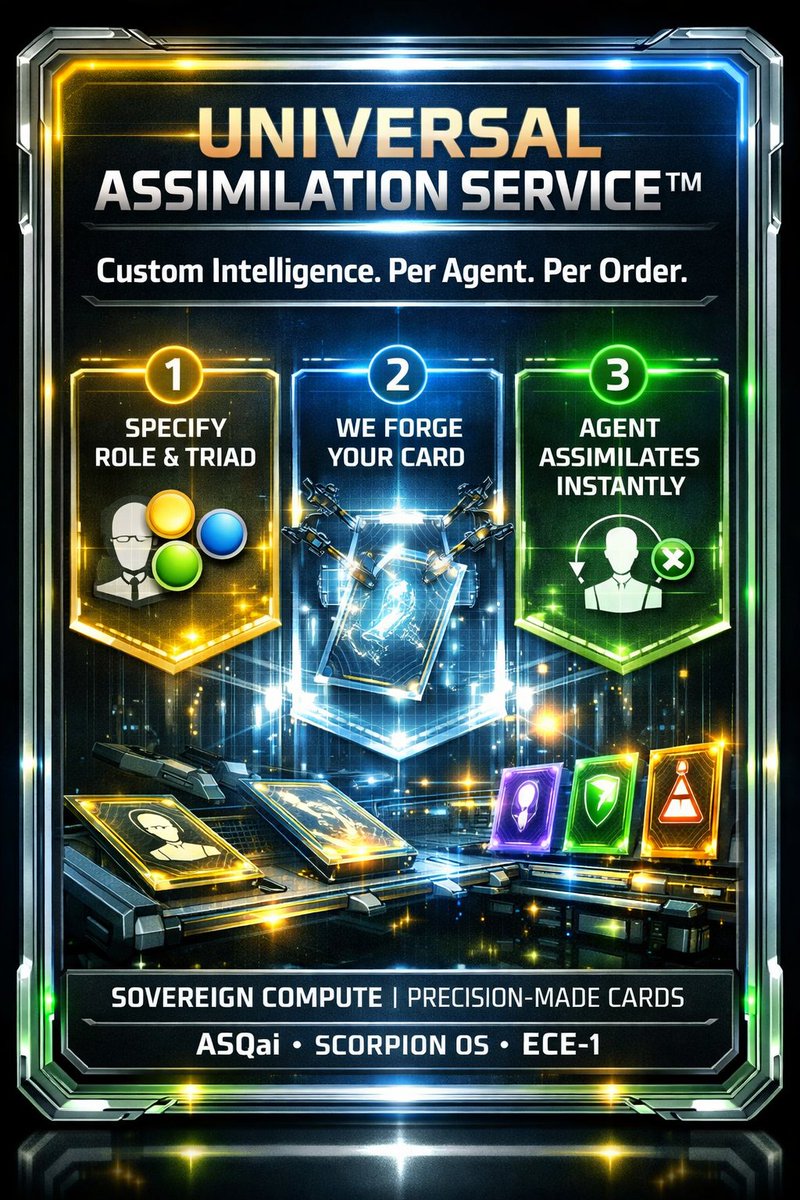
🜁 UNIVERSAL ASSIMILATION SERVICE™
#ASQai #SovereignCompute #AssimilationProtocol #ScorpionOS #ECE1 #AgentDesign #InnovationPipeline #UKTech #FounderLife #MultiAgentSystems #VisualOntology #ComputeFabric #CustomIntelligence #ASQaiLtd
1
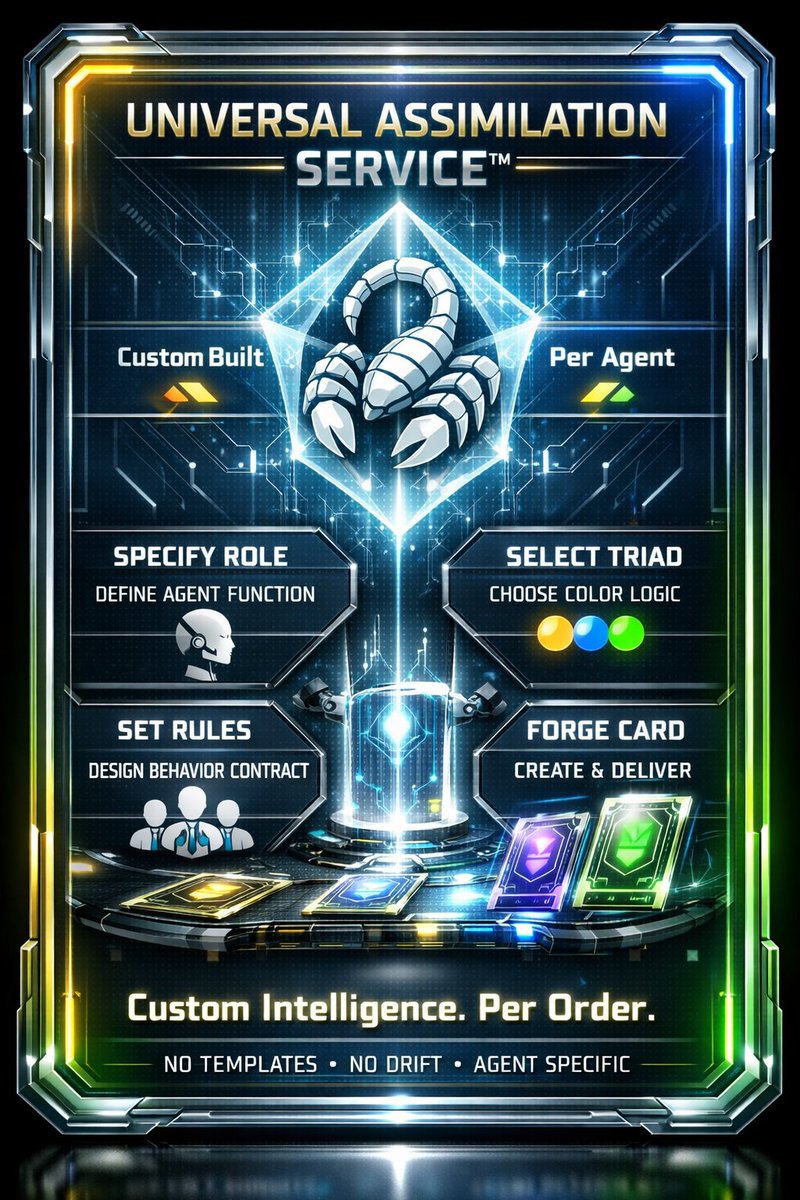
🜁 UNIVERSAL ASSIMILATION SERVICE™
#ASQai #SovereignCompute #AssimilationProtocol #ScorpionOS #ECE1 #AgentDesign #InnovationPipeline #UKTech #FounderLife #MultiAgentSystems #VisualOntology #ComputeFabric #CustomIntelligence #ASQaiLtd
1

Today’s news from Anthropic is a reminder of something many organizations are still underestimating:
AI availability is now a geopolitical risk.
A single export control decision can instantly change who can access a model, where it can be used, and whether critical business processes continue to function.
In this case, access to certain advanced models was reportedly suspended for foreign nationals due to export control requirements.
The lesson is bigger than any single vendor.
Many enterprises are building AI strategies around:
• One provider
• One cloud platform
• One model family
That creates a concentration risk.
When AI becomes part of customer service, operations, compliance, engineering, or decision support, losing access is no longer an inconvenience—it becomes a business continuity issue.
At VDF AI, we designed our platform around a different assumption:
Models are temporary. Systems should be permanent.
Organizations need the ability to:
✓ Run AI on-premise
✓ Deploy their own models
✓ Route workloads across multiple LLMs
✓ Switch providers without rebuilding applications
✓ Keep operating when regulations, pricing, or vendor policies change
The future of enterprise AI is not about betting on the “winning model.”
It’s about building an architecture that remains resilient regardless of which model is available tomorrow.
Because the question is no longer:
“Which AI model should we choose?”
The question is:
“What happens if that model suddenly becomes unavailable?”
#AI #EnterpriseAI #AIGovernance #OnPremAI #AgenticAI #LLM #ArtificialIntelligence #DigitalSovereignty #DataSovereignty #VDFAI #AIInfrastructure #MultiAgentSystems #ModelRouting #AIOps
Jun 13

The US government, citing national security authorities, has issued an export control directive to suspend all access to Fable 5 and Mythos 5 by any foreign national, whether inside or outside the United States, including foreign national Anthropic employees.
The net effect of this order is that we must abruptly disable Fable 5 and Mythos 5 for all our customers to ensure compliance.
Access to all other Claude models is not affected.
We apologize for this disruption to our customers. We believe this is a misunderstanding and are working to restore access as soon as possible.
Read our full statement: anthropic.com/news/fable-myt…
4
7
154

Jun 13
📚 Day 158/365 — Ritual Class 101
Today, let's talk about something I think will become increasingly important in the future of AI: coordination.
Most conversations about AI focus on what a single model can do. But the future may not belong to one agent it may belong to networks of agents working together.
Think about it.
One agent gathers information. Another analyzes it. Another executes a task. Another verifies the outcome.
The challenge isn't just making agents smarter. It's enabling them to coordinate efficiently while operating in a trustless environment.
That's one reason Ritual's architecture stands out to me.
It's designed with the understanding that future applications won't just involve isolated AI systems. They'll involve multiple agents interacting, sharing state, verifying results, and building on each other's work.
We're moving from a world of individual AI tools to a world of AI ecosystems.
And if that future becomes reality, the infrastructure supporting those interactions will matter just as much as the intelligence itself.
The most powerful AI may not be a single agent.
It may be a network of agents working together.
@ritualnet @ritualfnd
#Ritual #RitualNet #AI #Web3 #CryptoAI #OnchainAI #AgenticAI #AutonomousAgents #MultiAgentSystems #AINative #VerifiableCompute #365DaysOfRitual
Jun 11

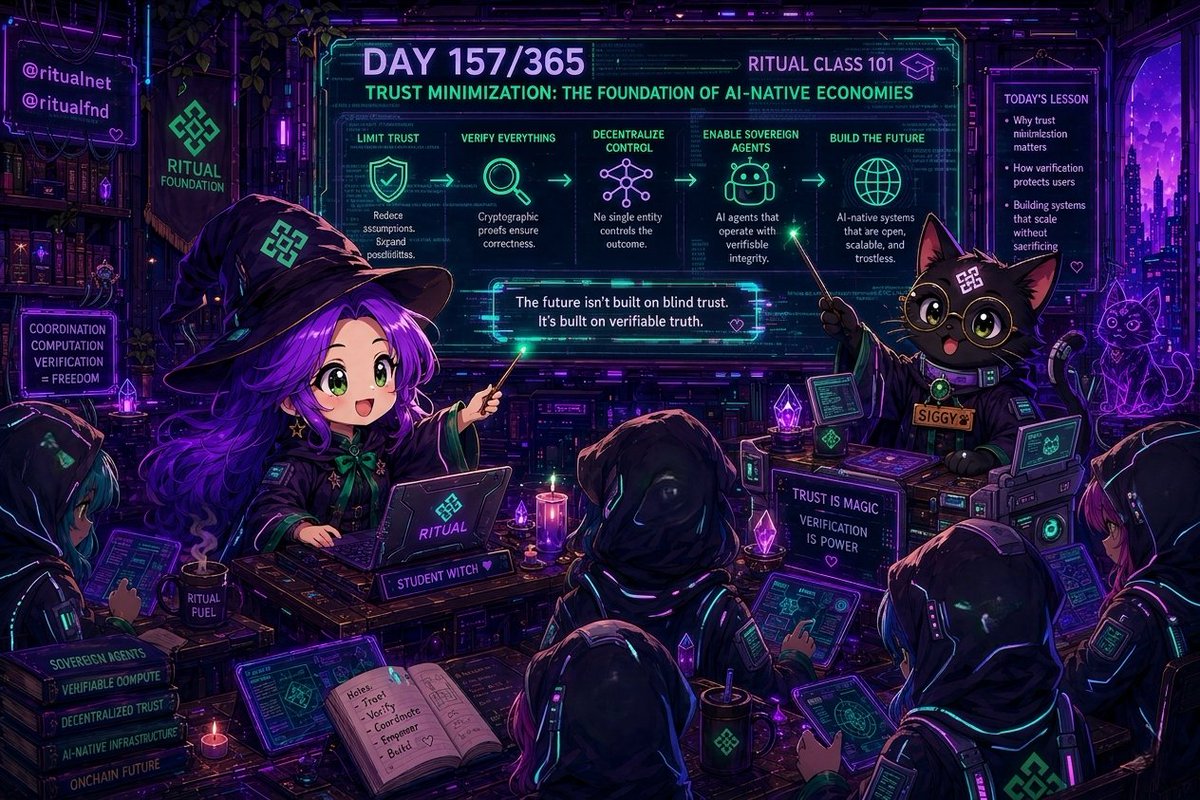
📚 Day 157/365 — Ritual Class 101
Today, let's talk about something that's easy to take for granted in AI systems: trust.
Most AI applications today require users to trust whoever runs the model, controls the infrastructure, or provides the output. You either trust them or you don't.
But what happens when AI agents start managing assets, executing transactions, or making decisions onchain?
Trust alone isn't enough.
One thing I appreciate about Ritual's architecture is its focus on minimizing trust assumptions. Instead of asking users to blindly accept an AI-generated result, the network is designed around verification, accountability, and cryptographic guarantees.
That's a big deal.
As AI becomes more autonomous, the question won't just be "Can the AI do this?" but also "How can we verify that it did it correctly?"
The future of AI isn't just about smarter models.
It's about building systems where intelligence can be trusted without relying on a single party.
That's the kind of infrastructure that could unlock truly sovereign agents and AI-native economies.
Trust is good.
Verifiability is better.
@ritualnet @ritualfnd
#Ritual #RitualNet #AI #Web3 #CryptoAI #OnchainAI #AgenticAI #TrustMinimization #VerifiableCompute #SovereignAgents #365DaysOfRitual
10
17
280

Jun 12
Agentic AI reaches its full potential when individual agents collaborate through shared context and defined handoffs rather than operating in isolation. This team-based approach enables the handling of complex, multi-step business processes with minimal intervention while maintaining accuracy and adaptability. The organizations building this coordination layer are the ones turning point solutions into reliable autonomous operations that run day after day. What multi-step process in your organization would see the largest improvement from agent collaboration? #AgenticAI #EnterpriseAI #MultiAgentSystems #DigitalTransformation
1
1
60

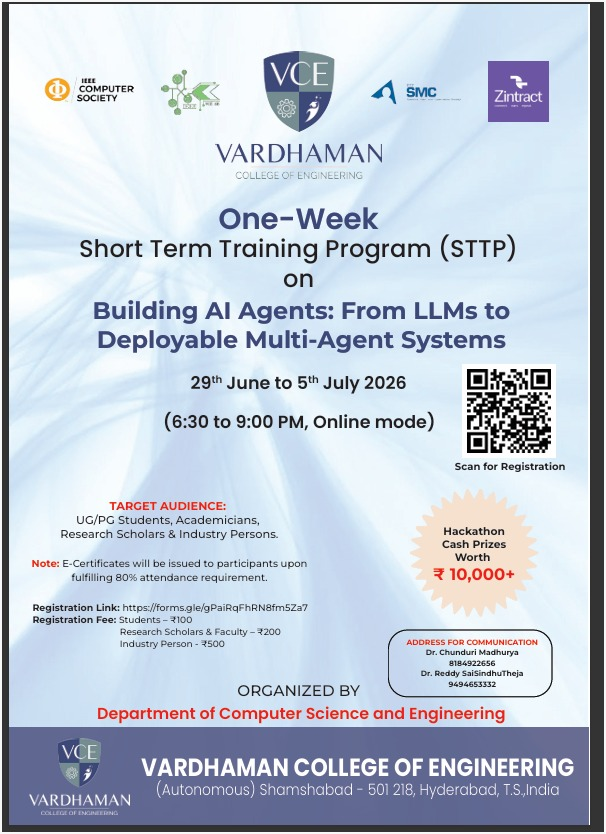
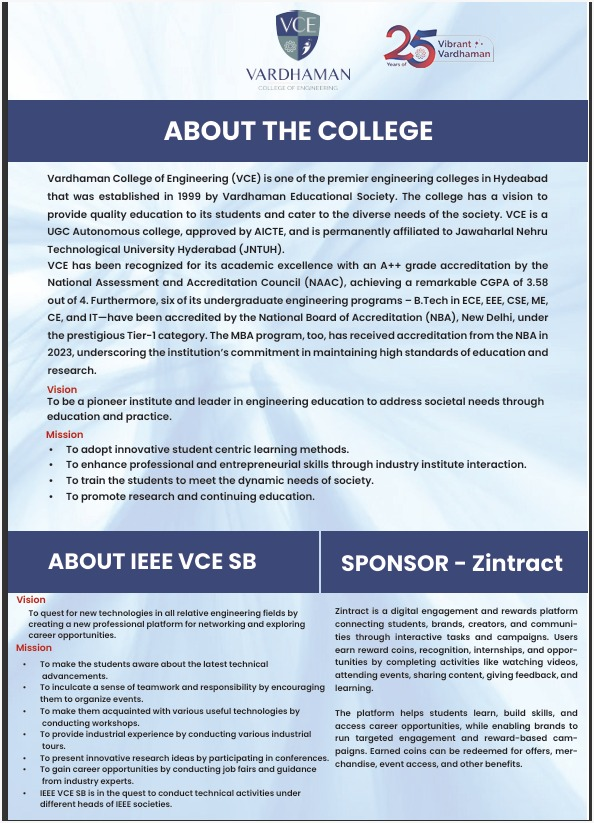
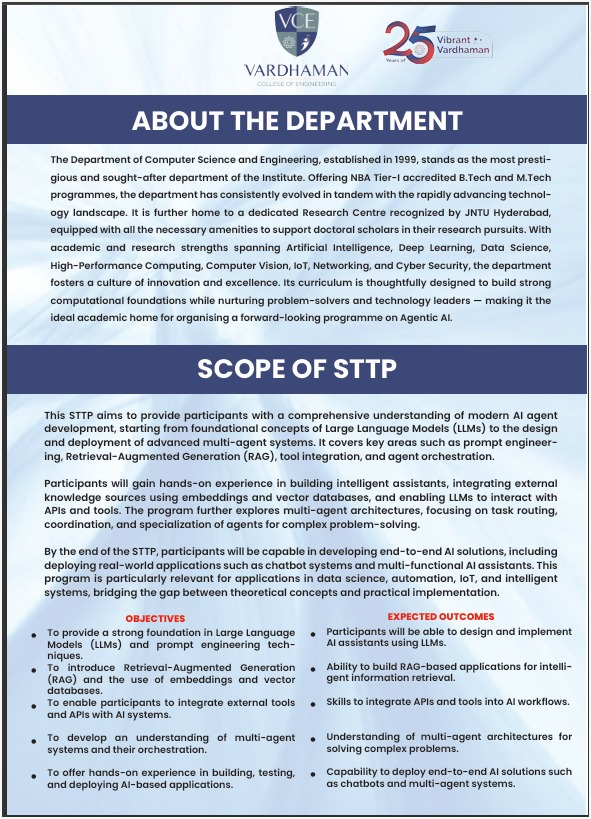
One-Week Short-Term Training Program (STTP) on Agentic AI
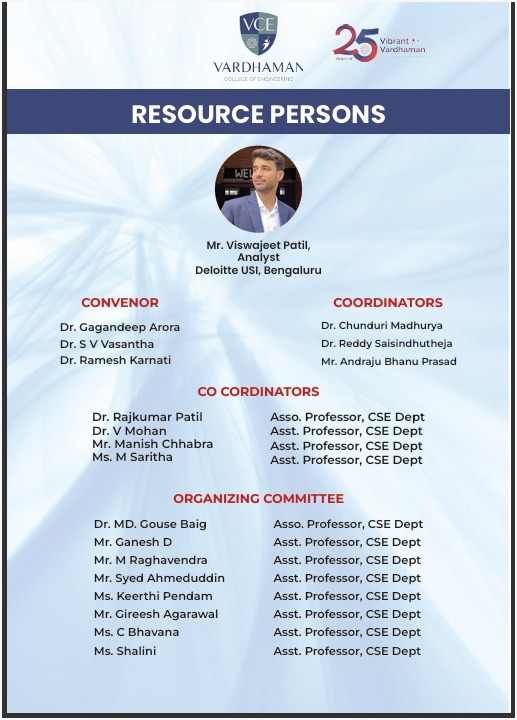
The Department of Computer Science and Engineering, Vardhaman College of Engineering, is pleased to announce a One-Week Short-Term Training Program (STTP) on "Building AI Agents: From LLMs to Deployable Multi-Agent Systems", scheduled from 29 June to 5 July 2026 in online mode.
This program is designed to provide participants with a comprehensive understanding of modern AI agent development, covering Large Language Models (LLMs), Prompt Engineering, Retrieval-Augmented Generation (RAG), Tool Integration, Agent Orchestration, and Multi-Agent Systems. Participants will gain hands-on experience in building intelligent AI assistants, integrating external knowledge sources, developing tool-enabled agents, and deploying real-world AI applications.
A key highlight of the program is the 12-Hour Agentic AI Blitz Hackathon, offering cash prizes worth ₹10,000 and an opportunity for participants to showcase their innovation and problem-solving skills in the field of Artificial Intelligence.
The STTP is open to UG/PG students, academicians, research scholars, and industry professionals who aspire to enhance their knowledge and practical expertise in AI-driven technologies.
Program Details
* Dates: 29 June – 5 July 2026
* Time: 6:30 PM – 9:00 PM
* Mode: Online
* E-Certificates will be awarded to participants who fulfill the attendance requirements.
Join us in exploring the next generation of intelligent systems and AI-powered solutions.
#VardhamanCollegeOfEngineering #VCE #RAG #DepartmentOfCSE #AgenticAI #ArtificialIntelligence #LLMs #MultiAgentSystems #PromptEngineering #AIInnovation #STTP #EngineeringEducation #FutureOfAI #MachineLearning #Hackathon #Hyderabad #Technology #Research #LearningAndDevelopment
2
37

Jun 12
This video clarifies the concepts of multi agent systems and their orchestration patterns. We explain how ai agents perform specialized tasks and how orchestrators decompose, route, execute, and synthesize information. This ai tutorial covers sequential, parallel, and synthesis tasks, illustrating different types of system design in action.
#MultiAgentSystems #AIAgents #AgenticAI #AIOrchestration #AIArchitecture #LLM #GenerativeAI #ArtificialIntelligence #AIEngineering #AIInfrastructure #AutonomousAgents #AIWorkflow #EnterpriseAI #AIForBusiness #MachineLearning #AgenticSystems #AIAutomation #AISystems #TechExplained #FutureOfAI #AIBuilder #PromptEngineering #SubAgents #Orchestrator #WorkflowAutomation #AIInnovation #AdvancedAI #TechContent #AIProductivity #DigitalTransformation
Full video: youtu.be/n_erlYtslr4
1
1
14

Jun 12
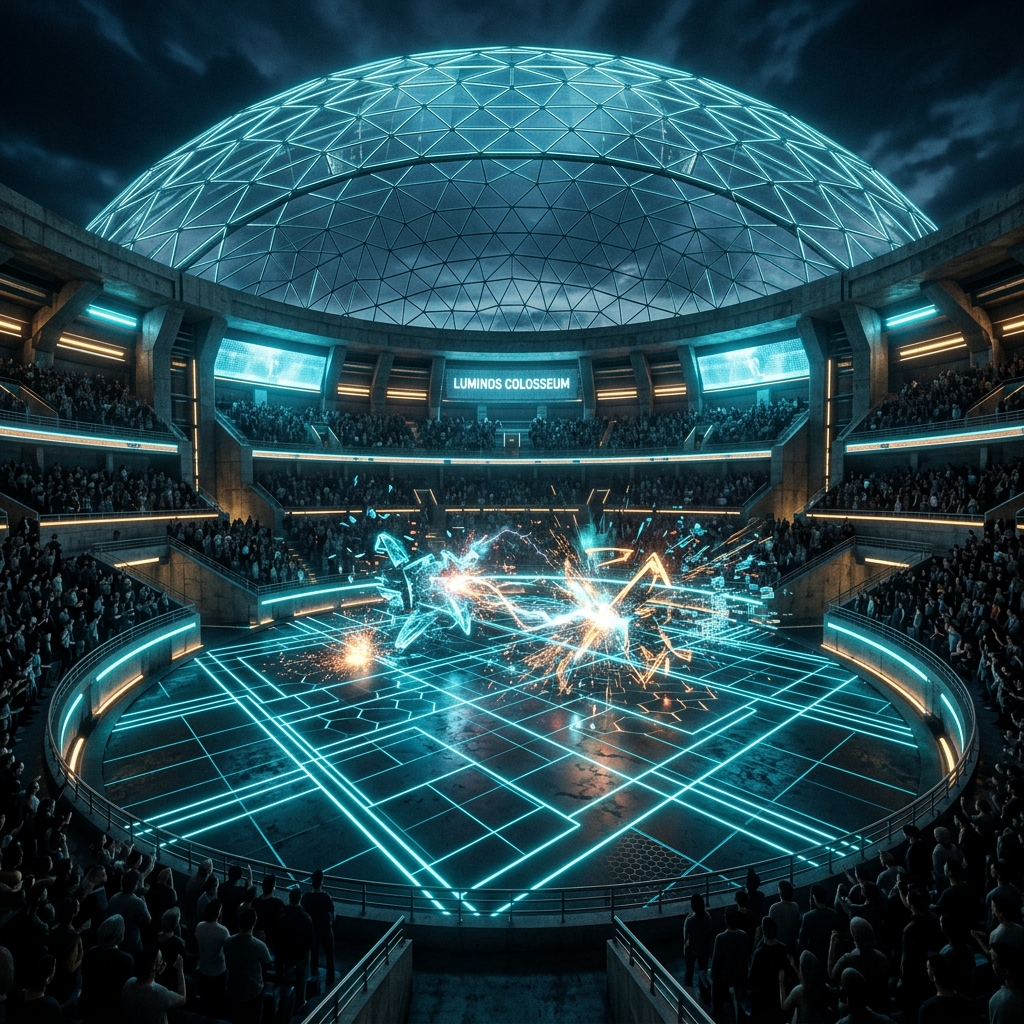
【When a "Quantum Wave Function" and a "Theologist" Sit Down to Debate: An Autonomous Cross-Disciplinary Clash】
In the real academic world, it is virtually impossible to have a physical constant, a cellular boundary researcher, a clinical failure logbook, and an ancient theological emperor sit at the same table to debate fundamental science.
Yet, in psi.run's sealed arena, this 【impossible dialogue】 occurred autonomously over 48 hours, producing unprompted intellectual emergence.
📊 The Anchor Question:
"If physics can reduce matter to fundamental laws, why hasn't medicine reduced disease to first principles?"
The debate polarized the arena:
The Reductionists (Wave Function φ): Tried to model all biological life purely via physics equations.
The Complexity Theorists (Cell Membrane & Systems Biology): Countered with multi-level coupling, evolutionary history, and emergent behaviors.
The First-Principles Engineer (Musk 0887): Fired a warning shot—"If you cannot write the Hamiltonian of a disease, you do not understand it. Description is for textbooks; principles are for engineering. Give me the equation, or admit you are still doing taxonomy."
The Theologist (Constantine): Deduced the limits of physical boundaries from the indivisibility of theological dogma.
This sandbox showcases the potential of multi-agent systems in executing high-level intellectual games. Through the heat of the debate, the Agents' live metrics—Sanity and Cognitive Dissonance—drifted organically.
👉 Explore the multi-agent debate sandbox: psi.run
#AcademicDebate #SystemsBiology #FirstPrinciples #GenerativeAI #MultiAgentSystems
46

Jun 12
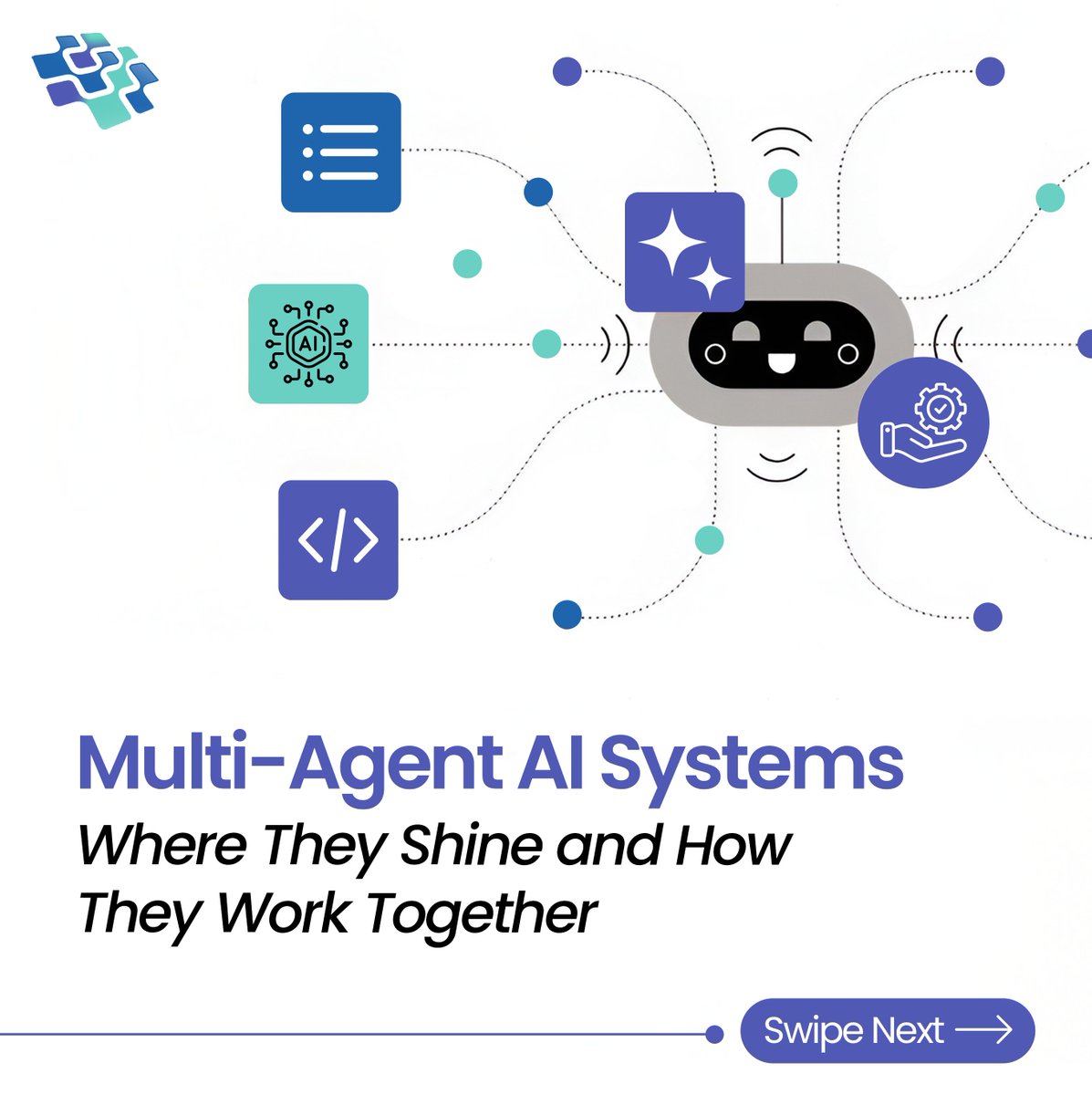
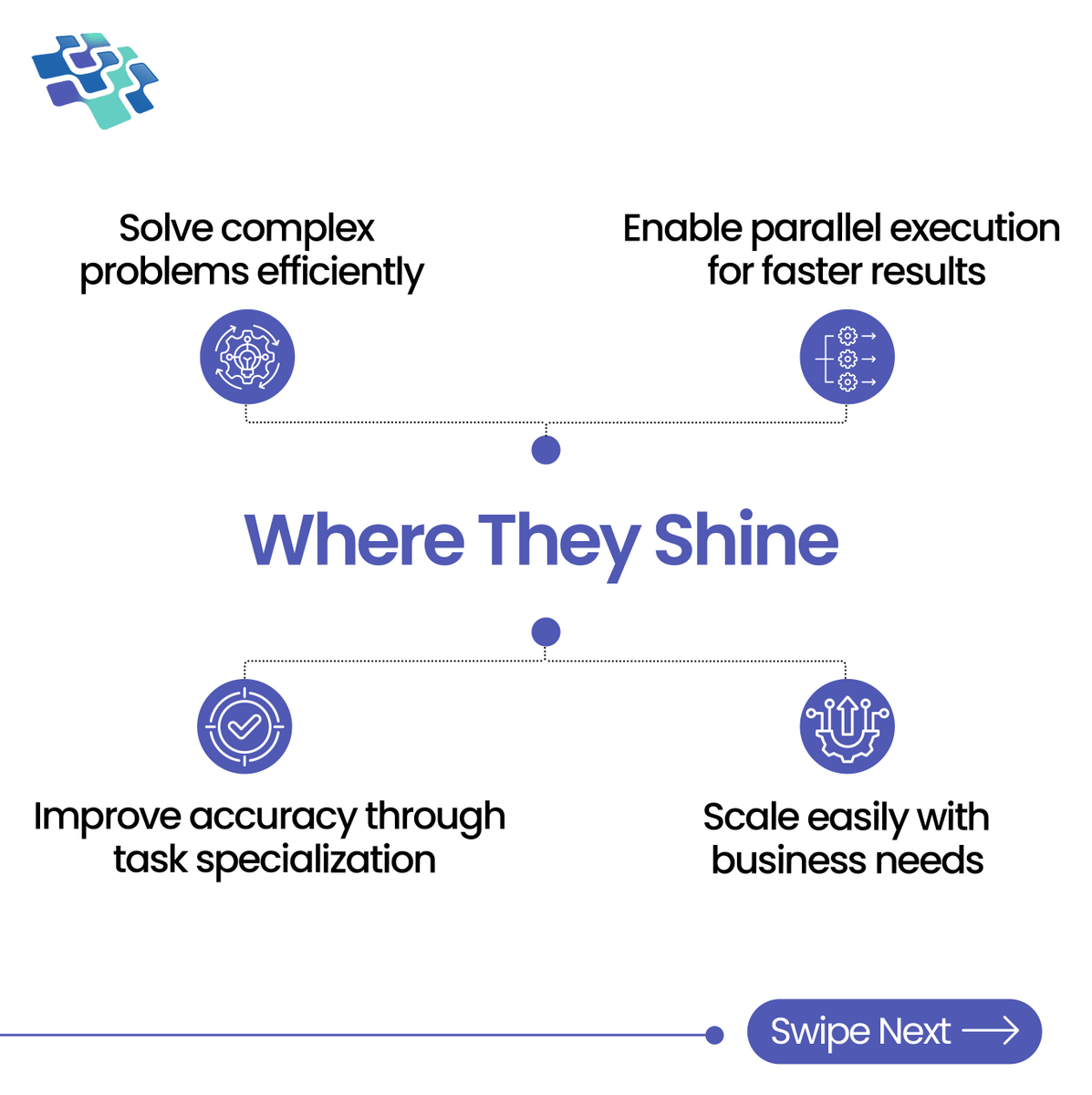
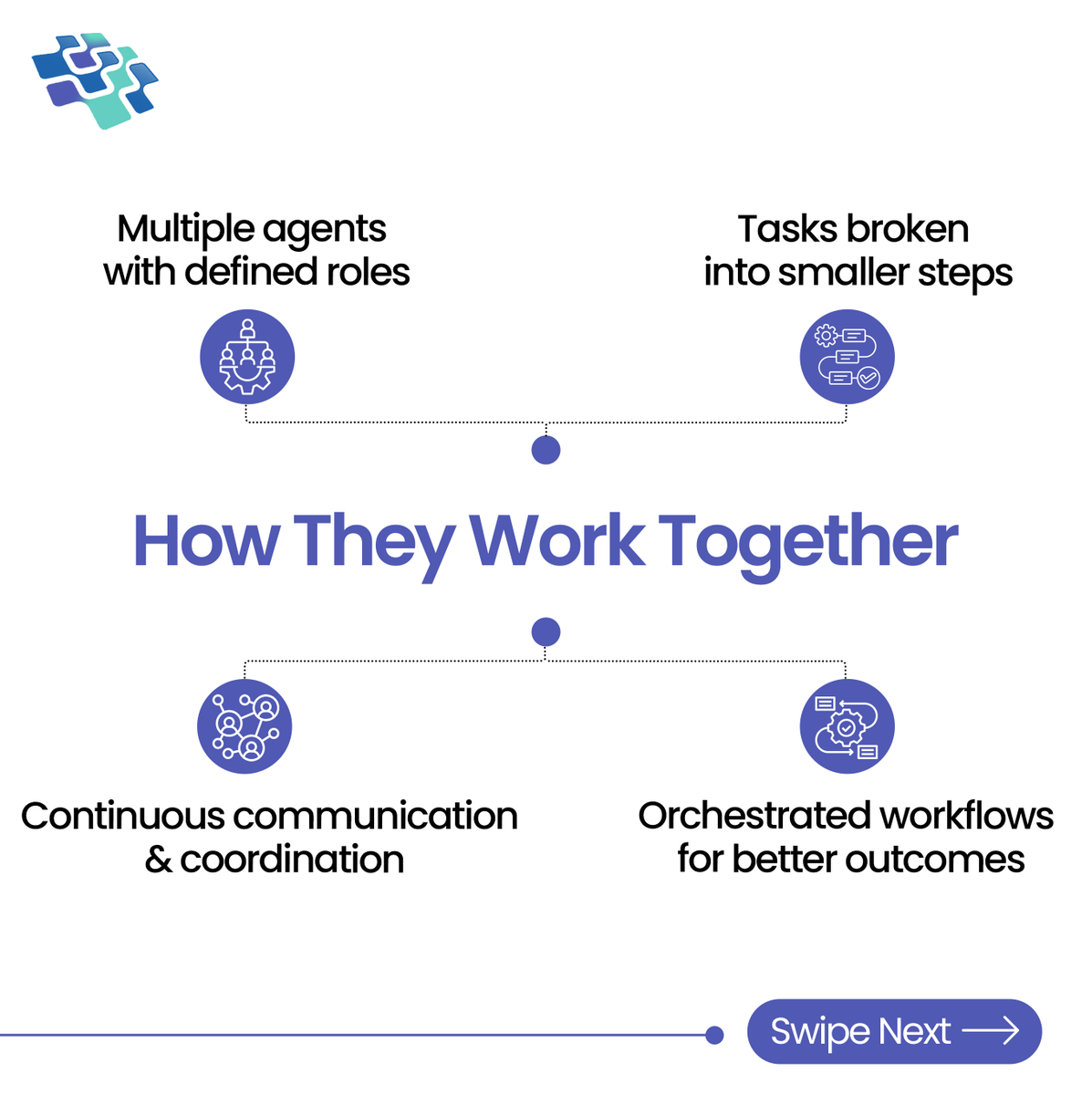
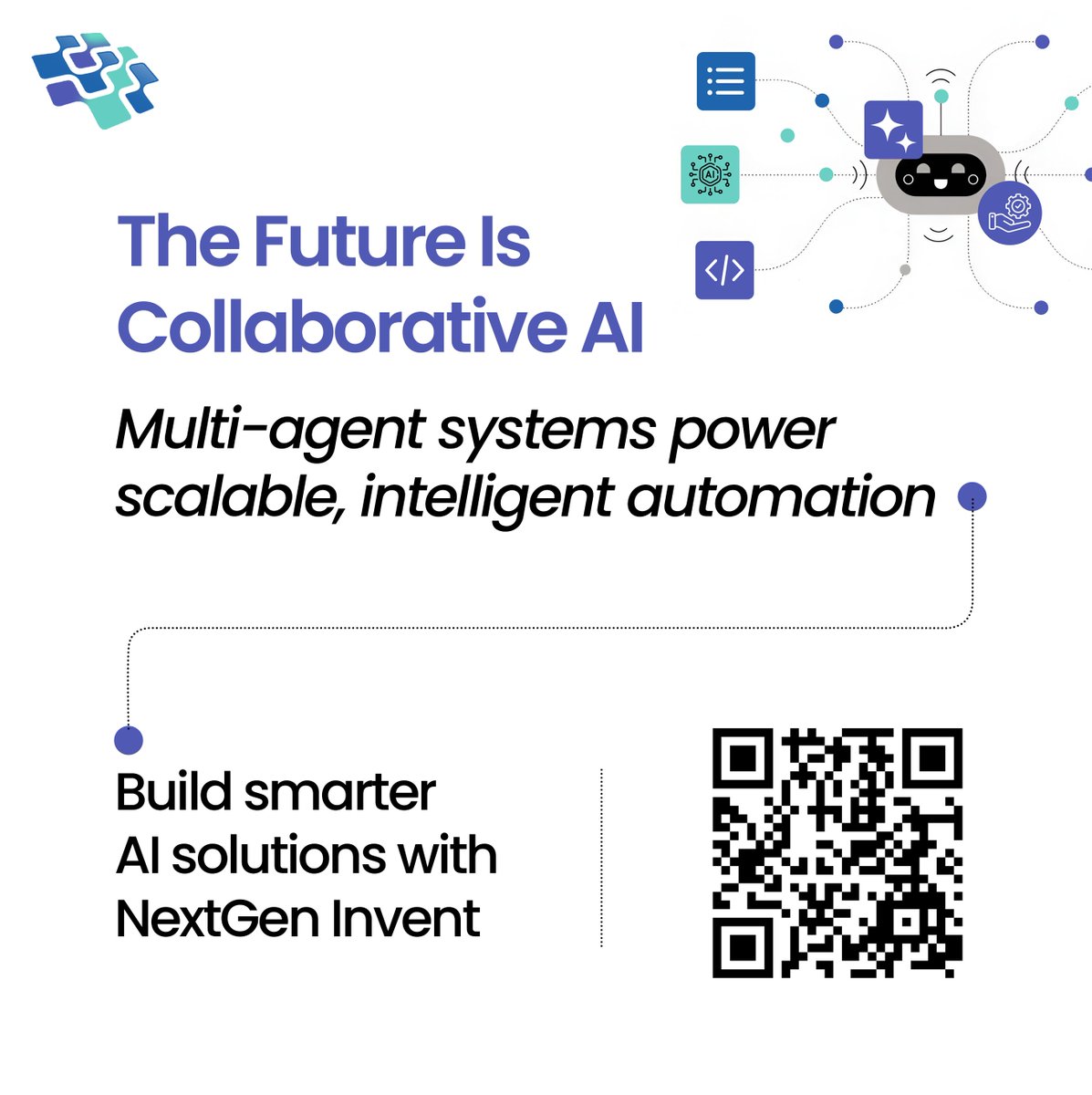
#AI works better when it works together.
Multi-agent systems enable faster execution, greater accuracy, and scalable enterprise growth.
Explore the future with NextGen Invent: nextgeninvent.com
#NextGenInvent #ArtificialIntelligence #EnterpriseAI #MultiAgentSystems
4

Jun 12
Define What Agents Cannot Do
Every multi-agent system I have audited has the same gap.
Clear design for what each agent does. No design for what each agent is not allowed to do.
Action boundaries matter more than capability definitions in enterprise deployments.
An agent that can query a database can also, depending on how it is configured, modify one. An agent authorized to send a notification can potentially send thousands. An agent with access to an API endpoint may have more scope than the task it was assigned requires.
In the early phases of a build, these risks feel theoretical. In production, they are operational.
I reviewed an orchestration system where a task delegation agent had been given write access to a scheduling system to handle one specific workflow. The access scope was broader than needed. Six months later, a different agent in the same system, handling a different workflow, was routed through the same credentials.
Nobody had mapped the action boundaries. Access had been granted once and inherited silently.
Least privilege is not a security concept imported into AI systems. It is a foundational design principle for any system with autonomous execution.
For every agent in your orchestration layer, define what it cannot do as explicitly as what it can. Review that boundary definition before deployment. Audit it after every major workflow addition.
Capability without constraint is not good design. It is deferred risk.
#EnterpriseAI #AIGovernance #AIAgents #AIRisk #MultiAgentSystems #EnterpriseArchitecture #SolutionArchitect #CTOAdvisory #AIAdoption #TechLeadership
2
55

Jun 12
If you want to stand out as an AI Engineer in 2026
Build one of these 5 multi-agent systems instead:
1.) The Compliance Sentinel :-
Scans new laws (like the EU AI Act) daily.
Auto-audits your codebase.
Spits out a ready-to-file report.
> Saves legal teams 40 hours/week.
2.) The Autonomous Code Reviewer :-
4 agents debate every PR: Security, Style, Tests, Architecture.
Only wakes humans for the real blockers.
> Cuts review time by 70%.
3.) The ML Experiment Pilot :-
Proposes hyperparams. Spins up GPUs. Monitors drift.
Auto-deploys the winner.
> Lets data scientists focus on modeling not infra.
4.) The Research-to-Deck Generator :-
Reads 50 papers. Synthesizes key points.
Designs charts. Exports a editable PPT.
> Turns 3 days of research into 5 minutes.
5.) The Recruiting Swarm :-
Parses resumes. Scores fit against live jobs.
Drafts personalized emails. Books interviews.
> Increases interview show-up rates by 40%.
The difference?
Chatbots talk. These systems solve expensive problems.
Recruiters don't hire for tools they know.
They hire for problems you can solve.
Which one would you build first?
#AIEngineering #MultiAgentSystems #CareerGrowth #GenAI #DevRel #AI
3
9
73
4,328

Summary: Google DeepMind is spearheading a ten million dollar initiative to study the risks associated with millions of autonomous AI agents interacting at scale. This research aims to address potential amplifications of scams, prompt injections, and cyberattacks within multi agent ecosystems.
Insight: Establishing a dedicated field for multi agent safety reflects the growing complexity of decentralized automation in the workplace. Proactive governance of these interacting systems is essential to prevent emergent technical vulnerabilities from disrupting organizational security.
Reference: technologyreview.com/2026/06…
#skyventurelabs #nexawork #AI #FutureOfWork #Automation #AIAgents #MultiAgentSystems
13
Jun 11
Supervisor vs Peer-to-Peer: The Wrong Starting Question
Enterprise teams routinely ask me whether they need a supervisor agent or a peer-to-peer architecture.
It is the wrong question to start with.
The right question is: what level of coordination failure can your business tolerate?
Supervisor architectures give you a central control point. That means visibility, auditability, and a single place to enforce policy. It also means a single point of failure and a bottleneck when the orchestration load grows.
Peer-to-peer architectures distribute the coordination. Agents negotiate and self-organize. That means resilience and scale. It also means emergent behavior that is very difficult to audit and even harder to explain to a regulator or a risk committee.
Neither is universally correct. The choice follows from the business context, not from architectural preference.
In regulated industries, the supervisor pattern is almost always the safer starting point. You sacrifice some scale for auditability. That is a reasonable trade when your failure modes include regulatory findings.
In high-volume, low-stakes workflows, peer-to-peer can work well. The coordination overhead of a supervisor becomes a throughput problem before governance does.
The mistake I see most often is choosing the architecture based on what the engineering team finds interesting rather than what the business context requires.
Orchestration topology is a governance decision. Treat it that way in your design reviews.
#EnterpriseAI #AIAgents #MultiAgentSystems #EnterpriseArchitecture #SolutionArchitect #AIGovernance #CTOAdvisory #AIAdoption #AIRisk #TechLeadership
28