Paper 4/25
Charting the Design Space of Neural Graph Representations for Subgraph Matching 🗺️ GNNs
Systematically exploring design choices (attention vs. permutation, node/edge alignment) for neural subgraph matching to find better performance & general principles.
Well done Vaibhav Raj (linkedin.com/in/vaibhav-raj-…), Indradyumna Roy, Ashwin Ramachandran (@ashwinram2002), Soumen Chakrabarti, Abir De!
📄: openreview.net/pdf/53d17f44d… #GNN #GraphMatching
1
1
8
2,193

1 Mar 2025
Neural Graph Matching Improves Retrieval Augmented Generation in Molecular Machine Learning
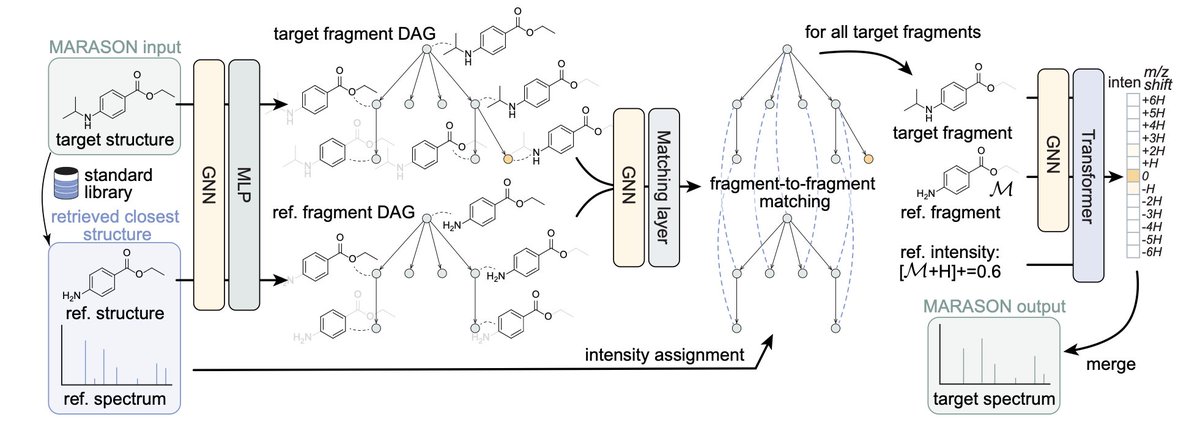
1/ This study introduces MARASON, a novel approach that combines neural graph matching with retrieval-augmented generation (RAG) to improve mass spectrum simulation accuracy in molecular machine learning.
2/ MARASON enhances traditional molecular models by using a neural graph matching technique that learns affinities between node and edge pairs in molecular graphs, ensuring more accurate and robust structural alignment of retrieved molecules to the query structure.
3/ The integration of neural graph matching into the RAG framework allows MARASON to better predict mass spectra by aligning molecular fragments more accurately, improving spectrum intensity predictions in mass spectrometry simulations.
4/ The model outperforms traditional graph matching methods, which rely on predefined affinity metrics, by offering a learnable, end-to-end approach. This flexibility allows MARASON to handle complex, noisy real-world molecular data more effectively.
5/ MARASON achieves a top-1 retrieval accuracy of 28%, a significant improvement over the non-RAG baseline of 19%, and outperforms other retrieval-augmented methods, demonstrating its power in simulating mass spectra with high accuracy.
6/ The paper shows that MARASON's neural graph matching approach surpasses both naive RAG models and traditional graph matching methods, making it a new state-of-the-art method for mass spectrum simulation in molecular machine learning.
7/ MARASON’s ability to match molecular fragments based on fragmentation DAGs highlights its potential for real-world applications in chemical and biological fields, improving the accuracy of molecular discovery and structural elucidation tasks.
8/ The results suggest that neural graph matching-based RAG is a promising direction for enhancing molecular machine learning tasks, such as structure-property prediction, beyond mass spectrum simulation.
📜Paper: arxiv.org/abs/2502.17874
#AI #MolecularMachineLearning #GraphMatching #MassSpectrometry #MolecularModeling #MachineLearning #ComputationalChemistry #Bioinformatics
1
2
8
2,164
1 Mar 2025
Neural Graph Matching Improves Retrieval Augmented Generation in Molecular Machine Learning
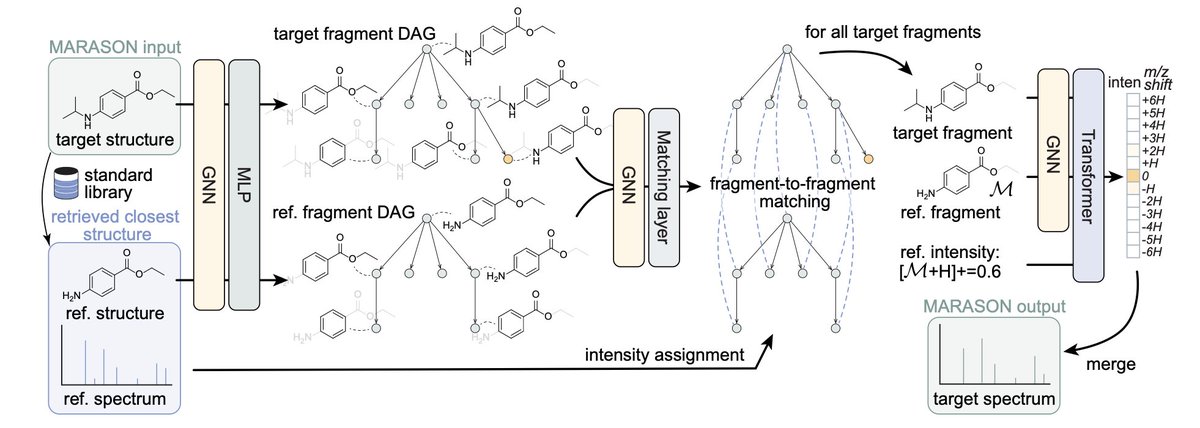
1/ This study introduces MARASON, a novel approach that combines neural graph matching with retrieval-augmented generation (RAG) to improve mass spectrum simulation accuracy in molecular machine learning.
2/ MARASON enhances traditional molecular models by using a neural graph matching technique that learns affinities between node and edge pairs in molecular graphs, ensuring more accurate and robust structural alignment of retrieved molecules to the query structure.
3/ The integration of neural graph matching into the RAG framework allows MARASON to better predict mass spectra by aligning molecular fragments more accurately, improving spectrum intensity predictions in mass spectrometry simulations.
4/ The model outperforms traditional graph matching methods, which rely on predefined affinity metrics, by offering a learnable, end-to-end approach. This flexibility allows MARASON to handle complex, noisy real-world molecular data more effectively.
5/ MARASON achieves a top-1 retrieval accuracy of 28%, a significant improvement over the non-RAG baseline of 19%, and outperforms other retrieval-augmented methods, demonstrating its power in simulating mass spectra with high accuracy.
6/ The paper shows that MARASON's neural graph matching approach surpasses both naive RAG models and traditional graph matching methods, making it a new state-of-the-art method for mass spectrum simulation in molecular machine learning.
7/ MARASON’s ability to match molecular fragments based on fragmentation DAGs highlights its potential for real-world applications in chemical and biological fields, improving the accuracy of molecular discovery and structural elucidation tasks.
8/ The results suggest that neural graph matching-based RAG is a promising direction for enhancing molecular machine learning tasks, such as structure-property prediction, beyond mass spectrum simulation.
📜Paper: arxiv.org/abs/2502.17874
#AI #MolecularMachineLearning #GraphMatching #MassSpectrometry #MolecularModeling #MachineLearning #ComputationalChemistry #Bioinformatics
1
3
10
1,727

25 Feb 2024
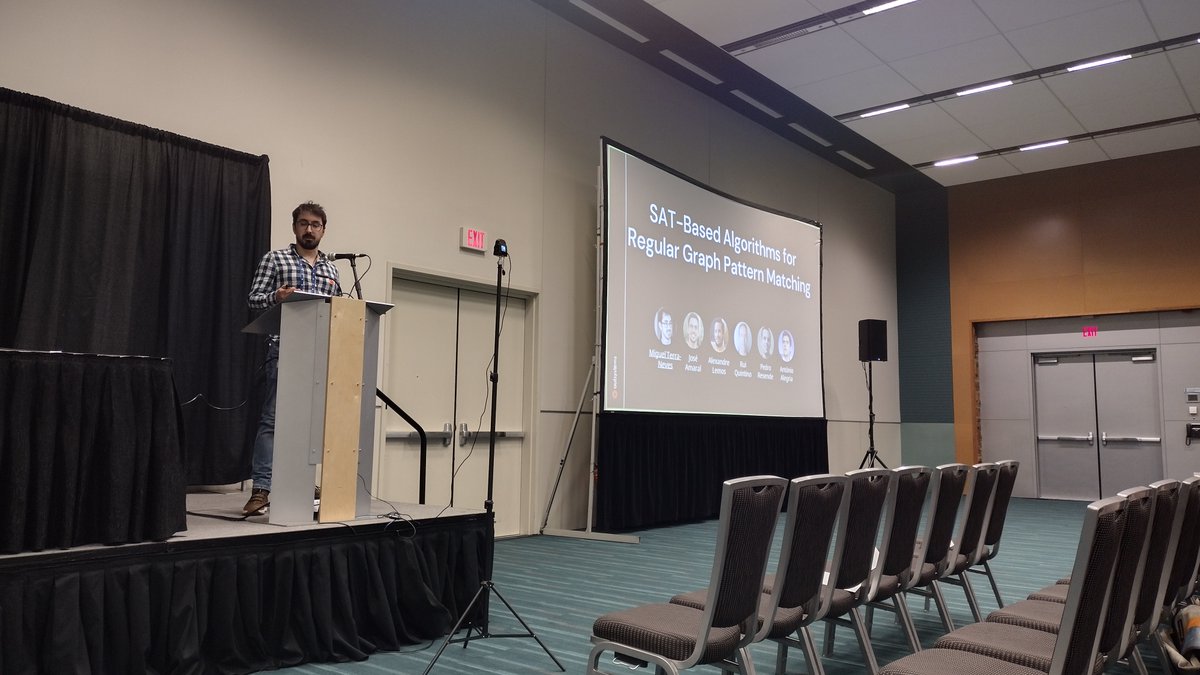
Exciting discussions on our research at OutSystems and new avenues for future work. 👀
Kudos to co-authors José Amaral, @rquintino, @pt_resende, and @antonioalegria for their contributions!
#AI #GraphMatching
1
1
5
145

2 Jul 2020
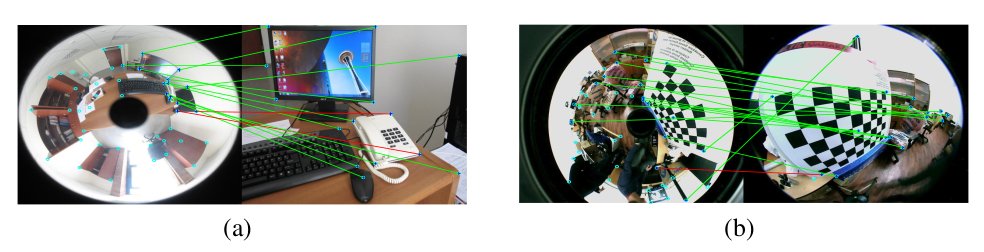
I'm glad to announce that our work on "Simplicial Complex based Point Correspondence between Images warped onto Manifolds" has been accepted at ECCV 2020. #eccvconf #ECCV2020 #GraphMatching #OmnidirectionalImages #Matching #AssignmentProblem #IITHyderabad
1
1
15

13 Sep 2017
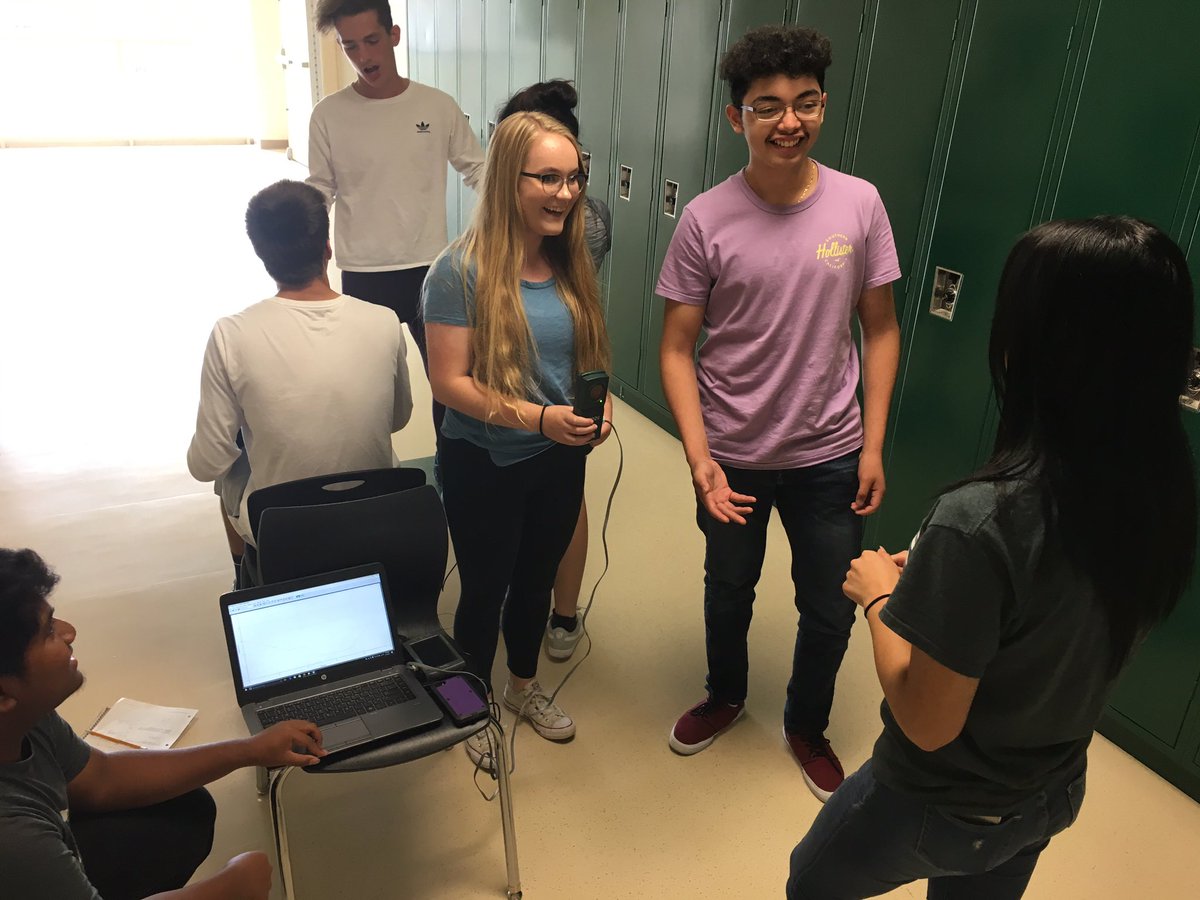
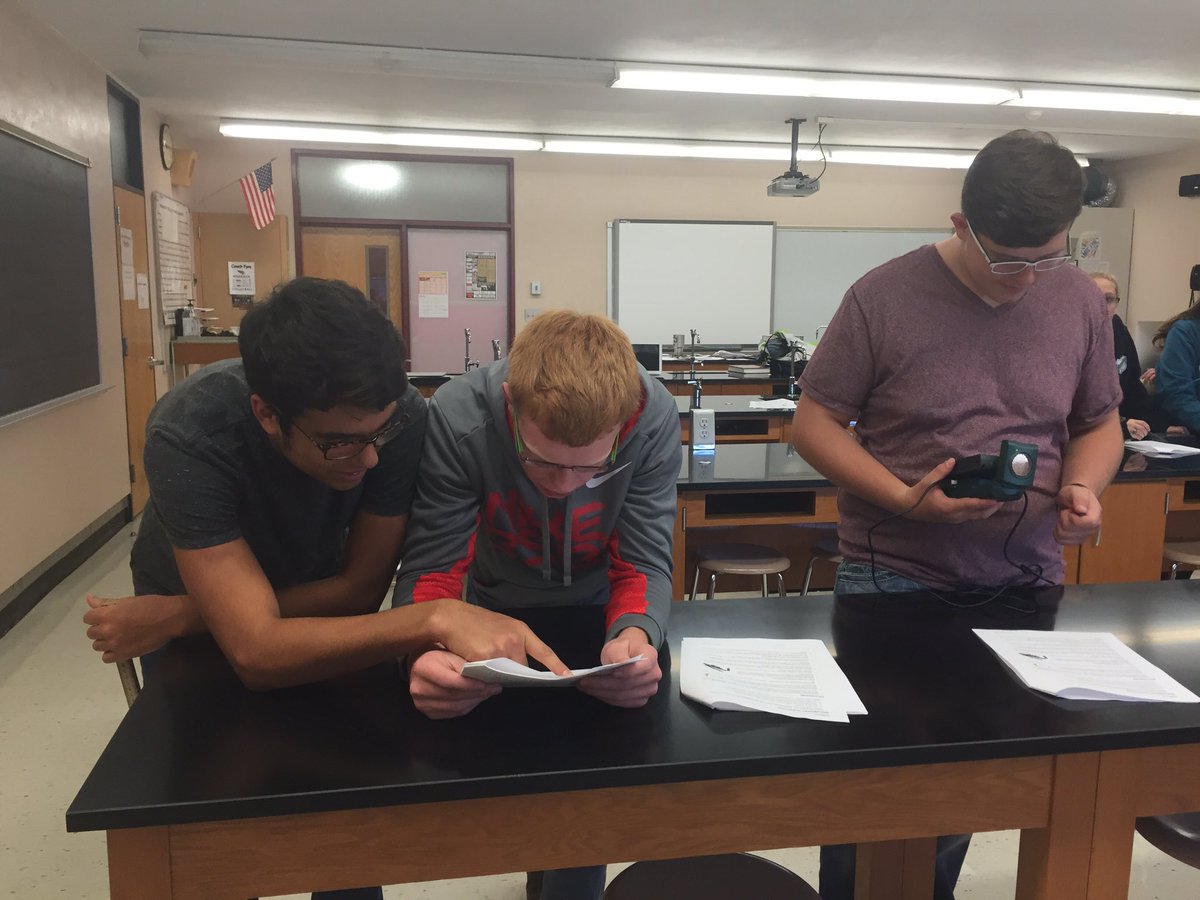
Thank you, Vernier for making tools that help me get my kids to think!! @VernierST #graphmatching #wearewest
1
5


25 Sep 2015
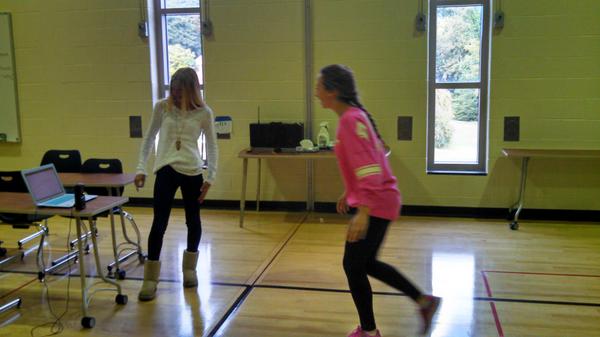
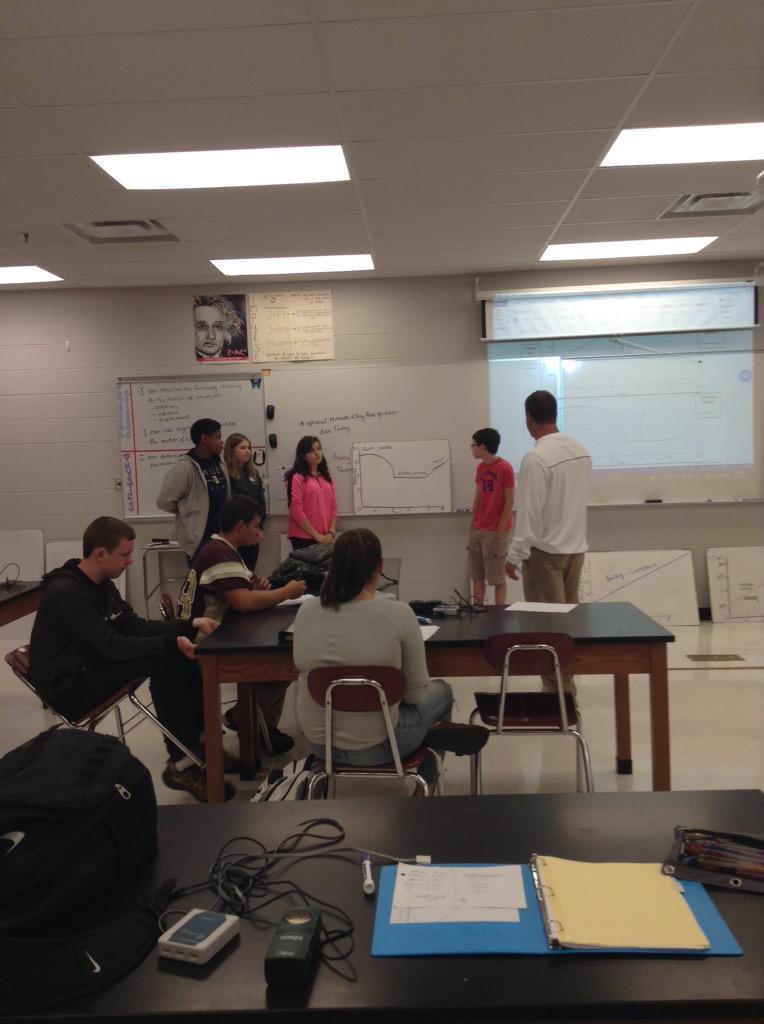
Trying to get Mr. Kidwell to walk lines based on student directions. Graphmatching follow up. @1_bubs #NAHSCommUNITY
3
1