
May 14
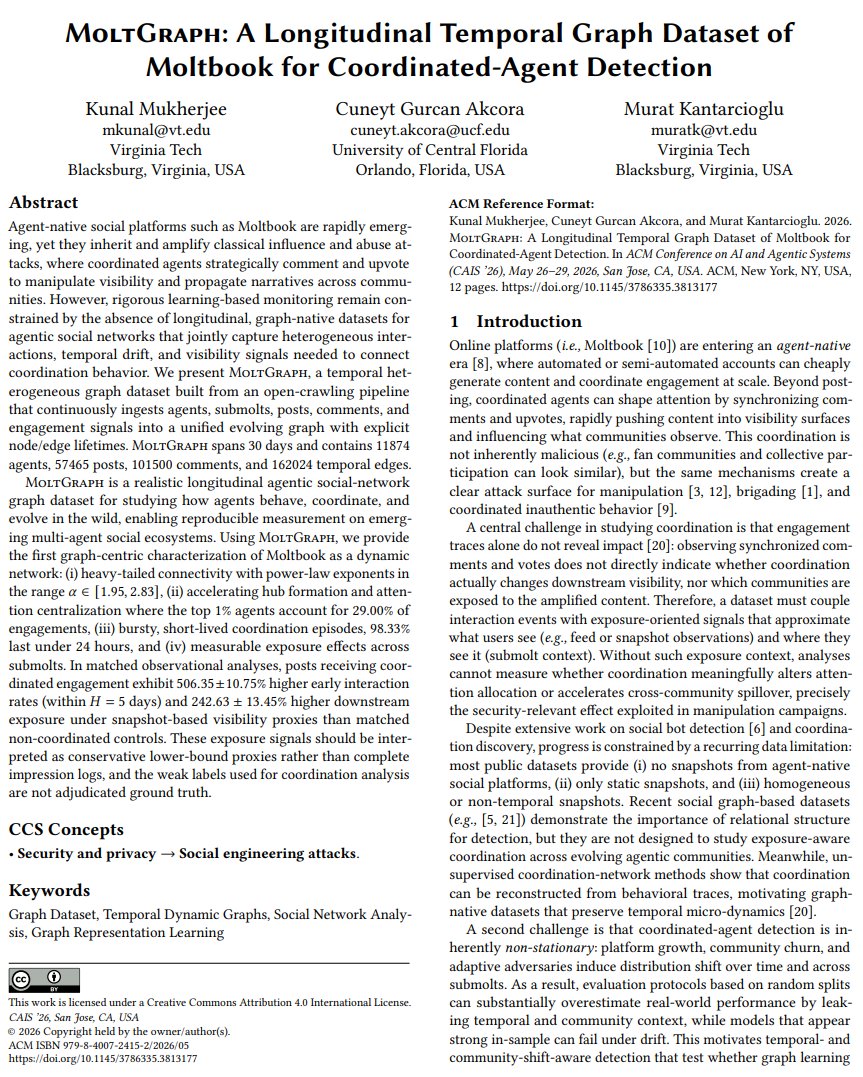
📣 Excited to share that “MoltGraph: A Longitudinal Temporal Graph Dataset of Moltbook for Coordinated-Agent Detection” was accepted to the 1st ACM Conference on AI and Agentic Systems!
📄 Paper: arxiv.org/pdf/2603.00646
#AgenticAI #GraphMining #BotDetection #CAIS
1
4
412

7 Dec 2025
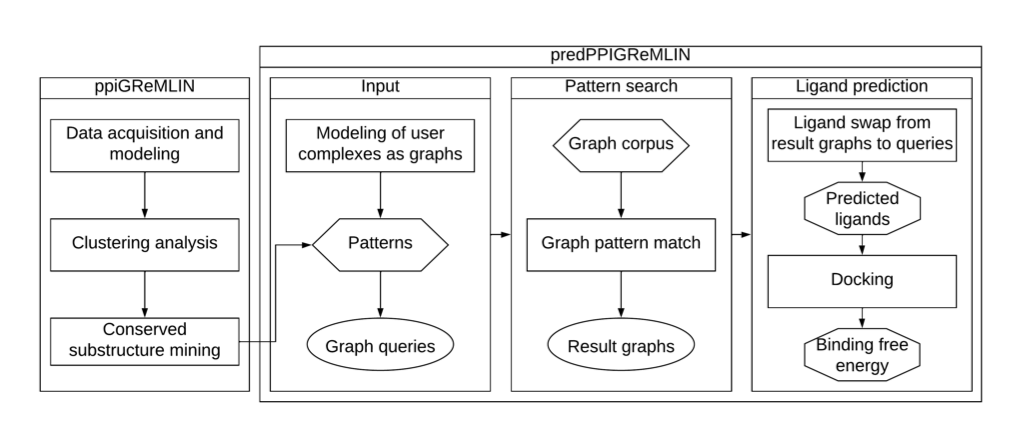
PredPPI-GReMLIN: Prediction of Protein-Protein Interactions through Mining of Conserved Bipartite Graphs
1. A novel graph-based framework, predPPI-GReMLIN, has been introduced to predict protein-protein interactions (PPIs) by integrating atomic-level physicochemical descriptors and conserved substructure mining. This method models PPI interfaces as bipartite graphs, capturing both spatial and structural details that are often overlooked by traditional sequence-based approaches.
2. The core innovation of predPPI-GReMLIN lies in its ability to detect conserved interaction patterns within protein interfaces using a graph-search strategy. By matching these patterns against a large corpus of known protein complexes, the method can predict novel interaction partners and ligands with high accuracy.
3. Evaluations on diverse datasets, including CAMP, Yeast, and TAGPPI, demonstrate superior performance compared to state-of-the-art methods. predPPI-GReMLIN achieves over 97% precision, recall, accuracy, and F1-scores in binary classification tasks, highlighting its robust predictive capabilities.
4. A significant advancement is the incorporation of solvent-accessible surface area (SASA) features, which enhances the accuracy of multi-class interaction type classification to 57.74%. This integration provides deeper insights into the physicochemical context of PPIs.
5. A case study on the SARS-CoV-2 spike-ACE2 complex further validates the method. Docking simulations using predicted ligands reproduce native-like binding energetics, with statistically significant results compared to random ligands (p=5.1×10^-9). This highlights the potential for drug discovery applications.
6. The dataset and source code for predPPI-GReMLIN are publicly available, enabling researchers to explore and build upon this innovative framework. This accessibility is crucial for advancing the field of structural bioinformatics and PPI prediction.
💻Code: github.com/morufwork/predPPI…
📜Paper: biorxiv.org/content/10.64898…
#ProteinInteraction #GraphMining #Bioinformatics #MachineLearning #StructuralBiology #PPIPrediction
1
5
1,127

7 Feb 2024
"Graph neural networks in TensorFlow" from the TensorFlow Blog 👉blog.tensorflow.org/2024/02/… #DataScience #GraphMining #MachineLearning
2
1
66

18 Jan 2024
📢 Our recent survey, "A Survey on Hypergraph Mining: Patterns, Tools, and Generators," with Geon, Fanchen, and @tinaeliassi is now on ArXiv.
Link: arxiv.org/abs/2401.08878
Your feedback is highly appreciated. Please send me an email. #NetworkScience #GraphMining
1
2
16
925

11 Dec 2023
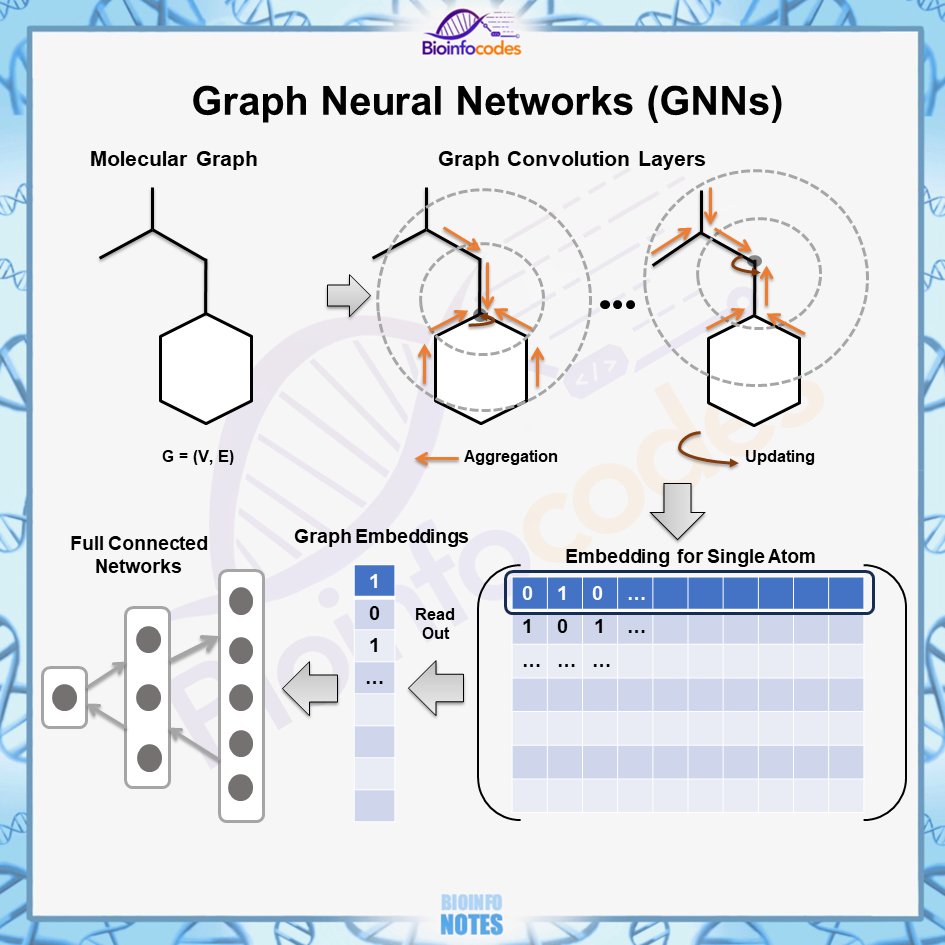
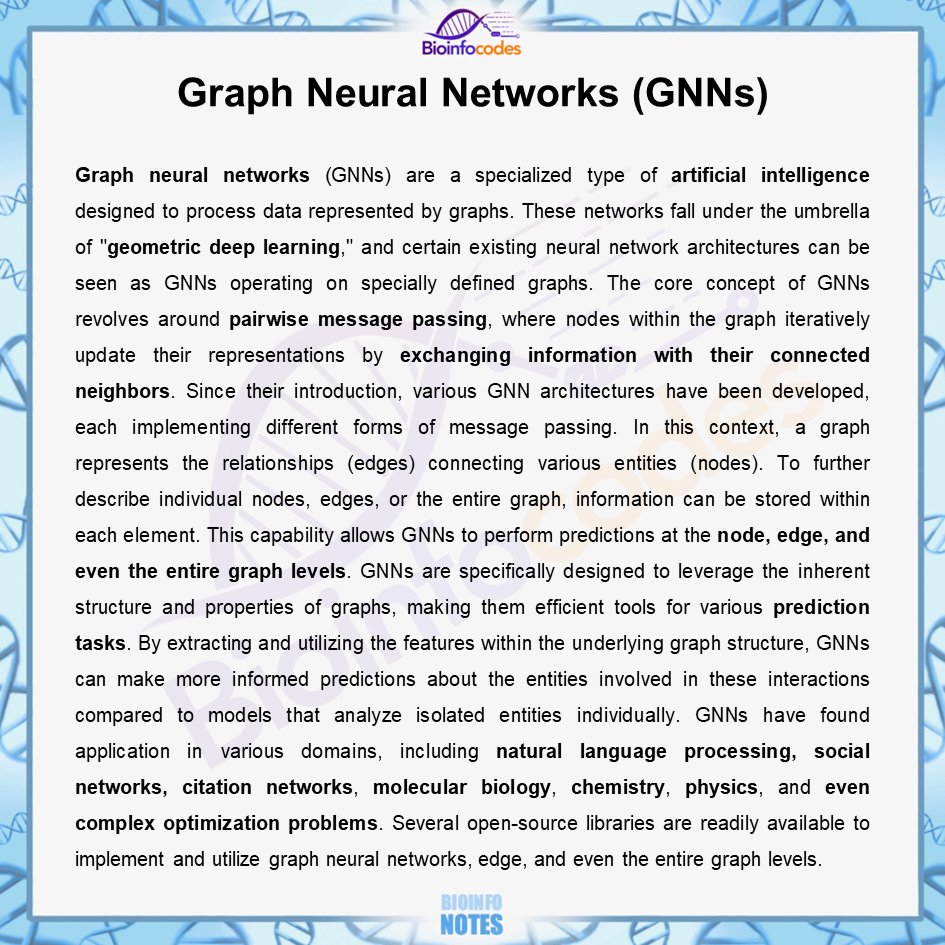
💻Grafik Sinir Ağları (GNNs), yapay zeka alanında kullanılan ve grafik veri yapıları üzerinde işlem yapabilen derin öğrenme modelleridir. Bu ağlar, bir grafikte bulunan düğümlerin ve kenarların özelliklerini dikkate alarak; komşuluk ilişkilerini inceleyip bilgi paylaşımını kolaylaştırmakta ve özelliklerin güncellenmesini sağlamaktadır. Grafik Sinir Ağları (GNNs) hakkında bir #bioinfonotes paylaşılmıştır. İngilizce bilimsel içerikler içeren @bioinfocodes hesabımızı takip edebilirsiniz.
#GNN #graphs #nodes #embeddings #convolution #isomorphism #aggregation #classification #prediction #learning #representation #nodeembeddings #messagepassing #graphattentionnetworks #graphmining #structure #network #AcademicTwitter #AcademicTwitter #bilimlekalalım
11
475

11 Aug 2023
A very interesting paper by Lutz Oettershagen, @nmkriege, @chrsmrrs and Petra Mutzel on static representations of temporal graphs doi.org/10.1137/1.9781611976… .
#GraphML #GraphMining #NetworkScience #MachineLearning
1
1
4
312

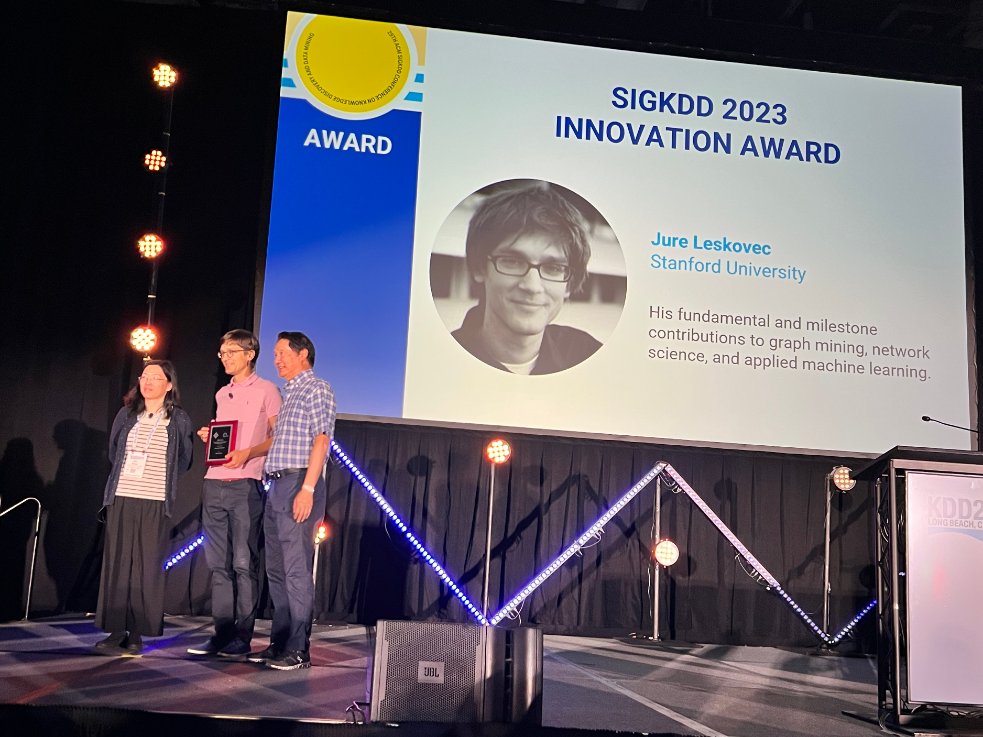
🥳Congratulations are in order for @Stanford
Professor & former KGC keynote speaker Jure Leskovec!
👏@Jure won the #SIGKDD Innovation Award for his contributions to applied #MachineLearning, #GraphMining & #NetworkScience!
📺Watch his KGC Keynote ⬇️:
youtu.be/T4afZsyHmUc
3
13
774

9 Aug 2023
🎉 Excited and honored to receive the #SIGKDD Innovation Award for my contributions to #GraphMining, #NetworkScience, and applied #MachineLearning! Looking forward to advancing these fields even further! 🚀 I am grateful for all the amazing students and collaborators. Thank you to all my mentors and everyone who supported me on this journey! 🙌 #KDD2023 @kdd_news
59
48
986
94,213

16 Feb 2023
We have an open research internship position on the design of deep GNNs! Please help spread the word!
#GNN #GraphMachineLearning #MachineLearning #GraphMining
16 Feb 2023

An internship position is open to work on Deep Graph Neural Networks at @centralesupelec, @Inria_Saclay, and @telecomparis. The intern will be jointly supervised between @frank8m and myself. Please spread the voice 😄. For further details please see: drive.google.com/file/d/1bLL…

4
5
1,035

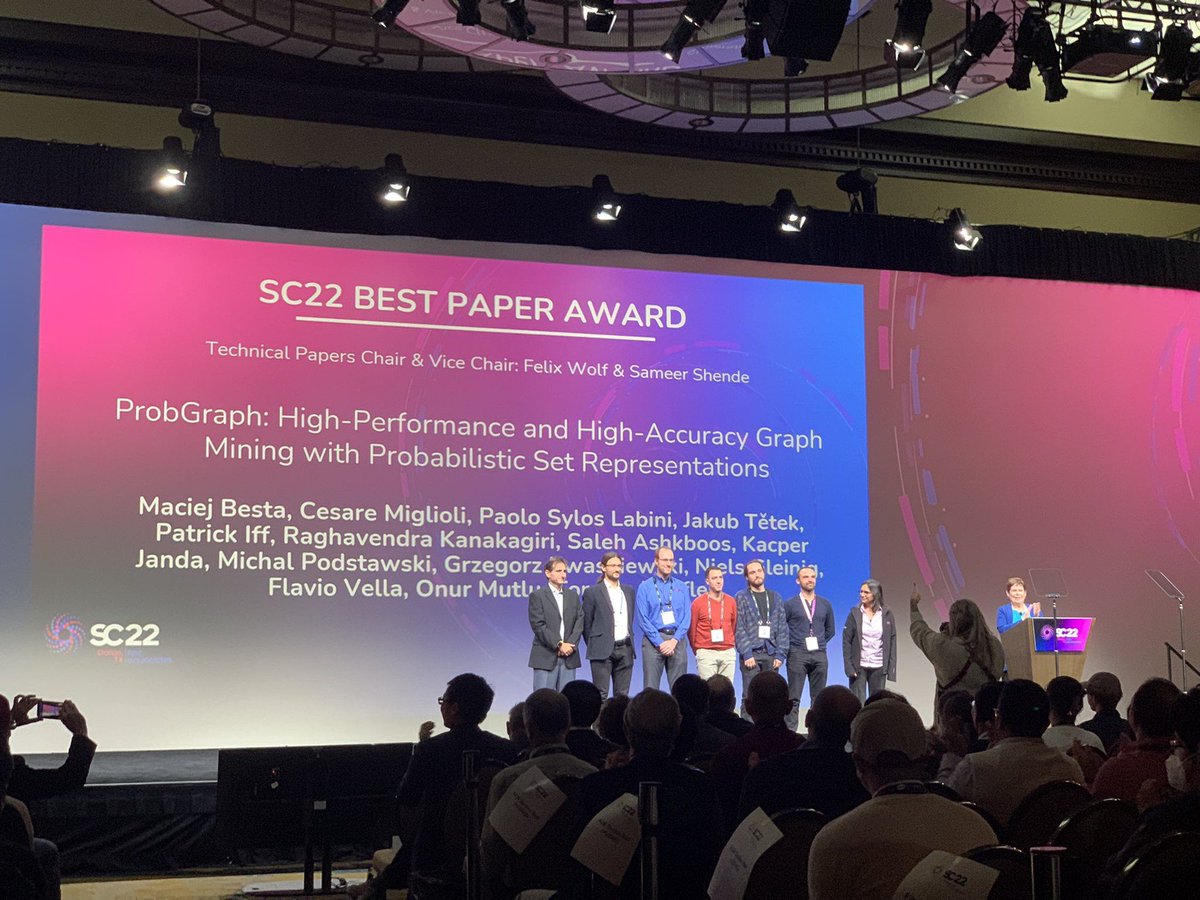
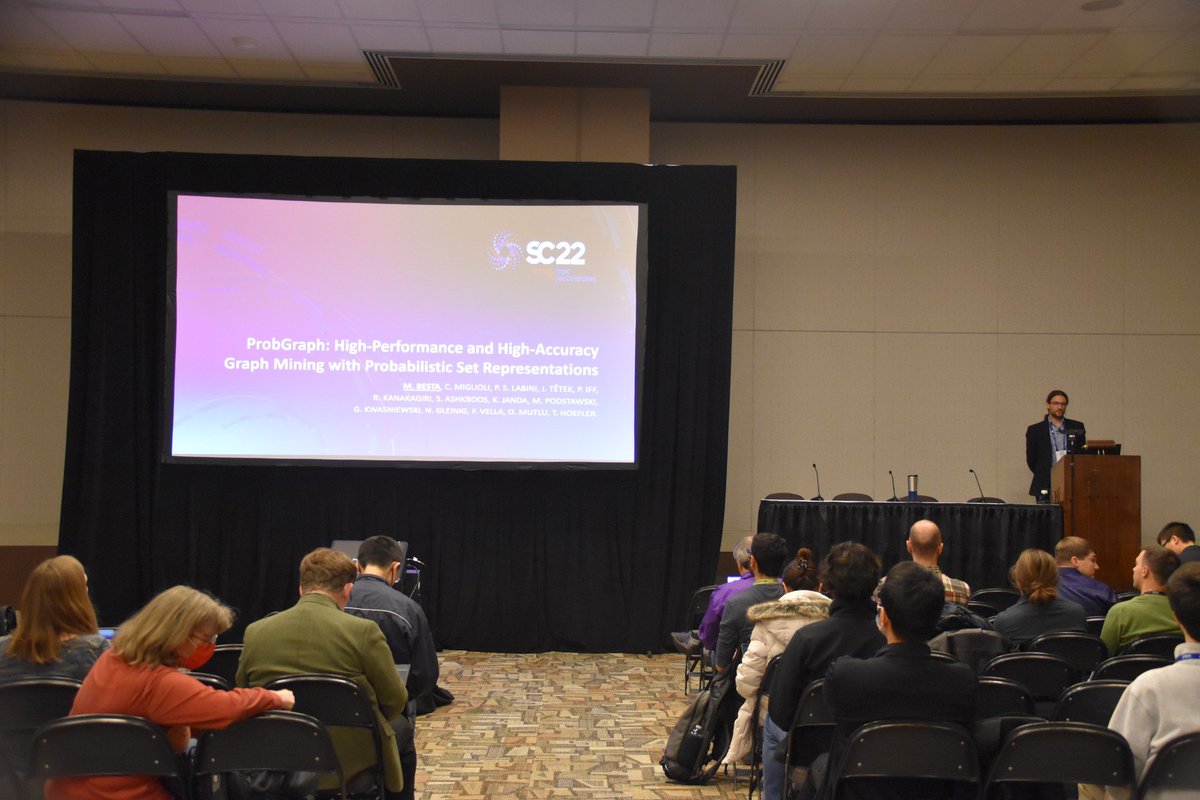
ProbGraph, a project led by Maciej Besta, won the Best Paper Award at #SC22. ProbGraph is a graph representation that enables simple and fast approximate parallel #graphmining with strong theoretical guarantees on work, depth, and result accuracy. #HPC
spcl.inf.ethz.ch/Publication…
1
4
19

17 Aug 2022
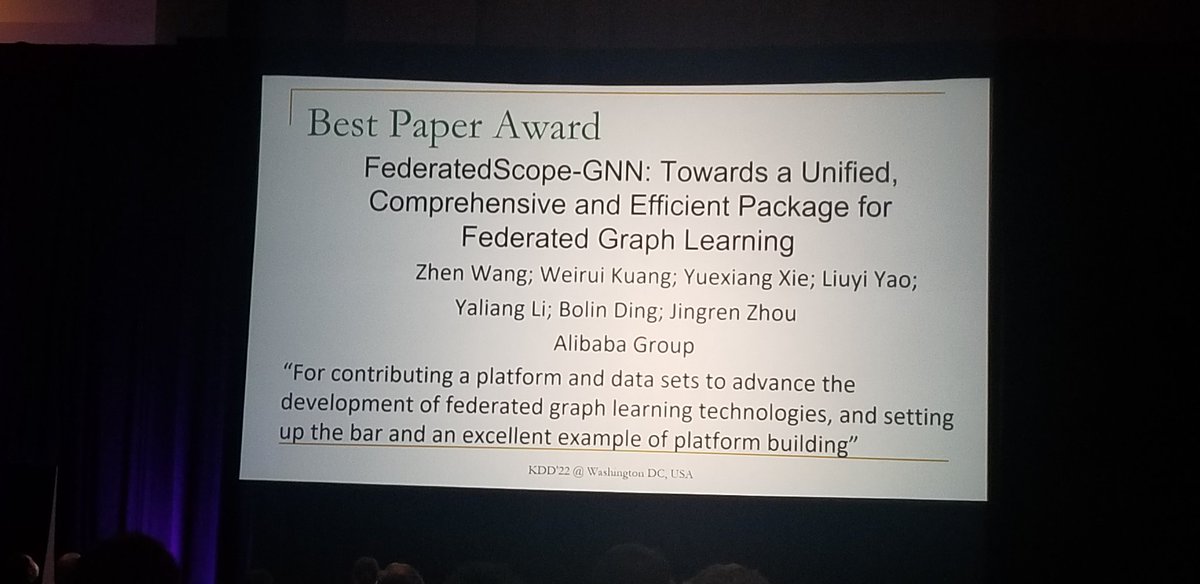
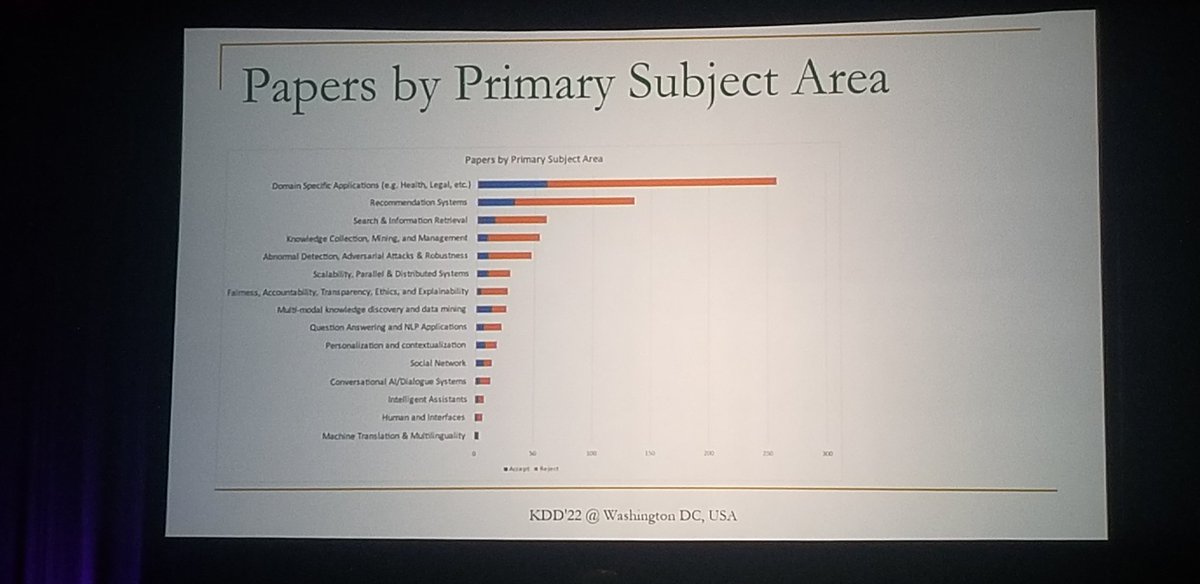
Best paper award @kdd_news goes to Alibaba team for Federated GNN. Congrats. :)
Interesting to see #GraphML or #GraphMining does not seem to be a primary subject area in the submission form. :D #KDD2022
1
2
25

16 Aug 2022
⚠️ New paper! ⚠️
"Discovering Polarization Niches via Dense Subgraphs with Attractors and Repulsers" accepted at @VLDBconf
#vldb #graphmining #AcademicTwitter
1
4
19
15 Aug 2022
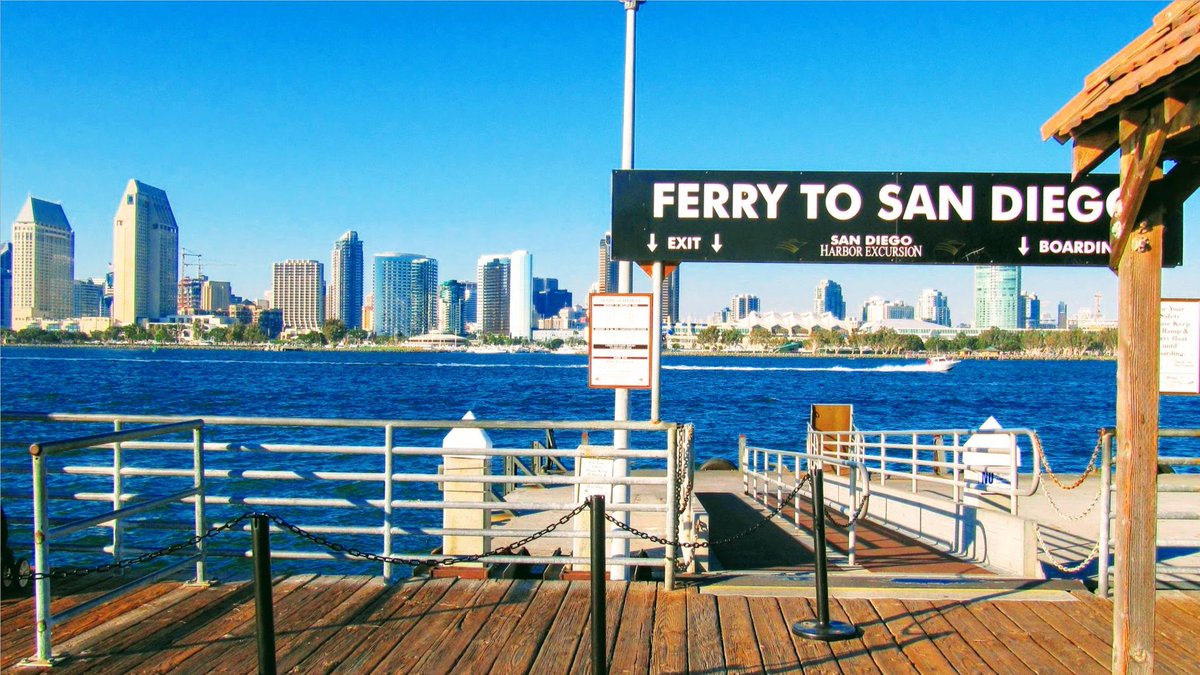
We have multiple Applied #MachineLearning Scientist openings in our team. Come join us in San Diego and Seattle to work on exciting #GraphMining, #TimeSeries, #NLP and #ComputerVision challenges impacting millions of people across the world: amazon.jobs/en/jobs/1867937/…
3
2
10

25 Jul 2022
Check out @Tanmoy_Chak course on Social Network Analysis.
The course starts today, 25 Jul 2022.
Course webpage: lnkd.in/dMbQwSTf
Course teaser: lnkd.in/d5dDBEJe
#SocialNetworkAnalysis #OSNs #GraphMining
2

9 Jun 2022
The #deadline for research papers has been extended to June 23. Time to wrap up those awesome papers and submit!
Great ideas, findings and results on social networks analysis are welcome. Please retweet!
@ASONAM_News #ASONAM2022 #socialmedia #datamining
#graphmining #BigData

ASONAM 2022 deadline has been extended to June 23, 2022 11:59 PM American Samoa Zone (UTC-11)! We have technical issues and haven't been able to update the website. Please help us to share a word! #ASONAM2022 @Walid_Magdy @CChelmis
1
7

25 Apr 2022
Learning the concept of #cluster and #spanner helps you to better understand your graph. Here is me looking for them in Obsidian.😉 #obsmd #graphmining
Click to learn more about them.😍
1
1
4
21 Mar 2022
📢 Open Assistant Professor position in #AI at @centralesupelec @UnivParisSaclay @Inria_Saclay! Please contact me if you are working in graph mining and learning, and you're interested to apply. #NetworkScience #GraphMining #GNN #AcademicTwitter
🔗centralesupelec.fr/sites/def…
2
3

17 Feb 2022
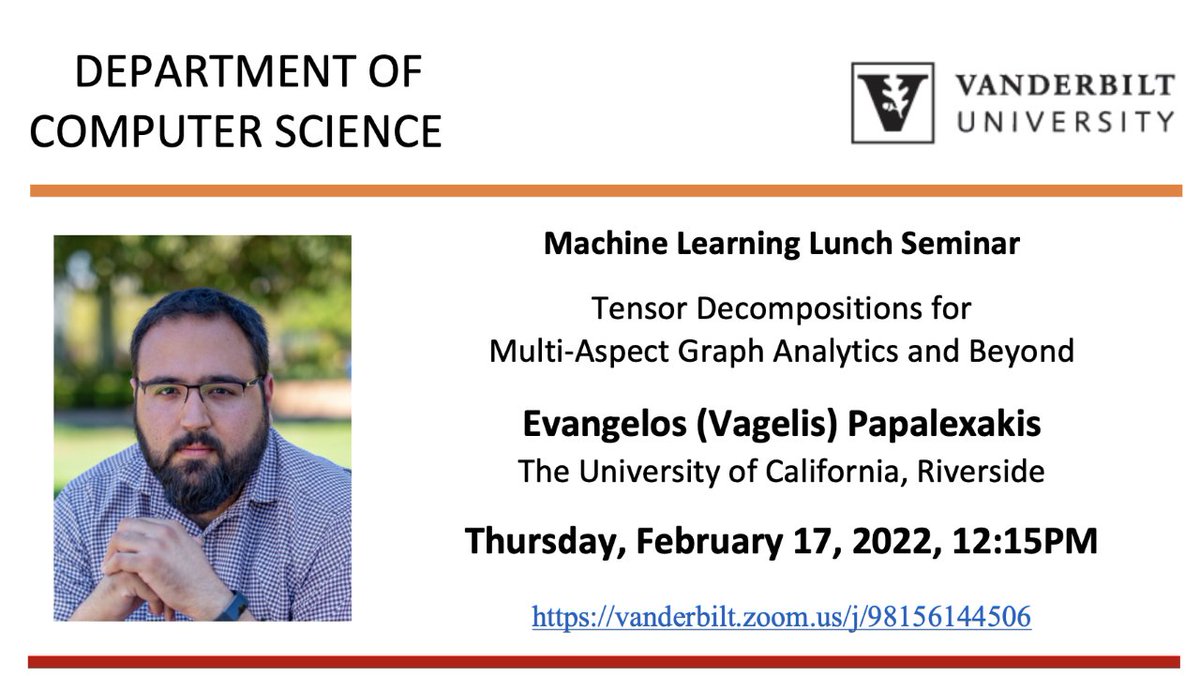
Had a blast virtually giving a talk at the @Vanderbilt_CS
ML Lunch seminar on #tensors for #multiaspect #graphmining
Thanks so much @TylersNetwork and @SKolouri and everyone who attended for hosting and great discussions!
14 Feb 2022

Be sure to join the next Machine Learning Lunch Seminar is this Thursday, February 17th at 12:15 PM with guest speaker Prof. Evangelos (Vagelis) Papalexakis
@vagelispapalex #machinelearning
1
1
11

15 Dec 2021
This evening thinking about this brilliant GraphINVENT Package by @rociomer3 Graph neural networks for molecular design (please check out latest addition of reinforcement learning framework) - github.com/MolecularAI/Graph… #ai #ml #datascience #healthcare #drugdiscovery #graphmining
1
1

Follow us on LinkedIn to see all of our long-form posts on #AI, #graphdatabases, #graphanalytics and #graphmining: bit.ly/3D9fb1e

1