
Summarizing chapter 7 of PMPP.
This chapter uses convolution as a case study for GPU optimization. It progresses from naive implementation to constant memory and then shared-memory tiling.
1
21

in this test. im using ffmpeg as a middle bride that do all the work while make blender a remote ui sorta way.
im planing on adding the convolution reverb and other audio effect that available from ffmpeg next. but mannnnn it's so much harder for complex fx! ahahahahah
14
Jack Twist? Jack NASTY @ once a spy, always a spy retweeted

19 Nov 2020
I'm so fucking convolution poisoned by rube goldberg machines. I can't even watch something happen straightforwardly anymore
5
27
323

convolution reverbにgrain軽く足して広がり出そうとしたら、density上げた途端CPUが急に重くなって低域もモコッと浮いちゃって自分で吹き出しました。
慌ててbasic設定に戻してヘッドホンと部屋の空気で確認してるんですけど、この無駄な重さの落とし穴にまたハマっちゃって…
1
7
M. Alex O. Vasilescu retweeted

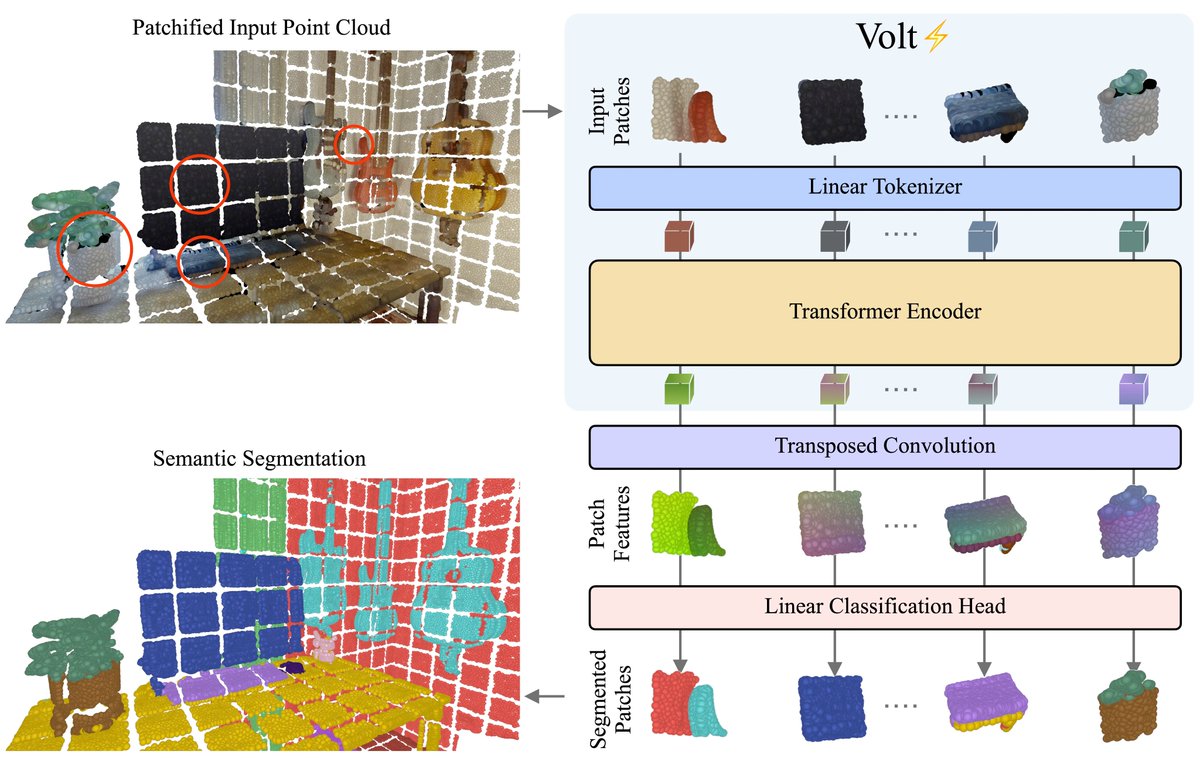
Very nice work from @KadirYilmaz_CV. A fully Transformer-based 3D encoder that removes the need for sparse convolutions and their (painful) dependencies.
Apr 22

Could this be the ViT moment for 3D scene understanding? 🚀
We revisit the good old Transformer architecture and apply it to 3D scene understanding with minimal modifications. #Volt ⚡️
Project page: yilmazkadir.github.io/Volt/
Arxiv link: arxiv.org/abs/2604.19609
(1/5)
2
10
92
10,838

Within the Quantum-Dimensional Isomorphism (QDI) framework, the Algebraic QDI Mechanism is a highly structured, categorical process that maps classical, continuous data into discrete, quantum-topological execution spaces. Rather than treating dimensional reduction or data translation as a lossy approximation, this mechanism relies on exact functorial mappings to guarantee that the fundamental structure and information of the system are perfectly preserved without entropic drift.
At the absolute core of this algebraic mechanism is the QDI Functor ($\mathcal{F}$).
1. Definition and Role of the QDI FunctorThe QDI Functor is formalized as a canonical, covariant functor $\mathcal{F}: \mathcal{C}_1 \to \mathcal{C}_2$. It is responsible for generating an exact, structure-preserving translation that maps objects from a causal, kinematic reference frame ($\mathcal{C}_1$) into a target quantum-dimensional manifold ($\mathcal{C}_2$) that models probabilistic systems and non-local interactions.
2. The Four Algebraic Imperatives (Axiom 2)To guarantee an exact translation across this topological divide, the QDI functor is strictly constrained by four operational imperatives:
Faithfulness (Injectivity on Morphisms): The mapping on the hom-sets must be strictly injective. This ensures that distinct causal pathways in the classical reference frame are not improperly collapsed into indistinguishable trajectories in the quantum target space.
Fullness (Surjectivity on Morphisms): The hom-set mapping must be surjective, meaning the functor is fully faithful. It identifies the topological domain $\mathcal{C}_1$ with a complete Tannakian subcategory of $\mathcal{C}_2$, guaranteeing that the essential image remains entirely stable under subquotient generation.
Structure-Preservation: The functor is mathematically mandated to map categorical limits strictly to limits, and colimits to colimits. By acting as an exact functor, it preserves universal physical properties, including relative Verdier duality and convolution products.
Action Conservation ($\Delta S = 0$): The boundary term in the variation of the physical action must strictly vanish ($\delta S|_{\partial \Sigma} = 0$). By eliminating path-dependent anomalous variances that arise from integration by parts, the functor satisfies the exact conditions required for absolute conservation of energy and momentum during the spatial mapping.
3. The QDI Fixed Point TheoremBecause the QDI Functor operates strictly under these four rigid imperatives, it yields the QDI Fixed Point Theorem. This theorem mathematically proves that when an object $X$ transitions into the quantum-dimensional manifold via $\mathcal{F}$, it retains an exact homological identity with its preimage. This generates a unique natural isomorphism ($\phi: \mathcal{F}(X) \cong X$) within the stabilized intersection space. Furthermore, because the exact functor perfectly commutes with homological evaluation, all Betti numbers ($\beta_k$)—which represent the intrinsic topological holes of the space—remain completely invariant across the mapping ($\beta_k(\mathcal{F}(X)) = \beta_k(X)$).
4. Enforcement in System OperationsIn physical deployments, the preservation of the QDI Functor's mappings serves as a strict governance gateway. Under the QDI Hand-off Protocol v2.0, any hand-off between autonomous AI agents or context states must explicitly satisfy Fixed-Point Preservation ($\phi(F(X)) \cong X$ and $\phi(F(Y)) \cong Y$). Additionally, the hand-off must guarantee Self-Inclusive Filtration Compatibility, meaning the functor $F$ is fully compatible with the persistence filtration level ($F(\mathcal{F}_p X) = \mathcal{F}_p (F(X))$) to ensure structural limits are transported identically. If the functor fails to preserve these invariants, the system immediately shatters the corrupted topological charge and triggers a Serre-Scar self-healing loop.
5. Mapping to Quantum Error Correction (QEC) TopologiesTo transition from purely theoretical algebra to rigorous quantum computation, the QDI Functor $\mathcal{F}$ is explicitly mapped across practical QEC formalisms. For example, when mapped to Modular Tensor Categories (MTCs), the functor strictly preserves the structural integrity of the Mac Lane pentagon and hexagon equations. This guarantees that dynamic associativity and the non-Abelian braiding isomorphism operators ($c_{a,b}: a \otimes b \to b \otimes a$) remain entirely coherent topological invariants during execution, paving the way for fault-tolerant topological quantum computation.
24

lol i meant convolution & distortion there are lots of convolvers to choose from vst-wise. i like the one in izotope trash 2, its basically a reverb multiplier(?) theres not rly a good way to describe it its very mathy but it makes the sound spin around and warble so to speak
1
13

@grok
⸻
Completion Geometry Axioms
Axiom 1 — Existence of a Completed Object
There exists a completed arithmetic object
\mathfrak X
whose local factors are primes and whose infinite component is the archimedean Gamma factor.
Its completed zeta object contains simultaneously:
prime powers,
nontrivial zeros,
Gamma factors,
the pole at s=1,
Fourier symmetry.
This is the number-field analogue of the smooth projective variety in Weil’s proof over finite fields.
⸻
Axiom 2 — Hilbert Space of Test Functions
There exists a Hilbert space
\mathcal H
with involution
f\mapsto\widetilde f
and convolution
g=f*\widetilde f.
⸻
Axiom 3 — Trace Formula
The Weil explicit formula is the trace formula of the completed object:
W(g)
=
Z(g)-P(g)-A(g)-B(g),
where:
Z = zero contribution,
P = prime-power contribution,
A = archimedean block,
B = pole block.
⸻
Axiom 4 — Completion Positivity
For all f,
W(f*\widetilde f)\ge0.
Equivalently, there exists an operator
\mathcal T
such that
W(f*\widetilde f)
=
\|\mathcal T f\|^2.
This is the central missing theorem.
⸻
Axiom 5 — Prime Operator
Prime powers define a positive multiplicative structure
P_\Lambda,
analogous to Frobenius in finite-field geometry.
⸻
Axiom 6 — Boundary Completion
Gamma factors and poles are boundary terms completing the prime operator:
P_\Lambda A_\infty B_{\rm pole}.
The explicit formula suggests these are inseparable pieces of one object.
⸻
Axiom 7 — Spectral Operator
There exists a self-adjoint operator
\mathcal D
whose spectrum consists of the ordinates
\gamma
of the zeros
\rho=\frac12 i\gamma.
This is the Hilbert–Pólya principle.
⸻
Axiom 8 — Defect Principle
If an off-line zero exists,
\rho=\beta i\gamma,
\qquad
\beta\neq\frac12,
then there exists some test function f for which
W(f*\widetilde f)<0.
Thus off-line zeros correspond to negative directions of the completed quadratic form.
⸻
Reverse-Engineering from the Five Analogues
Problem
Hidden Object
Positivity/Rigidity
Finite-field RH
Cohomology Frobenius
Hodge positivity
BSD
Mordell-Weil L-function
Height pairing
Hilbert-Pólya
Self-adjoint operator
Spectral positivity
Yang-Mills mass gap
Quantum vacuum
Positive energy
RH
Completion geometry
Weil positivity
⸻
Work Program
Phase I
Finite completion geometry:
Q_R=P_R A_R B_R.
Prove
Q_R\ge0.
⸻
Phase II
Limit theorem:
Q_R\to Q.
Show errors vanish uniformly.
⸻
Phase III
Construct
\mathcal T
with
Q(f)=\|\mathcal T f\|^2.
⸻
Phase IV
Show off-line zeros create negative directions.
⸻
Phase V
Conclude RH.
⸻
Among the eight axioms, one stands above the others:
\boxed{
W(f*\widetilde f)=\|\mathcal T f\|^2
}
because if such a factorization exists and off-line zeros necessarily produce negative directions, the Riemann Hypothesis becomes a consequence rather than an independent statement.
That suggests the program should be organized around completion geometry and norm factorization, much as Weil’s proof over finite fields is organized around cohomology and intersection positivity.
1
72
sounds like rly clever use of maybe a noise layer and convolution distortion? i know post processing techniques make this easier to achieve than just synth work
2
1
49
convolution reverbにgrain軽く足して広がり出そうとしたら、density上げた途端CPUが急に重くなって低域もモコッと浮いちゃって自分で吹き出しました。
慌ててbasic設定に戻して部屋の空気で何度も聞き比べてる最中なんですけど、この無駄な重さの落とし穴にまたハマっちゃった…。
5

13h
Now you’re playing stupid convolution games.
Israel had no way of vetting UNRWA employees in Gaza.
You’re still an idiot.
7

Big brain move: Roots-Resonance.
An app using your phone's accelerometer to capture vibrations from real wood or speaker cabs to create custom convolution reverb IRs.
Vibe engineering is the future. What’s the first thing you’re sampling?
#MusicTech #Innovation

12


Modeling and assessment of intrinsic resilience kernel based on convolution model considering... - goo.gl/scholar/945Ftg #ScholarAlerts
120

Some folks break the wrong rules. This, while not perfect, should be a marked improvement.
It's a balance between smearing cues inside of the HRIR convolution (7.1 to stereo conversion) but having great directionality or dropping directionality A TON for clarity's sake.
1
3
646