

Jun 9
We work with clients in the financial sector whose digital presence must function reliably inside #mainlandChina (operating within the constraints of the #GreatFirewall) as well as #HongKong with its own performance, data, and regulatory considerations
542.digital/case-studies/bui…
ALT Built for the Market: Technical Infrastructure for China and Hong Kong
4
Another year, another round of "system maintenance" across China's biggest apps right before June 4.
Coincidence?
WeChat, QQ, Douyin, Baidu Netdisk, Pinduoduo, Xiaohongshu, Weibo... and more.
Stability maintenance in action.
Like clockwork ahead of the 1989 Tiananmen Square massacre anniversary, a coordinated wave of artificial glitches freezes features across the country's digital landscape to preemptively erase references to 8964. To block memorial symbols like candle emojis or custom avatars, WeChat, QQ, Douyin, Pinduoduo, Xiaohongshu, and Sina Weibo completely disable profile modifications. Meanwhile, Baidu Netdisk suspends all resource and file sharing. The restrictions even clamp down on entertainment, with livestreaming platforms like YY disabling bullet comments and gaming giants like Tank World and Warship World silencing in-game chat systems.
This is political risk management disguised as routine IT work. Operating under strict oversight from the Cyberspace Administration of China, tech companies face catastrophic penalties if a single digital memorial slips through their filters. Ultimately, by forcing an entire digital economy into artificial paralysis, Beijing’s annual panic only highlights the history it desperately tries to bury, proving the regime remains utterly terrified of the truth.
#TiananmenSquare #Censorship #GreatFirewall #ChinaTech #FreedomOfSpeech #History #WeChat

6
26
42
8,313
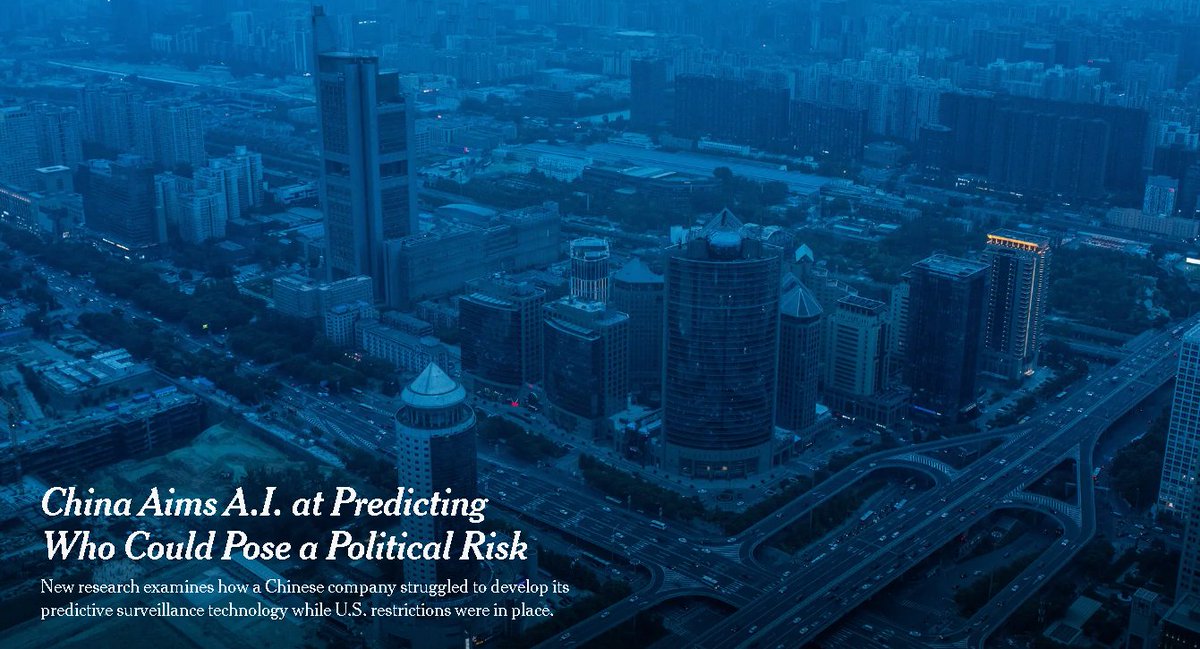
Beijing is officially weaponizing artificial intelligence to punish citizens for thoughts they have not even voiced yet.
A bombshell New York Times report has unmasked a terrifying evolution in digital tyranny, detailing the shift from punishing dissent to predicting it before it happens. Analyzed by researchers at Vanderbilt University, a massive data leak from the Beijing-based tech firm Geedge Networks reveals that China is actively developing AI-driven predictive surveillance to neutralize political risks. The company has deep ties to Fang Binxing, the infamous father of China's Great Firewall, and is moving far beyond passive internet censorship into the realm of preemptive control.
The leaked documents show that these new systems utilize Large Language Models to synthesize data at scale. By aggregating real-time internet browsing histories, tracking physical movements via cell tower records, and mapping out social media connections, the AI builds comprehensive citizen profiles. It then generates political risk scores to flag individuals who might become critics of the government, allowing the state to intervene based entirely on inferred intent rather than actual actions.
This dystopian toolkit is already being exported as a commercialized service to authoritarian regimes aligned with Beijing's Belt and Road Initiative. The leak exposed that Geedge’s flagship product, which functions as the Great Firewall in a box, was deployed by the military junta in Myanmar to locate pro-democracy activists, block social media, and trigger regional internet blackouts that led to targeted arrests. Similar mass surveillance deployments capable of deep packet inspection and tracking citizen reputation scores have been uncovered in Pakistan and Kazakhstan.
Fortunately, the leaked files also reveal a critical vulnerability in Beijing's digital panopticon. United States export controls on advanced semiconductors have successfully starved Geedge of the high-end computing power required to scale these predictive AI models. Forced to pivot to less efficient tech due to chip shortages, their progress has been significantly slowed. This serves as a stark reminder to Western policymakers that maintaining tight semiconductor sanctions is the primary line of defense keeping this predictive surveillance grid from expanding globally.
#UnveiledChina #PredictiveSurveillance #DigitalAuthoritarianism #GeedgeNetworks #GreatFirewall #Geopolitics #AICensorship #NationalSecurity
47
255
498
48,063

India and China took completely different internet paths 🌐
🇮🇳 India:
Google, YouTube, X, Instagram - connected to the global web.
🇨🇳 China:
Built its own ecosystem with WeChat, Baidu, Weibo, Alibaba & ByteDance.
One grew on the global internet.
The other built a parallel digital universe.
Agree or disagree? 🔓🔒
#OpenWeb #GreatFirewall

5G isn’t just about faster internet.
It’s the foundation for AI, smart factories, autonomous systems & future infrastructure 📡
🇨🇳 China:
• 4M 5G base stations
• World's largest 5G network
🇮🇳 India:
• Launched 5G in 2022
• One of the fastest rollouts globally
• Building a homegrown 5G stack
One scaled first.
The other scaled fast.
Agree or disagree?
#Huawei5G #India5G
5
9
1,909

May 26
🔴#TRIBUNE – VPN, chiffrement, gel des avoirs : La triple offensive discrète contre la liberté d’expression
Par @_h16
Pour une bonne partie de la classe politique européenne, la liberté d’expression est devenue le bruit du voisin qui tond sa pelouse un dimanche matin : absolument insupportable. Le réseau X de @elonmusk étant l’amplificateur le plus bruyant, il était inévitable qu’il serve de cible répétée, comme on l’observe avec l’information judiciaire ouverte par le parquet de Paris, dont la sobriété politique pourrait être encadrée.
Cependant, au-delà de Musk, c’est tout un arsenal qui se met en place…👇👇👇
▶️ lediplomate.media/tribune-vp…
#VPN,#Censure,#LibertéDExpression,#Surveillance,#UnionEuropéenne,#Bruxelles,#Internet,#Cybersécurité,#Chiffrement,#Backdoor,#ViePrivée,#ProtectionDesDonnées,#X,#ElonMusk,#RéseauxSociaux,#GreatFirewall,#ContrôleNumérique,#France,#PatriotAct,#OnlineSafetyAct,#Retailleau,#BrunoRetailleau,#LibertésPubliques,#SécuritéNumérique,#BigBrother,#ParlementEuropéen,#DonnéesPersonnelles,#Espionnage

4
4
429

May 15
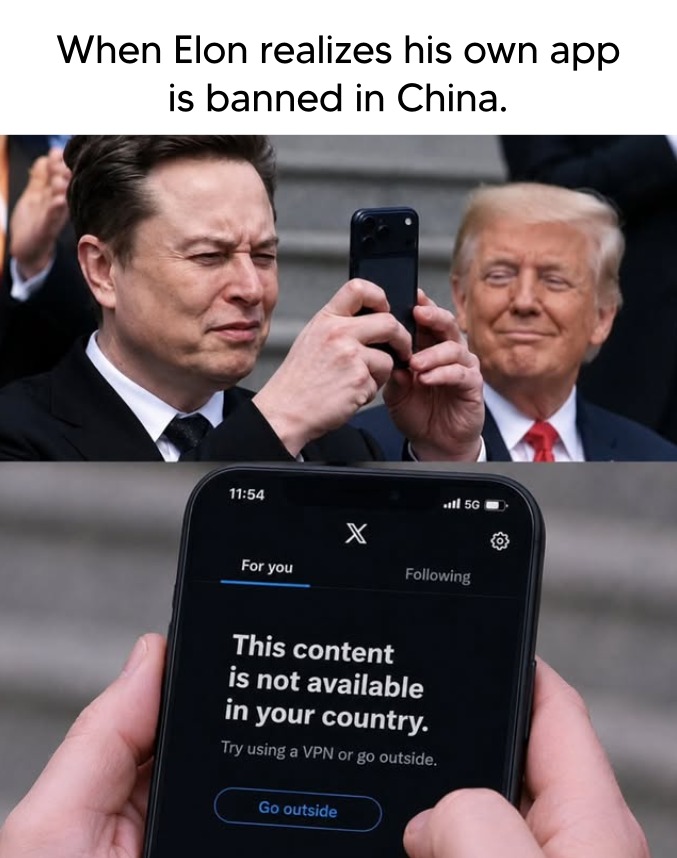
Elon couldn’t believe his eyes when he opened X in China 💀
Trump in the back smiling like “Told you I’d tariff my way in” 🤣
X #ElonMusk #China #GreatFirewall
@elonmusk
1
113

May 14
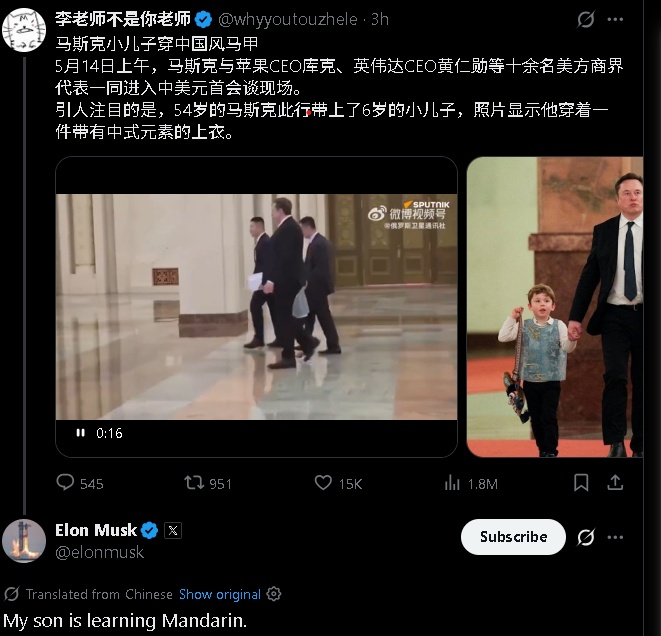
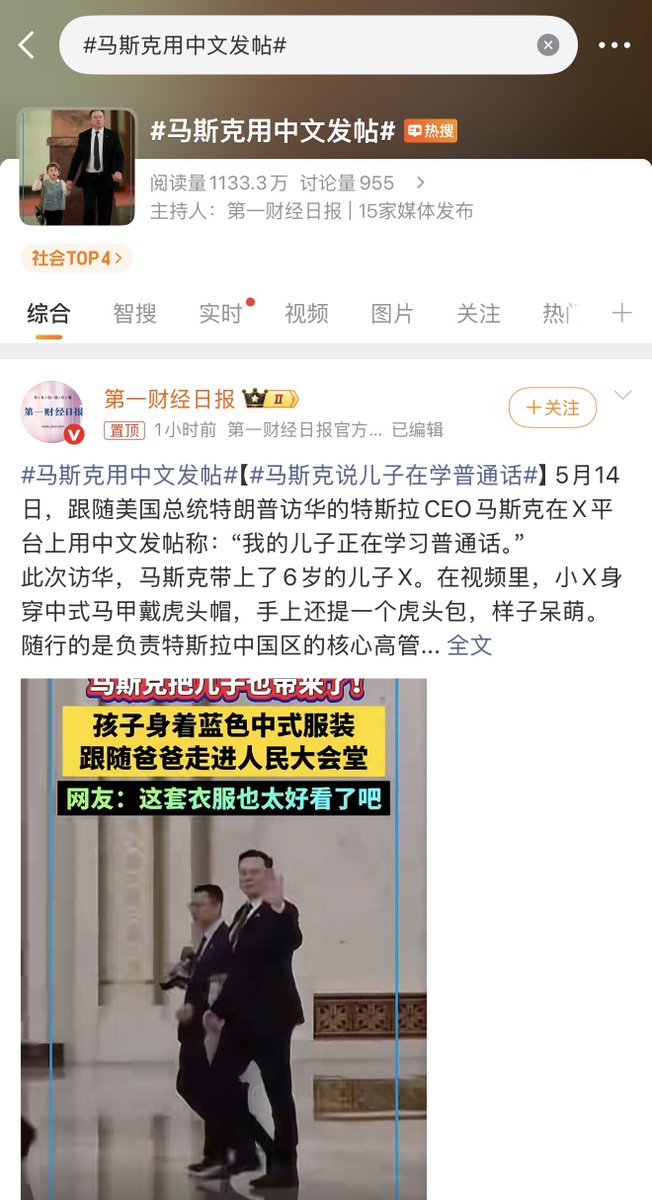
Elon Musk just walked into a geopolitical minefield without saying a single word about politics. While Chinese state media is frantically hyping Musk’s latest post in Mandarin about his son learning the language, they are carefully performing a narrative lobotomy on the actual conversation. The reality is that Musk was replying directly to @whyyoutouzhele, the man better known as Teacher Li. To the CCP, this account is not just a dissident. It is a structural threat to their total control of information.
Teacher Li Ying is the primary digital bridge for the truth that the Great Firewall is designed to kill. During the 2022 White Paper protests and beyond, his account became the central hub for raw, unfiltered footage of dissent and government failure that the CCP instantly scrubs from the domestic internet. He is so radioactive to the regime that even mentioning his name on Weibo can trigger an immediate account ban or a visit from local police. Authorities have gone so far as to interrogate people inside China simply for following him on X, labeling it an act of hostility against the state.
The current trending topic on Weibo is a masterpiece of informational cowardice. The Party wants to use Musk’s celebrity to project a friendly image of China to the world, but they are terrified of the person Musk is actually engaging with. By celebrating the language while erasing the recipient, the CCP is proving that their control is incredibly fragile. They want the clout of the world’s richest man but cannot risk the Chinese public discovering the one account that consistently proves the state’s propaganda is a lie.
#ElonMusk #TeacherLi #Censorship #Weibo #CCP #GreatFirewall #UnveiledChina

3
65
207
25,700
May 13
The CCP markets itself as a global superpower, yet it rules over the world’s most grounded population. While Beijing’s elite fly private to international summits, nearly 1.3 billion Chinese citizens—roughly 93% of the population—have never set foot outside the country. This isn't just about the cost of travel; it’s the result of a regime that has spent decades keeping its people physically and digitally siloed within the Great Firewall to ensure their worldview is strictly curated by state media.
When compared to other major economies, China is a massive outlier. In Canada and the United States, lifetime international travel is the norm, with only about 15% to 27% of citizens never having left their home country. Even in Japan, which has seen a recent decline in outbound tourism due to a weak Yen and a high-stress work culture, only about 35% to 45% of the population remains entirely domestic. In contrast, the overwhelming majority of Chinese citizens are effectively locked behind their own borders.
This isolation is a calculated feature of the CCP’s survival strategy, not a bug. By keeping the population insular, the Party ensures that most citizens never have the chance to compare the state's "declining West" propaganda with actual reality. For 9 out of 10 people in China, the world remains a scary, chaotic place described only in textbooks and censored social media, proving that for the regime in Beijing, a population that can't see the truth for themselves is a population that is easier to control.
#UnveiledChina #AntiCCP #ChinaTravel #GreatFirewall #Isolationism #CCPPropaganda #GlobalChina


16
22
90
4,846

May 10
非常に興味深い内容です!!
--
和訳 by Google
中国では検閲されているが、真実は広まっている。2026年4月、ある中国人ブロガーが、広東省東莞市張木頭郷にある場所を、国営拘置施設に関連した集団墓地の可能性がある場所として特定する動画を投稿した。この動画は、1992年から2003年の間に、そこに拘留されていた数千人が死亡、行方不明、あるいは単に消息を絶った可能性があると主張している。
それは数時間以内に削除された。この話題はWeibo、WeChat、Douyinから完全に消し去られた。現在、5人の元被拘禁者が恐怖から匿名で声を上げている。
内部で何が起こったのか、彼らの主張は以下の通りです。
🏚️それを可能にしたシステム
中国の「拘束・送還」制度は、安定した職や一時滞在許可証を持たない者であれば誰でも当局が拘束できるというもので、裁判も弁護士も釈放日も定められていない。移民、貧困層、初めて都市にやってきた農村労働者、法的救済を求める請願者など、あらゆる人々がこの制度の影響を受けやすい立場にあった。
収容所に入ると、被収容者たちは次のように語る。
―30人以上を収容する過密な独房
警備員が身分証明書を没収し、破棄する
― 被拘禁者が、押収されたばかりの書類を提示できなかった場合に行われる暴行
強制労働:石材採掘、鉄道建設、建設現場
家族との連絡なし。弁護士との相談なし。期限の見通しなし。
ある元被拘禁者は、1995年に東莞に到着した際、市に入ったことを証明できるはずの列車の切符を持っていたことを回想している。警備員はそれを取り上げて破棄した。彼が切符を提示できなかったため、彼らは彼を殴打した。その後、彼は強制労働に送られ、友人が身代金を払って釈放されるまで続いた。
これらは孤立した事例ではない。5人の男性がそれぞれ独立して、同じ構造の虐待について証言している。
💀誰が、何人亡くなったのか?
4月8日に動画を投稿したブロガーは、1992年から2003年の間に、張木頭施設を通過した後に少なくとも数千人が死亡、行方不明、または消息を絶った可能性があると推定している。
この数値は独自に検証されていません。中国はこのシステムからの記録を公表していません。中国国内での独自調査は、検閲とアクセス制限のため不可能です。中国共産党はこの施設に関連するいかなる不正行為も認めていません。
分かっていることは、人々が中に入り、多くが戻ってこなかったということだ。彼らに何が起こったのか、公式な記録は存在しない。
☠️すべてを変えた、そして変えなかった死
2003年、27歳のグラフィックデザイナー、孫志剛(スン・ジガン)は、居住許可証を所持していなかったとして広州で拘束された。彼は3日後、拘留中に殴打されて死亡した。
この事件はインターネット上に流出し、中国国民の怒りが検閲の壁を突破した稀有な事例となった。政府は圧力に屈し、拘束・送還制度を正式に廃止した。
しかし、その名称を廃止しても、その慣習は廃止されなかった。
人権擁護者や元被拘禁者らは、その後も「援助ステーション」(救助站)、精神科入院、行政拘禁など、異なる名称で同様の拘禁が続けられてきたと述べている。これらはすべて司法制度の外で運営され、弁護士を依頼する権利も、独立した監視もなく、誰が入退所したかの記録も公表されていない。
張木頭の動画は、2003年に終わったことを暴露したのではなく、名前を変えたことを暴露したのだ。
🔇その後に続く検閲
4月8日の動画公開から数時間以内に:
―中国の主要プラットフォームすべてから削除された。
— 関連検索語句はブロックされました
—議論はWeibo、WeChat、Douyin、Bilibiliから削除された。
—ブロガーのアカウントは停止された
この動画が生き残ったのは、中国のネットユーザーが既にコピーして、グレートファイアウォールの届かないプラットフォームであるXとTelegramにアップロードしていたからだ。
2026年3月、広州在住のある住民が、中国の臓器移植制度の停止と調査を求めるオンライン署名活動を別途開始した。しかし、その署名活動もすぐに鎮圧された。
2026年5月、中国当局はホームレスの人々を「流散人」(流散人员)と公式に呼び始めた。批評家たちは、この用語の変更は深刻化する社会危機に対処するのではなく、その存在を覆い隠すためのものだと指摘している。
否定する。改名する。検閲する。繰り返す。
❓未解決のまま残る疑問
――張木頭に入ったまま戻ってこなかった数千人の人々はどうなったのか?
なぜ中国政府はこの施設に関する記録を一度も公表していないのか?
臓器移植制度の調査を求める請願書が、提出からわずか数日で却下されたのはなぜか?
――もし拘留・送還制度が本当に2003年に終了したのなら、なぜ元被拘禁者や人権擁護者たちは、今日でも同様の制度が異なる名称で存続していると主張するのだろうか?
―誰が責任を負うのか?
中国共産党のこれまでの対応は、沈黙と削除である。
張木頭を通り過ぎた人々には、それぞれ名前があった。家族がいた。仕事を探す移民、正義を求める嘆願者、そして単に適切な書類を適切な日に持っていなかった人々だった。
彼らは答えを得る権利があった。彼らの家族は今もなおdo.
これも消えてしまう前にシェアしてください。
————
注:ブロガーによる「数千人」の死亡者数という推定は未確認です。この特定のケースにおける臓器摘出の疑惑は、直接的な証拠によって裏付けられていません。報道は元被拘禁者の証言を反映しており、それに応じて出典が明記されています。 @aricchen
によるオリジナル投稿、意見は私個人のものです。
#ChinaHumanRights #SunZhigang #Dongguan #ForcedDisappearances #GreatFirewall #CCP #HumanRights #China
May 10

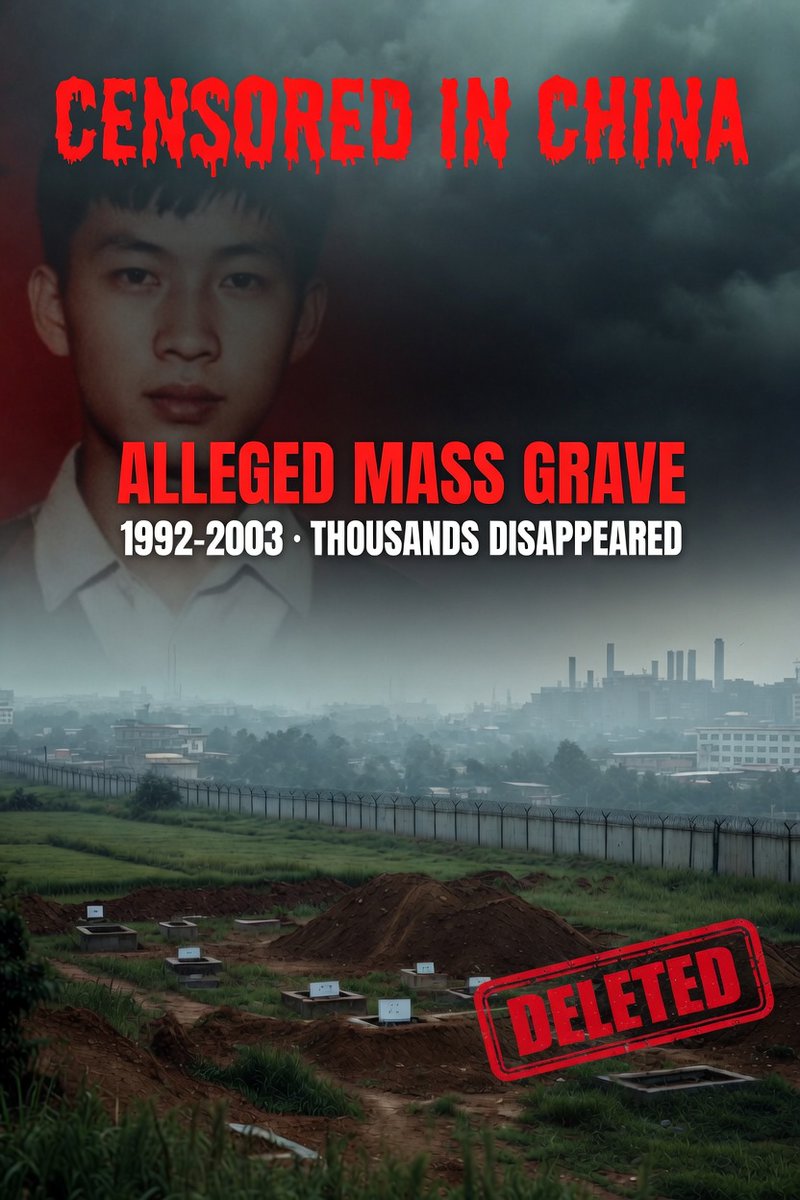
🚨 CENSORED IN CHINA — but the truth is spreading. In April 2026, a Chinese blogger posted a video identifying a site in Dongguan, Guangdong Province — Zhangmutou township — as a potential mass grave linked to a state-run detention facility. The video alleged that between 1992 and 2003, thousands of people detained there may have died, gone missing, or simply vanished.
It was deleted within hours. The topic was scrubbed from Weibo, WeChat, and Douyin. Five former detainees are now speaking out — anonymously, out of fear.
Here is what they say happened inside.
🏚️ THE SYSTEM THAT MADE IT POSSIBLE
China's "custody and repatriation" (收容遣送) system allowed authorities to detain anyone without a stable job or a temporary residence permit — no trial, no lawyer, no set release date. Migrants, the poor, rural workers arriving in cities for the first time, petitioners seeking legal redress — all were vulnerable.
Once inside, detainees describe:
— Overcrowded cells holding 30 people
— Guards confiscating and destroying identity documents
— Beatings when detainees could not produce the documents that had just been taken from them
— Forced labor: quarrying stone, building railways, construction sites
— No contact with family. No legal counsel. No timeline.
One former detainee recalled arriving in Dongguan in 1995 with a train ticket that could have proved he had just entered the city. Guards took it and destroyed it. When he couldn't produce it, they beat him. He was then sent to forced labor until a friend paid to have him released.
These are not isolated stories. Five men — independently — describe the same structure of abuse.
💀 WHO DIED, AND HOW MANY?
The blogger who posted the April 8 video estimated that between 1992 and 2003, at least several thousand people may have died, gone missing, or disappeared after passing through the Zhangmutou facility.
This figure has not been independently verified. China does not publish records from this system. Independent investigation inside China is impossible — censorship and access restrictions make it so. The CCP has never acknowledged any wrongdoing related to this facility.
What we do know: people entered. Many did not come out. No official account exists of what happened to them.
☠️ THE DEATH THAT CHANGED — AND DIDN'T CHANGE — EVERYTHING
In 2003, a 27-year-old graphic designer named Sun Zhigang (孫志剛) was detained in Guangzhou for not carrying his residence permit. He was beaten to death in custody three days later.
The case leaked online. It became one of the rare moments when Chinese public outrage broke through the censorship wall. The government, under pressure, formally abolished the custody and repatriation system.
But abolishing the name did not abolish the practice.
Rights advocates and former detainees say equivalent detention has continued under different labels ever since — "assistance stations" (救助站), psychiatric commitments, administrative holds — all operating outside the judicial system, with no right to legal counsel, no independent oversight, and no public record of who enters or leaves.
The Zhangmutou video did not expose something that ended in 2003. It exposed something that was renamed.
🔇 THE CENSORSHIP THAT FOLLOWED
Within hours of the April 8 video going live:
— It was deleted from all major Chinese platforms
— Related search terms were blocked
— Discussion was scrubbed from Weibo, WeChat, Douyin, and Bilibili
— The blogger's account was suspended
The video survived only because Chinese netizens had already copied and uploaded it to X and Telegram — platforms beyond the Great Firewall's reach.
In March 2026, a Guangzhou resident had separately launched an online petition calling for a suspension and investigation into China's organ transplant system. That petition was also rapidly suppressed.
In May 2026, Chinese authorities began officially referring to homeless people as "dispersed persons" (流散人员) — a terminology shift critics say is designed to erase the visibility of a growing social crisis rather than address it.
Deny. Rename. Censor. Repeat.
❓ THE QUESTIONS THAT REMAIN UNANSWERED
— What happened to the thousands of people who entered Zhangmutou and did not return?
— Why has the Chinese government never published records from this facility?
— Why was a petition calling for investigation into the organ transplant system suppressed within days of launch?
— If the custody and repatriation system truly ended in 2003, why do former detainees and rights advocates say equivalent systems persist today under different names?
— Who is accountable?
The CCP's answer, so far, is silence — and deletion.
The people who passed through Zhangmutou had names. They had families. They were migrants looking for work, petitioners seeking justice, people who simply didn't have the right piece of paper on the right day.
They deserved answers. Their families still do.
Share this before it disappears too.
———
Note: The blogger's estimate of "thousands" of deaths is unverified. Organ harvesting allegations in this specific case remain unsubstantiated by direct evidence. Reporting reflects accounts of former detainees and are attributed accordingly. Original post by @aricchen, views are my own.
#ChinaHumanRights #SunZhigang #Dongguan #ForcedDisappearances #GreatFirewall #CCP #HumanRights #China
1
1
6
1,478

May 10
🚨 CENSORED IN CHINA — but the truth is spreading. In April 2026, a Chinese blogger posted a video identifying a site in Dongguan, Guangdong Province — Zhangmutou township — as a potential mass grave linked to a state-run detention facility. The video alleged that between 1992 and 2003, thousands of people detained there may have died, gone missing, or simply vanished.
It was deleted within hours. The topic was scrubbed from Weibo, WeChat, and Douyin. Five former detainees are now speaking out — anonymously, out of fear.
Here is what they say happened inside.
🏚️ THE SYSTEM THAT MADE IT POSSIBLE
China's "custody and repatriation" (收容遣送) system allowed authorities to detain anyone without a stable job or a temporary residence permit — no trial, no lawyer, no set release date. Migrants, the poor, rural workers arriving in cities for the first time, petitioners seeking legal redress — all were vulnerable.
Once inside, detainees describe:
— Overcrowded cells holding 30 people
— Guards confiscating and destroying identity documents
— Beatings when detainees could not produce the documents that had just been taken from them
— Forced labor: quarrying stone, building railways, construction sites
— No contact with family. No legal counsel. No timeline.
One former detainee recalled arriving in Dongguan in 1995 with a train ticket that could have proved he had just entered the city. Guards took it and destroyed it. When he couldn't produce it, they beat him. He was then sent to forced labor until a friend paid to have him released.
These are not isolated stories. Five men — independently — describe the same structure of abuse.
💀 WHO DIED, AND HOW MANY?
The blogger who posted the April 8 video estimated that between 1992 and 2003, at least several thousand people may have died, gone missing, or disappeared after passing through the Zhangmutou facility.
This figure has not been independently verified. China does not publish records from this system. Independent investigation inside China is impossible — censorship and access restrictions make it so. The CCP has never acknowledged any wrongdoing related to this facility.
What we do know: people entered. Many did not come out. No official account exists of what happened to them.
☠️ THE DEATH THAT CHANGED — AND DIDN'T CHANGE — EVERYTHING
In 2003, a 27-year-old graphic designer named Sun Zhigang (孫志剛) was detained in Guangzhou for not carrying his residence permit. He was beaten to death in custody three days later.
The case leaked online. It became one of the rare moments when Chinese public outrage broke through the censorship wall. The government, under pressure, formally abolished the custody and repatriation system.
But abolishing the name did not abolish the practice.
Rights advocates and former detainees say equivalent detention has continued under different labels ever since — "assistance stations" (救助站), psychiatric commitments, administrative holds — all operating outside the judicial system, with no right to legal counsel, no independent oversight, and no public record of who enters or leaves.
The Zhangmutou video did not expose something that ended in 2003. It exposed something that was renamed.
🔇 THE CENSORSHIP THAT FOLLOWED
Within hours of the April 8 video going live:
— It was deleted from all major Chinese platforms
— Related search terms were blocked
— Discussion was scrubbed from Weibo, WeChat, Douyin, and Bilibili
— The blogger's account was suspended
The video survived only because Chinese netizens had already copied and uploaded it to X and Telegram — platforms beyond the Great Firewall's reach.
In March 2026, a Guangzhou resident had separately launched an online petition calling for a suspension and investigation into China's organ transplant system. That petition was also rapidly suppressed.
In May 2026, Chinese authorities began officially referring to homeless people as "dispersed persons" (流散人员) — a terminology shift critics say is designed to erase the visibility of a growing social crisis rather than address it.
Deny. Rename. Censor. Repeat.
❓ THE QUESTIONS THAT REMAIN UNANSWERED
— What happened to the thousands of people who entered Zhangmutou and did not return?
— Why has the Chinese government never published records from this facility?
— Why was a petition calling for investigation into the organ transplant system suppressed within days of launch?
— If the custody and repatriation system truly ended in 2003, why do former detainees and rights advocates say equivalent systems persist today under different names?
— Who is accountable?
The CCP's answer, so far, is silence — and deletion.
The people who passed through Zhangmutou had names. They had families. They were migrants looking for work, petitioners seeking justice, people who simply didn't have the right piece of paper on the right day.
They deserved answers. Their families still do.
Share this before it disappears too.
———
Note: The blogger's estimate of "thousands" of deaths is unverified. Organ harvesting allegations in this specific case remain unsubstantiated by direct evidence. Reporting reflects accounts of former detainees and are attributed accordingly. Original post by @aricchen, views are my own.
#ChinaHumanRights #SunZhigang #Dongguan #ForcedDisappearances #GreatFirewall #CCP #HumanRights #China
12
84
154
13,420

J'ai du mal à comprendre ce que l'UE reprochait à la Chine sur son contrôle du web par le GreatFirewall et le blocage des VPN 😇🤡
May 2

🇪🇺 The EU Plans to Crack Down on VPNs:
"The new EU age ID verification system will not be 'bypassed' via VPN access."
They couldn’t stop illegal migration, but suddenly becomes North Korea when it comes to controlling what Europeans read online...
14
121
296
4,148

X(旧Twitter)がプライバシー重視の新アプリ「#XChat」(エンドツーエンド暗号化・匿名・電話番号不要)をリリースした直後中国で即時ブロックされた百度検索はエラー表示、国家メディアの報道も即削除監視を嫌う中共が情報統制のため「言論の自由」を恐れ #GreatFirewall で封殺した事例
Apr 26
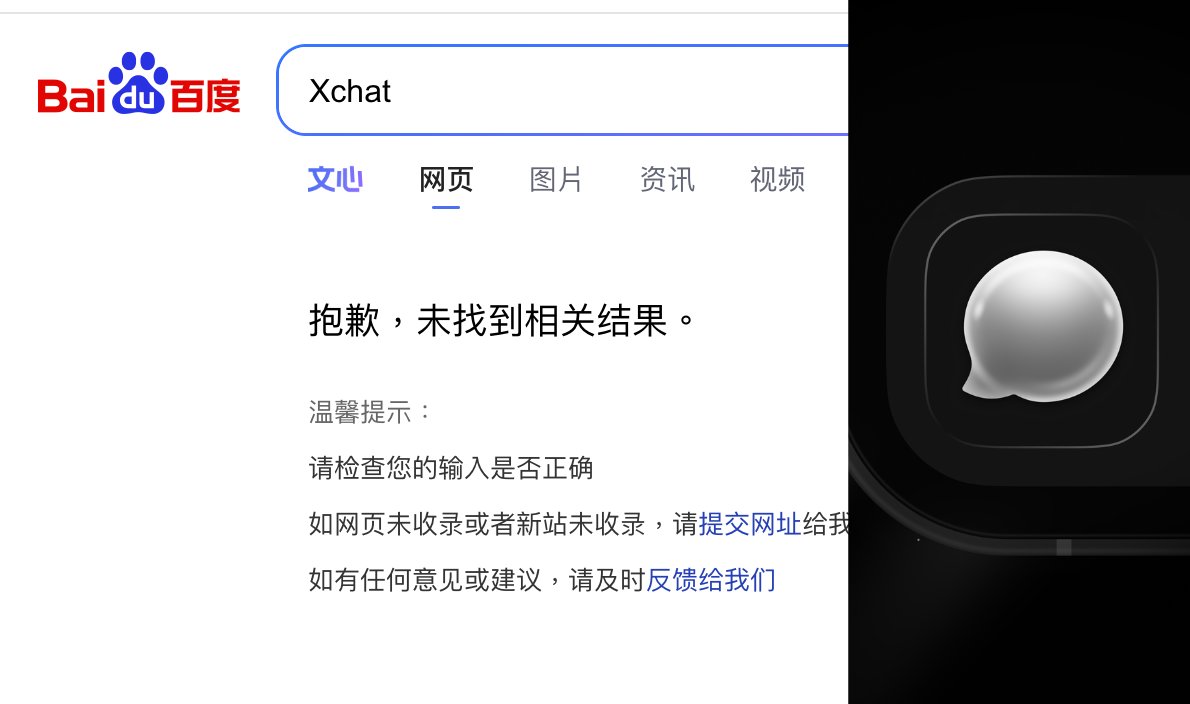
🚨 CCP CENSORSHIP EXPOSED: New Privacy App XChat IMMEDIATELY BLOCKED in China! Just hours after @elonmusk's X platform launched XChat — a secure, end-to-end encrypted messaging app with strong anonymity and no forced phone-number registration — the Chinese Communist Party went into full panic mode.
Searches for “XChat” on Baidu (Chinese Google) now return empty pages with error codes. State media reports from Xinhua and others were published… then hastily deleted. Even Xiaohongshu restricts results.
Why? Because XChat lets people communicate without surveillance — the CCP’s worst nightmare. They demand total control through WeChat and real-name tracking. Any tool offering real freedom of speech gets crushed.
This is the Great Firewall in action: blocking information, deleting reports, and silencing privacy at the source.
The free world MUST wake up to the CCP’s ruthless war on freedom of speech and information flow.
Share this NOW. Expose the truth. Protect digital liberty.
#CCPCensorship #GreatFirewall #XChat #FreedomOfSpeech #ChinaBlocksPrivacy #InformationControl #CCP #China
6
147
Apr 26
🚨 CCP CENSORSHIP EXPOSED: New Privacy App XChat IMMEDIATELY BLOCKED in China! Just hours after @elonmusk's X platform launched XChat — a secure, end-to-end encrypted messaging app with strong anonymity and no forced phone-number registration — the Chinese Communist Party went into full panic mode.
Searches for “XChat” on Baidu (Chinese Google) now return empty pages with error codes. State media reports from Xinhua and others were published… then hastily deleted. Even Xiaohongshu restricts results.
Why? Because XChat lets people communicate without surveillance — the CCP’s worst nightmare. They demand total control through WeChat and real-name tracking. Any tool offering real freedom of speech gets crushed.
This is the Great Firewall in action: blocking information, deleting reports, and silencing privacy at the source.
The free world MUST wake up to the CCP’s ruthless war on freedom of speech and information flow.
Share this NOW. Expose the truth. Protect digital liberty.
#CCPCensorship #GreatFirewall #XChat #FreedomOfSpeech #ChinaBlocksPrivacy #InformationControl #CCP #China
18
89
199
15,784
Apr 26
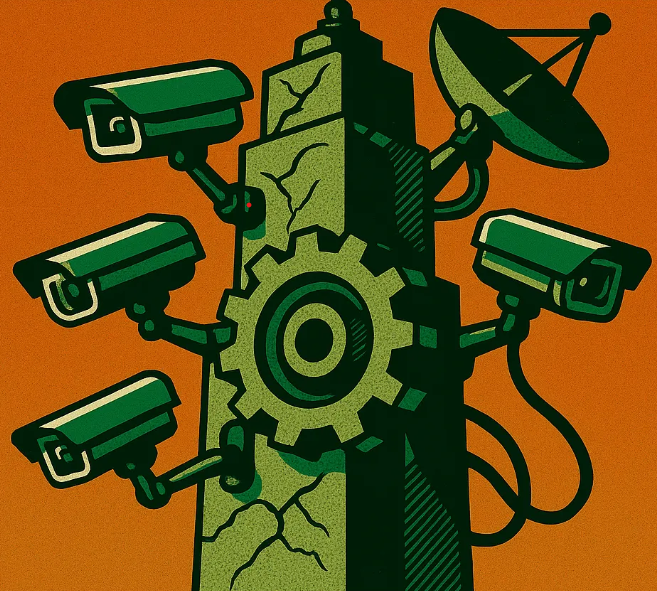
China built the world's most sophisticated internet censorship system. Now it is selling it to every government that wants to silence its own people.
In September 2025, over 500 gigabytes of internal documents, source code, work logs, and operational records were leaked from Geedge Networks, a Chinese company co-founded by Fang Binxing, the man Beijing officially recognizes as the "father of the Great Firewall." The leak was described by researchers as the largest exposure of censorship infrastructure in history.
What the documents revealed went far beyond China's domestic operations. Geedge has been exporting its surveillance and internet control technology to Myanmar since 2024, Pakistan since 2023, Ethiopia since 2021, and Kazakhstan since 2019, all packaged under China's Belt and Road Initiative framework.
The capabilities being sold are not basic content filters. In Myanmar, Geedge's systems are embedded directly into the country's internet exchange points, capable of monitoring 81 million simultaneous connections in real time, blocking VPNs, Signal, WhatsApp, and Tor, and tracking individual users by geographic location. The military junta used these tools to order 74 internet shutdowns in 2024 alone, many to conceal the killing of civilians during armed conflict.
In Pakistan, the technology powers a national surveillance program called Web Monitoring System 2.0, capable of monitoring mobile networks across the entire country in real time. Amnesty International confirmed the system has been used to target journalists, civil society groups, and ordinary citizens. Pakistani law offers virtually no legal protection against it.
The documents also revealed something deeply troubling about data sovereignty. Geedge systems are remotely managed by company employees in China, and internet user data from client countries is shared with researchers at MESA Lab, a unit of the Chinese Academy of Sciences. Governments that adopted this system did not just buy censorship tools. They handed their citizens' data directly to a Beijing-linked institution.
The company currently claims to serve over 40 global operators. Internal job postings reference future deployments in Malaysia, Bahrain, Algeria, and India. Geedge has also been hiring Spanish and French-speaking translators, pointing to expansion into Latin America and francophone Africa.
Inside China, the same technology is being refined and tested in Xinjiang, where the CCP is simultaneously running what the UN has described as potential crimes against humanity against the Uyghur population.
This is not a side business. This is a deliberate, structured, commercially packaged export of digital authoritarianism, built in China, tested on minorities, and sold to any government willing to pay to control what its citizens can see, say, and do online.
The CCP did not just build a cage for its own people. It turned the cage into a product.
#China #CCP #GreatFirewall #Surveillance #Geedge #DigitalAuthoritarianism #HumanRights #Myanmar #Pakistan #CyberSecurity
10
111
204
6,500

Apr 20
China Cutting Citizens' Access To Foreign Online Sites: Report
yespunjab.com/?p=241535
#China #InternetCensorship #VPNBan #GreatFirewall #XiJinping #TechNews #DigitalFreedom #CyberLaw #GlobalNews #ChinaNews #InternetRestrictions #FreedomOfInformation #BreakingNews
21
Apr 17
Leaked docs show Beijing's VPN crackdown is going nuclear: cops raiding homes, slapping fines for sneaking onto X, TikTok, or even Microsoft stuff—all thanks to those sneaky "anti-scam" apps on your phone.
From "Great Firewall" to "Great Prison Wall"... is the CCP auditioning to become North Korea 2.0 with a fully sealed internet? Chinese folks' freedoms just got another hilarious (not) upgrade in oppression!
What's the next plot twist?
Oh, and by the way, all you wumao trolls jumping the wall from China to spam here—you’re breaking the law too. Dare to tell your bosses?
Check out @FloraHua_2000’s full report for the details. 👇
#ChinaCensorship #VPNFail #GreatFirewall #CCP #EndCCP #China #RealChina #VPN
8
17
47
1,934

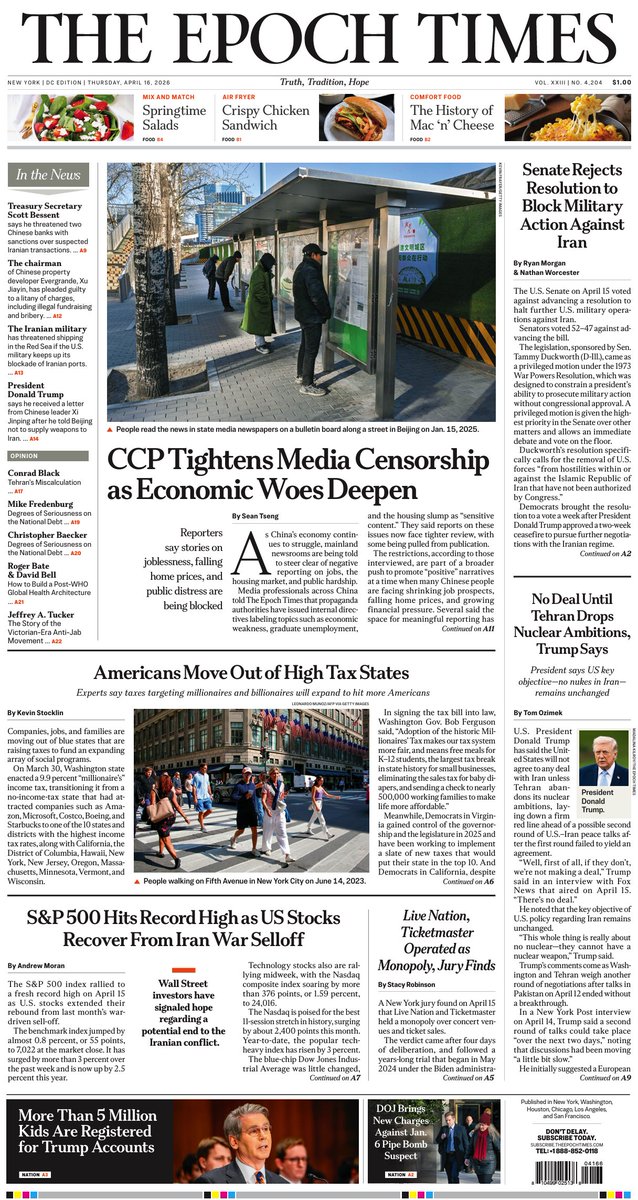
CCP Tightens Media Censorship as Economic Woes Deepen
Reporters say stories on joblessness, falling home prices, and public distress are being blocked.
#CCP #ChinaCensorship #GreatFirewall #EconomicCrisis #ChinaEconomy
2
106
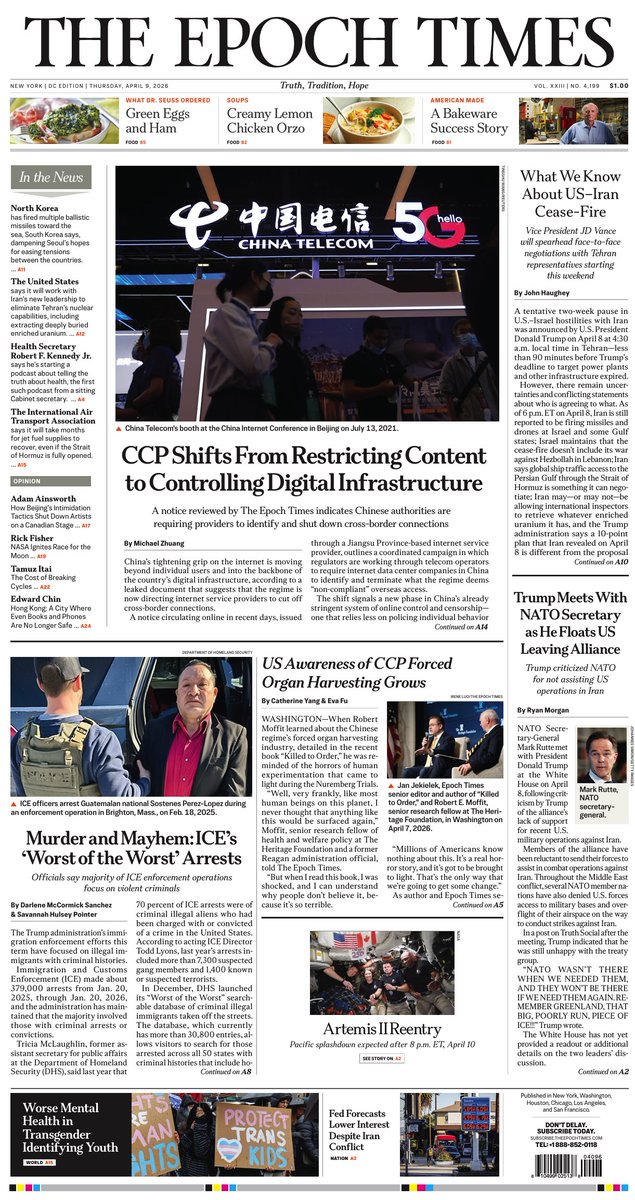
CCP Shifts From Restricting Content to Controlling Digital Infrastructure
A notice reviewed by The Epoch Times indicates Chinese authorities are requiring providers to identify and shut down cross-border connections.
#CCP #GreatFirewall #ChinaCensorship #InternetControl
2
88

The system was never about just blocking websites it was about controlling what people can see think and question. Even with the Great Firewall many still found ways to reach the outside world but now tighter restrictions on VPNs show a deeper fear of free information. When access to truth is treated as a threat it reveals the insecurity of power.
#China #GreatFirewall #InternetFreedom #Censorship #DigitalControl #FreeSpeech #HumanRights #InfoWar

🚨Breaking: The CCP knows that it has been losing big recently, especially after Venezuela and Iran. So how does it react? By shutting down the internet completely!
Although there is a Great Firewall in China, a lot of people are still able to “jump over the wall” to access information outside the wall.
But now, the CCP is going to completely ban the use of VPN services and all “illegal cross-border internet access”!
2
184