
May 21
In addition to the Nicholas Hernandez matter served earlier today, I just served the City of New York and Psychemedics Corporation in the Frankie F. Palaguachi case.
This case goes to something much larger than one former applicant or employee.
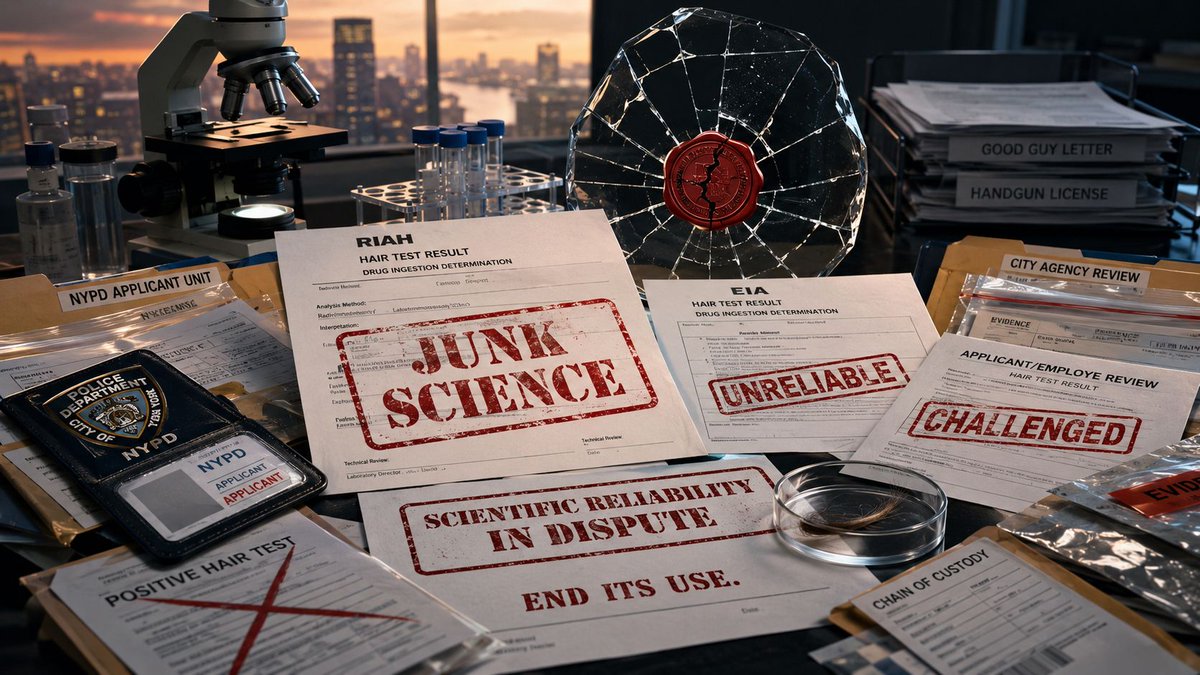
Hopefully, it marks the beginning of the end of the NYPD — and any other city agency — using RIAH, EIA, or any other iteration of this junk-science hair-testing regime to make destructive drug-ingestion determinations that have ruined lives, ended careers, blocked appointments, and branded people as drug users without scientifically reliable proof of ingestion.
For more than 30 years, applicants and employees have been forced to live with determinations, rulings, and findings built on a testing theory that should have been aggressively challenged long ago.
The damage is not abstract.
People lost careers.
People lost reputations.
People lost income.
People lost promotional opportunities.
People lost the ability to serve.
And too many decision-makers treated the test result as gospel because it was easier than asking the threshold question:
Is this testing method scientifically reliable for proving drug ingestion?
That question should have been answered honestly decades ago.
Hopefully, it will not take more than 20 years of litigation like the Boston Police Department hair-testing case before the obvious finally becomes official.
With this case and others, we can begin correcting a system that allowed flawed science, institutional convenience, and administrative arrogance to masquerade as proof.
The work continues.
#CivilRights #EmploymentLaw #NYPD #Psychemedics #DrugTesting #HairTesting #JunkScience #DueProcess #PublicEmployment #PoliceApplicants #PoliceOfficers #NYCHRL #NYSHRL #CivilJustice #TheSandersFirmPC #EricSandersEsq
1
6
11
767
May 18
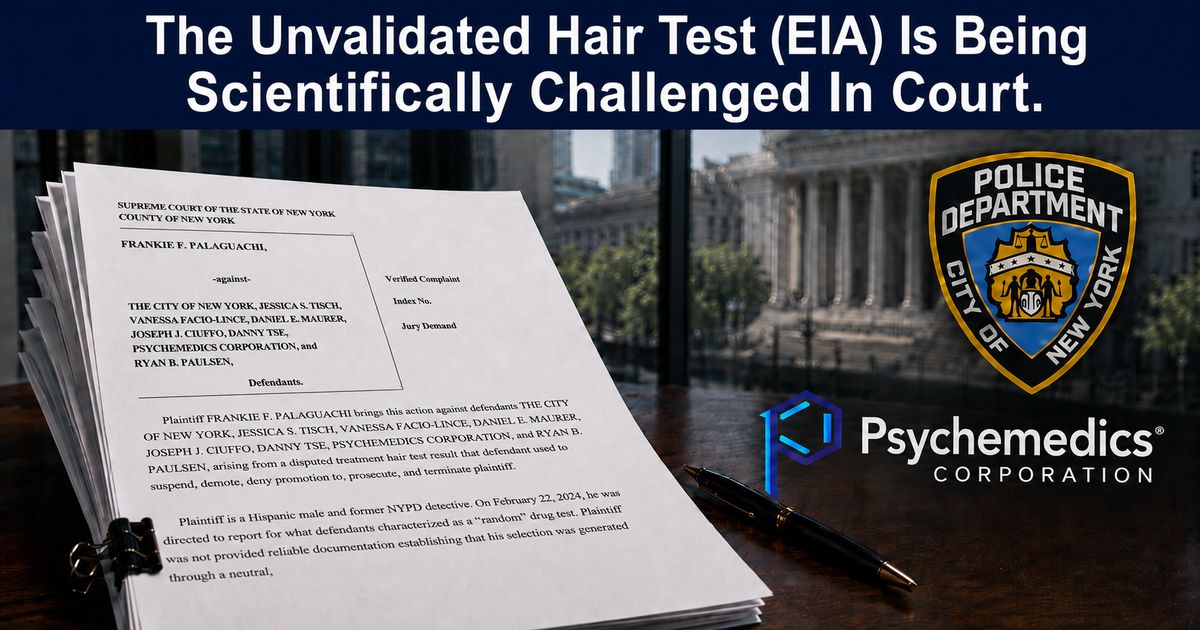
Former NYPD Detective Challenges NYPD and Psychemedics Over Unvalidated Hair Test (EIA)
FRANKIE F. PALAGUACHI, a Hispanic male and former NYPD detective, has filed a Verified Complaint against THE CITY OF NEW YORK, NYPD officials, PSYCHEMEDICS CORPORATION, and RYAN B. PAULSEN.
The case raises serious questions about whether the NYPD may use hair-based drug testing — including EIA or related immunoassay screening methods — as career-ending proof of marijuana ingestion without adequate scientific validation, adverse-impact review, meaningful sample verification, DNA authentication, or fair consideration of exculpatory evidence.
According to the Complaint, PALAGUACHI denied marijuana use under oath, obtained multiple independent negative drug tests, passed a polygraph examination, obtained a negative toenail test, requested DNA verification of the original hair sample, and challenged the alleged random-selection process, chain of custody, testing methodology, and lack of validation.
Despite that, he alleges the Department suspended him, denied his scheduled promotion to Sergeant, demoted him from Detective to Police Officer, prosecuted him administratively, obtained a guilty finding, and terminated him.
This is not just a drug-testing case. It is a civil-rights case about employment selection, scientific reliability, racial impact, retaliation, administrative adjudication, and whether public employers can rely on vendor-driven testing systems without proving they are valid, fair, and legally compliant.
Read the full update at The Sanders Firm, P.C. buff.ly/hDQFzmo
#CivilRights #EmploymentLaw #NYPD #PoliceAccountability #Discrimination #Retaliation #NYCHRL #NYSHRL #DrugTesting #HairTesting #Psychemedics #DueProcess #WorkplaceRights #NewYorkLaw #TheSandersFirmPC #EricSandersEsq
1
4
21
3,630
29 Dec 2025
When “Science” Becomes a Shortcut to Conviction
Last month, the New Jersey Supreme Court did something rare—and overdue. In State v. Nieves, it barred “Shaken Baby Syndrome” (SBS) testimony from criminal trials, holding that the theory is not generally accepted by the scientific community. In plain terms: speculation dressed up as science can no longer be used to take someone’s liberty.
That ruling matters far beyond New Jersey.
For decades, SBS operated as a prosecutorial shortcut. A triad of symptoms was treated as dispositive proof of violent shaking—often without eyewitnesses, without corroboration, and without meaningful biomechanical support. Caregivers who sought medical help became suspects. Jurors were told the science was settled. It wasn’t.
Now courts are finally catching up.
This is not an isolated reckoning. It is part of a larger pattern—how unvalidated or overstated forensic methods become institutionalized, not because they are reliable, but because they are useful. Once embedded, they are defended by inertia, authority, and repetition—long after scientific doubt emerges.
We have seen this before:
• Bite-mark analysis
• Microscopic hair comparison
• Certain arson indicators
• And now SBS / Abusive Head Trauma
Each followed the same arc: early adoption → courtroom certainty → scientific collapse → delayed accountability.
Which brings us to EIA hair testing.
In the Frankie F. Palaguachi case, employment consequences were imposed by the NYPD based on [unscientific, unverified, not generally accepted in the scientific community] enzyme immunoassay (EIA) screening results—a methodology that, like SBS, is often treated as conclusive despite serious questions about specificity, contamination, environmental exposure, and racial bias in hair structure and melanin binding.
The parallel is not rhetorical. It is structural.
Both SBS and EIA hair testing:
• Convert screening tools into determinative evidence
• Shift the burden onto the accused to disprove a scientific claim
• Are insulated by institutional reliance rather than continuous validation
• Disproportionately harm people of color
• Persist long after peer-reviewed science raises red flags
And in both contexts, law lags science—sometimes by decades.
The New Jersey Supreme Court said the quiet part out loud:
Convictions must rest on reliable, well-supported scientific evidence. Not tradition. Not consensus by repetition. Not expert confidence unmoored from data.
That principle does not stop at criminal courtrooms. It applies wherever liberty, livelihood, or dignity turns on forensic claims—including employment testing regimes that impose career-ending consequences without meeting rigorous scientific standards.
The lesson is simple but uncomfortable:
Institutions do not abandon bad science voluntarily. They abandon it only when courts, advocates, and the record make continued reliance untenable.
SBS is falling. Other forensic shortcuts will follow.
The question is not whether. It’s how many lives are affected before the law finally catches up.
Read the article: New Jersey Supreme Court Rejects ‘Shaken Baby Syndrome’ - The first ruling of its kind in the country could give people convicted based on SBS testimony a new shot at freedom. buff.ly/JCK3JTW
#ForensicScience #WrongfulConvictions #ShakenBabySyndrome #EIAScience #HairTesting
#CivilRights #DueProcess #Palaguachi #ScientificIntegrity #Accountability
4
8
579
14 Nov 2025
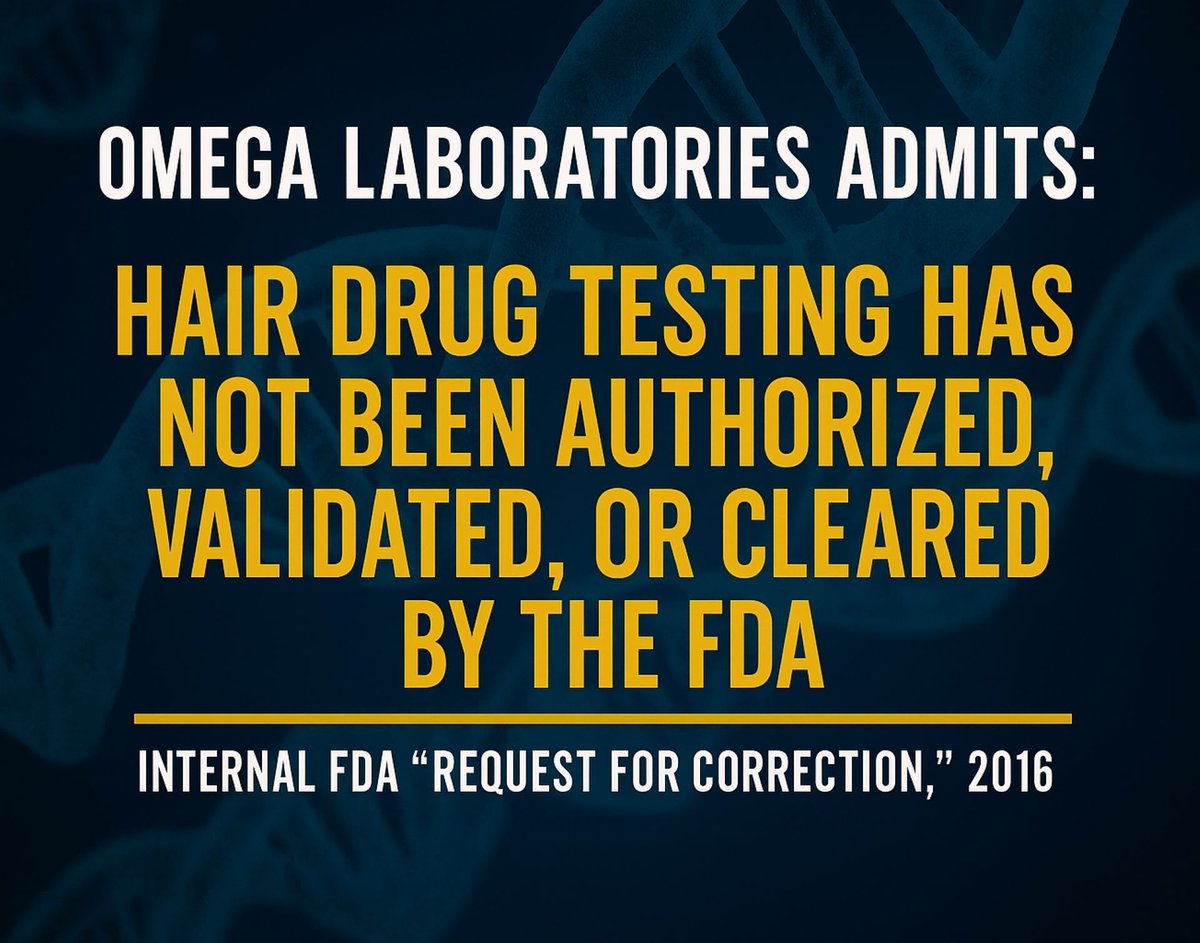
For more than 20 years, the public has been misled about hair-drug testing. Today, the truth is undeniable — and it comes straight from the labs themselves.
An internal FDA “Request for Correction” filed by Omega Laboratories reveals a reality New Yorkers deserve to know: hair testing has never been authorized, validated, or cleared by the U.S. Food and Drug Administration. Not in 2003. Not in 2010. Not today.
In that filing, Omega admits:
• The testing materials are not diagnostic devices
• Hair testing does not fall under FDA’s authorized test-system definitions
• The process has never undergone 510(k) review
• No laboratory has federal scientific clearance to perform hair-drug testing
• The industry exists entirely outside FDA regulatory oversight
In other words: hair testing is not a federally recognized test system.
Yet the NYPD — under multiple administrations — built entire career-ending decisions on it. Officers were hired, fired, disciplined, and blacklisted using an unapproved, unvalidated method that disproportionately harms Black and Latino candidates. Officers like Frankie F. Palaguachi, who became the latest victim of a system NYPD leadership knew was scientifically unstable and legally indefensible.
This is not a “new discovery.”
This is an almost 30-year pattern of institutional deception.
Psychemedics, Omega, and every other hair-testing vendor have fought tooth and nail to avoid FDA scrutiny. Why? Because the moment a federal agency evaluates the science, the entire structure collapses. It is racialized biology dressed up as forensic certainty — a discriminatory tool that never met the baseline standards required of every other clinical test in America.
New Yorkers deserve honesty.
Law-enforcement officers deserve fairness.
And public institutions must never rely on scientific shortcuts to mask institutional failures.
This is why we fight.
This is why transparency matters.
And this is why the Palaguachi case is bigger than one officer — it’s about ending a decades-long misuse of pseudoscience in policing and employment.
The truth is on record now. The excuses are gone.
Read the letter here: FDA — OMEGA Letter Request for Correction (RFC) ASPE
buff.ly/4c5eIlE
#HairTesting #CivilRights #NYPD #FDA #DueProcess #Monell #DisparateImpact #Palaguachi #LawEnforcementAccountability #ScienceAndJustice #EqualProtection #UGESP #EmploymentLaw #PublicSafety #TheSandersFirmPC
1
2
4
571
27 Oct 2025
🧪 Why So Many Still Deny the Truth About Hair Testing
It’s not ignorance. It’s architecture.
For more than three decades, hair drug testing has operated in plain sight — without any FDA authorization, no federal standards, and well-documented racial bias.
Yet when you confront agencies or employers, they deny the problem. Why?
⚠️ Regulatory Silence Became Policy
The U.S. Food and Drug Administration never authorized hair testing. But vendors and employers treated silence as approval. That lie became institutional truth.
🏛️ Inertia Protects Liability
If they admit it’s unlawful, they expose themselves to Title VII, administrative, and civil rights claims. Denial is cheaper.
🧠 The Public Was Kept in the Dark
People assume “drug test” equals science. They don’t know about environmental contamination, melanin bias, or the lack of Substance Abuse and Mental Health Services Administration standards.
⚖️ Courts Deferred Instead of Demanding Proof
Institutional trust replaced scientific validation. But that era is ending.
✊ This isn’t just about one test — it’s about power.
When silence is broken, the entire structure begins to fall.
👉 buff.ly/9Q0Xf02
#HairTesting #CivilRights #FDA #UGESP #TitleVII #EmploymentLaw #SystemicDiscrimination #AdministrativeLaw #CitizenPetition #RacialJustice #DueProcess #EEOC #RegulatorySilence #PublicSafety #Accountability #NYPD #DrugTesting #LegalReform #LawEnforcementHiring #EmployeeRights #TheSandersFirmPC
2
5
553
26 Oct 2025
🧪 Why People Still Deny the Truth About Hair Testing — and Why It Affects Everyone
For years, agencies and employers have relied on hair drug testing that was never authorized by the U.S. Food and Drug Administration (FDA) — and never standardized by the Substance Abuse and Mental Health Services Administration (SAMHSA).
People assume this fight is only about race or people who “failed” the test. It’s not.
📌 This impacts everyone.
It affects applicants who are wrongly flagged.
It affects employees whose clean results still live in unregulated databases.
It affects communities facing hiring gatekeeping with no scientific basis.
And it affects employers, too — exposing them to massive legal risk.
Why the denial persists:
⚠️ Regulatory silence was mistaken for approval.
🏛️ Institutions resist admitting liability.
🧠 The public doesn’t know the science is flawed.
⚖️ Courts historically deferred instead of demanding proof.
Passing the test doesn’t protect you — the system itself is unlawful.
When regulatory silence is broken, the entire structure collapses.
👉 Learn more: buff.ly/9Q0Xf02
#HairTesting #CivilRights #EmploymentLaw #FDA #UGESP #TitleVII #CitizenPetition #SystemicDiscrimination #RegulatorySilence #DueProcess #EEOC #Article78 #PublicSafety #DrugTesting #LegalReform #LaborLaw #Accountability #LawEnforcementHiring #EmployeeRights #WorkplaceJustice #PolicyFailure #TheSandersFirmPC
187
25 Oct 2025
🧪 Hair Testing Litigation Center
For more than three decades, public agencies and private employers have relied on hair drug testing methods that were never approved or authorized by the U.S. Food and Drug Administration (FDA) for employment use.
What began as a vendor marketing pitch quietly became policy — determining who gets hired, promoted, or terminated — all without rulemaking, scientific consensus, or legal authority.
This isn’t a technical oversight. It’s a systemic failure — with real human consequences.
⚠️ No FDA Authorization: Clearance under 21 C.F.R. § 862.3870 applies only to serum, plasma, saliva, and urine — not hair.
🧪 No Substance Abuse and Mental Health Services Administration Standards: SAMHSA has repeatedly declined to adopt hair testing due to contamination risks, bias, and lack of standardization.
❌ No Validation: Most employers cannot meet UGESP validation requirements.
⚖️ Racial Disparities: Hair binds drug metabolites more readily in melanin-rich hair, disproportionately impacting Black and Brown individuals.
Agencies like the New York City Police Department have embedded unapproved science into personnel systems, allowing it to operate as law without oversight.
📜 Our Mission:
The Hair Testing Litigation Center exists to expose and dismantle this regime through:
– Strategic litigation and regulatory petitions
– Civil rights and administrative law challenges
– Investigative reporting and public education
– Coalition-building with unions, advocates, and impacted communities.
🧠 Key Focus Areas:
Investigating discriminatory impact and structural bias.
Exposing regulatory silence that allowed hair testing to flourish.
Equipping workers, attorneys, and advocates with legal tools to fight back.
Driving change through Title VII, UGESP, state law, and citizen petitions.
⚖️ Why It Matters:
Regulatory silence ≠ legal authority.
Longevity ≠ legitimacy.
Marketing ≠ science.
If you’ve been denied employment, disciplined, or harmed by hair drug testing, you have legal options — including civil rights claims, administrative challenges, and citizen petitions to force the government to speak.
✊ This isn’t just about one test — it’s about dismantling an entire shadow system of power.
👉 Learn more: buff.ly/9Q0Xf02
#HairTesting #CivilRights #EmploymentLaw #FDA #UGESP #TitleVII #CitizenPetition #RegulatorySilence #SystemicDiscrimination #Article78 #EEOC #DueProcess #PublicSafety #FrankiePalaguachi #NYPD #DrugTesting #WorkplaceJustice #LegalReform #RacialJustice #LaborLaw #Accountability #LawEnforcementHiring #EmployeeRights #FederalRegulation #PolicyFailure #TheSandersFirmPC
1
2
435
25 Oct 2025
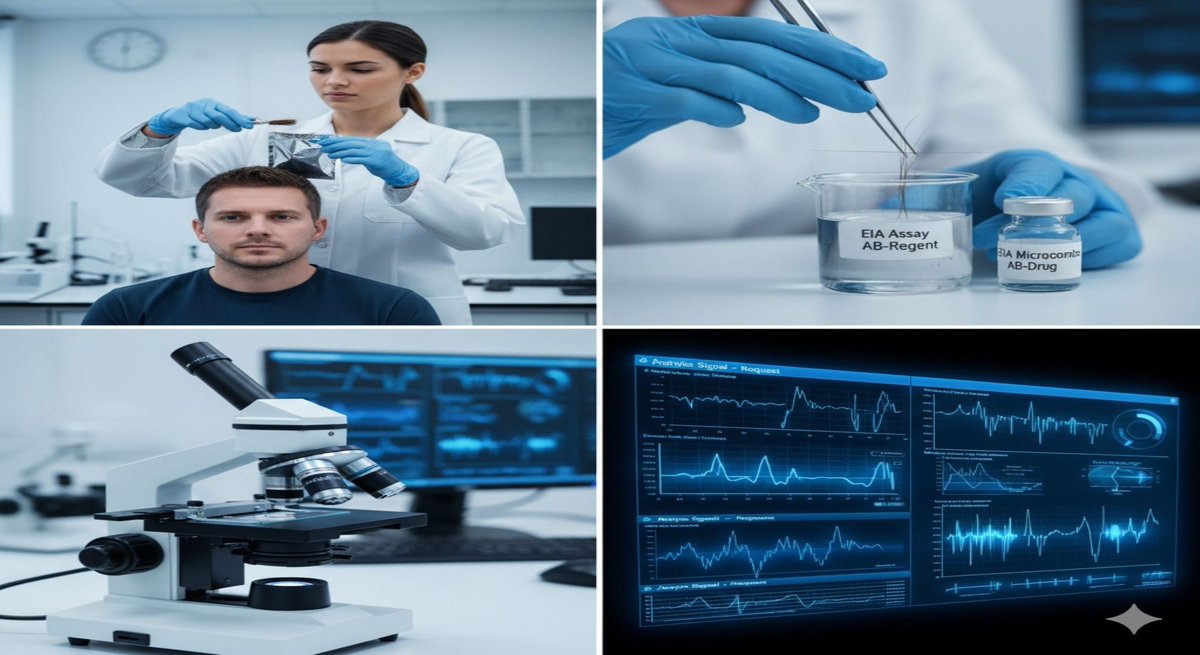
🧪 How to Challenge an Employment Decision Based on Unapproved Hair Drug Testing (RIAH, EIA, or Similar)
For nearly 30 years, hair drug testing has quietly shaped employment decisions across law enforcement, security, healthcare, and transportation — often without any legal authorization.
Here’s the truth:
Hair testing using immunoassay methods — including Enzyme immunoassay (EIA) and Radioimmunoassay (RIAH) — has never been approved or cleared by the U.S. Food and Drug Administration for use on hair.
Yet, many employers act as though it has the force of law.
Regulatory silence is not a license. It’s a vulnerability.
⚖️ Why This Matters
The FDA’s clearance under 21 C.F.R. § 862.3870 applies to serum, plasma, saliva, and urine — not hair.
There are no SAMHSA standards, no federal cutoff levels, and no chain-of-custody protocols for hair testing.
Hair testing is scientifically flawed: it can’t distinguish ingestion from exposure, is vulnerable to environmental contamination, and is racially biased due to melanin binding.
🧾 How to Fight Back — Step by Step
Preserve Your Records: Request lab reports, chain of custody, internal policies, and any claim of “FDA approval.”
Demand Validation: Require the employer to produce UGESP validation studies. Most can’t.
Frame Your Legal Theory: Potential claims include
Disparate impact under Title VII of the Civil Rights Act of 1964
Due process violations (public sector)
Arbitrary & capricious action (e.g., Article 78)
Negligence or misrepresentation (vendors/employers)
Breach of contract or CBA violations
State and local human rights law claims
Use Legal Mechanisms:
File an EEOC charge for disparate impact.
Pursue state or local human rights remedies.
File a Citizen Petition under 21 C.F.R. § 10.30 to force the FDA to go on record.
Challenge agency action through Article 78.
Use union grievance or arbitration procedures where applicable.
🧠 Expose the Scientific Gap
Employers love to say the test is “FDA approved,” “reliable,” or “industry standard.” None of this stands up to scrutiny. There is no FDA authorization, no SAMHSA standard, and decades of evidence of racial bias and contamination risks. Longevity is not legality.
🛡️ Why This Strategy Works
Once you raise a Title VII disparate impact claim, the burden shifts to the employer.
Without FDA authorization and validation, they can’t meet it.
Citizen Petitions strip away the “regulatory silence” they hide behind.
Administrative and civil rights actions create leverage for systemic change.
🚨 Bottom Line
Hair testing in employment is not backed by law — it’s built on silence and habit. But silence can be forced into speech. Applicants and employees have the tools to challenge and dismantle it.
Read the full analysis here: buff.ly/u7vxbXg
#HairTesting #EIA #RIAH #CivilRights #EmploymentLaw #FDA #UGESP #TitleVII #AdministrativeLaw #CitizenPetition #RegulatorySilence #SystemicDiscrimination #Article78 #EEOC #DueProcess #PublicSafety #FrankiePalaguachi #NYPD #DrugTesting #WorkplaceJustice #LegalReform #RacialJustice #LaborLaw #Accountability #LawEnforcementHiring #EmployeeRights #FederalRegulation #PolicyFailure #ChallengeTheSystem #TheSandersFirmPC
1
2
346
25 Oct 2025
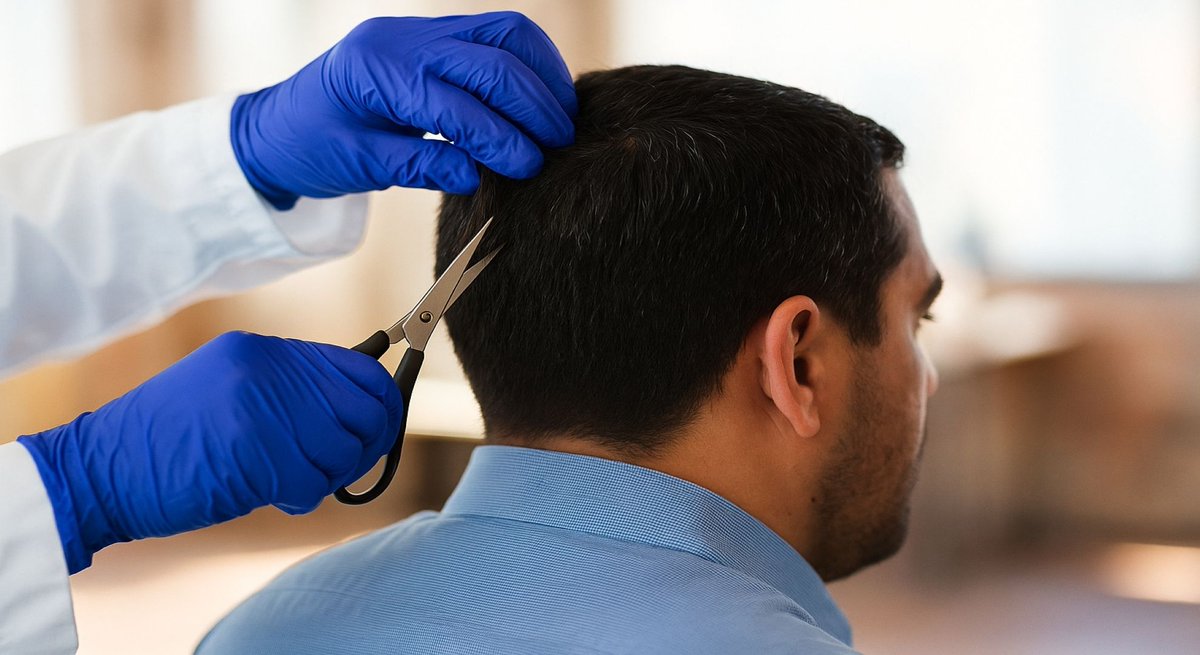
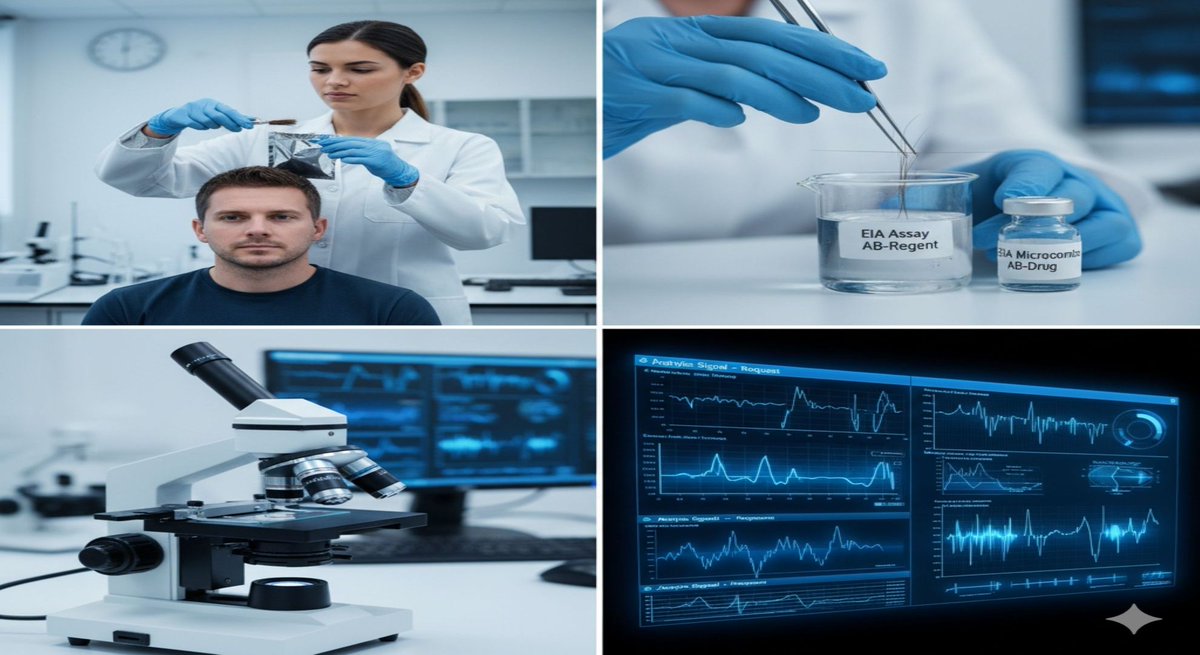
🧪 When Science Becomes Policy Without Oversight — and People Pay the Price
Public policy isn’t only written in statutes or rules—it’s also written in silence. When agencies don’t draw lines, vendors fill the void, employers treat ambiguity as permission, and a “tool” becomes a gatekeeper. That’s how EIA hair testing—cleared for serum, plasma, saliva, and urine, not hair—slipped into hiring and discipline as if it carried the force of law.
Silence is not neutral. It shifts the burden from institutions to workers. A single “positive” from a contested method becomes dispositive; probabilistic science becomes a career verdict. And because the test wears the aura of objectivity, the harmed applicant must somehow disprove what was never authorized.
The pattern is familiar: a lab markets “innovation,” a large employer adopts it to signal vigilance, and regulators, facing risk and resource limits, stay quiet. Over time, checklists expand, forms ossify, and “we’ve always done it this way” replaces proof. Meanwhile, the human costs mount—lost jobs, stalled careers, and stigma—disproportionately borne by Black and Brown applicants, whose hair is more likely to bind drug metabolites from environmental exposure.
This is not just about a device. It’s about administrative drift: psychological “holds” without due process, sealed records misused, algorithms deployed without validation. In each case, ambiguity becomes architecture.
The antidote to silence is legally operative speech—formal standards, published limits, and records that courts and the public can test. That’s why the Citizen Petition challenging unauthorized EIA hair testing matters: it compels the FDA to answer, on the record, what the market has assumed for decades.
Bottom line: Science used coercively in employment must be authorized, validated, and non-discriminatory. When institutions wield unapproved tools, silence becomes power—and power, without accountability, becomes injustice.
Read the full analysis here: buff.ly/dNUPdXd
#CivilRights #EIA #HairTesting #RegulatorySilence #ScienceAndLaw #EmploymentLaw #AdministrativeLaw #FDA #UGESP #TitleVII #WorkplaceJustice #DueProcess #Accountability #LegalReform #NYPD #FrankiePalaguachi #Policy #PublicSafety #SystemicDiscrimination #CitizenPetition #TheSandersFirmPC
1
2
415
25 Oct 2025
How FDA Inaction Enabled Decades of Unlawful Hair Testing
For more than three decades, both public agencies and private employers have relied on hair drug tests the federal government never actually authorized.
The U.S. Food and Drug Administration (FDA) had clear statutory authority to regulate these devices but failed to act. In that silence, vendors built a multibillion-dollar industry, and employers turned an unapproved test into a powerful gatekeeping tool.
This is not a misunderstanding — it’s a regulatory failure with civil rights consequences.
Regulatory Silence as Policy
The Substance Abuse and Mental Health Services Administration (SAMHSA) set standards for urine testing but deliberately excluded hair because of:
contamination,
lack of federal cutoffs, and
documented racial disparities.
Meanwhile, the FDA cleared the EIA immunoassay from Psychemedics Corporation under 21 C.F.R. § 862.3870 — covering serum, plasma, saliva, and urine. Hair was not included.
Instead of enforcing intended-use limits, the FDA stayed silent. Vendors marketed the test as “FDA cleared.” Employers treated silence as approval.
Institutionalized Without Oversight
Law enforcement agencies, including the New York City Police Department, adopted hair testing for hiring and discipline. Over time, silence became policy.
Hair testing is scientifically flawed:
Cannot reliably distinguish ingestion from environmental exposure
No federal cutoffs — labs set their own thresholds
No standardized collection or oversight
Disproportionate impact on Black and Brown individuals
Legal and Civil Rights Exposure
Every employment decision based on unapproved testing rests on shaky legal ground:
Title VII disparate impact liability
Due Process violations for public employees
Tort and contract claims in the private sector
Vendor liability for false FDA claims
The Palaguachi Citizen Petition
The Palaguachi Citizen Petition, filed under 21 C.F.R. § 10.30, forces the FDA to respond publicly. That response will shape litigation, oversight, and reform.
If the FDA admits hair testing was never authorized, agencies and employers may face class actions, civil rights investigations, and accountability.
Silence is not neutral.
Silence is power — and in this case, it enabled discrimination, economic harm, and institutional misconduct for decades.
The reckoning has begun.
Read the full analysis here: buff.ly/tNJ8gqs
#CivilRights #EmploymentLaw #FDA #HairTesting #Palaguachi #Accountability #WorkersRights #DrugTesting #RegulatoryLaw #DueProcess #TitleVII #SystemicReform #InstitutionalAccountability #LegalReform #PublicSafety #CivilRightsLaw #TheSandersFirmPC
157
25 Oct 2025
What an FDA Citizen Petition Really Means — and Why Job Applicants and Employees Should Care
For decades, both public agencies and private employers have quietly relied on drug testing methods the federal government never actually authorized. Those tests have shut people out of jobs, ended careers, and escaped regulatory scrutiny.
The U.S. Food and Drug Administration (FDA) never authorized hair testing under the pathway employers claim. Yet hair testing has been used to make hiring and disciplinary decisions since the 1990s. That silence has consequences.
The Citizen Petition under 21 C.F.R. § 10.30 is one of the few legal tools that can force the FDA to publicly answer for this failure. Once filed, the agency must respond in writing and create a regulatory record that can be used in litigation, oversight, and reform.
This is not academic. It affects real people:
Job applicants denied opportunities based on unapproved tests.
Employees disciplined or terminated on the basis of contaminated or scientifically unreliable results.
Black and Brown workers disproportionately harmed by hair testing’s documented racial bias.
Employers hiding behind “FDA approved” claims that don’t match the actual authorization.
The EIA hair testing device from Psychemedics Corporation was cleared only for serum, plasma, saliva, and urine—not hair. Employers expanded its use far beyond its legal scope, and the FDA looked the other way. That’s how unlawful testing became routine.
The Palaguachi Citizen Petition challenges this regulatory silence. If successful, it will force the FDA to take a position on the record—ending decades of employers relying on silence as a shield.
The implications are far-reaching:
Civil rights and due process claims.
Wrongful termination and failure-to-hire liability.
Pressure on agencies and employers to abandon unlawful testing.
This isn’t just a technical fight. It’s a civil rights and accountability issue. Workers deserve to know whether the test used against them is legally authorized.
Read the full analysis here: buff.ly/nl5kDCl
#CivilRights #EmploymentLaw #FDA #HairTesting #Palaguachi #Accountability #WorkersRights #DrugTesting #RegulatoryLaw #DueProcess #LegalReform #TitleVII #EEOC #WorkplaceRights #LitigationStrategy
1
3
351
25 Oct 2025
🚨 FORMER NYPD OFFICER FILES LANDMARK FDA CITIZEN PETITION CHALLENGING UNLAWFUL HAIR TESTING
For nearly three decades, the New York City Police Department has relied on a drug testing method the Food and Drug Administration (FDA) never cleared for hair testing.
Today, my firm filed a Citizen Petition with the FDA on behalf of former officer Frankie F. Palaguachi, challenging the NYPD’s use of Psychemedics Corporation’s immunoassay device (510(k) K111929). Though cleared for serum, plasma, saliva, and urine under 21 C.F.R. § 862.3870, this device was never authorized for hair testing. Yet, for decades, it has been used to decide who gets hired, disciplined, or terminated.
This filing aligns with the HARMS Citizen Petition, creating a coordinated legal and regulatory challenge to a practice that has harmed thousands of public employees and applicants across the country.
📜 Why it matters:
• Hair testing cannot reliably distinguish ingestion from environmental contamination.
• There are no federal SAMHSA standards for hair testing.
• Psychemedics’ own scientists admitted in a 2022 peer-reviewed article in the Journal of Analytical Toxicology that “not all THC from external contamination may be removed.”
• The method has produced racially disparate impacts, as recognized in Jones v. City of Boston.
• It violates UGESP and Title VII obligations requiring employers to validate testing methods and assess disparate impact.
⚖️ Palaguachi’s Case Timeline
• April 18, 2025 — EEOC Charge filed against the City of New York and Psychemedics.
• August 26, 2025 — Motion to Strike & Dismiss filed, challenging admissibility under Frye and UGESP.
• September 2, 2025 — Motion denied despite lack of FDA clearance.
• September 23–24, 2025 — Fogel Draft Report issued and responded to, raising legal and scientific objections.
• October 16, 2025 — HARMS Citizen Petition filed with FDA.
• October 17, 2025 — Palaguachi terminated based solely on Psychemedics hair test results — while the EEOC charge remained unanswered and FDA review pending.
This isn’t just a legal technicality. It’s a civil-rights crisis. For decades, Black and Latino officers and applicants have been disproportionately harmed by an unvalidated testing method masquerading as regulatory science.
The Palaguachi and HARMS petitions demand FDA action to:
✅ Determine hair testing is outside the cleared classification for 510(k) K111929.
🚨 Initiate enforcement against Psychemedics for misbranding and unauthorized marketing.
📝 Revise labeling and issue public communications to employers and law enforcement.
🤝 Coordinate with civil-rights agencies to address the harm.
📢 “This is bigger than one case. It’s about decades of discriminatory, scientifically unsound practices. FDA must act.” — Eric Sanders, Esq.
📅 Filed: October 24, 2025
⚖️ Counsel: Eric Sanders, Esq. | The Sanders Firm, P.C.
🤝 In coordination with the HARMS Citizen Petition
Read the Press Release here: Former NYPD Officer Files Citizen Petition Urging FDA Crackdown on Unlawful Hair Testing buff.ly/9SHoTJm
#FDACitizenPetition #CivilRights #RegulatoryCompliance #Psychemedics #NYPD #DrugTesting #EmploymentLaw #RacialJustice #FDA #HairTesting #UGESP #FryeStandard #TitleVII #PoliceReform #PublicAccountability #JusticeMatters #DueProcess #WorkplaceEquity #EricSanders #Palaguachi #HarmsPetition #CivilRightsEnforcement #ScientificIntegrity #InstitutionalReform #EqualProtection #EEOC #StopUnlawfulTesting #FDAActionNow #TheSandersFirmPC
1
8
18
2,080
23 Oct 2025
For years, law enforcement agencies, including the NYPD, have leaned on hair testing as an unquestioned pillar of their drug enforcement policies. But the foundation is cracking — legally, scientifically, and now federally.
The U.S. Food and Drug Administration is formally reviewing a petition challenging the Psychemedics Corporation marijuana hair testing device. The petition, filed on October 16, 2025, by Harmed Americans for Reform in Medical-Device Safety (HARMS), lays out in precise terms why this device cannot be relied upon to prove actual marijuana use.
Here’s the critical breakdown:
1. The Device Is Not Authorized for Hair Testing
The FDA’s original clearance for this device (K111929) rests on a regulatory classification — 21 C.F.R. § 862.3870 — that covers serum, plasma, saliva, and urine testing, not hair.
This means the device was never lawfully cleared for its current widespread application in employment and law enforcement settings. Its use on hair samples is an unauthorized stretch — and agencies relying on it are standing on legally thin ice.
2. Hair Testing Fails Scientific Reliability Standards
Even if the device were properly classified, it still fails basic scientific reliability. Unlike urine or blood testing, hair testing cannot distinguish between actual marijuana use and passive exposure. The petition documents how:
•Cannabinoid metabolites are detectable in hair even from secondhand smoke exposure.
•There are no standardized cut-offs that reliably separate use from exposure.
•Variability in hair type, treatment, and growth rates further undermines reliability.
This is why the petition specifically asks the FDA to revise labeling to state clearly:
“The device does not identify whether any test subject used marijuana but only detects the presence or absence of cannabinoid metabolites in hair, which could have occurred without the subject using marijuana.”
3. It Fails the Frye Test in New York
As raised and ignored by the NYPD in the Palaguachi case, under the Frye standard, scientific evidence must be “generally accepted in the relevant scientific community.” Hair testing for cannabinoids is not — and has been repeatedly challenged in both academic and legal forums for its inability to reliably link a positive result to intentional use.
This means evidence derived from such testing would not survive admissibility scrutiny in New York courts. Public employers using it as the sole basis for discipline or termination are doing so on a method that fails their own state’s evidentiary standard.
4. It Violates the UGESP
As raised and ignored by the NYPD in the Palaguachi case, under the Uniform Guidelines on Employee Selection Procedures (1978), any employment testing tool must be job-related, valid, and consistent with business necessity. Hair testing:
•Cannot accurately measure actual use,
•Is vulnerable to disparate impact due to differences in hair texture and treatment across racial groups,
•And lacks scientifically validated cut-offs or confirmatory protocols.
That is a direct compliance failure under UGESP. Continued use exposes agencies to serious Title VII liability.
5. Frankie Palaguachi’s Case Exposes the Real-World Harm
Former NYPD officer Frankie F. Palaguachi was terminated on the basis of a hair test produced with this very device. Now, with the FDA petition spotlighting both regulatory misclassification and scientific unreliability, that termination — and many like it — stands on legally indefensible ground.
This is not about “zero tolerance.” It’s about agencies using an unauthorized, scientifically unreliable, and legally defective device to end careers and destroy reputations.
6. A Reckoning Is Coming
If the FDA acts — and it should — it won’t just be a labeling change. It will be a formal acknowledgment that this device should never have been used the way it has.
That has enormous implications:
•For every employer and law enforcement agency relying on this test.
•For every employee disciplined or terminated based on it.
•And for the institutional culture that has treated unreliable science as a shield for selective enforcement.
Scientific unreliability. Regulatory overreach. Legal noncompliance. The system built around hair testing for marijuana use is collapsing under its own weight.
Read more here: marijuanamoment.net/fda-weig…
Read the HARM Petition here: thesandersfirmpc.com/wp-cont… #FDA #Psychemedics #FrankiePalaguachi
#NYPD #DrugTesting #CannabisTesting #FryeStandard #UGESP #AdministrativeLaw #CivilRights #EmploymentLaw #SecondhandSmoke #UnreliableEvidence #ZeroTolerance #RegulatoryFailure #DisparateImpact #ForensicScience #HairTesting #DueProcess #PublicSafety #Accountability #WorkersRights #Reform #ScientificIntegrity #EricSandersEsq #TheSandersfirmPC
1
2
5
612
20 Oct 2025
🔴 THE TRUTH WAS HIDDEN IN PLAIN SIGHT.
When former Police Officer Frankie F. Palaguachi filed a Charge of Discrimination with the United States Equal Employment Opportunity Commission on April 18, 2025, he alleged serious irregularities in the New York City Police Department’s drug testing practices — including inconsistent results, discriminatory impact, and lack of transparency involving Psychemedics Corporation.
Since then, neither the City of New York nor Psychemedics has filed a Position Statement.
Months later, on October 16, 2025, a Citizens Petition was filed with the U.S. Food and Drug Administration. That petition revealed what no one told him at the time:
👉 Psychemedics’ hair testing device was never properly cleared by the FDA for hair testing of cannabinoids.
This changes everything.
For decades, employees — including law enforcement officers — were forced to submit to a test built on regulatory quicksand. A test that was never lawfully cleared for the purpose it was used. A test that can’t tell the difference between actual use and passive exposure.
⚠️ Frankie’s EEOC charge is no longer an isolated dispute. It’s evidence of a system-wide practice built on unauthorized, scientifically unreliable methods.
This isn’t an employment “policy.”
This is a legal fault line that stretches back nearly thirty years.
#FrankiePalaguachi #NYPD #CivilRights #Psychemedics #EEOC #TitleVII #FDA #HairTesting #Accountability #EmploymentLaw #RegulatoryFailure #Justice #EricSandersEsq #TheSandersFirmPC
1
5
617
20 Oct 2025
🔴 Policy Without Science. Discipline Without Proof.
On October 16, 2025, Harmed Americans for Reform in Medical-Device Safety Corp. (HARMS) — led by Dr. Hooman Noorchashm, Dr. Michael K. Paasche-Orlow, and Dr. David A. Simon — filed a Citizens Petition with the U.S. Food and Drug Administration (FDA).
This petition was filed in response and opposition to the use of Enzyme Immunoassay (EIA) hair testing by the New York City Police Department (NYPD), using the case of former Police Officer Frankie F. Palaguachi as a real-world example of harm.
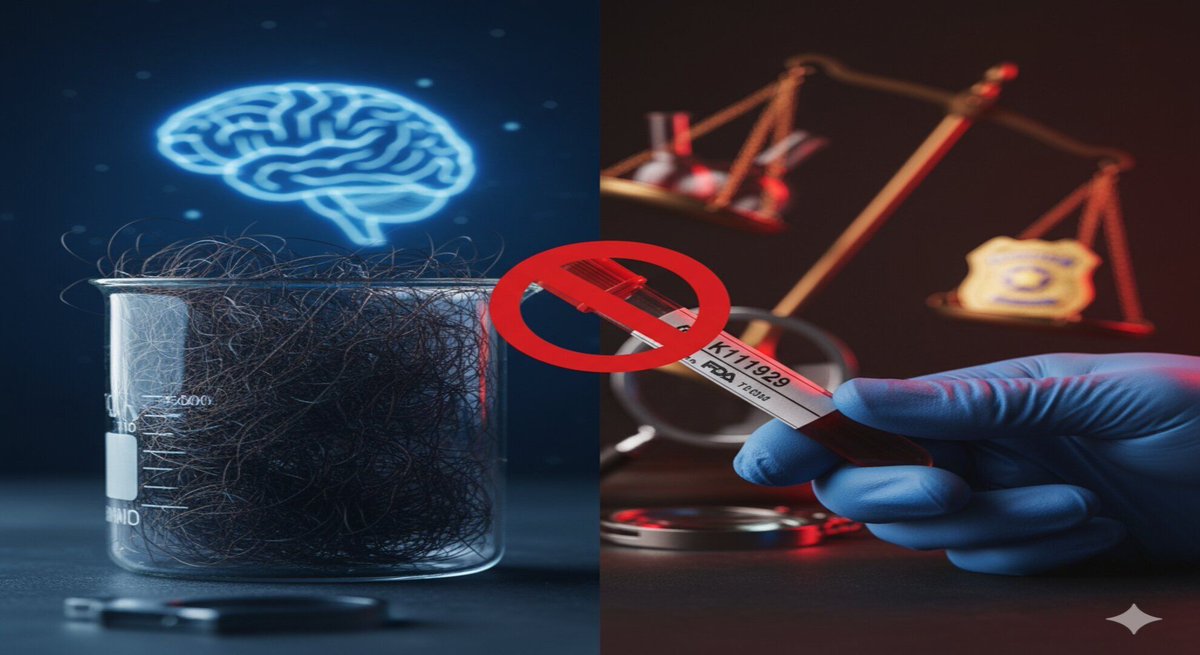
Palaguachi was terminated on October 17, 2025, one day after the filing, based on results from the Psychemedics Corporation cannabinoid hair testing device (510(k) No. K111929) — a device that the FDA never classified for hair testing and which cannot scientifically distinguish marijuana use from passive exposure.
📌 Why It Matters:
⚠️ Regulatory Misclassification: The device was cleared for serum, plasma, saliva, and urine testing — not hair.
🧪 Scientific Unreliability: EIA hair testing cannot prove marijuana use, only the presence of metabolites. Passive exposure can trigger a positive result.
📜 Misleading Labeling: Psychemedics’ language implies the test can “identify use,” creating a false evidentiary narrative in employment and disciplinary cases.
🧑🏽⚖️ Harm in Practice: Palaguachi’s termination exemplifies how this flawed science can end careers and violate due process.
The HARMS Petition calls on the FDA to:
Mandate labeling changes clarifying the device’s true limitations.
Issue public guidance to employers and law enforcement warning against misuse of hair testing.
Disclose investigation data to ensure accountability and transparency.
⚖️ When unreliable science becomes the basis for discipline, due process is not protected — it’s erased.
Read the Citizens Petition buff.ly/zRy42VE
#NYPD #FrankiePalaguachi #Psychemedics #FDA #CivilRights #DueProcess #EmploymentLaw #ScienceAndLaw #UGESP #TitleVII #HairTesting #PolicyWithoutProof #Accountability #LawEnforcement #RegulatoryFailure #EricSandersEsq #TheSandersFirmPC
2
6
845
10 Sep 2025
🚨 Exposed: NYPD “Random” Drug Testing Targets Officers of Color 🚨
Veteran Officer Frankie F. Palaguachi earlier this year, filed an EEOC charge alleging the NYPD—working with vendor Psychemedics—is running a racially biased, scientifically unsound hair-testing regime.
What’s at stake
“Random” selections made off-system, then funneled to Radioimmunoassay of Hair (RIAH) or Enzyme Immunoassay (EIA)—a method not approved by SAMHSA and known to skew against darker/coarser hair.
No split sample. No DNA authentication. No independent re-test. Careers end on proprietary lab calls.
UGESP (Uniform Guidelines on Employee Selection Procedures) ignored: no outcome audits by race/ethnicity, no validation, no transparency.
Retaliation against those who question the program.
The record
Jones v. City of Boston: federal appeals court allowed a Title VII disparate-impact challenge to hair testing due to racial bias.
Landon v. Kroll: labs can be liable for negligent testing that harms people.
The claim
Title VII / NYSHRL / NYCHRL / §1983: disparate impact & treatment, retaliation, equal protection.
MRTA: no adverse action based solely on metabolites without impairment.
The fix
Suspend hair testing until validated.
Add real safeguards: split samples, DNA authentication, appeal rights.
Publish selection algorithms and audit results by race under UGESP.
“This isn’t oversight—it’s structural betrayal masquerading as ‘random.’ The science is shaky, the process opaque, and the harm real.” — Eric Sanders, Esq.
🔗 Read the full EEOC charge and press release. buff.ly/vvGXZJ4
#CivilRights #NYPD #EEOC #EmploymentLaw #UGESP #TitleVII #PublicIntegrity #DueProcess #HairTesting #Psychemedics
1
1
4
1,341
7 Sep 2025
🚨 Clearance Without Fairness 🚨
For over a century, courts have admitted “science” first and asked hard questions later — handwriting analysis, bite marks, arson indicators, blood spatter, even microscopic hair comparison. Each promised certainty. Each collapsed under scrutiny.
The warnings are on record:
NRC (2009): Forensic science suffers from foundational flaws.
PCAST (2016): Courts must exclude unvalidated methods.
DOJ/FBI (2015): 90% of microscopic hair testimony was materially wrong.
Now hair toxicology stands at the same crossroads. Psychemedics’ SEC filings (1995–2024) repeat the mantra: “history of use,” “approximate amount ingested,” “FDA 510(k) cleared.” But 510(k) ≠ scientific validation. Clearance means market equivalence — not proof of accuracy, fairness, or reliability.
Boston learned this the hard way:
CSC (2013) — “Hair alone cannot prove ingestion.”
Jones v. Boston (2014/2016) — disparate impact on Black officers.
2021 — City abandons hair testing.
2023 — $2.6M paid to settle.
The lesson? Admission must follow validation, not precede it. Courts, employers, and policymakers can’t afford another forensic cautionary tale.
#ClearanceWithoutFairness #HairTesting #ForensicScience #FDA510k #Rule702 #Frye #UGESP #TitleVII #CivilRights #EmploymentLaw #ScientificValidity
Read my latest thought-piece: Clearance Without Fairness: courts keep warning us about unvalidated “science.” Hair testing should not be the next cautionary tale
buff.ly/x0lmtl8
3
7
3,618

10 Jun 2025
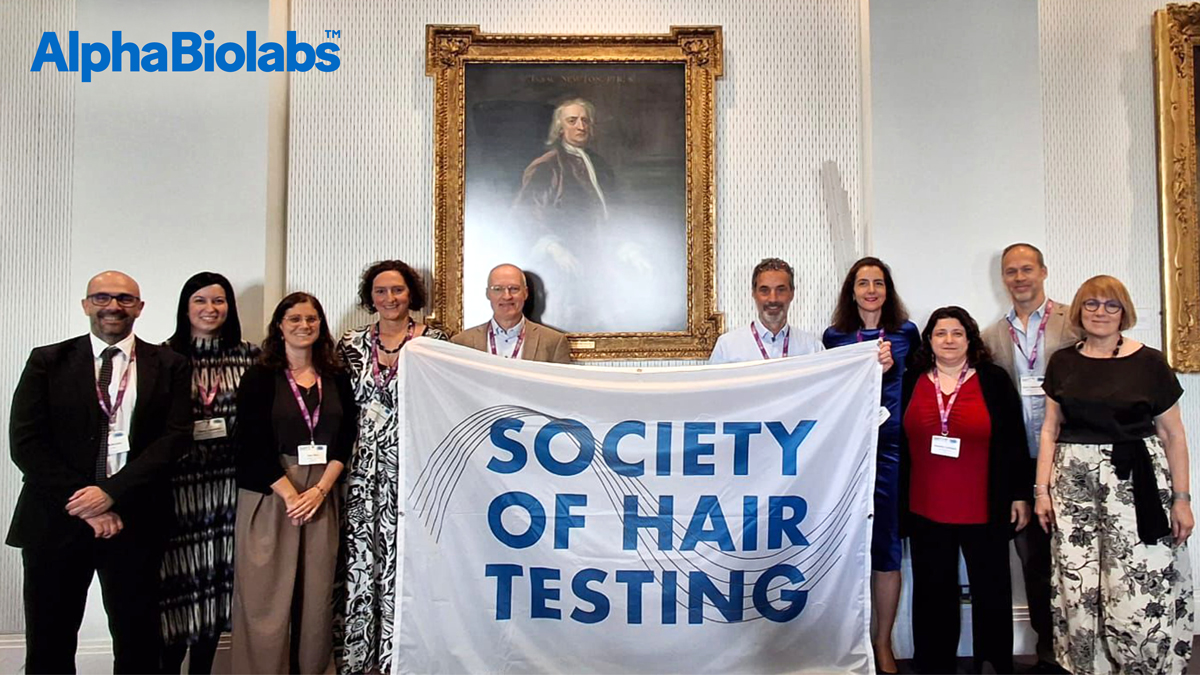
We’re delighted to announce that Mario Barroso (far left), Head of R&D and Method Development at AlphaBiolabs, was re-elected to the Board of the SoHT Society of Hair Testing at last week’s international conference, held at The Royal Society in London.
Congratulations Mario!
#SoHT2025 #HairTesting #DrugAndAlcoholTesting #LegalProfessionals #FamilyLaw
2
58

22 Feb 2024
Positive hair drug test results should be reported to the FMCSA's Drug and Alcohol Clearinghouse, enabling transportation companies to address illegal drug use by commercial drivers. Let's prioritize safety on our roads!
#SaferRoads #RoadSafety #Trucking #HairTesting
1
63

Why Hair And Blood Testing Can Benefit Leaders
Understanding Psychophysiology More Deeply
Read Here: typeshare.co/theleadershipgu…
#Leadership #Business #Strategy #Wellness #Wellbeing #Ideas #Solutions #Success #Trust #Burnout #Stress #Recovery #Physiology #Psychology #Creativity #Innovation #HairTesting #BloodTesting
1
84