
i do in fact do all og this at once hashjacking the goat


6
92

30 Dec 2025

2
5
236

14 Jul 2024
Africa has an information crisis and the underlying cyber colonialism behind it
Over recent years, social media and other digital platforms, amplified by algorithms and artificial intelligence (AI), have enabled vitriolic messages with hatred, delirium, and disinformation to ‘spread like wildfire’.
In many countries, both rich and poor, hate speech, malinformation, and disinformation threaten social cohesion. They sow chaos and confusion, polarize communities, ignite online and sometimes offline violence, and undermine faith in democracy itself.
Fragile democracies, where checks and balances are weak, are particularly vulnerable. In these environments, influence operations can thrive. The prospect of scaling up automated responses using AI creates an information ecosystem where speed is king. This increased automation could outpace human ability to verify information, leading to a potential automated disinformation arms race, making Africa especially vulnerable. Malinformation and disinformation can be dangerous and harmful because it creates a false reality. If a disinformation campaign is successful, thousands or even millions of people believe in a false reality that can quickly turn deadly or threaten the stability of society.
Case study of Kenya: ‘influence entrepreneurship’
"The production of misinformation and disinformation has become a business model," Justin Arenstein, CEO of Code for Africa, said at a high-level roundtable discussion forum organized by the German Embassy in Nairobi.
Kenya has become a hub for sophisticated disinformation operations. Underground public relations firms and individual keyboard warriors sell malinformation and disinformation services, ranging from single pieces to large-scale campaigns, often to discredit political opponents or influence political movements. For years, the country has embraced the use of fake newspaper front pages to spread misleading claims about local politicians online. This technique is now being copied and implemented elsewhere in Africa.
In 2022, a Reuters Institute for the Study of Journalism survey found that 75 percent of Kenyan respondents struggled to distinguish between real and fake news on the internet. With internet and social media access spreading rapidly in Kenya and across the continent, this situation has the potential to significantly infiltrate and undermine democratic electoral processes if not addressed. By early 2023, Kenya had achieved an internet penetration rate of 32.7 percent, marking an 8 percent increase from the previous year. Coupled with the widespread adoption of smartphones, this trend indicates that more Kenyans are gaining access to the internet, and consequently, social media, each year. As a result, an increasing number of Kenyans are being exposed to the challenges posed by disinformation.
Influence mercenaries
During Kenya’s 2022 presidential elections, influence operations were primarily indigenous but mirrored techniques used globally. These operations exploited existing fears, social divisions, and conspiracy theories based on mistrust of the state, amplifying them online. The motivations for influence operations varied. Some actors sold their influence to advance their own political goals or to support other candidates. During the campaigning season, even product influencers repurposed their activities during the election period, acting as amplifiers for influence operations.
For example, it was found that a hashtag could cost a client anywhere between USD 770 and USD 7,000. As a result, social media as a service has become a viable economic activity. In political circles, there is little to stop the widespread dissemination of disinformation since the primary motivation is commercial. Numerous influencers employed tactics like follow trains, hashjacking, and astroturfing to manipulate online platforms and expand their networks.
They propagated conspiratorial narratives, such as the deep state theory, to discredit the administration under Uhuru Kenyatta and distance their candidate, Ruto, from past governance. This narrative not only undermined democratic institutions like the media and judiciary but also echoed themes from the American pro-Trump QAnon movement. Concurrently, a campaign known as the Hustler Nation Intelligence Bureau urged online participants to identify and shame perceived enemies of the state, blurring the lines between political discourse and digital vigilantism.
The same tools and techniques could also be exploited by hostile nations, transnational criminal networks, and terrorist organizations.
Cyber Colonialism
Kenya has also become an important target for countries looking to spread malinformation and disinformation through their respective state media. The China Media Group for instance opened its continental headquarters in Nairobi this year. "From there, they launch misinformation, but also China-friendly coverage in the country's media," Russia and Turkey have also chosen Kenya as a hub for their campaigns.
Disinformation campaigns have targeted every region of the continent, with at least 39 African countries experiencing specific campaigns. The frequency of disinformation is on the rise, with half of these countries targeted three or more times, signaling a significant increase from previous years.
Conflict-ridden nations face even higher levels of disinformation, averaging around five campaigns, highlighting the link between instability and misinformation. These campaigns involve multiple actors, sometimes amplifying each other’s narratives or operating independently. Nearly 60 percent of these campaigns are sponsored by foreign states, with Russia, China, UAE, Saudi Arabia, and Qatar identified as primary sponsors.
Russia, in particular, leads with 80 documented campaigns across 22 countries, using disinformation to undermine democracy in many instances. African elections are particularly vulnerable, often targeted by both foreign entities and domestic actors employing disinformation tactics. Countries with stronger democratic institutions, such as presidential term limits, tend to face fewer foreign-sponsored disinformation campaigns, underscoring the strategic intent to support authoritarian regimes. Meanwhile, as disinformation proliferates, press freedom in Africa is declining, with legislation against digital disinformation sometimes used to suppress journalistic freedom.
From 2023 and onward Africa has faced 23 transnational disinformation campaigns, predominantly sponsored by external state actors. Russia and China lead these efforts, leveraging disinformation to advance geostrategic goals. These campaigns undermine democratic processes, promote coups, fuel anti-Western and anti-UN sentiment, and spread confusion on climate change.
These efforts achieve extensive reach, with prominent influencers connected to Russia reaching over 28 million users. Russian-sponsored campaigns employ African influencers, digital avatars, and manipulated media circulated through state-controlled channels, fostering echo chambers of disinformation. Russian embassies have reportedly established grassroots organizations to amplify these narratives.
The Wagner Group, linked to half of Russian campaigns in Africa, plays a pivotal role, now integrated into the Russian Africa Corps overseen by Artem Sergeyevich Kureyev. The Chinese Communist Party, through the United Front and China Media Group, also conducts significant disinformation campaigns, often aligning with Russian narratives while institutionalizing CCP narratives through ICT infrastructure and media partnerships across Africa.
West African Campaign
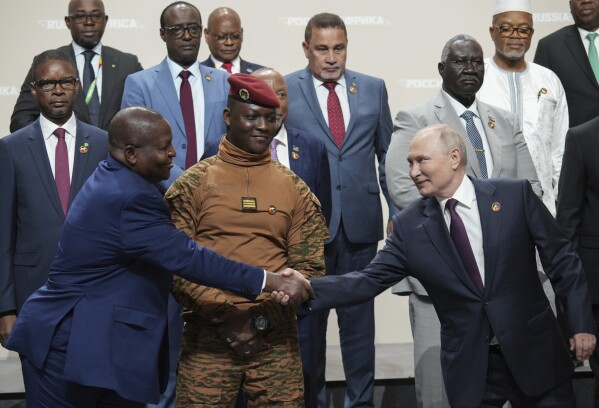
West Africa stands out as the region most targeted by disinformation, encompassing nearly 40 percent of documented campaigns across Africa. Approximately half of these campaigns are linked to Russia, which has intensified disinformation efforts in the Sahel region since 2018. Mali, Burkina Faso, and Niger have been particularly targeted, with 19 campaigns aimed at influencing public opinion, despite these countries' recent histories of military coups. Fact-checkers in Mali describe these disinformation campaigns as being produced "on an industrial scale," significantly shaping online narratives and discussions with toxic impacts.
In West Africa, the second largest sponsors of disinformation are the military juntas in Mali and Burkina Faso. These regimes, isolated and increasingly reliant on Russian support to maintain power, have adopted Russian disinformation tactics. They frequently blame France, the United Nations, the Economic Community of West African States (ECOWAS), and human rights groups while attempting to control the information space by silencing domestic journalists and censoring reputable international media outlets.
Militant Islamist groups constitute a third major sponsor of disinformation in the region, notably in countries like Nigeria. These groups employ various disinformation tactics through local languages and closed networks such as Telegram to recruit followers and propagate their messages.
East Africa Campaign
In East Africa, there is a notable concentration of documented disinformation campaigns, with the highest percentage (over 60 percent) originating domestically. Sudan and Kenya are the focal points, with Sudan experiencing 14 campaigns, six of which are domestic, amid ongoing conflict involving conflicting claims from the Rapid Support Forces (RSF) and Sudanese Armed Forces (SAF). This has exacerbated uncertainty and danger for civilians.
Foreign powers like Russia, the UAE, and Egypt, with interests in Sudan's conflict, have also sponsored disinformation to support their proxies. Before the conflict escalated, these networks targeted Sudan's pro-democracy movement by manipulating social media to silence genuine grassroots resistance, known as shadowbanning.
Meanwhile, Kenya has witnessed a surge in domestic political disinformation, showcasing a paradox where open information spaces in democratic countries can be turned into weapons against them due to rapid technological advancements without adequate policy responses.
In Somalia, Al Shabaab and the Islamic State in Somalia (ISS) have pioneered disinformation tactics, creating Facebook pages posing as media outlets to propagate extremist ideologies in local languages. ISS pages, for instance, called for boycotting Kenya's elections and excommunicating Muslims who participated.
Central Africa Campaign
Disinformation campaigns targeting United Nations (UN) peacekeeping missions in Central Africa have had significant impacts. In the Central African Republic (CAR), supporters of President Faustin-Archange Touadéra, reportedly influenced by Russia, have spread conspiracy theories about the UN's mission (MINUSCA). These false narratives aim to undermine MINUSCA's efforts, including claims of UN support for armed rebel groups and selling weapons, which led to violent protests resulting in casualties among peacekeepers and protesters outside a MONUSCO base in 2022.
Similarly, in the Democratic Republic of the Congo (DRC), political "pressure groups" have used online disinformation to incite anti-UN sentiment against the MONUSCO mission. Allegations, including false claims of UN support for rebel groups, exacerbated tensions during the DRC's December 2023 election, contributing to confusion and questions about the election's legitimacy.
In Cameroon's Ambazonian conflict, disinformation and cyberbullying, including the sharing of sensitive personal information (doxing), have reportedly led to the summary execution of innocent civilians. Russian involvement in CAR's disinformation landscape dates back to at least 2018, blurring distinctions between external and domestic disinformation by cultivating a network of journalists, bloggers, and regime spokespeople aligned with Touadéra's interests, including advocating for the removal of term limits.
Southern Africa Campaign
China's extensive use of bots to artificially boost the profiles of Chinese diplomats in Africa has been particularly active in southern Africa, targeting six countries. South Africa and Zimbabwe have seen the highest number of documented disinformation campaigns in this region, often during presidential campaigns where both external and internal actors manipulate information to shape narratives and foster distrust among the population.
In South Africa, Russia has played a prominent role as the primary actor behind disinformation efforts. Their campaigns aim to polarize communities, sow distrust, and bolster support for the African National Congress (ANC). Russian influence operations also involve leveraging influential South Africans to propagate pro-Russian narratives both domestically and internationally.
Meanwhile, in Zimbabwe, China has emerged as the leading external sponsor of disinformation. Chinese campaigns support the ruling party, ZANU-PF, by silencing opposition voices and civil society, promoting Chinese political and business interests, and disseminating anti-Western narratives. China utilizes a combination of social media channels and state-controlled media to amplify false claims and bolster these efforts, effectively weaponizing information to influence public opinion.
North Africa Campaign
Russia has established a significant presence in the information landscape of North Africa, particularly leveraging Egypt as a hub to disseminate Russian narratives across the region. Egyptian state-run media frequently republish content from Russian state media, with RT Arabic ranking as the second largest outlet after its English-language counterpart.
In Libya, Russian disinformation efforts have focused on supporting warlord Khalifa Haftar's Libyan National Army (LNA), fostering nostalgia for the Qaddafi regime, and disrupting the Libyan Political Dialogue Forum. Disinformation campaigns undermining the UN Support Mission in Libya have been widespread, benefiting Haftar's LNA.
Each North African country has also experienced domestic disinformation campaigns targeting opposition political figures and pro-democracy activists. In Tunisia, supporters of President Kaïs Saïed have actively used these tactics to undermine the opposition and legitimize his extraconstitutional seizure of power. Saïed himself has propagated racist conspiracies about Sub-Saharan Africans in his speeches, which are rapidly amplified by social media influence networks.
Disinformation undermines human rights, especially in cases where disinformation actors target minority groups, religious beliefs, societal inequalities or sex-related topics. By supporting these disinformation networks, Russia, China and other foreign governments are actively harming the countries they target and the African continent as a whole.
(Source:
1. news.un.org/en/story/2023/10…
2. issafrica.org/research/east-…
3. theelephant.info/opinion/202…
4. issafrica.org/iss-today/afri…
5. africacenter.org/spotlight/m…)
65
229
529
804,614

13 Nov 2023
Looking for a perfect sovereign chain? 👀👀
No hashjacking
No pricing plebs out, ever
No multistacks, just N 0.01 till $1 then reset
No lost replies as QT will be initiated when needed
HFSS forever
#microstack #microstackgang 😂✊🧡
1
6
86

21 Jul 2023
Just had a good long talk with Vee which was really helpful and I do recognize all the amazing work and creativity you guys have been contributing through hashjacking onto the stackchain. I’m really very sorry that by voicing my feelings and opinions it comes off as shitting on
1
8
115
21 Jul 2023
everything we had on the line, together and yeah hashjacking doesn’t cost anyone anything and I think it diminishes the value and power of the people taking that leap together. The logic and honesty too doe….
1
3
118
21 Jul 2023
I’m experiencing catastrophic technical difficulties in da spaces. Anthony’s testimony about Vee helping him understand og chain lead me to this request: Vee please help me understand how hashjacking isn’t making the main chain illogical and dishonest. 🙏 please
3
6
95

21 Jul 2023
It’s been happening for a very long time. Bob is just now having a problem with it because it now has a name. “HashJacking” has existed before it had a name and StackChain is full of hash that has been brought in from the wild.
2
2
110
21 Jul 2023
For sure there has always been questionable hash on the chain, but I always felt as long as the core group did what they could to keep integrity it was inconsequential. The recent rise in hashjacking kind of blew that for me.
1
49

21 Jul 2023
Anyways from my perspective it runs just like the old mempool. In fact we're even using the old mempool document that we used to use until we got Siggy.
We see it as hashjacking because the HashJackChain allows you to get the url of the hash and add it as a block on the....
2
2
76
29 Jun 2023
Fackin love stackchainers and stackchain, but between being called a liar and not being able to swallow hashjacking: rage quit initiated
4
127
29 Jun 2023
There are no rules george you know that, but yes I think that’s stackchain in its purest form, it’s always wobbled on this line, at least since I don’t know block 700 or some shit, but the miner block and the hashjacking have been the farthest tangent away from this.
2
35
28 Jun 2023
Guess I can start hashjacking the nature photography too, it’s a shame. I really liked going out there.
1
2
77
28 Jun 2023
Listened to this in my way out to Twin Peaks, it was another homage to hashjacking.
1
3
76
15 Jun 2023
to burn had lost their voice and the sovereign chain enabled everyone to let their hash speak and engage in the way of the ancients. Hashjacking has been around the chain for a while and I’ve always voiced concerns but it never seemed substantial enough to call it a change
1
6
128
7 Jun 2023
I love you George just hate hashjacking , always have, I think you know that. 🤷♂️
1
3
99
6 Jun 2023
Bob hashjacking is just asking someone who already posted a buy themselves if they would like to use it on the Stakchain. Some people are intimidated or don't know how to post on Stakchain. As far as I know there haven't been any buys taken and used without expressed permission.
1
4
42
6 Jun 2023
Hashjacking only counts on chain if the person gives permission to use their buy. I tried jacking Saylor but he wouldn't express consent so we never got to build blocks with it.
As far as your friend yeah I guess that could count if there was consent to post to Stakchain receipt
1
3
27
6 Jun 2023
I’m just hating from the peanut gallery I won’t really be forking anyone, but the hashjacking demotivates me from wanting to stack honestly. Just doesn’t feel the same.
2
4
37