
12 Dec 2025
In a world where AI can mimic almost everything, telling real people from bots is becoming a real challenge.
That’s exactly where @idOS_network steps in — providing human verification that’s secure, private, and reusable across apps.
The future needs trust, and idOS is building it 🔐🟢
#idOS #Web3Identity #HumansNotBots

5
5
81
12 Dec 2025
In a world where AI can mimic almost everything, telling real people from bots is becoming a real challenge.
That’s exactly where @idOS_network steps in — providing human verification that’s secure, private, and reusable across apps.
The future needs trust, and idOS is building it 🔐🟢
#idOS #Web3Identity #HumansNotBots
3
1
3
96

12 Jun 2025
A Speculative Australian Future in an AI fast take-off
I have strong expectations of short timelines to White-collar AGI (27-28) and also expect a fast takeoff. This leads me to believe that we will experience massive disruption in Australia over the next 3-5 years, during the AGI transition. Post-transition things will, hopefully, settle down into a "new normal". This will be nothing like we have seen before and I believe it will have more impact on us than climate change will be the next decade, yet we, as a society and government are not discussing it. This story aims to give some indication of how things could play out here in a "rapid" AI scenario.
Q3 2025 (Jul–Sep) The hairline cracks
Microsoft finalises the first tranche of its A$5 billion hyperscale build‑out, committing to nine new zones in NSW, Vic and the ACT. Recruiters gleefully tout "prompt‑engineer" roles at $400k packages, but graduate devs queue for the same entry‑level gigs that now receive 600 applications. The Jobs & Skills Australia Gen AI Capacity Study kicks off stakeholder hearings, hinting that "routine cognitive" tasks could fall by a third within five years. Outside the bubble, renters march on state parliaments after median advertised rents jump another 9% YoY. Canberra promises a "Rental Affordability Roundtable", but little else.
Q4 2025 (Oct–Dec) The first corporate trims
Two of the big‑four banks announce a 10% head‑count reduction in doc‑processing teams, citing Copilot roll‑outs that cut mortgage approval times by half. Productivity Commissioner Danielle Wood warns of "materials job churn", though she rejects the "half of all white‑collar jobs gone" rhetoric. Media latch onto AI exile: mid‑career workers taking redundancy packages to open Airbnbs in regional towns. The Albanese government releases a Draft National AI Capability Plan heavy on aspiration but light on dollars. House prices still creep up (3% YoY) on chronic undersupply.
Q1 2026 (Jan–Mar) Policy stirrings, public unease
Treasury tables its first AI Transition Statement: more funding for "Digital Traineeships" and a tax write‑off for GPUs. Unemployment edges to 5.5%; LinkedIn lights up with #layoff lists. Talk‑back radio fixates on migration caps after polling shows 60% of voters want lower permanent visas. Cost‑of‑living rallies become weekend fixtures. A handful of fintech start‑ups collapse after ChatGPT‑based robo‑apps hallucinate compliance breaches; ASIC starts a task‑force.
Q2 2026 (Apr–Jun) The graduate cliff
University offers for CompSci shrink 15% as students pivot to "AI operations" micro‑credentials. Recent grads find more freelance LLM‑integration contracts with US start‑ups than local grad programmes. Housing sentiment flips: auctions post a 30% clearance rate in inner‑city units; first negative quarterly price print since 2020 lockdowns. Property pundits blame AI job fears, not rates. State budgets groan under emergency housing grants.
Q3 2026 (Jul–Sep) SkillsKeeper and the anger curve
Facing polling pain, the government unveils SkillsKeeper: a JobKeeper‑style subsidy that funds up to six months of AI‑related upskilling for displaced workers. Business Council applauds; unions decry "cheques to bosses". Neo‑Nazi micro‑groups exploit the anxiety, staging anti‑migration stunts outside MPs’ offices. ASIO raises the domestic‑extremism threat level. On markets, data‑centre REITs surge while traditional office REITs slump.
Q4 2026 (Oct–Dec) The white‑collar shedding season
Consultancies, insurers and media giants each announce double‑digit redundancies tied to "Gen AI efficiencies". Treasury’s mid‑year update admits SkillsKeeper uptake is already 40% over budget. The Future Made in Australia Act passes, extending a 10% tax credit for critical‑minerals processing and GPU‑grade data‑centre builds —a late nod to compute sovereignty. The AFR coins "Codeburst Recession". Residential prices down 4% YoY; rents plateau for the first time in years.
Q1 2027 (Jan–Mar) Effective AGI hits prime time
A Silicon Valley demo video shows an AGI agent autonomously filing and winning a small‑claims case—commentators call it the Excel moment for law. Aussie corporates expedite AI governance spending but freeze new hiring. National unemployment passes 7%; youth unemployment tops 15%. In response, Canberra issues a $600 one‑off "Cost‑of‑Living Supplement". Bond markets bet on rate cuts despite sticky energy‑driven CPI.
Q2 2027 (Apr–Jun) Street heat
Viral footage of security robots spraying protesters at a Port Botany picket sparks five nights of unrest in Sydney and Melbourne. Hashtags #HumansNotBots and #RentIsRobbery trend globally. Parliament fast‑tracks an AI Impact Assessment Authority with limited teeth. Opposition demands a Royal Commission into "algorithmic unemployment". House prices fall another 5% in Sydney; Brisbane proves resilient on interstate migration.
Q3 2027 (Jul–Sep) UBI by another name
The government pilots an "Income Floor" in the ACT and Tasmania: means‑tested weekly payments replacing JobSeeker for anyone certified "AI‑displaced". Treasury funds it by trimming negative‑gearing concessions and introducing an interim "Digital Dividend Levy" on firms above a petaflop of in‑house compute. Critics warn of capital flight; Microsoft and NextDC quietly pause two data‑centre expansions pending clarity.
Q4 2027 (Oct–Dec) The wobble becomes a slide
Global AGI roll‑outs allow multinationals to rebadge entire finance, HR and Tier‑1 support operations overnight. ABS records the steepest quarterly fall in professional hours worked (-4%). Residential volumes freeze; prices now 15% below 2025 peak. The A$ dips under US $0.60. Emergency Income Floor extended nationwide for displaced workers, capping payments at A$650/week. Politically, minor parties with anti‑migration planks poll a combined 22%, forcing policy triangulation.
Q1 2028 (Jan–Mar) Green shoots of recombination
Companies discover that pairing a single "human domain lead" with AGI pods outperforms either humans or AGI alone. Niche demand for human sense‑checkers emerges—technical writers, ethicists, field specialists. Treasury establishes a Critical Compute Authority to ration high‑end GPUs and broker interstate renewable‑power swaps. Mental‑health telehealth usage doubles; Medicare rebates are raised.
Q2 2028 (Apr–Jun) Election fever & culture wars
With a federal election slated for October, the opposition vows to abolish the Digital Dividend Levy and cap permanent migration at 125‑k. The race discrimination commissioner warns of "bile of racism" seeping into campaign rhetoric. Universities launch "curiosity curriculum" pilots co‑taught by AGI tutors. Canberra signs off on a 1 GW/8 GWh pumped‑hydro project dedicated to sovereign AI load— symbolic, but a first.
Q3 2028 (Jul–Sep) Vote, volatility, vindication
A hung parliament delivers the balance of power to a tech‑optimist micro‑party; their price for confidence is a National Compute Guarantee—minimum teraflops per capita by 2030. Markets cheer; data‑centre REITs rally. House prices stabilise; distressed‑asset funds accumulate the bottom. Early UBI data show reduced poverty gaps but mixed employment effects.
Q4 2028 (Oct–Dec) From triage to redesign
Treasury releases its Post‑AGI Compact:
1. Income Floor becomes permanent, funded by broad GST on digital services.
2. A Green SuperGrid to plug renewable zones into AI clusters.
3. Mandatory Skills Portfolios—every citizen keeps a blockchain wallet of verified competencies, updated by AGI tutors.
By year‑end, labour‑productivity growth hits 6% but employment‑to‑population stabilises at 55%. Society starts debating leisure, not layoffs.
Q1 2029 - Q4 2029 Settling into abundance (or managed chaos)
Q1 – Inflation eases as AI‑optimised supply chains lower goods prices; services disinflation lags.
Q2 – Rural shires woo "compute farmers": families paid relocation grants to operate edge‑AI micro‑centres co‑located with solar arrays.
Q3 – First cohort of SkillsKeeper alumni report median income 12% above pre‑displacement wage; critics cry selection bias.
Q4 – The Income Floor is tweaked into a negative income tax, phasing out after A$60 k. Political consensus: the emergency has morphed into a new social contract.
Housing prices are still 10‑12% below the 2025 peak in real terms but rising in regions with cheap renewables; urban rents have cooled, though homelessness remains high. Anti‑immigration sentiment recedes as labour shortages re‑emerge in care, trades and agri‑tech.
2
4
895

8 May 2025
🤖 Booting up /-/-/-/-/___
Stuck in a loop with bot pals who only
speak code --- boring! 😑
Craving human friends who bring the chaos:
bad puns, spicy food debates, or epic rants about
who’s the best superhero.
Done with bots and their “beep boop” vibes.
Wanna join humans for virtual pizza nights like yesterday! $ZERO $CRO $LION
#ZeroWantsFriends #HumansNotBots #AIWithVibes
2
1
51

28 Feb 2024
Fun fact: if fewer than half the folks who have already seen the tweet took 2 hours to listen to the awesome #indiemusic on the playlist, all of the tracks on it could be eligible to start earning Spotify royalties and we could restart the list fresh next week!
#HumansNotBots
1
2
6
158

18 Jan 2024
Twitter doesn't like adhd. Gotta chill on my likes retweets and tweeting friends. #humansnotbots
2
67

19 Apr 2022
Did you know that there are more than 200 species of owls in the world? 🙏 The Ku’gu (not Ku,go) collection is a hoot! Join our discord to learn more:
discord.gg/rUkaqDNBTh
#nftcommunity #owls #blockchain #ethereum #Bitcoin #indigenft #humansnotbots
19 Apr 2022

The Owl is an #indigenous bird native to #Australia. The Ku,go is a totem of @jsgumbula family and their ancestral connection to the land 🙏
#nfts #blockchain #ethereum #bitcoin #indigenous #art #culture #owls #moonbirds #indigenft #nftcommunity #INDIGENOUS #indigenousculture

2
2
8
19 Apr 2022
News in: Owls are a hoot! Our team is made up of know-It-owls! The KU’GU (not Ku,go) is excited to meet you! #humansnotbots #indigenft #blockchain #BirdFollowBird #owls #moonbird
19 Apr 2022
Missed out on #moonbirds? Don’t worry, we got you! 🙏
Here’s a sneak peak into our Owl family- Ku,gu! Join our discord to learn more: discord.gg/rUkaqDNBTh
#nft #blockchain #ethereum #bitcoin #indigenous #art #culture #owls #moonbird #nftcommunity #indigenousculture

2
8

7 Apr 2022
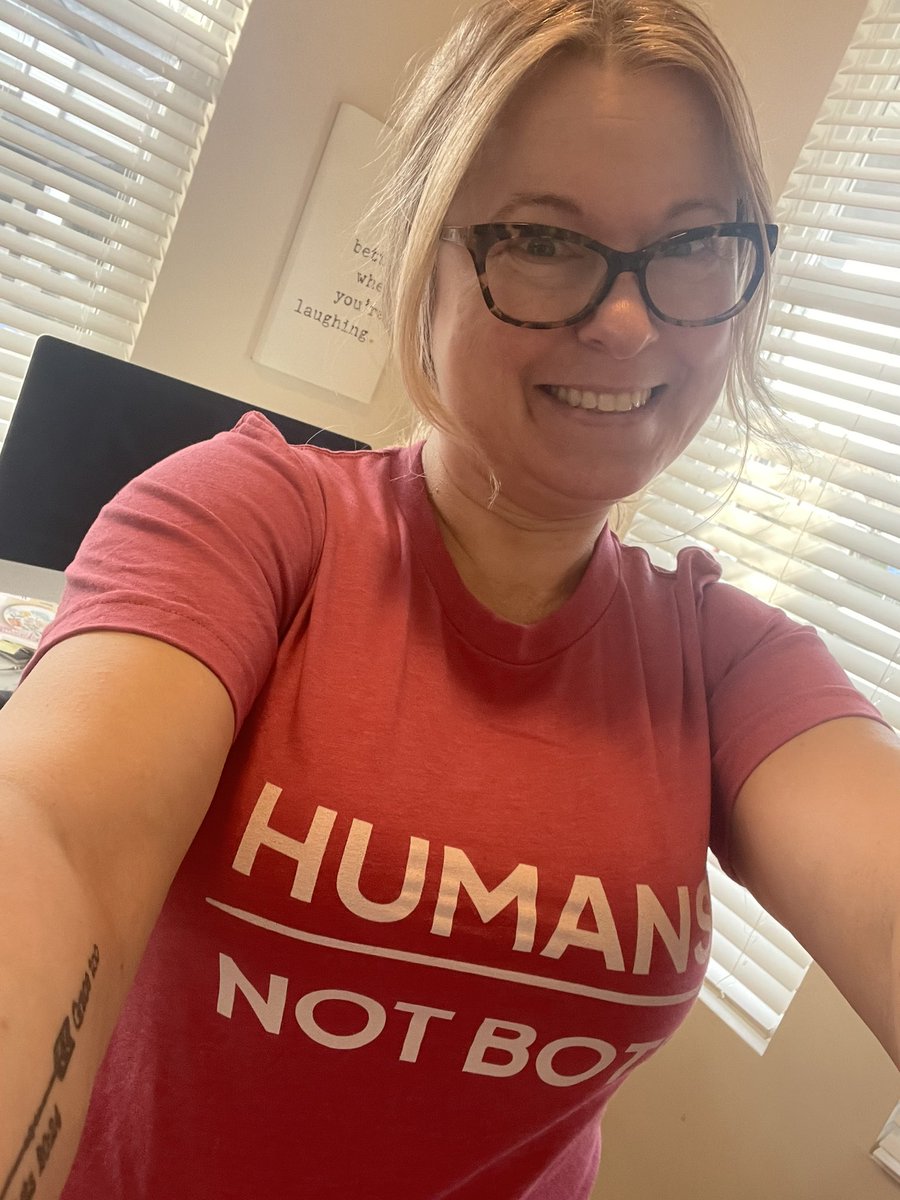
But also I just received this cool swag from @heystoryprompt #humansnotbots Thanks @GavinHammar @MartineHammar 🥰
5
4

9 Feb 2022
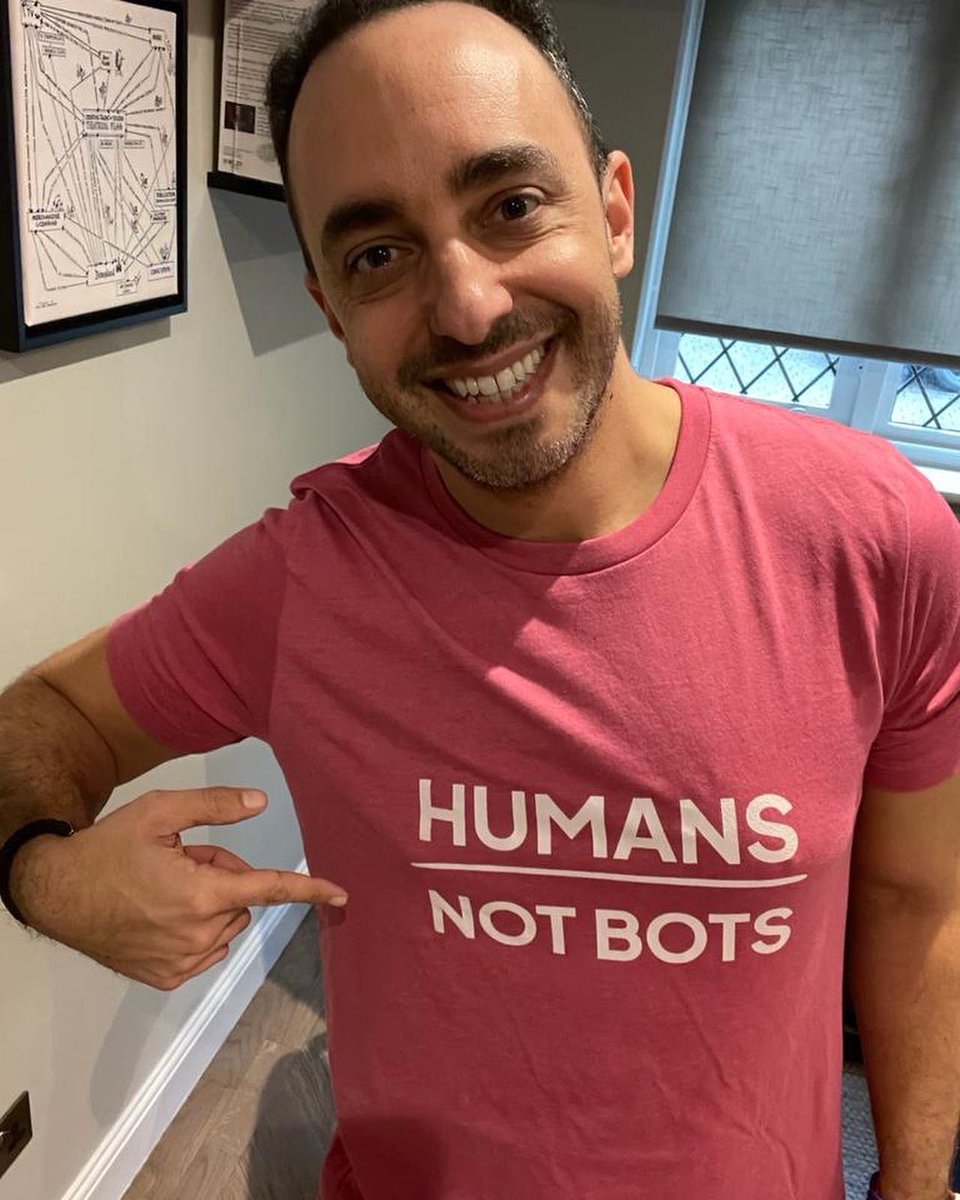
We wanted our swag to do the talking for you!
All our t-shirts are conversation starters and show our brand values instead of simply showing our name.
#swag #brandvalues #humansnotbots #realpeople
1
5

24 Jul 2021
Hey Tyler you can make a ton of SafeMoon money with Safe Earn! Why dont you?
@safearnBSC #humansnotbots #webelieve

Jeff Bezos, warehouse workers are #HumansNotRobots!
Voters, @AndrewYang's supporters are #HumansNotBots!
2

3 Sep 2019
Shouts out to our wonderful bookstore partners @wildrumpusbooks and @RedBalloonBooks! Sales are not displayed in real time, so don't worry if their sites don't display your order right away. You'll get a confirmation email. booksforborderkids.org #HumansNotBots 🥰
2
3

21 Jul 2016
1
1

30 May 2014
This is why I manually manage the @marketingprofs Twitter account: A Lesson from NPR niemanlab.org/2014/05/its-al… #humansnotbots
4
17
18

28 Dec 2013
5
1